Drought Stress Opens the Door for Canker Diseases in Woody Ornamentals
If your woody ornamentals are suddenly showing dead branches this summer, you are not alone. The Arkansas Plant Health Clinic has received a large number of samples with branch dieback following the extremely stressful weather conditions earlier this year. Arkansas experienced one of its driest January through April periods on record—only three years in the past 132 years were drier. In addition to the drought, a sudden freeze in mid-March brought temperatures below freezing after many plants had already experienced several days in the 70s and 80s. These environmental stresses have weakened many trees and shrubs across the state.
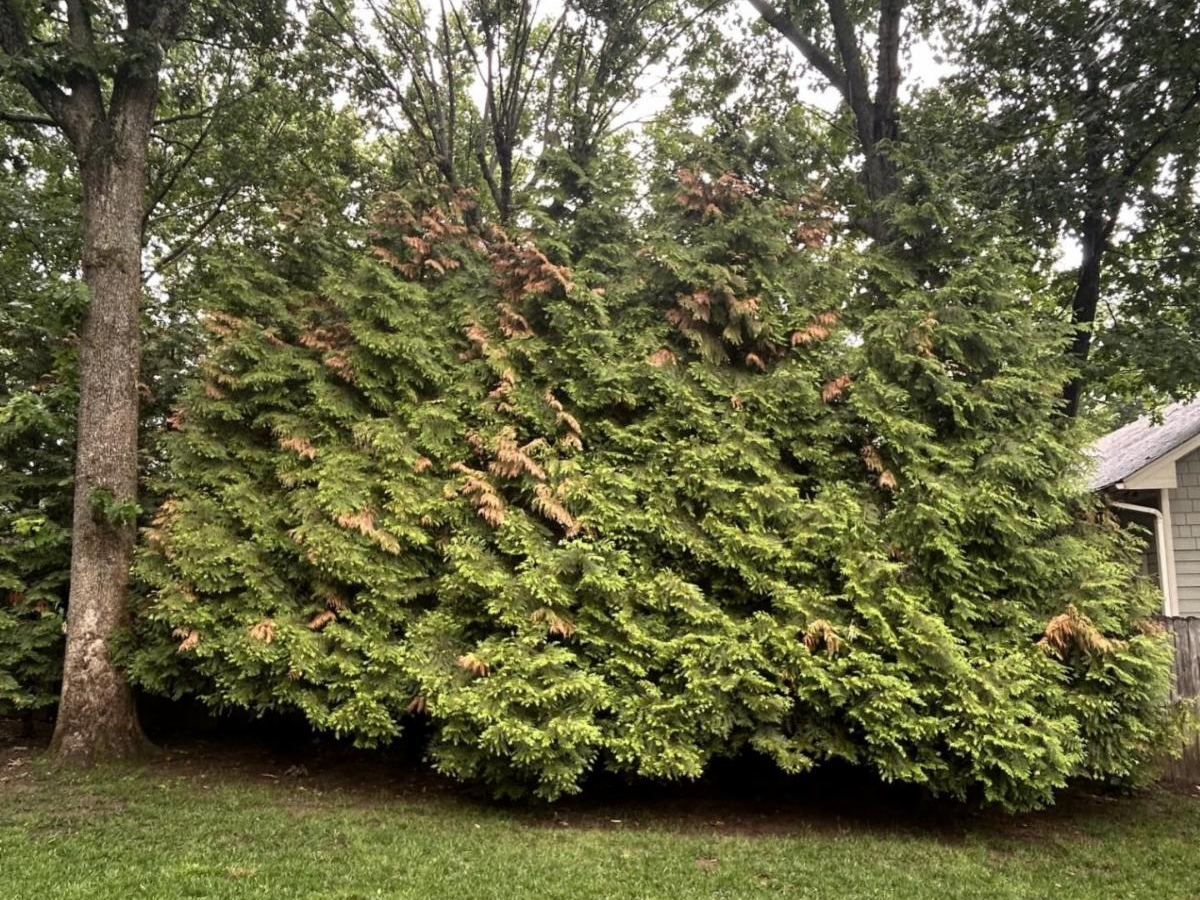
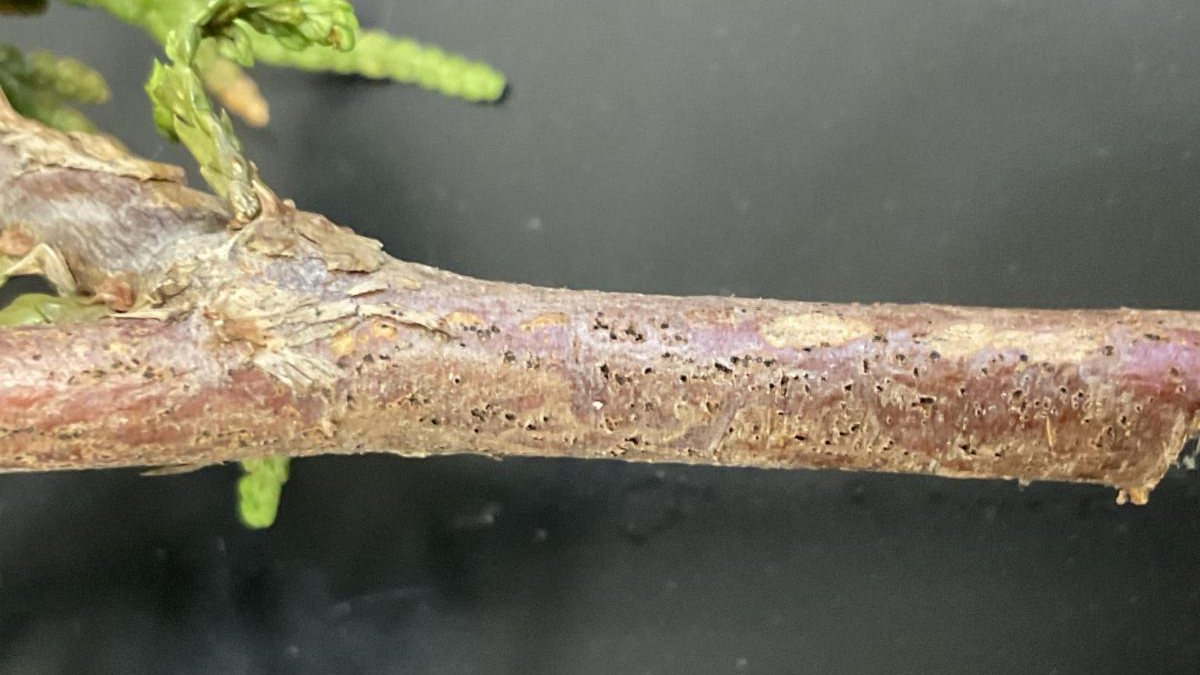
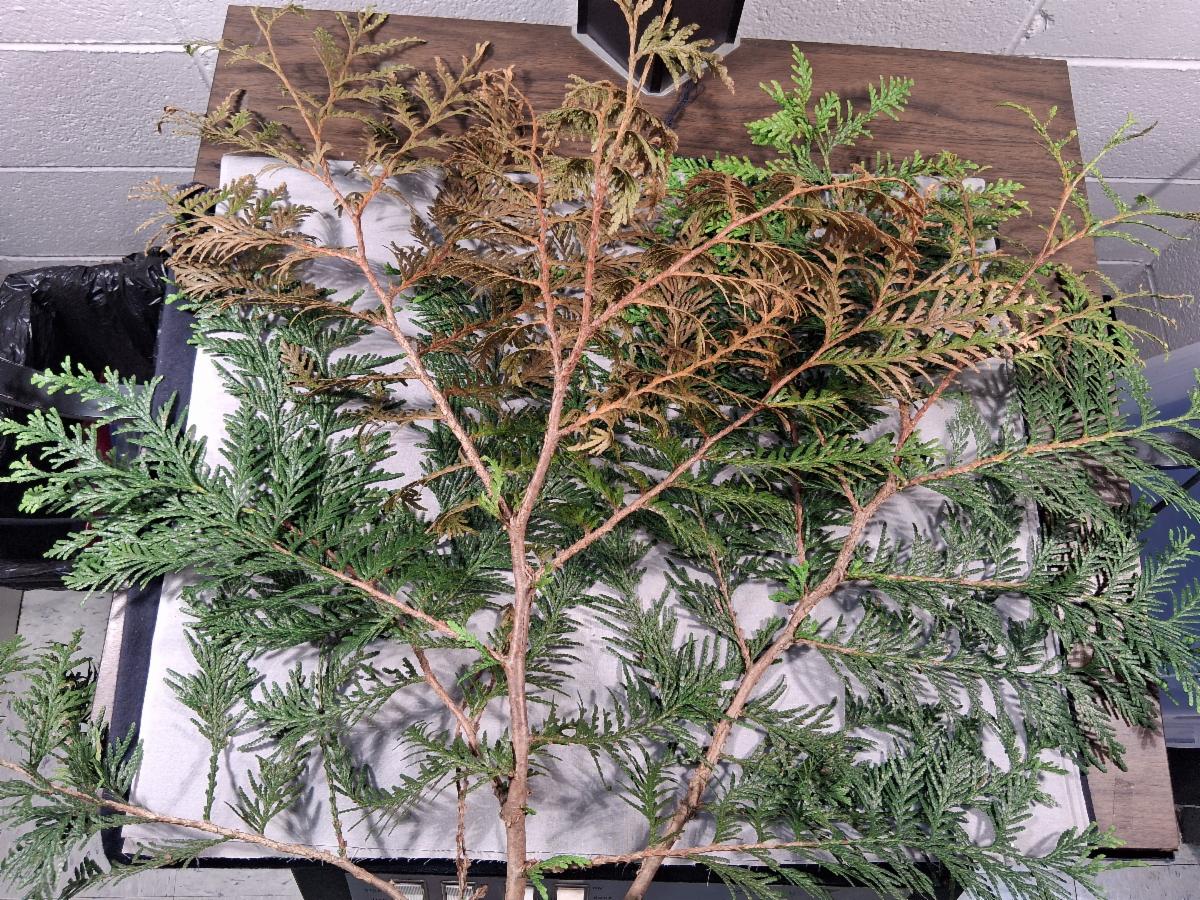
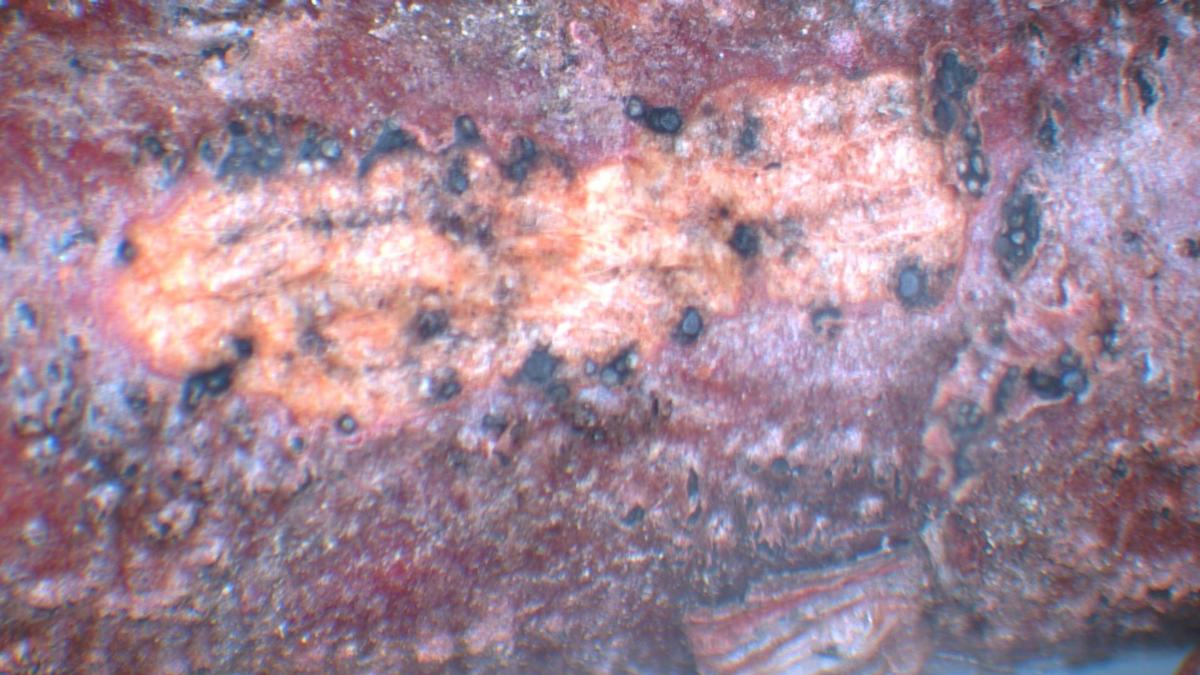
When plants are stressed, they become more vulnerable to opportunistic fungal pathogens, including Botryosphaeria, Phomopsis, and Seiridium, which cause canker diseases. Cankers are localized areas of dead bark and underlying tissue that can restrict the movement of water and nutrients through the branch. A common symptom we have observed, especially on arborvitae, is a sharp transition where foliage above the canker turns brown and dies while foliage below the canker remains healthy and green. In many cases, we can also see tiny fungal fruiting bodies emerging from the bark and confirm the diagnosis by observing fungal spores under the microscope.
Unfortunately, there are no curative treatments for cankers once they become established. Fungicides are generally ineffective because they cannot eliminate the fungus from infected woody tissue. Management relies on pruning out dead or infected branches several inches below the visible canker or dead tissue. It is important to disinfect pruning tools between cuts using a 10% bleach solution (one part household bleach to nine parts water). Because this diluted bleach solution loses effectiveness after about two hours, it should be mixed fresh shortly before pruning. Cankers that develop on the main trunk cannot be pruned out and often lead to permanent decline.
Reducing plant stress is the best defense against canker diseases. During periods of drought, trees and shrubs should be watered deeply about once per week rather than receiving frequent, shallow watering. Deep watering encourages moisture to penetrate into the root zone where it is needed, while overhead sprinklers are often ineffective for established trees and shrubs because they may not deliver enough water deep into the soil. This is especially important because canker diseases can progress much more rapidly during drought conditions.
Arborvitae has been one of the most common plants submitted to the clinic with this issue, with Botryosphaeria, Seiridium, and Phomopsis cankers being diagnosed from samples submitted from across Arkansas. However, drought-related stress and opportunistic canker diseases are not limited to arborvitae. We expect to continue seeing dieback and decline on a wide variety of woody ornamentals following the unusual combination of severe drought and the mid-March freeze.
What to look for:
• Individual branches that suddenly turn brown or die while the rest of the tree or shrub remains healthy
• A distinct transition between dead foliage above the canker and healthy green foliage below the affected area
• Sunken, cracked, or discolored areas of bark on branches or stems
• Tiny black fungal fruiting bodies that may appear as small bumps or dots emerging from the bark
• Increased dieback following periods of drought, extreme heat, or freeze injury
If you are seeing these symptoms, it may be a sign that your plant is suffering from environmental stress and a secondary canker disease. Early pruning of affected branches and proper watering practices can help slow further decline and protect the remaining healthy portions of the plant.
Landscape symptoms of Botryosphaeria canker on arborvitae
Photo by Jeremy Williams,
Tree Climbers LLC
Black fungal fruiting bodies (pycnidia) erupting through the arborvitae bark
Photo by Jason Pavel, University of Arkansas Cooperative Extension Service
A sharp transition between healthy and dead arborvitae tissue as a result of Botryosphaeria canker
Photo by Drew Johnson, University of Arkansas Cooperative Extension Service
Removal of outer bark reveals black fungal fruiting bodies (pycnidia) of Botryosphaeria
Photo by Jason Pavel, University of Arkansas Cooperative Extension Service
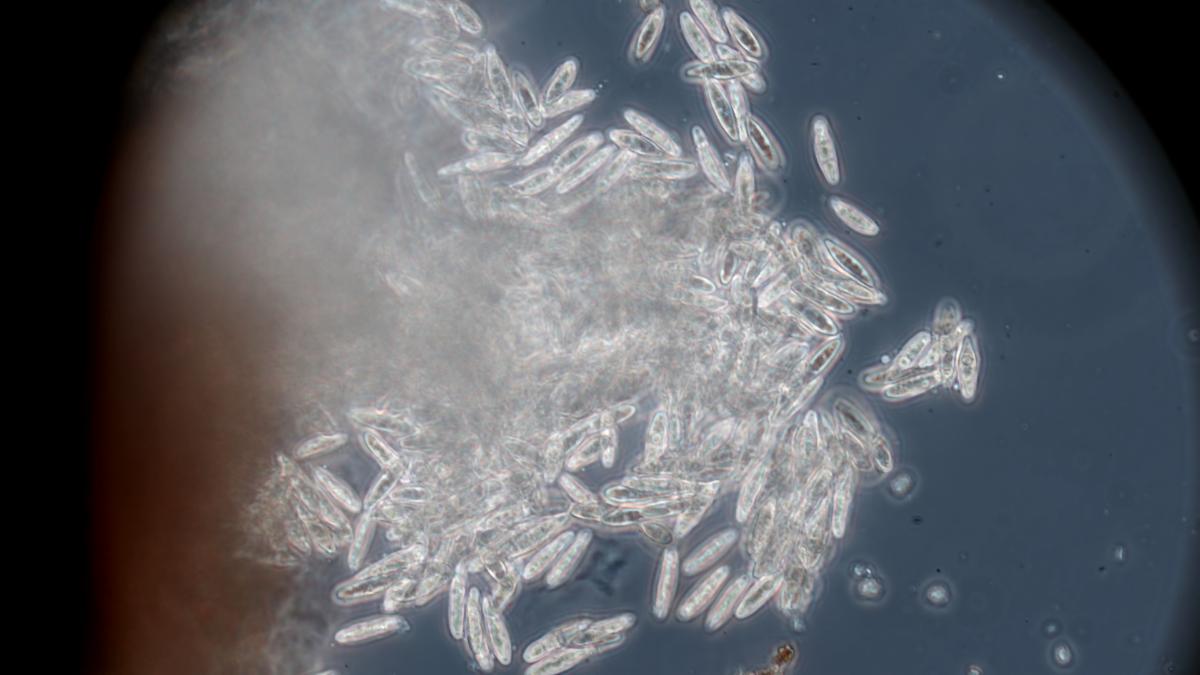
Botryosphaeria spores (conidia) being released from a fruiting body (400X)
Photo by Jason Pavel, University of Arkansas Cooperative Extension Service
Septoria Leaf Spot Showing Up in Tomatoes
As tomato plants continue to grow and produce fruit throughout the summer, we begin to see an increase in foliar diseases, with Septoria leaf spot being a common disease issue diagnosed at the Arkansas Plant Health Clinic. Although this disease can make plants look severe and unsightly, the good news is that it primarily affects the leaves, stems, and petioles and does not infect the fruit. However, severe defoliation can reduce plant vigor and leave fruit exposed to sunscald.
Septoria leaf spot is caused by the fungus Septoria lycopersici. The disease typically begins on the oldest, lower leaves close to the soil and gradually moves upward through the plant as spores are spread by splashing water from rain or irrigation. Warm temperatures, frequent rainfall, and extended periods of leaf wetness create ideal conditions for disease development, making this a common problem during Arkansas summers.
Management of Septoria leaf spot focuses on reducing the amount of leaf wetness and limiting the spread of spores. Remove and dispose of plant debris that has fallen. Mulching around plants can help prevent leaves from touching the soil and prevent fungal spores in the soil from splashing onto healthy foliage. Avoid overhead irrigation whenever possible, and instead water at the base of the plant. Proper plant spacing and pruning can also improve air movement and help leaves dry more quickly. Fungicides can be helpful as a preventative measure when conditions favor disease development, but they are not curative. Commercial growers should reference pages 123 – 124 of the 2026 Arkansas Plant Disease Products Guide under 'Septoria Leaf Spot' for fungicides registered for use against this disease in Arkansas. Home gardeners should reference pages 126 – 127 of the 2026 Arkansas Plant Disease Products Guide under 'Fungal Leaf and Fruit Spots including Early Blight and Septoria Leaf Spot' for fungicides specifically registered for use against this disease in Arkansas home gardens. At the end of the season, remove tomato debris from the garden to reduce the amount of fungal inoculum that can survive and contribute to disease the following year.
What to look for:
• Small, circular brown spots that first appear on the oldest, lowest leaves
• Spots with tan or gray centers and darker brown margins
• Tiny black fungal fruiting bodies (pycnidia) visible in the center of the leaf spots, often appearing like small black pepper grains
• Yellowing of leaves surrounding the spots, followed by browning and premature leaf drop
• Disease progressing from the bottom of the plant upward while the fruit remains unaffected
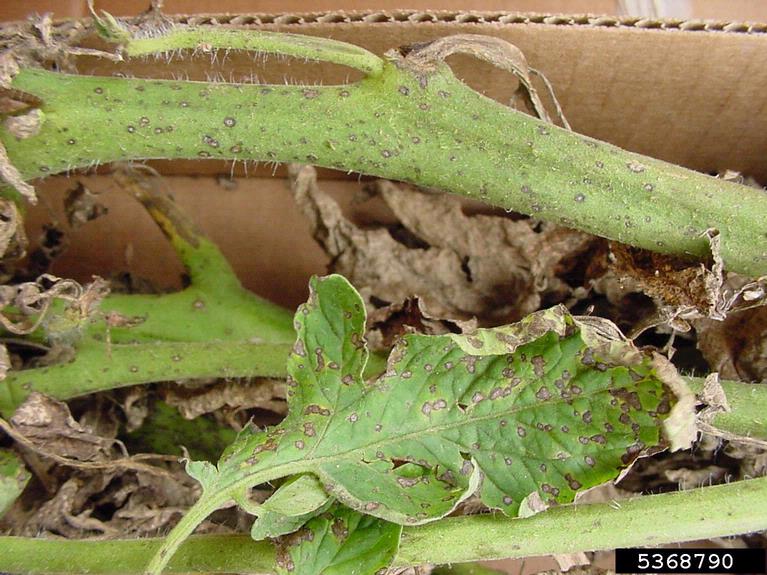
Septoria leaf spot symptoms on tomato leaves and stems
Photo by Paul Bachi, University of Kentucky Research and Education Center, Bugwood.org
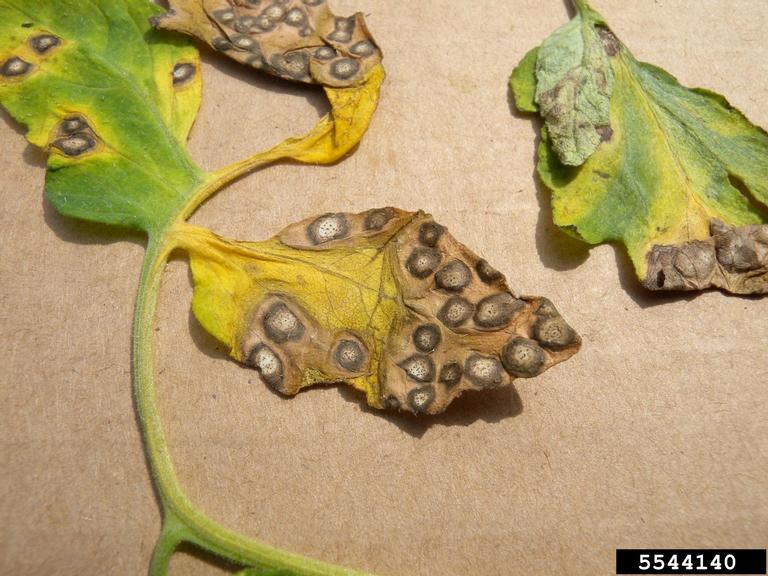
Septoria leaf spot lesions with characteristic gray centers
and dark margins
Photo by Brenda Kennedy, University of Kentucky, Bugwood.org
When Rose Leaves Look Like Lace: Identifying Roseslug Damage
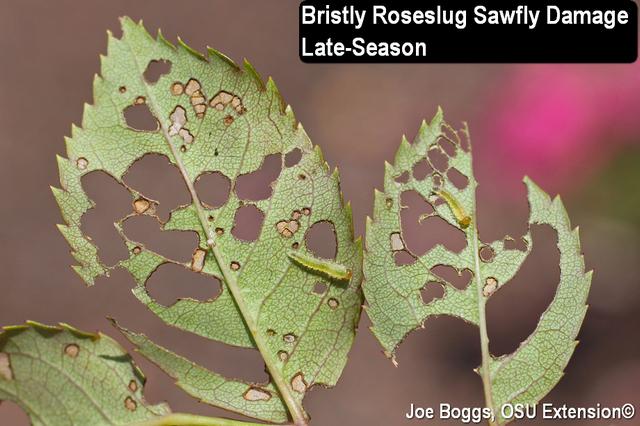
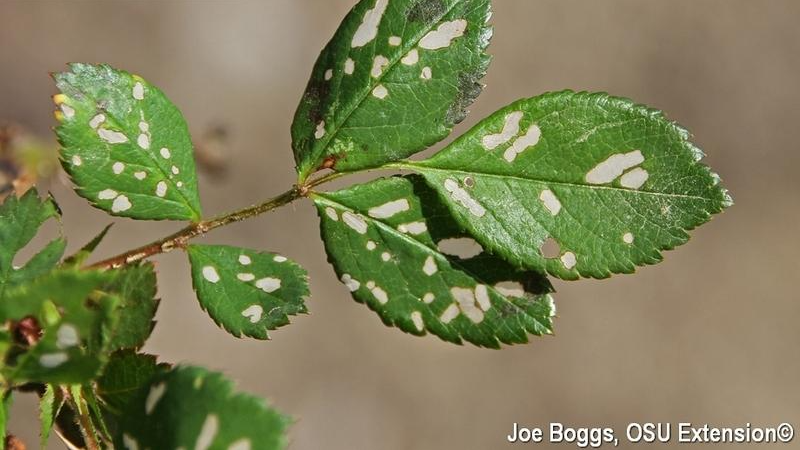
If your rose leaves suddenly appear transparent, lace-like, or full of holes, you may be dealing with roseslugs. Despite their name, roseslugs are not actually slugs. They are the larvae of several species of sawflies and are a common pest of roses. These small, caterpillar-like larvae commonly feed on the surface of the leaves, removing the green tissue and leaving behind a thin, transparent layer of leaf tissue. This type of damage is referred to as “windowpane” damage. Larvae can also fully chew through the leaves, leaving behind holes with the leaf veins still intact (called skeletonization).
Feeding damage from roseslugs can resemble feeding damage from Japanese beetles, so look and see if you can find the pest itself. Roseslugs can reside and feed on either side of the leaves, so be sure to check both the upper and lower leaf surfaces when scouting for this pest. While heavy infestations can make roses look unsightly and may stress the plant, healthy established roses can usually tolerate some feeding without long-term damage.
Regular inspection of roses is the best way to catch roseslugs early. Small infestations can often be managed by simply handpicking or knocking the larvae off the plant with a strong stream of water. Insecticidal soaps and horticultural oils can be effective when they make direct contact with the larvae. Because roseslugs are sawfly larvae and not true caterpillars, products containing Bacillus thuringiensis (Bt) that target caterpillars are generally ineffective. Other insecticidal products labeled for homeowners include acephate, bifenthrin, carbaryl, cyfluthrin, esfenvalerate, lambda cyhalothrin, permethrin, and spinosad. Systemic drenches of dinotefuran or imidacloprid will also provide protection. Read and follow label directions. Maintaining overall plant health with proper watering and care can also help roses recover from feeding damage.
What to look for:
• Leaves with transparent or “windowpane” areas where the soft, green leaf tissue has been eaten away
• Skeletonized leaves that have only the veins remaining
• Small, greenish-yellow larvae feeding on either side of rose leaves
If your roses look like something has scraped the surface off the leaves, turn the leaves over and look closely—you may find rose slugs feeding underneath. Early detection makes management much easier.
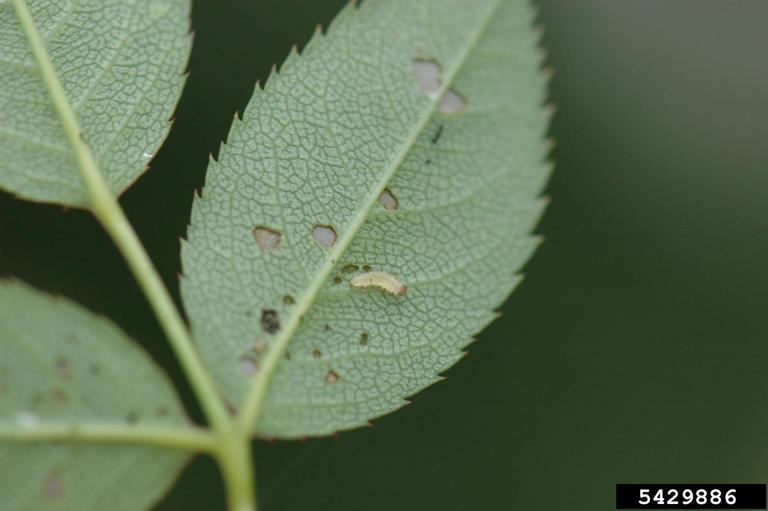
A roseslug and the windowpane feeding damage it's creating on the underside of a rose leaf
Photo by Brian Kunkel, Bugwood.org
Early windowpane damage can progress to extensive skeletonization as roseslugs continue feeding
Photo by Joe Boggs, The Ohio State University Cooperative Extension Service
Windowpane feeding damage from roseslugs on the upper surface of rose leaves
Photo by Joe Boggs, The Ohio State University Cooperative Extension Service
This bulletin from the Cooperative Extension Plant Health Clinic (Plant Disease Clinic) is an electronic update about diseases and other problems observed in our lab each month. Input from everybody interested in plants is welcome and appreciated.
TAYLOR KLASS is a plant pathologist /instructor and JASON PAVEL is a plant pathologist, both with the University of Arkansas System Division of Agriculture. They are located at the Plant Health Clinic, 2601 N. Young
Avenue, Fayetteville, Arkansas.
Acknowledgements: Gratitude is due to Sherrie Smith, the originator of the Plant Health Clinic newsletters. Her works are a vital source of reference for the information provided herein.
"This work is supported by the Crop Protection and Pest Management Program [grant no. 2017-70006- 27279/project accession no. 1013890] from the USDA National Institute of Food and Agriculture."
University of Arkansas, United States Department of Agriculture and County Governments Cooperating
Pursuant to 7 CFR § 15.3, the University of Arkansas System Division of Agriculture offers all its Extension and Research programs and services (including employment) without regard to race, color, sex, national origin, religion, age, disability, marital or veteran status, genetic information, sexual preference, pregnancy, or any other legally protected status and is an equal opportunity institution.
Arkansas Plant Health Clinic | 2601 N. Young Avenue | Fayetteville, AR 72204 US