Have the leaves on your azalea, oak, sycamore, serviceberry, or other landscape plants started looking dull and dusty, with their normal green color fading to a yellow, gray, or bronze appearance? Before you blame drought or a nutrient deficiency, take a closer look—especially at the underside of the leaves. Lace bugs may be the culprit!
Lace bugs are small, sap-feeding insects in the Tingidae family that can be found on a variety of trees and shrubs. They feed primarily on the undersides of leaves, sucking out plant juices and leaving behind a characteristic stippled or speckled appearance on the upper surface of the leaf. Heavy feeding can cause leaves to turn yellow or brown and, in some cases, drop prematurely.
The name “lace bug” comes from the delicate, lace-like appearance of the wings and body of the adults. Both adults and nymphs feed on plants, and several generations can occur during the growing season. Lace bugs are particularly noticeable during the hot summer months when populations can build up.
Although lace bug damage can look alarming, it usually does not cause serious long-term damage to healthy, established plants. However, this can be a different story for plants that are already stressed, newly planted or not yet fully established, or growing in conditions that are not ideal for them. For example, azaleas growing in full sun may be more susceptible to stress from heavy lace bug feeding than those growing in their preferred partially shaded environment. Natural enemies, including predatory insects and parasitic wasps, can also help keep populations in check. In the spring, spraying strong streams of water on the foliage can help to knock lace bug nymphs off before they cause too much damage. Make sure you water your trees and shrubs during periods of drought (even established trees and shrubs need this). Insecticide applications are not always necessary, particularly late in the season when plants have already produced much of their annual growth.
If treatment is warranted, remember that lace bugs feed on the undersides of leaves, so good coverage of the lower leaf surface is important. Always read and follow the pesticide label before applying an insecticide. Those who are applying insecticides to ornamentals commercially should reference page 249 of the current Insecticide Recommendations for Arkansas under ‘Lace Bug’ for insecticides registered for use against lace bugs in Arkansas. Home gardeners should reference page 280 of the current Insecticide Recommendations for Arkansas under ‘Lace Bug’ for similar information.
What to look for:
Yellow, bronze, or white stippling on the upper surface of leaves
Lace bug adults or nymphs on the underside of leaves
Small, dark spots of insect excrement on the underside of leaves
Shed skins from immature lace bugs
Fine, elaborate lace-like wings on adults
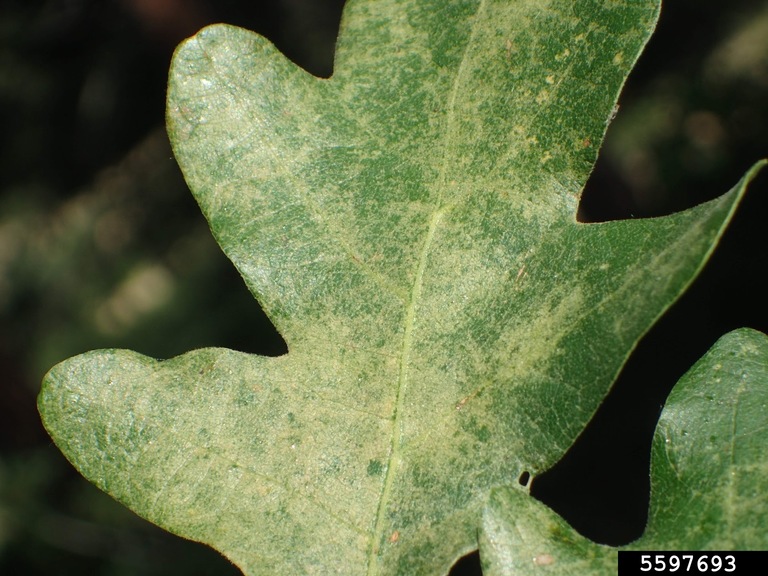
Stippling symptoms on an oak leaf
Photo by Melissa Schreiner, Colorado State University, Bugwood.org
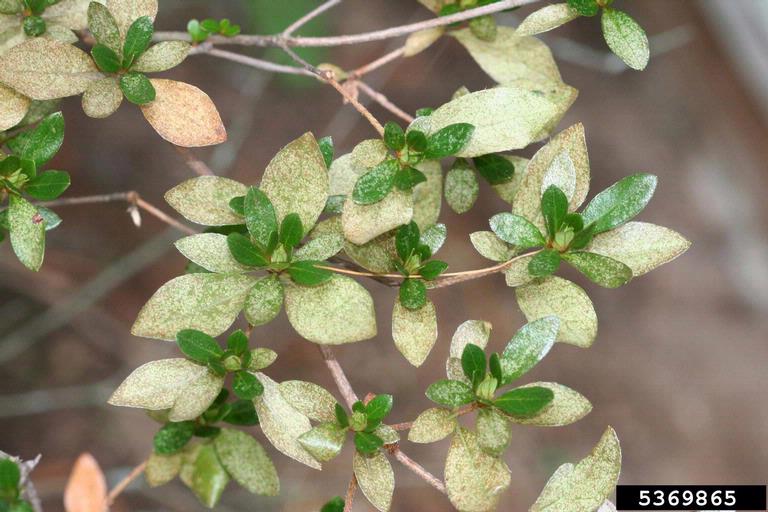
Stippling symptoms on azalea leaves
Photo by Whitney Cranshaw, Colorado State University, Bugwood.org
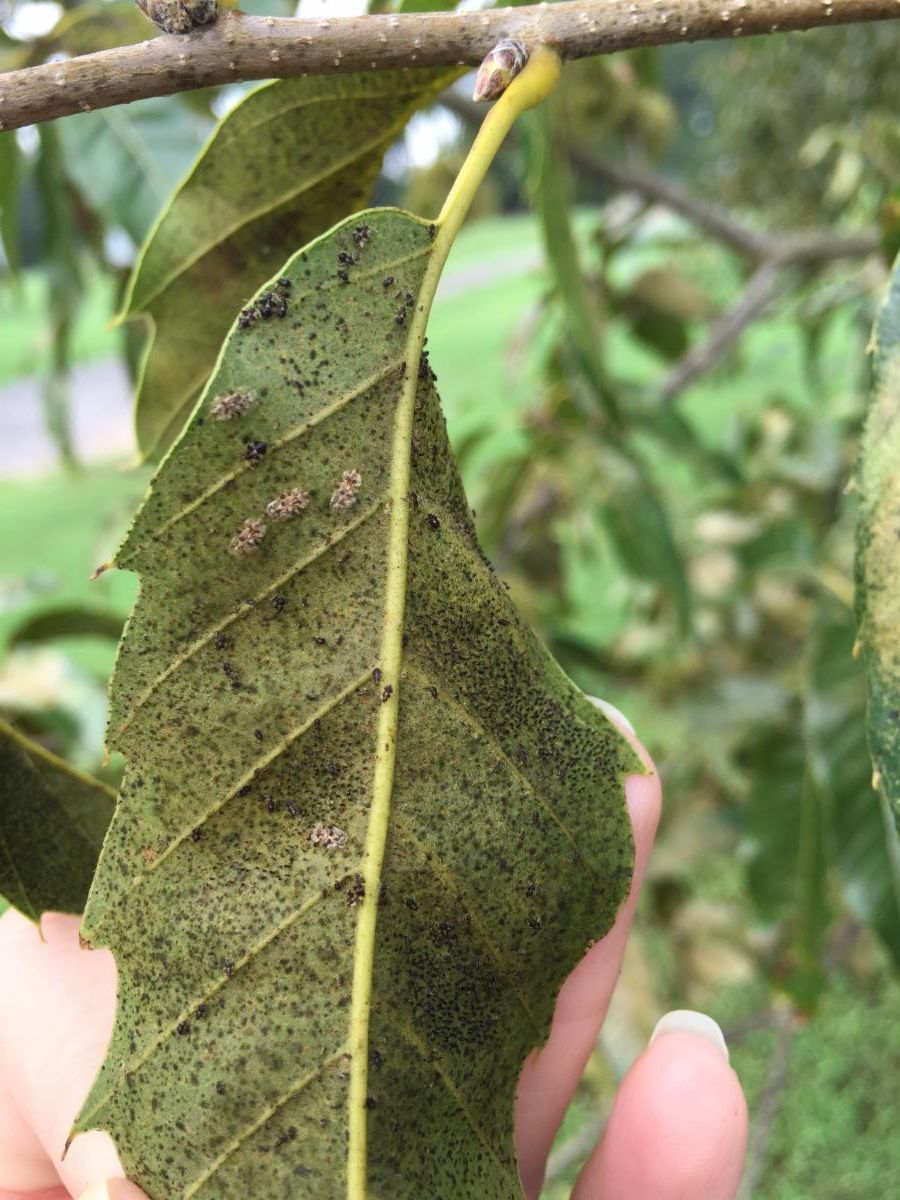
Oak lace bug eggs, nymphs, and adults on the back of an oak leaf
Photo by Jennifer Caraway, University of Arkansas Cooperative Extension Service
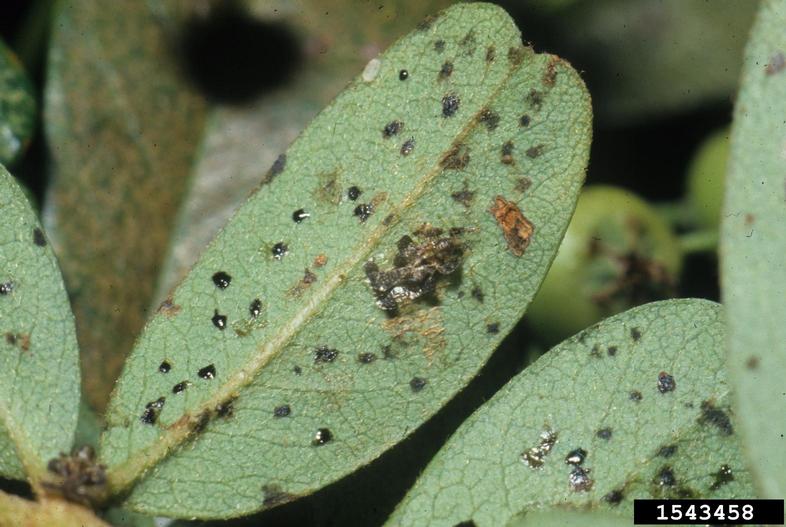
Adult hawthorn lace bugs with shiny black spots of frass
Photo by Jim Baker, North Carolina State University, Bugwood.org
Bitter Rot of Apple: When Apples Start Rotting on the Tree
Have you noticed dark, sunken spots developing on your apples as they begin to ripen? Bitter rot is a common fruit disease that can cause significant losses, particularly during the warm, humid conditions we experience during the summer in Arkansas.
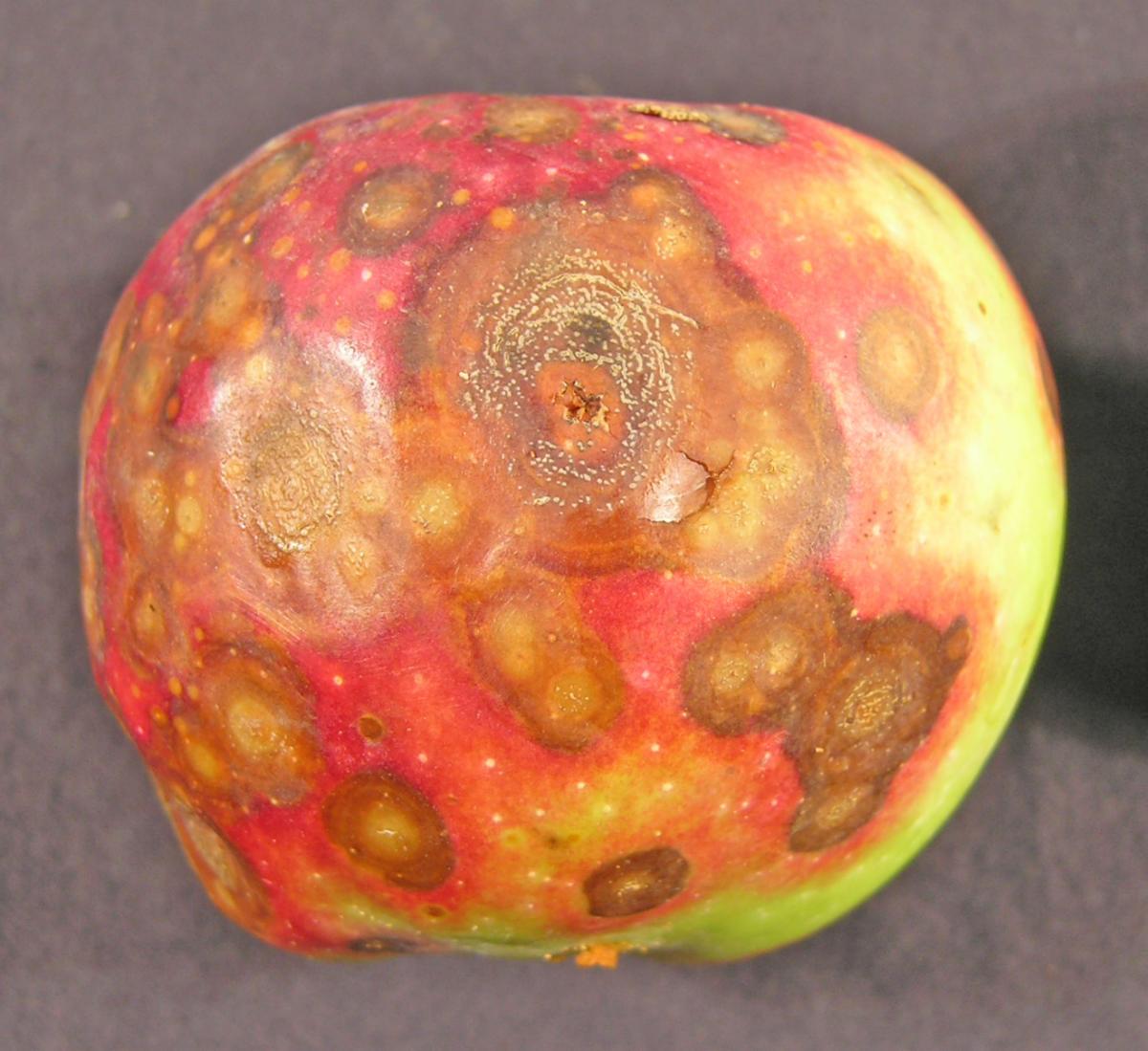
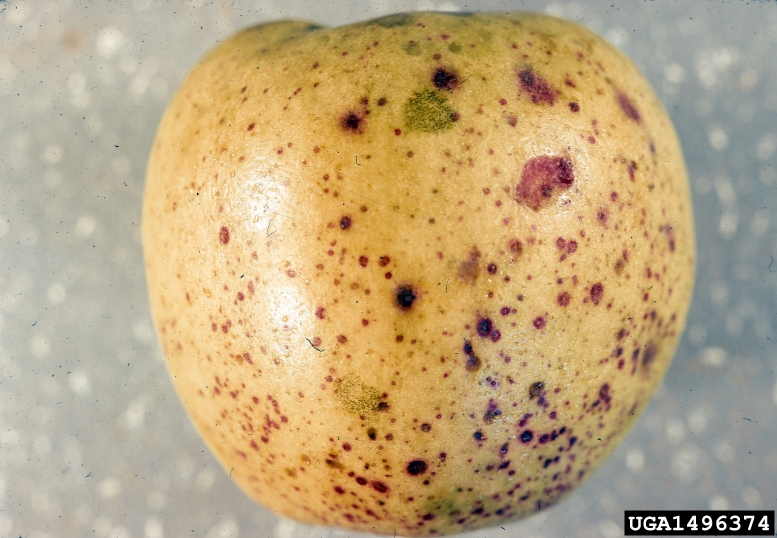
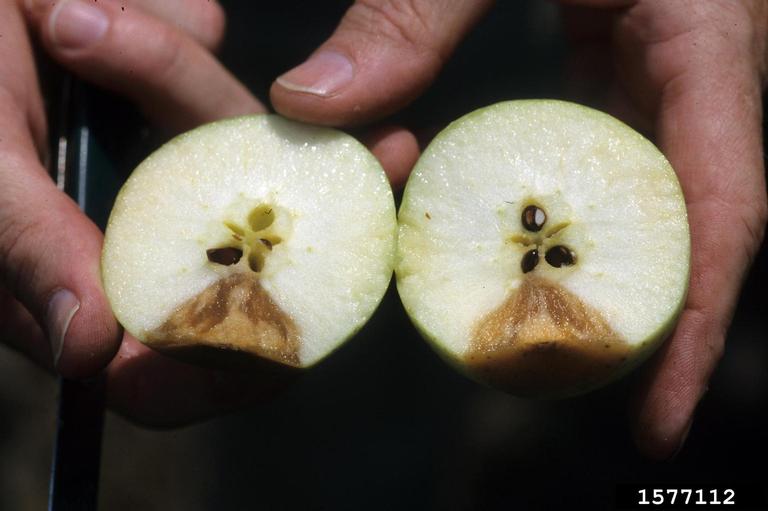
Bitter rot is caused by several species of the fungus Colletotrichum. The disease can begin as small, light-brown spots on the fruit, but the lesions quickly enlarge as the fruit matures. Eventually, the spots become sunken and develop concentric rings of small, dark fruiting bodies. Under warm, humid conditions, you may be able to see the pink or salmon-colored spores oozing out of the fruiting bodies, ready to spread the disease to additional fruit. When the fruit is cut open, a characteristic V-shaped area of rot can be seen in cross sections.
Bitter rot fungi can survive in infected or mummified fruit as well as in dead or diseased wood. These sources can produce spores that are spread by rain and splashing water, allowing new infections to occur throughout the growing season. Fruit wounds are not necessary for infection, as the bitter rot fungi can directly penetrate the fruit skin.
Once an apple is significantly infected, there is no way to reverse the rot. Management should focus on preventing new infections and reducing sources of disease. Remove and dispose of rotting or mummified fruit, prune out dead or diseased wood when appropriate, and maintain good air circulation in the canopy. Fungicides may be needed for effective management in susceptible orchards, but applications need to be made preventively and according to the product label. Commercial apple growers should reference pages 63 - 67 of the current Arkansas Plant Disease Control Products Guide for fungicides registered for use against bitter rot in Arkansas. Products available for use against bitter rot in a home orchard are more limited but include ‘Bonide Fruit Tree and Plant Guard Concentrate’ and ‘Safer Brand Garden Fungicide for Flowers, Fruit & Vegetables Concentrate’.
What to look for:
Small, brown spots on developing or ripening apples
Spots that enlarge and become sunken
Concentric rings of small, dark fruiting bodies within the lesions
Pink or salmon-colored spore masses under warm, humid conditions
V-shaped area of rot under sunken spot when apple is cut open
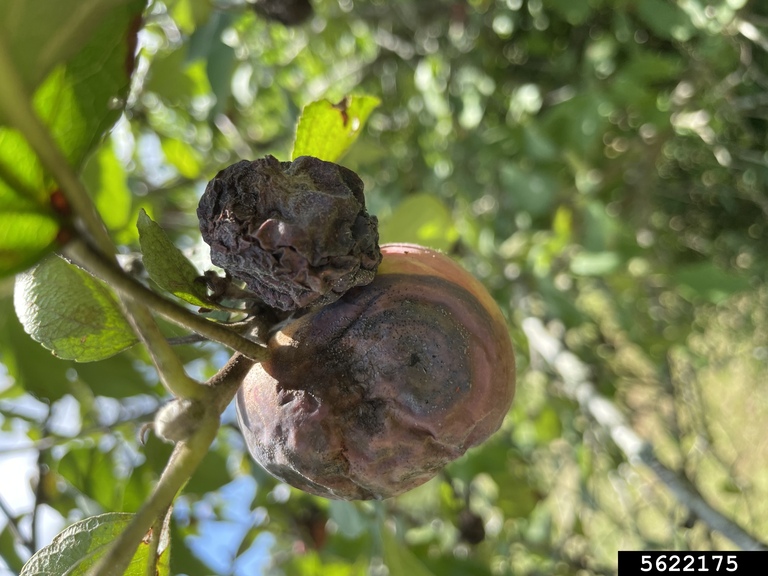
Rotten or mummified fruit remaining on the tree or ground
Apple showing advanced bitter rot lesions with concentric rings of fungal fruiting bodies
Photo by Sherrie Smith, University of Arkansas Cooperative Extension Service
Early stage bitter rot lesions on apple
Photo by University of Georgia Plant Pathology, Bugwood.org
Internal V-shaped area of rot characteristic of bitter rot
Photo by Gerald Holmes, Strawberry Center, Cal Poly San Luis Obispo, Bugwood.org
Advanced bitter rot with
mummified fruit
Photo by Edward Sikora, Auburn University, Bugwood.org
Gray Leaf Spot: Is Your Lawn Dying from Drought—or Disease?
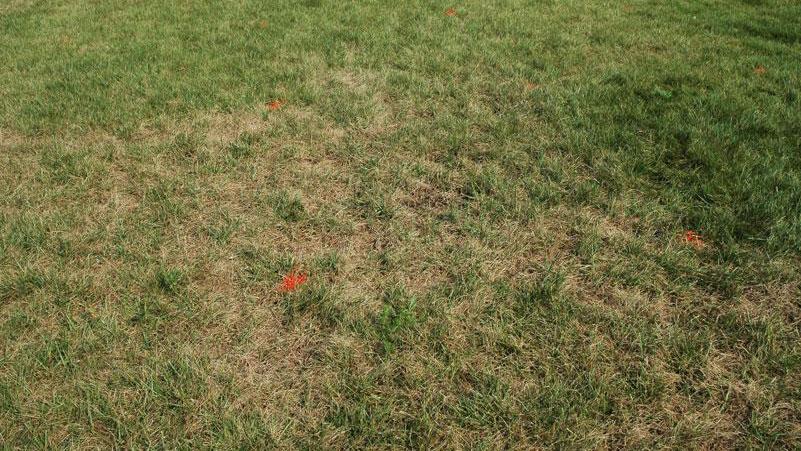
August heat can be hard on lawns, but drought isn't always responsible for a lawn that suddenly starts looking thin and brown. If you have St. Augustine grass, gray leaf spot should be on your radar. This fungal disease is most active during the hot, humid conditions of summer and can cause turf to develop a scorched or burned appearance.
Gray leaf spot is caused by the fungus Pyricularia grisea and is particularly important on St. Augustine grass. The disease can also occur on some cool-season grasses, including tall fescue and perennial ryegrass. P. grisea can infect other grasses as well, including grasses grown in pastures (for example, we recently diagnosed gray leaf spot in a crabgrass pasture).
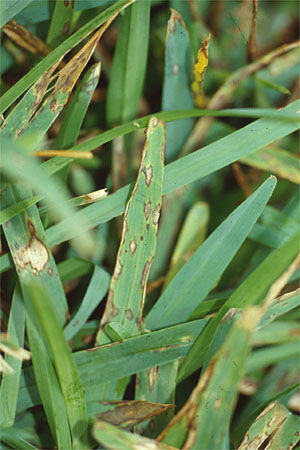
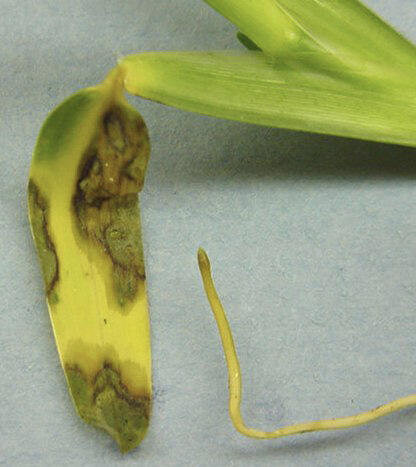
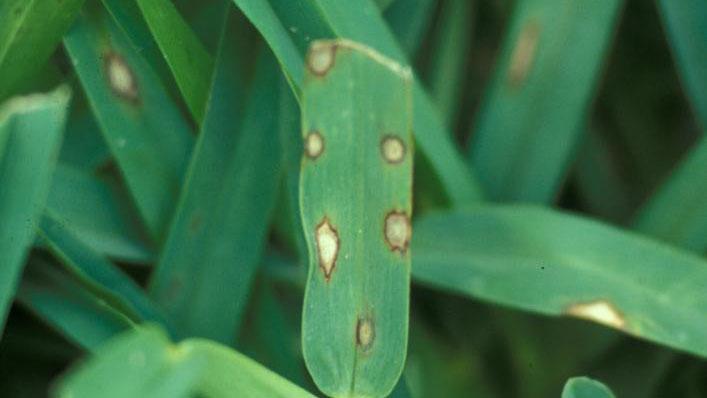
Symptoms begin as small, brown spots on individual grass blades. These spots enlarge into oval or elongated lesions that are tan to gray in the center and often have a darker border. As the number of lesions increases, infected leaves may die, giving affected areas of turf a thin, grayish or scorched appearance. Under favorable conditions, the fungus produces spores that give lesions a gray, fuzzy appearance.
Gray leaf spot is favored by hot temperatures, high humidity, and prolonged periods of leaf wetness. Excessive nitrogen fertilization can also increase disease severity. Frequent irrigation, particularly when foliage remains wet for long periods, can create ideal conditions for the disease. Gray leaf spot tends to have the largest impact on newly established turf/grasses.
Good turf management can help reduce disease pressure. Avoid excessive nitrogen fertilization during the summer, reduce thatch, reduce shaded areas of the lawn through tree and shrub pruning, and irrigate deeply and infrequently when needed. When watering is necessary, watering early in the morning allows grass blades to dry more quickly. Avoid mowing wet turf and minimize other stressors that can weaken the grass. Fungicides should be applied preventatively. Commercial applicators should reference page 131 of the current Arkansas Plant Disease Control Products Guide under ‘Gray Leaf Spot’ for fungicides registered for commercial use against gray leaf spot on lawns in Arkansas. Homeowners should reference page 134- 136 of the current Arkansas Plant Disease Control Products Guide under ‘Gray leaf spot’ for fungicides registered for home use against gray leaf spot on lawns in Arkansas. There are no fungicide options for pasture grasses that are both economical and labeled for use in Arkansas.
What to look for:
Oval or elongated tan-to-graylesions with darker margins
A gray, fuzzy appearance on lesions during humid or wet conditions
Turf that develops a thin, scorched, or burned appearance
Symptoms that develop during hot, humid weather
Damage that resembles drought stress but occurs even when adequate moisture is available
Gray leaf spot lesions on St. Augustine grass
Photo by Lane P. Tredway, University of Georgia, Athens, GA
Gray leaf spot stand symptoms
in a lawn
Photo by NC State Extension
Gray leaf spot causing lesions and leaf chlorosis on St. Augustine grass
Photo by Maria Tomaso-Peterson, PhD, Mississippi State University
Gray leaf spot lesions on St. Augustine grass
Photo by NC State Extension
This bulletin from the Cooperative Extension Plant Health Clinic (Plant Disease Clinic) is an electronic update about diseases and other problems observed in our lab each month. Input from everybody interested in plants is welcome and appreciated.
TAYLOR KLASS is a plant pathologist/instructor and JASON PAVEL is a plant pathologist, both with the University of Arkansas System Division of Agriculture. They are located at the Plant Health Clinic, 2601 N. Young
Avenue, Fayetteville, Arkansas.
Acknowledgements: Gratitude is due to Sherrie Smith, the originator of the Plant Health Clinic newsletters. Her works are a vital source of reference for the information provided herein.
"This work is supported by the Crop Protection and Pest Management Program [grant no. 2017-70006- 27279/project accession no. 1013890] from the USDA National Institute of Food and Agriculture."
University of Arkansas, United States Department of Agriculture and County Governments Cooperating
Pursuant to 7 CFR § 15.3, the University of Arkansas System Division of Agriculture offers all its Extension and Research programs and services (including employment) without regard to race, color, sex, national origin, religion, age, disability, marital or veteran status, genetic information, sexual preference, pregnancy, or any other legally protected status and is an equal opportunity institution.
Arkansas Plant Health Clinic | 2601 N. Young Avenue | Fayetteville, AR 72204 US