Tomato Pith Necrosis: A Stress-Related Bacterial Disease of Greenhouse and Field Tomatoes
Is your tomato plant suddenly wilting? Have dark brown streaks and cracks developed along the stem? When the stem is cut, do you see internal discoloration? Then tomato pith necrosis may be the culprit. This bacterial disease has shown up in tomato samples submitted to the Arkansas Plant Health Clinic. Tomato pith necrosis is caused by several soil-borne species of bacteria, most commonly those from the genus Pseudomonas. These bacteria are common inhabitants of the environment and in this case, they are taking advantage of tomato plants that are under stress rather than infecting healthy, vigorous plants.
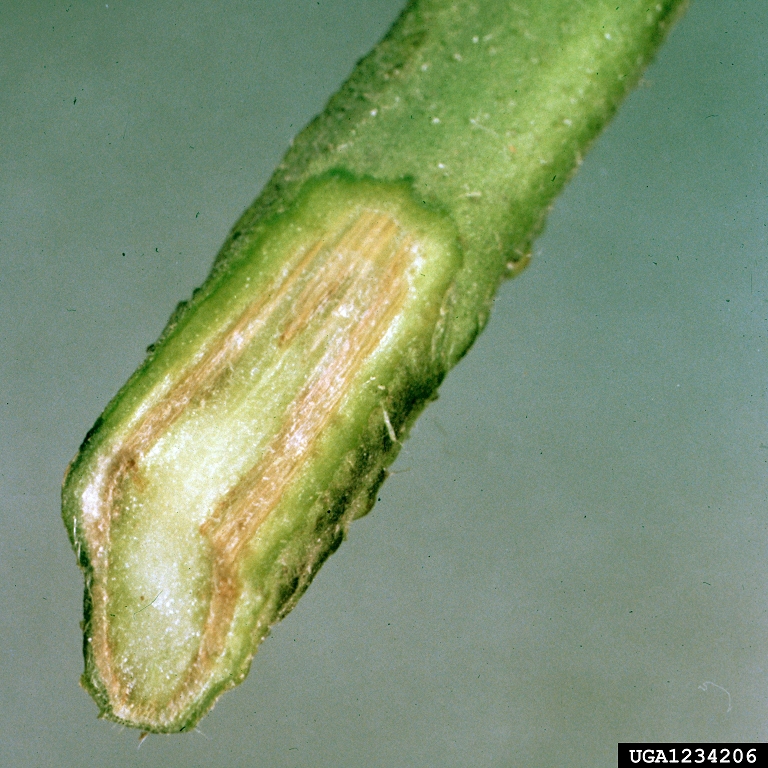
Tomato pith necrosis most often develops during cool, cloudy weather and periods of rapid plant growth, especially as the first groupings of fruit reach the mature green stage. Excess nitrogen fertilization, high humidity, and large differences in day and nighttime temperatures can also increase disease severity. The bacteria enter plants through natural openings or small wounds and colonize the stem pith—the white, spongy tissue in the center of the stem. As the disease progresses, the pith becomes dark brown and either distinctly chambered or hollow, weakening the stem and reducing the plant's ability to move water. Severely affected plants may lodge over or die prematurely.
There are no bactericides that effectively control tomato pith necrosis once symptoms develop. Management focuses on reducing plant stress and creating conditions that discourage disease development. Avoid excessive nitrogen applications, especially early in the season, and maintain consistent irrigation to prevent cycles of drought stress followed by rapid growth. Improving air circulation by proper plant spacing and pruning can help reduce humidity around plants. Avoid wounding plants and always be sure to adequately disinfest equipment and tools used in the field, high tunnel, or garden. Remove symptomatic plants. Thankfully, this disease does not tend to rapidly spread to nearby plants, unlike some other tomato diseases.
What to look for:
Wilting or collapse of individual plants despite healthy root systems.
Dark brown discolorationinside the middle of the stem when cut lengthwise.
Hollow orchambered stem pith.
Dark streaksor lesions on the stem.
Abundant adventitious (aerial) roots developing along the stem.
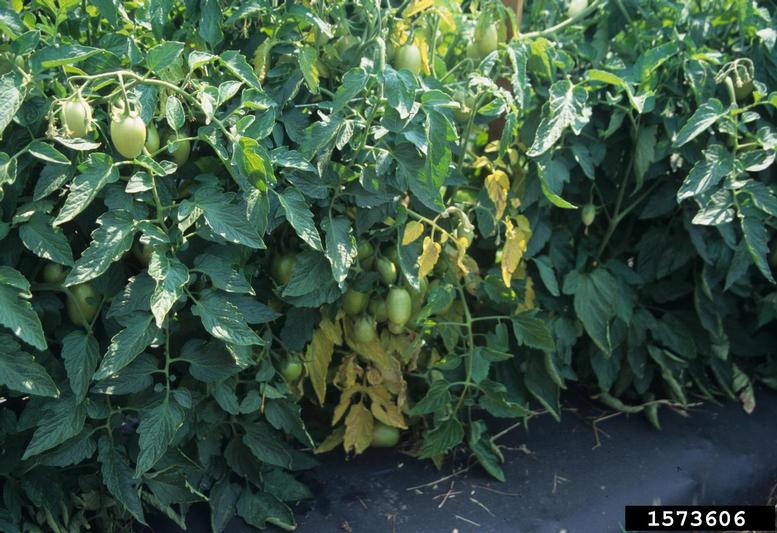
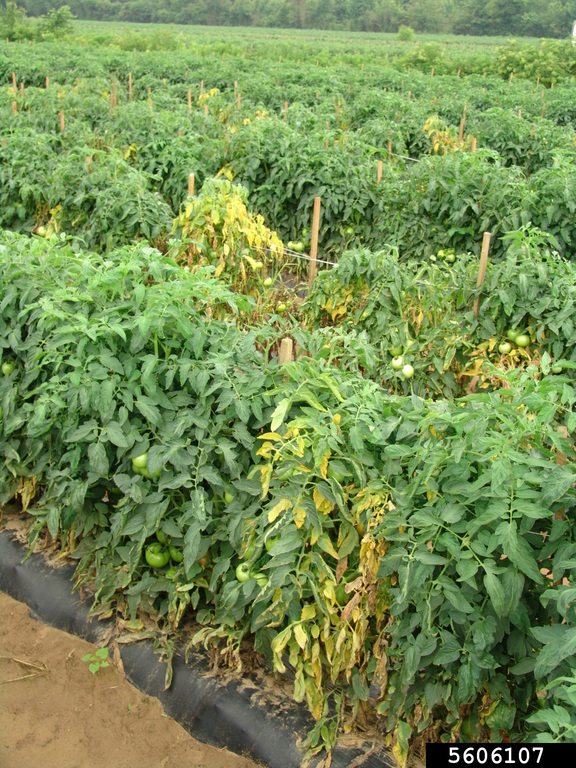
External symptoms of tomato pith necrosis (yellowing and wilting of foliage)
Photo by Gerald Holmes, Strawberry Center, Cal Poly San Luis Obispo, Bugwood.org
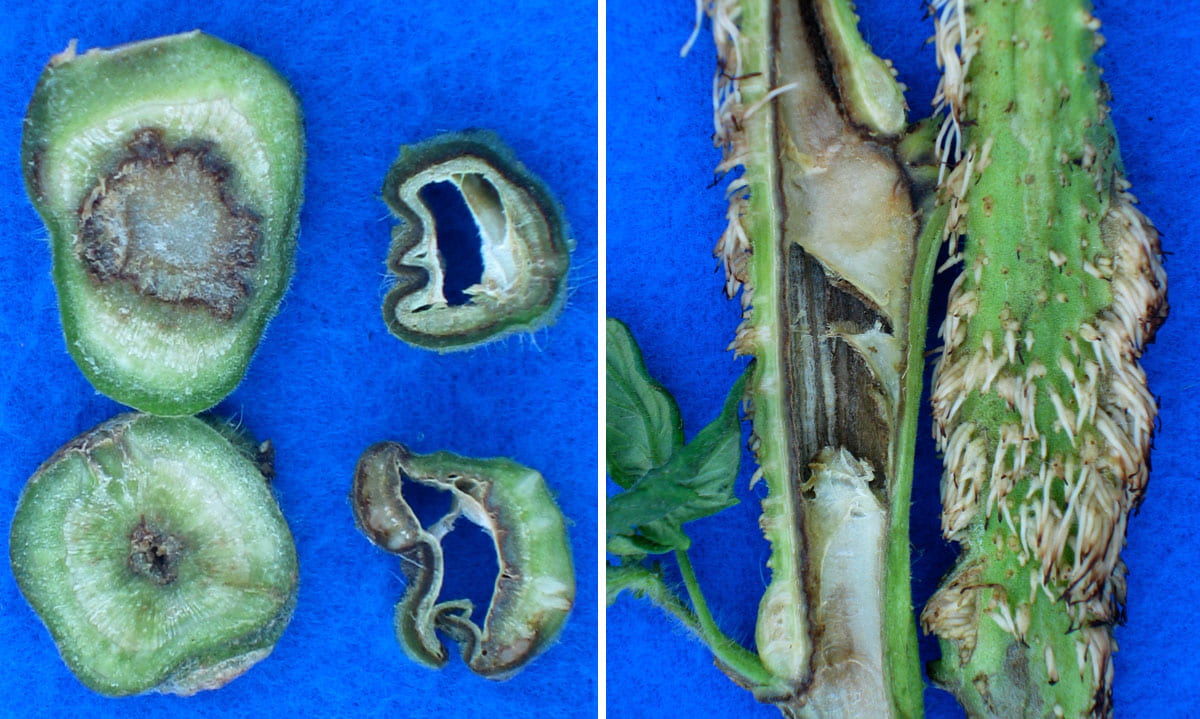
Tomato pith necrosis causing a degraded pith and adventitious roots on the stem
Photo by Cornell Long Island Horticultural Research & Extension Center
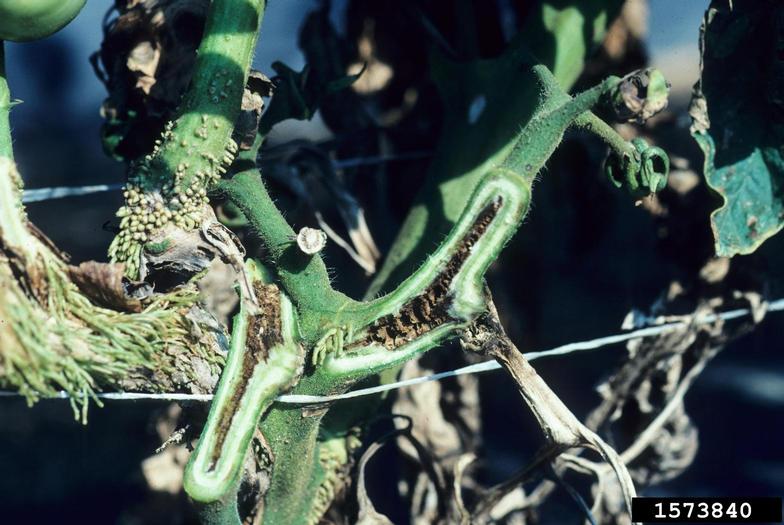
Discolored and chambered pith of a tomato plant with adventitious roots growing out of the stem
Photo by Gerald Holmes, Strawberry Center, Cal Poly San Luis Obispo, Bugwood.org
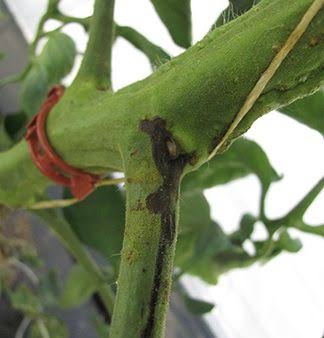
Dark brown streaks on a tomato stem as a result of tomato pith necrosis
Photo by Dan Egel, Purdue University
Southern Blight: A Soilborne Disease That Thrives in the Arkansas Summer Heat
Southern blight occurs during the heat of summer and can affect hundreds of plant species, including vegetables, annuals, perennials, and woody ornamentals. Common plants impacted by southern blight include tomato, pepper, peanut, hosta, daylily, phlox, and coneflower. This disease is caused by the soilborne fungus Agroathelia rolfsii (formerly Sclerotium rolfsii), which thrives during periods of hot temperatures and high humidity, particularly in moist, acidic soils.
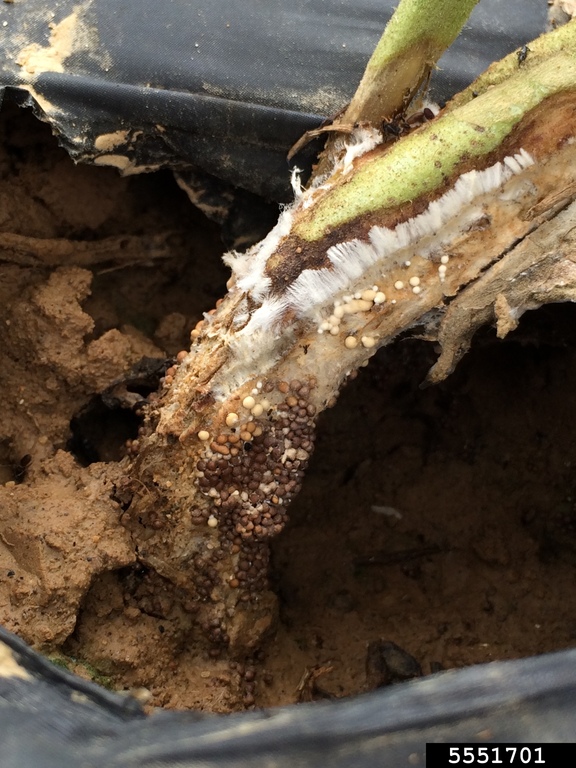
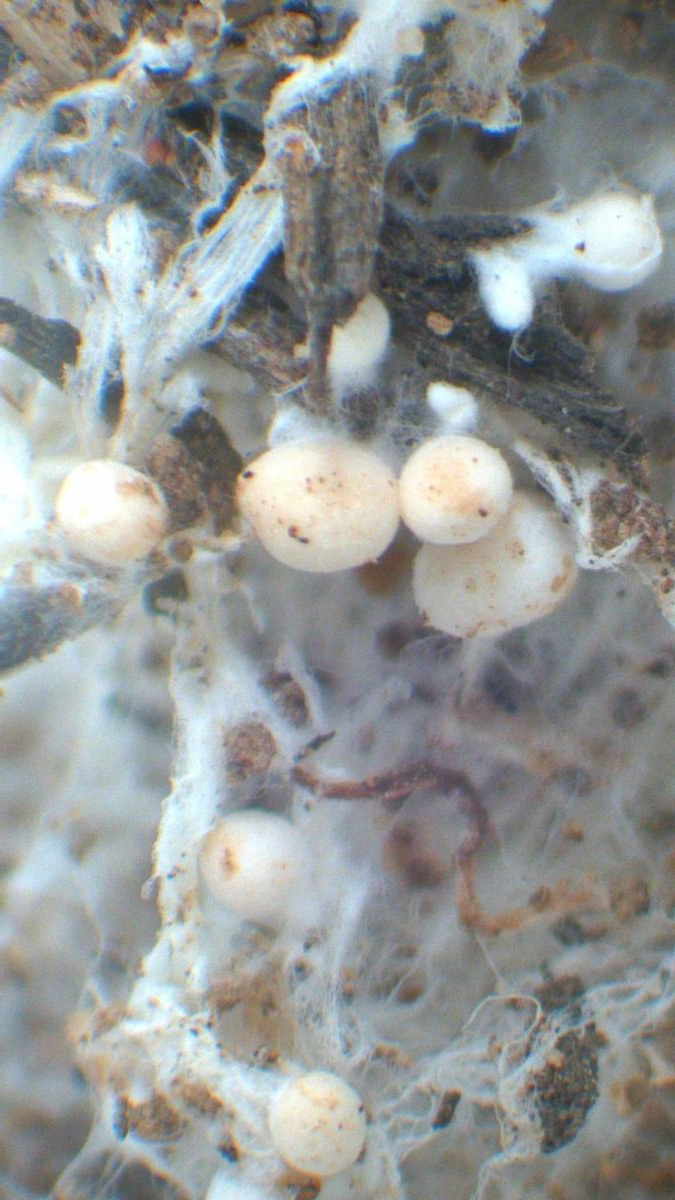
The fungus attacks plants at or just below the soil line, causing a dark lesion to develop on the crown followed by rapid decay of the stem tissue. Plants that appear healthy one day may suddenly wilt and collapse the next because the stem has been girdled at the crown. A white, cottony fungal growth often develops around the base of the plant, especially during moist conditions. As the disease progresses, the fungus produces numerous small, round survival structures called sclerotia. These structures are about the size of a mustard seed and are initially white/tan in color before turning dark brown; they allow the fungus to survive in the soil for many years.
Unfortunately, once a plant develops southern blight, there is no cure. Promptly remove infected plants (including as much of the root system and surrounding soil as practical) to reduce the number of sclerotia left behind. Deep plow or turn over the surrounding soil to bury any remaining sclerotia, which will lessen their lifespan. Avoid moving contaminated soil on tools, shoes, or equipment. Plants that are not susceptible to southern blight should be planted in the affected area for several seasons (e.g., ornamental grasses, larger woody ornamentals, grain crops). Good sanitation, improving drainage, reducing excessive mulch piled against stems, and maintaining healthy plants are the best long-term management strategies. If you are a commercial grower and have struggled with southern blight in the past, preventative fungicides are available. Reference the current Arkansas Plant Disease Products Guide for southern blight disease on your specific crop to see a full list of products.
What to look for:
Sudden wilting and collapse of otherwise healthy plants.
Brown, water-soaked decay at the stem base near the soil line.
White, cottony fungal growth on the lower stem or surrounding soil.
Small, round sclerotia that resemble mustard seeds, turning from white to tan or red-brown.
Disease developing during hot, humid weather, especially in mid- to late summer.
Tomato stem showing southern blight fungal growth and sclerotia
Photo by Rebecca A. Melanson, Bugwood.org
Southern blight white fungal growth and white/tan sclerotia
Photo by Jason Pavel, University of Arkansas Cooperative Extension Service
Bagworms are Back: Watch for These Hungry Defoliators
Bagworms (Thyridopteryx ephemeraeformis) are a common summertime pest of many landscape trees and shrubs in Arkansas. While they are best known for damaging arborvitae, juniper, cedar, spruce, pine, and other evergreens, bagworms also feed on numerous deciduous trees and shrubs, including maple, sycamore, oak, and elm. The caterpillars construct distinctive spindle-shaped bags/cocoons from silk and pieces of the host plant, allowing them to blend in with the foliage and making infestations easy to overlook until significant feeding has occurred.
Young bagworms hatch in late spring to early summer and begin feeding immediately. As they grow, they enlarge the protective bags that they carry with them by adding leaves, needles, and twigs from the host plant. Feeding by young larvae causes small holes and notches in needles/leaves, which can result in brown tips of branches. Larger larvae can consume entire needles or leaves, and heavy infestations may completely defoliate small trees and shrubs. The silk of mature bags can also sometimes girdle branches. Deciduous plants often recover from the defoliation as they can produce new foliage, but severe feeding can weaken them and make them more susceptible to other stresses. Evergreen trees and shrubs are much less tolerant of defoliation because they cannot readily replace lost foliage and may suffer permanent injury or die after heavy infestations.
Early detection is the key to successful management. If scouting for bagworms, moving a branch out horizontally can make it easier to spot the younger bags. Small larvae are much easier to control with insecticides than older larvae, which become increasingly protected within their bags. Commercial growers should reference pages 245 – 246 of the current Insecticide Recommendations for Arkansas under ‘Bagworms’ for insecticides registered for use against young bagworms in Arkansas. Home gardeners should reference page 278 of the current Insecticide Recommendations for Arkansasunder ‘Bagworms’ for similar information. Hand-picking bags from lightly infested plants during the fall, winter, or early spring can also greatly reduce next year's population. Once the bags are removed, destroy them by putting them in a bucket of soapy water rather than leaving them on the ground; this step is vital as each bag may contain hundreds of eggs that will hatch the following season.
What to look for:
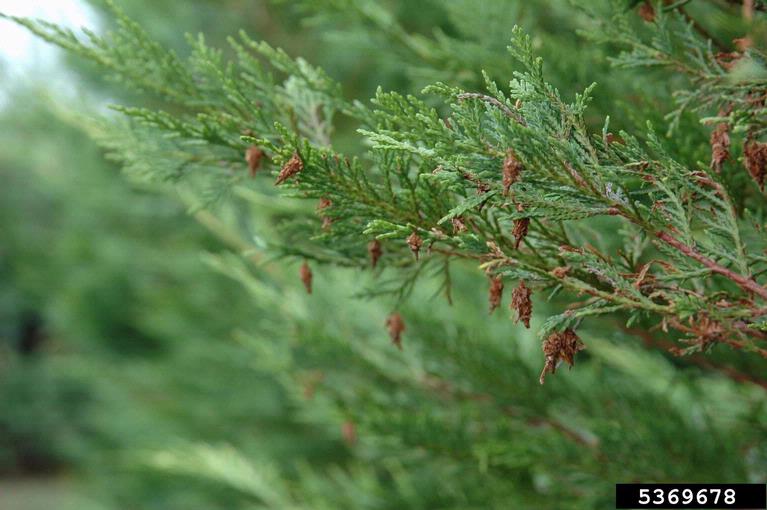
Small, spindle-shaped bags hanging from twigs and branches. The bags are camouflaged with host plant material and look like Christmas ornaments hanging from the trees.
Chewed leaves, brown needles, or missing needles, especially on evergreens.
Browning or thinningof evergreen foliage.
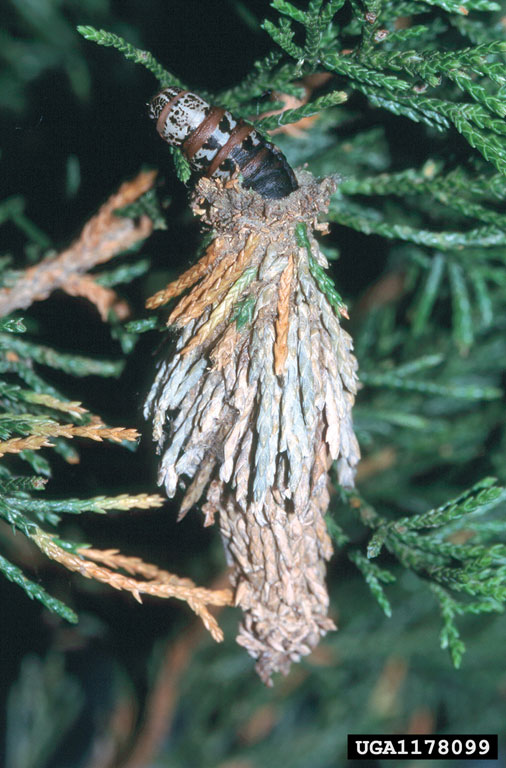
Caterpillars extending their heads and legs from the top of the bag while feeding or moving.
Bagworms hanging from an evergreen branch in the landscape
Photo by Brian Kunkel, Bugwood.org
A bagworm with its camouflaged bag
Photo by Connecticut Agricultural Experiment Station, Bugwood.org
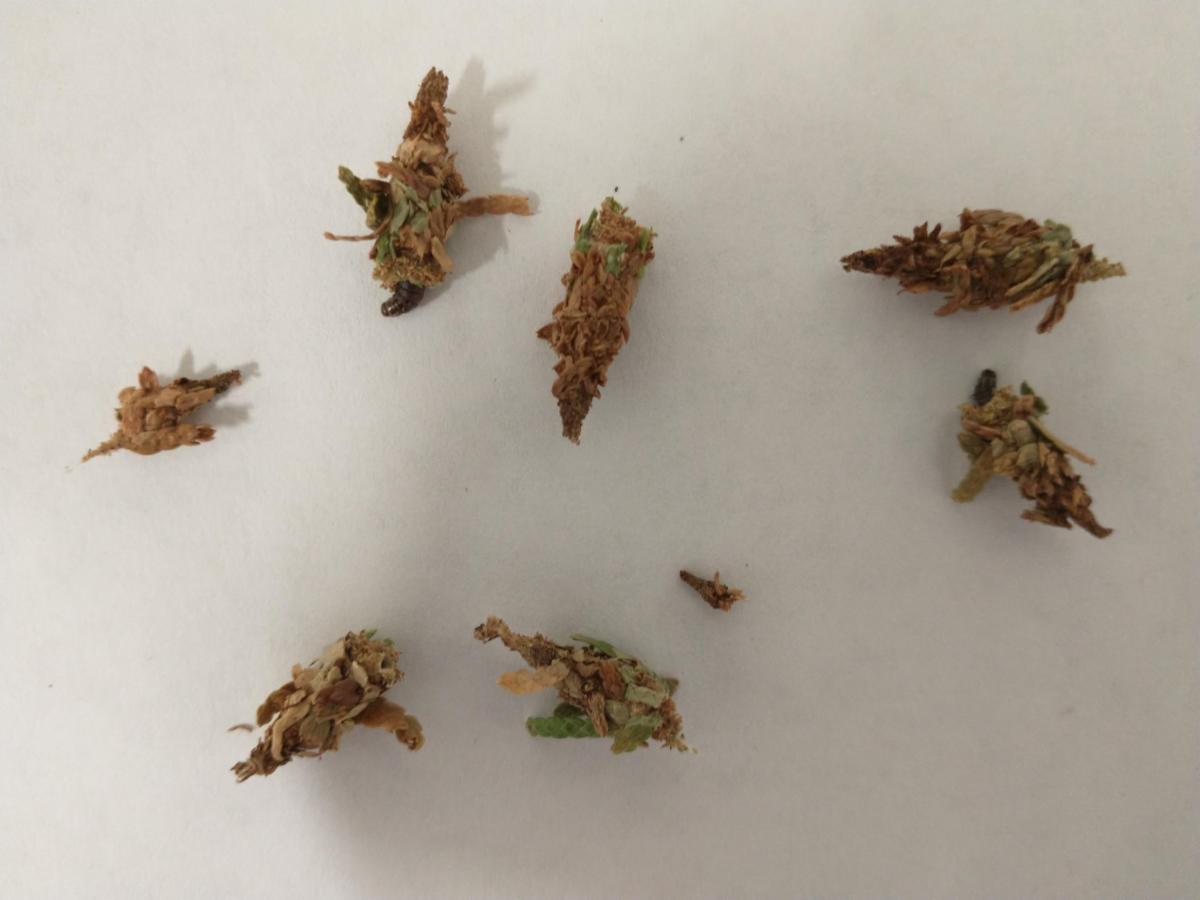
Bagworms with their bags that have been removed from a tree
Photo by Jason Pavel, University of Arkansas Cooperative Extension Service
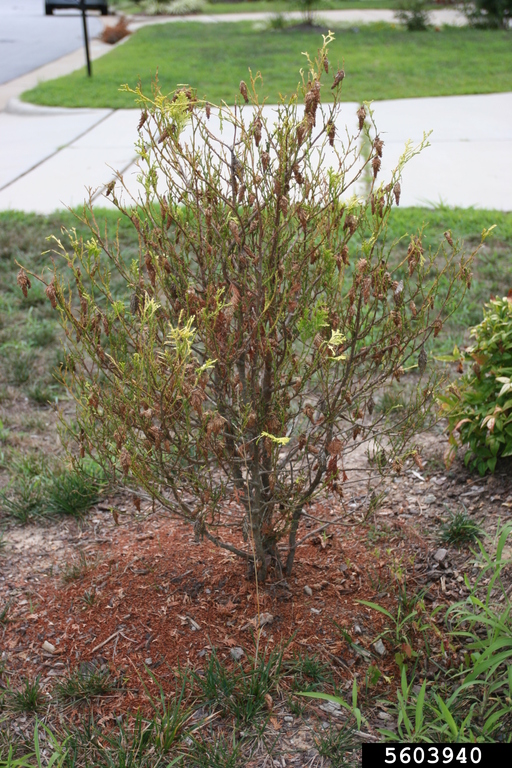
Severe damage from bagworms
Photo by Gerald Holmes, Strawberry Center, Cal Poly San Luis Obispo, Bugwood.org
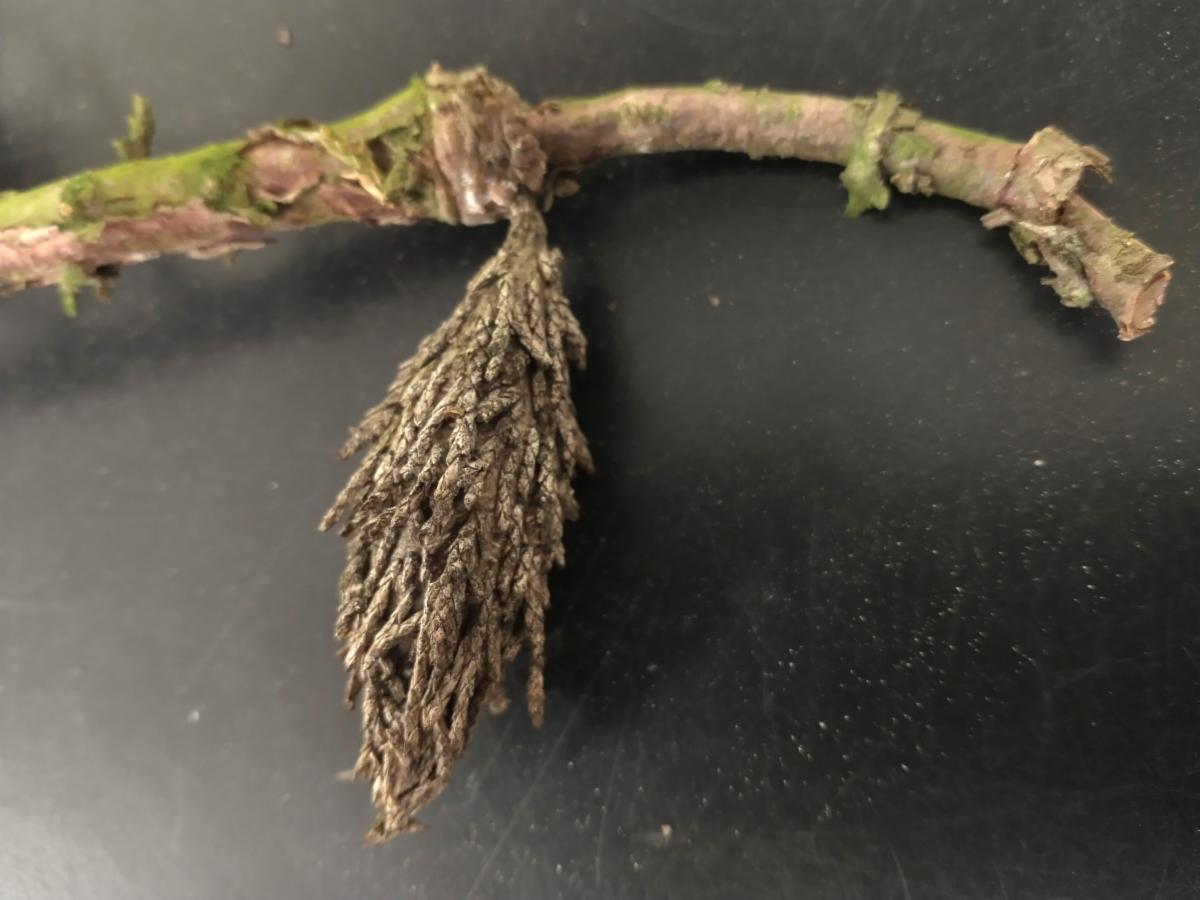
Bagworms can girdle tree and shrub branches
Photo by Jason Pavel, University of Arkansas Cooperative Extension Service
Fusarium Wilt: A Soilborne Fungal Disease That Blocks a Plant's Water Supply
Fusarium wilt is a destructive soilborne disease that affects a wide range of vegetables, fruits, and ornamental plants. At the Arkansas Plant Health Clinic, we regularly diagnose Fusarium wilt on crops such as tomato, watermelon, strawberry, and many other hosts. The disease is caused by specialized forms of the fungus Fusarium oxysporum, many of which are host specific. Once established in a field or garden, the fungus can survive in the soil for many years, making it a very difficult plant disease to manage.
The fungus infects plants through the roots and moves into the water-conducting tissue (xylem), where it clogs up and restricts water movement throughout the plant. Early symptoms often begin as yellowing of older leaves, followed by wilting during the hottest part of the day. Initially, plants may recover overnight, but as the disease progresses, the wilting becomes permanent. One of the most characteristic symptoms is a distinct brown discoloration of the vascular tissue inside the stem or root crown when cut open. Because the fungus lives inside the plant's vascular system and is a systemic disease, fungicides are ineffective once infection has occurred.
Management of Fusarium wilt relies on prevention rather than treatment. Plant resistant varieties whenever they are available, as resistance is one of the most effective management tools for many crops. Practice good sanitation by removing infected plants and cleaning soil from tools, boots, and equipment to avoid spreading the fungus. Crop rotation can help reduce disease pressure for some hosts. Fusarium wilt thrives in warm soil temperatures, acidic soils, and high humidity. Consider getting your soil pH tested and raise the pH if your soil is acidic. Reduce stress on the plants as much as possible and do not apply excessive nitrogen.
What to look for:
Yellowingof older leaves, often beginning on one side of the plant or stem/leaf.
Wiltingduring the heat of the day and recovery overnight with the wilting eventually becoming permanent.
Brown discolorationof the vascular tissue inside stems or crowns when cut open.
Stunted growth and gradual decline.
Symptoms occurring on scattered individual plants rather than all plants in an area.
Yellowing and wilting of tomato leaves caused by Fusarium wilt
Photo by Gerald Holmes, Strawberry Center, Cal Poly San Luis Obispo, Bugwood.org
Vascular browning of a tomato stem infected with Fusarium
Photo by Clemson University - USDA Cooperative Extension Slide Series, Bugwood.org
This bulletin from the Cooperative Extension Plant Health Clinic (Plant Disease Clinic) is an electronic update about diseases and other problems observed in our lab each month. Input from everybody interested in plants is welcome and appreciated.
TAYLOR KLASS is a plant pathologist/instructor and JASON PAVEL is a plant pathologist, both with the University of Arkansas System Division of Agriculture. They are located at the Plant Health Clinic, 2601 N. Young
Avenue, Fayetteville, Arkansas.
Acknowledgements: Gratitude is due to Sherrie Smith, the originator of the Plant Health Clinic newsletters. Her works are a vital source of reference for the information provided herein.
"This work is supported by the Crop Protection and Pest Management Program [grant no. 2017-70006- 27279/project accession no. 1013890] from the USDA National Institute of Food and Agriculture."
University of Arkansas, United States Department of Agriculture and County Governments Cooperating
Pursuant to 7 CFR § 15.3, the University of Arkansas System Division of Agriculture offers all its Extension and Research programs and services (including employment) without regard to race, color, sex, national origin, religion, age, disability, marital or veteran status, genetic information, sexual preference, pregnancy, or any other legally protected status and is an equal opportunity institution.
Arkansas Plant Health Clinic | 2601 N. Young Avenue | Fayetteville, AR 72204 US