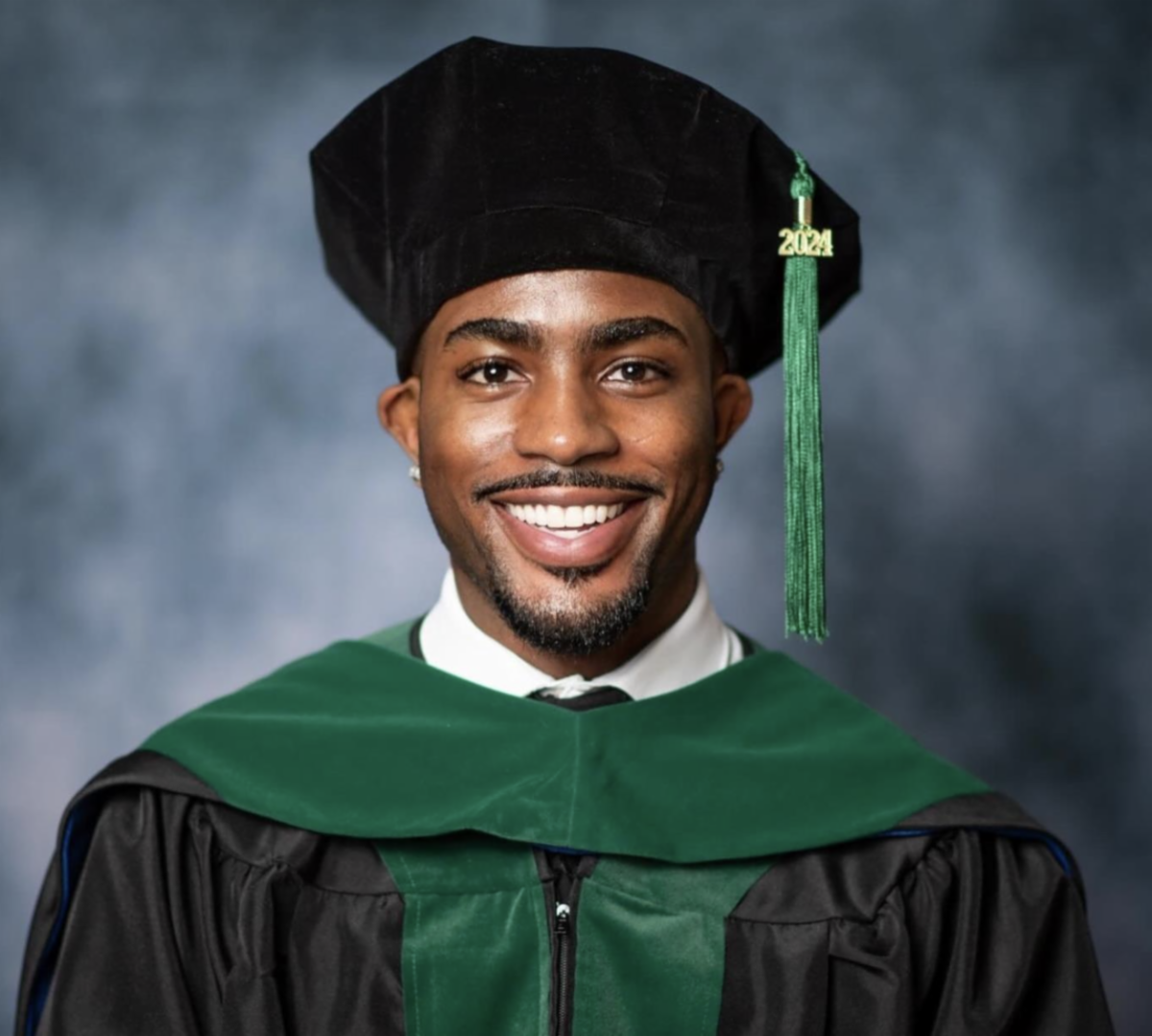
Army Captain and Second-year Psychiatry Resident at Tripler Army Medical Center in Honolulu, Hawaii: CPT Meet Tony Hansberry, II, MD, USA
In recognition of National Veterans and Military Families Month, GlobalMindED proudly spotlights CPT Tony D. Hansberry, II, MD, USA, an Army Captain and second-year psychiatry resident at Tripler Army Medical Center in Honolulu, Hawaii. Dr. Hansberry is dedicated to supporting the mental health and well-being of service members and their families—championing care that is both compassionate and culturally responsive. As a Black physician in a field where representation remains limited, he stands at the intersection of service, science, and advocacy, working to expand access to mental health resources and reduce stigma within military and minority communities. His leadership reflects a deep belief that empathy is transformative and that healing the mind is essential to strengthening the heart of our nation.
Tell us about your personal journey.
My journey began in northern Florida, where I was raised by a minister and a nurse. Service and compassion were part of everyday life, and I was inspired by my mother and grandmother, who spent decades caring for patients in medicine. A pivotal early experience came at age 14, when I attended a medical magnet high school program and completed a research project on surgical suturing techniques for closing a vaginal cuff after hysterectomy at a hospital simulation center. That project opened doors I’d never imagined, affirming both my curiosity and my capacity to contribute meaningfully to medicine at a young age.
I earned my Bachelor of Science in Chemistry (with a minor in Biology) from Florida A&M University, followed by a Master’s in Interdisciplinary Medical Sciences from the University of South Florida. I later graduated from Morehouse School of Medicine in Atlanta, a place that strengthened my commitment to equity and culturally attuned care.
Today, my work is rooted in the belief that healing is both clinical and deeply human. I carry a deep awareness of representation and the importance of creating spaces where patients feel safe, seen, and understood.
What pivotal experiences shaped your current path?
Although the surgical research project I completed at age 14 affirmed that I belonged in medicine, I was unaware of the persistence and sacrifice required to become a first-generation physician. Before medical school, I spent several years working in a range of roles from banking to retail, car rental, teaching middle school science, and supporting surgeons in the operating room. At the time, I saw these simply as ways to move forward. I now realize that each experience helped me learn to connect with people from different backgrounds, listen deeply, and build trust. These skills became central to my medical training and ultimately led me to psychiatry.
What are the most valuable lessons you’ve learned through your work?
One of the most meaningful lessons I’ve learned is to approach other’s differences with curiosity rather than judgment. Working with soldiers and veterans has especially shaped this understanding. Their resilience and courage are profound, and it is a privilege to sit with them as they share experiences that are often heavy, complex, and deeply personal. Like my journey to becoming a physician, many of my patients remind me that healing rarely follows a straight line.
What drives your desire to contribute and make a difference?
It’s simple: I want to leave the world better than I found it. Working in mental health allows me to do that, especially at a time where stigma surrounding mental health has lessened. I am also motivated by the opportunity to serve as an example for others. Representation and culturally informed care matter. If I can encourage even one person to believe that they are worthy of care or inspire someone to pursue a path they once thought was out of reach, then I know I am contributing to real and meaningful change. Ultimately, I want people to feel that their mental health is valued, valid, and deserving of support.
What are your highest hopes for democracy to unite, uplift, and inspire?
Democracy should affirm that health care is not a privilege, but a basic human right. It should encourage intellectual curiosity, respect science and medicine, and invest in research and community well-being. Public policy should model the foundational ethical pillars of healthcare: autonomy, beneficence, non-maleficence, and justice. Democracy should uplift humanity, not divide it. At its best, democracy protects the rights and dignity of all people, regardless of socioeconomic background, religion, gender, sexuality, or immigration status.
How can GlobalMindED support leaders like yourself in achieving your goals and advancing your aspirations?
At a time when we are seeing a rise in anti-intellectualism and renewed challenges to social rights that have long protected and uplifted marginalized communities, GlobalMindED continues to support leaders by elevating diverse voices, promoting mentorship, and advocating for equitable access to resources and healthcare. In doing so, GlobalMindED inspires a new generation to not only imagine a healthier and more just society, but to actively shape it.
Contact Tony Hansberry:
LinkedIn
|