|
Dear Mayor Mamdani,
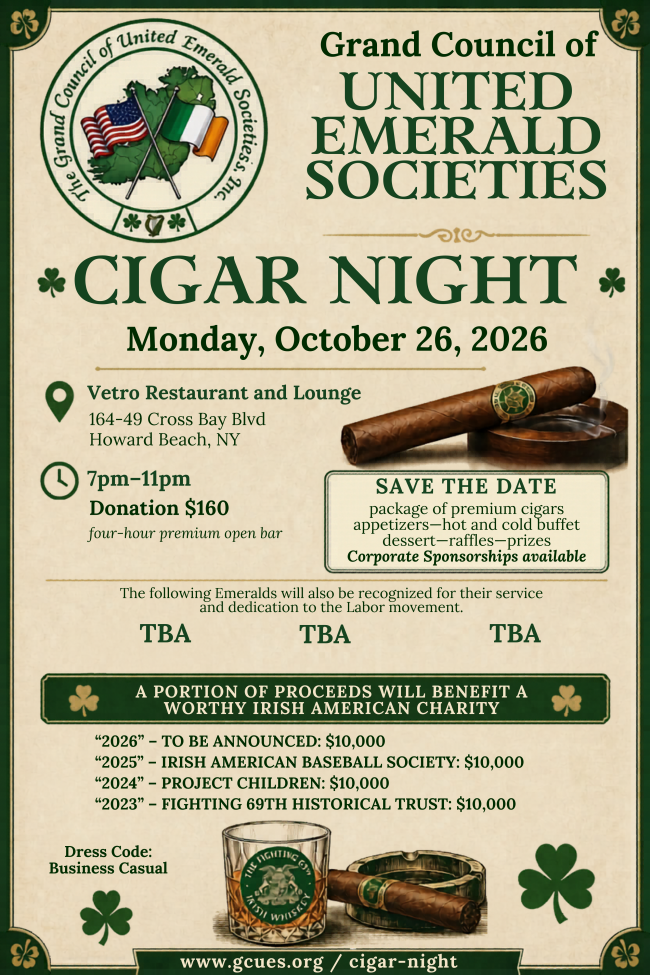
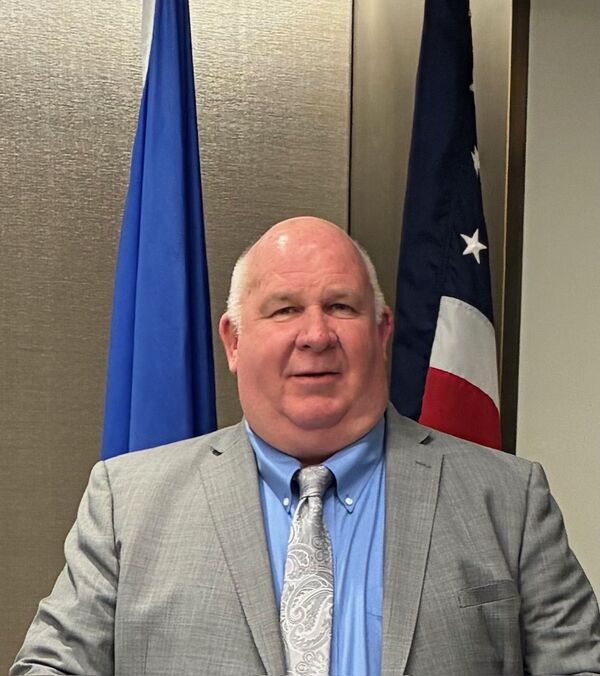
My name is Brian J. Sharkey and I retired as a Captain from the New York City Correction Department on March 1, 2003, after twenty years of service. I’m also a Past President of the NYCD Emerald Society and the Grand Council of United Emerald Societies Inc. Currently, I serve as the Historian of both organizations.
I was born and raised in the Rockaway Beach section of Queens. The Mitchell-Lama apartment building complex of three buildings Dayton Towers West, where I was raised, was often referred to as the Irish Projects even though there were people of different nationalities and creeds. There was a large Jewish community that rented one of the community rooms in the lobby of my building to serve as their Temple. The buildings were built at the site of “Irish Town,” which was a collection of houses, bungalows, hotels, bars, and restaurants that primarily catered to Irish Americans from the city in the summer. It was a fifty-minute ride from Penn Station before the A train; the LIRR operated the Rockaway Branch on those tracks.
Take ownership of your immigrant community list instead of blaming your predecessor. You made updates to the list so the omission of white ethnic groups such as the Irish, German, Greek, Italian, Jewish people is very glaring. Like any true Communist you seek to erase the history of the City of New York.
Over the years, Irish American communities flourished in every borough in the City of New York. They are still here. Besides the NYC Parade on March 17, there are eight other Saint Patrick's Day parades in March : Bayside (Queens), Bay Ridge (Brooklyn), Gerritsen Beach (Brooklyn), Park Slope (Brooklyn), Queens County (Rockaway), Richmond County (West Brighton), Sunnyside (Queens) and Throgs Neck (The Bronx).
Irish people were present in New Amsterdam and colonial New York as early as the 1600s, but their numbers remained relatively small until the 19th century. Many were merchants, soldiers, and skilled craftsmen.
Everything changed with the Great Irish Famine (1845–1852). More than one million people fled Ireland, and hundreds of thousands arrived in New York Harbor. Castle Garden before Ellis Island opened became the principal gateway for these immigrants. Unlike your first trip to America flying first class from Uganda into JFK with your parents.
The Irish literally helped build New York City. They worked on streets and sewers, bridges and docks, The Croton Aqueduct, railroads and canals, public buildings, and Central Park.
Many performed dangerous manual labor for very low wages while facing widespread discrimination. Irish immigrants encountered signs reading: “No Irish Need Apply.” Although historians debate how widespread these signs actually were, anti-Irish and anti-Catholic prejudice was very real. Irish immigrants were often portrayed as uneducated and unfit for skilled work.
Few individuals influenced New York more than Archbishop John Hughes (“Dagger John”), who fought for Catholic education and immigrant rights. The Irish responded to Archbishop Hughes by creating Catholic parishes, Catholic schools, mutual aid societies, county associations, benevolent organizations, and Irish-American newspapers. These institutions became the backbone of Irish New York. Today, St. Patrick’s Cathedral on Fifth Avenue remains the spiritual center of Irish Catholic New York and one of the city’s most recognized landmarks.
The legendary 69th Infantry Regiment ("The Fighting 69th") became one of America's most decorated military units.The regiment served with distinction from the Civil War through Iraq and Afghanistan and remains a symbol of Irish American military service.
Beginning with Tammany Hall, Irish Americans became a major political force. They served the City as: Mayors, Aldermen now as City Council members, Borough Presidents, Judges, Commissioners. In Albany as Governors and State Legislators and as members of Congress.
Irish Americans became deeply connected to public service in New York City. Many joined the Police Department, Fire Department, Correction Department, Sanitation Department, Transit Authority, and other agencies. Groups such as the NYPD Emerald Society, NYCD Emerald Society, FDNY Emerald Society, DSNY Emerald Society, NYCTA Emerald Society, Con Ed Emerald Society, Tele & Comm Workers Emerald Society, NYCDOE Emerald Society, NYS Courts, TBTA Emerald Society, and additional Emerald Societies focus on preserving Irish culture, acknowledging Irish American achievements, and supporting educational progress through scholarships for relatives. The National Grand Council of Irish Societies now called the Grand Council of United Emerald Societies became vital not only to New York City’s Irish American heritage but also to the broader national network of Emerald Societies.
Irish Americans became leaders of organized labor. They helped build NYC unions representing: Construction trades, transportation workers, municipal employees, police officers, firefighters, correction officers, sanitation workers, and utility workers. Their fight for pensions, workplace safety, and fair wages are legendary.
The New York City St. Patrick’s Day Parade, established in 1762 fourteen years before Independence Day remains the world’s oldest and largest celebration of its kind. Across generations, it has honored Faith, Irish heritage, public service, military service, and community organizations. Each March 17th on Fifth Avenue, thousands of marchers from AOH, Emerald Societies, Irish Counties, LAOH, pipe bands, schools, labor organizations, and cultural groups uphold this enduring tradition.
New York City hosts or serves as the birthplace for hundreds of Irish organizations, such as the Ancient Order of Hibernians (AOH), Ladies Ancient Order of Hibernians (LAOH), Grand Council of United Emerald Societies (GCUES), Irish County associations, Emerald Societies, Irish Arts Center, Irish Business Organization, New York Irish Center, Knights of Saint Patrick, and charitable foundations.
Today, Irish New Yorkers continue to shape key sectors such as government, law enforcement, fire service, labor, legal, business, education, and the arts. Although the immigrant experience has evolved significantly since the famine years, the enduring values of earlier generations faith, family, service, and love of America, still influence Irish-American life in New York City.
Brian J. Sharkey,
Long Beach, NY
The opinions are my own and
not the views of any Organization.
|