|
As this newsletter reaches you, communities across the world are experiencing record-breaking heatwaves. Intensified by fossil fuel-driven climate change, these extreme weather events are already causing thousands of deaths, disrupting communities, and placing unprecedented stress on forests, rivers, oceans, wildlife, and the ecosystems upon which all life depends. They underscore the urgent need to move beyond business-as-usual and accelerate the systemic transformations needed to stop fossil fuel expansion and build resilient communities.
Against this backdrop, London Climate Action Week (LCAW) was hosted in the middle of the UK’s second extreme heatwave of the summer. More than ever, LCAW reminded us we are running out of time and that we need to take action now. A Just Transition, an accelerated fossil fuel phaseout, and Rights of Nature are not just policy frameworks or movements — they are solutions essential to keeping 1.5°C within reach and building a livable and regenerative future for all.
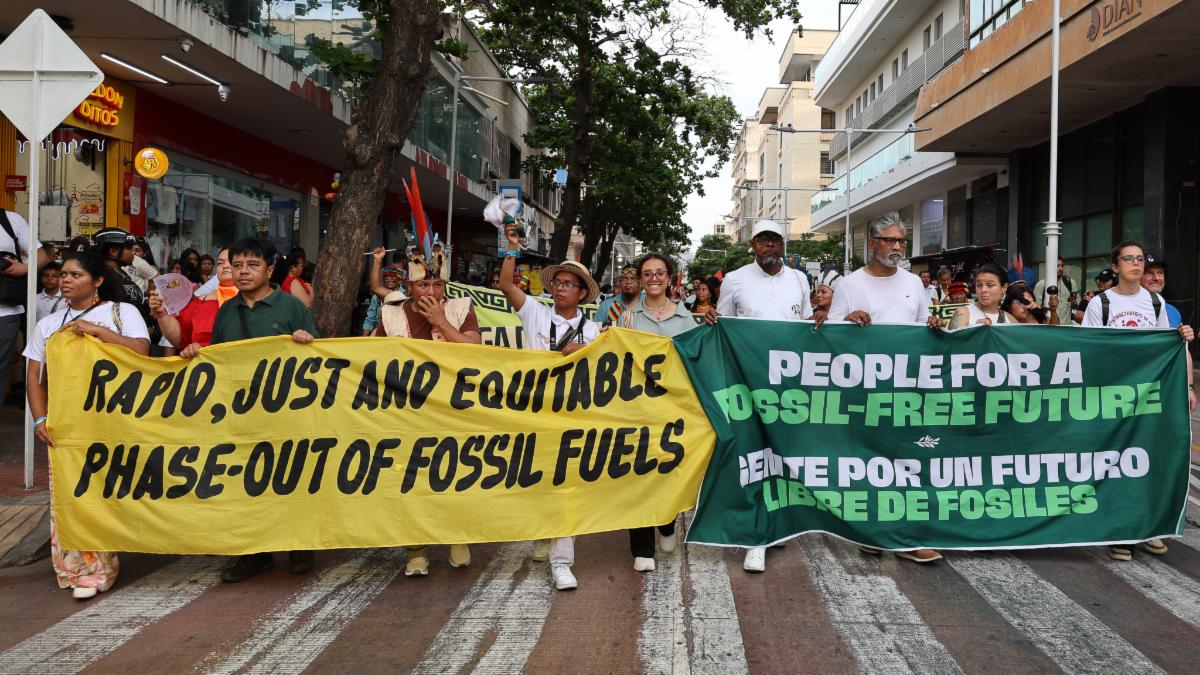
Throughout London Climate Action Week, WECAN amplified global calls for a Just Transition away from fossil fuels while uplifting strategies for the implementation of renewable energy systems that adhere to planetary boundaries and do not further perpetuate social and environmental harm and extraction. Building on the momentum of the First International Conference on the Transition Away from Fossil Fuels in Santa Marta, Colombia, we welcomed the launch of the conference's final outcome report during LCAW. Together, these efforts reflect the growing international drive behind a Just Transition that is rooted in climate justice, human rights, and the leadership of women in all their diversity, Indigenous Peoples, and frontline communities.
However, at London Climate Action Week and the SB64 in Bonn—the mid-year UN climate meeting to prepare for the UN Climate Conference (COPs) in November—we witnessed how governments are promising implementation, yet continue to delay the very real solutions that can ensure global warming remains below 1.5°C. In Bonn, governments delayed negotiations on the Just Transition Mechanism, while avoiding concrete commitments and accountability for climate finance. We also continually see an assault on gender-just language through the UN negotiations and a backsliding throughout government-led events on their commitments to transitioning away from fossil fuels, which was agreed to during COP28 in Dubai.
WECAN joins our colleagues in maintaining pressure on governments to deliver climate justice, gender equity, and a Just Transition. As preparations for COP31 in Antalya, Türkiye, continue, we must ensure that implementation is guided not only by technological innovation but by the needs of communities who are on the frontlines of climate chaos.
Through our advocacy and policy work, including The Need for Real Zero Not Net Zero Report and our contributions to the Belém Mission to 1.5°C initiative, we continue to demonstrate that real climate solutions require an equitable phaseout of fossil fuels, investment in regenerative and community-led solutions, and holistic, systems-wide transformation that address the root causes of the climate crisis.
Please see today’s newsletter for further updates from London Climate Action Week, preparations for New York Climate Week, news about the Line 5 pipeline, updates from the Rights of Nature movement, and a highlight of WECAN’s Women for Forests Program in Ecuador.
| | |
London Climate Action Week 2026
WECAN Advocacy and Events
| | |
From June 20-28, the Women’s Earth and Climate Action Network participated in London Climate Action Week (LCAW), to amplify women- and community-led strategies and solutions, challenge the systems driving the climate crisis, and provide feminist and climate justice analyses on implementation pathways to a resilient world.
WECAN joined partners from around the world during LCAW to champion women's leadership, the Rights of Nature, an equitable fossil fuel phaseout, and a Just Transition that places frontline and Indigenous communities at the center of climate action. Throughout the week, we engaged in strategic dialogues with policymakers, civil society, and movement leaders, including participating in the Climate Innovation Forum to hear from the COP30 and COP31 Presidencies on their priorities and vision for implementation.
Throughout the week, WECAN uplifted on-the-ground climate justice projects from food sovereignty to reforestation, distributed reports and policy briefs for building a Just Transition, and shared frameworks and strategies for systemic change, including climate justice principles, Rights of Nature, Indigenous rights, real zero, forest protection, care economies, and democratized and localized renewable energy.
| |
Rights of Nature at London Climate Action Week
At London Climate Action Week, WECAN contributed to critical conversations and advocacy around the rapidly growing Rights of Nature movement through several events alongside our partners, including a high-level strategy retreat with the Global Alliance for the Rights of Nature (GARN). Transforming our relationship with Nature is essential for tackling the climate crisis.
| | |
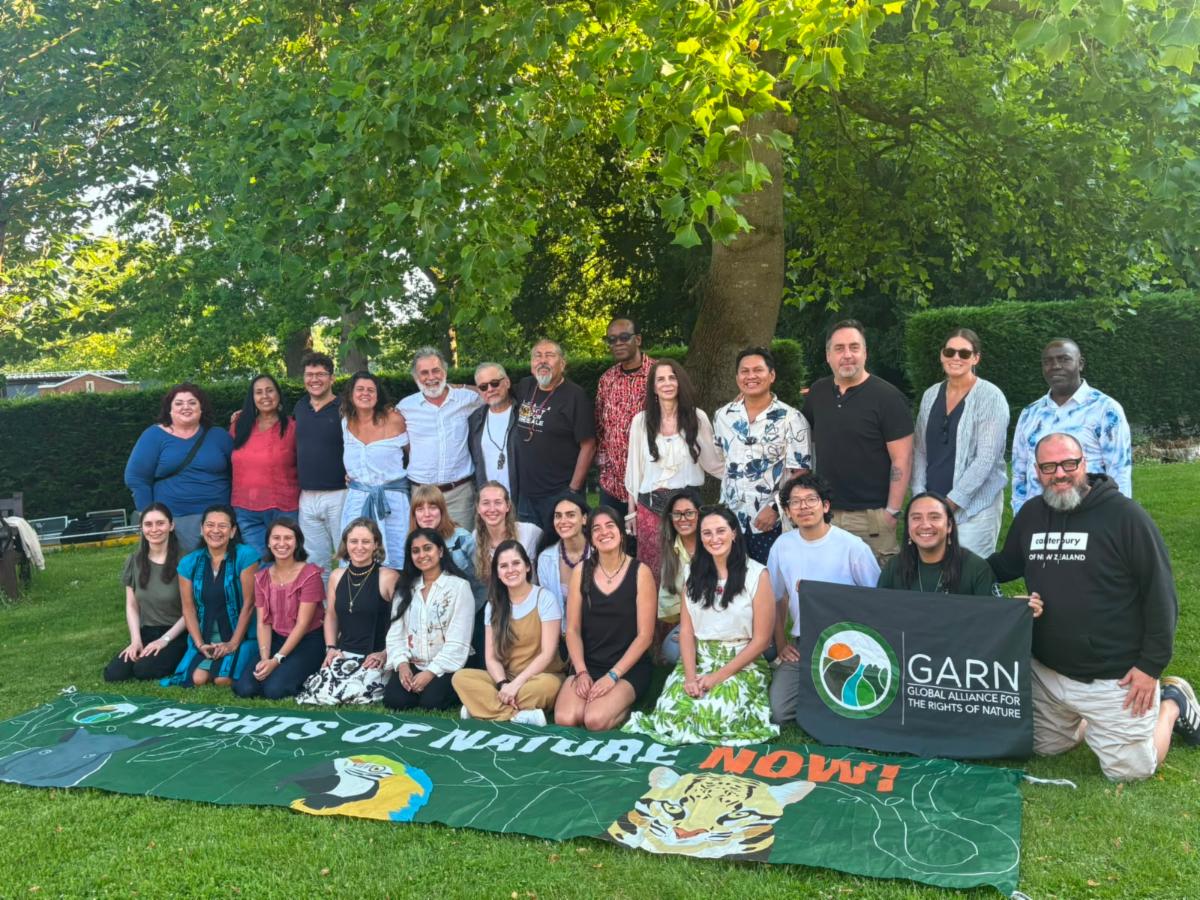
Global Alliance for the Rights of Nature (GARN) High-level Strategy Retreat
Ahead of London Climate Action Week, WECAN participated in the Global Alliance for Rights of Nature (GARN) High-Level Strategy Retreat. WECAN is honored for Osprey Orielle Lake, WECAN Executive Director, to serve on the GARN Executive Committee.
During the retreat, the GARN Executive Committee assessed the movement’s growth and pathways for expanding global recognition of the inherent rights of ecosystems as a solution to the climate crisis. Discussions included the collective effort to initiate a Universal Declaration on the Rights of Nature for adoption by the United Nations. Please see our policy brief of this initiative: A Global Initiative for a Universal Declaration on the Rights of Nature
For further reference, also see our report: Rights of Nature as a Central Pillar of a Just Transition
| |
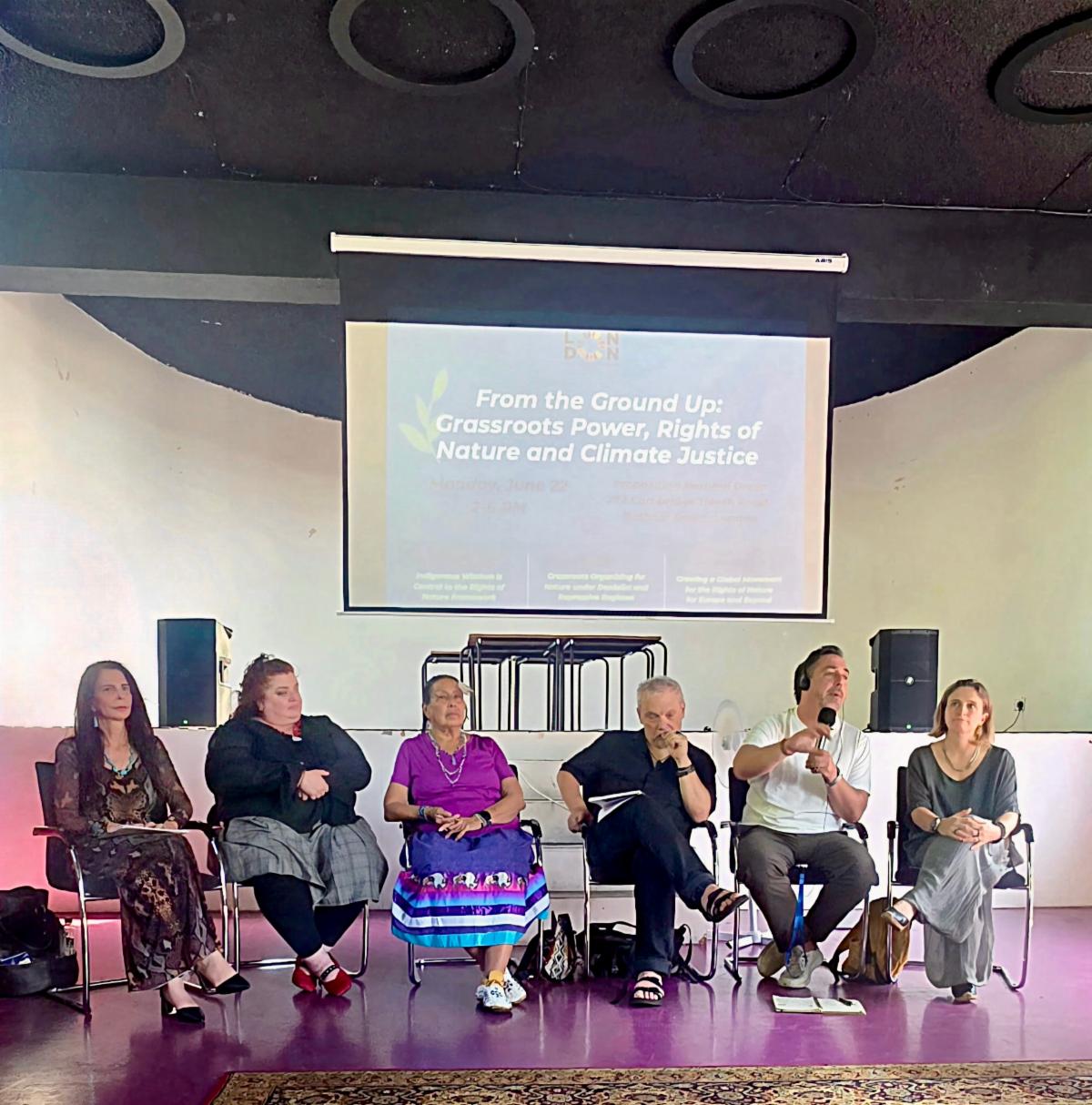
From the Ground Up: Grassroots Power, Rights of Nature, and Climate Justice
At the event “From the Ground Up: Grassroots Power, Rights of Nature, and Climate Justice”, WECAN Board Member and Project Coordinators Casey Camp-Horinek (Ponca Nation) and Julie Horinek (Ponca Nation), Osprey Orielle Lake, WECAN Executive Director, and partners from Movement Rights, GARN, and the Earth Law Center presented on panels about the growing Rights of Nature movement as a fundamental pillar for addressing interlocking crises and climate chaos.
The multi-session gathering also explored why Indigenous wisdom is central to protecting and defending Nature, how communities are organizing under increasingly repressive conditions, and what it will take to grow a global movement for the Rights of Nature across Europe and beyond.
| |
Rights of Nature Showcase: Stories of Resistance, Restoration & Return
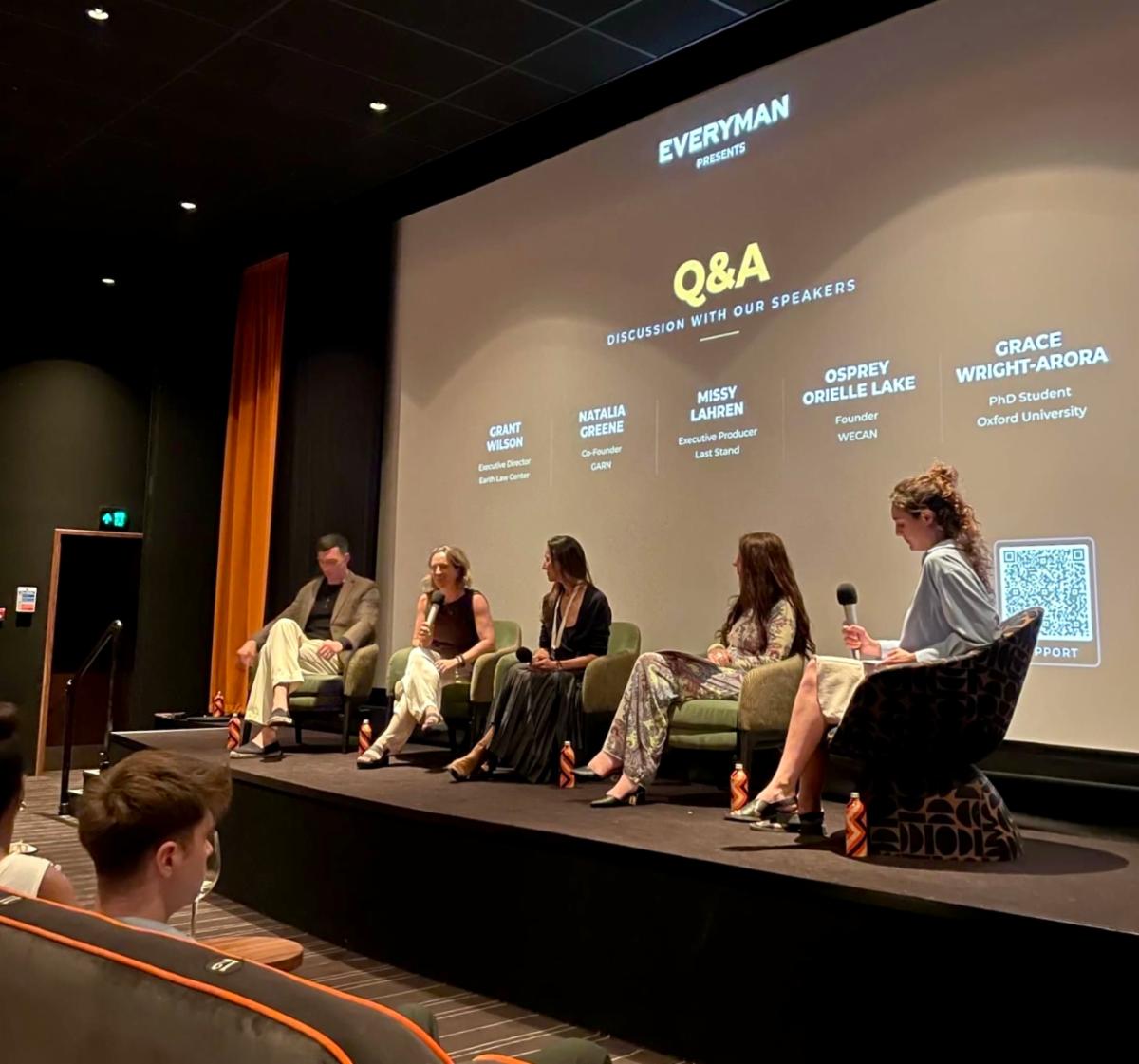
WECAN’s award-winning short film, Indigenous Women of Sarayaku Nurturing and Restoring the Ecuadorian Amazon Rainforest, was screened at London Climate Action Week during the “Rights of Nature Showcase: Stories of Resistance, Restoration & Return,” hosted by The Earth Law Center and Imp(act) Earth Film Festival. Through powerful storytelling and thought-provoking discussion, the evening invited audiences to reimagine humanity’s relationship with the natural world and explore a growing global movement dedicated to protecting, restoring and living in greater harmony with the ecosystems that sustain all life.
Watch the WECAN film on Youtube here.
| | Women Leaders Protecting People and Planet: Stories, Solutions and Solidarity | | |
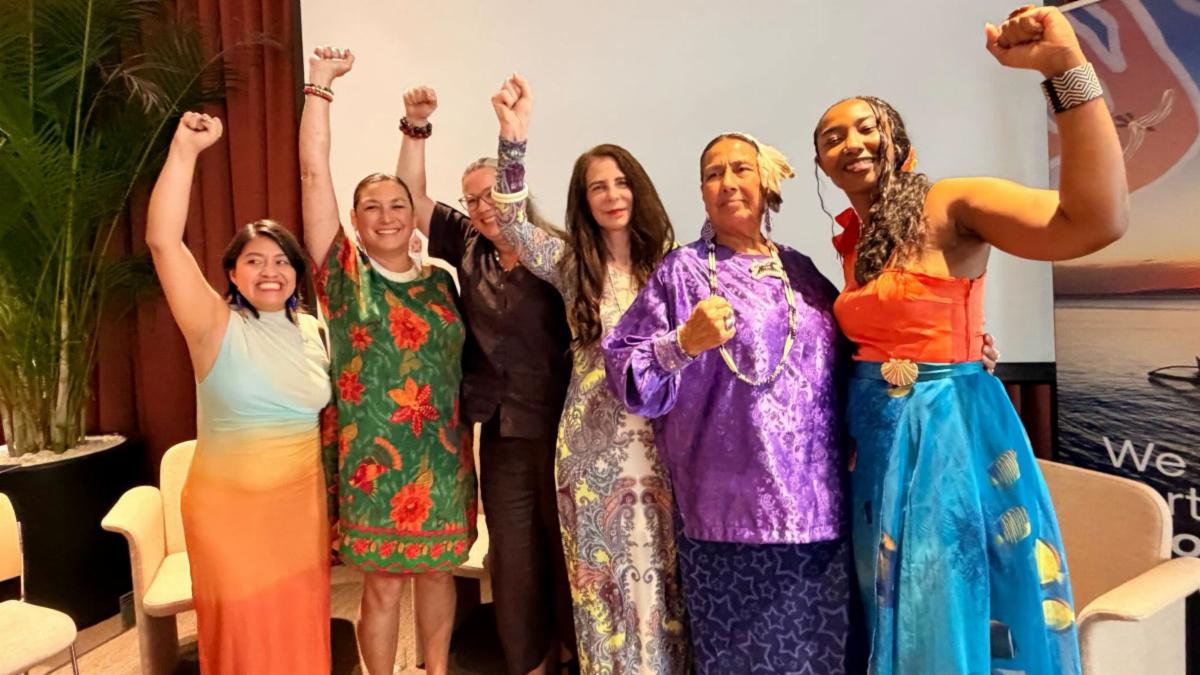
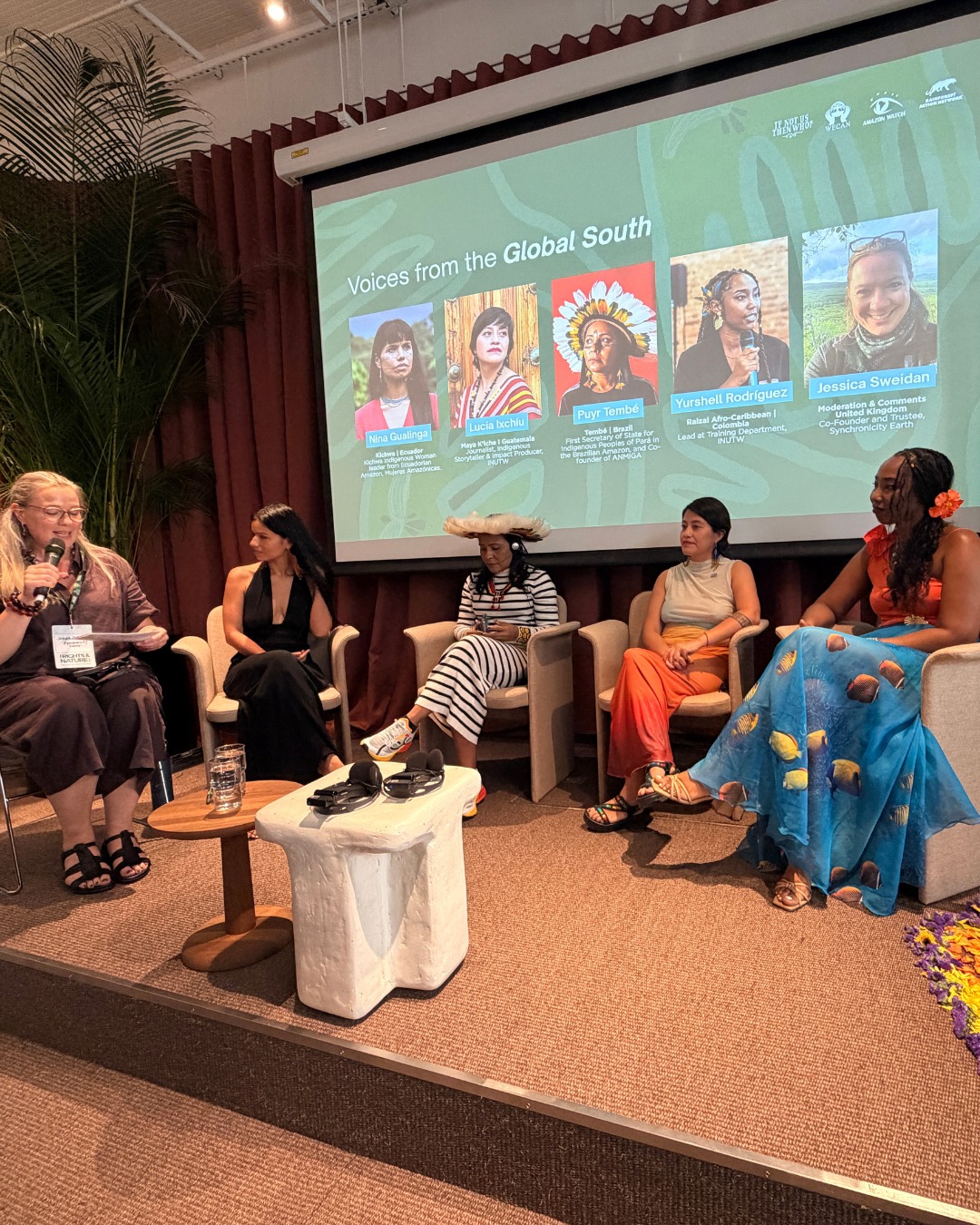
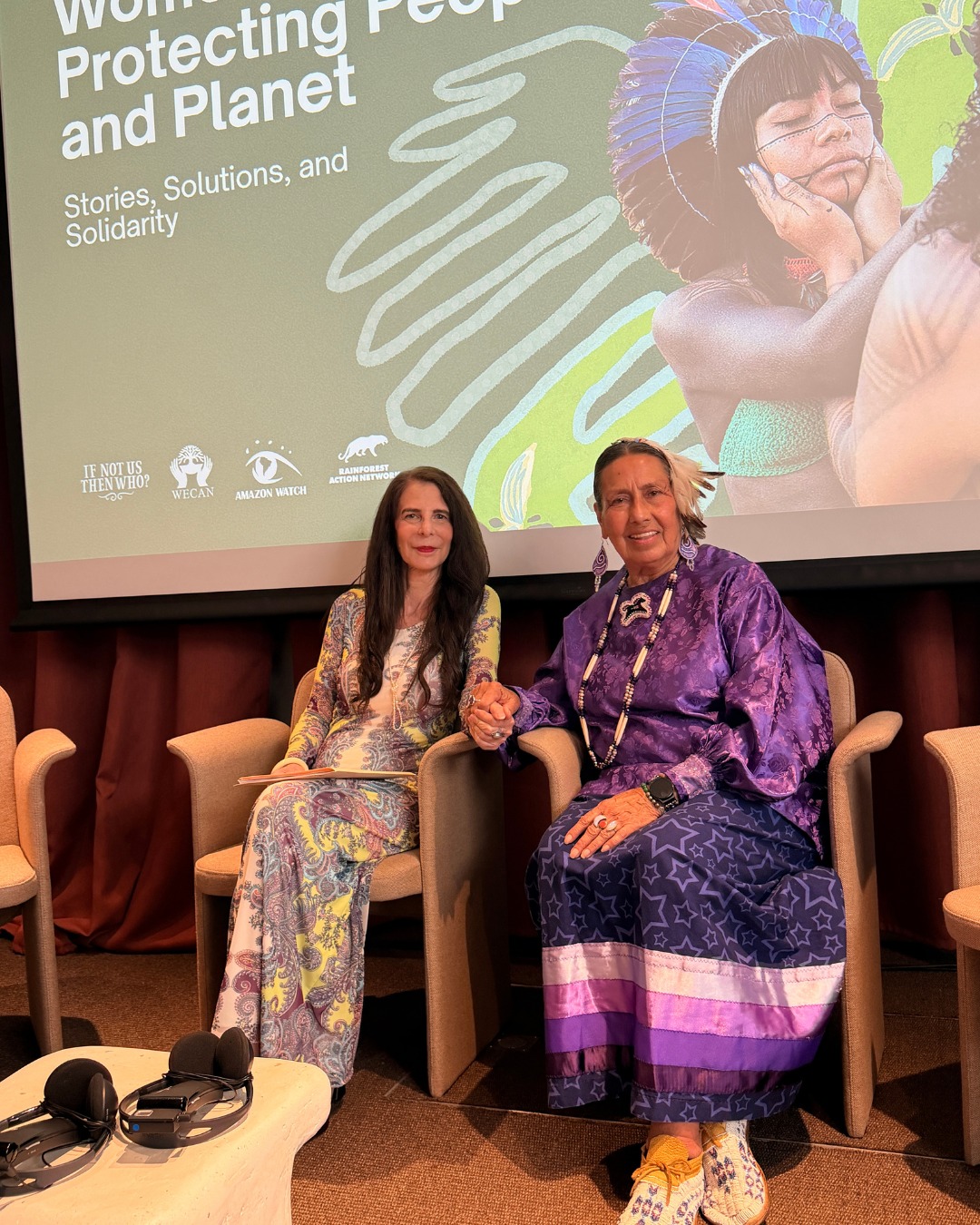
Indigenous and Afro-descendant women leaders and global advocates from across the Americas shared powerful interventions on climate justice, biodiversity, and the transformative leadership of women rooted in their territories, during the event “Women Leaders Protecting People and Planet: Stories, Solutions and Solidarity”, co-hosted by WECAN, Amazon Watch, If Not Us Then Who, ANMIGA, and Rainforest Action Network.
Across two panels, speakers shared how communities are protecting forests, rivers, cultures, and future generations while advancing solutions grounded in reciprocity, resilience, and collective care. At a time of accelerating environmental and social crises, the gathering uplifted transformative paths forward, including feminist care economies, Indigenous rights, forest and biodiversity protection and regeneration, ancestral knowledge, lived experience, and bold visions for the future.
Thank you to the speakers and moderators:
-
Puyr Tembé (Tembé), First Secretary of State for Indigenous Peoples of Pará in the Brazilian Amazon, Brazil
-
Yurshell Rodríguez (Raizal Afro-Caribbean), Lead, Training Department, If Not Us Then Who?, Colombia
-
Lucia Ixchíu (Maya K’iche’), Journalist, Indigenous storyteller, and Impact Producer, If Not Us Then Who?, Guatemala
-
Nina Gualinga (Kichwa), Indigenous rights, gender equality, and climate justice advocate, Ecuador
-
Casey Camp-Horinek (Ponca Nation), Environmental Ambassador and WECAN Board Member & Project Coordinator, Turtle Island/USA
-
Leila Salazar-López, Executive Director, Amazon Watch, Turtle Island/USA
-
Osprey Orielle Lake, Founder and Executive Director, Women’s Earth and Climate Action Network (WECAN), Turtle Island/USA
-
Jessica Sweidan, Co-Founder and Trustee, Synchronicity Earth, United Kingdom (Moderator)
| | London #5 - This Revolution Will Not be Televised | | |
WECAN participated in the event, “London #5 - This revolution will not be televised!” where climate leaders, creators, disruptors, storytellers, and changemakers gathered to share ideas, solutions, and tools for building new systems and a world of prosperity and liberation.
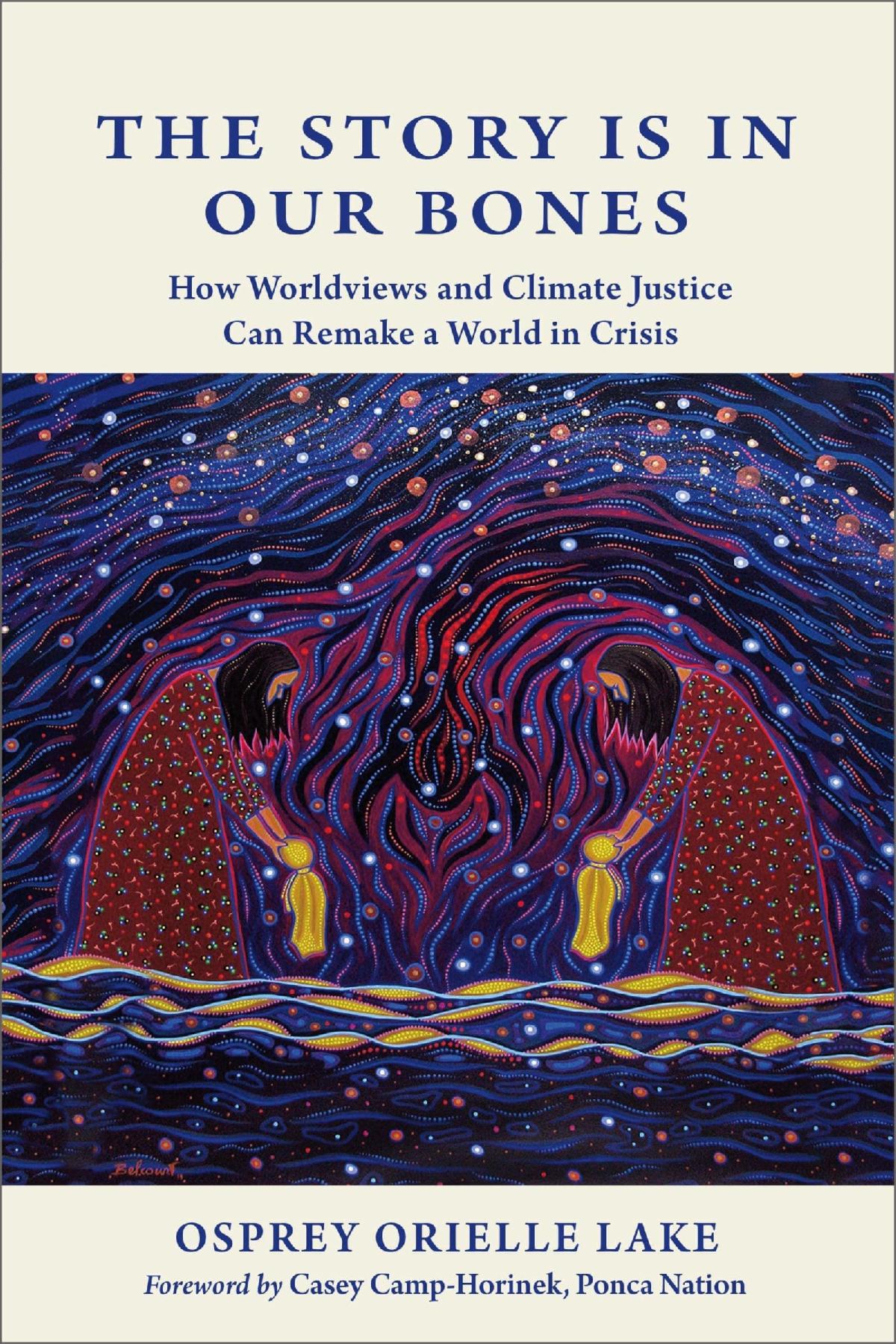
During the event, Osprey Orielle Lake, WECAN Executive Director, presented a powerful fireside intervention and soapbox provocation on climate justice implementation through feminist, decentralized, democratized, and community-led climate action. She also shared from her book, The Story is in Our Bones: How Worldviews and Climate Justice Can Remake a World in Crisis, which opens a portal to restoration and justice against a backdrop of the dominant cultural worldview based upon extraction and exploitation.
| Protecting Health and Rights in the Energy Transition | |
Throughout London Climate Action Week, WECAN amplified global calls for a Just Transition away from fossil fuels while uplifting strategies for the implementation of renewable energy systems that adhere to planetary boundaries and do not further perpetuate social and environmental harm and extraction.
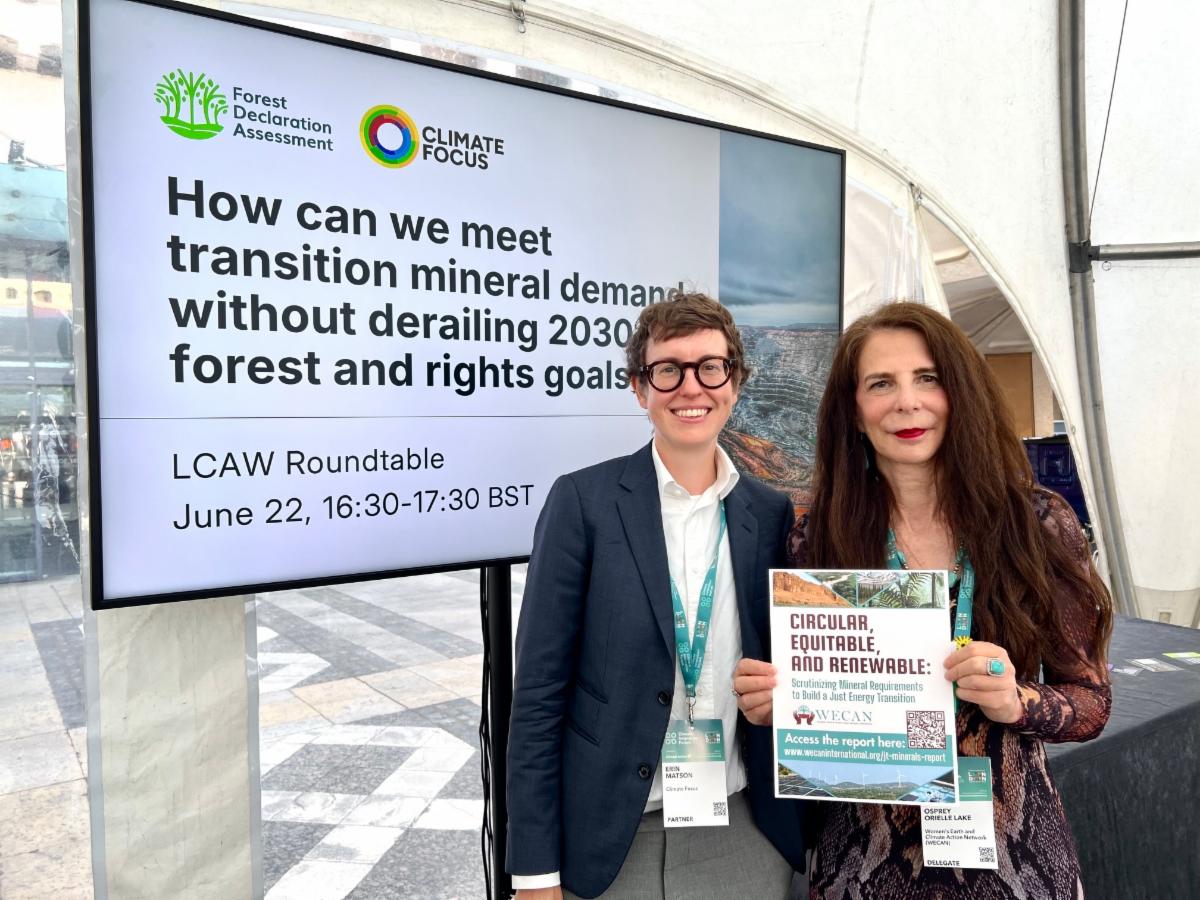
WECAN presented on our report, “Circular, Equitable, and Renewable: Scrutinizing Mineral Requirements to Build a Just Energy Transition,” and circulated the policy brief amongst global climate advocates, policymakers, and civil society, while also engaging with partners and colleagues on how to stop mining projects that are destructively impacting Indigenous territories and frontline communities. We also contributed to a roundtable discussion on critical minerals and mining, emphasizing the need to avoid reproducing extractive models and instead advance a Just Transition grounded in human rights, Indigenous rights, environmental integrity, and community well-being.
Read the WECAN policy brief here.
| | Looking Ahead to the Second Conference on Transitioning Away from Fossil Fuels | | |
Undoubtedly, phasing out fossil fuels is an essential pathway of global survival in our collective effort to address the climate crisis. Beyond survival, it is a precondition for creating more just, equitable, and healthy societies. To build phaseout pathways that tackle underlying inequities and economic restraints, new legal agreements and financial architecture are needed. For this reason, WECAN continued to amplify the importance of a binding Fossil Fuel Treaty at London Climate Action Week.
WECAN attended “The Fossil Fuel Treaty Initiative: Meeting the Habitability Imperative” event, hosted by the Fossil Fuel Treaty and the Carnegie Endowment for International Peace. The panelists shared insights as discussions are underway for the Second Conference on Transitioning Away From Fossil Fuels, which will be hosted by Tuvalu and Ireland in 2027. The conference will aim to deepen the work on implementing solutions and confronting the barriers to a fossil-free future. WECAN is honored to serve on the Fossil Fuel Treaty Steering Committee and will continue to advocate for its advancement.
During the event, WECAN interviewed Johanna Gusman, Ministerial Advisor for the Republic of Vanuatu, on the critical leadership of Pacific Islands and Nations on the frontlines of the climate crisis in advancing the transition away from fossil fuels. Hear the Ministerial Advisor's insights on this pivotal moment in this short video.
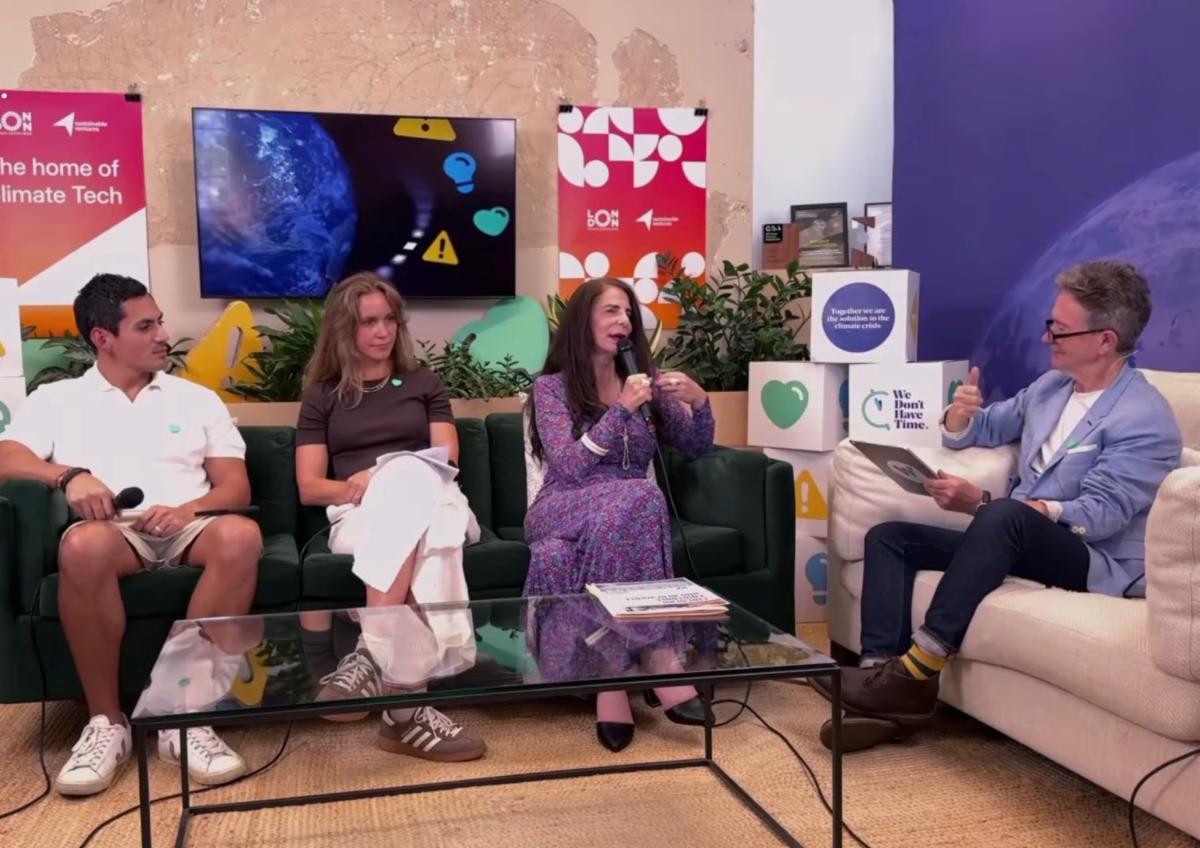
Osprey Orielle Lake also participated in the “Santa Marta Coalition of the Willing” session of the We Don’t Have Time broadcast during London Climate Action Week. During the session, she reflected on the significance of the First Conference on Transitioning Away from Fossil Fuels in Santa Marta, Colombia earlier this year. She emphasized that the transition away from fossil fuels can not replicate the irreparable destruction of the fossil fuel era, including harms to the health of ecosystems, communities, and violations of Indigenous and human rights.
Watch the We Don’t Have Time session here.
| As Tuvalu and Ireland prepare to host the Second Conference on Transitioning Away from Fossil Fuels next year, civil society, Island Nations, and frontline communities are diligently working to hold governments accountable. We are continuing collective calls for a binding Fossil Fuel Treaty, equitable climate finance, and phaseout pathways that tackle underlying inequities and economic restraints. The time for a fossil fuel phaseout is here, and we will continue to fight for and build in line with Just Transition principles to create a world where communities and ecosystems thrive! | | |
Indigenous Women of Sarayaku Nurturing and
Restoring the Ecuadorian Amazon Rainforest
Film Awards and Project Updates
| | |
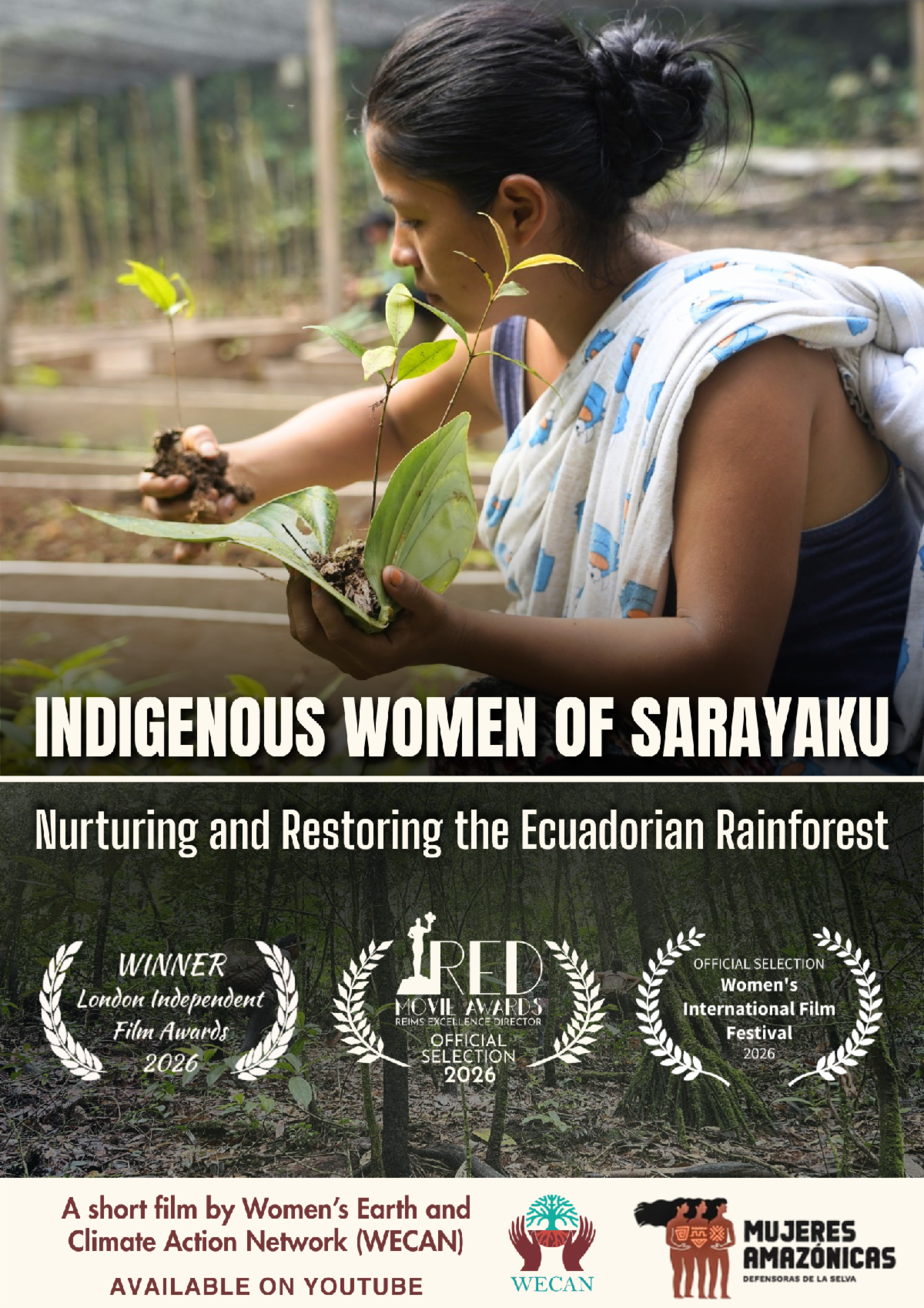
The award-winning WECAN short film, Indigenous Women of Sarayaku Nurturing and Restoring the Ecuadorian Amazon Rainforest, which highlights the WECAN Indigenous Women of the Ecuadorian Amazon Reforestation and Forest Protection project, is gaining global recognition at film festivals and being screened at events across the globe.
The WECAN short film produced with Mujeres Amazonicas, shares how Indigenous women in the Ecuadorian Amazon are taking action to protect their territories and our global climate. Right now, the Amazon is at a critical tipping point, with deforestation and extraction on the rise, threatening the rights and well-being of Indigenous peoples who have stewarded this vital ecosystem for generations. Through the WECAN Indigenous Women of the Ecuadorian Amazon Reforestation and Forest Protection project, Indigenous women leaders are safeguarding the Ecuadorian Amazon’s endemic tree species within the Sarayaku territory to ensure vital ecological integrity. The project, which is helping to protect 135,000 hectares of rainforests, includes strategic reforestation, long-term forest protection through advocacy for land defender rights, forest monitoring, training sessions and workshops, uplifting women’s leadership, advocacy to stop deforestation by governments and corporations, and highlighting forest solution narratives.
We are celebrating that our film has been selected for inclusion in Women In Media - Newark's 16th annual Women's International Film Festival, as well as an Official Selection, and was advanced to the main international jury of film professionals (which included film industry actors, directors, and composers) in the Reims Excellence Director (RED) Movie Awards.
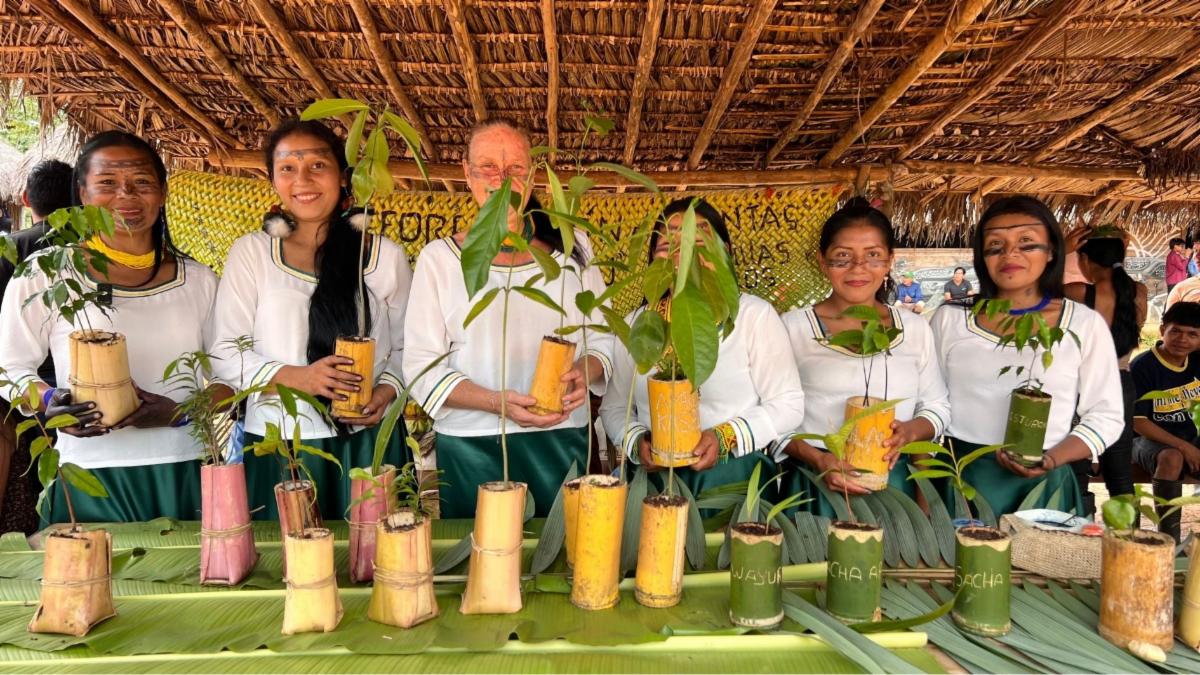
| | Sarayuku Women Showcase Innovative Forest Restoration Solutions | | From May 15th - 17th, 2026, Indigenous women participating in the WECAN reforestation program showcased the project at the Sarayaku Pachamama Festival. They made an educational hut designated to display tree seedlings in sustainable containers made of local leaves and native bamboo tubes and explained to attendees how this project is leading reforestation and forest protection measures across the Sarayaku territory. | | Women project participants display tree seedlings and showcase the project to community members and reporters at a Sarayaku Celebration called the Pachamama Festival as part of the WECAN Ecuador Reforestation and Forest Protect Project. | | SAVE THE DATE: WECAN AT NYC CLIMATE WEEK 2026 | | |
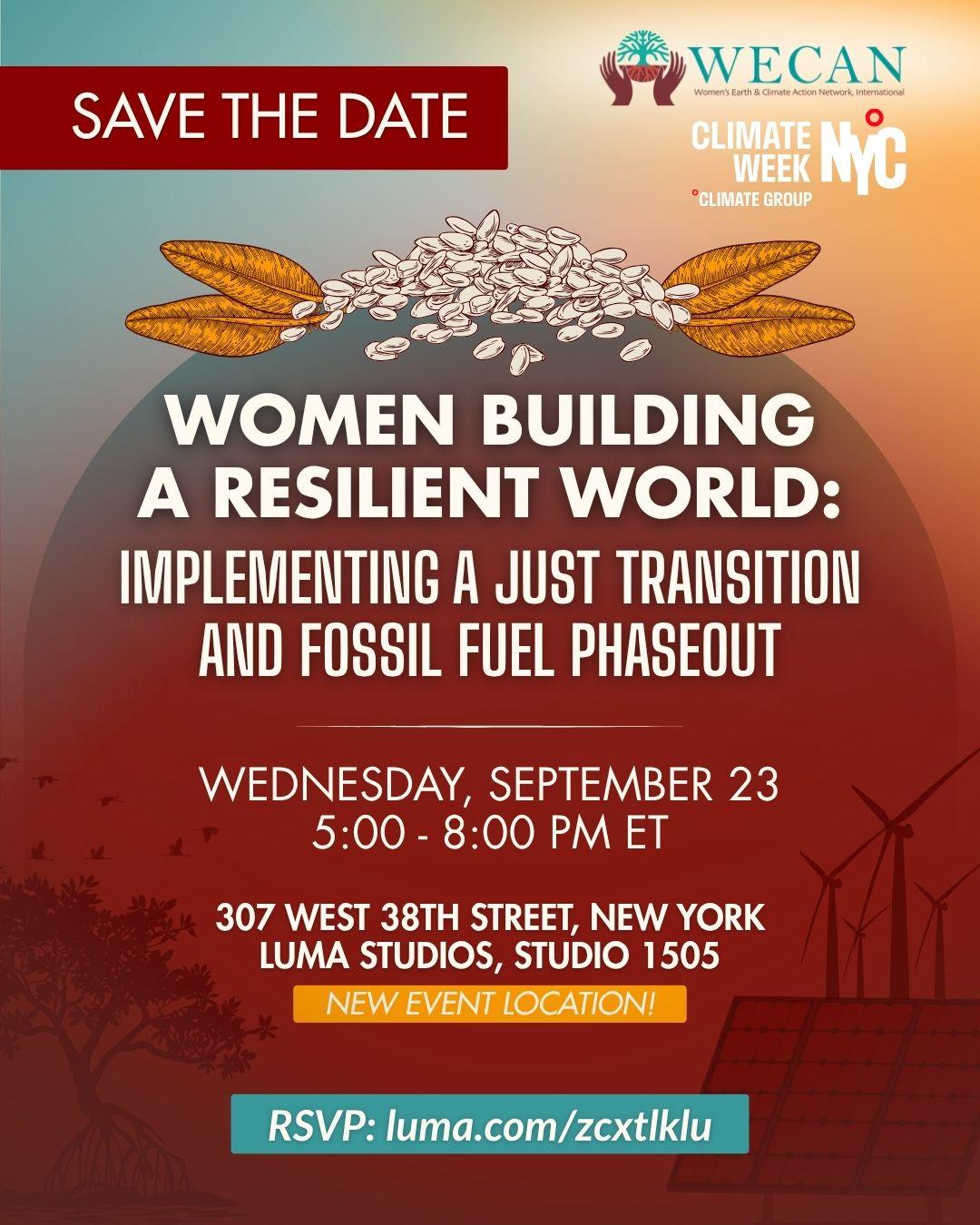
WECAN will be in New York City during Climate Week 2026 from September 20-27, advocating and organizing with women leaders in all their diversity at public events, advocacy opportunities, and strategy sessions with policymakers and movement partners. Please be welcome to join us!
We invite you to attend an inspiring and solutions-oriented WECAN event during NYC Climate Week, "Women Building a Resilient World: Implementing a Just Transition and Fossil Fuel Phaseout." Amidst a growing polycrisis of geopolitical tensions and climate disasters, women leaders in all of their diversity are speaking out.
During this event, frontline and Indigenous women leaders, policymakers, and climate justice advocates explore bold actions and solutions needed to accelerate a Just Transition and an equitable phaseout of fossil fuels. Through policy dialogue, frontline experiences, and community-led solutions, speakers will examine how to translate climate commitments into meaningful implementation while raising ambition to meet the urgency of the climate crisis.
Discussions will highlight women's leadership in advancing renewable energy, protecting ecosystems, advocating for Rights of Nature, resourcing Indigenous-led stewardship models, dismantling false solutions, strengthening care economies, and building equitable, regenerative solutions that leave no one behind.
Please stay tuned for speaker announcements and other WECAN and partner events!
| | |
Defend Water and Tribal Sovereignty
Line 5 Pipeline Updates
| | |
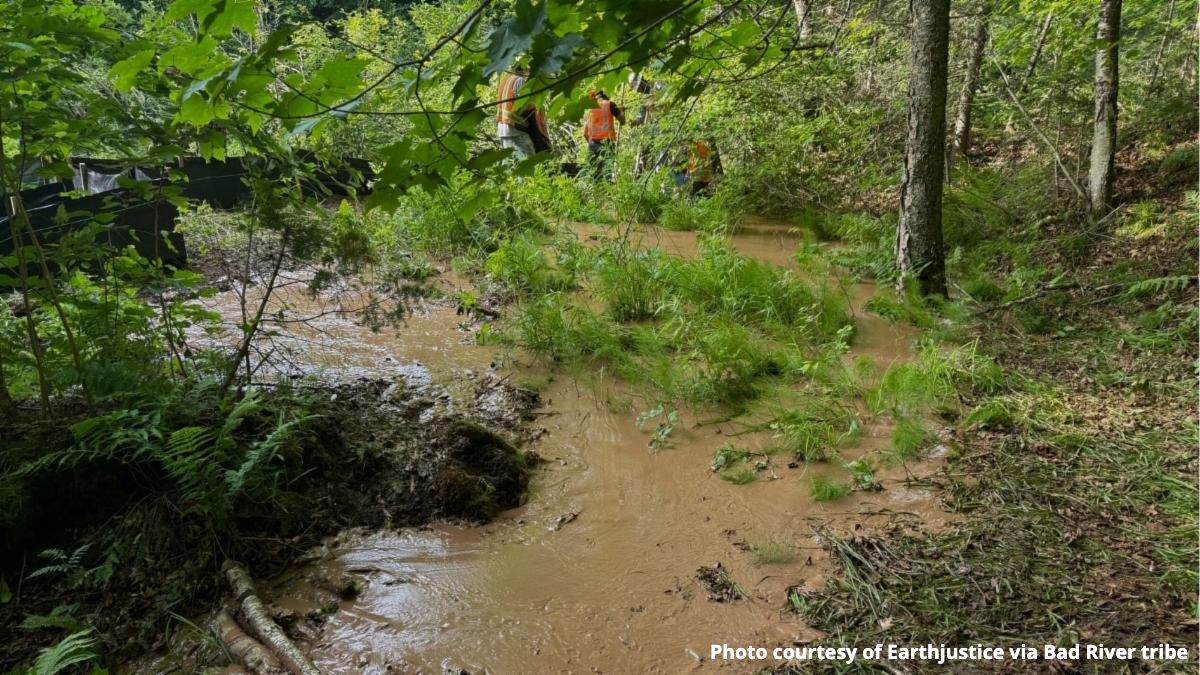
At the end of June, Enbridge spilled up to 1,900 gallons of drilling fluid into Bad River Band forested wetlands in Wisconsin during the construction of Enbridge’s Line 5 oil pipeline reroute. The Canadian pipeline company began construction on a portion of the Line 5 reroute earlier this year, amidst ongoing legal proceedings with Bad River Band and environmental groups. Now, as drilling fluid leaked into sensitive wetlands and waters, Enbridge has violated a 2024 waterway and wetland permit. Given that Enbridge is responsible for the largest on-land oil spill in U.S. history, Indigenous leaders, local communities, and environmental groups have long warned of the serious risks that Line 5 spills pose to the local ecosystems and water sources in the Great Lakes, which provide one-fifth of the world’s fresh surface water.
In addition to the forested wetlands, the drilling fluid entered Vaughn Creek, which flows through Bad River Band Reservation and Potato River. Because Vaughn Creek feeds into vital Bad River watersheds, the Tribe is greatly concerned. After repeatedly flagging these exact risks during the permitting process, it is deeply disappointing, though not surprising, to see this kind of harm already happening so early into the construction process.
Continued horizontal drilling for the Line 5 reroute would put 101 acres of wetlands and 186 waterways at risk of frac-outs, and also threaten the entire Great Lakes ecosystem. Enbridge currently intends to continue all scheduled drilling, digging, and blasting within 70 water crossings.
Each day that Enbridge is permitted to construct or operate this outdated and unnecessary pipeline poses a significant threat to the Great Lakes, surrounding communities, Tribal sovereignty, drinking water for over 40 million people, and all life that depends on this essential ecosystem.
Construction must stop immediately, and we join Bad River and the communities dependent upon the Great Lakes in calling for a full shutdown of the Line 5 pipeline.
| | Opposing the Line 5 Permit Request - Comment Period Closed | | |
Thank you to everyone who participated in the public comment period, organized by the Michigan Department of Environment, Great Lakes, and Energy (EGLE), and called for Michigan to protect the Great Lakes, stand with Tribal Nations, and reject all permits for the dangerous Line 5 tunnel project.
On Thursday, June 18, WECAN joined Indigenous women leaders and partners in participating in a virtual public hearing as part of the comment period. WECAN presented a statement strongly opposing Enbridge’s permit request to discharge treated wastewater from the proposed Line 5 tunnel project under the Straits of Mackinac. The comment period is now closed, and WECAN is closely monitoring for the release of EGLE’s permit decision.
WECAN is honored to facilitate and organize with the Indigenous Women’s Treaty Alliance (IWTA), working to stop Line 5. Learn more about our work on Line 5 here.
| | |
Ecuador Case at the Inter-American Court of Human Rights
Sarayaku Calls for Justice in Protecting the Living Forest
| | |
Over two decades ago, Ecuador allowed the Argentinian oil company, Compañía General de Combustibles (CGC), to explore for oil within the Sarayaku territory, home to the Kichwa people, without their consent. The Indigenous people of Sarayaku fought tirelessly to defend their sacred forests, rivers, and lifeways that faced grave danger.
Through Sarayaku’s resistance, they prevented the project from ever advancing because, in 2012, the Inter-American Court of Human Rights ruled against the Ecuadorian State for allowing oil activities in Sarayaku territory without their right to Free, Prior, and Informed Consent (FPIC), which was recognized in the Ecuadorian constitution since 2008. This was a significant landmark legal victory, setting standards for Indigenous rights across the Americas.
Despite this victory, fourteen years later, the threats of oil exploration continue to threaten Sarayaku as compliance with the judgment remains incomplete, leaving the territory and the people's collective rights at risk.
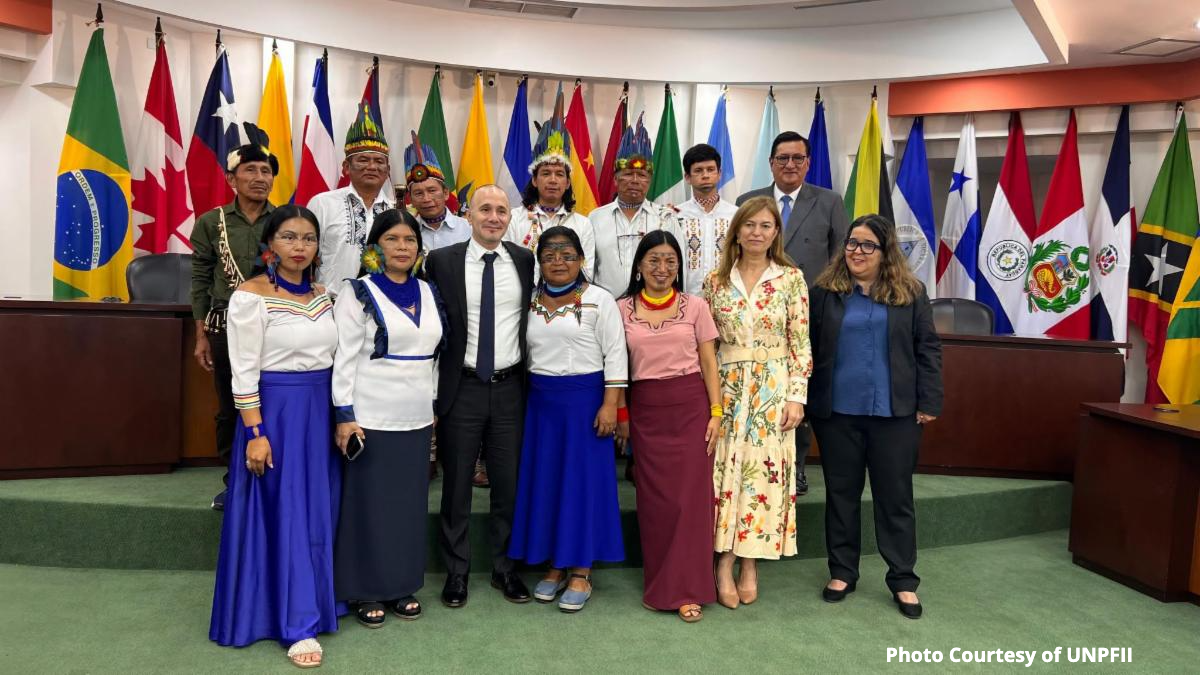
On June 18th, 2026, the Inter-American Court of Human Rights held a monitoring hearing in Costa Rica where Sarayaku denounced the Ecuadorian government for failing to comply with the Court’s 2012 order. Ecuador has neglected to provide adequate mechanisms for FPIC and has not removed more than a ton of abandoned pentolite explosives spreading across 25,000 hectares of the Sarayaku territory. The Sarayaku people also asked for the Court to order Ecuador to formally recognize their territory under their vision of Kawsak Sacha, or Living Forest, which would declare their territory as a living entity subject to rights, establishing durable protections against future threats of extraction.
WECAN continues to support and stand with the Kichwa people of Sarayaku as they fight for Indigenous sovereignty and land rights, and the protection of their territory under Kawsak Sacha, preventing the continued harms of industrial exploitation and colonization. Follow Sarayaku here on social media for updates on this ongoing fight.
| |
Rights of Nature Win
Stingless Bees are Now Recognized as Rights Holders
| |
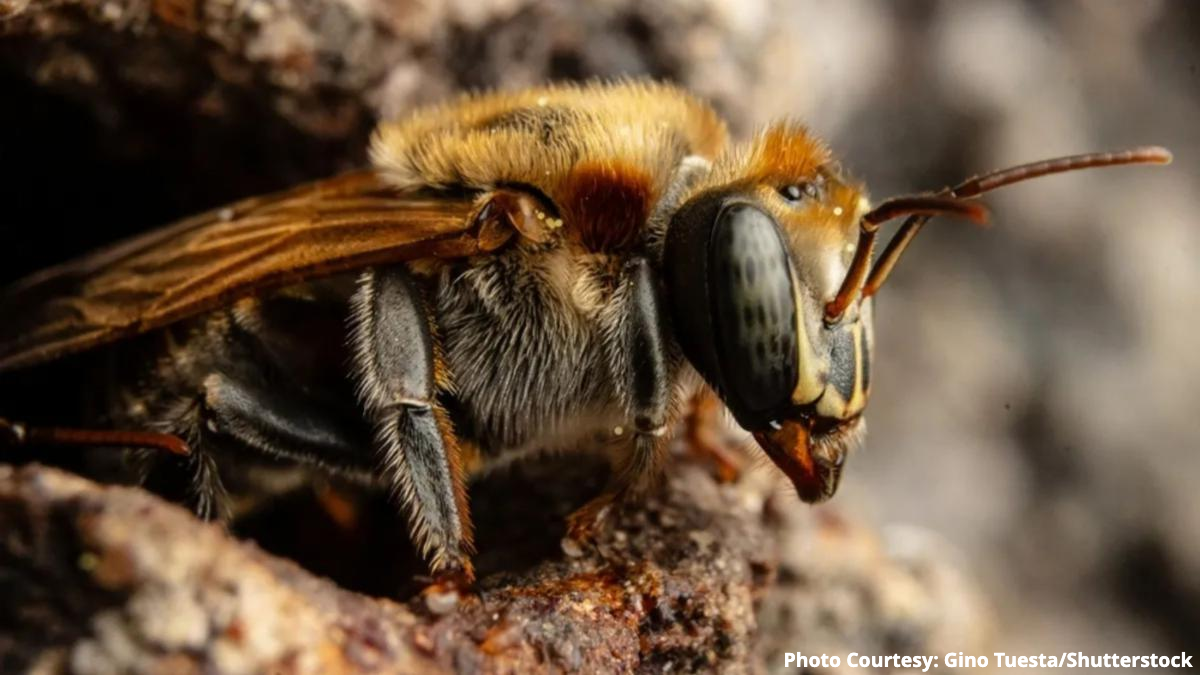
In a historic first, legal rights have been granted to an insect! In Peru, 175 species of stingless bees, critical pollinators in the Amazon region, are now recognized as rights holders. This legal standing reflects their intrinsic rights and entitles them to several freedoms, including the right to lead healthy lives, to flourish, and to reproduce. The bees also have been granted the right to legal representation, which allows humans to present a case against threats to bee populations and habitats.
This is a breakthrough win for the rapidly growing global Rights of Nature movement, which is deeply rooted in Indigenous knowledge systems and stewardship practices. As both a legal framework and a worldview, Rights of Nature is essential in mitigating the climate crisis and addressing interlocking environmental and social crises of our time, including biodiversity loss, violations of Indigenous and human rights, and ecological degradation. This case is now inspiring nations across the globe, from Bolivia to Poland and Zimbabwe, to consider enacting similar Rights of Nature protections.
From workshops to policy briefs and engagement with governments in UNFCCC spaces, WECAN advocates for the global Rights of Nature framework and legal system as a pathway to address the root causes of environmental degradation, reject false solutions, and help restore balanced and respectful relationships with the Earth.
Learn more here about our Rights of Nature Advocacy.
| | Please consider supporting WECAN as we continue to uplift the leadership and solutions of women worldwide fighting for climate justice and the defense of the planet for current and future generations. | |
For the Earth and All Generations,
Women's Earth and Climate Action Network
(WECAN) International Team
| | S T A Y C O N N E C T E D | | | | |