|
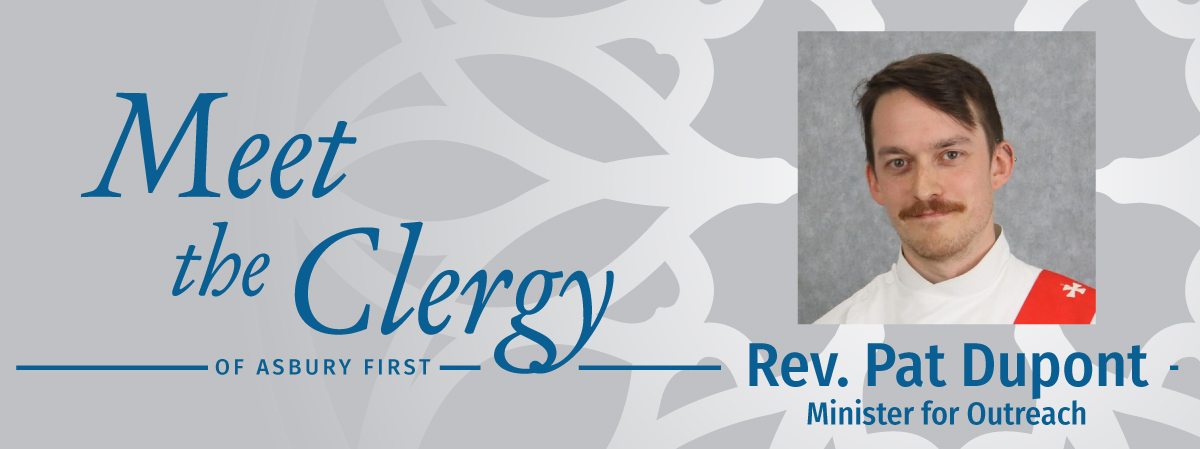
At the heart of Asbury First's outreach ministry is a simple yet transformative belief: that following Jesus means more than worship—it means walking alongside our neighbors, especially those pushed to society's edges. Since joining Asbury First in 2021, Rev. Patrick Dupont has brought this conviction to life, drawing on years of hands-on experience serving Rochester's most vulnerable communities.
From his formative years at St. Joseph's House of Hospitality, where he ran a soup kitchen, emergency shelter, and advocacy programs, to his current role shaping the future of the Community Outreach Center, Pat's journey reflects a deep commitment to turning faith into action. We chatted with him to discuss what it means to build authentic relationships across divides, how his Catholic Worker roots inform his ministry, and why he believes this moment holds special promise for Asbury First's service to the community.
You've described your calling as moving people "from being Jesus worshippers to Jesus followers." What does that distinction mean to you in practice, particularly in your work at the Outreach Center?
An important aspect of Methodism is it’s practical theology. The tradition isn’t as much concerned with what we believe as how we live. Throughout the gospels, Jesus offers people an invitation into a new way of living and being, right here, right now.. In this light, faith in Christ isn’t a profession we make on Sundays, it is lived out in our everyday decisions and actions. A big part of this ‘embodied faith’ for me lies in our presence with and for hurting people. It is easy to say we care for the poor, sick and marginalized, but do our lives integrate this professed value? If we mean it, we may have to adjust the patterns of our hours and days beyond accommodating worship practices. Are we changing our habits of consumption? Are we living in ways that seek to level out unequal wealth distributions? Are we showing up for the people we proclaim we care about? Theologian Gustavo Gutierrez said: "You say you care about the poor? Then tell me, what are their names?" Turning this same idea around, Mahatma Gandhi said, “Ask the poor. They'll tell you who the christians are.”
Your time at St. Joseph's House of Hospitality included both direct service and activism alongside Rochester's homeless population. How did that experience shape your understanding of what effective outreach ministry looks like?
I lived and worked at St. Joe’s for three years. It was a very immersive experience and I learned a whole lot about how easy it is to do harm in our efforts to do good. I learned how easy it is in the midst of my efforts to love and serve my neighbors, to end up actually disrespecting, disempowering, and discriminating against others. I learned how important deep self awareness, introspection, education, self-examination and growth are if we are to be of any good to anybody else. I learned that it is easily possible to ‘humble ourselves before others’ in tangible service, while also clinging tightly to social norms of privilege, bias, control and perceived superiority. I try to keep these lessons in mind and strive to nurture outreach efforts at Asbury First that lean as much as possible into humility, collaboration, inclusiveness, and non-hierarchy. And I try to remember that I still have a lot to learn and a great deal of growing to do! I pray that our ministries are spaces where that learning and growth can take place.
What's your vision for where the Outreach Center should be three to five years from now?
I would love to see the Community Outreach Center move further into the vision outlined above. I hope that the C.O.C. can develop an increased sense of community ownership, and a decreased sense of Asbury First ownership (or, godforbid, Pat ownership!). I would love to see more programming being provided in the space by other community groups and organizations. I would love for the C.O.C. to be known in our city as a diverse, welcoming, collaborative, community space with food, clothing, bicycle repair and healthcare – but also with support groups and mental health care, music groups and art classes, community organizing and movement building, and other kinds of gatherings that would benefit our community that would never occur to me! Of course, moving in this direction means, to a certain extent, giving less weight to my vision and fostering a shared communal vision with neighbors and stakeholders beyond the church. Dietrich Bonhoeffer said: “The person who loves their dream of community will destroy community, but the person who loves those around them will create community.” If we can accomplish that, it is exciting to me to think about where we might end up!
|