|
“I believe unconditionally in the ability of people to respond when they are told the truth. We need to be taught to study rather than believe, to inquire rather than affirm.”
— Septima P. Clark, Echo in My Soul (1962)
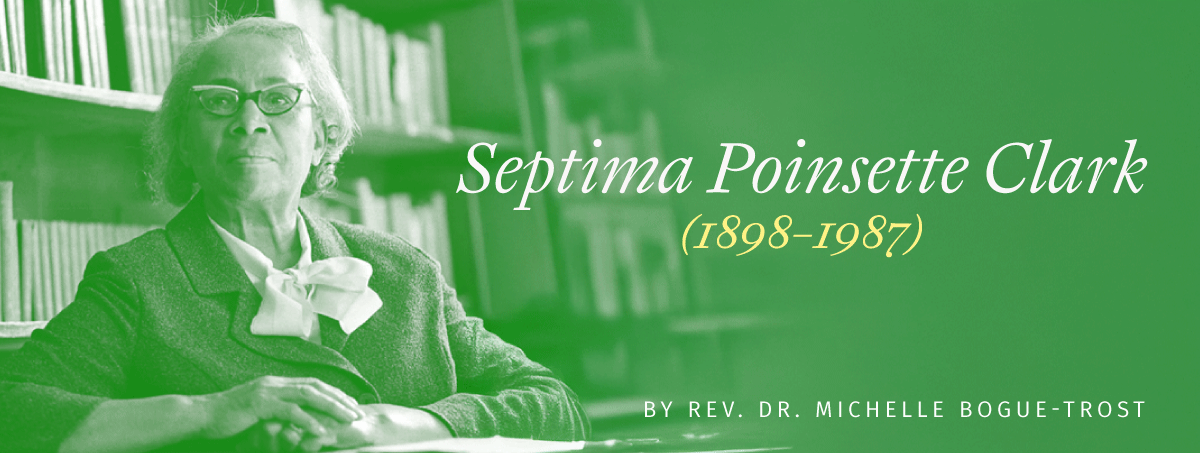
Septima Clark was an educator and civil rights strategist whose work helped thousands of African Americans in the South gain literacy and the ability to vote. Often called the “Queen Mother of the Civil Rights Movement,” Clark developed the Citizenship School model that taught reading, writing, and civic knowledge in church basements and community centers across the South. Her work quietly equipped ordinary people to claim their rights and helped lay the groundwork for the broader civil rights movement.
Septima Clark understood that freedom grows through learning.
In the years before the Civil Rights Movement gained national attention, Clark and others began organizing what they called Citizenship Schools. These were not grand institutions. Often they met in church basements, kitchens, or borrowed classrooms. The purpose was simple and radical: to teach people to read well enough to pass discriminatory voter registration tests, and teach them enough about the civic process to participate fully in public life.
What Clark helped people discover was not only literacy but agency. Education became a doorway to dignity. When people realized they could read the law, understand the ballot, and ask questions about the systems shaping their lives, fear began to loosen its grip.
Clark’s approach was patient and practical. She believed that leadership did not emerge from charisma alone but from communities learning together. The citizenship schools were less about producing heroes and more about cultivating thousands of people who knew their own worth and responsibility.
As we move through Lent and continue reflecting during Women’s History Month, Clark’s legacy offers an important reminder. Transformation rarely arrives in a single dramatic moment. More often it grows quietly through learning, reflection, and courage practiced over time.
Faith communities have always played a role in that kind of formation. Churches have been places where people learn not only scripture but also how to think, question, organize, and serve the common good.
Septima Clark believed people were capable of far more than the world expected of them, if they were given the opportunity to learn and grow together. She still has something to teach us. Communities shaped by truth, curiosity, and courage become places where new possibilities emerge. And the work of building those communities is slow, steady. This is how movements begin.
|