|
Did You Know
The Search for the Perfect Protein
Not all proteins are created equal. Whether you are vegan, vegetarian, or a meat eater, it is likely you are missing one of the 8 essential amino acids our body needs. If you haven't been feeling well for some time, or you feel you aren't functioning at a high physical or mental level, it means what you are eating isn't providing the nutrients you need to produce cellular energy for growth, repair and detoxification. Many people believe a specialty diet is the solution. They decide to become a vegetarian, or they try the Atkins, Keto, or Bulletproof diet. None of these diets are bad, but they don't solve what David Minkoff calls "the protein problem," which is twofold.
The first part of the problem is that most of our animal products aren't from quality sources. We don't have great access to nontoxic proteins that won't harm us. So, the problem isn't just the foods we eat-it's also what our food eats! Cows are often fed genetically modified corn that's been sprayed with glyphosate. The same cows are given antibiotics and hormones and those substances become part of our food.
The second part of the problem is the widespread myth that all proteins are created equal. Twenty-eight grams of protein from tuna is not the same as twenty-eight grams from Greek yogurt - they do not have an equivalent amount of nutrition. By "nutrition," this mean quantities of essential amino acids that the body can turn into protein. The body can't convert the cow dairy protein into human protein as efficiently as it can with the tuna. We must be informed and choose our protein sources wisely, because we need a certain amount of this nutrient each day to function at a high level.
PROTEIN MYTH ONE: ALL PROTEINS ARE THE SAME
PROTEIN MYTH TWO: PEOPLE ARE GETTING ENOUGH PROTEIN IN THEIR DAILY LIVES.
PROTEIN MYTH THREE: SOY IS A GOOD SOURCE OF PROTEIN.
PROTEIN MYTH FOUR: COLLAGEN IS A GOOD SOURCE OF PROTEIN.
PROTEIN MYTH FIVE: BRANCHED CHAIN AMINO ACIDS ARE GOOD FOR MUSCLE RECOVERY
|
|
Try New Things
Buy Local Produce
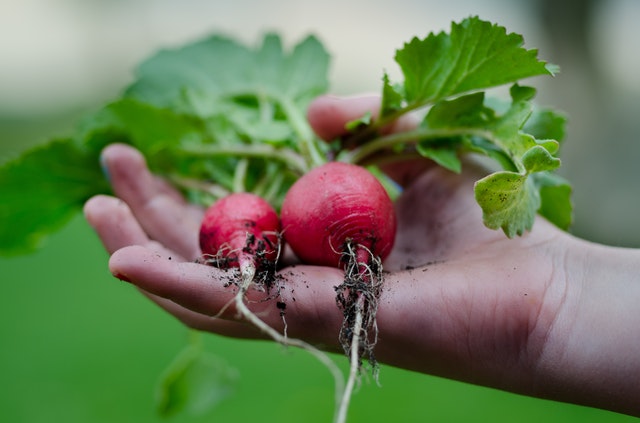
Large scale chemical agriculture is poisoning our soils and our water, and weakening our communities. By buying directly from a local family farm you can help put a stop to this unfortunate trend. By buying
organic produce from your local farmer, you are working to maintain a healthy environment, a vibrant community, and a strong and sustainable local economy for you and your kids to thrive in.
There are almost two million farms in the USA. About 80% of those are small farms, and a large percentage are family owned. More and more of these farmers are now selling their products directly to the public. They do this via
CSA programs,
Farmers' Markets,
Food Coops, u-picks, farm stands, and other
direct marketing channels.
CSA, which stands for Community Supported Agriculture, is a system for helping farmers sell direct to consumers. Consumers pay at the beginning of the season, when the farmer needs capital most (for seeds, fertilizer and other seasonal startup costs), and receive farm raised goods later that year, typically on a weekly or monthly schedule.
NOW is the time to
join a CSA! If all the local CSAs are full, try purchasing your foods at the Farmers' Market, or look for the Locally Grown label at your supermarkets.
|
|
Supplement Corner
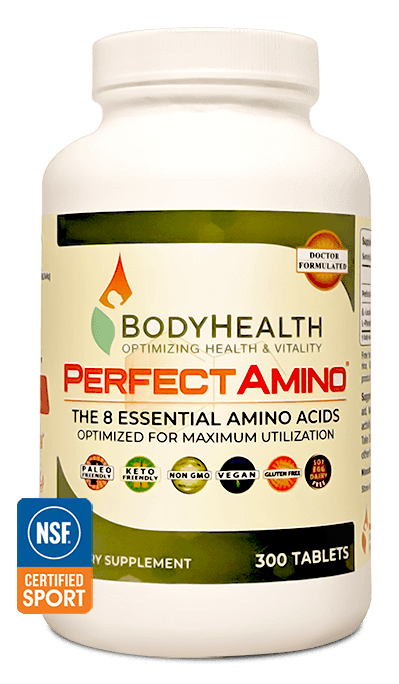
Perfect Amino
Of the twenty-two amino acids that the body uses to make proteins, eight of them are classified as essential. This means that we must get these from food or supplements, because the body is unable to make them. If the body has the eight essential amino acids in the proper quantities and in the right proportion, then it can make the remaining fourteen non-essential acids. This is important because more than 50 percent of most proteins are made of these essential ones.
When the pancreatic cells get enough of the eight essential amino acids, they can make the protein insulin, which consists of two chains: thirty-one amino acids in one, and twenty in the other. All of the critical enzymes needed for energy, repair, detoxification, and growth are proteins made of amino acids. This allows the thyroid to make thyroid hormone, the pituitary to make growth hormone, etc.
Each protein, whether it be from a vegetable or animal source is made up of from tens to thousands of amino acids. Many of them are not the ones that are needed by the cell at the moment they arrive. The cell has no storage depot for amino acids, and the unnecessary ones are quickly shunted down the catabolic pathway. Since the most valuable amino acids are the essential ones, the body will take them and turn them into proteins if there are adequate amounts to make the given protein that the cell is working on.
The beauty of Perfect Amino is that it's a mixture of the eight essential amino acids with an ideal ratio of one to another.
|
- Tryptophan encourages the release of serotonin and melatonin.
- Lysine deficiency can result in a deficiency in niacin (Vitamin B). It is beneficial in treating and preventing herpes.
- Methionine supplies sulphur and other compounds required by the body for normal metabolism and growth.
- Valine is needed for muscle metabolism, tissue repair, and for the maintenance of proper nitrogen balance in the body.
- Leucine stimulates muscle protein synthesis and may be the major fuel involved in anabolic (tissue building) reactions.
- Isoleucine is important for blood sugar regulation, muscle development and repair and energy regulation.
- Threonine is important for antibody production. It can be converted into glycine and serine.
- Phenylalanine stimulates certain hormones including adrenaline and noradrenaline, which are activating substances in the central and peripheral nervous systems.
|
|