|
News Updates for the Week of October 19, 2026
RFP for Atlantic mackerel research, National Seafood Month, and dam removals in the Northeast with herring returning in droves
View as Webpage
| | |
Upcoming
Meetings
October 22: Research Coordination Webinar on Characterizing patterns and trends in recreational fishing/boating in the Northeast US
November 9-12: ASMFC 2026 Annual Meeting
November 16: Atlantic Striped Bass Stock Assessment Subcommittee Check-In
November 19: Maryland Water Monitoring Council 32nd Annual Conference
December 7: Atlantic Striped Bass Stock Assessment Subcommittee Check-In
December 7-11: SAFMC December Meeting
December 8-10: NEFMC December Meeting
December 14-17: MAFMC December Meeting
January 26-28: ASMFC 2027 Winter Meeting
| |
Assistant Chief for Statewide Programs (Freshwater Fisheries) -- SC DNR (Lexington Cnty., SC)
(Due: October 23)
F&W Biologist Trainee -- NJ DEP (Port Republic, NJ)
(Due: October 26)
Associate Research Scientist -- FL FWC (Marathon, FL)
(Due: October 29)
Marie Patrol Law Enforcement Officer -- NC DEQ (multiple locations)
(Due: October 31)
Senior Research Scientists -- Bigelow Laboratory for Ocean Sciences (East Boothbay, ME)
(Due: November 1)
Fisheries Aging Lab Specialist -- VMRC (Hampton, VA)
(Due: November 1)
Fisheries Science Technician -- NC DEQ (Pasquotank Cnty., NC)
(Due: November 3)
Habitat Management Biologist I -- NH FGD (Concord, NH)
(Due: November 4)
Lieutenant Colonel, Mass. Environmental Police -- MA EEA MEP (Chelsea, MA)
(Open until closed)
Recreational Fisheries Data Analyst -- ASMFC, ACCSP (Arlington, VA)
(Open until filled)
Fisheries Liaison Officer -- AIS (multiple locations)
(Open until filled)
DNR Law Enforcement -- GA DNR (Regional)
(Open until filled)
| |
Public Comment
October 30: GA DNR CRD seeks public comment on proposed reef, migratory fish endorsement rules. Comments may be made through October 30.
(Find more here)
November 3: A stakeholder-inclusive Regional Fund Administrator seeks public comment on Draft Regional Offshore Wind Fisheries Compensation Framework. Comments may be made through November 3.
(Find more here)
November 12: NOAA Fisheries seeks public comments on Framework Adjustment 7 to the Spiny Dogfish Fishery Management Plan. Comments may be made through November 12.
(Find more here)
| |  | NOAA & ASMFC: Atlantic Mackerel Cooperative Research Initiative - Paired Acoustics - Biological Sampling for Atlantic Mackerel Request for Proposals | |
The NOAA Fisheries Northeast Fisheries Science Center (NEFSC) and the Atlantic States Marine Fisheries Commission (ASMFC) seek one Atlantic mackerel fishing vessel to charter for twelve research cruise days in the Northwest Atlantic in winter and spring 2027. The project aims to advance methods for detecting and quantifying Atlantic mackerel using active acoustics.
The Atlantic Mackerel Research Initiative is a two-year cooperative effort between scientists, managers, and the fishing industry to address uncertainties in population dynamics and biomass estimates of Atlantic mackerel, which is managed by the Mid-Atlantic Fishery Management Council. The goal is to advance our understanding of the stock through collaborative research, with focus on five research elements: 1) acoustic detection, 2) spawning seasonality, 3) egg surveys, 4) movement and mixing, and 5) ecosystem drivers.
Find more information here.
| ACCSP: Data Warehouse Refreshed | |
The Atlantic Coastal Cooperative Statistics Program (ACCSP) completed a Data Warehouse refresh on October 12, 2026, incorporating several data updates and improvements to support data quality and consistency.
Updates include:
- Virginia: Updated menhaden reduction data.
- New Jersey: Updated merged data to remove duplicate records.
- Data Quality Improvement: Negative values in the Landed Pounds field now display as null values.
Find more information here.
| MD DNR: Maryland Striped Bass Reproduction Index Higher for 2026 But Below Average For Eighth Straight Year | |
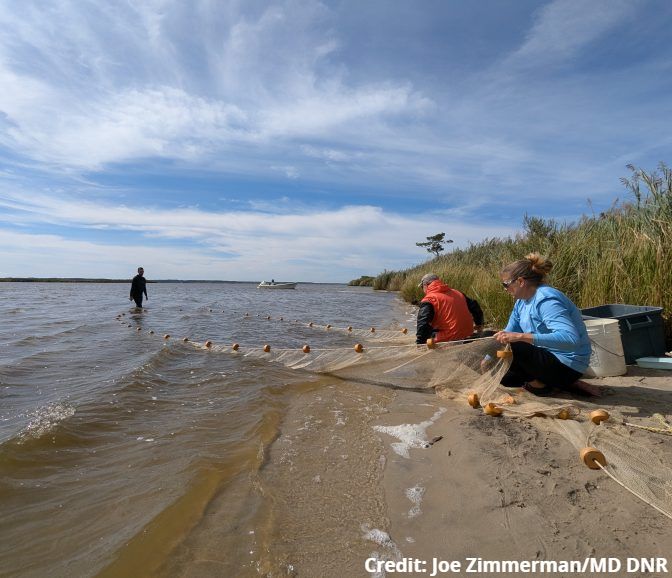
The Maryland Department of Natural Resources’ 2026 juvenile striped bass survey recorded a young-of-year index of 5.5. Although it marks the eighth consecutive year of low spawning success for striped bass, this is the highest index recorded since 2018. The survey tracks the reproductive success of Maryland’s state fish in Chesapeake Bay.
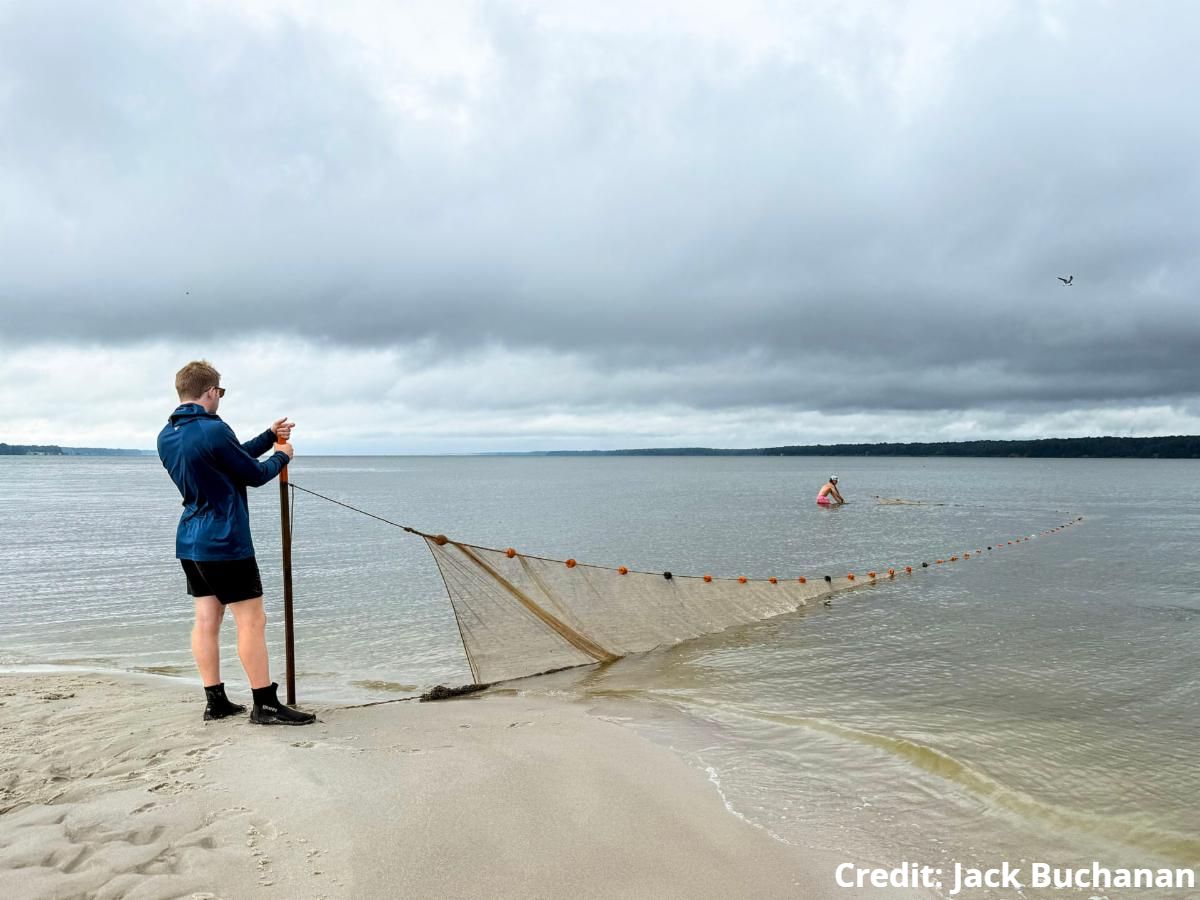
During this annual survey, fisheries biologists sample 22 sites located in four major striped bass spawning areas: the Choptank, Nanticoke, and Potomac rivers, and the upper Chesapeake Bay. Biologists visit each site three times per summer, collecting fish with two sweeps of a 100-foot beach seine net. The index represents the average number of 3-inch or smaller juvenile striped bass caught in 132 sweeps of the net. The survey, one of the longest-running continuous fish surveys in the United States, has been conducted in Maryland’s Chesapeake Bay since 1954.
Find more information here.
| VIMS: Juvenile Striped Bass Maintain Average Abundance in Virginia Waters in 2026 | |
Preliminary results from an ongoing long-term survey conducted by William & Mary’s Virginia Institute of Marine Science (VIMS) suggest that an average year class of young-of-year striped bass was produced in the Virginia tributaries of the Chesapeake Bay in 2026. Striped bass are an important top predator in the Chesapeake Bay ecosystem and a valuable resource for commercial and recreational anglers. The 2026 year class, representing fish hatched this spring, will reach fishable sizes in three to four years.
The VIMS Juvenile Striped Bass Seine Survey recorded a mean value of 9.52 fish per seine haul in the Virginia portion of the Chesapeake Bay. The 2026 value is an increase from the 5.12 fish per seine haul recorded in 2025, though both years are similar to the historical average (7.77 fish per seine haul) observed in Virginia tributaries. The improvement in recruitment observed in 2025 and 2026 is consistent with historically observed patterns: years with below-average recruitment (i.e., 1999, 2002, 2012, 2024) were followed by years with average to above-average recruitment (i.e., 2000, 2003, 2013, 2025).
Find more information here.
| |
FL FWC: Lionfish Challenge Sets a New Standard
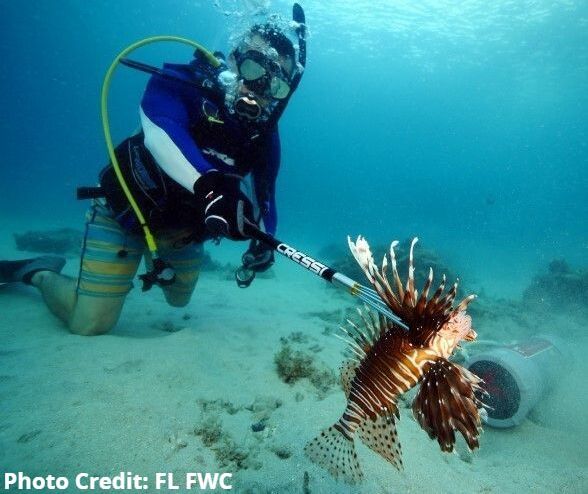
The Florida Fish and Wildlife Conservation Commission’s (FWC) annual Lionfish Challenge has come to an end, achieving record participation and lionfish removals since program inception, reflecting the growing statewide commitment to controlling invasive lionfish populations. During the summer-long tournament, a total of 533 registered participants removed 36,187 lionfish over 1,468 dive trips, this is an increase of more than 5,000 lionfish harvested, compared to the 2025 challenge.
“The record-breaking success of the Lionfish Challenge demonstrates the powerful conservation impact of collective action,” said FWC Chairman Rodney Barreto. “By removing 36,187 invasive lionfish from Florida’s waters, participants are helping reduce pressure on native marine species, protect biodiversity, and preserve the health of our precious marine ecosystems. This achievement reflects Florida’s growing commitment to safeguarding our underwater resources for future generations.”
Find more information here.
| | |
Virginia Tech Seafood Agriculture Research and Extension Center: Feedback Wanted from the Summer Flounder Fishing Industry
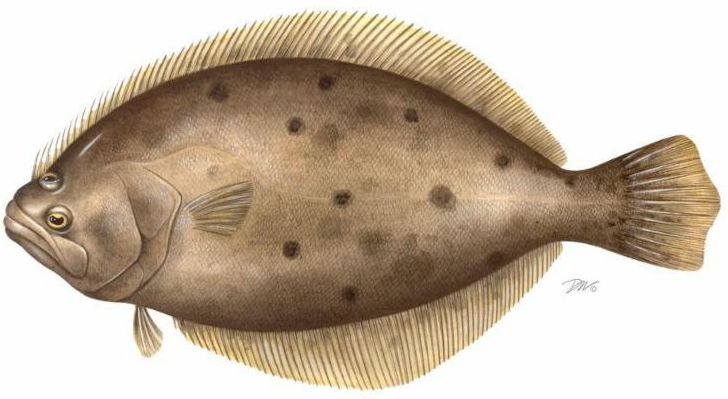
The Virginia Tech Seafood Agriculture Research and Extension Center in partnership in collaboration with the Mid-Atlantic Fisheries Management Council and the Atlantic States Marine Fisheries Commission is conducting a study on the dynamics of socio-environmental factors driving resilience of coastal fisheries: integrating feedback between livelihoods, human behavior, climate, and fish ecology. This survey will provide researchers with information and data that can then be used to analyze how variability summer flounder population migration and abundance, state quotas, and the economic contributions of the fishery interact. Participants in the summer flounder fishing industry are encouraged to provide their feedback.
Find more information here.
| | |
San José State University: Feedback Wanted on Human-Centered Exploratory Research for Acoustic ShrimpSense Prototype in Marine Operations
Researchers in the Department of Industrial and Systems Engineering at San Jose State University are recruiting participants for a study to help improve the usability and design of the ShrimpSense acoustic monitoring system (IRB 26-198). Researchers are studying how people in fishing, marine, aquaculture, and research settings monitor aquatic animals and environmental conditions and looking for participants with relevant experience in in fishing, aquaculture, marine monitoring, or aquatic animal research. By learning about current tools, workflows, challenges, and experiences, the study aims to make ShrimpSense more useful, understandable, and practical for real-world monitoring in marine operations.
Find more information here.
| | |
NOAA Fisheries: Celebrate National Seafood Month by Choosing American Seafood
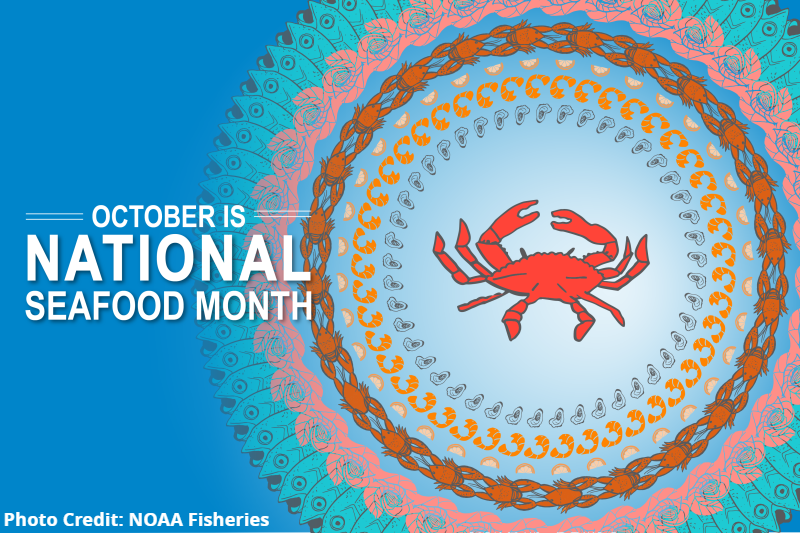
October is National Seafood Month, a time to celebrate the essential role American seafood plays in feeding our nation, powering coastal economies, and preserving a heritage built around our working waterfronts. October gives us the welcome opportunity to swell the tide of national gratitude for the hardworking fishermen and seafood farmers who feed us. Thanks to them and our science-based management system, American seafood represents the gold standard for sustainability. And while 50 years of management under the Magnuson-Stevens Act has made the United States the model for sustainable fisheries, there is still work to be done.
Find more information here.
| | Subscribe or share with friends our collection of upcoming meetings, recent news alerts, and articles from Atlantic coast states, regional fishery management councils, and federal agencies. | | | | |