|
News Updates for the Week of September 28, 2026
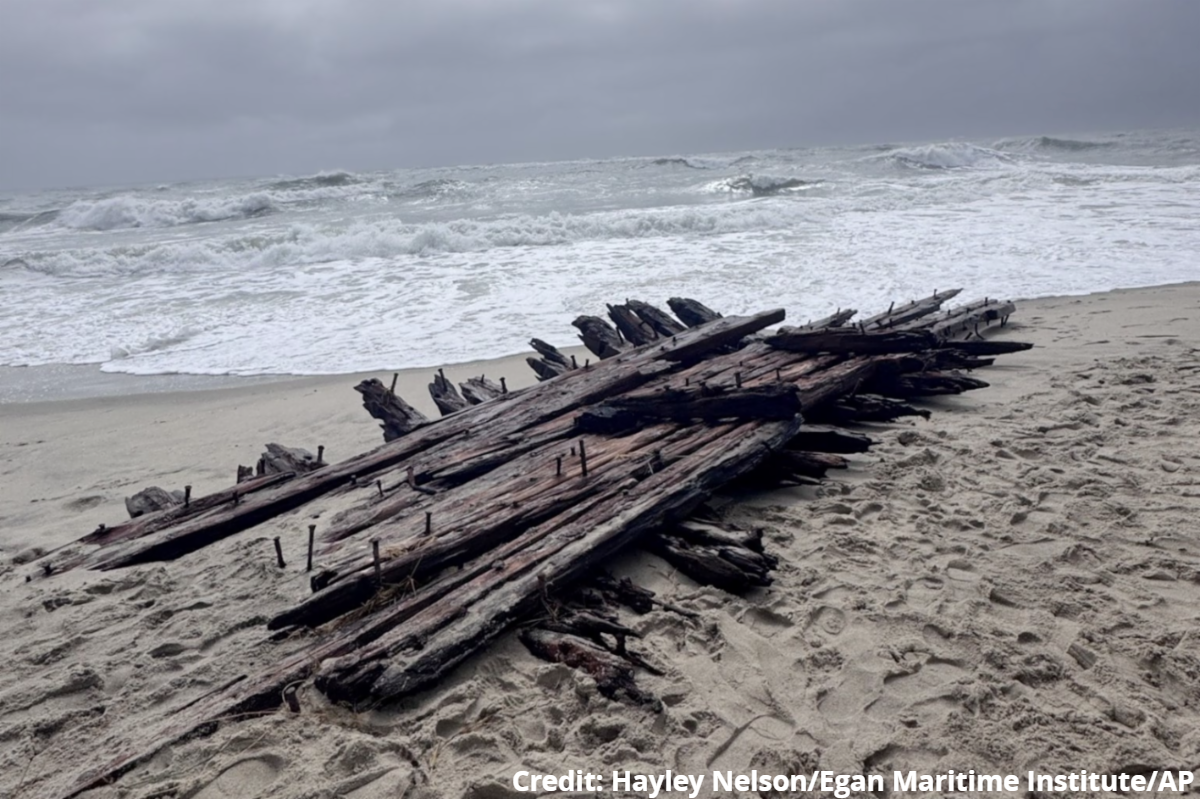
Delaware Bay juvenile finfish survey video, eelgrass recover in ME, and nor’easter unearths 19th-century shipwreck in MA
View as Webpage
| | |
Upcoming
Meetings
October 1: Atlantic Striped Bass Steering Committee for Work Group on Future Management Meeting
October 1: General Public Hearing on ASMFC Atlantic Menhaden Draft Addendum II
October 5: Horseshoe Crab ARM Subcommittee and DE Bay Ecosystem Technical Committee Meeting
October 6: Shad and River Herring Technical Committee Meeting
October 6-8: MAFMC October Meeting
October 13: Black Drum Technical Commitee Meeting
October 14: ACCSP Recreational Technical Committee and MRIP Wave Meeting
October 15: ACCSP Recreational Technical Committee and MRIP Wave Meeting
October 19: Atlantic Striped Bass Stock Assessment Subcommittee Check-In
November 9-12: ASMFC 2026 Annual Meeting
November 16: Atlantic Striped Bass Stock Assessment Subcommittee Check-In
November 19: Maryland Water Monitoring Council 32nd Annual Conference
December 7: Atlantic Striped Bass Stock Assessment Subcommittee Check-In
December 7-11: SAFMC December Meeting
December 8-10: NEFMC December Meeting
December 14-17: MAFMC December Meeting
January 26-28: ASMFC 2027 Winter Meeting
| |
Executive Projects Manager -- CT River Conservancy (Greenfield, MA)
(Due: October 1)
Fisheries and Wildlife Biologist III (Fish Health Specialist -- FL FWC (Webster, FL)
(Due: October 2)
Marine Resource Scientist II -- ME DMR (West Boothbay Harbor, ME)
(Due: October 2)
Supervisory Research Fish Biologist -- US FWS (multiple locations)
(Due: October 5)
Fish Biologist (Fieldwork and Environmental Compliance) -- NOAA SEFSC (multiple locations)
(Due: October 5)
Supervisory Research Fish Biologist -- NOAA (Woods Hole, MA or Orono, ME)
(Due: October 5)
Sustainable Seafood Program Assistant -- SC Sea Grant Consortium (Charleston, SC)
(Due: October 5)
Bycatch Analyst -- Azura (Remote)
(Due: October 7)
Marine Fisheries Management Section Leader -- FL FWC (Tallahassee, FL)
(Due: October 9)
Climate Resilient Fisheries Postdoctoral Research Associate -- Gulf of Maine Research Institute
(Due: October 9)
Marine Fisheries Executive Assistant for Councils -- NC DEQ (Carteret Cnty., NC)
(Due: October 10)
OPS Fisheries & Wildlife Bio Scientist IV -- FL FWC (Jacksonville, FL)
(Due: October 12)
Assistant Director of Research -- Virginia Sea Grant, VIMS
(Due: October 14)
Fellowships and Internships Coordinator -- Virginia Sea Grant, VIMS
(Due: October 14)
F&W Research Scientist 3 -- NJ DEP (Oxford, NJ)
(Due: October 15)
Senior Research Scientists -- Bigelow Laboratory for Ocean Sciences (East Boothbay, ME)
(Due: November 1)
Fisheries Aging Lab Specialist -- VMRC (Hampton, VA)
(Due: November 1)
Reef Fish and Shrimp Fisheries Observer -- AIS to support SEFCS (North Myrtle Beach, SC)
(Open until filled)
Fisheries Liaison Officer -- AIS (multiple locations)
(Open until filled)
DNR Law Enforcement -- GA DNR (Regional)
(Open until filled)
| |
Public Comment
October 9: ASMFC seeks public comment on Draft Addendum II to Amendment 3 to the Interstate Fishery Management Plan for Atlantic Menhaden to consider modifying the Chesapeake Bay reduction fishery cap. Comments may be made through October 9.
(Find more here)
October 13: NOAA Fisheries seeks public comment on revisions to fishing gear regulations in Atlantic highly migratory species fisheries. Comments may be made through October 13.
(Find more here)
October 14: NOAA Fisheries seeks public comment on ropeless fishing from fishery participants and others with specialized knowledge on the potential voluntary use of ropeless fishing gear. Comments may be made through October 14.
(Find more here)
October 16: NOAA Fisheries is seeking public comment on a Notice of Intent to Prepare an Environmental Analysis assessing potential modifications to the Atlantic Large Whale Take Reduction Plan. Comments may be made through October 16.
(Find more here)
October 19: MD DNR seeks public comment on byctach in striped bass gill nets. Comments may be made through October 19.
(Find more here)
October 30: GA DNR CRD seeks public comment on proposed reef, migratory fish endorsement rules. Comments may be made through October 30.
(Find more here)
November 3: A stakeholder-inclusive Regional Fund Administrator seeks public comment on Draft Regional Offshore Wind Fisheries Compensation Framework. Comments may be made through November 3.
(Find more here)
| |  | ASMFC: Applicants Sought to Conduct Phase II of the Pilot Regional Industry-Based Bottom Trawl Survey | |
The Northeast Trawl Advisory Panel (NTAP), NOAA Fisheries’ Northeast Fisheries Science Center (NEFSC), and the Atlantic States Marine Fisheries Commission (ASMFC) seek applicants to execute Phase II of the pilot Regional Industry-Based Bottom Trawl Survey (RIBTS). ASMFC will issue a funding contract to support conduct of the survey. The anticipated timeframe to conduct the Phase II Survey is fall 2027.
Standardized surveys of marine fisheries species are crucial for conducting stock assessments that inform fishery management and for tracking ecosystem changes over time. Motivated by the critical need to find viable contingency options for the NEFSC bottom trawl survey (BTS), NEFSC is collaborating with NTAP to develop RIBTS. The long-term goal of the RIBTS program is to reduce uncertainty and increase accuracy in resource assessments with an annual collaborative fishing industry-based regional trawl survey. RIBTS is being developed with a phased approach.
Proposals must be submitted as an electronic proposal by email no later than 11:59 PM on December 4, 2026, to Jainita Patel. Please download the RFP for more details, qualifying requirements, and submission.
Find more information here.
| NJ DEP: Delaware Bay Trawl Survey Monitors Crucial Finfish Populations | |
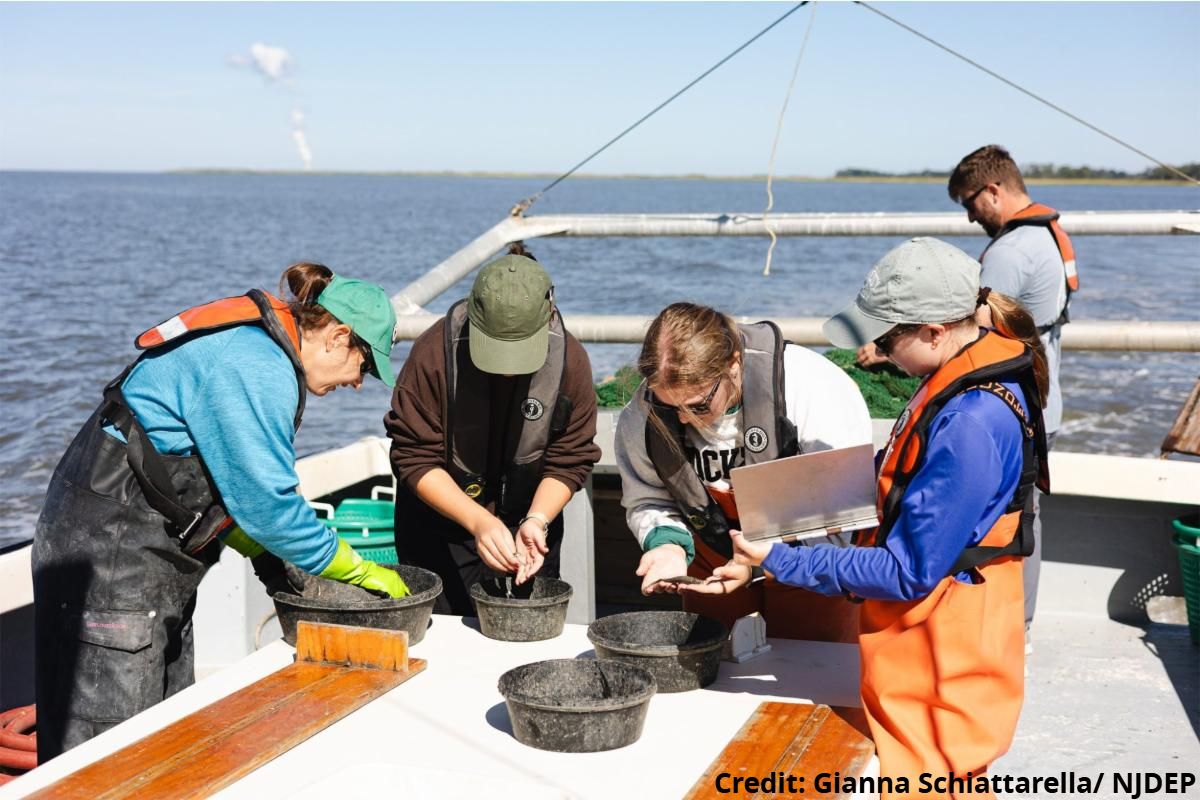
It’s National Estuaries Week, and we’re highlighting an important estuary system in New Jersey: the Delaware Bay. Estuaries are bodies of water where rivers meet the ocean. The Delaware Bay is one of the state’s major estuaries and is home to many important finfish species. The Marine Resources Administration has conducted a juvenile finfish trawl survey in the bay since 1991, designed to study residential and transient juvenile finfish species. Eleven sampling stations are set up in the “shallow” nearshore waters on the New Jersey side of the bay. Data collected from this survey allows biologists to estimate relative abundance and forecast population changes of important finfish species.
The survey takes place from April through October. This September, catch primarily consisted of bay anchovy, weakfish, blue crab, spot and other common species. Some more unique catch included harvest fish, naked goby, American eel, and Atlantic thread herring.
Find more information here.
| |
CT DEEP: Start of Cold-Water Boating Season Announced
The Connecticut Department of Energy and Environmental Protection (DEEP) announced the official start of the state’s cold-water boating season. Beginning October 1 and continuing through May 31, all paddlers operating kayaks, canoes, stand-up paddleboards, and rowboats – and their passengers – are required by state law to wear a U.S. Coast Guard approved personal flotation device (PFD) while on the water.
“Paddling on Connecticut’s coastal and inland waterways in the fall is a wonderful way to experience our state’s stunning autumn landscape,” said Acting DEEP Commissioner Emma Cimino. “However, fall also brings cooler air and water temperatures that can pose serious risks. Being prepared starts with wearing your PFD. It’s not only an important safety measure – it’s also the law from October 1 through May 31 for anyone aboard a manually propelled vessel.”
Find more information here.
| MD DNR: Major Modernization and Maintenance Projects in Crisfield | |
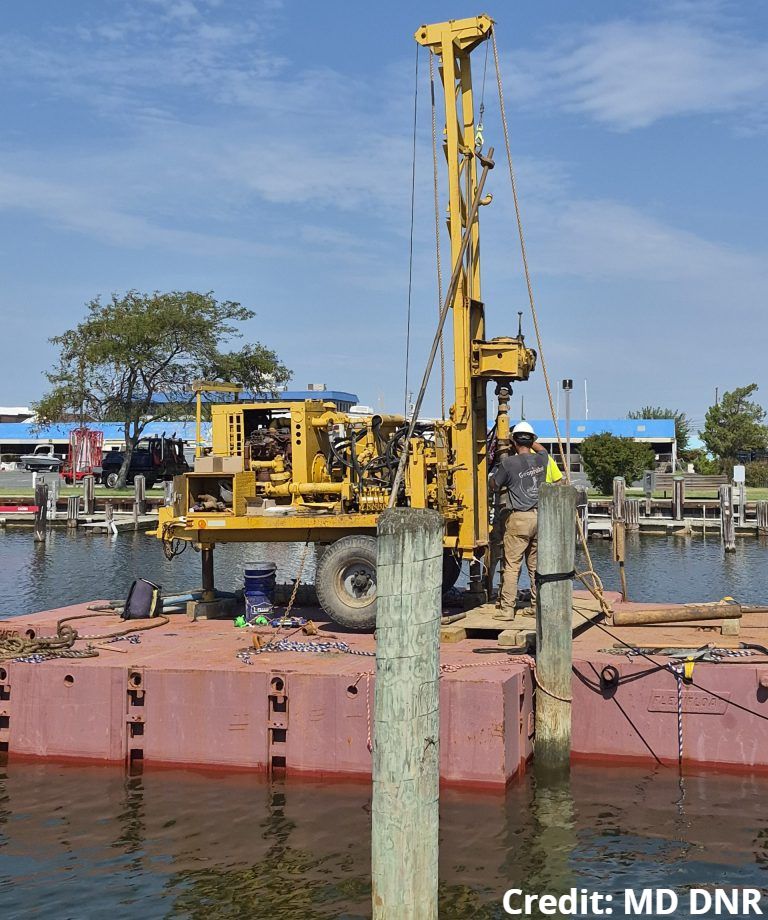
The Maryland Departments of Natural Resources, in partnership with the Maryland Department of General Services and Maryland Department of Transportation, has begun work on long-planned, major upgrades to Somers Cove Marina in Crisfield.
Known as the “Gateway to the Chesapeake” for boaters throughout the eastern seaboard, Somers Cove is the state’s largest public marina. The $30 million project will provide enhanced service for Chesapeake Bay boaters as well as economic and flood prevention benefits for the community of Crisfield. The work is part of the Moore-Miller Administration’s efforts to invest in communities all across Maryland to improve their economic prospects and residents’ quality of life.
“Somers Cove has an outsized importance for Maryland,” said Maryland DNR Secretary Josh Kurtz. “As Maryland’s largest publicly owned marina and the gateway to the Chesapeake Bay, these vital investments to Somers Cove will benefit boaters and the boating economy across the region.”
Find more information here.
| MA DMF: Expanded Access to Shellfishing on the North Shore | |
Governor Maura Healey announced expanded access to shellfish harvesting in Plum Island Sound after extensive testing by the Massachusetts Division of Marine Fisheries (DMF) found significant improvements in water quality. The updated requirements are expected to cut rainfall-related closures by more than half in one of the most productive shellfish areas on the North Shore, giving more than 200 commercial shellfishers and hundreds of recreational shellfishers as many as 72 additional harvesting days each year.
“Shellfishing is an important part of the North Shore’s economy, culture and way of life, and we’ve been working to support our Massachusetts shellfishers and strengthen our working waterfronts,” said Governor Maura Healey. “Because the water in Plum Island Sound is cleaner and the science says it’s safe, we can give more than 200 commercial shellfishers up to 72 more days a year to harvest. That means more certainty for their businesses, more local seafood on our tables and more support for a North Shore industry that has been part of these communities for generations.”
Find more information here.
| GA DNR: Oyster Harvest Closure Extended Due to Warm Coastal Waters | |
Georgia’s territorial waters will remain closed to commercial and recreational oyster harvest beginning at 6 a.m. Thursday, Oct. 1, 2026, because coastal water temperatures remain above the threshold established to protect public health, the Coastal Resources Division (CRD) of the Georgia Department of Natural Resources (DNR) announced.
The closure will remain in effect until water temperatures fall below 81 degrees and conditions warrant reopening. Higher-than-average coastal water temperatures during September prompted DNR to extend the state’s annual oyster harvest closure, which normally runs from June through September.
“This extended closure ensures that Georgia continues to meet the requirements of the National Shellfish Sanitation Program and helps protect public health,” said Dominic Guadagnoli, shellfish fishery manager for CRD.
Find more information here.
| SC DNR: Shellfish Harvest Season Opening | |
The 2026-2027 season for recreational harvest of shellfish (clams and oysters) in South Carolina's coastal waters will open one-half hour before official sunrise on Thursday, October 1, 2026. The recreational shellfish season will remain open through May 15, 2027, unless conditions warrant extending or shortening the season.
In the event of a hurricane, major rain event or pollution spill, shellfish beds may be temporarily closed by the South Carolina Department of Environmental Services (SCDES, formerly SCDHEC). Harvesters should check with SCDES to verify whether any closures are in effect. Closure information is available by calling 1-800-285-1618 or through an interactive map on the SCDES website. SCDES will also use these resources and local newspapers throughout the year to announce temporary closures resulting from unusual rain events or spills.
Find more information here.
| NYS DEC: $1.25 Million in Funding Available for Hudson River Estuary Communities | |
New York State Department of Environmental Conservation (DEC) Commissioner Amanda Lefton announced the availability of $1.25 million in grants for projects to help communities within the Hudson River Estuary watershed plan for and adapt to climate change, advance conservation and stewardship, restore habitat, improve recreational river access, and expand educational programming. The funding is announced during Climate Week and National Estuaries Week, an annual celebration to promote the importance of estuaries and the need to protect them.
“During Climate Week, New York recognizes the impact Governor Kathy Hochul’s record investments in local conservation efforts are making in improving our state’s resiliency to climate change,” Commissioner Lefton said. “Healthy estuaries play a crucial role and the $1.25 million available now through the Hudson River Estuary Grants program will help Hudson River communities further adapt to climate risk and implement projects that restore and protect estuary ecosystems.”
Find more information here.
| | |
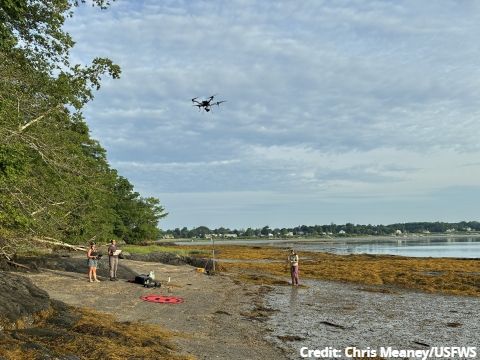
US FWS: Saving Maine's Eelgrass Meadows
This summer, U.S. Fish and Wildlife Service biologists with the Gulf of Maine Coastal Program worked with partners to advance eelgrass assessments and ultimately restore eelgrass in Casco Bay, Maine. With financial support from Restore America’s Estuaries, the partnership combined careful planning and pre-restoration monitoring with an increasingly useful conservation tool: drones.
Find more information here.
| | |
NOAA Fisheries: Funding Opportunity Reminder for Innovative Solutions to Fisheries Bycatch Challenges
NOAA Fisheries is requesting proposals to support collaborative bycatch reduction projects under the agency’s Bycatch Reduction Engineering Program. Up to $4.6 million in federal funds may be available in FY 2027. Non-federal researchers working on the development of improved fishing practices and innovative gear technologies are eligible to apply for funding. Pre-proposals are due October 5, 2026.
Find more information here.
| NOAA Fisheries: 2026 Federal Recreational Red Snapper Season and Issuance of Exempted Fishing Permits for Recreational Red Snapper Harvest in the South Atlantic Announced | |
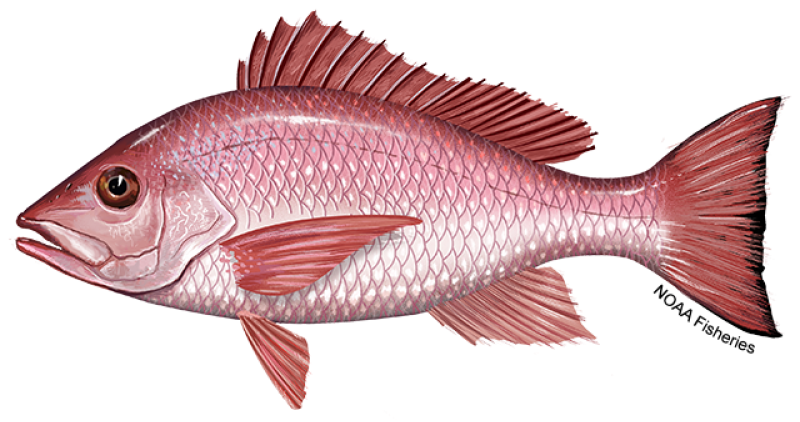
The 2026 federal recreational red snapper fishing season in the South Atlantic will open for harvest for three days at 12:01 a.m., local time, on October 9, through 12:01 a.m., local time, on October 12. This is one day longer than the 2025 two-day recreational season. Additionally, NOAA Fisheries has issued exempted fishing permits (EFP) to Florida, Georgia and South Carolina authorizing extended recreational red snapper fishing seasons for eligible participants from October 9 through October 22, 2026. EFP project participants are limited to landing or possessing recreationally harvested red snapper only under their respective EFPs, and not in addition to the federal recreational season.
Find more information here.
| | Subscribe or share with friends our collection of upcoming meetings, recent news alerts, and articles from Atlantic coast states, regional fishery management councils, and federal agencies. | | | | |