News from The RADish Ranch
| | |
Greetings!
This month we are sharing a fantastic resource with you from Dan Hughes (author of "Building the Bonds of Attachment" and "Attachment-Focused Parenting") and his Dyadic Developmental Psychotherapy (DDP) model.
The 27 S’ of Attachment-Focused Parenting focus on providing parents (and professionals) with key elements of trauma-responsive therapeutic methods that help to bring safety, regulation, connection, and attachment to the parent-child relationship.
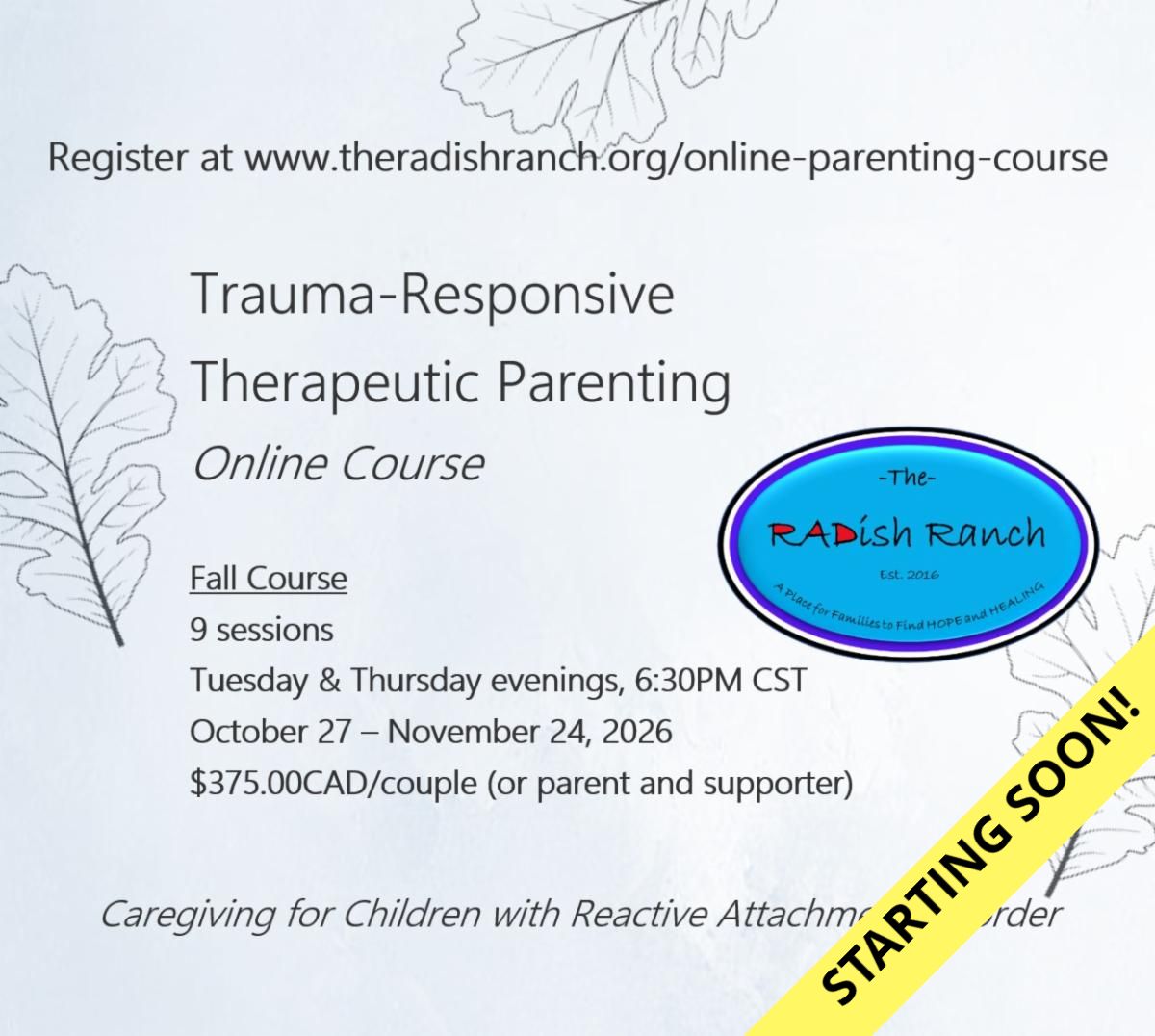
We have included adaptations to the list that highlight the practices and techniques taught in our Therapeutic Parenting Course (starting on October 27th!).
Enjoy!
| |
Karen Poitras
President & Founder of The RADish Ranch
| | |
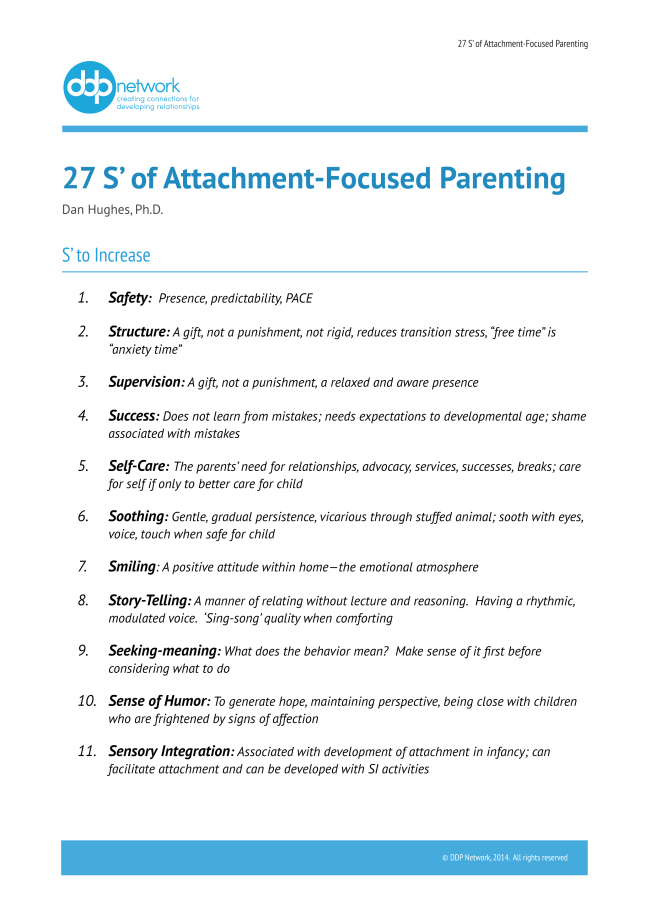
27 S’ of Attachment-Focused Parenting
from Dan Hughes, Ph.D. (with adaptations from The RADish Ranch)
| | |
S's to Increase in Trauma-Responsive Therapeutic Parenting
-
Safety. Provide physical and felt safety through presence, predictability, and PACE (playfulness, acceptance, curiosity, and empathy).*
-
Structure. A gift, not a punishment; structure and routine reduce transition stress and the anxiety of “free time,” as well as foster a sense of felt safety.
-
Supervision. A gift, not a punishment; a relaxed and aware presence through implementation of the 6 foot rule/line-of-vision supervision that provides both felt safety and attachment opportunities.
-
Success. Provide opportunities for success through problem solving, play, creativity, and chores; expectations must match developmental age. Always aim to set your child up for success.
-
Self-Care. The parents’ need for relationships, advocacy, services, successes, and breaks; care for yourself if only to better care for your child. Self-care also includes community care and accessing or building your attachment village.
-
Soothing. Gentle, gradual persistence; soothe with eyes, voice, and touch. For some children providing this vicariously through stuffed animal or comfort items is beneficial.
-
Smiling. Smiles that convey care and affection; smiles from the eyes and heart. This becomes easier when implementing intentional nurturing practices that focus on silliness and play.
-
Story-Telling. A manner of relating without lecture and reasoning, with a rhythmic, modulated voice. This can be used when discussing behaviours or parts of your child's life.
-
Seeking-Meaning. When faced with your child's maladaptive or negative behaviours, ask yourself, "What does the behavior mean?" Make sense of it first before considering what to do - this means identifying any underlying needs that need to be met and them moving into using the Safety Check Protocol behaviour intervention.
-
Sense of Humour. Use humour to generate hope, maintain perspective, find joy, and co-regulate. Laughter is the best medicine. This is true for children and parents!
-
Sensory Integration. Associated with development of attachment in infancy, sensory integration can facilitate attachment. This is included in the 6R program and Snuggle Time.
-
Stretching. As parents, be prepared to expand your parental skills, interventions, and knowledge to meet the unique needs of your child.
- Sorry. As parents, model repairing the relationship after making a mistake or experiencing a rupture. Children show they are sorry through actions (restitutions in the Safety Check Protocol), rather than words, to accept responsibility for their actions.
-
Sleep. Sleep is crucial for the functioning of all - children and parents. Unique bedtime routines need to be created and protected. Did you know your children who are dysregulated and healing need about 12 hours of sleep?
-
Soup. A healthy comfort food. Food is both an emotional and physical confirmation of good care. We often refer to mealtimes and food as the practice of "nurturing through nutrition."
- Special. Your child has a special place in your mind and heart, and knows it. This is communicate through intentional nurturing practices, co-regulation, and consistently meeting their needs.
-
Stamina. Persistence, fortitude, in it for the duration, seeing the distant horizon. This is the strength of therapeutic parents.
-
Scaffolding. Accept your child where they are in the present; be ready to help them prepare for their next developmental steps in growth, healing, and attachment.
*PACE is the foundation of dyadic developmental psychotherapy
| | |
S's to Decrease in Trauma-Responsive Therapeutic Parenting
-
Shame. Source of denial, opposition, rage, inability to trust and resolve trauma. Shame tells a child, "You are bad and not worthy of being loved." Parents must reduce shame-inducing practices.
-
Stimulation. Overstimulated by many routine, interesting, exciting events which then leads to dysregulated emotion, thinking, and behavior. Simplifying your child's environment is essential.
-
Shouting. Habitual misbehaviors often lead to habitual anger, shouting, and a negative emotional atmosphere. Self-care, support, and emotional regulation for parents allow habitual negative responses to be changed to ones of connection and healing.
-
“Should”. Advice from others to raise the child based on his chronological age. Parents must find a community and people who understand the impacts of developmental trauma and the practices of trauma-responsive therapeutic care.
-
Sarcasm. Often a substitute for anger, which can be just as destructive.
-
Seclusion. Isolation triggers abandonment and prevents co-regulation of affect. Children heal in connection and closeness with their parents. (Seclusion or isolation is only used if a child is a danger to themselves or others and safety is the immediate priority. It is ended as soon as the danger has passed and the relationship is then repaired.)
-
Smacking. Likely to re-traumatize and prevent attachment.
-
Secrets. Events from the past are shameful and frightening and met with avoidance and denial. Children must feel free and secure enough to trust parent with their secrets (past and/or present).
-
Shunning. Giving a "cold shoulder," ignoring, and/or ostracizing increase a child's sense of shame and mistrust in people and the world. This attitude toward a child is often a sign of blocked care from parents.
| | |
"Therapeutic Parenting is about creating a sense of belonging in the parent-child relationship. Boundaries are developed in increase safety and nurture is used to reduce shame.
When this is achieved, both parent and child feel safe and loveable enough to engage in a healthy attachment-bond."
-Fi Newood
| | Upcoming Programs & Resources | |
| |
Books to Boost Your Parenting!
"We bought the therapeutic parenting book, “What Are They Doing? The What, Why, and How of Therapeutic Parenting.” I came home, started reading it, and honestly started crying happy tears. It made me realize that I wasn’t a “bad” parent, just a therapeutic one. I have been doing so many of those out of survival and knowing it sometimes worked." -Therapeutic Mom
| | | | Here is some information that can help family and friends better understand RAD and Therapeutic Parenting! | | Follow us on Facebook and Instagram | | | |
“Behold, I will bring health and healing; I will heal them and reveal to them the abundance of peace and truth.”
Jeremiah 33:6
| | | | |