This Week: "Black, Indigenous, and People of Color Connections" networking event; Part-time data annotation & translation work opportunity; EAS concentrators: schedule your advising appointment; Radcliffe Institute paid research assistant application deadline tonight
|
|
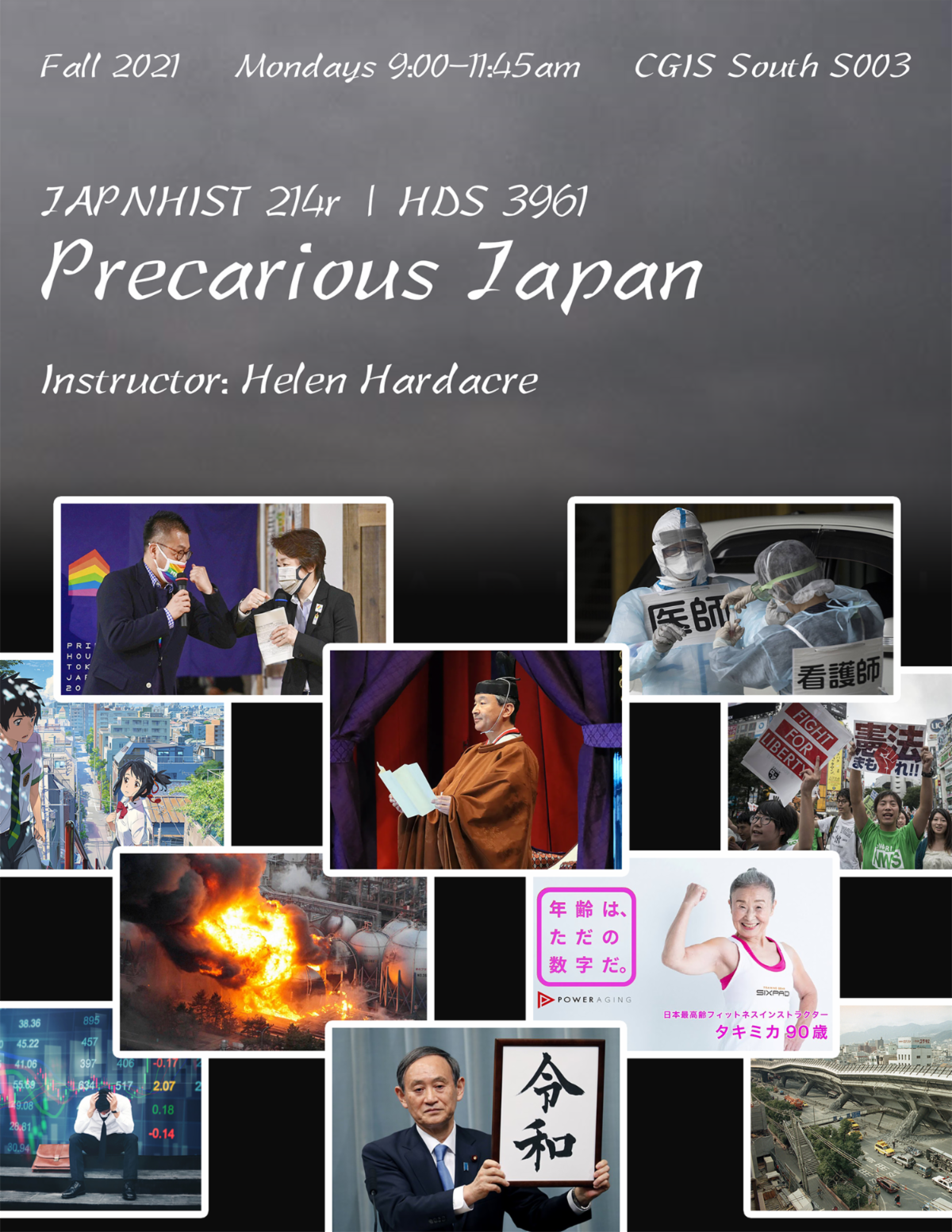
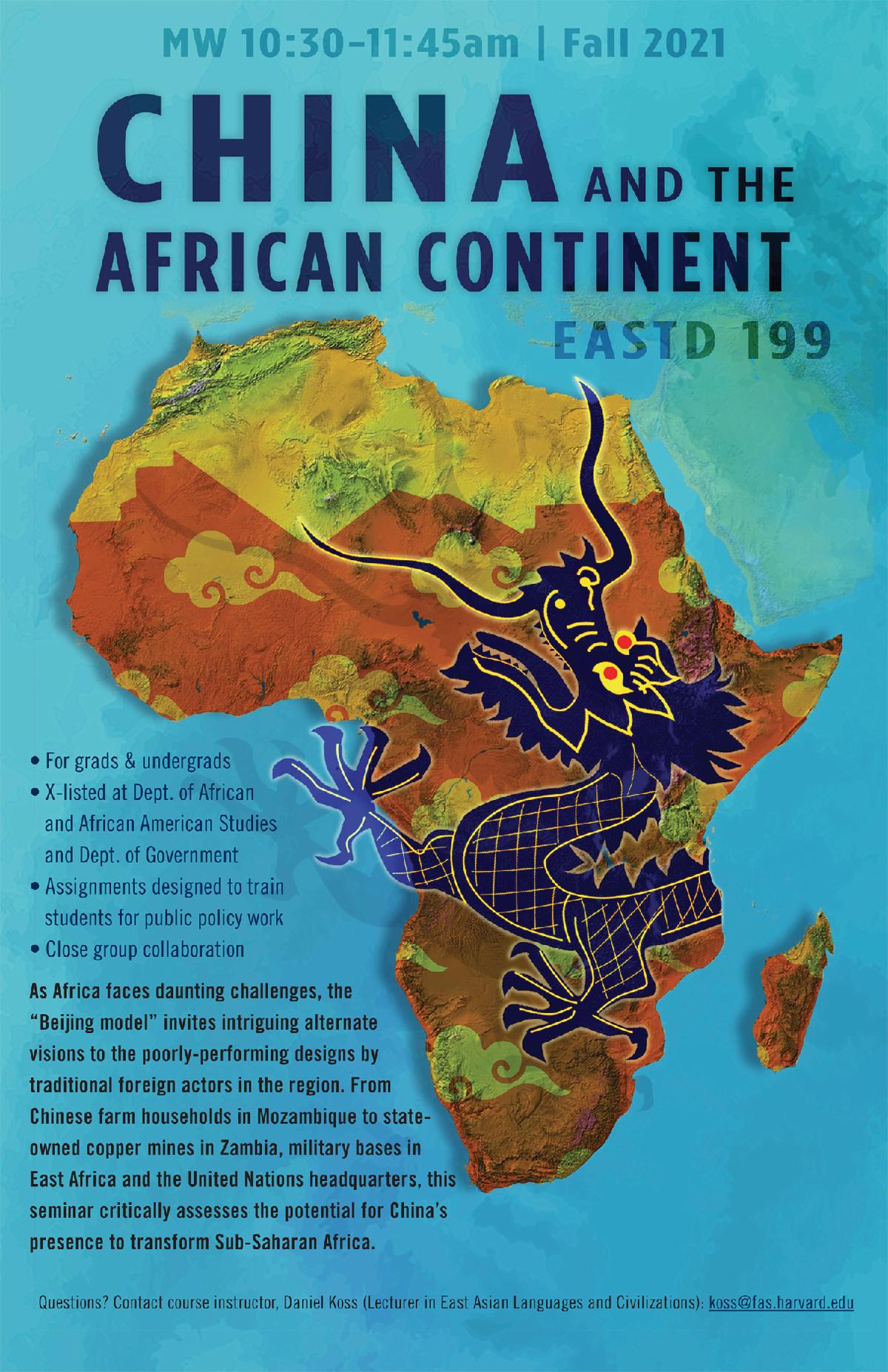
Fall 2021 Course Spotlight |
|
Concentration Announcements |
|
Interviews & Course Registration Signatures
All undergraduate concentrators and prospective concentrators must schedule an appointment with the undergraduate advising staff before the course registration deadline on August 26th.
Please schedule a meeting by e-mailing your Assistant Director of Undergraduate Studies directly.
ADUS for First-years/Sophomores:
Tuesdays 1:00pm-2:00pm | Wednesdays 11:00am-12:00pm
ADUS for Juniors:
Meet with ADUS for Juniors. E-mail to set up Zoom appointment.
Office hours: Wednesdays 3:00pm-4:00pm | Thursdays 11:00am-12:00pm
ADUS for Seniors:
Meet with ADUS for Seniors. E-mail to set up Zoom appointment.
Secondary Field
If you are interested in advising for Secondary Field, please contact Nicole Escolas at eas@fas.harvard.edu.
EAS 91r Independent Study
If you are interested in an independent study, please contact Nicole Escolas at eas@fas.harvard.edu to fill out the administrative paperwork. You can contact the faculty member with whom you wish to work directly.
Tutorial Staff
Director of Undergraduate Studies:
Professor Melissa McCormick
2 Divinity Ave. #219
p: (617) 496-2276
Office hours: Tuesdays 1:30pm-3:00pm by appointment
The Office of East Asian Studies will open for the fall semester on August 16th, 2021. Prior to that, Nicole and Naia are available via e-mail or phone M-F 7:00am-4:30pm. Please call us at 617-495-8365, or e-mail eas@fas.harvard.edu or naia_poyer@fas.harvard.edu.
Tutorial Offerings 2021-22
Fall 2021
Senior Tutorial:
A full-year course for those seniors writing honors theses. Students work in individual tutorials with a faculty advisor and a tutor. You are encouraged to make use of materials in East Asian languages in your research to the best of your abilities. Preparing for an honors thesis should begin in the junior year. Students should discuss potential thesis topics with professors and tutorial instructors and further explore these topics in papers written for tutorials or other courses.
Junior Tutorial:
The Greatest Chinese Novel
The Story of the Stone (also known as The Dream of the Red Chamber) by Cao Xueqin (1715-1763) is widely recognized as the masterpiece of Chinese fiction. It is also a portal to Chinese civilization. Encyclopedic in scope, this book both sums up Chinese culture and asks of it difficult questions. Its cult status also accounts for modern popular screen and television adaptations. Through a close examination of this text in conjunction with supplementary readings and visual materials, the seminar will explore a series of topics on Chinese culture, including foundational myths, philosophical and religious systems, the status of fiction, conceptions of art and the artist, ideas about love, desire and sexuality, gender roles, garden aesthetics, family and clan structure, and definitions of socio-political order.
Spring 2022
Senior Tutorial:
The second half of the full-year course for seniors writing honors theses.
Junior Tutorial:
Economic Governance in East Asia
East Asia has given rise to models of development with distinct visions for the relationship between the state and the market. Hallmarks of the designs are powerful ministries, gigantic conglomerates, state-supervised labor unions, and spectacular corruption. The first part of the tutorial revisits four decades of “miraculous” growth in Japan and the Asian Tiger economies (South Korea, Taiwan, Hong Kong, and Singapore), in order to illuminate underlying development strategies from a political science perspective, including through theories of late industrialization and varieties of capitalism. The second part of this course focuses on China, whose strategists have drawn on its neighbors’ experience. It highlights the vast differences between economic regions in China (the Pearl River versus the Yangtze Delta, versus lagging Western regions), as well as the significant transformation of the country’s approach over the last three decades. Students will develop a deeper comprehension of phenomena such as national champions, tycoons in the digital economy, Communist party control, international expansion, and slogans such as “Made in China 2025.” Throughout the course, we will occasionally go back in time to historical foundations of economic governance. This junior tutorial provides individualized support in the research process toward a final paper.
|
Political Geography of China
Putting Chinese politics on the map, this course asks how the government deals with the enormous challenges of ruling over a vast terrain with a diverse population, encompassing super-rich urban metropolises as well as poor rural peripheries. We begin with statecraft traditions from the late imperial era; and end with China's place on the future global maps of the 21st century. Topics include: macro-regions; priority zones of governance; Special Economic Zones; the Chinese equivalent of “blue states and red states;” rising inequality; ethnic minorities and borderlands; economic development models; urbanization and city planning; collective action in digital space; domestic and international migration; environmental politics; and the geo-politics of the “One Belt One Road” initiative. We will set aside class time for a hands-on introduction to producing and interpreting maps of China.
Sophomore Tutorial:
Introduction to the Study of East Asia: Issues and Methods
This interdisciplinary and team-taught course provides an introduction to several of the approaches and methods through which the societies and cultures of East Asia can be studied at Harvard, including history, philosophy, literary studies, political science, film studies, anthropology and gender studies. We consider both commonalities and differences across the region, and explore how larger processes of imperialism, modernization, and globalization have shaped contemporary East Asian societies and their future trajectories.
Advising Events
East Asian Languages at the Virtual Language Advising Fair
Chinese (Mandarin)
Password: nihao
Monday, August 16, 10:00am-11:00am
Japanese (General)
Monday, August 16, 10:00am-11:00am
Japanese (Additional sessions for Elementary Japanese)
Monday, August 16, 2:00-4:00pm & 7:00-8:00pm
Friday, August 20, 9:00am-11:00am
Korean
Link TBD
Monday, August 16, 10:00am -12:00pm
For more information about the Language Advising Fair, visit this page.
|
|
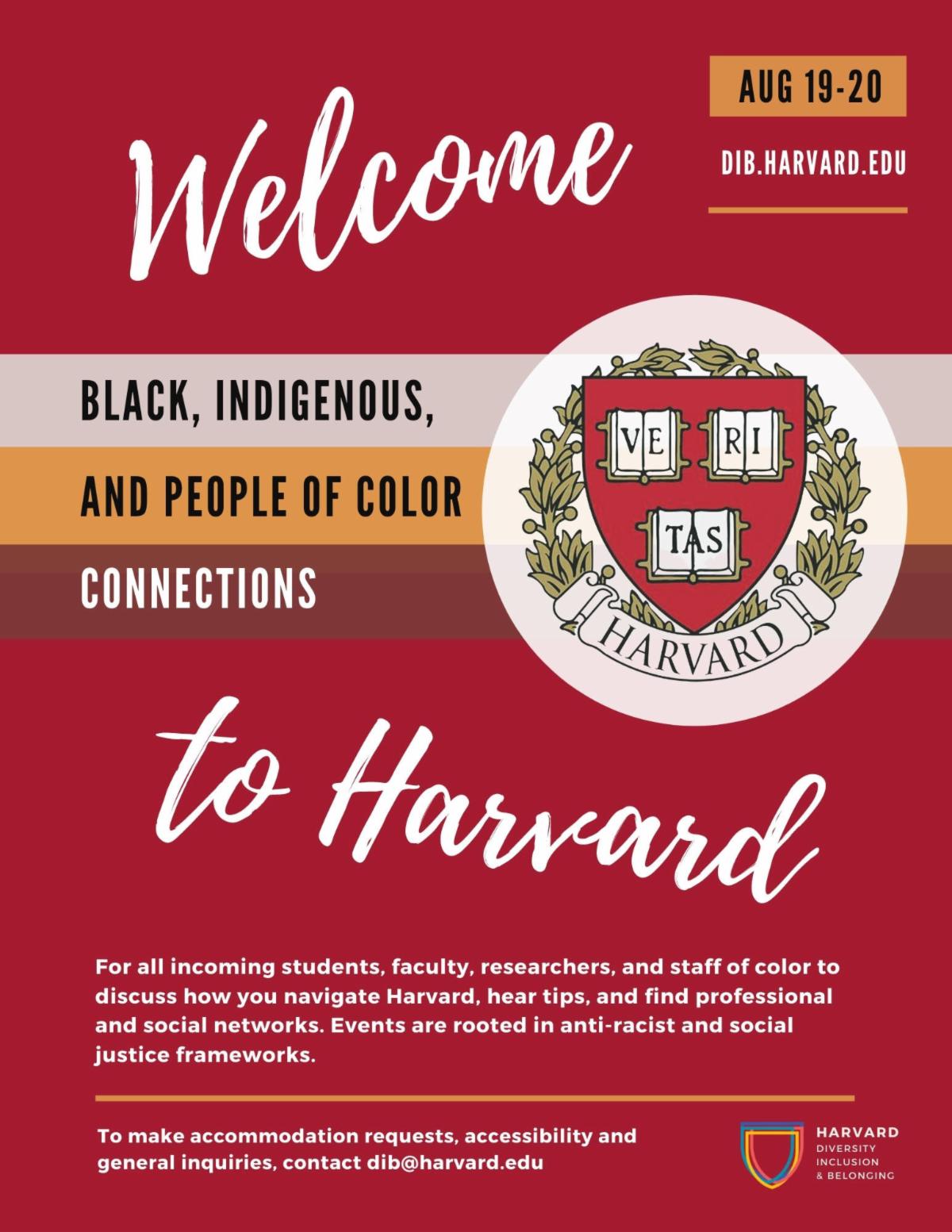
Harvard Black, Indigenous, and People of Color Connections
Date: Thu - Fri, Aug 19 to Aug 20, 10:00am - 5:00pm
Location: Online
This two-day welcome event is designed to build networks and explore navigating Harvard and Boston as a person of color.
It is open to students, staff, faculty, postdocs, fellows, and researchers joining Harvard from the past year.
If you have questions about access or accommodations for this event, please contact dib@harvard.edu.
|
|
Data Annotator and Translator, CJK languages (hourly employment via Workforce Logiq)
Location & hours: fully remote, part-time (20+ hours/week), partial flex time
Compensation: $25/hr
Moveworks is a Series C start-up in Silicon Valley that has developed a powerful AI-based chatbot which resolves enterprise employee issues autonomously and instantly using advanced Natural Language Understanding.
Overview
Data annotation entails categorizing, tagging, labeling, and evaluating textual information. This role is a blend of data annotation and translation.
Below are typical tasks you would do in this role:
- Grading the quality of algorithmic responses to user queries
- Tagging salient information in user-entered text
- Identifying mentions of common software titles and other named entities in support tickets in IT and other enterprise domains
- Categorizing support tickets by user intent using a complex multi-dimensional taxonomy
- Evaluating the performance of an AI chatbot
- Giving human feedback to MT (machine translation) algorithms
- Evaluating and commenting on the accuracy of language detection machine learning algorithms
- Search relevance evaluation
- Intent categorization using a complex, taxonomy of intents
- Translation (bi-directional)!
Expert fluency in English and Chinese OR Japanese OR Korean is required. Appreciation for language nuances born out of bi-directional written translation experience and/or academic study is necessary for this job. We are especially interested in how you approach the level of formality in the source and the target language, as well as how attuned you are to issues surrounding the language register in translating instructions for users.
Some attributes of successful candidates are:
- Cultural awareness
- Passion for the study of languages with all its applications
- Attention to detail coupled with the ability to see the big picture
- Reliable performance on repetitive tasks (we like to think of our tasks as “non-boring and repetitive”)
- An analytical mindset
- The ability to form and apply mental models consistently
- Accuracy at speed
- Motivation to meet recurrent deadlines on rolling tasks
- Ability to explain your thought process and decision making
- Willingness to put yourself in the shoes of others and empathetic understanding of the needs of users
- Proactive self-starter capable of focused independent work
- Adept at remote collaboration (Slack, ZOOM, Google suite)
- Excited to learn and improve
- Curious and creative
Selection process: successful completion of a take-home challenge (3 exercises in Google Forms, all in English) is a prerequisite for being advanced to the interviewing stage. Interviews are conducted via ZOOM.
|
|
Year-long Paid Research Opportunities with Radcliffe Research Partnership
Application deadline: Sunday, August 15 2021
Compensation: $15/hour
The Harvard Radcliffe Institute for Advanced Study is looking for undergraduate students for paid research opportunities under the supervision of a Radcliffe fellow. Although the official deadline has passed, applications for the following projects will be accepted until midnight on Sunday, August 15:
Each fellow will hire 1-3 undergraduate researchers. Students will be paid $15.00/hour and will have a unique opportunity to explore a field of interest and to build a mentoring relationship with the fellow. Students can apply here for these 2021-2022 research positions. Participants in this program, the Radcliffe Research Partnership, must be active Harvard College students who are registered and enrolled in courses and have legal authorization to work in the United States.
|
|
Asia Center Virtual Programs
Left: Photo from "Elegy to a Uyghur Dreamscape" (ongoing virtual exhibition)
|
|
Student Groups
*Please be aware that student groups may have become inactive during our time off campus. If you are aware of any updates to a group on this list, please let us know by e-mailing naia_poyer@fas.harvard.edu.
|
|
Asian American Business Association
The Asian American Business Association (AABA) provides a forum for the promotion, understanding, and cross-cultural exchange of East Asian and Asian American business, social, academic, cultural, political, and community-related initiatives. Visit their website here.
Asian American Dance Troupe
For over twenty years, the Asian American Dance Troupe (AADT) has sought to spread an appreciation and awareness of Asian culture through the medium of dance. Our repertoire includes a diverse range of dance forms including traditional, ethnic minority, fusion, martial arts, modern, and hip hop. Membership in this organization shall be open to all students in good standing currently enrolled in Harvard College. Visit their website here.
Asian American Studies Working Group is a space of interdisciplinary collaboration between faculty, graduate students, and undergraduates pursuing scholarships in Asian American and Pacific Islander (API) histories, experiences, and intellectual traditions. Its goals are to build scholarly community, to explore major debates and developments in API Studies, and to enrich the research pursued by its members across Harvard University. To contact the organizers, see when the group meets next, or to learn more, visit:https://emr.fas.harvard.edu/asian-american-studies-working-group
China Education Symposium
The China Education Symposium seeks to increase the understanding and awareness of China's education issues among the Harvard community and the greater Boston Chinese community through information sharing and discussions, and to search for feasible approaches to improve China's education. Visit their website here.
China Forum
Founded in 1998, Harvard College China Forum (former Harvard China Review Annual Conference) is currently the largest China-focused conference in the New England area and annually attracts audiences from all over North America. Every spring the forum invites influential business leaders, policy shapers, and leading scholars to Harvard to address current trends and events in a wide range of topics relevant to the development of China today. Operating under the Harvard China Review framework, HCCF works together with the Harvard China Review and runs a series of sub-programs, including monthly seminars as well as an annual cultural exchange program in the summer. Visit their website here.
CinEncounters
Established in 2012, CinEncounters is a forum for critical engagement with lesser-known masterpieces of Japanese cinema from the 1960s, 1970s, and beyond. From the Japanese “New Wave” to Pink, from Anime to Documentary, screenings will foster a collective exploration with the unexpected, the uncharted and the unusual currents of Japanese film. Monthly showings will offer an opportunity to gather, discuss and enjoy new encounters with films, filmmakers and the histories and stories behind them. Moreover, screenings will invite critics, filmmakers and others related to the films to join our discussions over Skype, when possible. All films are shown with English subtitles and no prior knowledge of Japanese is required.
The 2018-19 series is organized by Alexander Zahlten (EALC) and Julia Alekseyeva (RIJS Postdoctoral Fellow). If you are interested in receiving more information about the respective CinEncounters screenings, please send a brief email to: cinencounters2018@gmail.com.
Contemporary Japanese Politics
The Contemporary Japanese Politics Study Group was established in 1999 with the goals of better understanding key trends in politics and foreign policy in Japan and focusing a scholarly eye on key issues. This group enables advanced Ph.D. students to circulate their works-in-progress (conference papers, draft dissertation chapters, etc.) and receive feedback, as well as faculty and postdoctoral fellows to present their research.
Chaired by Susan Pharr and Daniel Smith of the Department of Government and co-sponsored by the Program on U.S.-Japan Relations (USJRP) at the Weatherhead Center for International Affairs, the group includes over fifty faculty, graduate students, and others, both at Harvard and across the greater Boston and New England region.
For more information, please contact Shinju Fujihira, Executive Director of the Program on U.S.-Japan Relations. For details about study group events, visit their website here.
Gaongil (Harvard College Modern Korean Studies Society)
A tight-knit organization that meets once a week to discuss various economic, social, political, cultural issues related to modern Korea. As the Korean word "Gaongil" means "Middle-Path," the organization is committed to remaining nonpartisan while encouraging free and unhindered discussion.
Anyone who is interested in joining Gaongil can come and check it out! No prior experience with Korean language or culture is needed, and the meetings are entirely in English.
Fill out the interest form here to be included in their e-mail list.
Harvard Asian American Women's Association
The Asian American Women's Association recognizes the need for a unified, open community at Harvard concerned with the issues facing women of Asian descent in Western society. The purpose of the Asian American Women's Association is to address these needs by creating a collective voice and promoting the prominence and concerns of the female Asian-American population, both within the community and without, particularly through regular discussion of pertinent issues. Visit their website here.
Harvard Buddhist Community
The HDS Buddhist Community (HBC) is a nondenominational Buddhist group serving the Harvard and Cambridge communities throughout the school year. In addition to hosting weekly meditation sittings, HBC also organizes Buddhist film screenings and discussion groups, as well as the annual Buddhism & Race Conference. HBC generally meets weekly in Andover Chapel at the Harvard Divinity School.
Harvard Chinese Students and Scholars Association (Harvard CSSA)
Harvard CSSA is dedicated to the goal of promoting social, intellectual, and cultural activities of Chinese students and scholars at Harvard and for other interested members in the Harvard community. It facilitates communication among its members and acts as a liaison between itself and other organizations on campus. The group works to facilitate the exchange of information between China and the United States. Its activities include sponsoring and co-sponsoring social, intellectual, and cultural events, films, and seminars. President Xu Zhang. Group e-mail is harvardcssa@gmail.com. Visit their website here.
Harvard College Japan Society
The Japan Society promotes the culture and spirit of Japan at Harvard through cultural experiences, social interaction, and community bonding. Visit their website here.
Harvard Hong Kong Society
The HHKS is dedicated to promoting unique aspects of Hong Kong culture and society, and bringing together all students who are interested in Hong Kong. Visit their website here.
Harvard-Radcliffe Chadō Society
The Chadō Society is a group of Harvard students dedicated to learning chanoyu (in English, commonly known as “Japanese tea ceremony”). Though the organization is officially an undergraduate organization, they also welcome graduate students, non-student Harvard affiliates, and non-Harvard students to learn tea in the tradition of the Urasenke school. The organization’s instructors are all members of Urasenke Boston, the local affiliate of the Kyoto-based Urasenke organization. The head of the international organization is Sen Soshitsu XVI, who is a direct descendant of one of the first Japanese tea masters, Sen no Rikyu. The current club president, Jaden Freeze, can be reached at harvardchadosociety@gmail.com. Visit their website here.
Harvard Tai Chi Tiger Crane Club
The Harvard Kung Fu Club and the Tai Chi Club are two divisions of the Harvard Tai Chi Tiger Crane Club, a club sport registered at the Malkin Athletic Center with the Harvard Department of Athletics. For more information, visit their website here.
Harvard Taiwanese Culture Society
TCS is a student-run organization at Harvard College dedicated to promoting the culture and heritage of Taiwan and of Taiwanese-Americans. From cultural events like making muaji to social events like karaoke to special events like our annual winterfest: a taste of Taiwan, our goal is to enhance awareness of Taiwanese culture and to provide a place for those interested in learning about Taiwan to meet and to discuss their interests. Visit their website here.
Harvard Vietnamese Association
The Harvard Vietnamese Association is dedicated to fostering an awareness of Vietnamese culture on campus and within the Greater Boston area, and promoting the interests of the Vietnamese student body at Harvard. Visit their website here.
Korea Caucus
The mission of Korea Caucus is to actively raise the awareness of Korea within the KSG community by sharing the country's cultural heritage through social events, serving as a bridge and resource to non-Korean students who are interested in learning more about the country. They also aim to provide a forum to address key issues facing Korea and the implications for the rest of the world through activities and events. Visit their website here.
Korean Association
The Korean Association leads the undergraduate Korean-American community's efforts to teach and learn about Korean culture and political issues. The KA additionally provides a social outlet for Korean-American students who are interested in meeting others with a shared heritage and common interests. The KA supports cultural groups including YISEI the magazine, the fan dance troupe Chunsa, and the Korean drumming group (poongmul pae) Han Ma Eum. Visit their website here.
Organization of Asian American Sisters in Service
OAASIS currently consists of 25 members who are committed to each other in three aspects: commitment in sisterhood, commitment in service, and commitment in exploring the diverse experiences of Asian and Asian American women. Our comp process for Spring 2019 will be starting soon! Please visit our website at www.oaasis.info, or our Facebook page at http://facebook.com/harvardoaasis. Any questions can be directed to compoaasis@gmail.com. OAASIS is an officially recognized student organization that welcomes students of all gender and ethnic identities.
|
Chinese Art Media Lab (CAMLab)
CAMLab explores innovative ways of showcasing Chinese art and culture through immersive installations, exhibitions, films, digital publications, curatorial projects, and other multimedia forms. For more information, visit their website and Instagram.
Explore Asia at Harvard Map (Harvard Asia Center)
The Fairbank Center for Chinese Studies provides undergraduates studying China with a myriad of opportunities and resources, including funding to travel to China, information about programs in China, and opportunities to do research with respected scholars of Chinese studies. Visit their undergraduate resources page: https://fairbank.fas.harvard.edu/resources/undergraduate/
Free Peer Tutoring for Undergraduates
A new program implemented to replace the former Bureau of Study Council. Read more here.
The Harvard Asia Center generates and shares knowledge about Asia from a transnational and transregional perspective. With its core lectures, seminars series, and conferences, the Center engages with topics critical to Asia and its connections with other regions, bringing in notable academics, government officials, business leaders, and other specialists as featured speakers and panelists. Learn more about Asia Center lectures, events, and student grants here: https://asiacenter.harvard.edu/programs-events
The Harvard-Yenching Institute is an independent foundation dedicated to advancing higher education in Asia in the humanities and social sciences, with special attention to the study of Chinese culture. Learn more here.
International Chinese Studies Virtual Events Clearing-House
In spring 2020, as a result of the Covid-19 pandemic, China Studies around the world moved online. One unanticipated consequence of this unfortunate situation is that it is now possible to attend events regardless of one’s location. The China Studies Virtual Events Clearing-house has been created to share information about upcoming online events with the broader China studies community. The clearing-house was created and is maintained by the Fairbank Center for Chinese Studies at Harvard University. Learn more here.
International Japan Studies Event Database
The International Japanese Studies Events Database was created in response to the Covid-19 pandemic and the shift to online event programming undertaken at institutions and programs worldwide. Inspired by a similar initiative within the Chinese studies community and Harvard's Fairbank Center, the Edwin O. Reischauer Institute of Japanese Studies, in cooperation with the Weatherhead Center Program on US-Japan Relations, has launched this site as a service to the wider Japanese studies community. Learn more here.
Korean Studies Portal
Japan Digital Research Center (Reischauer Institute of Japanese Studies)
Japan Disasters Digital Archive
The Radcliffe Institute for Advanced Study is dedicated to creating and sharing transformative ideas across the arts, humanities, sciences, and social sciences. Visit their events page here: https://www.radcliffe.harvard.edu/calendar/list
The Reischauer Institute of Japanese Studies is an excellent resource for EAS concentrators studying Japan. Find a calendar of Japan-related events and lectures, undergraduate grant information, and internship opportunities on their website: rijs.fas.harvard.edu
|
Have an event/group you'd like featured in this newsletter? Contact Naia Poyer (EALC Program Assistant).
|
|
|
|
|
|
|