| |
|
| |
Volume 15. Issue 4. August 2017 |
|
|
|
|
Greetings from Executive Director
In June, NYSCADV participated in the National Network to End Domestic Violence's Advocacy Day in Washington, DC. We also had the opportunity to participate in a training hosted by Joe Fuld, founder of The Campaign Workshop. This was a day-long intensive which helped state domestic violence coalition staff from across the country focus on sharpening our advocacy efforts.
In a broad sense, advocacy is helping someone understand your issue. And, a campaign can mean much more than running for office. The development of a successful advocacy campaign is multilayered and may include parsing major goals into primary and secondary goals. Some elements of a campaign include: message development, grassroots and grasstops advocacy tactics, digital campaign integration, fundraising/budgeting, and communicating with the press. While it's hard to condense a full day's worth of activities, here are some key tips we took away from the training:
- Always consider your audience when thinking about your message. Are you speaking to survivors? Community members? Board members? Funders? Define the stakes for people who don't know.
- Build a database of reporters in your area focused on your issue.
- When refining your message, make sure to think about the 7 C's - clear, concise, contrastive, connective, creative, coordinated, and consistent.
- Grassroots vs grasstops - it's best to engage both!
- Some campaigns can take time - it's okay to have primary and secondary goals that will get you to where you want to be.
- Be sure to tell your story! You are the experts!
All the best,
Connie
|
|
|
NYSCADV 2017 Annual Meeting
NYSCADV's 2017 Annual Meeting will be held on September 25, 2017 at the Hilton Albany.
|
|
NYSCADV Day of Action 2017
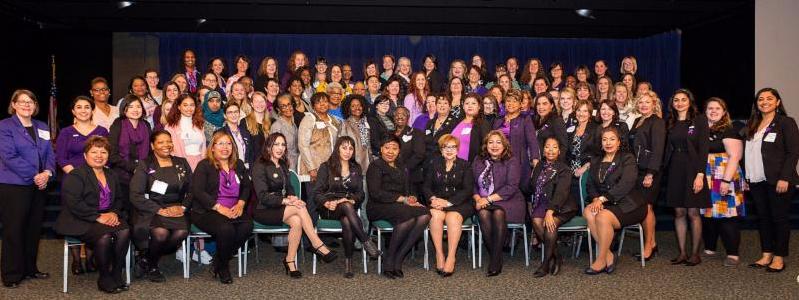
In May 2017, approximately 200 Advocates, Service Providers and Allies joined NYSCADV in Albany, to send a strong and unified message. We called on the
New York State Senate and
Assembly Majority to prevent domestic violence and protect survivors of domestic violence.
|
NNEDV Census 2017
Save the date! NNEDV's 2017 Census will take place on September 13th.
NNEDV's Domestic Violence Counts: National Census of Domestic Violence Services (Census) is an annual noninvasive, unduplicated count of adults and children who seek services from U.S. domestic violence shelter programs during a single 24-hour survey period. Conducted annually by NNEDV since 2006, this Census takes into account the dangerous nature of domestic violence by using a survey designed to protect the confidentiality and safety of victims.
In preparation for the census, NYSCADV is contacting all New York State domestic violence programs to verify contact information and identify a point person for the census.
Please email Jennifer at
jclark@nyscadv.org
if your agency has not responded to/received a verification request. Please include in the email your organization name, mailing address, phone number, name and email of Executive Director, and name and email of the contact person for the census data.
|
|
NYSCADV & Partners will Participate in SUNY's Got Your Back Events in Binghamton & Long Island
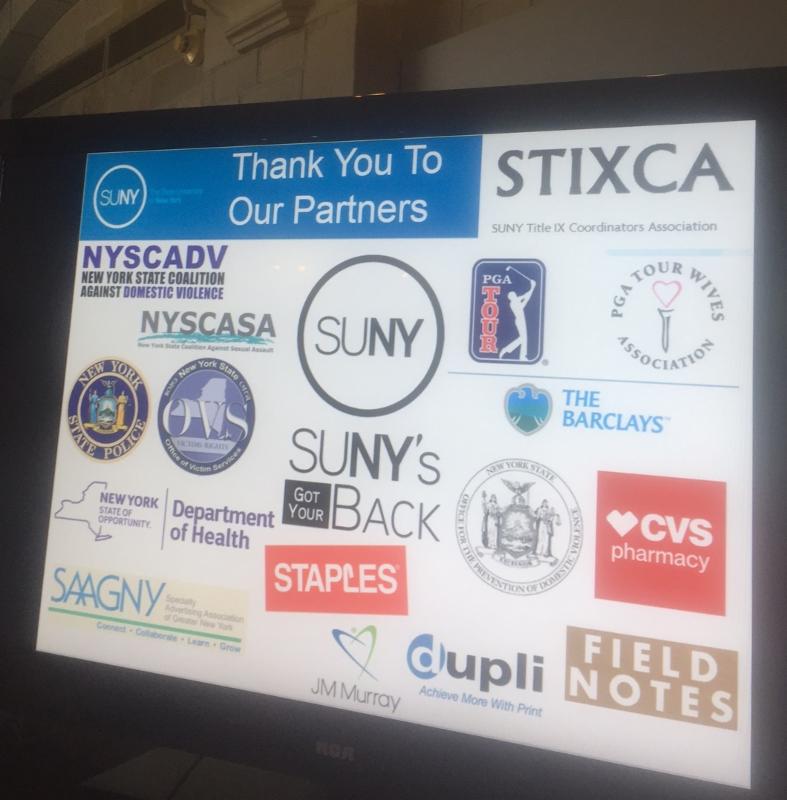
For the second year, NYSCADV is partnering with allies and the State University of New York's (SUNY) Got Your Back program to assemble comfort bags for local domestic violence and sexual assault service providers.
SUNY's Got Your Back is a program to distribute bags to survivors who are seeking help from local domestic violence and sexual assault programs, and New York State Coalition Against Domestic Violence is a partner in this initiative. University leaders, Professional Golf Association's (PGA) touring professional golfers, business leaders, partners and volunteers will be participating in two events being held in Binghamton and Long Island.
In the program's first year, more than 10,000 bags were assembled and distributed to shelters and hospitals. This year, we will be assembling 10,000 bags in six days in August.
|
|
Governor Cuomo Signs Legislation
Ending Child Marriage in New York
Governor Andrew Cuomo
signed legislation to end child marriage in New York. The legislation raises the age of consent to marry from 14-years-old to 18-years-old and amends the process to require parental and judicial consent for marriage of those between 17-years-old and 18-years-old.
Connie Neal, Executive Director of the
New York State Coalition Against Domestic Violence said, "We are pleased to see Governor Cuomo sign into law this legislation which will end child marriage in New York State" said "Child marriage has been a problem of great concern, as it is coerced marriage. Worldwide women who are married before the age of 18 are 3 times more likely to have been physically assaulted by their spouses than women who marry at 21 or older. The legislation passed both houses unanimously, and updates an antiquated New York State law which will allow for girls to have more educational, social, and economic opportunities and advantages in the future."
NYSCADV collaborated with allied organizations to pass End Child Marriage bill in 2017.
|
Court Strikes Down Groton Lockdown Law,
Citing First Amendment
The ruling, which came from the New York State Supreme Court Third Appellate Division, could have implications for the City of Binghamton, where a lockdown law served as a model for Groton's and has frequently been used to shut down after hours clubs.
Lockdown laws, more formally referred to as public nuisance abatement laws, are used by municipalities to shut down properties where multiple code and nuisance violations have been reported. Reports of violations often come from calls to police.
The more serious the violation or crime, the more points a property receives. In Binghamton, if a property accrues more than 12 points in six months, or more than 18 points in a year, the city will send a letter informing the property owner of the law, and asking them to meet.
That's also the case in Groton,
whose law
is a nearly word-for-word copy of
Binghamton's
.
The ruling struck down the law in its entirety, stating, "the unconstitutional aspects of the law are so interwoven into its provisions" that striking down only parts of the law wouldn't suffice.
"Nothing in the nuisance law precludes the assessment of points against a property for police involvement resulting from a tenant's exercise of the right to petition the government for redress by summoning police," the court said.
And a law that punishes people for calling law enforcement violates their First Amendment rights, the court said.
It is possible the laws could be made constitutional, though, said Sandra Park, senior attorney with the ACLU Women's Rights Project, who helped file an amicus brief in the case.
A
bill the could have made through the New York Senate would make it illegal to penalize people for calling 911.
The bill, Park said, could have created the exemption the court was looking for in the Groton case, allowing it to strike down only parts of the law while keeping others.
|
|
New York Adding Shelter Options for Homeless
Victims of Domestic Abuse
Domestic violence continues to drive homelessness in New York City, ahead of evictions and overcrowding, at a time when the city's primary shelter system is so taxed that Mayor Bill de Blasio plans to open 90 new facilities over five years.
To address the issue, the city is also bolstering its separate, smaller system of domestic violence shelters by opening 54 additional apartment-style units for families next month. Another 150 emergency beds for individuals are to open later this year.
The city currently has 47 emergency shelters for domestic violence victims whose lives are in danger and seven shelters with apartment-style units for those who are not at imminent risk but need to keep their locations confidential. (About 2,700 people are currently accommodated among both types of shelters.)
But the new beds cannot keep pace with the demand for the shelters, which last year housed a total of 8,786 people, including the children of victims.
|
|
De Blasio Administration Releases
Domestic Violence Task Force Report
Mayor Bill de Blasio and First Lady Chirlane McCray released the
Domestic Violence Task Force Report, recommendations to reduce domestic violence in New York City. The city will invest nearly $7 million to better apprehend abusers as well as ensure support for survivors. Domestic violence crime is rising in New York City: the number of intimate partner homicides rose from 49 in 2015 to 59 in 2016, and the number of domestic violence incident reports rose from 75,241 in 2015 to 76,237 in 2016.
Convened in November 2016, the Task Force was charged with developing a coordinated response to this persistent problem that included both criminal justice and social services intervention.
In 2007, 4.8% of all major crimes in the City were related to domestic violence, broadly defined to include offenses involving members of the same family or household as well as those related to intimate partners. By 2016, that percentage had reached 11.6%. Domestic violence now accounts for one in every five homicides-and two in every five reported assaults-citywide.
The Task Force conducted an in-depth review of current City programs and investments to enhance the delivery of social services to victims, evidence gathering and other law enforcement tactics. The new approach focuses on intervening as early as possible, enhancing pathways to safety for survivors and ensuring swift, effective and lasting enforcement to hold abusers accountable.
|
|
Soldier Accused of Killing New York State Trooper
After Domestic Dispute
A New York state trooper was shot dead while responding to a domestic dispute in Jefferson County.
An Army soldier is suspected in the death. The body of the GI's wife was found on the scene, and another woman survived being shot.
Trooper Joel R. Davis was killed as he approached a residence in the town of Theresa after reports of shots being fired, New York State Police Superintendent George P. Beach said in a statement.
Justin D. Walters, 32, surrendered without incident, the statement said.
Davis was a 36-year-old father of three teenagers, assigned to the town of Philadelphia, Beach said.
Gov. Andrew Cuomo sad in a statement, "The entire New York family grieves today. His death is yet another sad reminder of the risks law enforcement officers face each day in order to protect our communities and serve the residents of this great state."
|
|
Poor Domestic Violence Coverage May 'Perpetuate' Abuse
Superficial or irresponsible reporting on domestic violence "re-victimizes" readers who have experienced it, and "may perpetuate cycles of abuse," says the New York City Mayor's Office to Combat Domestic Violence.
A recent study by the NYC Mayor's Office analyzing 442 print articles in the New York media written between 2013 and 2016, concluded that press coverage of Intimate Partner Violence (IPV)-and in particular of homicides linked to domestic violence cases─is often "inadequate" or infected by sensationalism, which in turn prevents serious public debate on the issue.
According to the study, the media covered 99 of the 126 intimate partner homicides recorded in New York during that period. But in many of the articles there was no mention of "domestic violence" or "intimate partner violence."
The report called on the media to live up to its "critical role in shaping how society perceives the dynamics of IPV, and in sparking conversation around public responsibility and solutions to IPV."
|
|
Police Must Tackle Language Barrier in Domestic Abuse Cases
Ms. Macareno was one of several women who filed a federal discrimination lawsuit against the city in 2013, claiming that the police violated their civil rights by denying them interpreters. The parties reached a settlement this month that requires the police department to adopt new protocols and training for officers responding to domestic violence incidents involving victims and witnesses who do not speak English well.
Under the terms of the agreement, which was approved on Wednesday by a federal judge in Manhattan, the police department will train officers over the next 18 months on when to call on an interpreter and how to use their department-issued smartphones to reach a city-contracted service that provides immediate access to interpreters in more than 240 languages.
As part of the settlement, the city will pay a total of $297,500 to 15 women involved in the lawsuit. An additional $460,000 will go to Legal Services NYC, the group that represented the women, and the Violence Intervention Program, an advocacy group for Latina women that was also a plaintiff in the lawsuit.
|
|
ICE in New York State Courts Survey
Since the election, Immigration and Customs Enforcement (ICE) has substantially increased the number of immigrants it targets in New York State Courts.
As a result, many advocates are hearing from im
migrants that they have a profound fear of going to court. This includes immigrants who need access to the courts for orders of protection, to defend against criminal charges, and to vindicate their rights as tenants.
To better understand these concerns, a coalition of legal services and community based organizations sent out a survey to the field from June 12 - 23. 225 advocates and attorneys from 31 counties across New York State participated. The participants work in criminal, family, housing, employment, education, and immigration law, and practice in criminal, family, and civil courts in New York State.
The result shows 50% of more than 225 advocates have worked with immigrants who are afraid to go to court because their abusive partners have threatened that ICE will be there and
67% of advocates working with survivors of violence have had clients who decided not to seek help from the courts due to fear of ICE.
|
|
300 Groups Say The Senate Health Care Bill Would Hurt Rape And Child Abuse Victims
NYSCADV Signed on the letter to protect healthcare for domestic violence survivors
Victims of rape and domestic abuse would suffer "devastating" effects if either the House or Senate proposals to revamp health care are passed, a large coalition of advocacy groups said as they demanded that lawmakers tear up their drafts and craft a better bill.
More than 300 national and local nonprofits signed a
letter sent to the Senate leadership on Monday, heaping pressure on Republican lawmakers who were forced to delay a vote on the Senate proposal because of lack of support. The vote won't take place until after the July 4th recess.
The letter
calls the current Republican proposals in Congress to overhaul the Affordable Care Act "unacceptable" because they could lead to insurance company policies that "simply price people right out of care" - disproportionately affecting victims of domestic violence, sexual assault, and child abuse.
|
|
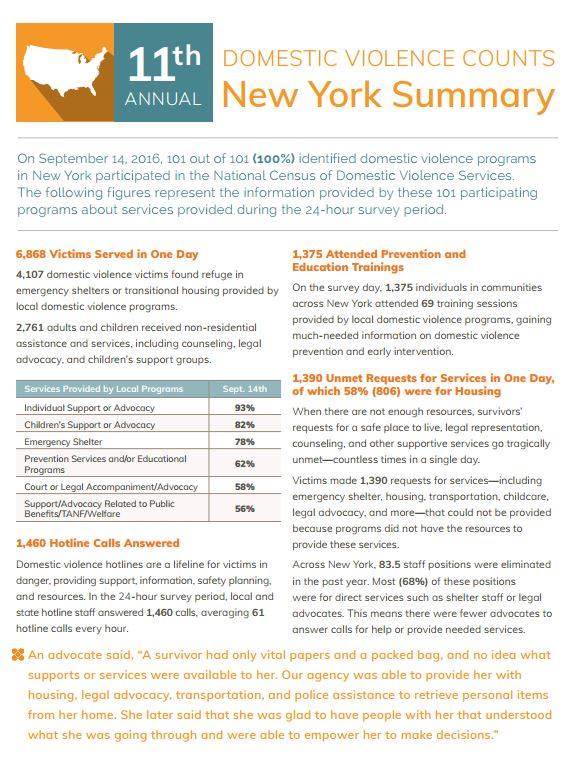
New York State results from 2016 NNEDV #DVcounts
The National Network to End Domestic Violence (NNEDV) released the
11th annual Domestic Violence Counts census report. The 24-hour count [1] of services provided to adult and child victims offers a unique glimpse into the untold story of our nation's domestic violence shelters.
Domestic violence programs provide desperately needed services to individuals who are very often fleeing for their lives. Shelters provide a safe haven in a time of fear and uncertainty, working closely with families, communities, law enforcement, health care workers, and other advocates.
The data revealed in this newly released report show that in just one day...
- 1,762 local domestic violence programs (92% of 1,910) participated in the national census and reported the number of services they provided to survivors, as well as the services they were unable to provide.
- 72,959 adults and children received help and support from domestic violence programs on Census Day. Of this number, more than 41,000 adults and children found refuge in emergency shelters or transitional housing.
- 26,076 individuals participated in prevention and education trainings offered by domestic violence programs that day, including students, teachers, law enforcement, and community leaders.
- 20,239 calls for help were answered by local, state, and national hotline staff and volunteers.
- 6,868 Victims Served in One Day
- 1,460 Hotline Calls Answered
- 1,375 Attended Prevention and Education Trainings
- 1,390 Unmet Requests for Services in One Day, of which 58% (806) were for Housing
- Across New York, 83.5 staff positions were eliminated in the past year. Most (68%) of these positions were for direct services such as shelter staff or legal advocates.
|
|
ICE Removes Protected Names From Public Database and Pledges to Safeguard Data in the Future
The Immigration and Customs Enforcement (ICE) bureau of the Department of Homeland Security (DHS) shared in a
July 14, 2017 letter that it has removed from its publicly searchable database all federally protected information of immigrant victims of crime. In the letter, ICE states that it "takes very seriously both its mission to promote public safety and its obligations to safeguard crime victims."
This letter comes after advocates found that identifying information about victims of domestic violence, human trafficking, and other crimes was publicly searchable in a new database launched by ICE in late April 2017. The Tahirih Justice Center informed ICE Acting Director Thomas Homan about the violation by letters dated May 12 and
May 25, and requested that ICE immediately remove all confidential information from the database. Although it took several weeks, during which time the database remained fully available, ICE finally removed the protected information.
|
|
Bresha Meadows Case: Teen Who Killed Father Gets
Deal That Spares Jail Time
Bresha Meadows, the 15-year-old girl Ohio jailed for killing her allegedly abusive dad, finalized a plea deal with Trumbull County prosecutors that will soon move her from behind bars to a treatment center.
The teen, who has been locked up for 10 months already, will be moved from a detention center to the Bellfaire JCB residential treatment center on July 29th - where she will receive therapy for the next six months.
Then, if all goes well, after 18 months in custody, she will finally go home.
|
Nearly Half of All Murdered Women
Are Killed by Romantic Partners
A new CDC report suggests that domestic violence is a major cause of death for women.
Over half of the killings of American women are related to intimate partner violence, with the vast majority of the victims dying at the hands of a current or former romantic partner, according to a new report released by the Centers for Disease Control and Prevention today.
The CDC analyzed the murders of women in 18 states from 2003 to 2014, finding a total of 10,018 deaths. Of those, 55 percent were intimate partner violence-related, meaning they occurred at the hands of a former or current partner or the partner's family or friends.
In 93 percent of those cases, the culprit was a current or former romantic partner. The report also bucks the strangers-in-dark-alleys narrative common to televised crime dramas: Strangers perpetrated just 16 percent of all female homicides, fewer than acquaintances and just slightly more than parents.
About a third of the time, the couple had argued right before the homicide took place, and about 12 percent of the deaths were associated with jealousy. The majority of the victims were under the age of 40, and 15 percent were pregnant. About 54 percent were gun deaths.
Click here and read the full article "Nearly Half of All Murdered Women Are Killed by Romantic Partners." |
|
Men Legally Allowed to Finish Sex Even If Woman Revokes Consent, NC Law States
North Carolina is the one state where the law explicitly says you cannot revoke consent once it's given. A bill that would remove this "unacceptable loophole" has little traction.
As a result, for the past 38 years, women in North Carolina-like 19-year-old Aaliyah Palmer, who allegedly agreed to have sex with a man at a party but changed her mind when he got violent-have been unable to legally revoke consent after sexual intercourse begins. "It's really stupid," Palmer recently
told the Fayetteville Observer. "If I tell you no and you kept going, that's rape."
On March 30, state Sen. Jeff Jackson, a Democrat, filed a bill that would change this horrific law. (He filed a
similar bill with two Republican co-sponsors in 2015.) The text of SB 553 is short and to the point, reading, in part: "a person may withdraw consent to engage in vaginal intercourse in the middle of the intercourse, even if the actual penetration is accomplished with consent and even if there is only one act of vaginal intercourse."
Currently, the
bill
sits in the Senate's Rules Committee, where it is likely to be tabled. Jackson tells Broadly he plans to refile the bill again next year. "This really shouldn't be a controversial matter," he says. "North Carolina is the only state in the country where no doesn't really mean no. Right now, if a woman tells a man to stop having sex he is under no legal obligation to do so, as long as she initially consented. If sex turns violent, the woman has no right to tell the man he must stop."
|
|
The Congressional Baseball Gunman Had a History of Domestic Violence
Americans who follow news about public shootings in the country will not be surprised by the biography of James T. Hodgkinson, the 66-year-old from Belleville, Illinois, who shot up a D.C.-area baseball practice for congressional staffers on Wednesday morning.* He is a white man with a
legal license to own firearms
, for one thing. And, like so many men who attempt mass murder, he has a history of violence against women.
On Wednesday, Hodgkinson shot two Capitol Police officers, House Majority Whip Steve Scalise, and multiple congressional staffers, all of whom have survived their injuries. (Hodgkinson was
killed by law enforcement officers
.) According to police records, he had committed violent acts before. In April 2006, Hodgkinson was arrested in Illinois after allegedly punching a woman in the face at a private residence and firing a shotgun at a young man at the scene.
NBC reports
that police recovered a shotgun, a pocket knife, and hair from a woman's head at the scene;
the Daily Beast is reporting
that Hodgkinson was seen "throwing" another woman identified as his daughter around a room, hitting her, pulling her hair, and grabbing at her. The first woman tried to leave in a car with Hodgkinson's daughter, but he reached in, turned off the engine, and cut her seatbelt with a knife. Though Hodgkinson was charged with battery, his case was later dismissed.
|
|
Estimating The Cost of Domestic Violence
and Stalking on Victims Lives
Financial manipulation is a tactic abusers commonly use in domestic violence cases to torment and control their victims.
"What we know is that economic security equals safety," said Sarah Gonzalez Bocinski, director of the Economic Security for Survivors Project at the Institute for Women's Policy Research. "Without those resources, options are very limited."
As many as 74% of women surveyed at domestic violence shelters reported that they stayed with an abuser longer because of financial issues, she said, citing a 2012
Mary Kay Foundation report.
Some states offer unemployment insurance benefits to domestic violence and stalking victims who have to quit their jobs and relocate for safety reasons. Michigan only affords those protections to victims if the perpetrator is a coworker.
Vermont has a restitution program that collects fees from court and traffic fines and uses them to pay up to $10,000 to domestic violence victims, Gonzalez Bocinski said.
"As far as we know, that's the only state who has set up a system like that," she said. "Then the state goes after the perpetrators to get those funds reimbursed. ... It's a very victim-centered approach, which is nice to see. You get those resources right away when you need it the most, when you are trying to disentangle yourself from an abusive partner and are trying to re-establish your life."
|
|
India's All-Women Police Fighting Sexual Harassment
Female officers trained in martial arts patrol the streets of Jaipur to rein in sexual violence.
Nearly 40,000 rapes are recorded in India each year, but many more are thought to go unreported.
Widespread anger over the death of a student who was gang raped on a bus in Delhi in 2012 has driven some progress towards change.
|
|
Teen Dating Abuse Discussion with
Jaime Saunders, CEO of Willow Center &
Lorien Castelle, NYSCADV Director of Prevention
Dating violence is a widespread issue, and many teens who are victims of violence in relationships do not report their experiences out of fear. According to a 2011 survey conducted by the CDC, "23 percent of females and 14 percent of males who ever experienced rape, physical violence, or stalking by an intimate partner, first experienced some form of partner violence between 11 and 17 years of age."
Connections with Evan Dawson discussed teen dating abuse and new initiatives that address barriers faced by survivors
with Jaime Saunders, CEO of Willow Center & Lorien Castelle, NYSCADV's Director of Prevention
. Willow Domestic Violence Center is leading the way with local initiatives. It's opening a new state-of-the-art facility that includes an expanded emergency shelter, an expanded counseling center, and an onsite pet shelter.
|
THRIVE: A Framework for Understanding the Community Determinants of Intimate Partner Violence
Prevent Intimate Partner Violence (IPV), a project of the National Resource Center on Domestic Violence has released a
new resource to support local IPV prevention efforts in diverse communities.
THRIVE: A Framework for Understanding the Community Determinants of Intimate Partner Violence presented by Lisa Fujie Parks and Ashley Crawford, hosted by the PreventIPV Project of the National Resource Center on Domestic Violence (August 2, 2016)
There is growing understanding that social determinants of health (SDOH) need to be addressed in order to promote health, safety, and health equity. But there are few frameworks and tools that specifically focus on how to address issues like intimate partner violence (IPV) through a SDOH approach. Prevention practitioners working at the community level are asking questions such as: What factors need to be addressed to promote community environments that support safe relationships and decrease rates of IPV? And how can efforts to address these factors decrease inequities in rates of IPV rather than exacerbate them?
In this webinar, Prevention Institute provided an overview of THRIVE, a framework and tool that can help prevention practitioners explore these questions. PI shared work completed in 2016 with support from the Blue Shield of California Foundation to map the community determinants of IPV onto THRIVE. Presenters explored how THRIVE can be used as a practical framework and tool to support local IPV prevention efforts in diverse community contexts.
Objectives:
- Provide an overview of THRIVE, a framework and tool to address the social determinants of health at the community level;
- Discuss the community determinants of IPV using THRIVE; and,
- Explore how THRIVE can be used as a framework and tool to support local IPV prevention efforts in diverse community contexts.
Click here to watch the recorded THRIVE webinar and view additional materials.
|
|
|
Two New Websites Launched by Future Without Violence for Preventing and Ending Intimate Partner Violence
More prevalent for women in the U.S. than breast cancer and diabetes combined, intimate partner violence (IPV) can have a significantly adverse impact on one's physical and mental well-being, but health care professionals can play a critical role in preventing violence and supporting survivor health. As one of the nation's leading voices on the intersection of health and domestic violence,
Futures Without Violence is launching two new websites that are designed to be digital hubs for establishing partnerships between domestic violence agencies and healthcare settings across the country.
The first,
www.ipvhealth.org, provides background information on the health impact of violence and abuse, as well as tools and resources for establishing a partnership between domestic violence agencies and health settings. The second new website,
www.ipvhealthpartners.org was developed by building on the success of the ten domestic violence agencies and ten community health centers that participated in a productive initiative called Improving Health Outcomes Through Violence Prevention Project.
Ipvhealthpartners.org is a step-by-step guide for community health centers and local domestic violence agencies to establish partnerships with one another, and better meet the health needs of DV/sexual assault survivors.
|
|
CDC New Guide on Adapting Evidence-based Approaches
CDC released
Using Essential Elements to Select, Adapt, and Evaluate Violence Prevention Approaches to help state and local partners with the implementation of evidence-based prevention approaches.
Because each setting for violence prevention strategies is unique, practitioners must make decisions about how to balance delivering prevention approaches as intended with the reality of their local context. The
Division of Violence Prevention developed this guidance document to support a step of the implementation process.
How can the document be used?
This guidance will help anyone implementing violence prevention programs to:
- Identify essential elements of approaches
- Better understand what evidence-based approaches are and
- Apply this knowledge to effectively select, deliver, adapt and evaluate approaches.
Although this guidance was designed with evidence-based approaches in mind, it may also be useful for approaches supported by promising or emerging evidence.
To learn more, join CDC and
PreventConnect
for a web conference Monday, August 28 at 11am PST/2pm EST.
For more information and to register, click here.
|
|
What's the Deal with Snap Map?
|
|
NNEDV new campaign: #TechSafetyMeans
Technology allows us to quickly and easily connect with other people. Technology can be a valuable resource for survivors, granting them access to information, resources, emergency services, and networks of support. However, technology is also often misused by perpetrators to stalk, harass, and control victims. For example, offenders can manipulate technology to track and stalk victims. They can also install spyware on survivors' devices to secretly monitor and harass them. By hacking or inappropriately accessing a survivor's webcam, hard drive, or online accounts, abusers can gain access to personal information which can be used to locate the survivor or as blackmail.
The Safety Net project at the National Network to End Domestic Violence (NNEDV) addresses the intersection of technology and domestic violence, stalking, sexual assault, and dating violence. Since technology permeates many aspects of our lives, we at NNEDV strive to ensure that survivors and advocates can utilize technology safely, effectively, and securely.
To us, #TechSafetyMeans...
- Supporting survivors at the local level.
- Making connections and serving survivors through strong statewide networks.
- Advocating for privacy and digital safety at the national level in government, with tech companies, and other allied agencies.
- Ensuring survivors know how to safeguard their privacy and maintain safety on all their devices.
- Creating communities where perpetrators cannot use technology to their advantage.
- Advocating for change that benefits all survivors!
|
|
Online Harassment In US Rising Because Anti-Cyberstalking Laws Are Not Enough
The biggest bane of the digital age - anyone can track you online, even if it is just to annoy you, harass or threaten you. Despite a number of laws, cyberstalking, cyberbullying and other forms of online harassment are on a steady rise in the United States.
According to a recent study conducted by Pew Research Center, 41 percent of the 4,248 poll participants from the U.S. said they were personally harassed online, and about 66 percent witnessed others being cyberstalked. Although most participants faced minor forms of harassment that could easily be shrugged off, 18 percent said the harassment was serious that left a long-lasting impression on their lives.
The Constitution provides some means to prevent cyberstalking, such as the Interstate Communications Law,
which states: "Whoever transmits in interstate or foreign commerce any communication containing any demand or request for a ransom or reward for the release of any kidnapped person, shall be fined under this title or imprisoned not more than twenty years, or both."
However, the glaring limitation to this law, as pointed out by a
Harvard Law report, is it only applies to real time threats and is not necessarily applicable in situations where a person deliberately posts messages on a bulletin board or in a chat room with the intention of annoying, harassing or terrorizing another person.
Further, "
The Interstate Stalking Act," was signed into law by former President Bill Clinton in 1996. While this act does address the issue of harassment, it requires the stalker to have physically traveled across state lines in order to stalk his or her victim. It becomes redundant when it comes to internet stalking.
|
|
Safe Housing Partnership
The Safe Housing Partnership is a new for for the Domestic Violence and Housing Technical Assistance Consortium, is an innovative, collaborative approach to providing training, technical assistance, and resource development at the critical intersection of domestic and sexual violence, homelessness, and housing. Funded and supported by an unprecedented partnership between the U.S. Department of Health and Human Services, Department of Justice, and Department of Housing and Urban Development, this multi-year Consortium brings together national, state, and local organizations with deep expertise on housing and domestic violence in order to collaboratively build and strengthen technical assistance to both housing/homelessness providers and domestic violence service providers. The Consortium aims to improve policies, identify promising practices, and strengthen collaborations necessary to improve housing options for survivors of domestic violence and their children in order to enhance safety, stability, and well-being.
Survivors of violence face real barriers when trying to access safe housing - barriers caused by the power and control dynamics of abuse, a need for safety and confidentiality, economic instability, the effects of trauma, and the lack of affordable housing in communities. Nobody should have to choose between staying in an unsafe home and having no home at all.
The new website included sections on:
- Understanding the intersection of domestic and sexual violence and homelessness for women and children
- Key approaches to addressing barriers to safe housing
- Building partnerships between DV/SA organization and homelessness and hosing providers
- Public policy
- Technical assistance
- Statistics
- More information about the consortium
|
|
2016 National Report on Hate Violence Against Lesbian, Gay, Bisexual, Transgender, Queer and HIV-Affected Communities
2016 was the deadliest year on record for the LGBTQ community
National Coalition of Anti-Violence Programs (NCAVP) released its 20th annual report Lesbian, Gay, Bisexual, Transgender, Queer and HIV-Affected Hate Violence in 2016. For this report - the most comprehensive of its kind - NCAVP collected data on 1,036 incidents of hate violence against LGBTQ and HIV-affected people from 12 local NCAVP member organizations in 11 states. States reporting were: Arizona, California, Illinois, Ohio, Massachusetts, Michigan, Missouri, New York, Virginia, Vermont and Wisconsin.
For twenty years, NCAVP has released reports on the pervasive and sometimes deadly hate violence perpetrated against LGBTQ and HIV-affected communities. The NCAVP LGBTQ and HIV-Affected Hate Violence in 2016 report is being released at a time when the executive branch of our government is hostile to our communities; sweeping anti-LGBTQ legislation is advancing in states across the nation; and existing protections are being rolled back, leaving already vulnerable communities even more susceptible to violence. NCAVP has compiled this report to address the nature and frequency of this violence and who it affects. "Recent executive orders as well as ongoing efforts to pass anti-LGBTQ legislation and roll back protections at the city, state, and federal level make LGBTQ people vulnerable to identity-based discrimination as we go about our daily lives," said Beverly Tillery at the New York City Anti-Violence Project. "These attacks on our communities send the message that discrimination and violence against LGBTQ people is acceptable. Every one of us must call out and resist religious exemption and anti-LGBTQ public accommodation bills for the hateful legislation that they are, and advocate for increased protections for LGBTQ communities on the state and federal level."
Click here to read the full
"2016 National Report on Hate Violence."
|
|
Resources For Protecting Domestic Violence
Immigrant Survivors
The Immigrant Defense Project has several community resources including a 2 page Know Your Rights flyer (available in eight languages), ICE Raid Toolkits and planning guides for those at risk of deportation. In addition to community resources, they also operate a Criminal Immigration hotline and have additional resource guides for criminal defenders, immigration attorneys, judges, and prosecutors.
Click here to view the Immigrant Defense Project'
s Resource Guides.
The National Latin@ Network, a project of Casa de Esperanza, has put together a Question & Answer (Q&A) document for advocates and attorneys serving immigrant survivors of gender-based violence. The Q&A on immigrant survivors of gender-based violence includes information for undocumented survivors and survivors who may be eligible for VAWA self-petitions, U visas, T visas or those applying for gender-based asylum.
#KnowYourRights
Video Series from Newsweek and Immigrant Defense Project
Individuals at risk of deportation and communities looking to protect loved ones and neighbors can provide critical support by learning about a person's rights when encountering ICE. Knowing one's rights and having a plan does not guarantee that someone will avoid arrest, but can provide critical support in other ways-for example, it could help legally challenge an arrest; shield children from the direct trauma of a raid; support broader advocacy to stop the spread of militarization and aggressive policing; and affirm the strength of community connections.
To help immigrants, their loved ones and community allies, Immigrant Defense Project have now collaborated on a series of videos produced by Newsweek on how to prepare for an ICE raid
NNEDV Resource Highlight: WomensLaw & Immigration
Refugees, immigrants, victims of trafficking, and asylum seekers may have the ability to access legal immigration protections. Many refugeesand immigrants are vulnerable to exploitation, and face limited options to reach safety.
Understanding these protections can be difficult; WomensLaw provides access to up-to-date, plain language legal information specific to these victims of domestic and sexual violence:
- VAWA self-petition: The VAWA self-petition allows certain spouses, children, and parents of U.S. citizens and certain spouses and children of permanent residents (Green Card holders) to file a petition for themselves, without the abuser's knowledge.
- U visas: U visa can help crime victims obtain legal status. The U visa may be available to victims of domestic or sexual violence, stalking, and other crimes, who help in the prosecution of the crime committed against them.
- T visas: T visa was designed to provide temporary non immigrant status to victims of severe forms of human trafficking. These laws are crucial in helping survivors escape from abusers, find work and housing, and protect their family members.
- Asylum: WomensLaw.org also provides information on seeking asylum in the United States. Foreign victims of severe domestic abuse and violence, including undocumented immigrants, may qualify for asylum. Asylum status can help survivors and their families by granting legal status, work authorization, and eligibility to apply for permanent residency after one year.
Additionally, WomensLaw provides legal resources for organizations that specialize in immigration law and international cases.
|
|
Assessing the Readiness of Your Coordinated Community Response (CCR) for Formal Risk or Danger Assessment
Advocates and law enforcement officers have conducted informal danger and safety assessments of individual intimate partner violence (IPV) cases without the use of standardized tools for decades, and do so even today. Informal safety assessments have evolved over the years into the adoption of formal risk and danger assessments, that measure the relative likelihood and severity of another physical assault committed by a perpetrator. These assessments were developed by accomplished researchers in the field, with some of the best known instruments including: Danger Assessment (DA); Domestic Abuse, Stalking, and Honour Based Violence Risk Identification, Assessment and Management Model (DASH); Domestic Violence Screening Instrument (DVSI); Lethality Assessment Program - Maryland Model (LAP); Ontario Domestic Assault Risk Assessment (ODARA); Spousal Assault Risk Assessment (SARA); Stalking and Harassment Assessment and Risk Profile (SHARP), and the Victim Inventory of Goals, Options, & Risks (VIGOR). A description of these tools and links to more comprehensive information about them is found on the Battered Women's Justice Project's website.
|
|
Firearms and Domestic Violence: A Deadly Combination
Firearms and domestic violence are a lethal mix. Looking at homicides that occurred in 2011, a recent study showed that nearly two-thirds of women killed with guns were killed by their intimate partners.(1)
It is clear from this data that removing guns from domestic abusers saves lives.
It is important for all disciplines to understand the federal firearm laws and their relationship to any state laws. The complexity of firearm legislation and case law make it difficult and confusing to determine what laws apply and to whom. Federal law prohibits abusers who have been convicted of misdemeanor crimes of domestic violence and persons subject to certain protection orders from purchasing or possessing guns and ammunition. Some states have enacted legislation that mirrors the federal firearm prohibitions. Other jurisdictions have adopted broader laws to address issues that the federal law does not address such as including dating relationships and stalking crimes. To assist practitioners, The National Center of Protection Orders and Full Faith & Credit (NCPOFFC) has compiled
a matrix of domestic violence-related firearm prohibitions.
All disciplines that deal with intimate partner violence have a unique responsibility to address the presence and use of weapons to ensure survivor safety. NCPOFFC has created firearms checklists so practitioners can be better prepared to deal with weapons possession. Please click the following link to access the appropriate firearms checklist:
Law enforcement checklist:
This checklist for law enforcement provides information on two classes of persons prohibited under the domestic violence related provisions of the federal Gun Control Act. Those subject to a protection order (18 USC 922 (g)(8)) and those convicted of a misdemeanor crime of domestic violence (MCDV) (18 USC 922 (g)(9)) are prohibited from purchasing or possessing firearms. This document also provides tips on seizure and safe return of firearms as well as responding to information requests and incidents of officer-involved domestic violence. It is important for all disciplines to understand the federal firearm laws and their relationship to any state laws.
This checklist for judges provides key information on the federal Gun Control Act provisions prohibiting purchase or possession of firearms by those subject to a protection order (18 USC 922 (g)(8)) or those convicted of a misdemeanor crime of domestic violence (MCDV) (18 USC 922 (g)(9)). Detailed information on who is prohibited, as well as surrender, transfer, and return of firearms, and requirements of judicial notification are provided.
This checklist provides information for advocates facilitating a discussion with survivors about firearms. It also provides key information on the federal Gun Control Act provisions prohibiting the purchase or possession of firearms by those subject to a protection order (18 USC 922 (g)(8)) or those convicted of a misdemeanor crime of domestic violence (MCDV) (18 USC 922 (g)(9)).
This checklist for prosecutors provides key information on the federal Gun Control Act prohibiting those subject to a protection order (18 USC 922 (g)(8)) or those convicted of a misdemeanor crime of domestic violence (MCDV) (18 USC 922 (g)(9)) from possessing a firearm or ammunition. This tool provides tips from charging decisions to documenting the conviction, as well as facilitating a community response to aid in convicting dangerous abusers.
|
FVPSA Report on the Intersection of Human Trafficking and Domestic Violence
A report from the Family Violence Prevention and Services Program (FVPSA) at Family and Youth Services Bureau (FYSB) highlights the nexus between domestic and sexual violence and human trafficking.
Intersections of Human Trafficking, Domestic Violence, and Sexual Assault is a recently released report that shares information and recommendations from a round table hosted by FVPSA in September 2014. The event included three listening sessions: one with community-based organizations; another with tribal communities and programs; and a final session with state domestic and sexual violence coalitions.
|
|
Elder Abuse Resources For Domestic and Sexual Violence Advocates and Programs
Many older survivors will seek the help of domestic and sexual violence advocates and programs in dealing with the abuse they experience. Older victims can benefit from many of the services traditionally offered by domestic violence and sexual assault programs such as individual and peer counseling, support groups, emergency and transitional housing, and specialized economic and legal advocacy. However, domestic violence and sexual assault programs have not customarily served many victims age 50 and older. Typically, staff working in domestic violence or sexual assault programs have more experience working with younger populations than older individuals.
Notwithstanding these challenges, advocates and programs can have a profound and positive influence in the lives of older survivors. Advocates can use their specialized skills and training and their confidential relationship with survivors to help them better understand the dynamics of abuse; to be aware of the available options, services, and resources; and to assist them as they navigate through complex intervening systems. Advocates and programs can also help to combat ageist social norms by promoting dignity and respect for persons of all ages in their work and service programs.
|
|
OVC Awarding Funding to Increase Access to Mental Health Services for Victims of Crime
Deadline: August 10, 2017
OVC seeks applicants for the FY 2017 Vision 21 Integrated Services for Victims Program: Increasing Access to Mental Health Services for Victims of Crime solicitation to bridge the divide between crime victims, victim service providers, and mental health service providers so communities can create a seamless network of services to assist crime victims.
OVC anticipates that it will make awards under five purpose areas.
- Purpose Area 1: Suicide Prevention Gatekeeper Training for Crime Victim Advocates-Help victim service providers properly identify crime victims who may be exhibiting signs of suicidality, refer them to appropriate mental health services, and support their access to such services.
- Purpose Area 2: Increasing Access to Victim Services for Victims of Domestic Violence and Sexual Assault Who Have a Serious Mental Illness-Increase the capacity of both victim service providers and mental health service providers to provide mental health services to victims of domestic violence and sexual assault who also have severe mental illness.
- Purpose Area 2A: Funding for Direct Services-Successful applicants will (a) aid domestic violence and sexual assault services providers with properly identifying victims who have a serious mental illness, referring them to mental health services treatment, and adapting their operational policies and procedures; and (b) assist mental health
- Purpose Area 2B: Training and Technical Assistance- Provide TTA to successful applicants under Purpose Area 2A, in order to increase their capacity to meet the needs of victims of domestic violence and sexual assault who also have a severe mental illness.
- Purpose Area 3: Increasing Access to Mental Health Services to Traditionally Underserved Victims of Crime-For purposes of this program, traditionally underserved victims of crime include, individuals who are deaf and hard of hearing; lesbian, gay, bisexual, or transgender (LGBT); American Indians and Alaska Natives; individuals who are limited English proficient (LEP); and individuals who reside in rural communities.
- Purpose Area 3A: Funding for Direct Services-Successful applicants will develop and implement projects that use technology and other innovative practices to reach these populations.
- Purpose Area 3B: Training and Technical Assistance (TTA)-Provide TTA to successful applicants under Purpose Area 2A in order to increase their capacity to overcome barriers to accessing mental health services for members of underserved populations.
|
|
Deadline: Thursday, September 28, 2017 at 8:00 PM EDT
This Notice of Funding Availability (NOFA) establishes the funding criteria for the FY 2017 Continuum of Care (CoC) Program. HUD is making available approximately $2 billion in Fiscal Year 2017 for the CoC Program. The CoC Program is designed to promote a community-wide commitment to the goal of ending homelessness; to provide funding for efforts by nonprofit providers, States, and local governments to quickly re-house homeless individuals, families, persons fleeing domestic violence, and youth while minimizing the trauma and dislocation caused by homelessness; to promote access to and effective utilization of mainstream programs by homeless individuals and families; and to optimize self-sufficiency among those experiencing homelessness.
|
Webinars, Events & Trainings
(descriptions are taken directly from the host's event announcements)
|
NYSCADV 
NYSCADV Annual Meeting 2017
10:00 AM - 4:00 PM
Albany, NY
NYSCADV's 2017 Annual Meeting will be held on September 25, 2017 at the Hilton Albany.
|
|
Battered Women's Justice Project Webinars
Part I: Recognizing Stalking in Intimate Partner Violence Cases
Aug 9, 2017
2:00-3:30 PM EST
Research has shown that 7.5 million adults are stalked in one year in the United States, yet stalking is a crime that is often misunderstood, minimized, or missed entirely. While stalking remains an under reported crime, when it is reported, stalking charges are rarely filed even when all the elements of the crime are present. Part I of this webinar series will explore the importance of recognizing the intersection of stalking in intimate partner violence cases and the various technologies being used to track and monitor victims. It is important that law enforcement and prosecutors recognize stalking behaviors as threatening, criminal behaviors that often play out in intimate partner violence cases. This recognition can lead to better charges filed, enhanced criminal penalties, the allowance of evidence that would otherwise be non-admissible, and help protect the victim from a potentially lethal encounter. As a result of this webinar, participants will have a better understanding of stalking and the intersection with intimate partner violence cases, including various technologies used.
Debunking Domestic Violence Myths
Aug 16, 2017
3:00-4:30 PM EST
Intimate partner violence (IPV) and its concomitant elements of physical violence, sexual abuse, psychological abuse and coercive control can profoundly affect the lives of those exposed to it. How women respond to IPV has been the subject of analysis for several decades. The overall conclusion of much of that work was that the term, "battered woman syndrome" does not adequately capture the scientific and clinical knowledge of battering and its effects, a statement that is even more true today. This webinar will present a model of threat appraisal that addresses the legal requirement of self-defense in cases where an alleged IPV victim is charged in the death of an alleged abuser. The model of threat appraisal integrates cognitive psychology, cognitive neuroscience and clinical psychology and provides a framework for assessment of the elements that contribute to understanding threat appraisal or threat detection. Case examples will be provided.
Safer Families, Safer Communities
Aug 21, 2017
3:00-4:30 PM EST
Safer Families, Safer Communities, a project of the National Domestic Violence and Firearms Resource Center, supports comprehensive implementation and enforcement of domestic violence firearm prohibitions at all levels of government. By providing information, as well as community-based strategies and examples, this project seeks to prevent domestic violence -related homicide in our families and communities.
Part II: Stalking Evidence: What to Look For and How to Get it Admitted
Aug 23, 2017
3:00-4:30 PM EST
In Part II of this webinar series we will delve into the investigation and prosecution of stalking cases. We will explore how to conduct thorough investigations, including evidence preservation and collection as well as investigative strategies for interviewing victims and suspects. We will also look at evidentiary issues, particularly around technology, prosecutors may face when trying stalking cases. It is imperative that law enforcement and prosecutors work together to hold offenders accountable and keep victims safe. As a result of this webinar both law enforcement and prosecutors will have a better understanding of the unique challenges for investigating and prosecuting stalking cases and the strategies to overcome them with an emphasis on collaboration.
The Patchwork of State Laws on Firearm Prohibitions for Domestic Violence Protective Orders
Aug 25, 2017
3:00-4:30 PM EST
Comparison of current state laws regarding firearms prohibitions following imposition of domestic violence protective orders.
Domestic Violence is Complex: Cycles, Wheels, or Systems
Aug 29, 2017
3:00 - 4:30 PM EST
This webinar will focus on the challenges posed to clinicians in working with victims of violence. Dr. Burge will present the findings of their research. The partner violence literature describes three dominant models of dynamics of partner aggression: Cycle of violence, family systems theory, and Duluth model (power and control wheel). Complexity science describes three patterns of system dynamics: Periodic, chaotic, and random. Are these parallel patterns? In this analysis, investigators calculated dynamic patterns (periodic, chaotic, and random) using 84 daily reports of male-to-female aggression and assessed the "fit" between time-series-derived patterns of male partners' violent behaviors and literature-based models of violence dynamics.
|
|
End Violence Against Women International
Practical Tools and Techniques for Obtaining Post-Arrest Communications in Cases of Intimate Partner Violence and Human Trafficking
August 30, 2017
1:00-2:30 PM EST
In this webinar, two expert investigators will explain various types of communications that can be obtained during a law enforcement investigation, and describe how they can be used in court, using real-world examples. Discussion will include communications from suspects in jail or prison, as well as social media posts. The presenters will also explore the implications for human trafficking investigations, since many of these cases start out as IPV, as well as elder abuse. Technical tools and tips will be provided for obtaining and preserving various forms of communications (e.g., recorded jail communications, cell phones, computers).
|
Employment Opportunities
(descriptions are taken directly from the host's employment announcements)
|
|
|
|
| |
|