|
|
|
|
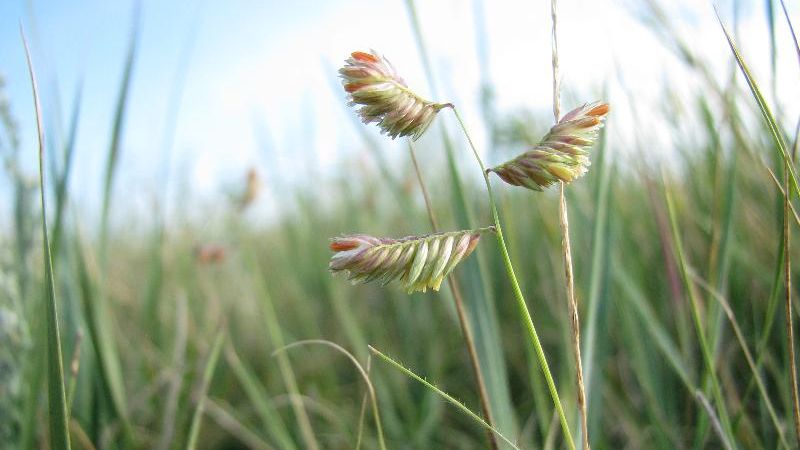
Buffalograss, photo: Sarah Vinge-Mazer.
|
Greetings from the PCAP office!
I hope everyone has found time to enjoy quality time outdoors this summer and had a chance to watch the frequent and outrageous prairie storms this past month, hopefully from a safe place!
Here at the SK PCAP office, July was spent planning our fall and winter activities as well as the joint Native Prairie Restoration/Reclamation Workshop and Transboundary Grasslands Partnership Workshop in Regina in February 2020! See below for more details!
If you missed any of our Native Prairie Speaker Series last month, the recordings are available on our YouTube Channel. We had Geoff Holroyd discuss Burrowing Owls and Shirley Bartz discuss Loggerhead Shrikes in Val Marie. We also hosted a webinar by Joel Nicholson from Alberta Environment and Parks, that discussed their Greater Sage-grouse Recovery Program. You can find our YouTube channel here!
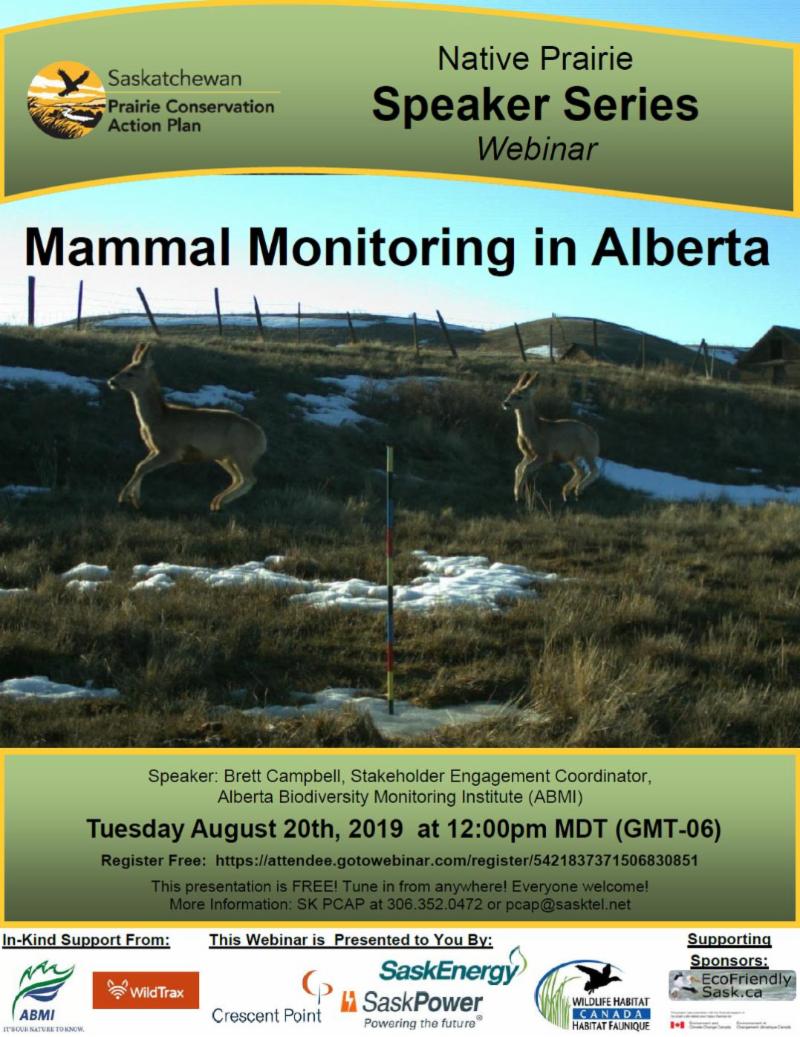
We have a great webinar coming up on August 20th about mammal monitoring in Alberta by Brett Campbell with the Alberta Biodiversity Monitoring Institute. You can register for free here! And if you're in the Eastend area on August 14th, Dr Jeff Lane will be giving a presentation on bats at the SODCAP AGM, as part of PCAP's Native Prairie Speaker Series.
There are also quite a few events in August in SK and the prairies, make sure to check out the events section of the newsletter!
Finally, we would like to thank the generous support from our sponsors: Crescent Point Energy, SaskPower, SaskEnergy, SaskTel, SaskWater, Mosaic, Enbridge, EcoFriendly Sask, Wildlife Habitat Canada and Environment and Climate Change Canada, as well as the continuous support of all the PCAP's
Partners
.
Please feel free to contact us at any time!
Enjoy the rest of your summer!
Carolyn Gaudet, SK PCAP Manager
Ph. 306 352 0472
pcap@sasktel.net
|
|
2019 TESA Goes to....
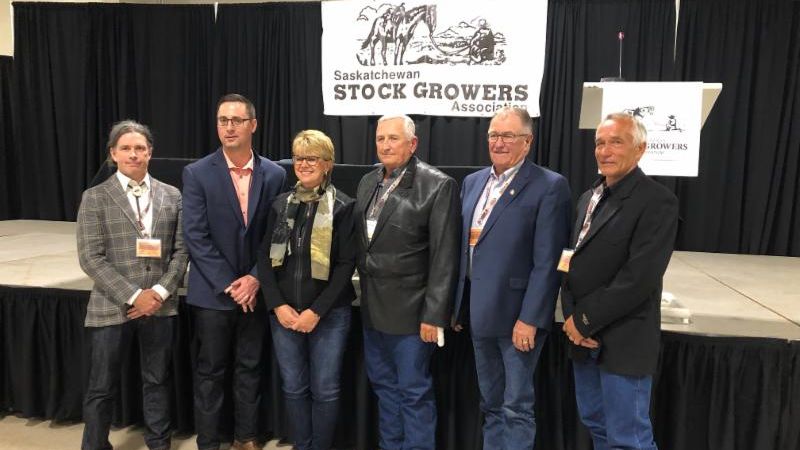
Since 1995, the Environmental Stewardship Award (TESA) has been presented annually to innovative cattle producers that have realized the value of implementing environmentally and economically sustainable cattle production on their operations. The 2019 TESA sponsored by Ducks Unlimited Canada, MNP and the SK Stock Growers was presented to
Willow Creek Ranch of Consul, SK at the SSGA 106th AGM in Moose Jaw.
Willow Creek Ranch is located on the eastern edge of the Wild Horse Plain in SW Saskatchewan and is owned and operated by Randy and Terry Stokke. They operate on 14,000 acres, 90% of which is native prairie and Willow Creek Ranch has been in the family for three generations.
They have made improvements over the years to improve their grass management and develop an extensive rotational grazing system. These improvements include new water sources and cross-fencing to improve distribution and change their grazing rotation over the years to make better use of their grass. They credit most of their success to an interest in local grassland management, and learning how to manage their grass properly.
The range is managed in a way that creates a mosaic of slowly shifting habitat that benefit a variety of species, co-existing together. Willow Creek Ranch provides habitat for over 50 bird species, as well as dozen federal species at risk and provincially rare species.
In addition to their conservation efforts on the ranch, they have also put in tremendous effort to raise awareness of how traditional, extensive ranching operations can provide ecosystem services for the public good. The ranch provides a model example of sustainable livestock operations that enable them to credibly promote their industry as a solution for maintaining grassland ecosystems and their biodiversity.
|
|
SK PCAP 2019-2023 Framework, Annual Report and Workplan
Ever wonder what exactly PCAP does? Review our recent
2018-2019 Annual Report to learn about what we've accomplished in the last year.
You can also read the 2019-2020 Workplan to learn about what we plan to accomplish this year. The 2019-2023 Framework is also available on the website and includes our focus areas, goals, and the activities the Partnership commits to completing for the next 5 years!
|
|
|
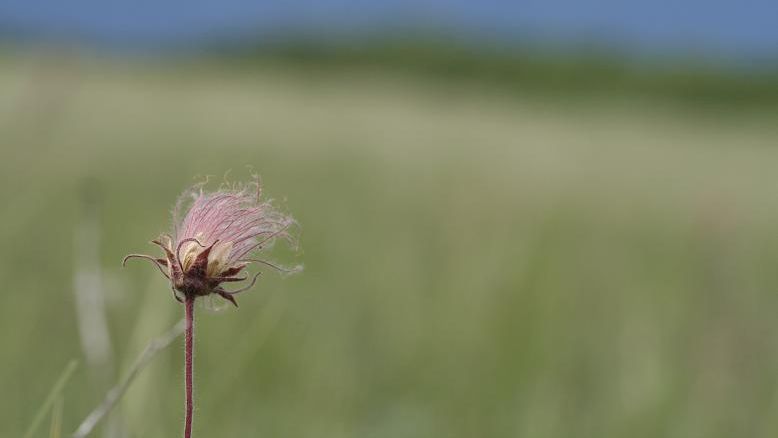
| Three-flowered Aven, photo credit: Andrea Kotylak |
|
|
Assessing umbrella species for grassland bird conservation
The concept of using an umbrella species to conserve habitat for multiple species in the same ecosystem is a popular approach. An umbrella species may be chosen for being a species at risk that represents the ecosystem and all it encompasses. Greater sage-grouse has received attention as a potential umbrella species for the shrub-steppe habitat and its occupants in the United States, at the core of its range. Recently, Phil Rose and his colleagues at the University of Regina and Environment and Climate Change Canada - Canadian Wildlife Service examined the extent to which conserving sage-grouse habitat would benefit mixed-grass prairie species in Saskatchewan or in the northern portion of its range. This was done by comparing grassland songbird abundance in sage-grouse critical habitat and in nearby habitat that is not designated critical habitat.
Phil and his colleagues found that the abundance of Sprague's pipit, Baird's sparrow, and chestnut-collared longspur were negatively associated with shrub and silver sagebrush cover, both of which characterize sage-grouse critical habitat in Canada. Also, vegetation characteristics associated with shrub-steppe songbirds and grassland generalists are similar to those that defined greater sage-grouse critical habitat. Conserving greater sage-grouse critical habitat in Canada is likely to have a positive influence on shrub-dependent or shrub-tolerant species, such as lark bunting, and a neutral or positive effect on grassland generalist species. The conservation of open, grassland habitat within the sagebrush matrix could benefit chestnut-collared longspur, Sprague's pipit, and Baird's sparrow, but enhancing shrub and sagebrush cover in sage-grouse critical habitat will have a negative effect on these three species.
In the southern Great Plains, similar conclusions were made when examining the use of the lesser prairie-chicken as an umbrella species, where prescribed grazing plans were used on private land to improve rangeland condition. This work was led by David Pavlacky from Bird Conservancy of the Rockies. Their results indicate the voluntary conservation practices aimed at recovering lesser prairie-chicken populations on private land made meaningful contributions to the regional population sizes of several declining grassland species, while also improving the productivity of grasslands for ranchers. These prescribed grazing plans have led to increasing the abundance of 24 of the 40 species surveyed. However, those management changes also led to a decrease in a number of species as well. You can read the full report
here.
Management of sage-grouse habitat in the northern United States, either sagebrush restoration, sagebrush reduction for brood-rearing sites or particular grazing regimes may also affect songbird density in a positive, negative or neutral way. In the words of Phil and his colleagues, "it is unrealistic to expect conservation programs be targeted towards the specific needs of each individual species, it is equally unrealistic to expect that conservation directed at a single species will offer complete protection for all species in a region." That being said, choosing a number of key species to act as umbrella species with various habitat requirements should cover the suite of grassland songbirds in Saskatchewan better than a single species. Be on the lookout for Rose et. al. publication in the near future!
|
2020 Native Prairie Restoration/Reclamation and Transboundary Grassland Workshops
In 2020, SK PCAP is combining two workshops: the 7th Native Prairie Restoration/Reclamation Workshop and the 5th Transboundary Grassland Workshop,
February 25-27, 2020 at the Ramada Plaza, Regina
, SK.
The conference will include plenary sessions, concurrent sessions, case studies, trade show, poster session and a silent auction with proceeds going towards PCAP education programs.
The theme is The Big Picture: Planning and Partnerships with presentations on:
- Tools to Restore/Reclaim Native Prairie
- Planning to minimize impact to Native Prairie
- Planning for a Species Reintroduction
- Prescribed Fire as a Management Option
- Integrated Pest Management Plan
- Soils and Mycorrhizae
- Ecosystem Management
- Transboundary Partnerships
- Native Seeds
- Urban Restoration Projects
- Wetland Restoration Projects
- Transboundary Species at risk
- Invasive species across jurisdictions
Registration will open this fall. Stay tuned!
In addition to the NPRRW and TGPW committees inviting key speakers, we are also encouraging individuals to submit oral presentation or poster abstracts for our consideration. The Call for Abstracts can be found
here
.
Tradeshow:
As always, there will be a tradeshow! This is the perfect opportunity to showcase your business/organization with an audience of restoration/reclamation experts, consulting companies, government organizations, NGO's, prairie conservationists, academic representatives, etc. There will dedicated tradeshow times throughout the workshop. More information to come!
More information will become available on the PCAP website shortly. In the meantime, please contact Carolyn Gaudet, SK PCAP at (306) 352-0472 or pcap@sasktel.net.
|
|
| |
|
Nature Conservancy of Canada is hiring a new Program Director (Southeast and Central SK)
The job description and details can be found
here.
Competition closes August 16 at 5 pm CST.
|
|
|
|
SK PCAP Native Prairie Speaker Series
Plan to attend our August Native Prairie Speaker Series webinar! More information can be found
here.
by Brett Campbell,
Alberta Biodiversity Monitoring Institute (AMBI)
August 20, 2019 at 12 pm MDT
We also have an in-person presentation this month:
by Dr. Jeff Lane, U of S
August 14th at 1:00pm at the SODCAP AGM
Memorial Hall, Eastend, SK
Save the date!
Swift Fox Recovery in Montana
by Heather Harris, Wildlife Division,
Montana Fish, Wildlife & Parks
September 17, 2019 at 12 pm MDT
More information coming soon!
|
|
Upcoming Events!
August 8, 2019
Hanley, SK
Nature Conservancy of Canada
August 10, 2019
Robsart, SK
August 14, 2019
Memorial Hall, Eastend, SK
Dr. Jeff Lane, U of S
August 14th at 1:00pm at the SODCAP AGM
Memorial Hall, Eastend, SK
Grassland Restoration Forum
August 14-15, 2019
Consort, AB
Society for Range Management - Prairie Parkland Chapter
August 14-15, 2019
Brandon, MB
Saskatchewan Chapter of the Wildlife Society
August 16-17, 2019
Last Mountain Regional Park, SK
by Brett Campbell, Alberta Biodiversity Monitoring Institute
Native Prairie Speaker Series webinar
August 20, 2019
Saskatchewan Chapter of the Wildlife Society
September 5, 2019, 3-7 pm
Regina, SK
Grassland Restoration Forum
September 11, 2019
near Brooks, AB
Grassland Restoration Forum
September 12, 2019
Brooks, AB
Nature Conservancy of Canada
September 14, 2019
Val Marie, SK
Society for Ecological Restoration
September 21, 2019
Saskatoon, SK
February 25-27, 2019
Regina, SK
|
2019 Education Programs:
Presenting Sponsors:
 01
01
2019 Education Programs
Supporting Sponsors:
|
|
Carolyn Gaudet, Editor, Saskatchewan Prairie Conservation Action Plan Newsletter
306-352-0472 |
|
|
SK PCAP gratefully acknowledges financial support in 2019-2020 from:
Crescent Point Energy, Ducks Unlimited Canada, Canada North Environmental Services, EcoFriendlySask.ca, Enbridge Inc., The Mosaic Company, Parks Canada - Grasslands National Park of Canada, Saskatchewan Cattlemen's Association,
Saskatchewan Ministry of Agriculture, Saskatchewan Ministry of Environment - Fish and Wildlife Development Fund,
SaskEnergy,
SaskPower, SaskTel, SaskWater, University of Saskatchewan - College of Agriculture and Bioresources, Water Security Agency and Wildlife Habitat Canada.
SK PCAP gratefully acknowledges in-kind support for 2019-20 from:
Agriculture and Agri-Food Canada - Science and Technology Branch, Canadian Parks and Wilderness Association, Canadian Western Agribition, Environment Canada - Canadian Wildlife Service,
Friends of the Royal Saskatchewan Museum, Friends of Wascana Marsh, Meewasin Valley Authority, Native Plant Society of Saskatchewan, Nature Conservancy Canada, Nature Saskatchewan, Parks Canada - Grasslands National Park, Prairie Wind & Silver Sage, Ranchers Stewardship Alliance Inc., Redberry Lake Biosphere Reserve, Saskatchewan Association of Rural Municipalities, Saskatchewan Association of Watersheds, Saskatchewan Burrowing Owl Interpretive Centre, Saskatchewan Cattlemen's Association, Saskatchewan Environmental Society, Saskatchewan Forage Council, Saskatchewan Forage Industry Network, Saskatchewan Ministry of Agriculture, Saskatchewan Ministry of Environment, Saskatchewan Ministry of Energy and Resources, Saskatchewan Science Centre, Saskatchewan Stock Growers Association, Saskatchewan Wildlife Federation, Saskatoon Nature Society, SaskEnergy, SaskOutdoors, SaskPower, Society for Range Management - Prairie Parkland Chapter, South of the Divide Conservation Action Program Inc., University of Regina, University of Saskatchewan - College of Agriculture and Bioresources, Wild About Saskatoon-Nature City Festival.
|
|
|
|