August 2021 | Volume 13 Issue 8 |
|
Hello!
Please keep our ranchers and farmers in your thoughts these days as the drought conditions are undeniable in the Prairies. If you're not aware of how the persistent drought will affect our grassland stewards, cattle markets and the conservation of grasslands, now is a good time to learn more about it.
We have a date for the 9th Native Prairie Restoration/Reclamation Workshop, February 8-10, 2022! We decided to have 3 shorter days with presentations in the morning and case studies in the afternoon. More details coming soon!
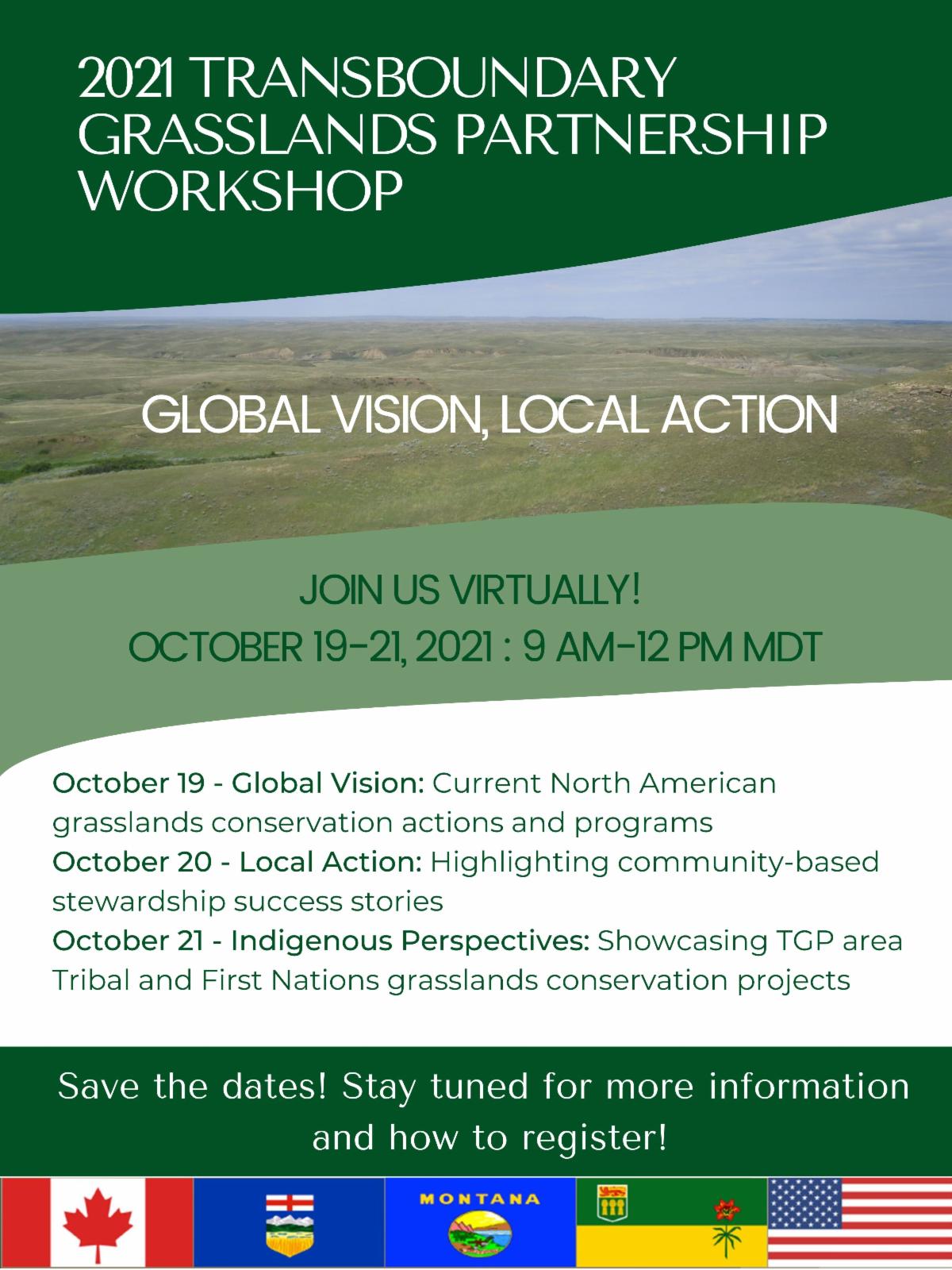
Make sure to save the date for the 2021 Transboundary Grasslands Partnership Workshop, October 19-21, 2021. We have 3 great mornings of presentations planned!
If you missed our July webinar presentation, Noah Johnson, University of Regina, talked about bullsnakes. The webinar recording is on our YouTube Channel!
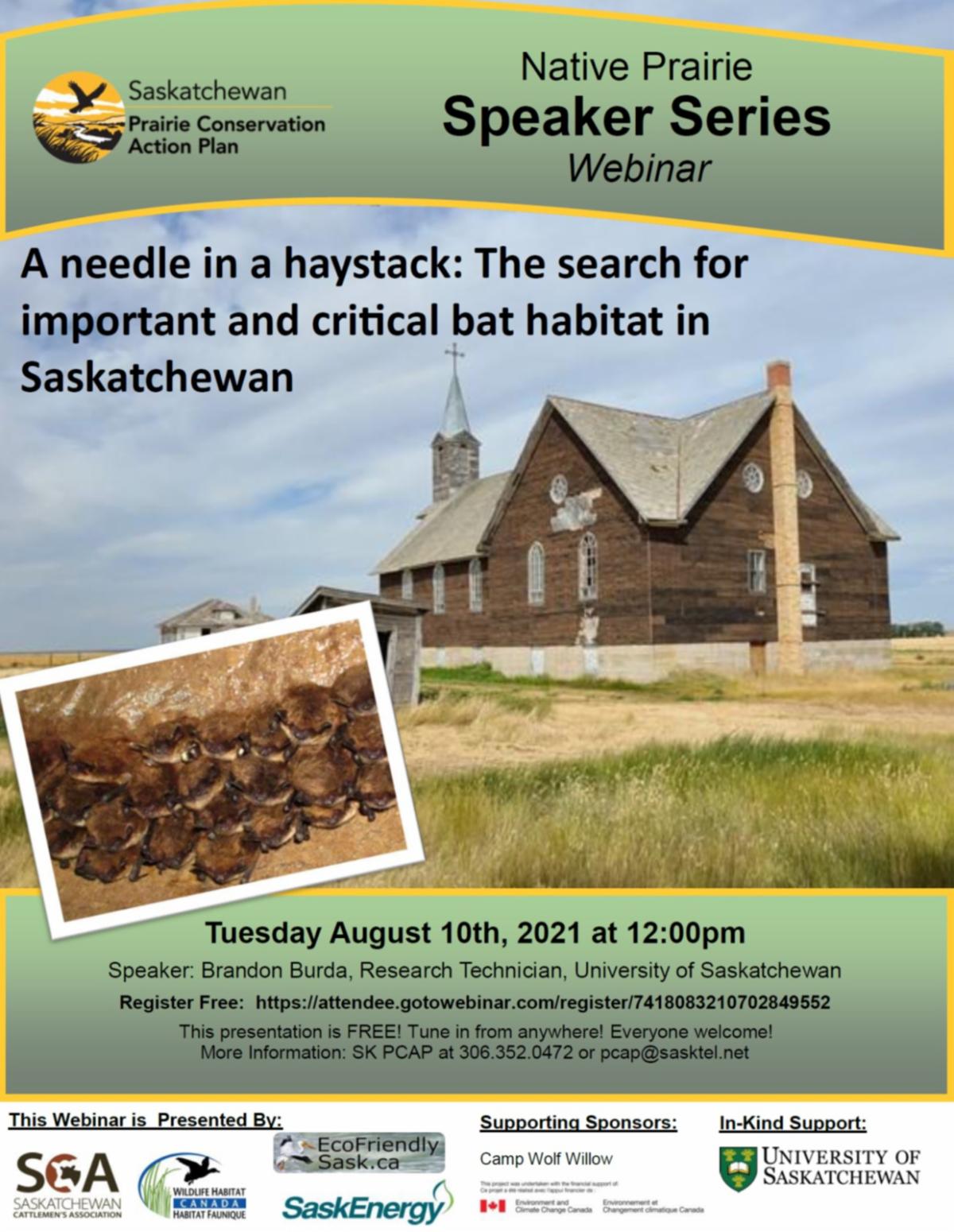
This month's NPSS presentation is by Brandon Burda, who will discuss finding bat habitat in SK! You can register here!
And finally, we would like to thank our sponsors for their generous support: Camp Wolf Willow, EcoFriendly Sask, K+S Potash, Pembina Pipelines, Saskatchewan Cattlemen's Association, SaskEnergy, SaskPower, SaskTel, Wildlife Habitat Canada and Environment and Climate Change Canada, as well as the continuous support of all the PCAP Partners.
The PCAP office will be closed Aug 16-30, 2021! We'll catch up with you in September!
Carolyn Gaudet, SK PCAP Manager
|
PCAP Partner Spotlight...
Agriculture and Agri-Food Canada
Submitted by AAFC
Ag Canada’s Native Plant Breeder: Dr. Sean Asselin
For the beef industry, a key priority is for cattle producers to raise more beef with fewer resources – in part by reducing production costs and increasing feed efficiency. Agriculture and Agri-Food Canada (AAFC) has several researchers working in this area.
In 2019, Dr. Sean Asselin joined AAFC as a native forage breeder at the Swift Current Research and Development Centre. His work seeks to increase yield and nutritional quality of native perennial forage species.
This is not only good for producers: it’s also good for native prairie and the ecosystem as a whole, providing benefits such as carbon sequestration, soil stabilization, biodiversity and habitat for pollinators.
Native forage species include prairie clovers (white and purple), wheatgrasses, winterfat and many others.
By better understanding the interaction between their genetics and the environment, Dr. Asselin hopes to select breeding lines that will best stand up to extreme and varied growing conditions. The more stable and nutritional these native forages are, the more likely producers are to seed them back into their rangelands.
Dr. Asselin notes that Canadian grasslands are one of the most endangered ecosystem in the world. Reintroducing native species and having animals on the land actually promotes biodiversity, as their grazing and trampling helps break up the plant canopy and allows other plant species to flourish.
Ultimately, Dr. Asselin would like to increase interest in native forage species and collaborate on conservation projects as well.
|
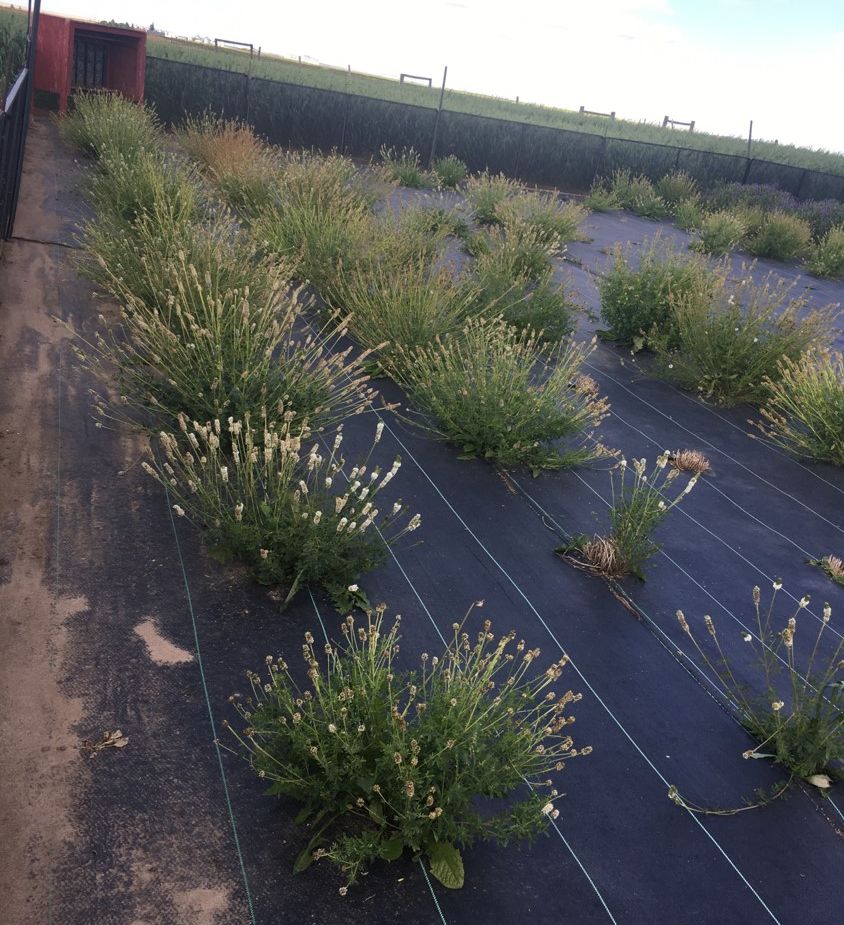
The variation shown in these White Prairie Clover plants is being studied by Dr. Asselin and his team. Photo credit: Dr. Sean Asselin |
Downy Brome Management – Lessons Learned from the Field
Submitted by Chris Tenszen, Trace Associates Inc.
This is a success story about a wellsite in Southern Alberta that was approved for a reclamation certificate in 2020 after successful management of a large Bromus tectorum (downy brome or cheatgrass) infestation. The site provided an opportunity to look back at what worked, what didn’t work, and what might have worked. Downy brome is an invasive annual grass species that is a threat to native grasslands. It outcompetes native plants by growing earlier in the season, accessing soil moisture earlier, and spreading quickly through its large seed production. Managing downy brome requires a consistent, driven approach with a focus on decreasing seed production and exhausting the seed bank.
When the site was assigned to Trace Associates Inc. (Trace) in 2010, it had a large downy brome infestation. We knew this would be an issue, so glyphosate was used for two seasons to reduce the weed population before reclamation began. In the fall of 2011, Trace recontoured the site, replaced topsoil, and seeded using a native grass seed mix. After that, hand-picking and mowing were the main control methods over the next nine years.
Nine years may seem like a long time to achieve closure, but it takes years to exhaust the seed bank. Downy brome seeds can survive in the soils for up to five years. Although effective, hand-picking is not a silver bullet, as it is slow, costly, and requires extreme discipline to remove every plant before they can go to seed. Mowing and bagging was used to control plants at the flowering stage, as the bag attachment on the mower was able to catch and remove the seed heads. However, some seeds still reach the ground without being caught. Eventually the effort was rewarded, and in 2020, the downy brome was reduced to 1% which was comparable to the rest of the field. A Reclamation Certificate was received for the site in 2020.
Client support and consistent effort were important to this success story that was 10 years in the making. Because downy brome germinates early in the season and grows throughout the year, it was important to get an annual budget and work plan approved early so that work could begin once conditions were right. Communication, a clear objective, and understanding the client’s constraints were critical because casual ‘due diligence’ weed control that industrial operators are familiar with will not work against downy brome.
Looking back, it may have been better to continue with glyphosate use to decrease weed populations prior to seeding. Once the site was seeded, Trace felt our most effective control method was removed from our arsenal. We also discovered that mowing pressure year after year caused an evolutionary response of the plant. Downy brome would produce a greater number of short-stalked plants the following generation, which made hand-picking even more difficult and time consuming.
Overall, diligence and an integrated management approach was needed. This meant having a strong understanding of various control methods and using the right method at the right time.
|
SASKPOWER RENEWED VITAL POWER LINE AT LAKE DIEFENBAKER CROSSING
Submitted by Jaret McDonald, SaskPower
SaskPower has rebuilt a 50-year- old power line that connects Coteau Creek Hydro Station to Swift Current by crossing Lake Diefenbaker. This project will mean safer and more reliable power for customers in the area.
The improved power line is higher from the water, so boating traffic can pass more safely underneath. It also has better lightning protection and serves as a backup source of power for years to come. “This line is almost 50-years-old, and the towers were coming to the end of their lives,” explains Helene Careau, a SaskPower Resource Specialist in Environmental Assessment and Approvals. “It’s a major crossing, a major power line going into Swift Current.”
Another priority for SaskPower is preserving the natural prairie ecosystem. “My job is to make sure that we not only follow the rules and regulations, but whenever possible, go above and beyond to minimize our environmental impact so that whatever we do at SaskPower, we don’t cause harmful damage to the environment,” says Careau. To help reduce their environmental impact, SaskPower crews and contractors worked through the winter. This better protects the native prairie ecosystem. They also had an environmental monitor on-site fulltime to work alongside crews.
Says Careau, “The Park is happy, the Ministry of Environment is happy. It’s great to have the feeling we worked together towards our goal while keeping the environmental impact as low as possible.” SaskPower will be re-planting all native vegetation and monitoring the area for the next five years to be sure everything grows back to its original beauty.
Learn more by watching a video here. |
|
SK PCAP Native Prairie Speaker Series
Plan to attend our August Native Prairie Speaker Series webinar!
|
August 9 @ 12 PM
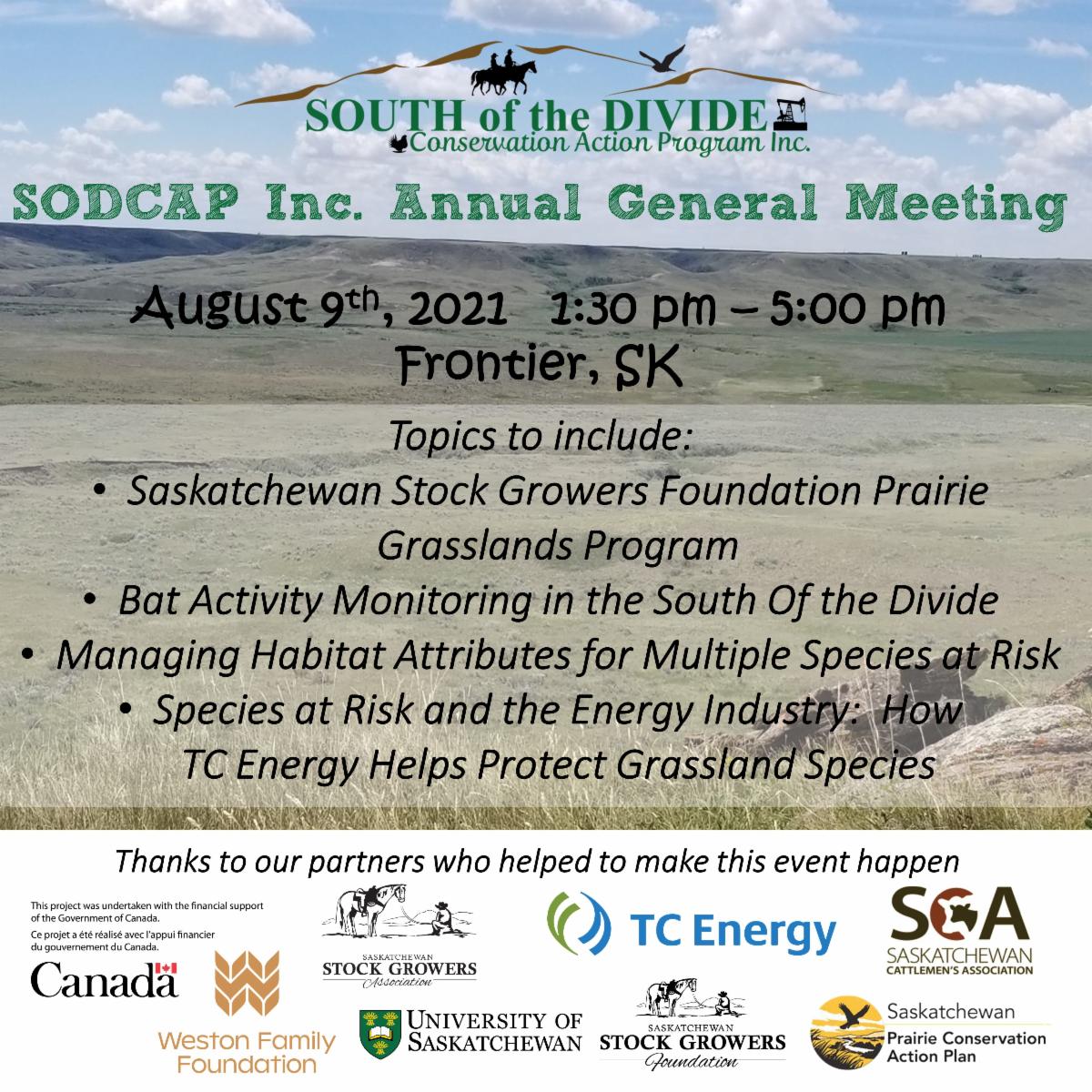
Frontier, SK
August 10 in Francis, SK
August 10 - 13, 2021
August 31-September 2
September 11, 2021
September 18, 2021
Transboundary Grasslands Partnership Workshop
October 19-21, 2021
Brandon, MB and virtual
Nov 15-17, 2021
|
Save the Date!
The 9th Native Prairie Restoration/Reclamation Workshop
will occur virtually February 8-10, 2022! Stay tuned for more details!
|
Native Prairie in the News
|
2021/22 Speaker Series Supporting Sponsors
Camp Wolf Willow
|
2021/22 Education Programs:
Presenting Sponsors:
|
2021/22 Education Programs
Supporting Sponsors:
|
|
Carolyn Gaudet, Editor, Saskatchewan Prairie Conservation Action Plan Newsletter |
|
SK PCAP gratefully acknowledges financial support in 2021-2022 from:
Camp Wolf Willow, Ducks Unlimited Canada, EcoFriendlySask.ca, Parks Canada - Grasslands National Park of Canada, Pembina Pipelines, Saskatchewan Cattlemen's Association, Saskatchewan Ministry of Agriculture, Saskatchewan Ministry of Environment - Fish and Wildlife Development Fund, SaskEnergy, SaskPower, SaskTel, University of Regina, University of Saskatchewan - College of Agriculture and Bioresources, Water Security Agency and Wildlife Habitat Canada.
SK PCAP gratefully acknowledges in-kind support for 2021-22 from:
Agriculture and Agri-Food Canada - Science and Technology Branch, Canadian Parks and Wilderness Association, Environment Canada - Canadian Wildlife Service, Friends of the Royal Saskatchewan Museum, Friends of Wascana Marsh, Meewasin Valley Authority, Native Plant Society of Saskatchewan, Nature Conservancy Canada, Nature Saskatchewan, Parks Canada - Grasslands National Park, Prairie Wind & Silver Sage, Ranchers Stewardship Alliance Inc., Redberry Lake Biosphere Region, Saskatchewan Association of Rural Municipalities, Saskatchewan Association of Watersheds, Saskatchewan Bison Association, Saskatchewan Burrowing Owl Interpretive Centre, Saskatchewan Cattlemen's Association, Saskatchewan Environmental Society, Saskatchewan Forage Council, Saskatchewan Ministry of Agriculture, Saskatchewan Ministry of Environment, Saskatchewan Ministry of Energy and Resources, Saskatchewan Ministry of Parks, Culture and Sport, Saskatchewan Stock Growers Association, Saskatchewan Wildlife Federation, SaskEnergy, SaskOutdoors, SaskPower, Society for Range Management - Prairie Parkland Chapter, South of the Divide Conservation Action Program Inc., University of Regina, University of Saskatchewan - College of Agriculture and Bioresources.
|
|
|
|
|
|
|