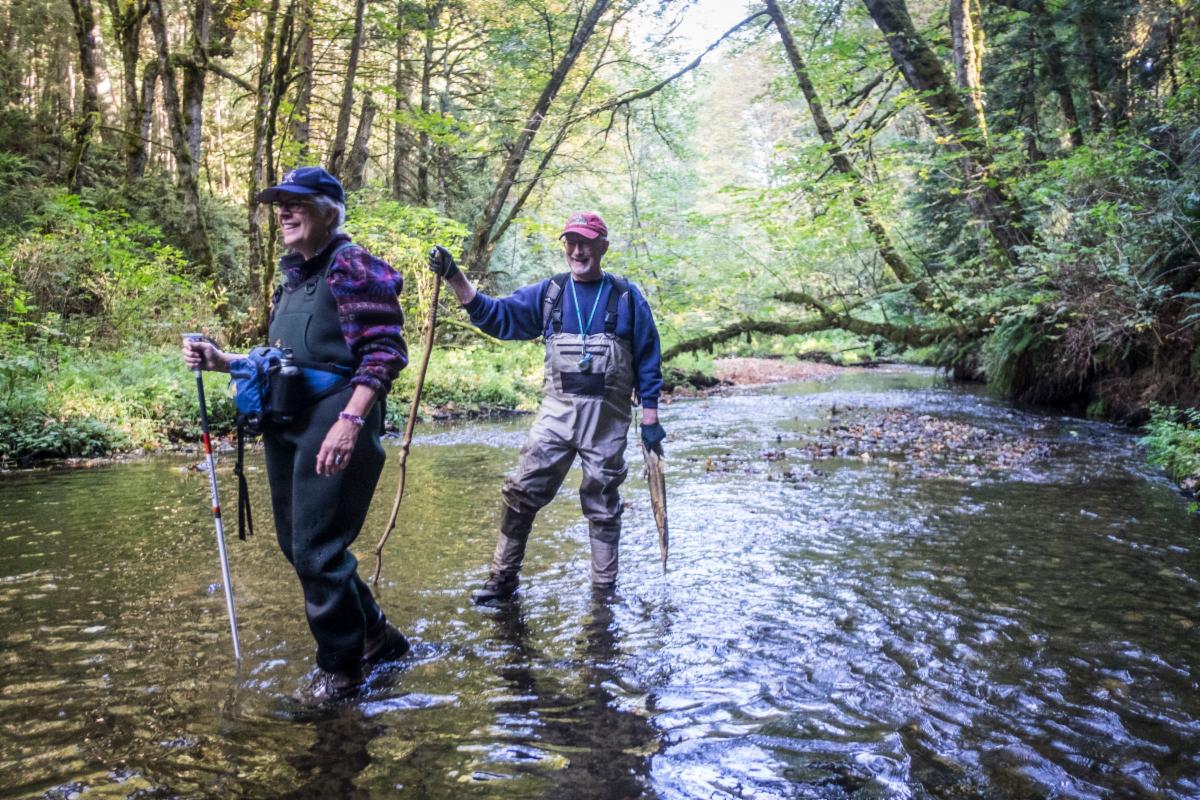
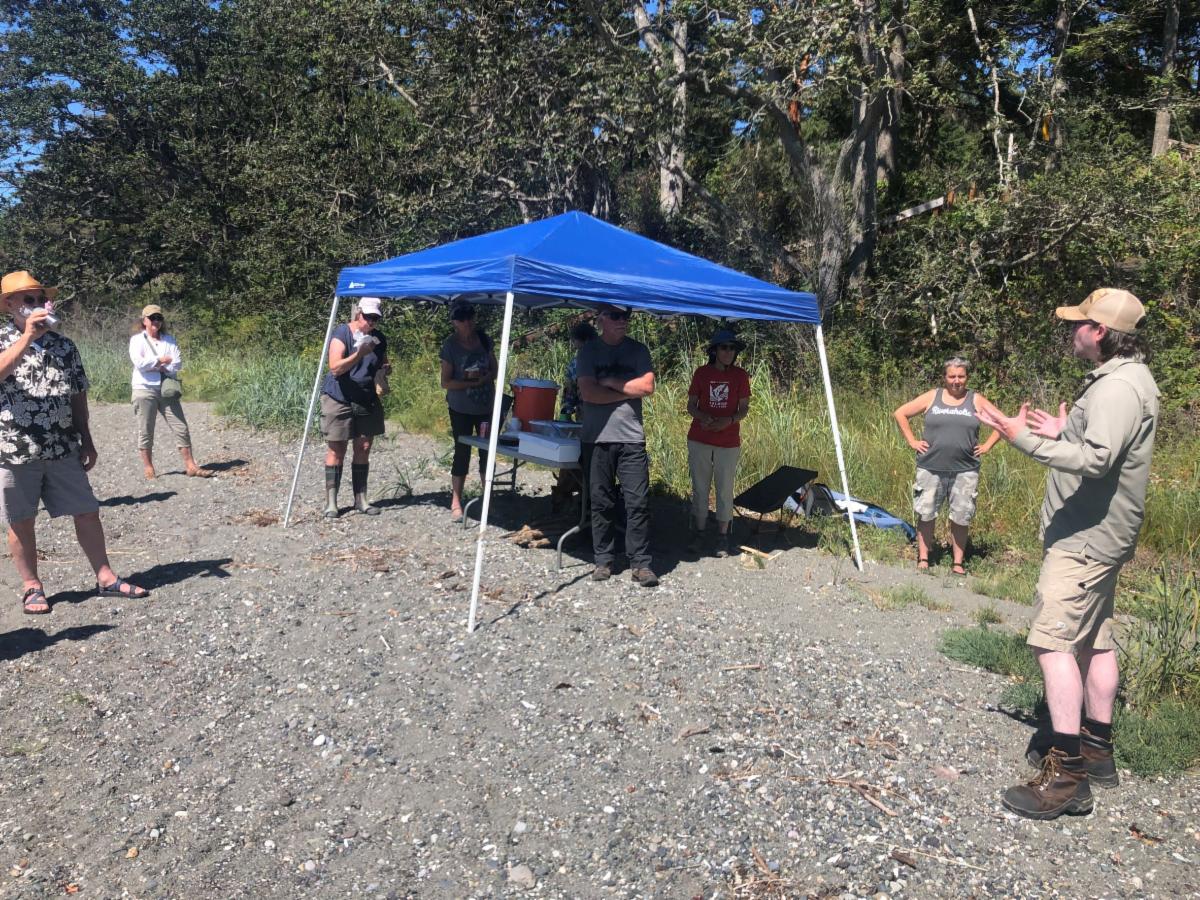
Volunteers help survey Chimacum Creek for Chum Salmon. Image by Charles Espey. |
|
It's that time of the year! Summer chum salmon are returning to spawn at Chimacum Creek and other locations throughout the Olympic Peninsula. Each year we conduct spawner surveys on Chimacum Creek, running from late August to early November. This community science effort has been going on for almost three decades. During spawner surveys, teams of volunteers walk different stretches of Chimacum Creek to count and record all live and dead fish. They also collect scale samples, which can provide information on the age of the fish and their growth rate. All this data assists the Washington Department of Fish and Wildlife in monitoring the summer chum population.
It was not always that way. Summer chum went extinct in Chimacum Creek In the early 1990s. A large storm swept the area during a critical time for salmon. In the midst of summer chum spawning season, when egg-laying is in full swing, a large culvert under Irondale Road washed out. The chum population in the creek was already in serious decline, and when the sediment that comprised the road fill buried their spawning grounds the run was wiped out.
Volunteers from the organization that preceded us, Wild Olympic Salmon*, stepped up to bring the run back from extinction. Eggs from nearby Salmon Creek were reared at a small hatchery high in the Chimacum watershed to acquaint them to the water. As they grew into fry, they learned to recognize the unique scent of Chimacum Creek, as this special smell would help lead them back home all the way from the ocean to spawn. The salmon were released near the mouth of Chimacum Creek. The reintroduction was a success, with as many as 3,000 salmon returning in the years since reintroduction. There is still much that can be done to improve the Chimacum Creek watershed, not only for chum but for coho salmon, steelhead, and sea-run cutthroat trout as well. Continued community efforts and collaborations between the Salmon Coalition and other partner organizations are improving the habitat of Chimacum Creek.
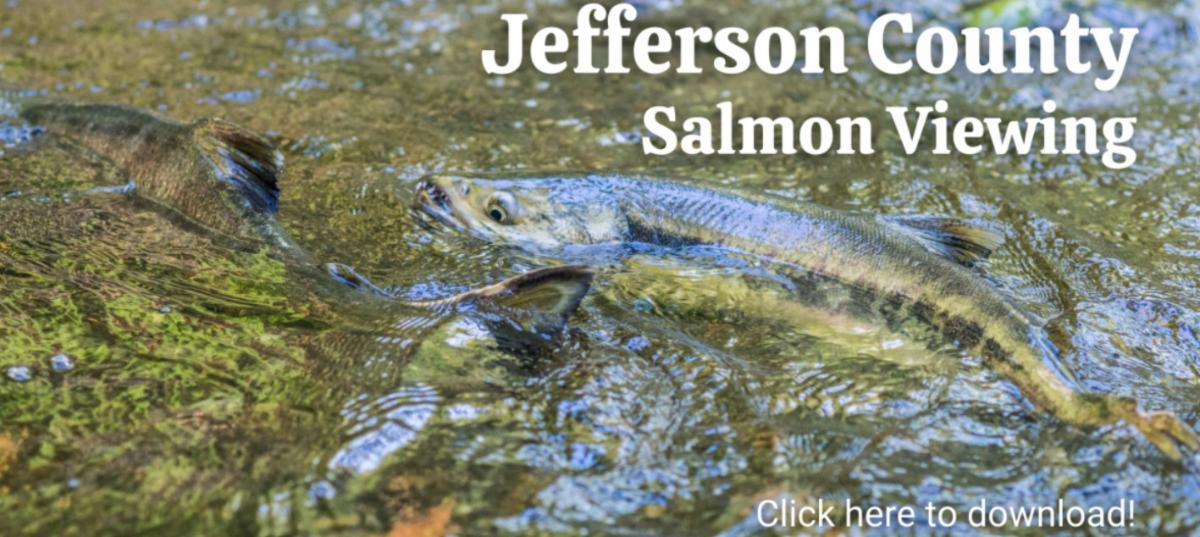
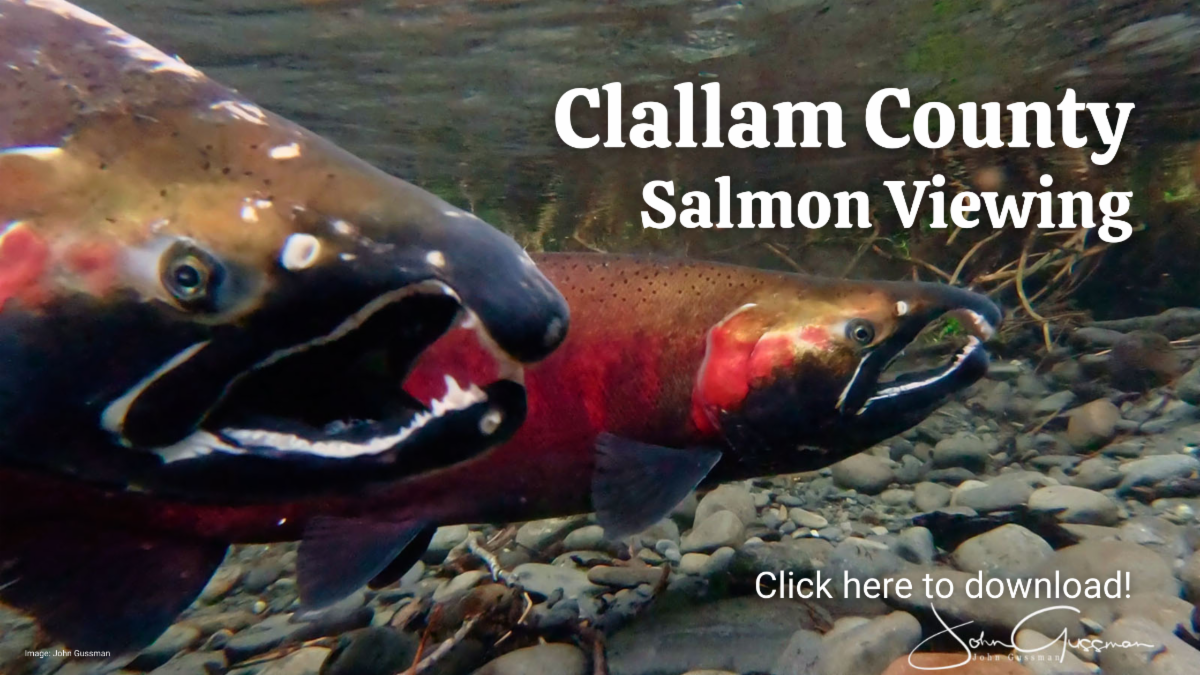
Since salmon season is upon us, click on the images below to get some tips on how to view salmon and the best spots to observe salmon spawning in both Jefferson and Clallam County.
*Background: Wild Olympic Salmon, the predecessor of NOSC, played a powerful role in the restoration of Chimacum Creek. The organization also produced “Tracking the Dragon,” a community quest game designed to educate local people of all ages.
|
|
Volunteer Appreciation Day |
|
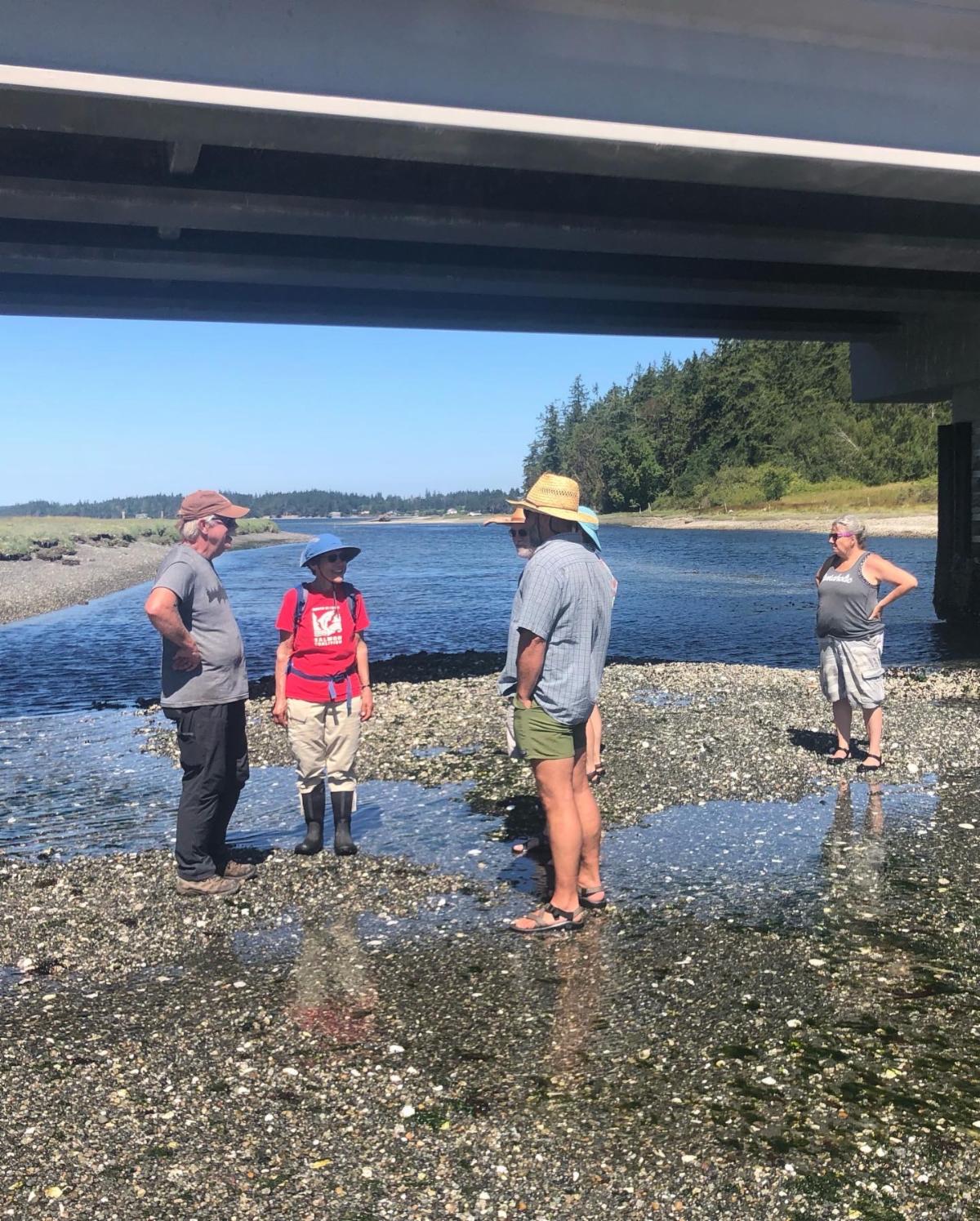
Volunteers go tide pooling under the bridge between Indian and Marrowstone Island during volunteer appreciation day.
Image by Kevin Merrigan.
|
|
In mid-August, we held a volunteer appreciation event at the Kilisut restoration site--nearly two years to the day of the reopening of the channel between Oak Bay and Kilisut Harbor. There was some delicious carrot cake to be had, as well as a fun tide pooling activity under the bridge that connects Indian and Marrowstone Islands. Starfish, mussels, sculpin, barnacles, crabs, and herons, were all spotted around the project site at low tide. While the primary goal of the project was to benefit salmon, it has been beneficial for several other species as well. Be sure to check out the recent article that Cheryl Lowe did on the annual beach seining done every year within Kilisut Harbor to monitor the amount of fish and species that use the area in our June Newsletter.
To all the volunteers who could not make it to the event: the Salmon Coalition is extremely thankful for helping us during our planting, maintenance and education events, as well as assisting with spawner surveys from the past year. This includes 9 plantings, and several maintenance events in which volunteers potted, installed plant protectors, and/or mulched plants. This also includes the countless hours spent on both the chum and coho spawner surveys in the Chimacum Creek watershed. The weather ranged from cold and wet at some of the planting events, to hot and exposed at the River's Edge site near the Dungeness River. Either way, volunteers brought their positive attitudes to all of these events and the NOSC team enjoyed interacting with you. The Salmon Coalition could not have achieved its restoration and education goals without our dedicated volunteers. Thank you for your support! We hope to see you all again at future events.
|
|
Nate Roberts explaining the Kilisut Restoration Project. Image by Kevin Merrigan. |
|
Partner Spotlight: Role of Conservation Districts |
|
Two of the Salmon Coalition's important partnerships are with the Jefferson County Conservation District and Clallam Conservation District. Each county in Washington is represented by at least one Conservation District. Conservation Districts are community-based hubs of natural resource expertise and funding. They are staffed by locals who understand the needs of landscapes and fellow community members they help serve. Conservation Districts provide a variety of services within the state of Washington, including habitat restoration and enhancement, soil, forest, and rangeland health, irrigation water management, environmental education and much more.
They are non-regulatory entities that do not enforce compliance or impose penalties, but rather work collaboratively with members of the community to help them responsibly and efficiently manage their land. The Conservation Districts provide information as well as technical and financial assistance to help landowners achieve their land use objectives in an environmentally sustainable manner. Grant funding and free or low-cost services make it more affordable for landowners to take actions that make the landscapes, soils, air and water healthier for everyone.
Currently, the Salmon Coalition is collaborating with both the Jamestown S'Klallam Tribe and Clallam Conservation District on one of the largest projects we have undertaken: the River's Edge Levee Setback Project along the Dungeness River near Sequim. The Conservation District has helped coordinate several volunteer events at the site, which involved multiple plantings with several thousand plants going into the ground, in addition to adding plant protectors and mulch. The project is far from over, with plenty more trees and shrubs to be planted for the next planting season. We are happy to be collaborating with such a great group and look forward to our continuing partnership and helping them with projects such as River's Edge!
"Partnerships with groups such as the North Olympic Salmon Coalition help to get more conservation on the ground. These partnerships bring more expertise, boots on the ground, and financial resources to each restoration project. We are truly Stronger Together."
-Kim Williams, Clallam Conservation District Manager.
|
The River's Edge site. The field between the forest on the left side of the image and the road/trail in the middle of the image (gray lines) has been planted by a combination of volunteers, WCC Crew, and Sequim 7th grade students.
Image by John Gussman.
|
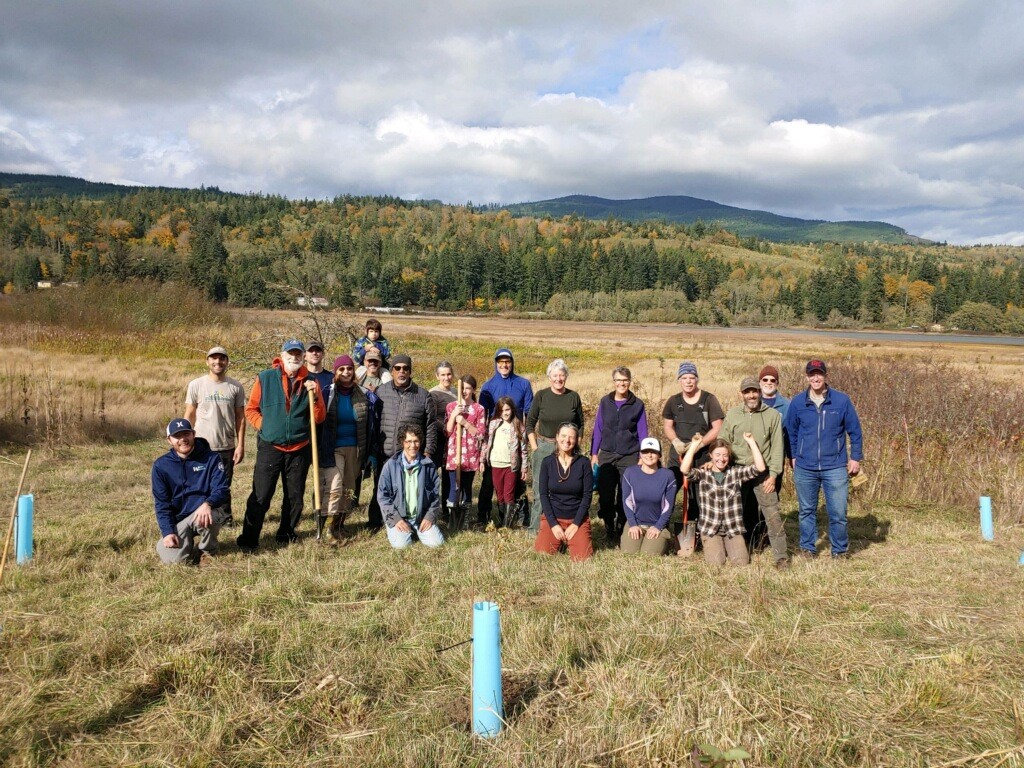
We also coordinated with the Jefferson County Conservation District last October for a volunteer planting at the Snow Creek Estuary at Discovery Bay. The event was hosted in celebration of Orca Recovery Day, with US Representative Derek Kilmer joining in at the event. It finished off with a creek viewing in which the volunteers observed some spawning chum salmon!
|
Group Photo of the Volunteer Event for Orca Recovery Day at Snow Creek Estuary. Image by Nate Roberts. |
|
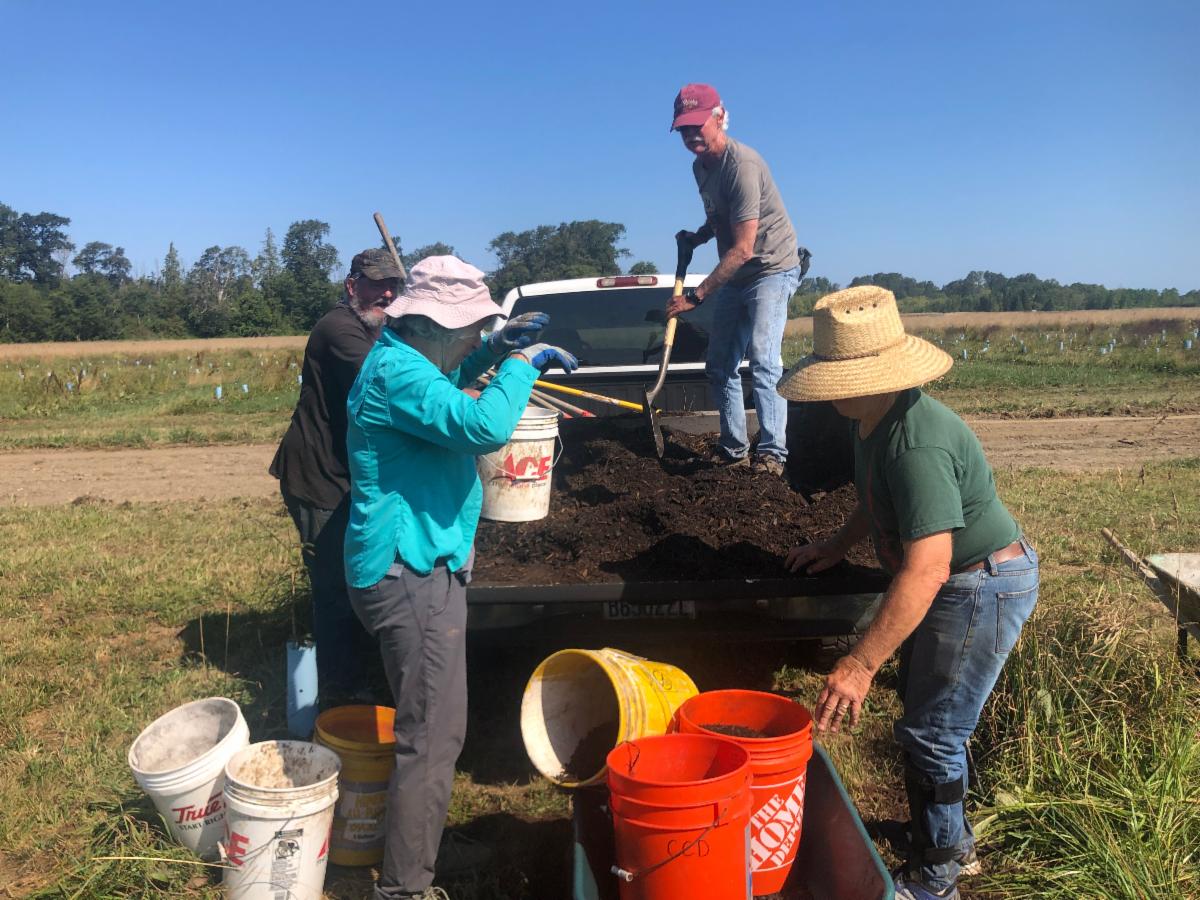
Volunteers helping mulch plants at River's Edge along the Dungeness River.
Image by Kevin Merrigan.
|
|
The membership drive is still going! Each year we pick a different focus, whether it be for an education program, volunteer monitoring, or habitat restoration project. For this year's drive, we are raising funds for a habitat restoration project at Kodama Farm and Food Forest, located in Chimacum's Beaver Valley. The East Fork of Chimacum Creek runs in a straight line, directly through the middle of the farm. Kodama Farm has set aside 21 acres through a conservation easement with the Jefferson Land Trust to help restore lost wetland and salmon habitat and provide an example of how farms can work to create a sustainable, healthy ecosystem that benefits the farm, the creek and the salmon. They’re eager to demonstrate that farms can coexist with healthy salmon runs.
The proposed restoration will include a re-meandering of the creek with side-channels and ponds to provide nursery habitat for juvenile salmon. It will also involve improving wetland habitat through the planting of thousands of native shrubs and trees to create shade and increase biodiversity of the site.
Many of our volunteers made a difference in Chimacum Creek throughout the years, by conducting spawner surveys or helping out with a riparian planting. If you are part of the Chimacum Creek watershed and want to play a role in the community's efforts to continue restoring the area to improve salmon habitat, please become a member for our 2022-2023 Membership year to support salmon habitat restoration work and collaborations on the North Olympic Peninsula today!
|
|
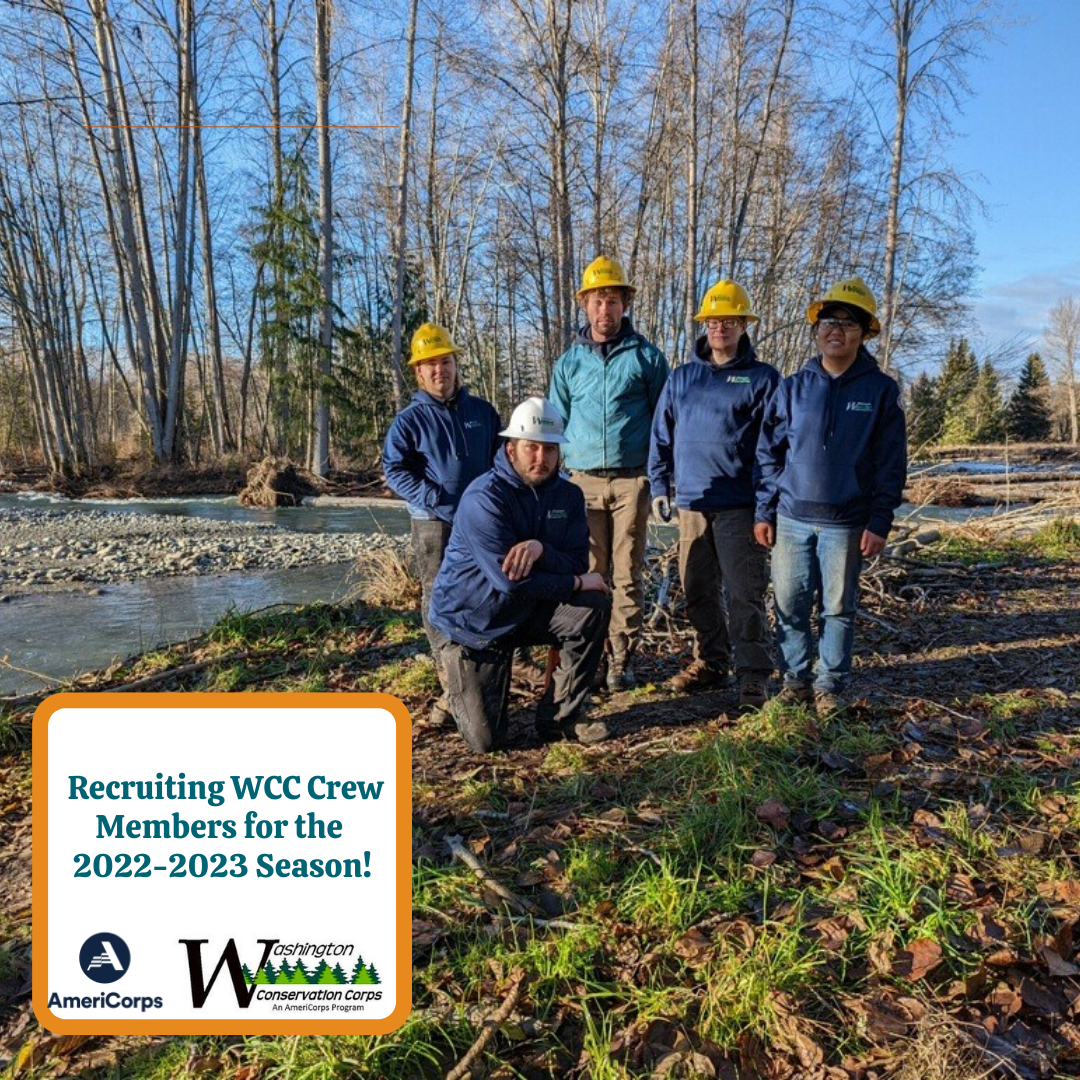
WCC crew poses for the camera! Image provided by Stephen Richardson. |
|
Looking for an opportunity to serve the community and spend your days outdoors? Apply to be a Washington Conservation Corps (WCC) Crew Member today! WCC provides hands-on environmental service opportunities to young adults (ages 18-25) and military veterans. WCC is currently recruiting over 280 11-month field crew and Individual Placement members throughout Washington State! Successful applicants will start their terms on October 3, 2022.
The Salmon Coalition sponsors a WCC Crew based out of Chimacum near Port Townsend. The crew will improve habitat for salmon and wildlife in the North Olympic Peninsula, partnering with many different natural resource organizations based in Clallam and Jefferson Counties. Serving with the WCC means spending your days outdoors, in all types of weather, accomplishing projects that restore and enhance landscapes across Washington. Crew members serve on a crew of five AmeriCorps members, along with an experienced crew supervisor who provides training, mentorship, and development opportunities. Individual Placements serve directly with a partnering organization, focusing on environmental research, community engagement and restoration project management. Click on the box below to learn more and see all position locations.
|
|
Base funding for the RFEG program comes from a grant from the U.S. Fish & Wildlife Service's Partners for Fish and Wildlife Program, a portion of state commercial and recreational fishing license fees, and excess egg and carcass sales administered by the Washington Department of Fish & Wildlife. |
|
Give Us Your Feedback
Questions or Comments? Let us know what you think!
outreach@nosc.org
360.379.8051
www.nosc.org
|
|
|
|
|
|
|