|
A monthly round-up of top stories from the Arkansas Agricultural Experiment Station.
August 30, 2024
| |
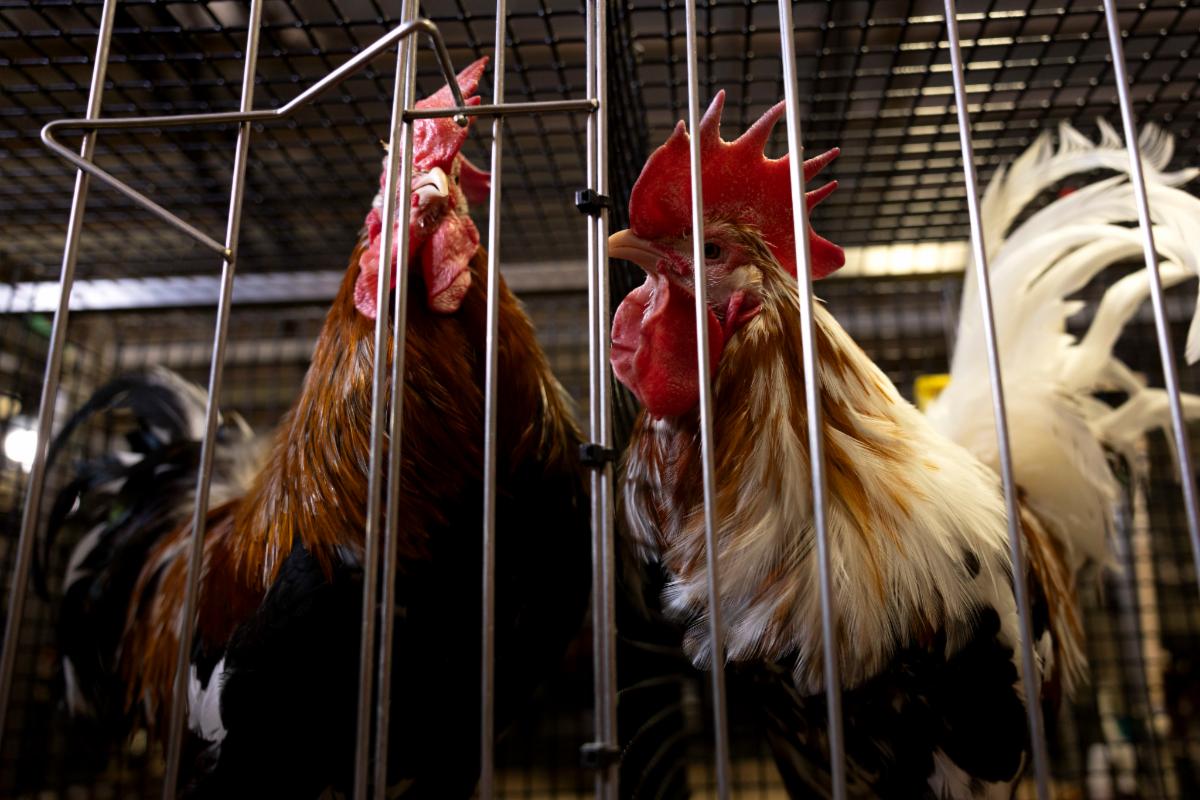
A Brown line rooster, left, shows normal pigmentation. A Smyth line rooster displays white feathers as a result of vitiligo. | |
|
IN THIS ISSUE:
- Hydroponics and controlled environment research to control pests and pathogens
- Getting a closer look at the state’s forests
- Generative AI and agriculture meet in the classroom
- Two ‘new’ herbicides up for EPA approval in blackberries after testing
- Initiative advances organic farming and diversity in Arkansas
| |
|
A unique chicken breed is helping researchers better understand vitiligo, an autoimmune disease that affects 1-2 percent of the world’s population.
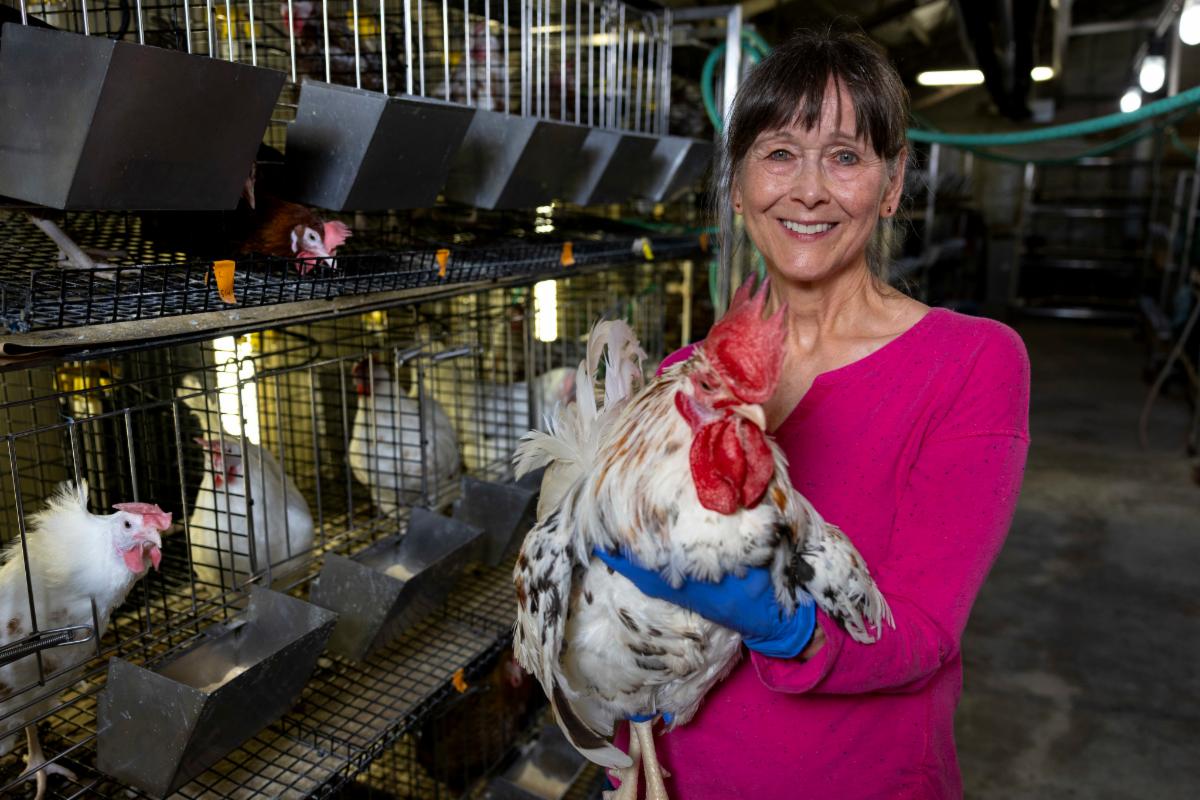
Gisela Erf, professor of immunology in the poultry science department, has been working with the vitiligo-prone Smyth line of chickens since 1989 and recently published a paper that identified the immune mechanisms behind the onset of vitiligo. The findings could one day inform the development of effective preventative measures for humans.
The Smyth line is a unique breed of chickens that represents the only animal model for vitiligo that shares all the characteristics of the human condition. Erf maintains the only known research breeding flock in the world.
| |
Gisela Erf, Tyson Endowed Professor in Avian Immunology, holds a rare Smyth line chicken that has helped research the autoimmune disease vitiligo, which causes the destruction of pigment in the body. | |
Listen — Food, Farms & Forests Podcast | |
|
Emily McDermott and postdoc Cameron Osborne are part of a groundbreaking effort to stop emerging diseases before they spread. Their work on the REDI-NET project is helping the Department of Defense create standardized protocols for pathogen surveillance. In this episode of Food, Farms & Forests, they discuss the project's goals, the techniques they use, and the challenges they've faced.
| |
|
Arkansas could produce an estimated 1 to 3.5 million more servings of rice per year. That’s according to recent research analyzing rice quality in the state. In this episode of Food, Farms and Forests, Lanier Nalley, professor of agricultural economics and agribusiness, explains his research on the potential impacts of improving rice milling quality.
| |
New episodes every other week! Subscribe on your favorite platform! | |
|
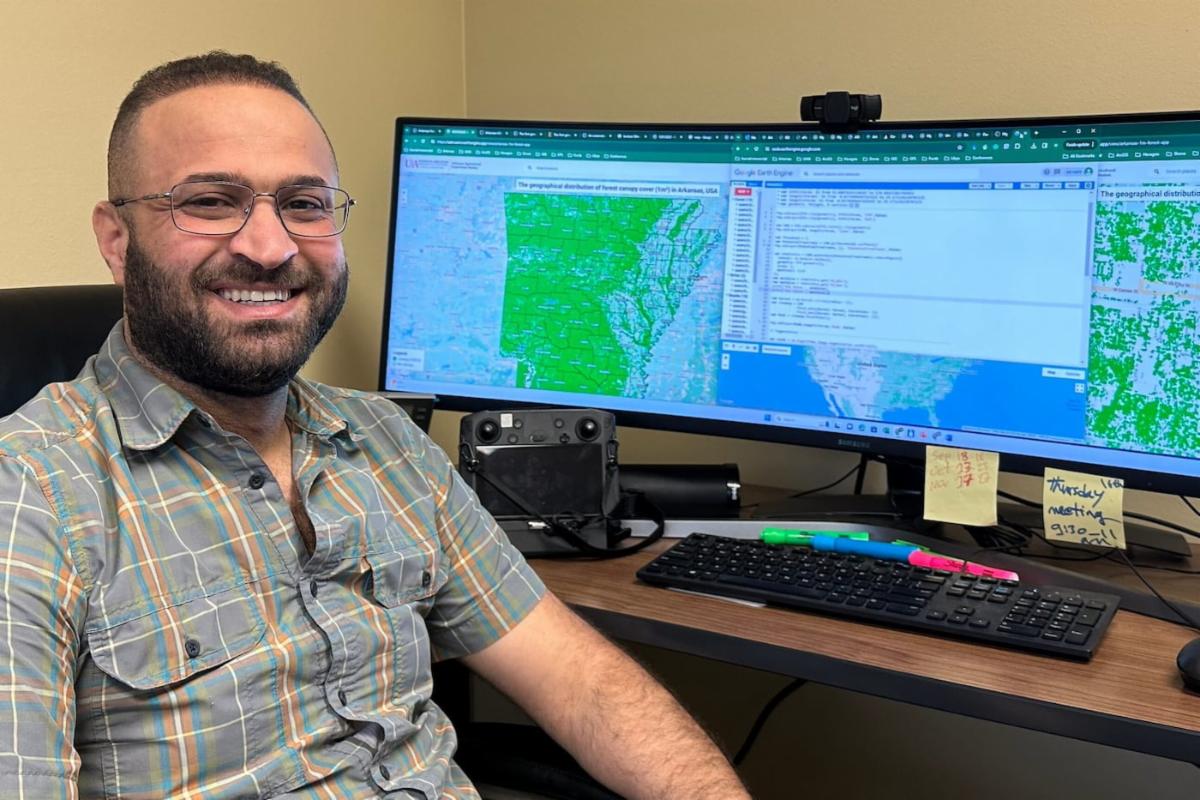
Hamdi Zurqani, assistant professor for the College of Forestry, Agriculture and Natural Resources at the University of Arkansas at Monticello, has developed the first high-resolution forest canopy cover dataset for an entire state, providing valuable insights for forest management and conservation to a major economic sector in Arkansas.
The 1-meter measurements are unique. Until now, the most common forest measurements and datasets have come from satellite imagery at 30-meter spatial resolution. Zurqani conducts research as part of the Arkansas Forest Resources Center, a partnership between the University of Arkansas System Division of Agriculture and UAM.
| |
Hamdi Zurqani said the high-resolution forest canopy cover dataset provides valuable insights for forest management and conservation to a major economic sector in Arkansas. | |
|
Don Johnson, University Professor of agricultural education, communications and technology, led research showing that artificial intelligence tools such as ChatGPT show promise as a useful means in agriculture to help write computer programs for microcontrollers.
Microcontrollers have agricultural applications that include greenhouse and row-crop irrigation control, food processing systems, and drones to name a few.
“Generative AI can make a big impact on agriculture … I can’t see how it wouldn’t,” Johnson said. “We need to prepare our graduates to be a part of that.”
| |
Don Johnson, University Professor of agricultural education, communications and technology, is researching the use of Arduino microcontrollers by agriculture students. | |
|
Research by weed scientist Matt Bertucci, assistant professor of horticulture, shows that two herbicides common in agriculture are safe and effective in blackberry production. That research is now in the hands of the U.S. Department of Agriculture and the U.S. Environmental Protection Agency awaiting final approval before recommendations for 2,4-D choline and glufosinate can be released to growers.
“We’re excited about these results because they offer growers new tools for better weed control,” Bertucci said in an episode of the Food, Farms and Forests podcast.
| |
Matt Bertucci, assistant professor of horticulture, has conducted research on two herbicides for use by blackberry growers. | |
|
Every day, most of us walk through — and on top of — incredible worlds that we don’t even know exist. Associate professor of entomology and plant pathology Natalie Clay studies these hidden worlds with an aim to understand the insect and plant interactions in forest ecosystems.
| |
|
Tomi Obe is passionate about the intersection of food safety and poultry processing. Tomi is an assistant professor with the Center of Excellence for Poultry Science and is eager to find ways to identify and control foodborne pathogens in the poultry industry.
| |
|
As controlled environment agriculture and vertical farming gain a greater foothold in modern agriculture, a new $300,000 grant from the U.S. Department of Agriculture’s National Institute of Food and Agriculture aims to enhance hydroponic lettuce production.
Kristen Gibson, director of the Arkansas Center for Food Safety and food science faculty member, is leading the research with co-principal investigators Rupesh Kariyat, associate professor of insect-plant interactions and chemical ecology in the entomology and plant pathology department; and Ryan Dickson, assistant professor of greenhouse and controlled-environment agriculture in the horticulture department.
| |
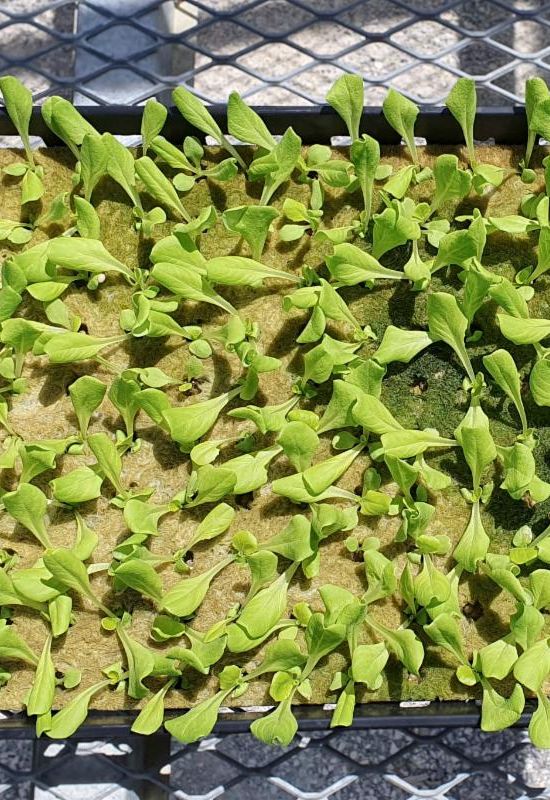
A rockwool substrate sheet with 14-day old lettuce seedlings is ready to be placed in the hydroponic deep water culture system. | | |
|
|
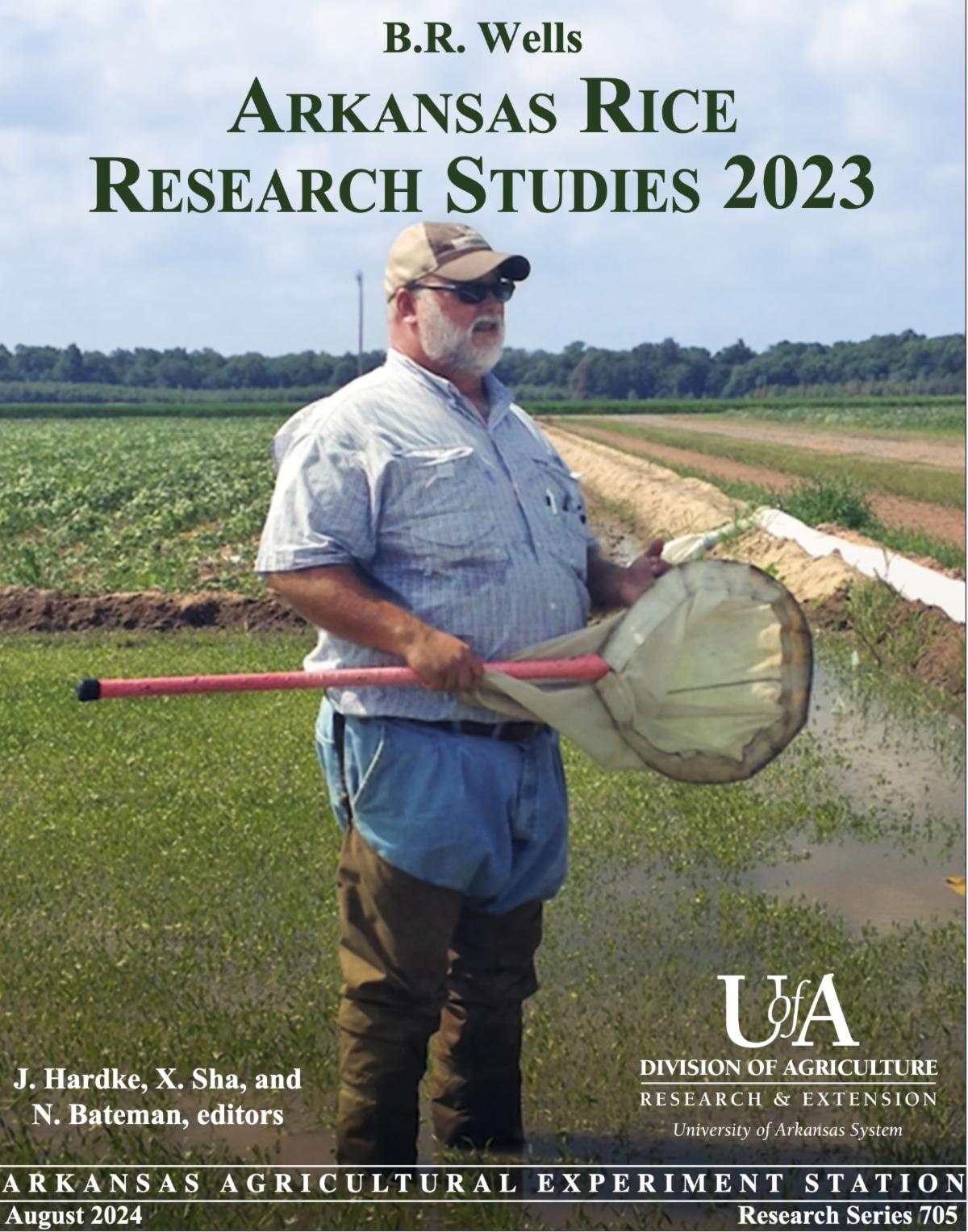
The 2023 edition of the B.R. Wells Rice Research Studies report was published in August, featuring research and recommendations from the faculty, students, and staff of the Division of Agriculture. This year's featured rice colleague is Gus Lorenz, who retired as extension entomologist and associate department head for entomology in 2022.
| |
Enjoy this newsletter? Please share it with others who might like it. | | | | |