Our Collection's Rarest Oak | |
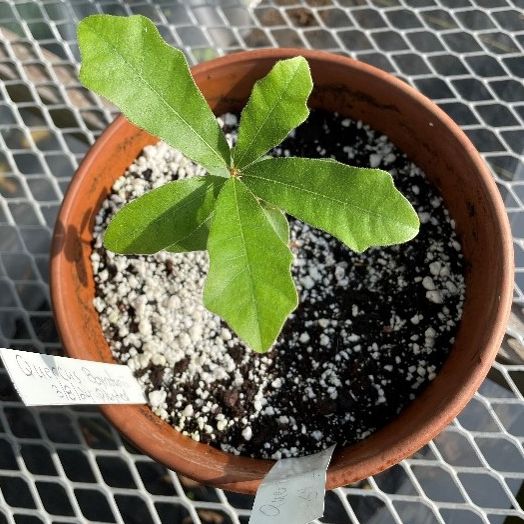
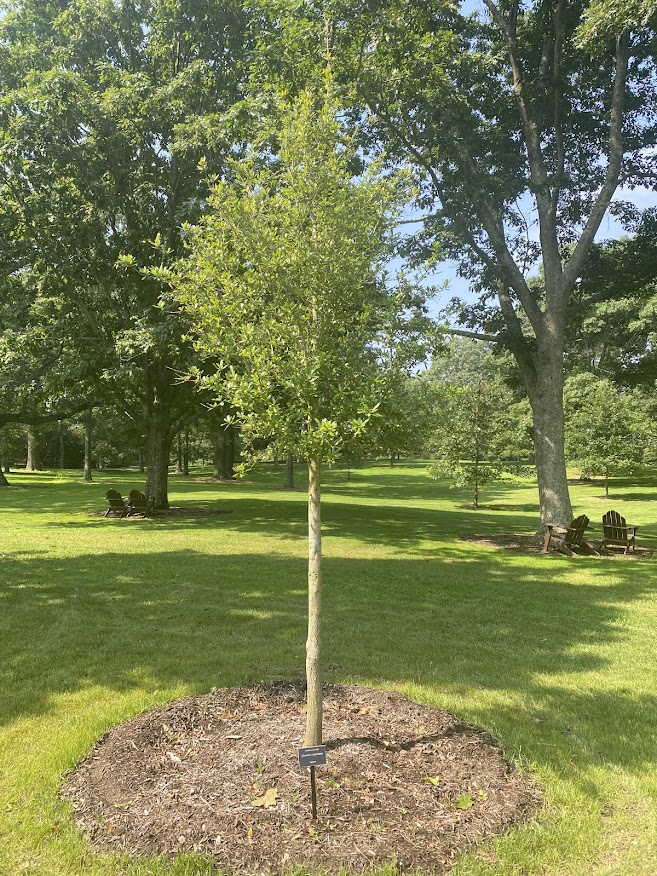
One of our most beloved and historically important features is Oak Park, designed by Frederick Law Olmsted in 1886. Designed to enhance and retain the landscapes’ natural beauty, Oak Park originally featured only four species, despite the United States being a biodiversity hotspot for Quercus. As the specimens featured in Oak Park and throughout the arboretum begin to age out, we have an opportunity to expand the collection to conserve other species facing habitat loss. Sourcing endangered and rare species is difficult because they are not sold in the horticultural trade; we rely on a network of fellow botanical gardens, arboreta, and conservation organizations to share seeds, and knowledge, of these plants. Earlier this year, we received 6 stunted, unrooted seedlings of Quercus boytonii, one of the rarest endangered oaks in North America. | |
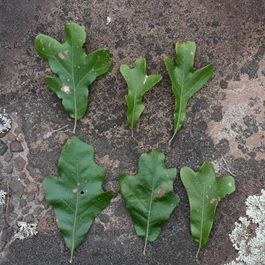
The Boynton oak is believed to be endemic to Alabama, surviving on narrow tracts of sandstone outcroppings within pine-oak-hickory forests. It is only present in 6 counties throughout the entire state. The thin soils and blazing sun of these outcroppings create a harsh environment for plants, but the Boynton oak was able to call it home. Its native habitat is not suitable to forestry and exploitation by humans, but the Boynton oaks still faces serious threats to its’ existence by encroaching invasive species and fire suppression. | 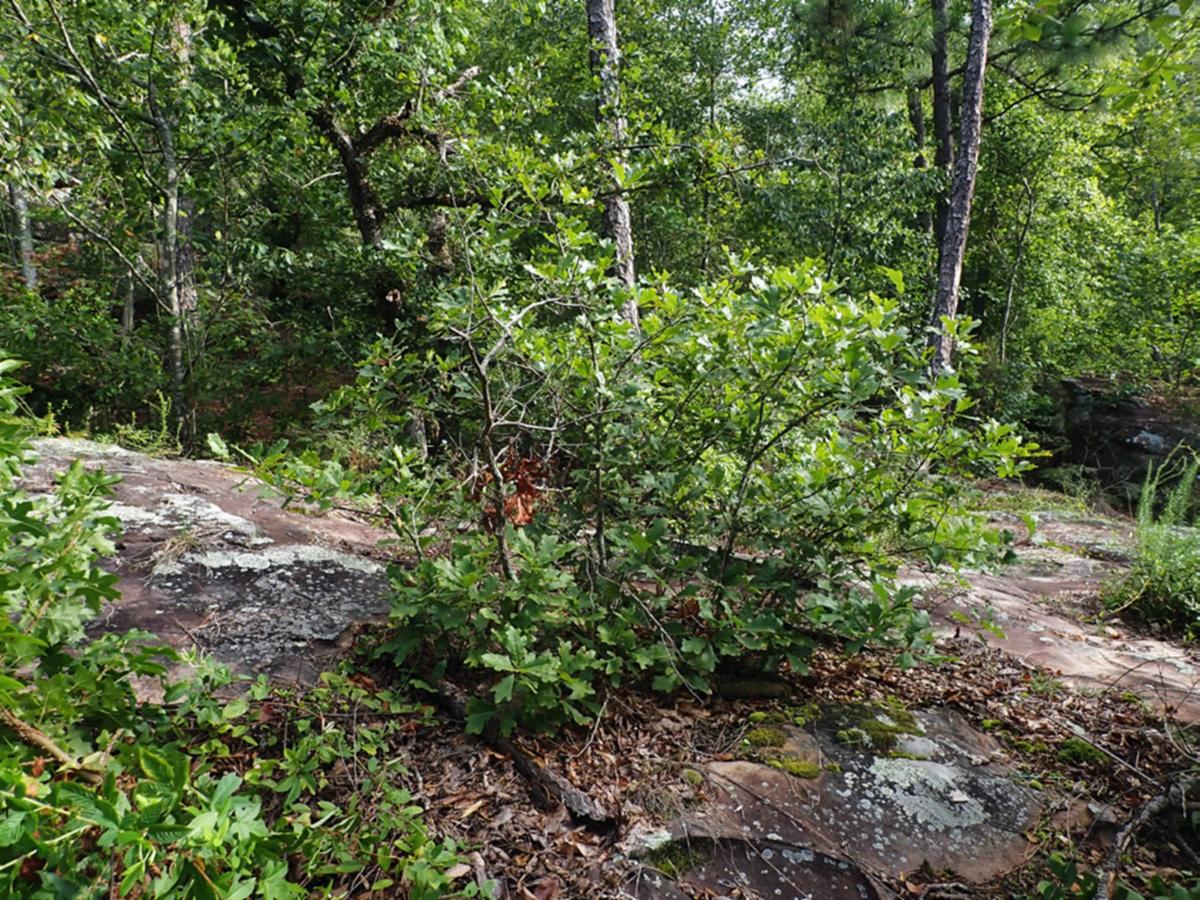 | While the Boynton oak could reach 20 feet high (still small for an oak!), most populations found exhibit a shrub habit instead. This adaptation allows the oak to survive in rocky outcrops with extremely poor and shallow soils. The leathery leaves are identifiable by three prominent lobes near the top of the leaf. Like I have mentioned in previous articles, oak leaf morphology can be highly variable among individuals of one species and sometimes even among leaves on one individual. In the case of the Boynton oak, a limited genetic pool and the ease of hybridization among oaks is contributing to the decline of populations of true Quercus boytonii. | |
Of course, the Boynton oaks produces acorns like every other oak species, although not much is known about the species’ acorn production cycle and acorn production appears low. It seems to do very well reproducing asexually through rhizomatous stems, which is what gives this oak a unique advantage in its’ natural habitat and could also be helpful for ex-situ conservation efforts. Oak species are not typically well suited to propagation through cuttings, but the organizations at the forefront of the Boynton oak’s conservation work report success propagating from root cuttings. | |
Bayard Cutting Q. boytonii seedling | |
|
It’ll be quite some time before we can safely put this tree out into the landscape, deer and lawn mowers being quite the predators, so this isn’t a species you can currently visit. This Southeastern native does have a Northeastern analog though, Quercus illicifolia or the bear oak. The bear oak thrives in a similar barren and rocky habitat and is an important species throughout the Long Island Pine Barrens. Although not quite as rare as the Boynton oak, it is equally endangered and deserves equal conservation efforts locally. We have Quercus illicifolia located in natural areas throughout the Arboretum and have plans to introduce more in the appropriate habitats in the future. | |
-Jessica O'Callahan, Grounds Supervisor | |
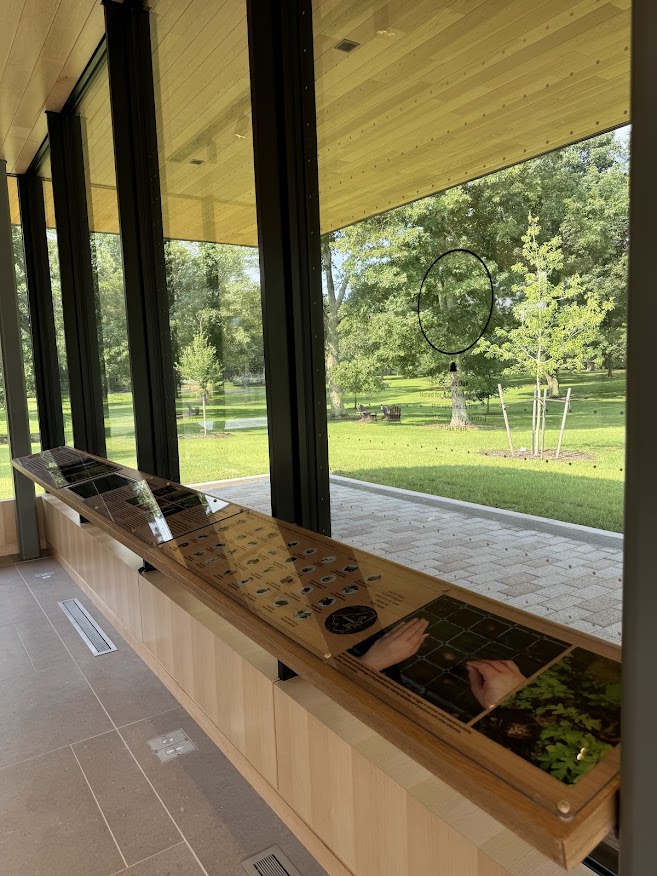
Our Visitor Center has been open to the public for almost two months! It has been such a pleasure meeting our visitors and sharing information about our beautiful landscape. Lushly illustrated graphic displays and visually compelling exhibitions support visitors’ enjoyment, learning, and appreciation. The exhibits transform the ways in which diverse visitors of all ages can explore this “living museum of trees.” The glass walls harmoniously bring nature into the structure as visitors feel like they there are standing in Oak Park. | 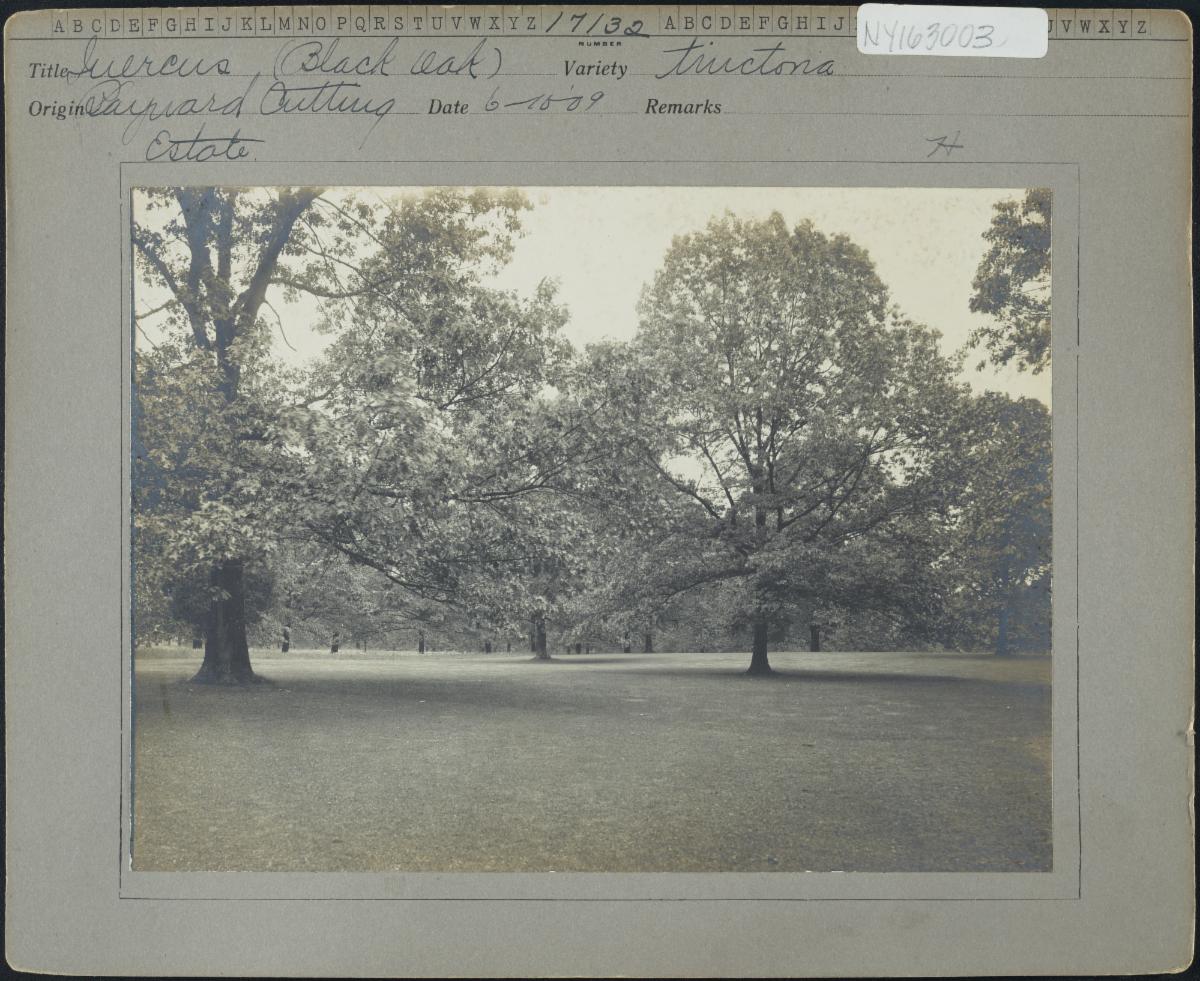 | When exploring the exhibits, visitors will notice information corresponding with the view into Oak Park. Visitors can learn about the unique juxtaposition of honoring a historical landscape while addressing the difficulties of climate change. Oak Park is a great example of preparing for the future regarding temperatures rising and diversity. Our plant hardiness zone is predicted to increase to zone 8 within the next 20 years. We want to ensure Oak Park, a historical Fredrick Law Olmsted design, remains healthy and long living. | |
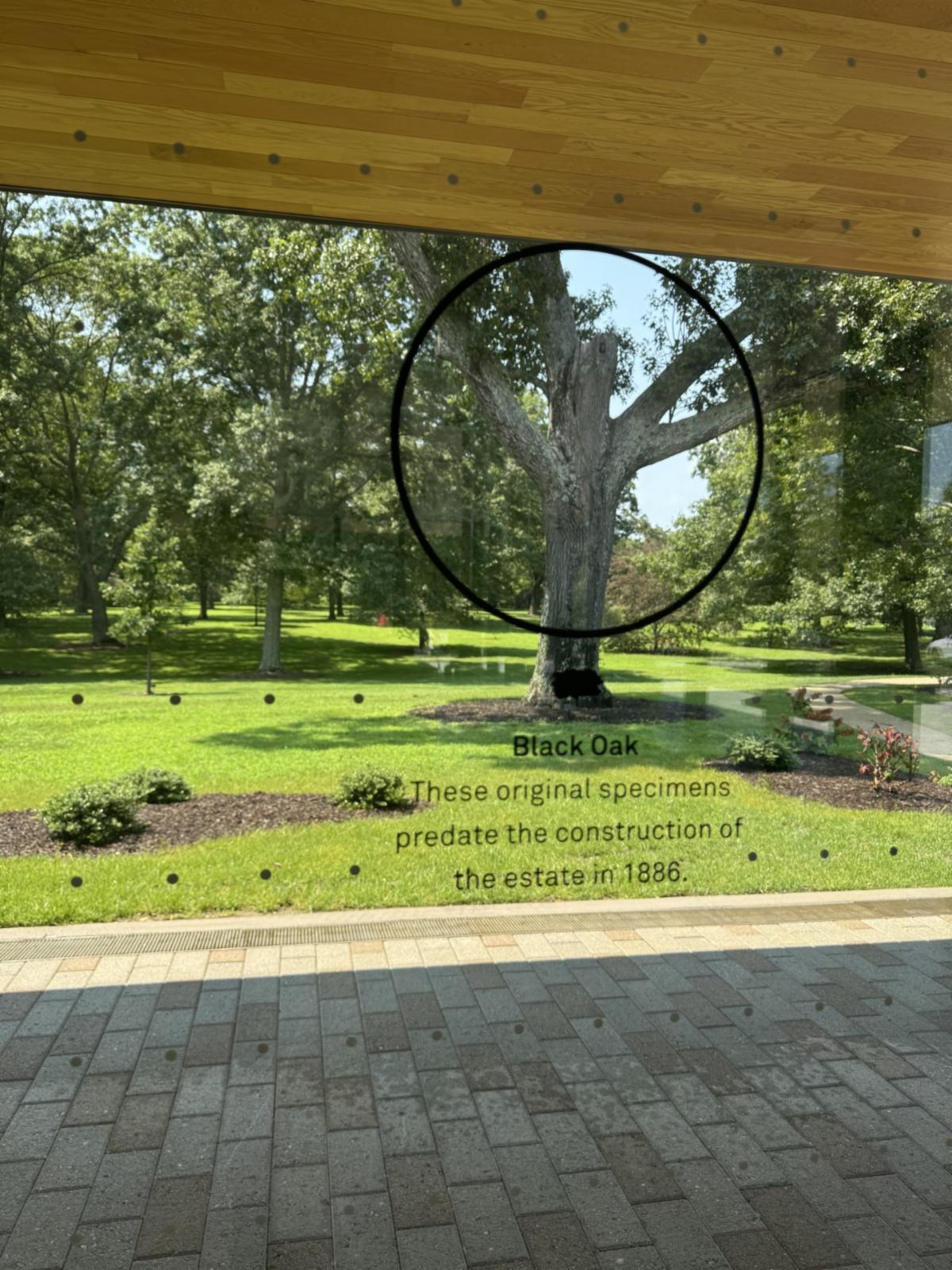
 |  | Olmsted designed Oak Park to have a lush green lawn with specimen oaks (mostly Black Oak, Quercus velutina). It resembles an English landscape with sprawling lawns and large oaks spaced to encourage tree limbs to spread wide. We wish to preserve the historic integrity of this ten-acre collection by making the necessary horticultural adaptations. The warmer weather is causing more fungal and insect problems, which affects the aging oaks from the Olmsted era the most. To ensure a sustainable landscape, we carefully curate plant introductions that can handle warmer temperatures. Our director, Kevin Wiecks, began our oak propagation and sourcing program about seven years ago. Acorns and cuttings are sourced from all over the world with the help of the International Oak Society and other institutions. The sizes vary from small specimens like the Boynton Oak (Quercus boyntonii), to large specimens like a newly planted Southern Live Oak (Quercus virginiana, 2024-0044). This 3” caliber tree was sourced from Bold Spring Nursery in Georgia and can be seen right outside the window of the Visitor Center. Not only do we trial new oak species annually, but we share our data internationally with scientific and educational institutions.
| |
Climate Change and Conservation Exhibit | |
Visitor Center Window Callouts | |
The Visitor Center exhibit displays how our oak collection has grown from four to over thirty species. Visitors can see the various types of acorns and how uniquely different they are from each other. The increase in diversity and sourcing oaks from more Southern provenances are two ways Oak Park will continue to thrive with the changing climate. We hope to convey to our commitment to honor historical landscapes while providing a flourishing green space to future generations. Next time you visit, take a moment to see our exhibits in the Visitor Center. Furthermore, we have knowledgeable staff that can answer questions and share places to explore. Glance through the windows into Oak Park and observe its many layers. From a simply beautiful view to a horticulturally progressive collection, there are many ways the Arboretum can be enjoyed. | |
-Joy Arden, Landscape Curator | |
|
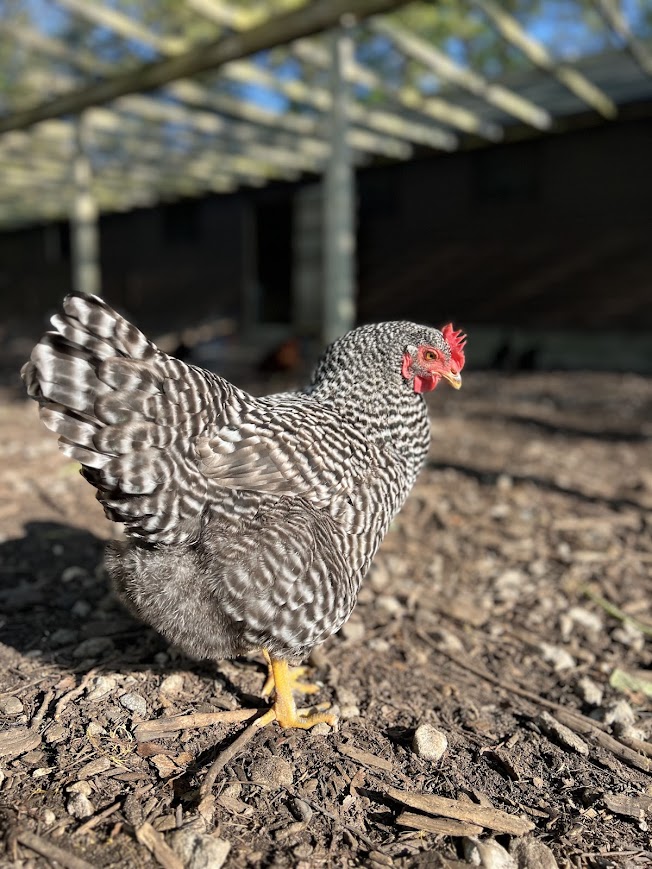
One of our chickens showing off her beautiful feathers!
Michael Connolly, Farm Hand
| |
|
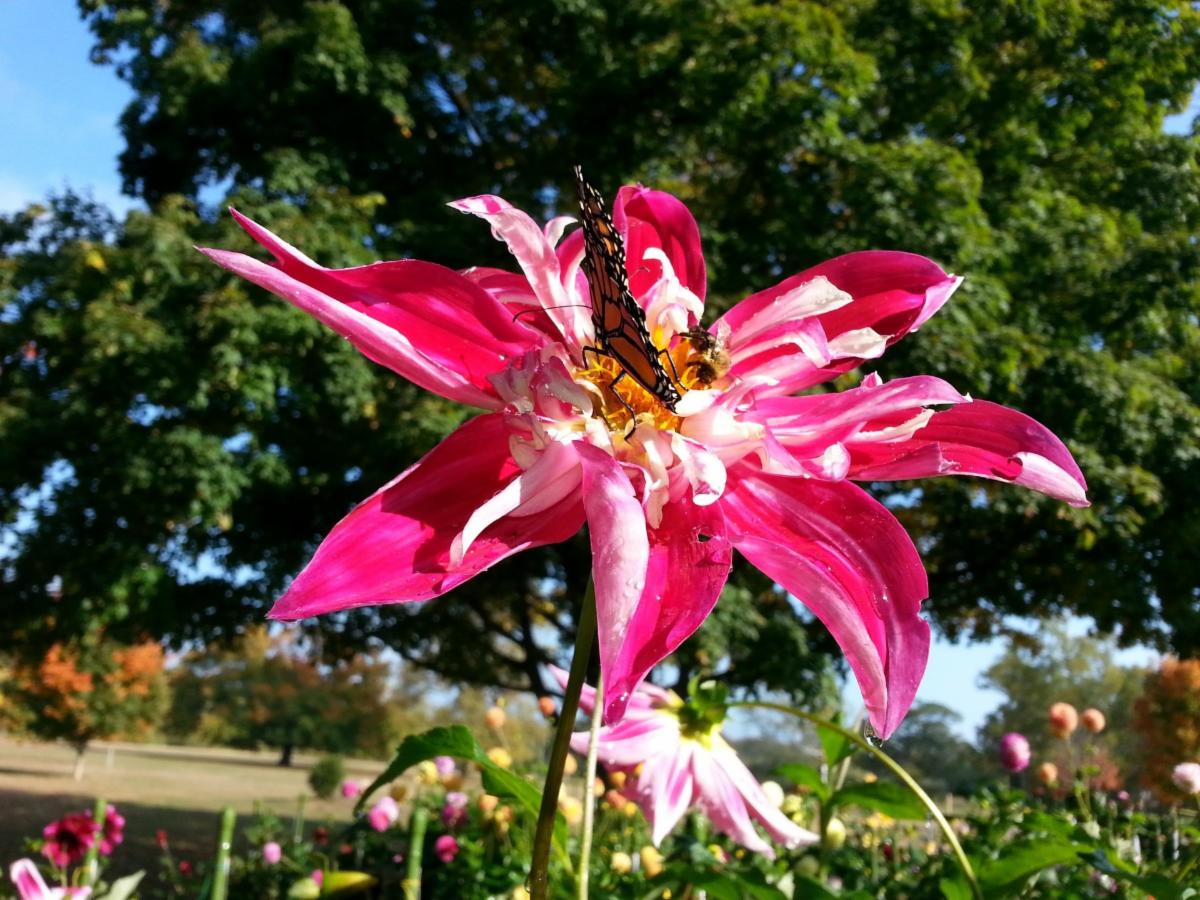
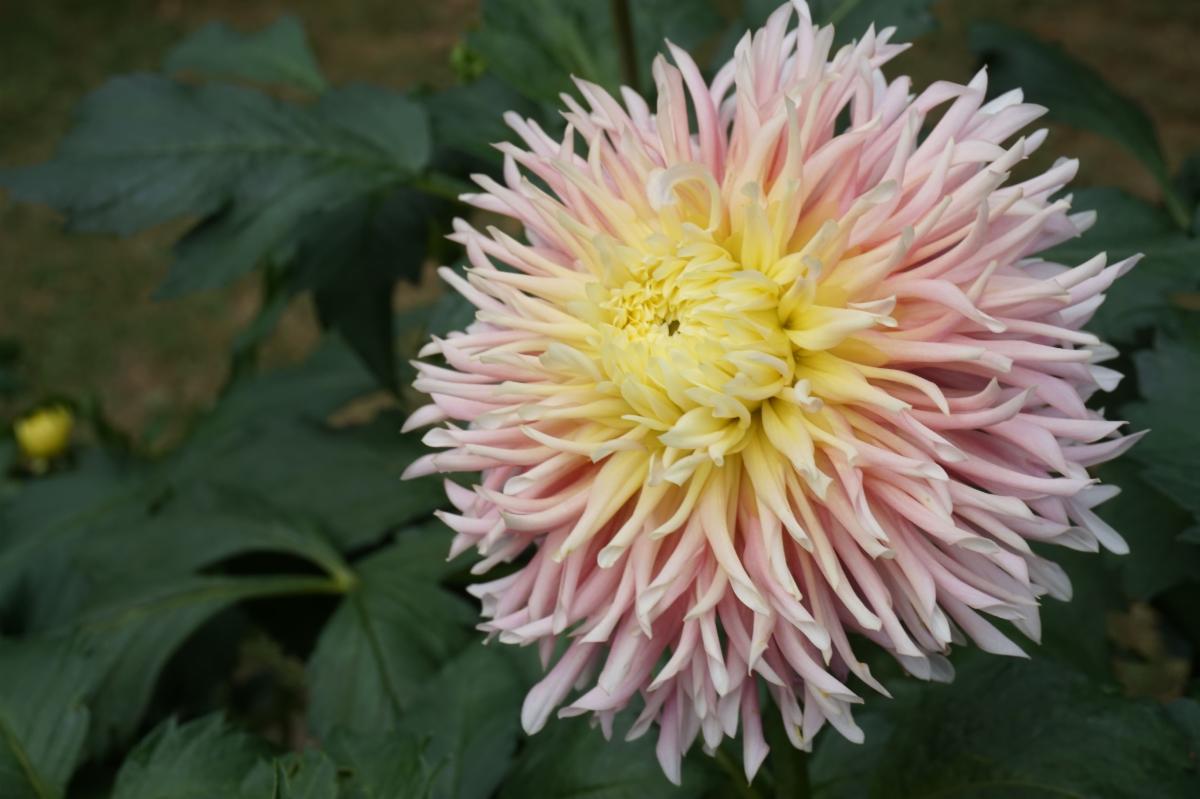
Long Island Dahlia Society Show & Photo Contest
The Long Island Dahlia Society hosts a dahlia show each year in the Carriage House. The show is held over Labor Day weekend. Dahlia growers from all over the east bring their blooms to display and compete amongst the top growers in the region. This is another excellent way to see the “best of best” dahlias on display.
2024 LIDS Photography Display and Competition
Dahlias through the Camera’s Lens
August 31, 2024 – 2:00 to 5:00 p.m.
September 1, 2024 – 10:00 to 3:00 p.m.
More information and Registration Here
| |
|
Farming Fundamentals (Ages 5-12)
Fridays in July & August - 9:30AM to 10:30AM
$25 per session or $125 for series
This 6-week series is designed to be a fun, educational addition to your child’s summer. We will cover a variety of topics that give us a deeper understanding of where the food we eat comes from including: growing vegetables, creating compost, the precipitation cycle, supporting pollinators, raising chickens and harvesting crops.
| |
|
Forest Bathing Walk
Join certified forest therapy guide, Linda Lombardo of Wild Heart Nature Connection, on a walk to reconnect with the natural world around us.
Saturday, August 10, 2024 - 10:30AM to 12:30PM
Fee: $40 per person.
Please wear comfortable, sturdy shoes and warm clothing for walking outdoors. Register here!
| |
|
Art Show: Bayard Cutting Arboretum & Beyond Photography of Holly Gordon
An artist and a gardener, Holly Gordon began as a nature photographer greatly influenced by Monet and the Impressionists. Having been a resident of the Town of Islip, she has found constant sources of inspiration from visits to Bayard Cutting Arboretum. As the Arboretum has evolved, so has Gordon's creative vision.
August 22 - September 15, 2024
Thursday - Sunday 11:00AM-4:00PM
More information here!
| |
|
Watercolor Workshops with Teresa Cromwell
Have fun with watercolors and go home with a finished picture ready to frame!
Fee: $50 per Student
All materials are provided by the instructor. Feel free to bring your own paints and brushes to class. Registration, additional dates, and more information can be found on our website.
| |
House and Grounds Tours
Manor House Tours are offered Thursdays thru Sundays at 1PM. Ground Tours are offered on Wednesdays and Saturdays at 10:30AM. Call (631) 581-1002 for availability, costs, required registration, and more details.
| |
Home School Programming
We welcome you and your children to explore our program. Tours are available on Tuesdays at 9:30 am. Reservations are required and payment must be made in advance. For more information, please contact Carolann Gaites, Volunteer Coordinator, at 631-581-1002, ext. 105.
| |
Help Support Bayard Cutting Arboretum | |
Tax deductible donations can also be made by check payable to
Natural Heritage Trust and mailed to
Bayard Cutting Arboretum, PO Box 907, Great River, NY 11739
| | | | |