https://files.constantcontact.com/fd73091e001/d6a85882-4d9f-43ce-b4d3-c07bf1da1ccb.png?rdr=truea=1134830823678
"To protect the Oregon coast by working with coastal residents for sustainable communities; protection and restoration of coastal and marine natural resources; providing education and advocacy on land use development; and adaptation to climate change."

Oregon Coast Alliance is the coastal affiliate of 1000 Friends of Oregon

Oregon Coast Alliance Newsletter

 Urbanizing Rural Oregon and Other News

The Unincorporated Communities Housing Boondoggle


The Data Center Problem


Botts Marsh LLC Begins Its Annexation Process in Wheeler: City Council Hearing September 15th


The Unincorporated Communities Housing Boondoggle

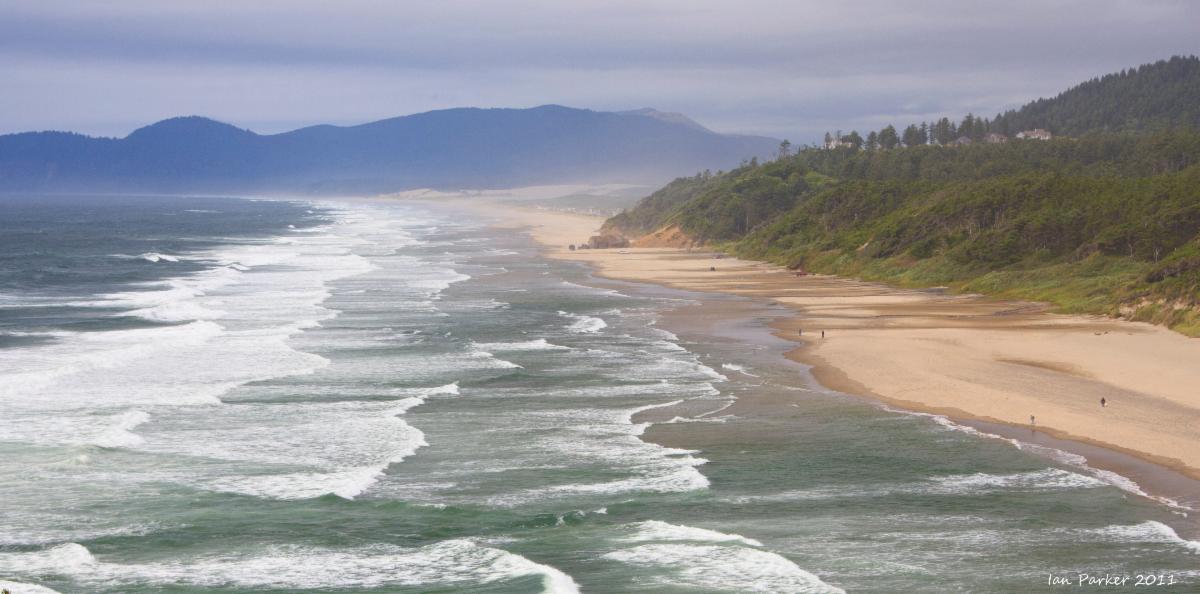
Beach North of Pacific City. Courtesy Ian Parker.

Per Governor Kotek’s initiative, the Department of Land Conservation and Development (DLCD) is pursuing a rulemaking to expand housing opportunities in the state’s unincorporated communities (UCs). The Advisory Committee assisting in this effort met for the first time on August 19th. Though this sounds like a reasonable and appropriate policy change to bring housing to Oregonians, it is in fact a complete boondoggle and land grab. The rulemaking explicitly “Requires participating counties to plan and zone for community needs to support these areas, including but not limited appropriate commercial and light industrial uses, transportation, public facilities and urban services.” (emphasis added).


In other words, in addition to requiring the communities to host urban-density housing, the participating counties will be required (not permitted, but required), to zone them for commercial and light industrial uses — meaning everything from data centers and warehouses to strip malls, motels and gas stations. All this rezoning for commercial and industrial would pull development away from cities where it belongs. Why? Because rural land is cheaper to purchase, and its taxes are lower. Oregon’s rural communities would be forever compromised: urbanized and commercialized.


There are more than 400 unincorporated communities statewide, and at least forty-five in the coastal region. The new rulemaking would allow counties to expand the growth boundaries of these unincorporated communities to accommodate the new urban development, thus reducing the amount of farm and forestland across Oregon, and place urban uses in direct conflict with them. It would also add to Oregon’s water scarcity problem, which is a growing issue statewide, including the coast. But it rains so much! you might say. Yes, the coast receives much rainfall, but high water use is in the summer months, when coastal water supplies are at their lowest, and there is no water to spare.


Ironically, Oregon has more than enough land already zoned for needed housing, both in urban and rural areas. Portland alone has capacity to provide for 47% of the state’s entire projected housing need. Furthermore, the Legislature has recently passed several laws to assist in adding housing inside cities, and these have barely come online as of yet. As for rural areas, there is already more than enough land zoned for needed housing, from farmworker housing in exclusive farm use zones to accessory dwellings in rural zones. And on the coast especially, there are enough short term rentals (STRs) to meet the entirety of needed housing, if only they were restored to the longterm rental market.


ORCA is partnering with many other concerned people to let DLCD know that this rulemaking is unnecessary, and would also turn the land use system on its head, urbanizing rural Oregon in ways exactly opposite to what the land use laws were intended to do, which is keep rural Oregon rural.


The Data Center Problem

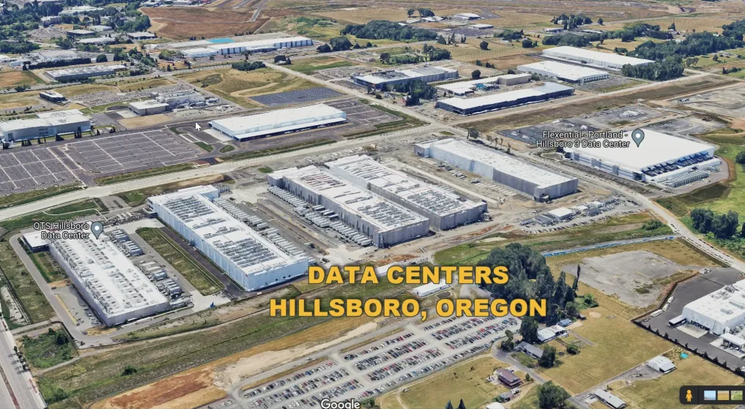
Data Centers in Hillsboro. Courtesy Google Earth.

All of a sudden proposed data centers, whether for Artificial Intelligence (AI) needs or greater computing ease, are everywhere. In Oregon most are clustered either in the Portland Metro area or in northeastern Oregon near the Columbia River. The Legislature approved a one-year moratorium on the state’s Enterprise Zone program due to the backlash over rapid expansion of data centers. the Enterprise Zone program is a tax incentive program geared to encouraging industrial development, and it has been a boon for incoming data centers. Washington County and Hillsboro just approved more than a dozen new applications for property tax easements ahead of the state moratorium, prompting a lawsuit by the Oregon Education Association and other parties. Oregon is among the top ten states where data centers want to locate, thanks to the lack of sales tax and relatively cheap electricity. Umatilla and Morrow Counties have the most, followed by Washington County.


Why are data centers controversial? There are many reasons, but two of the biggest (in addition to generous tax incentives) are their dramatic needs for water and energy, thus the big clusters of data centers along the Columbia. Taking note of the growing concerns, Governor Kotek convened a data center advisory committee. Far from recommending a moratorium on data centers, the committee sympathized with communities in rural Oregon that have benefited economically from them. They did not discuss Google data centers’ use of nearly 40% of the water in The Dalles, and their desire to obtain water from Mt. Hood National Forest. Nor did they discuss groundwater contamination in northeast Oregon thanks to heating contaminated water through Amazon data centers.


Instead, the group focused on data centers’ energy demands, and whether regional grid capacity can keep up. The consensus? Oregon should use the data center boom to increase private investment in energy infrastructure that benefits everyone. Unfortunately, a problem like data centers cannot be solved by simply growing more. Even more decision-making transparency will not solve the problems; only restraint and realistic decision-making about limits to water and energy availability will provide solutions.


Where is the coast in all this? There are no data centers yet in the coastal region, but ORCA is concerned that the day applications begin might not be far away. There are many undersea cables that come to land on the Oregon coast already, and more will probably apply. Water and energy infrastructure are in even lesser supply on the coast than in other parts of the state, and should data centers cast looks our way, the many problems they cause will only be magnified.


Botts Marsh LLC Begins Its Annexation Process in Wheeler: City Council Hearing September 15th

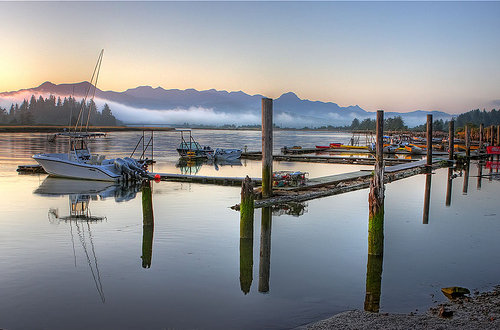
Wheeler Docks and Neahkahnie Mountain. Courtesy City of Wheeler.

A portion of the Botts Marsh LLC development is not in the City of Wheeler, and must be annexed in before any further work can take place. The planning commission hearing was August 13th, and (predictably) the commissioners approved the request. The City Council hearing will be September 15th at 6:00 pm. 


Despite the quick planning commission approval, there are problems with this annexation. An annexation is a land use action, and requires compliance with the city’s comprehensive plan. As Wheeler has no implementing regulations, the Statewide Planning Goals apply. That means Wheeler must apply these Goals to this annexation, which they did not do. Several aspects of the Goals would apply in this instance, but the applicant has not met his burden of proof, as there was no attempt at all to satisfy this requirement, and thus there is no substantial evidence in the record to justify it.


To provide testimony for this upcoming hearing, please email City Manager Paul Shively, here before September 15th.


Quick Links...

Here's where you can make a difference for the Oregon coast.
Go to the ORCA website to make a donation or become a sustaining member. 

Contact Information
Contact Executive Director Cameron La Follette
by email or phone: 503-391-0210
You are receiving ORCA email communications as a donor or as a person who subscribed to this email newsletter. Please click Unsubscribe below if you wish to no longer receive the Oregon Coast Alliance Newsletter.
Facebook