|
In this eBulletin:
Master Class with Dr. Sally Brown
Feat. Jared Kinnear
NWB Resource Library:
Nutrient Needs
W5170 Albany
Revised EPA PFAs
Save the Date: 2026 Northeast Residuals & Biosolids Conference
| |
Thurs., Sept. 3, 2026
Northwest Biosolids Webinar: ABCs of AD Anaerobic Digestion
| |
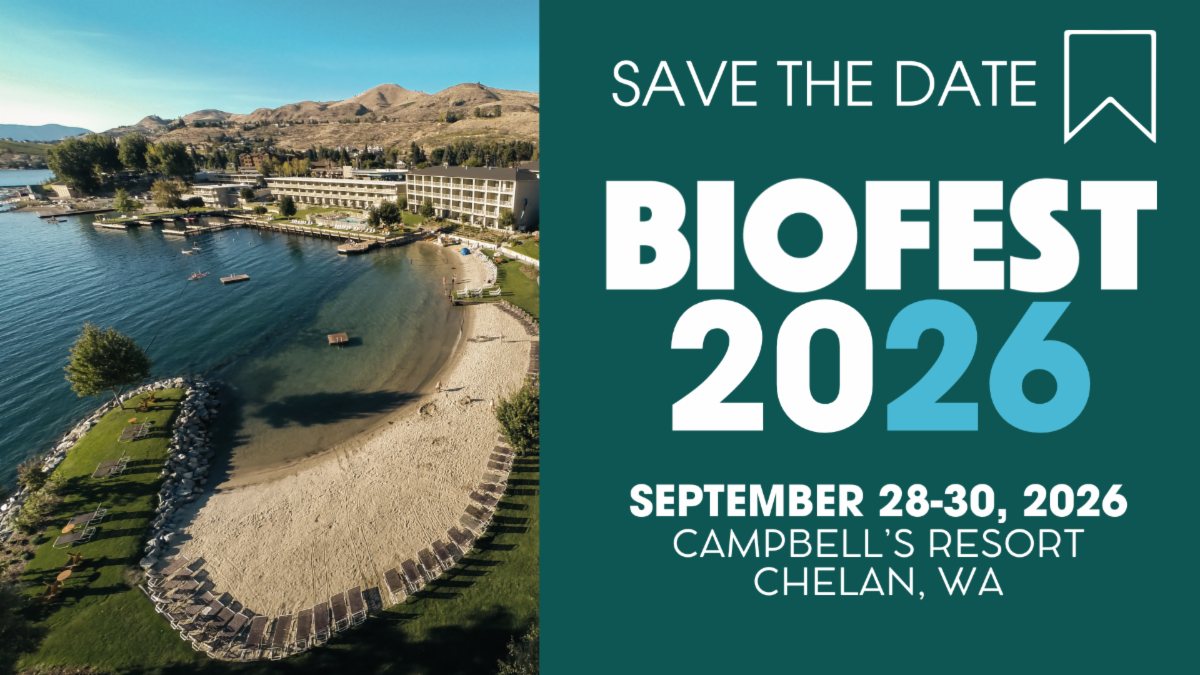
Mon., Sept. 28-Wed., Sept. 30, 2026
Campbell's Resort | Chelan, WA
|
Engineer 1
Columbia Boulevard Wastewater Treatment Plant
City of Portland, Portland OR
| Do you have a job opening to advertise? NWB members can email job postings to amy@nwbiosolids.org | |
NW Biosolids
Board of Directors:
James Dunbar, President
Ben Nydegger, Vice-President
Brian Campbell, Treasurer
Kasie Auger
Secretary
Tania Gheseger
Past President
Deidre Bartlett
Cat Gowan
JR Inman
Mike Van Ham
MacLeod Pappidas
Mike Gates
Kyle Dorsey
Brian Campbell
Darrell Winans
Landon Reigelman
NW Biosolids Committees:
Education Committee
Deidre Bartlett, Chair
MacLeod Pappidas, Vice-Chair
Sally Brown
Mike Gates
Dave Keeney
Terry Alber
Cat Gowan
Deveron Musgrave
Jori Nelson
Landon Reigelman
Jim Landon
Tyler Ellingboe
Valerie Ward
Anna Beebe
Membership Committee
Mike Van Ham, Chair
Brian Campbell, Vice Chair
Darrell Winans
Mike Gates
Isaiah Langi
Ben Nydegger
Will Hausa
Outreach Committee
Kasie Auger, Chair
Maile Lono-Batura, Vice Chair
Steve Wilson
Kyle Dorsey
MacLeod Pappidas
Deveron Musgrave
Darrell Winans
Will Hausa
Research Committee
Tania Gheseger, Chair
Cat Gowan, Vice-Chair
Ben Nydegger
Greg Mockos
Kasie Auger
Faith Rasmussen
Scott Mansell
| | |
Want to protect our waterways and at the same time heal our soils? Skip Greenpeace and work with biosolids. That is the message from Jared Kinnear featured guest in the August Master Class.
Jared, with Clean Water Services, does more than make that connection clear.
| |
Nutrient needs
By Dr. Sally Brown, University of Washington
| A few months ago an article came out from Cornell University researchers (article #1 Realizing an equitable circular bionutrient economy in the United States) that talked about the importance of capturing the nutrients in wastewater and biosolids to achieve nutrient circularity. This was a bit of a shocker for those of us who remember Murray McBride (now emeritus) and Ellen Harrison (no idea where she is now), both past foes of biosolids. It turns out that you can love the N and P in the biosolids and even have fondness for the P(ee) and the P(oop) but not respect the cake itself. This month the library is all about the value of the nutrients in human waste including a final article on how to embrace those same nutrients when they are served in biosolids form. | |
W5170 Albany
By Dr. Sally Brown, University of Washington
| Every year, a group of scientists gets together to talk about biosolids. This group, now referred to as W 5170, has been talking about biosolids for over 50 years. The USDA (U.S. Department of Agriculture) sponsored group was largely responsible for conducting the science behind the 503 biosolids regulations. The members have changed, but the focus has not; benefits of and contaminant behavior in biosolids. This year’s annual meeting was held in Albany, NY to coincide with the MABA (Mid-Atlantic Biosolids Association) meeting. The topic, no surprises here, was PFAS. Perhaps the only surprise was that microplastics weren’t mentioned. Attendees included Ian Pepper, University of Arizona, Linda Lee, Purdue and Jim Ippolito, Ohio State. Joining the regulars were Hui Li from Michigan State and Qianqian Dong from Texas A&M (Agricultural and Mechanical). Hui got his PhD under Linda Lee and Qianqian got hers under Hui. There were also presentations from two graduate students from Penn State, Kelly Kosiarski and Dallon Pannella. | |
Revised EPA PFAs
By Dr. Sally Brown, University of Washington
| The EPA has issued a revised draft guidance memorandum for PFAS (PFOA and PFOS) in biosolids. This was in response to the thousands of comments the agency had received in after the first draft risk assessment was issued during the last days of the Biden administration. That risk assessment was conducted in a traditional manner using available scientific references and protocol. Although the conclusions that were reached were flawed- due largely to the lack of data on the behavior of PFAS in normal biosolids- the methods used were solid. Don’t get me wrong, I strongly disagreed with how the authors used the limited data and the conclusions that they reached. Namely that at high loading rates biosolids containing 1 ppb of PFOA and PFOS could pose a threat to highly exposed individuals (HEI). Nevertheless, the authors were doing their job as directed. They were trying to use science and missed out on common sense. | |
Save the Date:
2026 Northeast Residuals & Biosolids Conference
| The New England Water Environment Association and the North East Biosolids & Residuals Association are once again collaborating on a conference program you won't want to miss. The program is almost ready to be announced. In addition to the traditional technical content, we are adding an optional workshop on drying and a tour of the WM biosolids drying facility in Norridgewock. There are some great networking events planned. And for NEBRA members, there will be our annual membership meeting. | |