Note: For the best browsing experience, view on a desktop device. | | |
August 2026
CIR NEWSLETTER
|
|
Howdy!
In this edition of the Center for Infrastructure Renewal (CIR) Newsletter, you will find many examples of the outstanding accomplishments of our faculty, researchers, staff and students, whose work continues to advance innovative solutions to critical infrastructure challenges. You will also notice that the CIR Newsletter has received a wonderful refresh thanks to the efforts of our CIR and Texas A&M Transportation Institute (TTI) Communications teams. I would like to extend my sincere appreciation to Katie Carroll (CIR) and Gracie McMahan (TTI) for coordinating this project, as well as to all the TTI Communications team members who helped bring this vision to life. Thank you for your dedication, creativity and hard work in showcasing the Center for Infrastructure Renewal in such a professional and engaging way.
As we close out Fiscal Year 2026, I am pleased to reflect on the continued growth and success of the CIR. Over the past several months, CIR-affiliated researchers have earned national recognition, contributed impactful scholarly publications and strengthened partnerships across academia, industry and government. I am especially proud of our students, many of whom have successfully defended master's theses and doctoral dissertations, presented their work at conferences and received prestigious awards, including nationally competitive recognitions such as the U.S. Department of War (DoW) Science, Mathematics, and Research for Transformation (SMART) scholarship and the National Science Foundation (NSF) Graduate Research Fellowship Program (GRFP). These achievements truly reflect the strength of our collaborative research environment and our commitment to developing the next generation of infrastructure leaders.
We also continue to expand our research capabilities through strategic investments in facilities and emerging technologies. We are excited to announce the construction of the new Infrastructure and Robotics Automation Laboratory (IRAL), a collaborative research space that will bring together the Texas A&M Engineering Experiment Station (TEES) and TTI researchers working in robotics, unmanned aerial vehicles (UAVs), remote sensing, artificial intelligence, computer vision, 3D printing and automation for modern infrastructure systems. The laboratory will also support research related to space and lunar construction technologies while providing a shared environment for innovation, hands-on student training and interdisciplinary collaboration.
Additionally, we recently launched a Recent Publications webpage that highlights the latest scholarly contributions from CIR faculty and students, making it easier for our partners, stakeholders and the broader research community to access and learn about the groundbreaking work being conducted across the center.
Together, these investments in people, facilities and research visibility strengthen CIR's mission to deliver innovative, research-driven solutions that improve the resilience and performance of infrastructure systems for Texas, the nation and beyond.
Thank you for your continued support of CIR and the talented people who make our success possible.
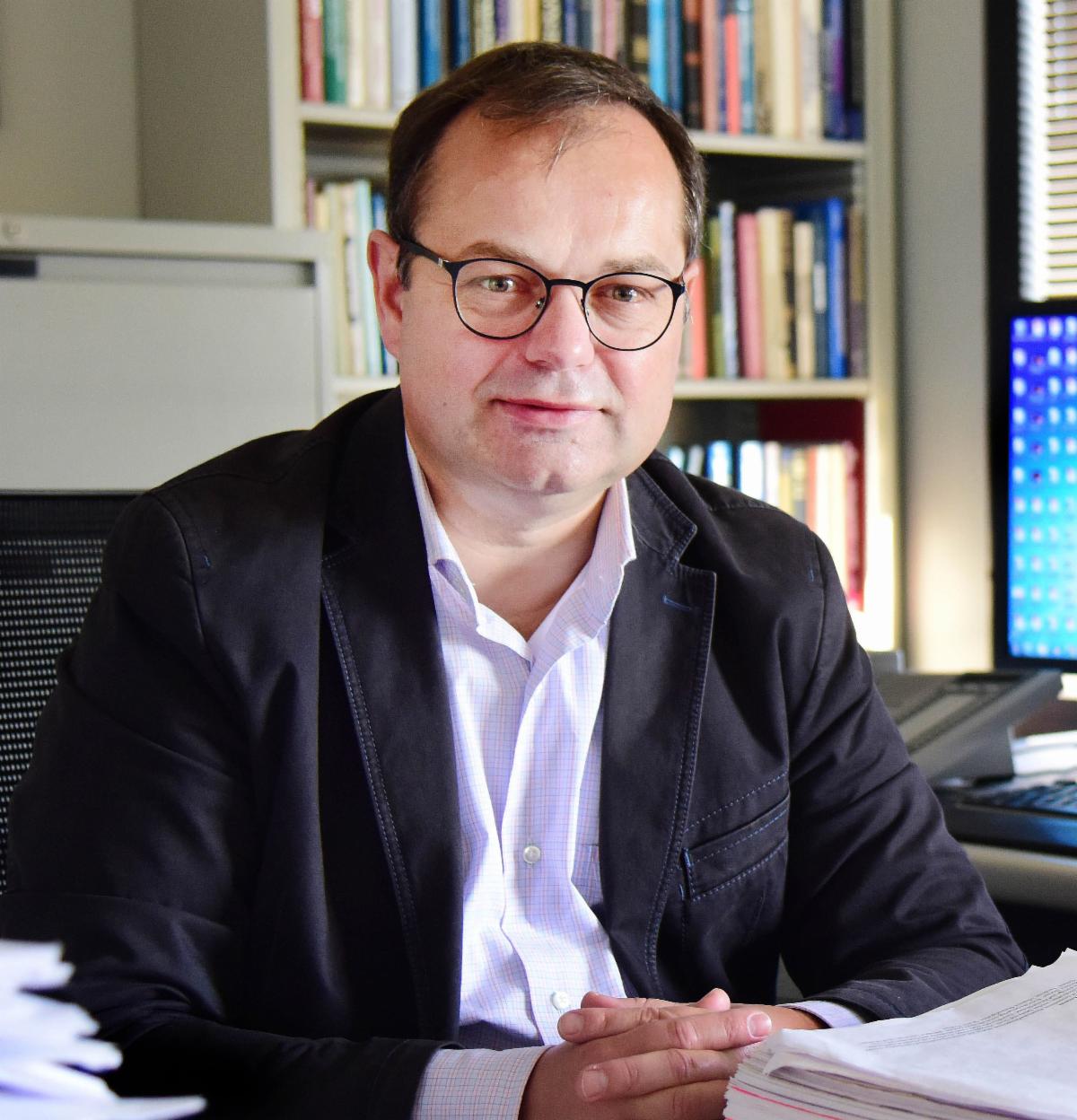
Anand J. Puppala
Director, Center for Infrastructure Renewal
| | FACULTY NEWS & RECOGNITION | | Dr. Pravin Saraswatula Selected for Emerging Leaders Alliance Conference | |
Congratulations to Dr. Pravin Saraswatula, TTI assistant research scientist and CIR-affiliated researcher, on being selected to represent the American Concrete Institute at the Emerging Leaders Alliance Conference. Held Sept. 14–17, 2025, in Pittsburgh, Penn., the conference brought together a select group of emerging leaders to strengthen leadership skills and build cross-industry connections. Dr. Saraswatula’s participation highlights the strength of CIR-based research and the national recognition of its researchers. We look forward to the valuable insights and perspectives he brings back to the CIR community following this experience.
View the American Concrete Institute's LinkedIn announcement post.
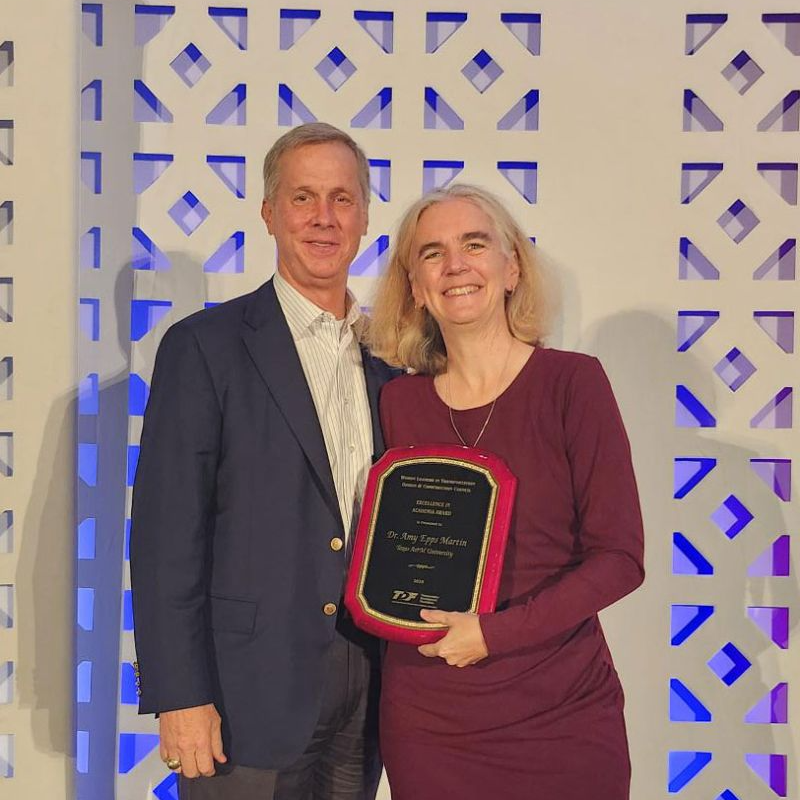
| | Dr. Amy Epps Martin Receives ARTBA Excellence in Academia Award | |
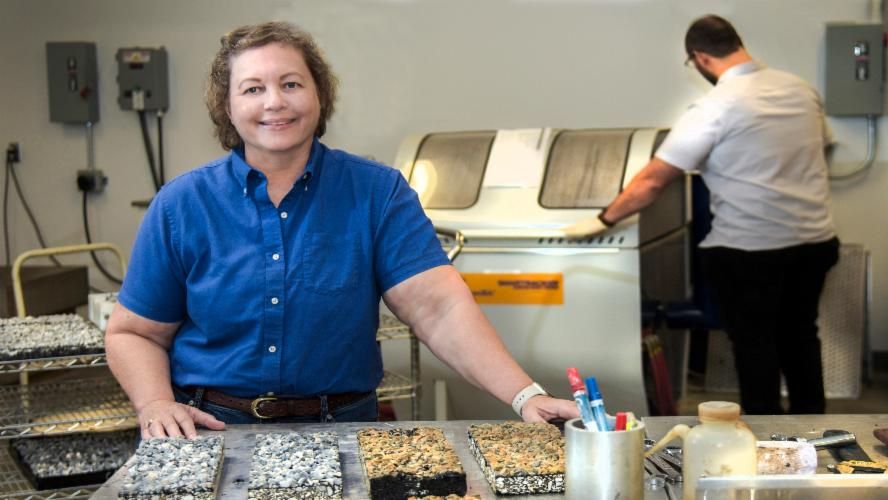
Congratulations to Dr. Amy Epps Martin, Texas A&M University Zachry Department of Civil and Environmental Engineering professor and CIR-affiliated researcher, on receiving the Excellence in Academia Award from the American Road & Transportation Builders Association (ARTBA) Foundation’s Women Leaders in Transportation Design and Construction Awards. This national recognition highlights her impactful career advancing safe and sustainable asphalt technologies, much of which has been conducted in collaboration with CIR labs and research initiatives.
Over the past 25 years, Dr. Epps Martin has led numerous state and national research projects and mentored dozens of graduate students, helping to shape the next generation of transportation professionals. Her leadership and contributions continue to elevate the visibility and impact of CIR-supported research within the transportation community.
View the Zachry Department of Civil and Environmental Engineering's LinkedIn Announcement.
| | Dr. Kinsey Skillen Presents TxDOT Research at American Concrete Institute Committees | | |
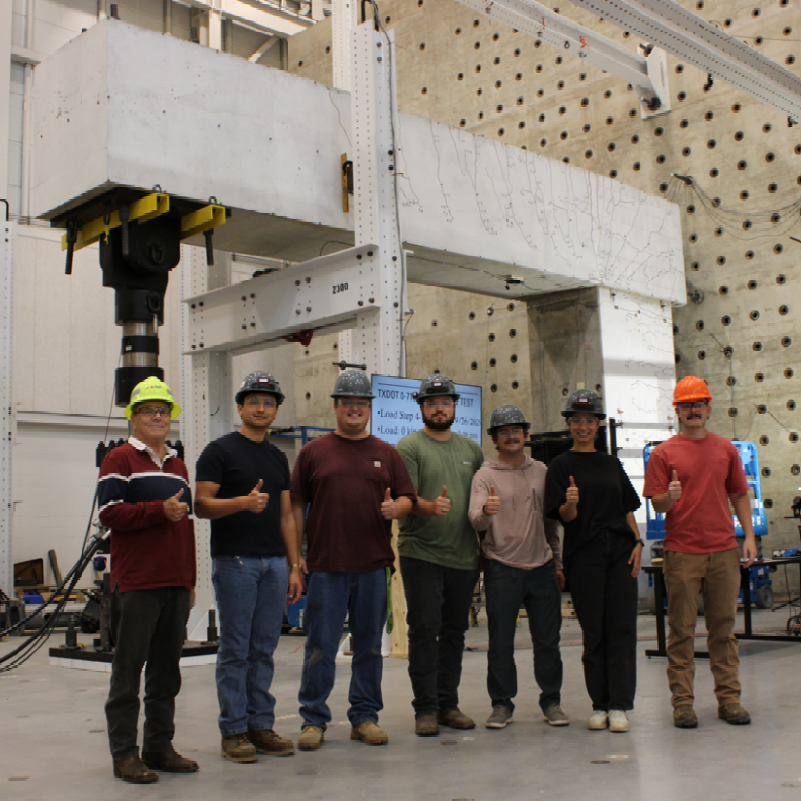
Dr. Kinsey Skillen recently presented findings from two TxDOT projects at meetings of American Concrete Institute Committees 445 and 352. Serving as PI, his work focuses on improving the constructability and structural performance of bent cap structures, supported by full-scale construction and testing conducted in the CIR High Bay Laboratory.
These projects demonstrate the critical role of CIR facilities in advancing applied research that directly informs infrastructure design. Through his contributions to national committee discussions, Dr. Skillen is also helping shape industry standards and best practices in bridge engineering.
Learn more about the CIR researchers represented at the 2025 ACI convention.
| | | AMAZE Asphalt Testing Robot Advances TxDOT Materials Testing | | | | |
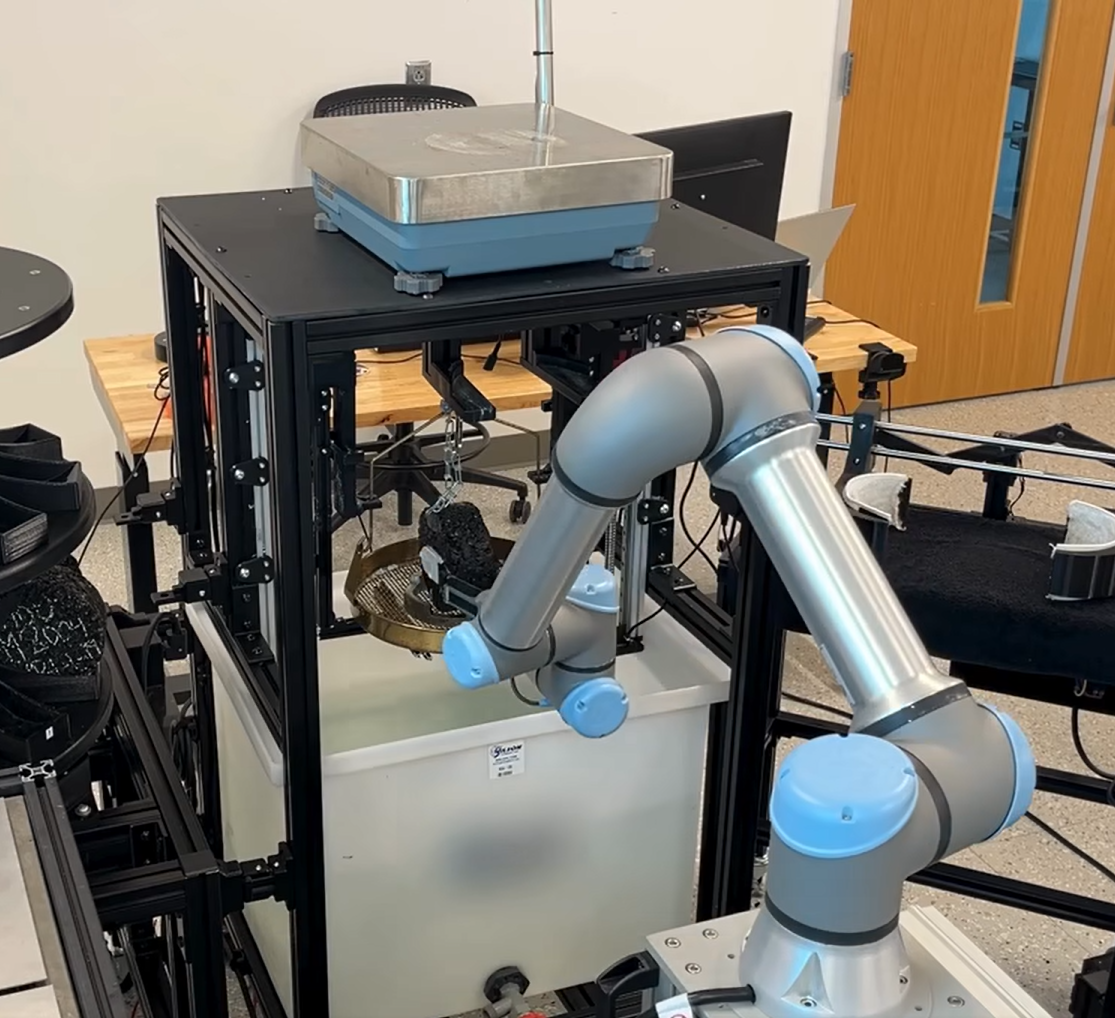
CIR-affiliated research continues to support innovation in transportation through advancements like AMAZE, TxDOT’s new asphalt testing robot. Developed through Texas Department of Transportation’s (TxDOT’s) Research and Technology Implementation Division, AMAZE improves the safety, efficiency and consistency of road material testing, enhancing the quality and longevity of Texas roadways.
Contributions from researchers, such as Dr. Fujie Zhou, who collaborate with CIR labs help drive these technology-forward solutions. This work highlights the role of CIR-supported research in advancing practical tools that directly benefit infrastructure systems and public safety.
Watch TxDOT's Introducing AMAZE video on LinkedIn.
| | Dr. Jonathan Snodgrass Featured on KBTX News Discussing Texas Power Grid Future | | |
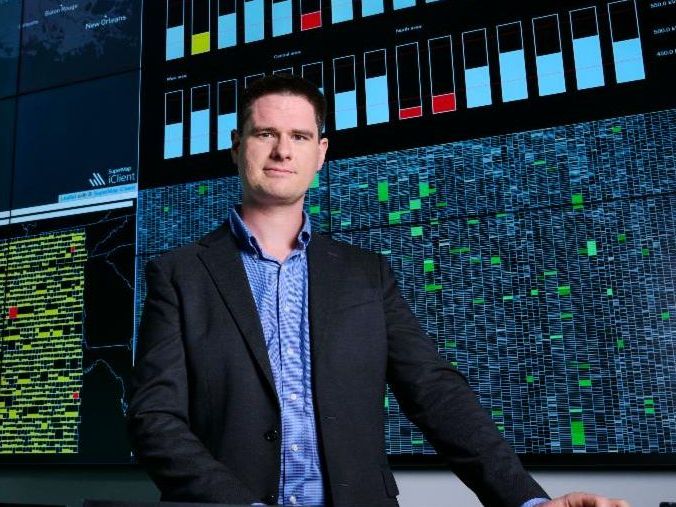
Dr. Jonathan Snodgrass, Texas A&M University Department of Electrical and Computer Engineering senior researcher and CIR-affiliated collaborator, was recently featured on KBTX News discussing the future of the Texas power grid amid rising energy demand. His work, conducted in collaboration with the Texas A&M Energy Institute, examines how utility cost structures can adapt to growing demands from data centers while protecting consumers.
This research reflects the type of interdisciplinary, policy-relevant work supported through CIR partnerships and labs. Dr. Snodgrass’s feature highlights the important role CIR-connected researchers play in advancing resilient and affordable energy infrastructure solutions.
View the KBTX News segment.
| | | STUDENT RESEARCH AND ACHIEVEMENTS | | Eleanor Garrett & Micah Stark Earn Top Honors at ACI Student Presentation Competition | | |
Congratulations to Eleanor Garrett and Micah Stark, student researchers working within CIR-affiliated labs, on their outstanding achievements at the American Concrete Institute Concrete Convention Student Presentation Competition in Toronto, Canada.
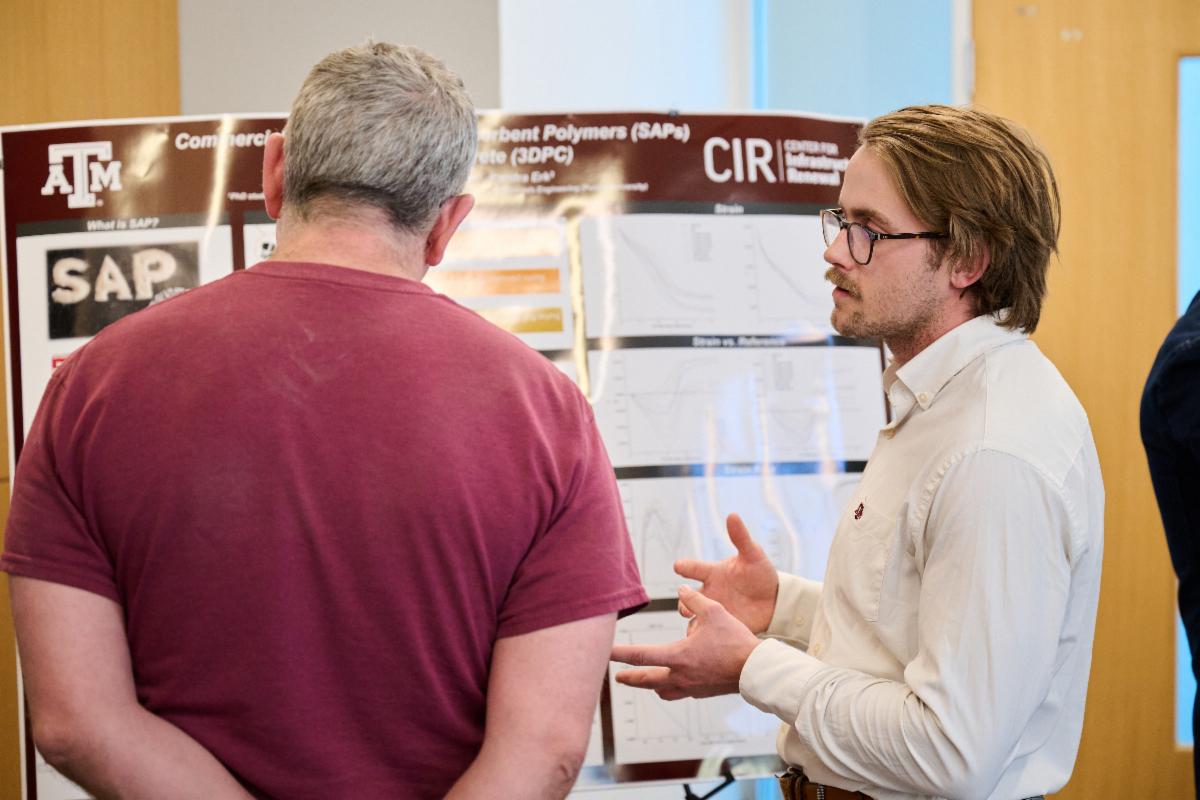
Ms. Garrett earned second place for her presentation on the shear and torsion response of reinforced concrete elements, while Mr. Stark received third place for his work on mitigating plastic shrinkage in 3D-printed concrete using super absorbent polymers. Their research, conducted under the guidance of Dr. Kinsey Skillen, reflects the high-quality, innovative work supported through CIR facilities.
These recognitions highlight the strength of CIR’s student researchers and their contributions to advancing the field of concrete materials and structural engineering.
View the ACI Foundation's announcement LinkedIn post.
| | | Jafari Group Students Present Coastal and Geotechnical Research at Geo-Extreme Conference | | CIR student researchers, advised by Dr. Navid Jafari, showcased innovative coastal and geotechnical research at the Geo-Extreme Conference. Cyrus Bahman, Mohamed Hassan, and Hamed Nasiri presented work addressing coastal erosion, wetland stability, and the behavior of shell-rich sediments — topics critical to understanding and protecting vulnerable Gulf Coast environments. | | | |
Their research leverages advanced field methods and experimental tools developed through CIR-supported labs, highlighting the center’s role in advancing practical, data-driven solutions. These presentations reflect CIR’s commitment to preparing students to lead in tackling complex infrastructure and environmental challenges.
Learn more about the student presentations on CIR News.
| | UNIVERSITY TRANSPORTATION CENTER (UTC) HIGHLIGHTS | | |
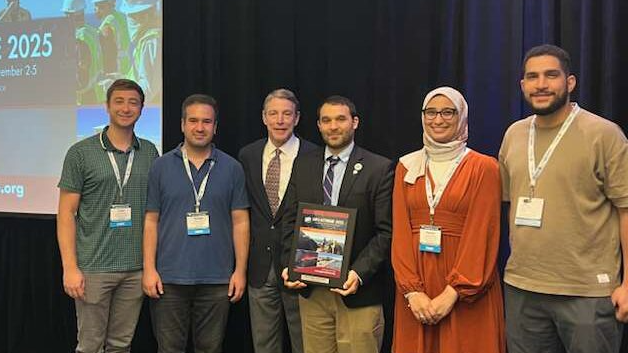
CIR-affiliated students continue to excel through participation in UTC-supported programs, including the CREATE Center. Kyle Parr, a doctoral candidate under the guidance of Dr. Anand Puppala, was named the 2025 CREATE Student of the Year in recognition of his outstanding research on the durability and sustainability of coastal transportation infrastructure.
His work on chemically stabilized soils and innovative laboratory testing methods reflects the high-impact, data-driven research conducted within CIR labs. This recognition, along with honorable mentions awarded to Aaron Lawrence and Hernán Vega Camacho, highlights the strong contributions of students engaged in CIR-supported UTC initiatives and their role in advancing resilient infrastructure solutions.
| | |
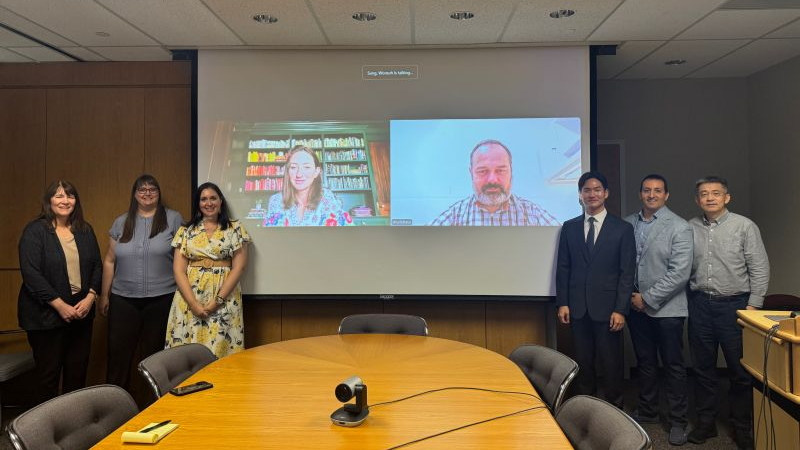
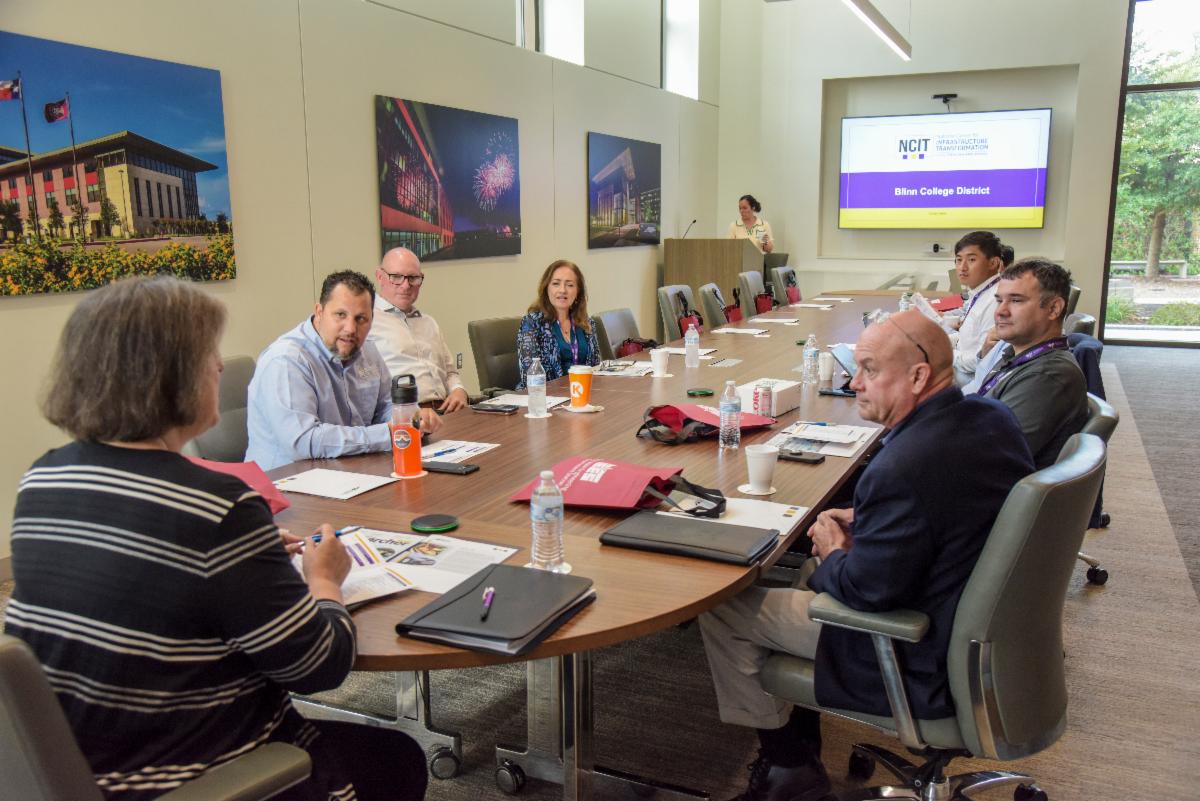
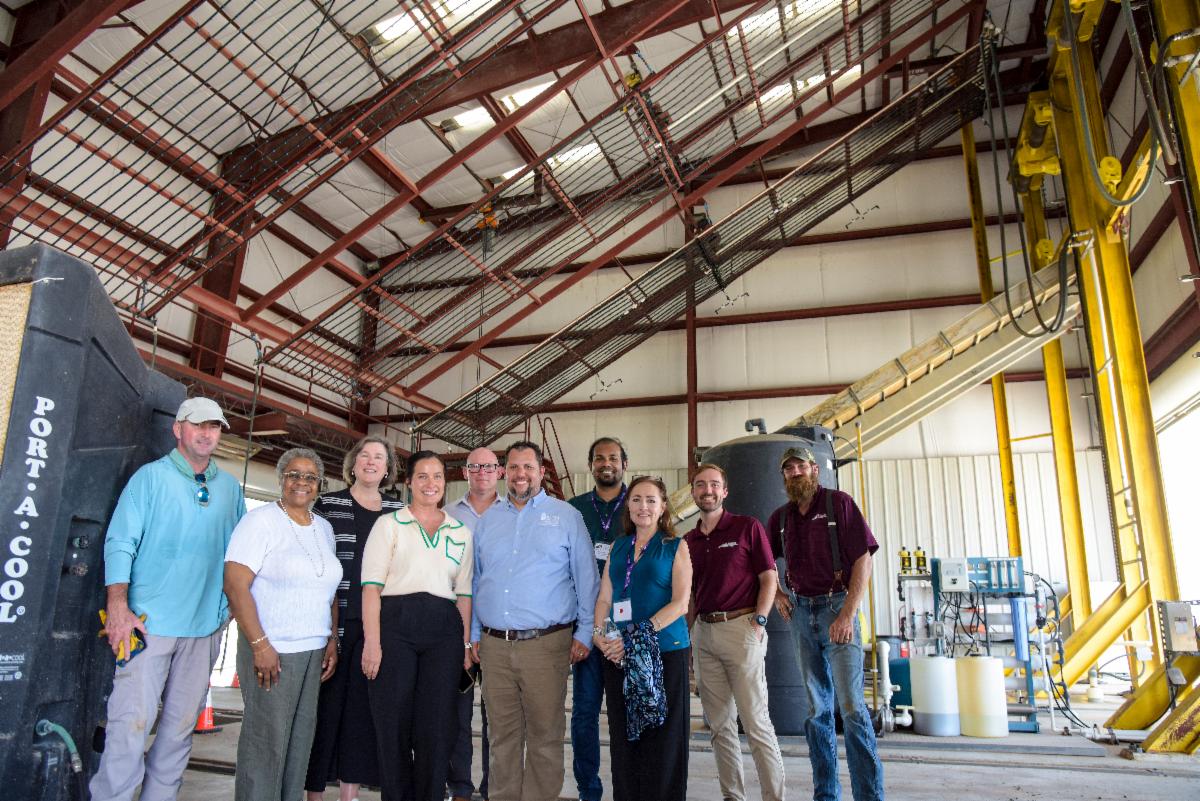
CIR actively supported collaboration and knowledge exchange during the National Center for Infrastructure Transformation (NCIT) Annual Meeting, held Aug. 5–7 across Prairie View A&M University and TTI. The event brought together faculty, researchers and leadership to share research progress and explore opportunities for advancing infrastructure innovation.
As part of the program, attendees toured CIR’s state-of-the-art laboratory facilities, highlighting the center’s role in enabling cutting-edge research and testing. This engagement underscores CIR’s ongoing partnership with NCIT in driving transformative, real-world infrastructure solutions.
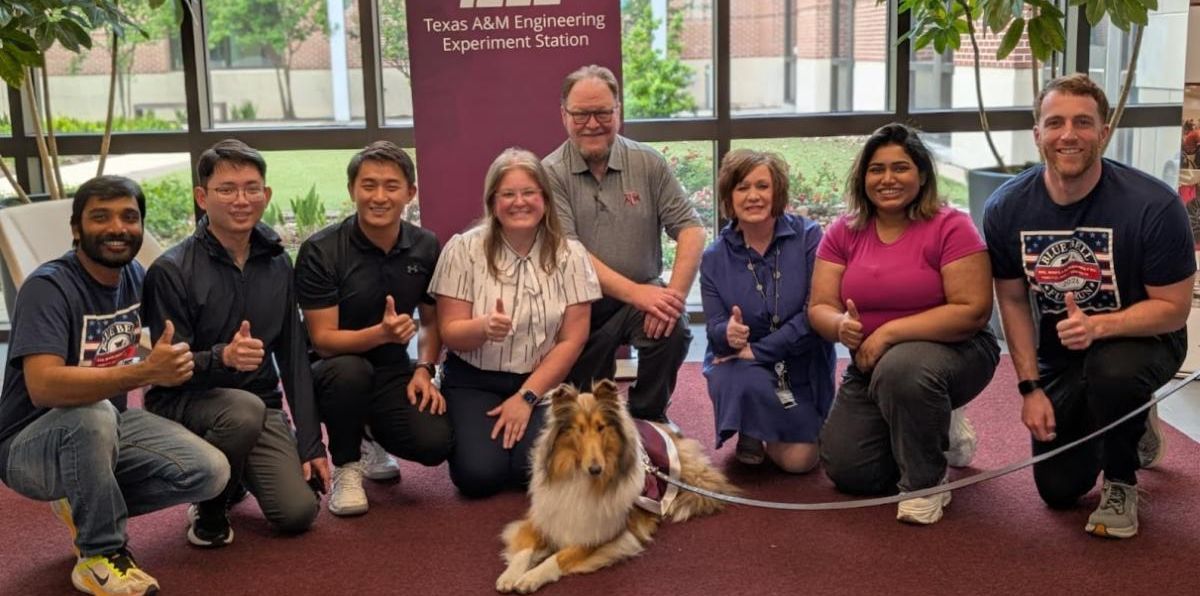
| | We were honored to host Texas A&M University’s First Lady at our center. Thank you, Miss Reveille, for bringing Aggie spirit and lots of smiles to our team! | | CIR Researchers and Students Present at TRB Annual Meeting | | |
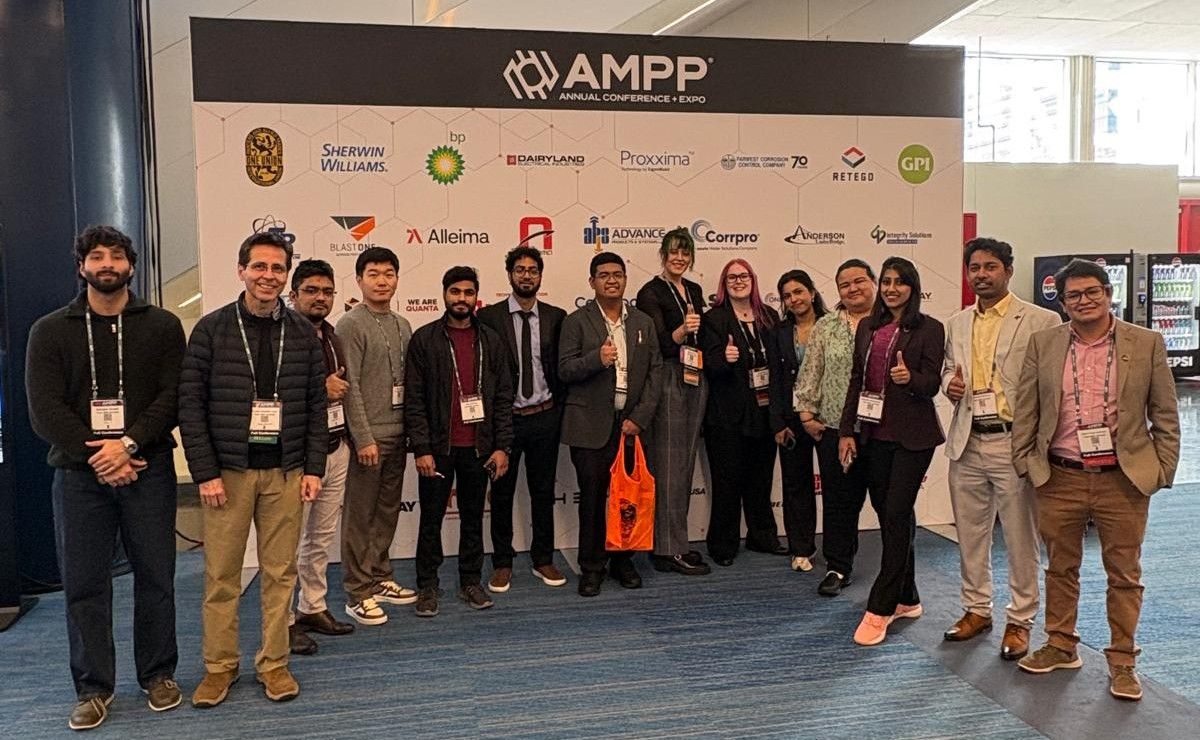
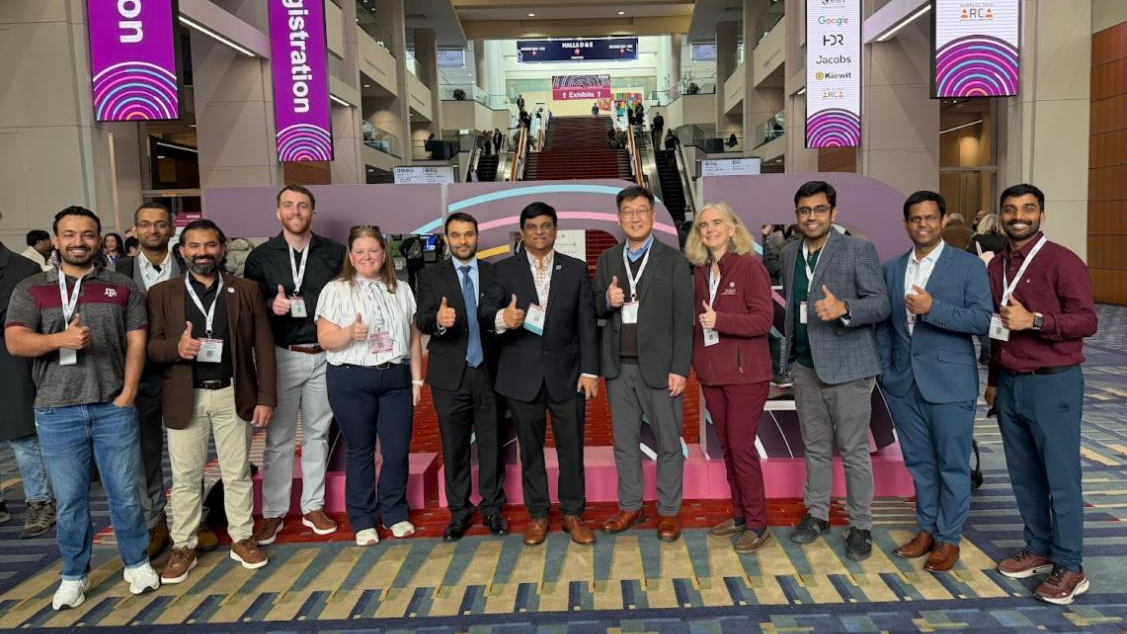
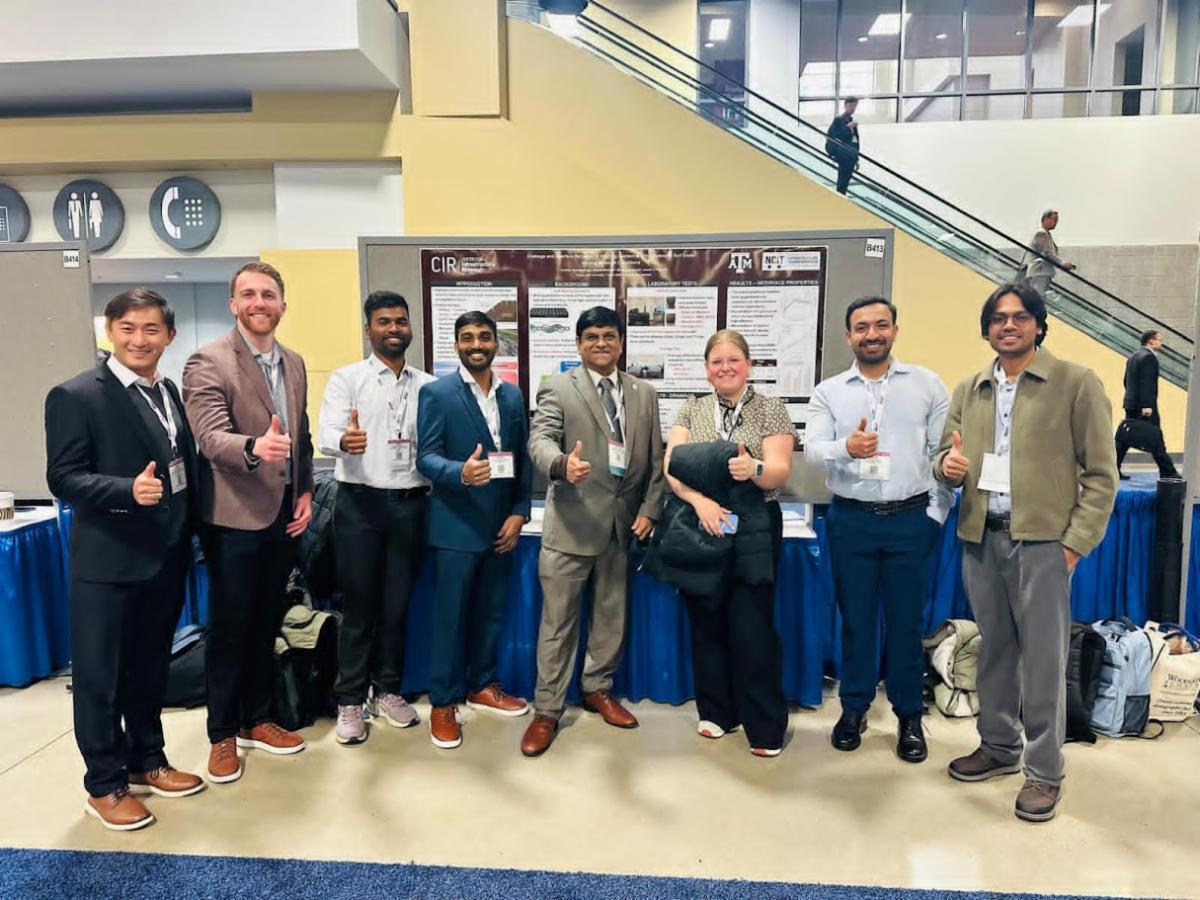
Researchers and students had a strong presence at the 2026 Transportation Research Board (TRB) Annual Meeting in Washington, D.C., this year, contributing to technical sessions, committee leadership and innovative presentations across a wide range of infrastructure topics. Representing multiple disciplines, participants engaged with national and international experts while sharing solutions to critical transportation challenges.
Dr. Charles Donnelly, working under Dr. Zach Grasley, contributed throughout the week through committee leadership, working group updates, and presentations on dowel bar performance and the use of recycled steel fibers as an alternative to conventional reinforcement.
TTI researchers Clarice Smith and Darlene Goehl presented collaborative work with TxDOT on monarch flight diverters, an innovative approach to reducing butterfly mortality along roadways.
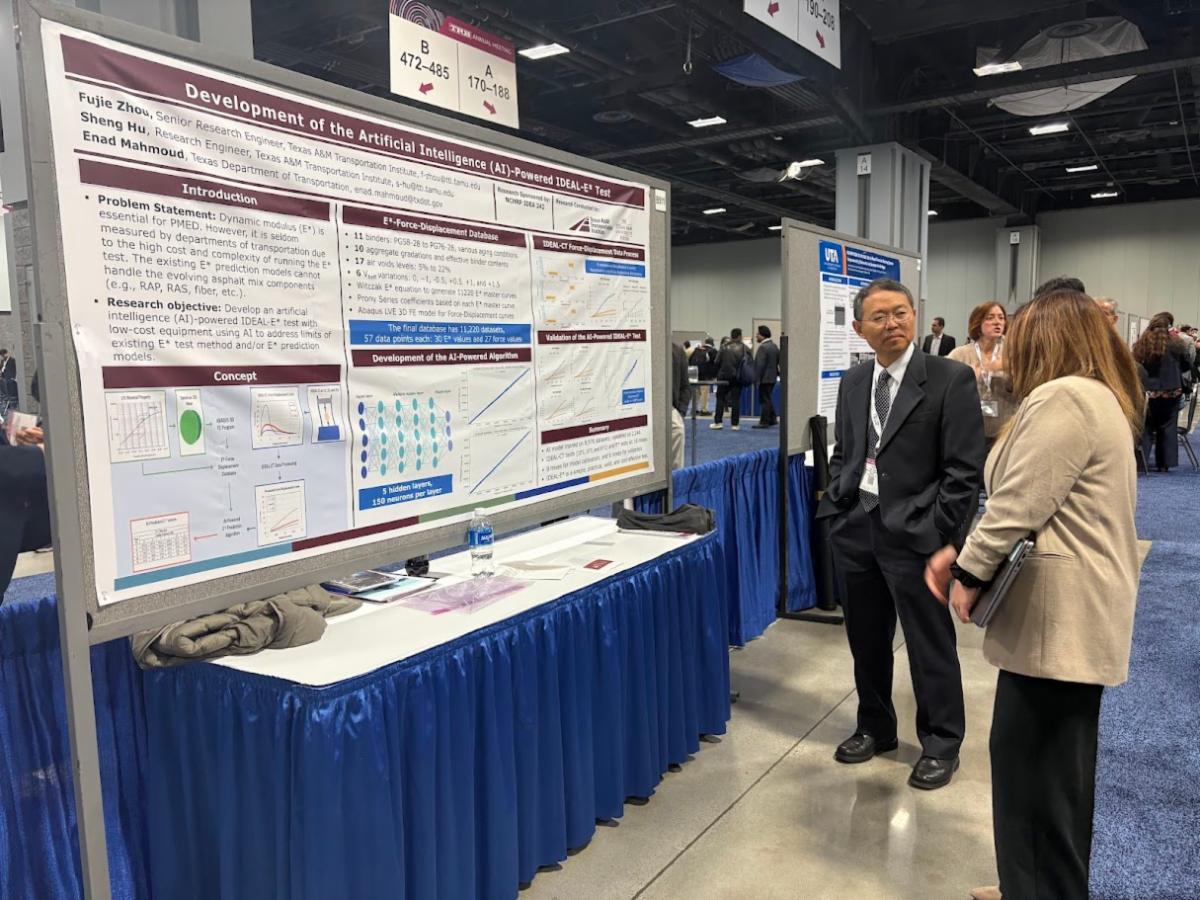
| | | | TTI’s Dr. Fujie Zhou also presented during a TRB poster session, showcasing research on the development of an artificial intelligence (AI)–powered indirect tension asphalt cracking test (IDEAL-CT) test for evaluating asphalt materials. His work addresses limitations of traditional dynamic modulus testing by leveraging AI-driven modeling to predict pavement performance more efficiently and cost-effectively. The approach integrates extensive force-displacement data and advanced algorithms to enhance material characterization, offering a promising tool for improving pavement design and long-term performance. | | Dr. Anand Puppala’s research group was strongly represented, with six students presenting across both lectern and poster sessions on a wide range of geotechnical and infrastructure topics. Ayush Kumar examined artificial mangrove systems for coastal protection, while Soparith Chou explored the durability of calcium-based soil stabilization. Shanmukha Sai Avinash Gonnabathula presented on the performance of wicking geotextiles, and Muddassir Sanei demonstrated the use of machine learning for geopolymer stabilization. Kyle Parr discussed the long-term durability of stabilized soils, and Akash Tanshette showcased research on 3D-printable construction materials developed from local soils. Collectively, their work emphasized resilience, sustainability and the integration of emerging technologies in infrastructure systems. | | | | | |
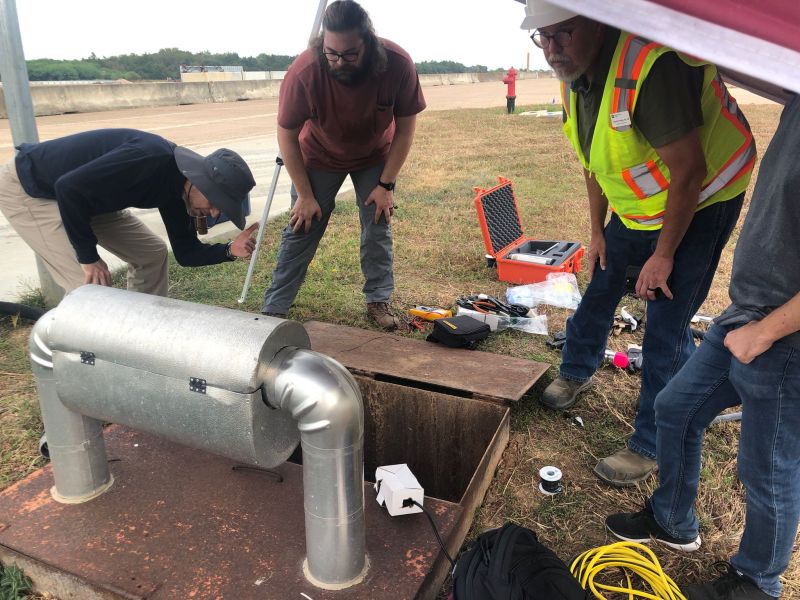
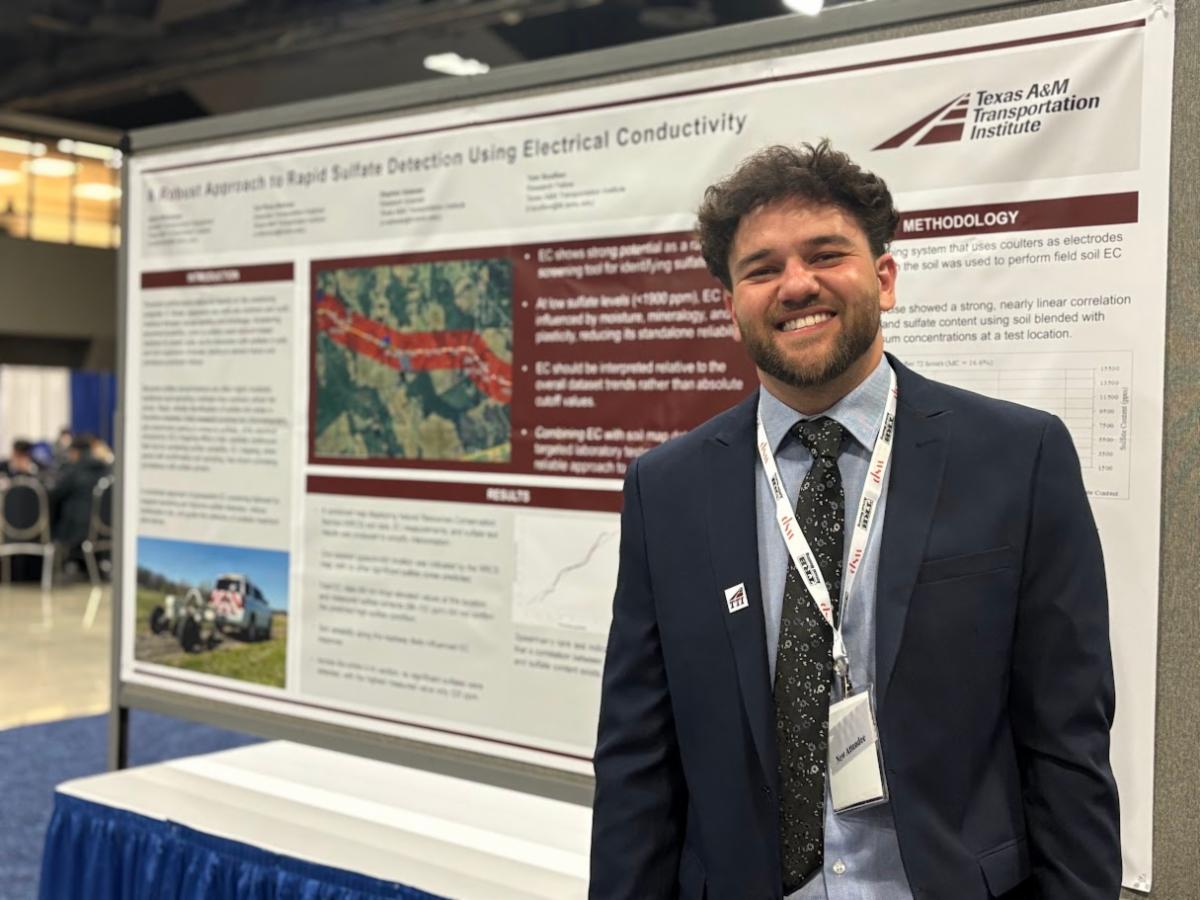
TTI researcher Hanno Oberholzer presented in a TRB poster session on challenges associated with sulfate-rich soils in pavement systems. His research highlighted how traditional stabilization methods, particularly lime treatment, can lead to excessive heaving and premature pavement failures when sulfates are present.
To address this, his work explored improved identification techniques, including electrical conductivity mapping combined with targeted soil sampling, enabling more informed stabilization decisions and more durable roadway infrastructure.
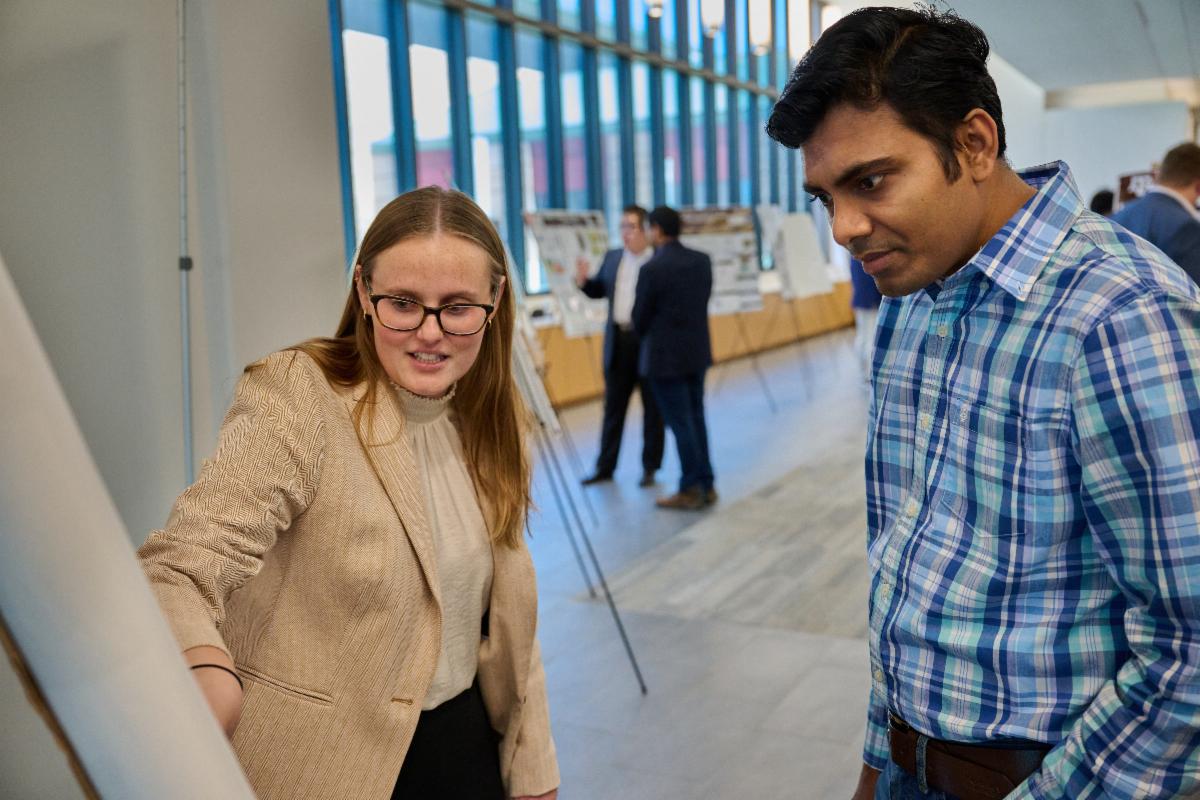
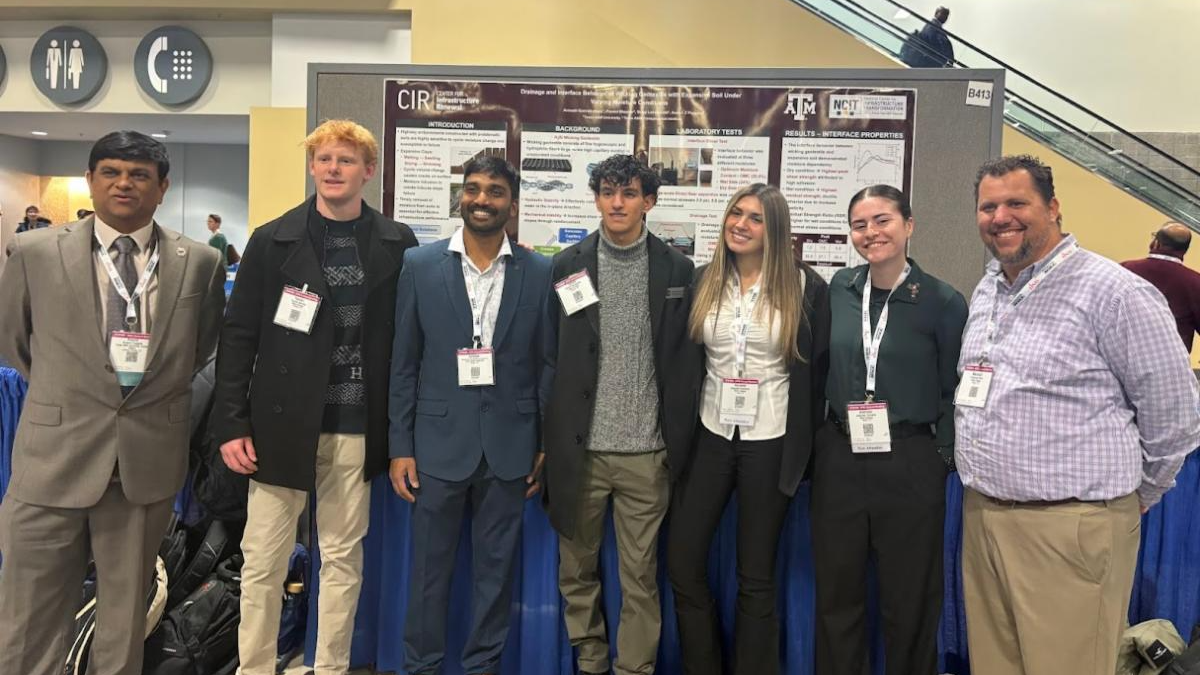
| | Researchers under Dr. Yong-Rak Kim also contributed significantly. Dr. Santosh Kommidi presented predictive modeling of pavement cracking, while Dr. In Kyu Jeon showcased next-generation cementitious materials for sustainable bridge construction. These efforts highlight the integration of advanced material science with practical engineering applications. | | During the TRB poster session, CIR also welcomed a visit from Rich Marshall, dean of Applied Technology, Workforce and Economic Development at Blinn College, who attended alongside several Blinn College students. Their engagement provided a valuable opportunity to share CIR research initiatives and connect with future workforce talent, reinforcing the importance of academic partnerships and regional collaboration in advancing infrastructure innovation. | | | |
TRB fostered many meaningful collaborations and mentorships. Dr. Amy Epps Martin emphasized the importance of connecting with colleagues and mentoring students, reflecting on the collaborative culture that drives ongoing impact.
The Southern Plains Transportation Center hosted a luncheon for affiliates, enabling deeper discussions around research and collaboration opportunities. Participation at NCIT and TTI booths further allowed researchers and students to showcase work, engage with industry professionals, and build lasting partnerships that extend well beyond the conference.
| | | | |