|
A Letter from Co-presidents Carol Pauley and Kathy Hardy
We hope you’re enjoying the summer. Only one more month until the tourists are gone!
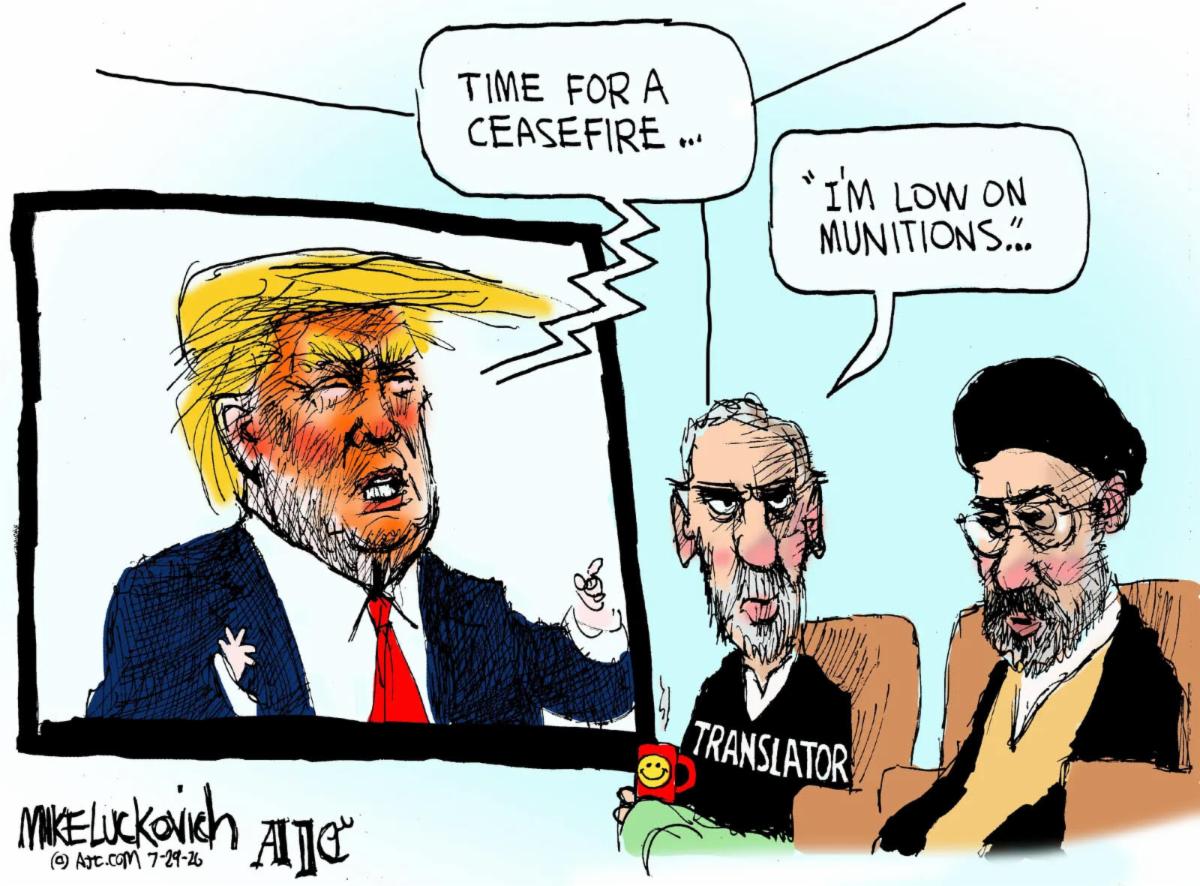
This month’s letter is a rant on the unending war with Iran. How we got here is suspect at best – there was no eminent threat to the United States. Now, the Strait of Hormuz is closed, the U.S. is blockading the entrance, and the entire world is left with uncertainty as to what happens next. President Trump has said the war is over; he’s also said the strait is open. He’s also said that if the strait doesn’t open, we’ll bomb the hell out of Iran. He’s also negotiated several ceasefire agreements and continued to ignore their terms. It’s a cycle that could go on indefinitely. The Trump administration zig zags between threats of military retaliation and pseudo diplomatic negotiations. And now Iran is threatening to keep the war going until the Trump presidency is over. How could all of this be happening all at once and how does it affect the U.S. and the rest of the world? Well…
For the average American:
- There are higher and more volatile energy costs, mostly in gasoline. We see gas prices fluctuate with Donald Trump’s rhetoric.
- Military costs and risks are rising. At the same time our stockpile of weapons is rapidly decreasing, leaving the U.S. vulnerable to threats from other nations. Look at the aircraft carrier USS Abraham Lincoln. The crew has been at sea for over 200 days and not under the best of conditions. Now the administration is moving USS George Washington from the Pacific region to replace the USS Abraham Lincoln, leaving a gaping hole in security there as China has its eye on Taiwan.
- The inflationary impact of continual warfare is real as businesses factor uncertainty into pricing to stabilize their bottom lines.
- Americans are being asked to accept an open-ended war without a clearly defined purpose and end date. This effect is purely political.
For the rest of the world:
- The global energy sector is taking a big hit as the Strait of Hormuz remains closed.
- Trade is more expensive and the related uncertainty is increasing.
- The world is less stable than before the war.
- U.S. credibility is going down the toilet.
- Countries once looking to the U.S. for security are now looking for other partners.
Is the war making us less safe? Probably. The war was originally justified as a way to make us safer. Instead, we’re not more secure - we have higher economic costs, increased regional instability, more military commitments, decreased military readiness, and less diplomacy. Where’s Antony Blinken and Jake Sullivan when you need them?
It’s a sad day when we believe the rhetoric coming out of Iran rather than that coming from our own president. There’s nothing positive to say about this war except that we hope it will be over sooner rather than later.
Our song this month is Chimes of Freedom by Bob Dylan (1963):
Well, far between sundown’s finish and midnight’s broken toll
We ducked inside the doorway, thunder crashin’
As majestic bells of boats struck shadows in the sun
Sayin’ it may be the chimes of freedom crashin’
Flashin’ for the warriors whose strength is not to fight
Flashin’ for the refugees on their unarmed road of flight
And for each and every underdog soldier in the night
We gaze upon chimes of freedom flashin’
We’ll leave you with a bit hope from Chapter 23 of the Tao te Ching by the ancient Chinese philosopher Loa Tze:
“A violent wind does not outlast the morning; a squall of rain does not outlast the day.”
We are in this together.
Carol and Kathy
|