|
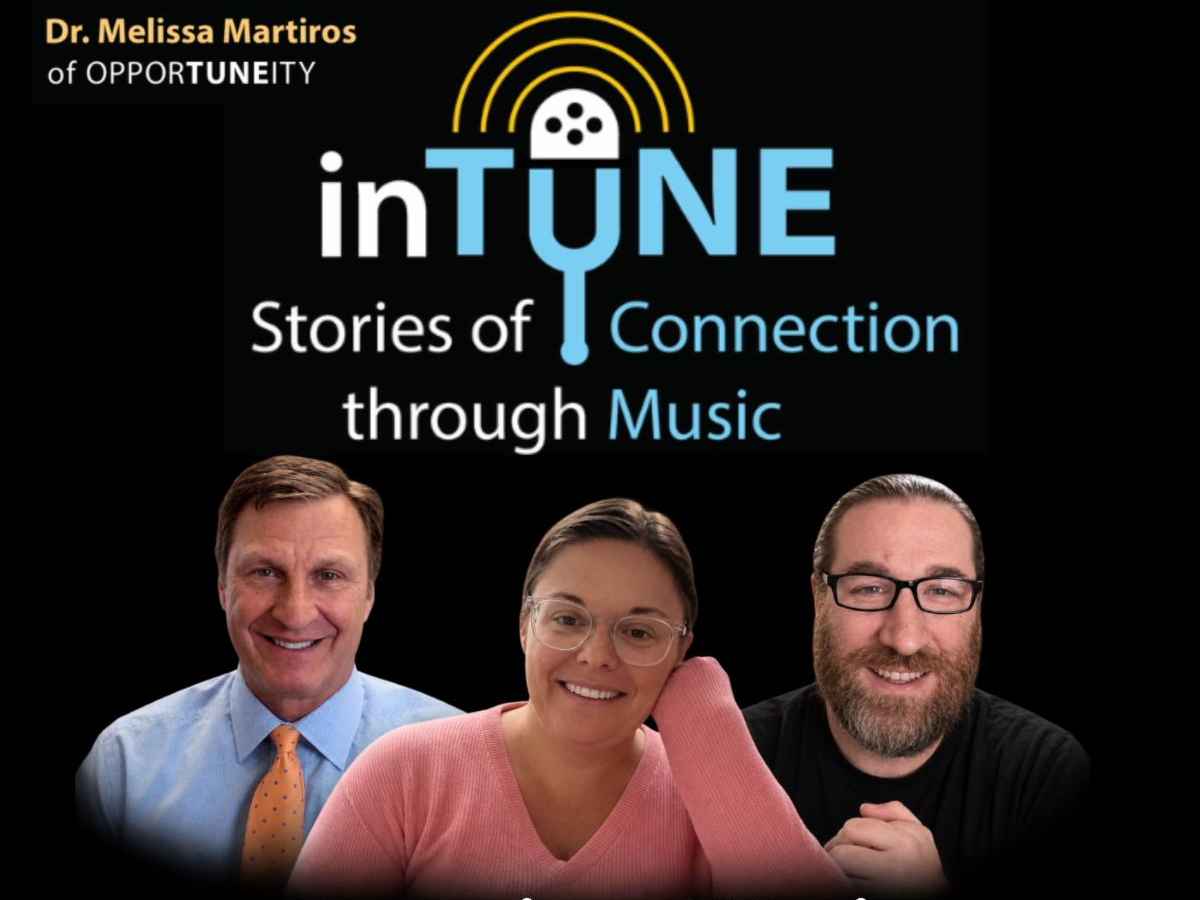
As we get ready to wrap up our first season — a year's worth of interviews — we sat down with Angela Senicz, who edits and produces every episode of inTUNE and has therefore heard these conversations more times than the people who had them. She came to us from music rather than corrections, and we wanted to know what a season of these stories has been like from her side of the audio.
Tell us a bit about yourself.
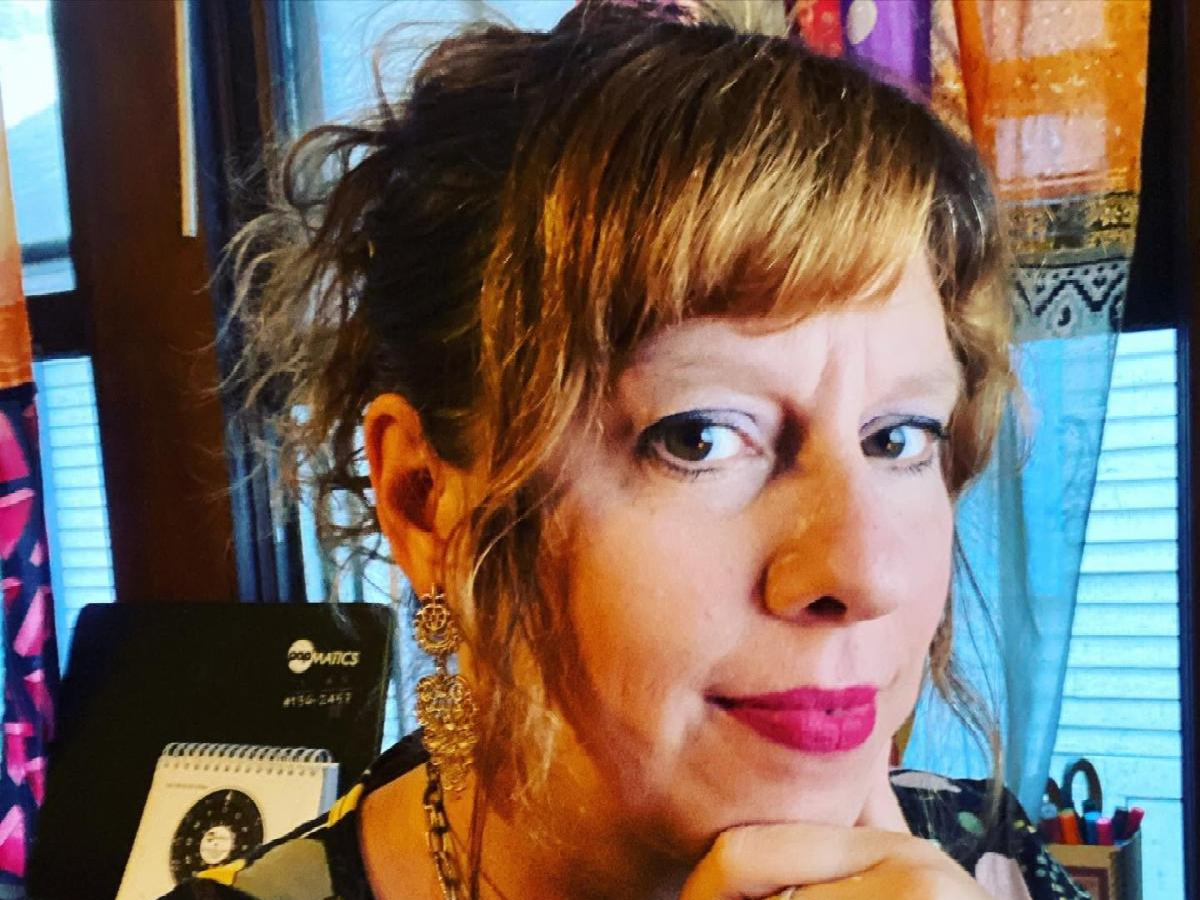
I'm a deeply curious person. I went to a great books college, where we studied the foundational works of Western civilization in their original form, from the ancient Greeks to the moderns. That education taught me how to think, but it didn't prepare me for any particular job. I fell into editorial work, loved it, and spent 20 years at an ed tech company, first editing science textbooks and later training people across the company. In early 2023 I left to start a business with my piano-teaching mentor: popMATICS, an online piano school for adults. Music had always been a hobby, and I was trained classically, so turning it into a career has been a dream come true. I love helping adults find more freedom and creativity at the piano. I also play in bands, support kids in music and songwriting, and write songs myself.
What's your role on inTUNE, and how did you end up in it?
I edit and produce the episodes. I met Melissa through popMATICS — my business partner, Tony, went to college with her, and he ended up teaching popMATICS classes to students in the jail and in the after-school program. Around that time I mentioned to Melissa that I was looking for additional work and sent her my resume. At my old company I had produced an internal podcast, and when Melissa saw that, she told me she'd always wanted to start a podcast for OpporTUNEity. We brainstormed the name and purpose, set up some interviews, and took it one step at a time to see where it led. I've always loved editing, and editing dialogue lets me apply that skill in new ways. It's fun to shape someone's actual spoken words into a story — especially stories like these, where we're seeing the power of transformation in a life.
Walk through what producing one episode involves.
First I listen to the raw audio to hear the whole story, and I read through the transcript, deciding up front whether I'll need to rearrange anything. Then comes the main edit: trimming pauses and small tangents to tighten the flow, noting places that could use a pause or a short music break, and any moment that might make a good hook for the opening. Once the core interview is done, Melissa writes and records the intro, the reflection, and The Pulse. Then I listen again to refine the transitions and add music, and give it one final listen.
The first pass is the part that takes longer than anyone would guess — cutting dead air, pauses, "ums." When you're working from a waveform, every "um" means finding it, cutting before and after, and stitching the two pieces back together naturally. The tools have gotten much better; now I can edit from a transcript almost the way I would on paper and the software matches the audio to my edits.
How do you decide what to cut?
I think of each episode as having a narrative arc. Anything that's part of the main arc stays. I'll keep a little tangential material if it helps us understand the person — my test is: if I didn't know this person, would this help me understand them better? Almost everything people say is interesting, but I have to balance that against the listener's time.
You come from music, not corrections. What did you expect these stories to sound like?
I expected to hear that when you treat people with dignity and offer them music, they often respond well, and that's largely what I heard. This wasn't entirely new territory for me, though. A close friend of mine was in and out of prison for many years, and I was one of his support people. I wrote letters, mailed books to the jail, and heard about life inside. Through him I came to understand how the system can crush a person, and also what it can look like when things go right.
I also connect deeply with Melissa's philosophy of working with people, not for them. When I was about 15 I got a last-minute spot on a mission trip to Haiti — my dad was a priest, someone had canceled, and I was invited to take their place. That experience changed my life, and I went back a second time. My mother later spent years working with a church group there, and her guiding principle is much like Melissa's: treat people as fellow human beings, and partner with them instead of doing things for them.
You hear these recordings more times than anyone, including the person who said them. What's that like?
It's quite a fun experience. When we read a book, we hear the ideas in our own voice, but there's something powerful about hearing the unique voice of the person who had the idea. The speaker probably won't remember a particular turn of phrase. They might listen to the episode once. But I've heard it many times, and those little moments stay with me. The guests are so open and vulnerable that I always feel like I know them personally afterward — which is funny, since most of them have no idea who I am.
Which stories have stayed with you the most?
All of them, in different ways. One of our earliest guests, Marc Recor, talked about the "river of life" — he saw prison as a chance to step outside that river, away from the pressure of making a living, and focus on himself. Many people don't take that opportunity. He did.
If I had to pick one, it would be John Edward Keough, the poet. While he was in solitary confinement, a librarian encouraged him to submit his poems, and he traded his food — even his Jell-O — for stamps so he could send them out for publication. Eventually one was published. That kind of determination through so much rejection is remarkable for anyone, and even more so from inside a prison.
I know how hard stamps are to come by in there. I used to send my friend stamps and commissary money so he could write me those autobiographical letters.
What's it like cutting someone's words down when they're describing the worst part of their life?
I approach it the way I approach all editing. Whether someone is describing the worst moment of their life or the best, those are profound experiences, and those are the parts I work hardest to keep intact. I rarely cut much substance from them. The cuts I make are about polishing the story so it's easier for a listener to hear. It's all in service of the story.
Has it changed how you think about who ends up incarcerated?
Not really, because I came in with an open mind. I've always felt that people in prison are human beings who have made mistakes and have the potential to change. What the podcast reinforced is that the more meaningful distinction isn't whether someone is inside or outside — it's whether they see themselves as stuck or ready to change. Sheriff Evangelidis made this point, and several other guests echoed it. When people see themselves only as victims of their circumstances, they tend to stay caught in a loop, in prison or out. Once they recognize they have the power to change their lives, they start doing it — like John writing poems in solitary, or the many students who wrote, recorded, and performed songs in OpporTUNEity workshops. That's exactly why the support matters: programs like OpporTUNEity are there when people are ready.
Anything else you'd like to add?
When we talk about music transforming lives, we often think of picking up an instrument and learning to play. But many of this season's episodes focused on songwriting, and I truly believe songwriting has a special power to change people. When I was younger, I didn't think I had a creative bone in my body. Today I write songs myself and I've facilitated songwriting workshops with children. I believe anyone with an interest in music can become a songwriter. What I loved about this season is seeing how songwriting in particular helps people work through trauma.
Mostly, I'm grateful — for the chance to produce this podcast, for season two ahead, and for everything OpporTUNEity does. I'm happy to be a small part of it.
|