| |
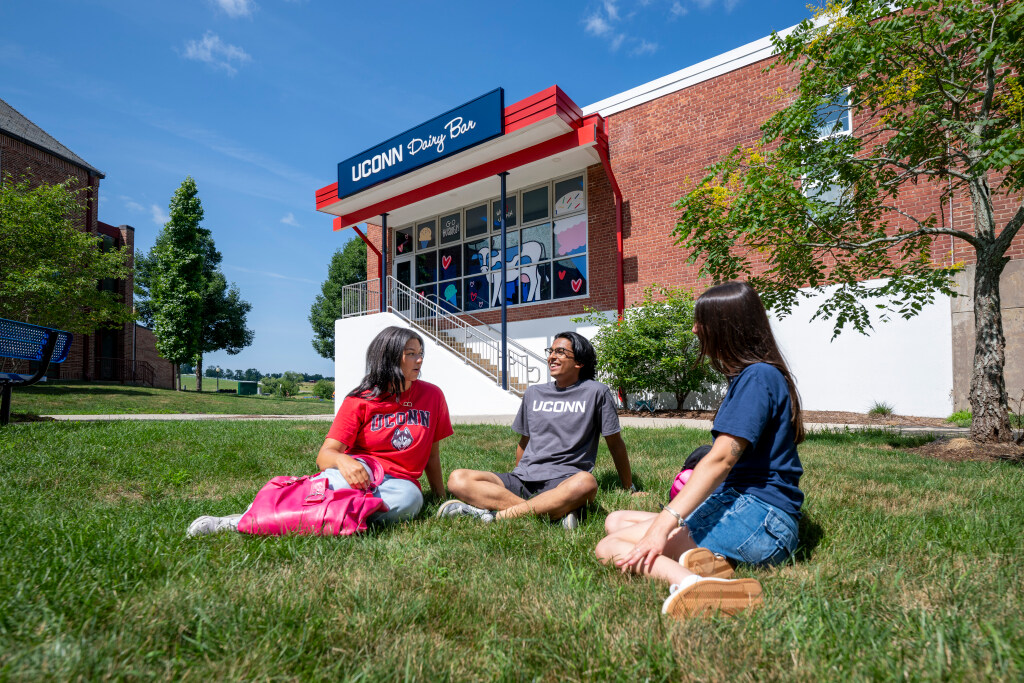
Group of students in front of the UConn Dairy Bar on July 8, 2026. (Sean Flynn/UConn Photo) | | | | |
2026-2027 Community-Engaged Scholars Fellowship Program is back! | | Faculty and Staff are invited to apply | | |
Community-engaged teaching and learning is an educational approach that combines academic learning with reciprocal partnerships and experiences beyond the classroom. Through this year-long fellowship, faculty and staff will explore theories, frameworks, and best practices in community-engaged pedagogy while developing or enhancing courses and learning experiences that connect students with community partners to address real-world challenges. Fellows will learn how to design high-impact educational experiences that deepen student learning, foster civic and professional development, and generate meaningful benefits for community partners.
Fellows will meet regularly during the spring semester to learn the theory and practice of community-engaged teaching and learning. Participants will receive individualized support to develop reciprocal community partnerships and adapt or create course syllabi that align with both learning objectives and community priorities. Fellows will then implement their courses in the summer, fall, or following spring semester and continue to meet during the fall to discuss progress, share experiences, and address challenges related to partnership-based teaching and learning.
The Fellowship provides the following:
- A year-long cohort-based professional development experience focused on community-engaged teaching and learning.
- Training in the theories, principles, and best practices of community-engaged pedagogy, including community-based learning, partnership development, reflection, and assessment.
- Individualized mentorship and consultation from experienced community-engaged faculty and staff throughout the fellowship year.
- Assistance in creating, revising, or enhancing a community-engaged course, project, or learning experience.
- Support in identifying, cultivating, and sustaining reciprocal partnerships with community organizations and agencies.
- Opportunities to engage with an interdisciplinary cohort of faculty committed to student success, civic learning, and community impact.
- Access to resources, readings, tools, and examples that support effective community-engaged teaching and learning.
- Ongoing participation in a community of practice dedicated to advancing community-engaged teaching and learning at UConn.
Fellowship Support and Funding
Fellows are eligible to receive up to $1,000 in course development support, contingent upon participation in required fellowship activities. Funding may be received through one of the following mechanisms:
Option 1: KSF Transfer
- Transfer of up to $1,000 to a faculty/staff research account.
- Fellows selecting this option must provide a KSF account number.
Option 2: Special Payroll
- Compensation processed as summer salary or overload.
- Subject to eligibility based on appointment structure, time of year, and university earnings limitations.
- Funding is inclusive of fringe benefits.
Option 3: Course Development Support
- Direct support administered by the Office of Outreach and Engagement for approved course development expenses.
- Eligible expenses may include professional development opportunities, conferences, books, instructional materials, guest speakers, outsourced services, community partnership activities, and other approved course-related expenses.
- Fellows selecting this option should consult with the Office of Outreach and Engagement prior to making purchases or commitments.
Please note that special payroll and overload compensation are subject to university policies and eligibility requirements.
Benefits of Participation
Faculty and staff members accepted into the program will participate in an intellectually stimulating environment where they can exchange ideas with colleagues across diverse disciplines and learn from fellow participants' experiences. Through collaborative learning and individualized support, Fellows will strengthen their capacity to integrate community engagement into their teaching and create meaningful learning experiences for students.
By the conclusion of the fellowship, participants will have developed or enhanced a community-engaged course, project, or learning experience and will possess practical tools and resources to establish and sustain meaningful community partnerships. Fellows will also become part of a growing network of UConn faculty committed to advancing student success, civic learning, and community engagement.
Community-Engaged Scholars Fellowship Learning Objectives
- Design and implement a new community-engaged course, project, or learning experience that connects students with community partners.
- Revise and strengthen an existing community-engaged course using evidence-based and equity-centered pedagogical practices.
- Develop reciprocal and sustainable partnerships that enhance student learning and community outcomes.
- Integrate reflection, assessment, and community engagement best practices into course design and implementation.
Community-Engaged Scholars Fellowship Learning Outcomes
- Demonstrate knowledge of theories, frameworks, and principles that inform community-engaged teaching and learning.
- Design courses and learning experiences that integrate academic content with community-engaged practice.
- Apply best practices in community engagement to create impactful, reciprocal, and sustainable partnerships.
- Develop and sustain collaborations with community organizations that support student learning and community priorities.
- Implement effective reflection and assessment strategies that promote student learning, civic development, and critical thinking.
- Evaluate and communicate the impact of community-engaged teaching and learning on students, partners, and communities.
- Contribute to UConn's public mission through community-engaged teaching and learning.
Important Dates
Spring 2027
Pre-Semester Intensive Training and Retreat | January 30, 9 am – 4 pm EST | Location TBD. *If there is inclement weather on January 30, we will reschedule for Saturday, February 6th.
Theme: Foundations for Designing a Community-Engaged Course
Purpose: Group Faculty in SL theory and practice, guide syllabus development, and relationship building
- Workshop 1 | Friday, February 19, 2027, 2:30 pm – 4:00 PM
- Workshop 2 | Friday, March 5, 2027, 2:30 pm- 4:00 pm
- Workshop 3 | Friday, April 9, 2027, 2:30 pm -4:00 pm
- Workshop 4 | Friday, May 14, 2027, TBD | Community Partner Visit | Half-Day with Luch
Fall 2027
- Workshop 5 | Friday, September 10, 2027, 2:30 pm -4:00 pm
- Workshop 6 | Friday, October 8, 2027, 2:30 pm -4:00 pm
- Workshop 7 | November 12, 2027, 2:30 pm -4:00 pm
- Workshop 8 | December 10, 2027, 2:30- 4:00 pm | Celebration
Applications for the 2027 cohort are due on Tuesday, December 11, and must be submitted via Kuali Build for review by the Community-Engaged Teaching and Learning Committee.
Email engagement@uconn.edu with any questions.
| | | | |
Trucen: The Research University Civic Engagement Network | |
2026-2027 Programming Review
Thursday August 13 | 2-3:30PM
| | |
Join the TRUCEN 2026-2027 Programming Preview Event for a first look at the many opportunities to connect, collaborate, and lead across the TRUCEN network this year.
Join and learn about opportunities to:
- Visit peer campuses through Showcase Visits
- Join a Sustained Conversation Group or Network Action Group
- Participate in the Dream Lab
- Attend action-oriented webinars and Lightning Sessions
- Find ways to share your own expertise
Whether you're a longtime member or new to TRUCEN, this preview is a great opportunity to discover what's ahead, find opportunities that align with your interests, engage with tangible resources generated by your colleagues, and begin planning your engagement for the coming year.
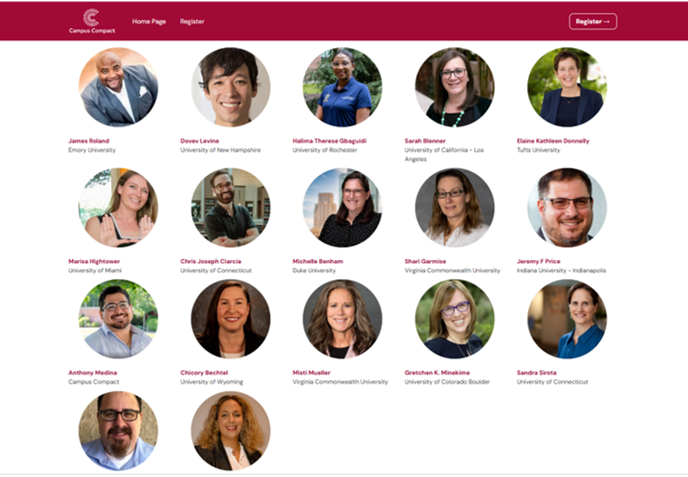
This virtual event will feature voices from a wide swath of TRUCEN member schools, as well as Campus Compact leadership. See below for the individuals who will be speaking:
James Roland
Emory University
Dovev Levine
University of New Hampshire
Halima Therese Gbaguidi
University of Rochester
Sarah Blenner
University of California, Los Angeles
Elaine Kathleen Donnelly
Tufts University
Marisa Hightower
University of Miami
Chris Joseph Ciarcia
University of Connecticut
Michelle Benham
Duke University
Shari Garmise
Virginia Commonwealth University
Jeremy F Price
Indiana University - Indianapolis
Chicory Bechtel
University of Wyoming
Misti Mueller
Virginia Commonwealth University
Gretchen K. Minekime
University of Colorado Boulder
Sandra Sirota
University of Connecticut
Doug Barrera
University of California, Los Angeles
Megan Moran
Worcester State University
Hosted by:
Bobbie Laur
President
Campus Compact
Anthony Medina
Senior Manager for Policy & Leadership Engagement
Campus Compact
| | | | |
Book Club: The Handbook of Broader Impacts | | |
The Office of Outreach and Engagement is excited to launch a new book club focused on broader impacts and community-engaged scholarship.
Our first selection, The Handbook of Broader Impacts, explores how research can create meaningful societal impact through community engagement, interdisciplinary collaboration, and institutional support. The book offers practical strategies and real-world examples for integrating broader impacts into research, teaching, and academic careers.
Faculty, staff, students, and campus partners from all UConn campuses are invited to participate. Meetings will take place virtually. The tentative schedule is below.
To join or learn more, please email engagement@uconn.edu with your interest.
| | | | |
HELLO Lab Advances Community-Engaged Research and Family Partnerships | | |
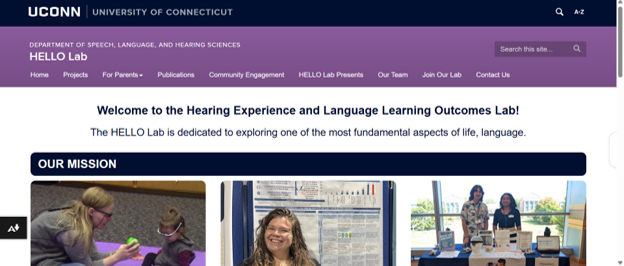
The UConn HELLO (Hearing, Early Language, and Literacy Opportunities) Lab is advancing community-engaged research through innovative partnerships that support children who are Deaf and hard of hearing and their families. Over the past academic year, the lab collaborated with libraries, schools, healthcare organizations, and advocacy organizations across New England to provide inclusive story times, educational resources, family outreach events, and community-engaged research opportunities. Their work also includes developing accessible parent resources, creating evidence-based educational videos through HELLO Lab Presents, and working alongside community partners to ensure research addresses community-identified needs.
The lab's community engagement efforts have also earned recognition from partners across the region. Recently, the Executive Director of the New England Center for Hearing Rehabilitation shared that, thanks to the sustained outreach led by Research Scientist Torri Ann Woodruff-Gautherin over the past three years, UConn's HELLO Lab has become widely recognized throughout Connecticut's Deaf and hard-of-hearing community for its meaningful partnerships and commitment to improving the lives of children and families.
Learn more about the HELLO Lab and explore upcoming community events:
https://hello.lab.uconn.edu
Watch Hello Labs Presents, a YouTube series that translates evidence-based child development research into practical, family-friendly resources: https://www.youtube.com/@TheHELLOLab
| | | | |
Change in Terminology from Service Learning to Community-Engaged Teaching
| | |
To: Office of the Provost, UConn Faculty, Office of the Registrar
From: Office of Outreach and Engagement
Date: July 14, 2026
Subject: Change in Terminology from Service Learning to Community-Engaged Teaching
The University of Connecticut is updating its terminology to reflect current scholarship and best practices in higher education. Effective immediately, the term service learning will transition to community-engaged teaching in all official communications, policies, and practices.
This change is intended to more directly reflect the principles that have long guided service learning work at UConn, particularly reciprocity, mutual benefit, reflection, and collaboration with community partners. The updated terminology better captures the full scope of these practices and aligns UConn’s language with contemporary usage across higher education and within our own institutional guidance documents.
This update reflects an evolution in terminology within the field rather than a change in UConn’s longstanding commitment to engaged, collaborative teaching and learning practices.
Rationale for the Change
-
Alignment with National Scholarship and Practice: The term community-engaged teaching is now widely adopted across higher education and better reflects contemporary best practices.
-
Integration with UConn Policies: This terminology is consistent with UConn’s Promotion, Tenure, and Reappointment (PTR) Guidance Documents (2025, June), which define community-engaged teaching as teaching that enriches student experiences through reciprocal, sustainable partnerships, leverages shared resources, and integrates research with practice.
Definition (PTR Guidance Documents, 2025, June):
“Community-engaged teaching is teaching that enriches student experiences through the development of reciprocal, sustainable community partnerships, which leverages university and community resources, impacts students, and strengthens the university and the community. Community-engaged teaching as scholarly work is characterized by its interconnection with the advancement of knowledge in academia and the community, continuous improvement and reflection of learning methods, and integration of research and practice.”
By adopting this terminology, UConn reinforces its commitment to collaboration, reciprocity, and the co-creation of knowledge with community partners. Faculty, staff, and students are encouraged to use community-engaged teaching in communications, proposals, and course descriptions going forward.
Terminology Note:
While community-engaged teaching will serve as the primary institutional terminology, the phrase community-engaged teaching and learning is also acceptable when appropriate to context, audience, or disciplinary practice.
For any questions regarding this terminology update or its application, please contact the Office of Outreach and Engagement (engagement@uconn.edu).
Community Engaged Course Designation
Evaluation Rubric for Course Approval
Community-engaged teaching is teaching that enriches student experiences through the development of reciprocal, sustainable community partnerships, which leverages university and community resources, impacts students, and strengthens the university and the community. Community-engaged teaching as scholarly work is characterized by its interconnection with the advancement of knowledge in academia and the community, continuous improvement and reflection of learning methods, and integration of research and practice.
Criteria
The basic criteria for designating an existing course as a community-engaged course at UConn includes:
- Involves a collaborative partnership built on reciprocity, where community partners co-create goals and share resources in ways that are mutually beneficial
- Demonstrates a clear connection between the community engagement activity and the course content
- Involves structured student reflection
- Designed to develop student civic literacy and engagement
A course may be designated as community-engaged if its activities partner with public or private organizations to enhance teaching and learning, foster civic responsibility, address societal challenges, and contribute to the public good (American Council on Education, 2025).
How to Add A Service Learning Attribute To A Course
| | | | |
Learn from Award-Winning Programs and Partnerships | |
Join the Campus Compact webinar series, offering you the opportunity to learn directly from recipients of the 2026 Campus Compact Impact Awards and discover the strategies, partnerships, and innovations behind their award-winning initiatives.
Join us for the Impact Award Spotlight Series, a collection of webinars held on select Tuesdays and Thursdays throughout August and September, from 1:00–2:00 p.m. ET.
Take a break in your day or enjoy lunch while connecting with colleagues, celebrating the accomplishments of your peers, and learning from outstanding examples of civic and community engagement.
Recipients of Campus Compact's Excellence in Civic & Community Engagement Programming Award and Excellence in Community-Engaged Partnerships Award will share a behind-the-scenes look at how their ideas evolved into successful, award-winning programs.
You'll leave with practical insights, proven strategies, and ideas you can adapt to strengthen your own campus and community engagement efforts.
|
| | | |
Age-Friendly University Global Network | TFAH & Partners Announce Age-Friendly Ecosystem Collaboration Toolkit | The Age-Friendly Ecosystem Collaboration Toolkit offers practical strategies and resources to foster understanding, break down silos, and facilitate effective collaboration among leaders across the Age-Friendly Ecosystem. The goal is to move from isolated progress to collective action that benefits older adults, their families, and caregivers across the country. |
| |
The Age-Friendly University Global Network invites faculty, staff, and students from Age-Friendly University institutional members to contribute short pieces of 500 words or less for inclusion in our newsletter. This is a great opportunity to share insights, experiences, and updates with a global network of age-friendly advocates. To guide you in crafting your submission, please consider the following:
Content Ideas
- Research Highlights: Summarize key findings from recent studies or ongoing projects related to aging and age-friendliness.
- Program Updates: Share news about age-friendly initiatives, events, or activities happening at your institution.
- Personal Stories: Reflect on meaningful experiences or lessons learned through age-friendly work.
- Student Experiences: Showcase student involvement, achievements, and reflections on internships, practicums, or other age-friendly related projects.
- Announcements: Highlight upcoming events, collaborations, or opportunities within your institution.
Submission Guidelines
- Length: Keep your submission concise— generally no more than 500 words.
- Format: Include a title for your piece. Submissions should be in Word or a similar text format.
- Images (Optional): If relevant, attach high-quality images (with appropriate permissions) to accompany your submission. Provide captions and photo credits.
- Author Details: Include your name, role, and institution, as well as any other contributors.
Submitting Your Article
We welcome submissions at any time. Items will be reviewed and included in the next relevant monthly newsletter - sent on the third Monday of each month.
You should email your submission to Info@AFUGN.org with the subject line “Newsletter Submission.” All submissions will be reviewed for clarity, relevance, and alignment with the newsletter’s goals. Minor edits may be made for formatting or consistency.
| | | | |
From Community Engagement Alliance | | Strengthening community and research team collaboration | | |
Strong community-engaged research is built on meaningful partnerships that ensure research reflects community priorities and leads to lasting health improvements. CEAL provides tools and resources to help researchers and community organizations share findings and translate research into action.
Explore these community-engaged research resources
| | |
Advancing Alzheimer’s and brain health awareness
The Indian Health Service (IHS) launched a new video series to support providers, care teams, and families caring for people with Alzheimer’s disease and related dementias in American Indian and Alaska Native (AI/AN) communities. These videos feature expert guidance and community perspectives to strengthen dementia care.
Watch the IHS video series
Read about how CEAL is working with AI/AN communities
NIH Director’s Transformative Research Award
The NIH Director's Transformative Research Award is now accepting applications for high-reward research projects with the potential to reshape scientific fields. This funding opportunity supports innovative ideas that challenge existing paradigms and open frontiers in science. The submission deadline is September 3, 2026.
Learn more about this funding opportunity
| | | | |
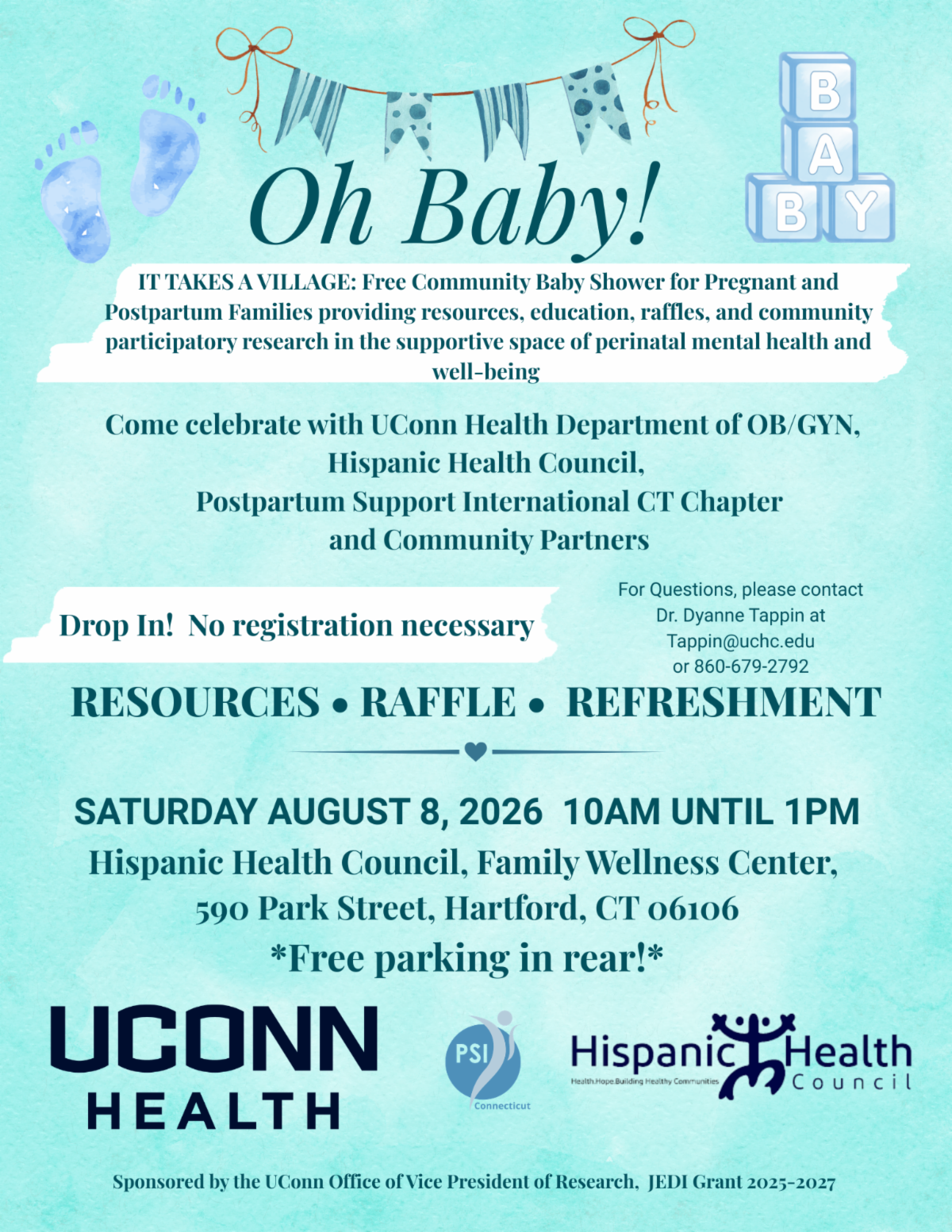
Community Partnership Opportunities | | UConn Health: Community Baby Shower | | PFLAG Hartford Seeks Volunteers and Board Members | | |
PFLAG Hartford, a local chapter dedicated to supporting LGBTQ+ individuals and their families, educating allies, and advocating for equality, is seeking volunteers and board members to help expand its impact throughout the community.
The organization is currently recruiting for several leadership and volunteer roles, including:
- Resources, Tabling & Events Chair – Coordinate community outreach events, organize educational programs, and recruit speakers for meetings.
- Technology Chair & Social Media Communications Assistant – Manage the organization's website, email communications, social media platforms, and Mailchimp mailing lists.
- Volunteer Mobilization Coordinator – Recruit, train, and coordinate volunteers for events, advocacy efforts, and community outreach activities.
- Membership Chair & Committee – Grow membership, reconnect with former members, and organize welcoming events for new and returning participants.
Whether you're looking for a one-time volunteer opportunity or a longer-term board leadership role, PFLAG Hartford offers meaningful ways to make a difference while supporting the LGBTQ+ community.
If you know students, faculty, staff, alumni, or community members who may be interested, please consider sharing this opportunity. Volunteers of all backgrounds are welcome to help advance PFLAG Hartford's mission of creating a caring, just, and affirming world for LGBTQ+ people and those who love them.
| | | | |
Place-Based Justice Network Summer Institute | The Place-Based Justice Network is a community of practitioners in higher education community engagement who are driven by values-oriented approaches to non-exploitative engagement. | | |
Through a series of online sessions, the Place-Based Justice Netowrk Summer Institute will strengthen your abilities to act in solidarity with our communities across the world as they face unprecedented forces working against their interests.
This is a place for higher education practitioners to get remotivated, learn from how others do this work in the face of major headwinds, and find a balanced and critically conscious way to approach this work.
The institute will intentionally build community between members, which will strengthen the collective work. This year, the Summer Institute will occur throughout August with 3 sessions at 3 hours each. You are welcome to register right up until the event. Please share with other colleagues!
Click here for more details and registration.
Summer of Solidarity Dates:
· August 3rd: 11am PT - 2pm PT/ 1-4 pm CT/ 2-5 pm ET
· August 11th: 11am PT - 2pm PT/ 1-4 pm CT/ 2-5 pm ET
· August 19th: 11am PT - 2pm PT/ 1-4 pm CT/ 2-5 pm ET
Interested in joining PBJN? Find out more HERE.
| | | | |
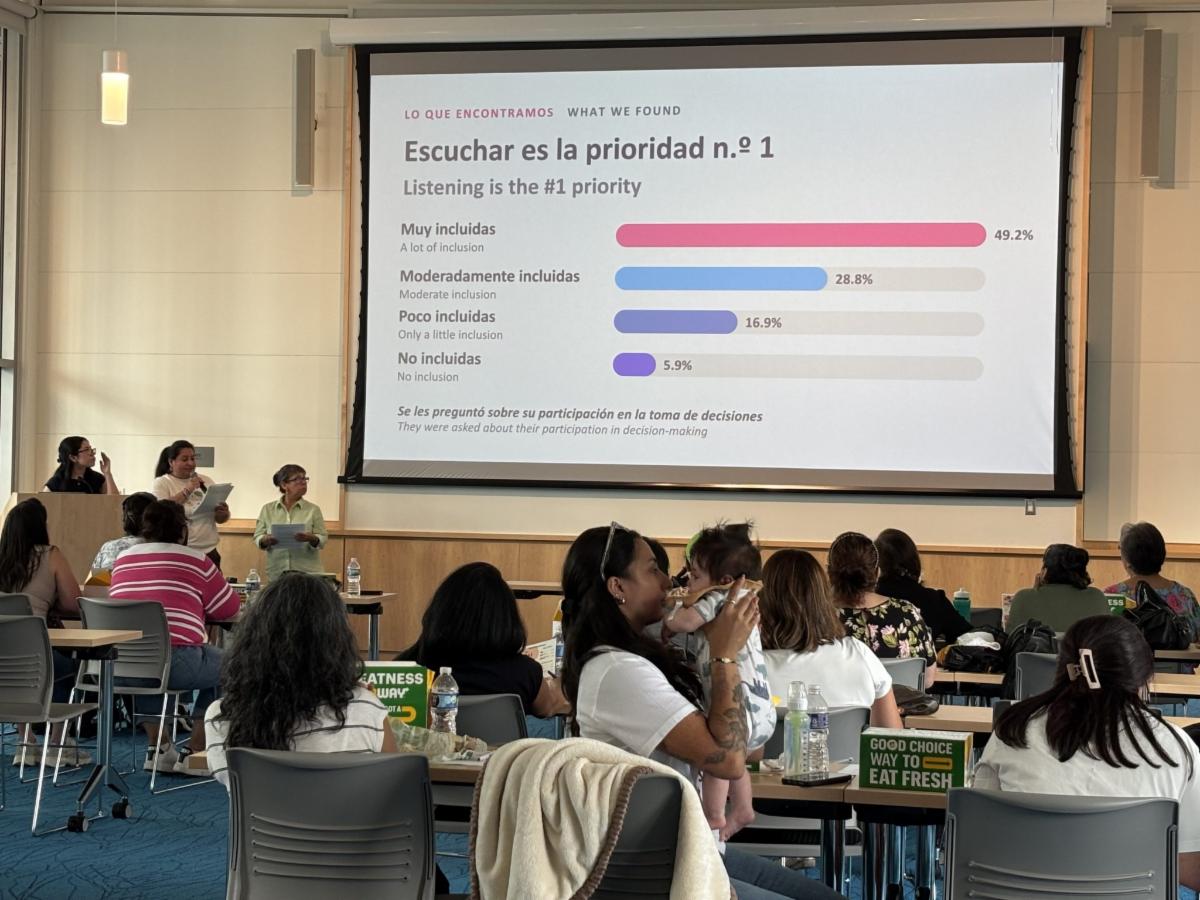
UConn Today #CommunityImpact | | (Photo by Hispanic Health Council) | | Patient Action Leaders Advancing Novel, Transformative, Equitable (PA’LANTE) Healthcare | | |
In Connecticut, Latinos experience substantial health inequities exacerbated by social and economic disparities. Health disparities in Hartford are pronounced, with Latinas disproportionately burdened by chronic conditions due to historical factors creating oppressive conditions based on gender, race, and ethnicity.
The Hispanic Health Council (HHC) and the UConn Health Disparities Institute (HDI) are teaming up to do something about it. With funding from the Patient-Centered Outcomes Research Institute® (PCORI®), HHC’s and HDI’s goal is to increase patient and community voice in decision-making, specifically in patient-centered comparative clinical effectiveness research (CER) that helps people make informed healthcare decisions and improves healthcare delivery and outcomes by producing evidence from research guided by patients, their caregivers and the broader health and healthcare community.
Read More.
| | | | |