|
| Early Childhood Education in Pennsylvania | |
2026-27 Enacted Budget Overview: Office of Child Development and Early Learning
On July 12, 2026, the PA Legislature passed, and Governor Josh Shapiro signed the bills to enact the 2026-27 budget.
The 2026-27 budget highlights for early childhood programs are outlined below.
Department of Human Services
Early Intervention
-
Early Intervention Birth-3 (decrease of $5.213 million, total appropriation of $193.219 million) to support all eligible children.
- Includes a reduced need of $(3.521) million to serve the eligible population and $(1.692) million to adjust for an increase in the federal participation rate.
- The enacted budget and the use of available carryover funding previously allocated to counties will fully support all anticipated 2026-27 program costs.
Child Care Works (CCW)
-
Child Care Services (level-funded, total appropriation of $298.080 million) to support subsidized child care services for low-income families.
-
Child Care Assistance (increase of $1.129 million, total appropriation of $124.384 million) to support subsidized child care services for families receiving TANF, Former TANF, and SNAP benefits.
Child Care Works (CCW) is also supported by federal funding sources, including the Child Care and Development Block Grant (CCDBG), the Social Service Block Grant, Temporary Assistance for Needy Families (TANF), and the Supplemental Nutrition Assistance Program (SNAP).
The federal Child Care Development Funds (CCDF) Final Rule has been modified and no longer requires states to move to prospective payment based on enrollment. In 2026-27, DHS/OCDEL will continue to pay child care subsidy retrospectively based on reported attendance.
Child Care Recruitment and Retention (increase of $5 million, total appropriation of $30 million) to enable licensed childcare centers who participate in Child Care Works to give childcare workers recruitment and retention bonuses.
Evidence-Based Home Visiting and Family Supports
-
Community-Based Family Centers (level-funded, total appropriation $34.558 million)
-
Nurse Family Partnership (decrease of $86,000, total appropriation of $13.889 million) to adjust for an increase in the federal participation rate.
Department of Education
Early Childhood Education
-
PA Pre-K Counts (increase of $3.75 million, total appropriation of $330.563 million). To increase the cost per slot from $10,750 to $10,875 for full-time slots and from $5,375 to $5,437 for part-time slots.
- Head Start Supplemental Assistance Program (increase of $1,043, total appropriation of $91.921 million)
Early Intervention
-
Preschool Early Intervention, 3-5 (increase of $41.221 million, total appropriation of $494.505 million) to support all eligible children.
| |
New Equivalency Report Creates Additional Pathway for Internationally Educated Early Childhood Professionals
Effective Aug. 3, 2026, the Educational Credential Evaluators offers an Equivalency Report for those early childhood education (ECE) workforce professionals who are unable to obtain their original international educational documents.
Photocopies of original documentation will now be eligible to proceed through a vetted review process by Educational Credential Evaluators. The report can only be based on copies or scans of official documents and ECE will not prepare an equivalency based on irregular documentation.
The Equivalency Report can be used by ECE professionals to be placed on Pennsylvania’s ECE Career Pathway. Pennsylvania’s ECE Career Pathway provides a clear framework for professional growth, helping educators meet the qualifications and competencies required for various roles in early childhood education.
In 2025, the Office of Child Development and Early Learning and the Pennsylvania Key partnered with the Educational Credential Evaluators to develop a more accessible system for early childhood education workforce members who obtained their education abroad. Now, in its second year, the International Education Evaluation program has launched an exciting new opportunity for workforce members who are experiencing challenges obtaining original diplomas, transcripts, and degrees from the educational institutions where they obtained their education.
More information can be found on the Pennsylvania Keys' International Education Evaluation webpage, including instructions on securing the required documentation and the evaluation application process in Pennsylvania.
| |
August Health Trends in Early Childhood - Food Safety Matters: Preventing Food Poisoning
In 2026, the United States is experiencing a “foodborne illness summer,” and it is difficult to keep track of which foods are safe to eat and where! Dominating the news cycle is the Cyclosporiasis outbreak. The August release of Health Trends in Early Childhood focuses on Food Safety Matters: Preventing Food Poisoning.
Each year, roughly 48 million or one in six Americans (16.7%) get food poisoning (also called foodborne illness) after eating contaminated food. Foodborne illnesses occur when viruses, bacteria, parasites, or toxins (poisons) produced by them get into the foods we eat (e.g., Listeria, Salmonella, Cyclospora, Shigella, STEC, Vibrio, Yersinia, and others). Anyone can get food poisoning, but children are more likely to be affected and have a more serious illness. Read the August Health Trends in Early Childhood for more information on how to prevent food poisoning.
Health Trends in Early Childhood, the monthly release from The Pennsylvania Key, focuses on trending health issues affecting children from birth to age five and their families and caregivers. Each month, find information about a recent health trend, learn why it is important, discover the impact it has on children, their families and caregivers, and the community, as well as actions we all can take to ensure the health and well-being of children in our communities. Also, find reliable resources to learn more about the issue.
| |
2027 PA One Book Additional Book Interest Survey
The 2027 PA One Book title will be announced in October 2026. This brief survey is intended to help estimate statewide interest in obtaining additional copies of the selected title beyond those distributed to Commonwealth Public Libraries and Pennsylvania Certified Early Learning Programs.
Survey responses will be summarized and shared with the publisher to provide insight into potential statewide demand as printing and inventory decisions are made. Collecting this information in advance supports planning and promotes broader access to the PA One Book selection for children, families, educators, and communities across Pennsylvania.
Please note: This survey is for planning purposes only. It does not serve as an order form, reservation, or commitment to purchase. Responses will be used solely to better understand potential demand for the 2027 PA One Book title.
More information about the PA One Book program can be found at the Pennsylvania One Book Website.
| |
Save the Date
2026
- Aug: National Immunization Awareness Month
- Aug. 3-4: International Conference on Childhood Education and Development, New York, NY
- Sept.: National Early Literacy Month
- Sept. 22-23: 2026 Refugee Education Summit, King of Prussia
-
Sept. 26: Sembrando Semillas: Cultivating the Future with Resilience and Rooted Care, Philadelphia
- Sept. 29-30: National Home Visiting Summit, Baltimore, MD
- Sept. 28-Oct. 1: National Head Start Association's Fall Leadership Institute, Washington, DC
- Oct. 2-6: World Association for Infant Mental Health Interim World Congress, Toronto, Canada
- Oct. 6-7: 2026 Paving the Way Conference, Lancaster, PA
- Oct. 12: UnConference: Ordinary Moments, Meaningful Connections, Pittsburgh
- Oct. 18-21: Pennsylvania ECE Summit, State College
- Oct. 27-29: ZERO TO THREE Learn Conference, Portland, OR
- Dec. 5-8: NAEYC Annual Conference, Washington, DC
- Dec. 14-18: NHSA Parent & Family Engagement Conference, Nashville, TN
2027
- Jan. 25-28: National Head Start Association's Winter Leadership Institute, Washington, DC
- April: Month of the Young Child
- April 10-16: Week of the Young Child
- April 19-23: National Home Visiting Week
- April 25-29: After-School Professionals Appreciation Week
- May: Children’s Mental Health Awareness Month
- May 3-6: National Head Start Conference and Expo, Pittsburgh, PA
- May 3-7: Teacher Appreciation Week
- May 7: National Children’s Mental Health Awareness Day
- Aug: National Immunization Awareness Month
- Sept.: National Early Literacy Month
- Nov.: Council for Professional Recognition's Early Educators Leadership Conference, Las Vegas, NV
- Dec. 4-7: NAEYC Annual Conference, Chicago, IL
- Dec. 13-16: 2027 Parent & Family Engagement Conference, Grapevine, Texas
2028
- April: Month of the Young Child
- April 24-28: After-School Professionals Appreciation Week
- May: Children’s Mental Health Awareness Month
- May 1-4: 2028 National Head Start Conference & Expo, New Orleans, Louisiana
- May 1-5: Teacher Appreciation Week
- Sept.: National Early Literacy Month
- Nov. 15-18: NAEYC Annual Conference, Seattle, WA
| |
Recognizing Inspiring School Employees (RISE) Award
Nomination deadline: Aug. 30
The Pennsylvania Department of Education is accepting nominations for the 2026 Recognizing Inspiring School Employees (RISE) Award, which honors non-teaching school staff who make an extraordinary impact on students and school communities. Eligible nominees include paraprofessionals, bus drivers, custodians, food service workers, administrative staff, counselors, health services personnel, and other support professionals serving PreK–12 schools. Nominations are open through Aug. 30, offering an opportunity to recognize the dedicated individuals whose work helps students thrive every day. Nominate a school employee.
| |
Share with Families: Pennsylvania's SUN Bucks (Summer EBT) program
Application deadline: Aug. 31
Pennsylvania's SUN Bucks (Summer EBT) program helps eligible families purchase groceries during the summer months when school meals are unavailable. Eligible children receive a one-time $120 benefit that can be used to buy food at participating retailers. Most eligible children are automatically enrolled through programs such as SNAP, TANF, Medicaid, with qualifying income, or free/reduced-price school meals, while some families may need to apply. Benefits for Summer 2026 began in early June, and applications remain available for eligible households. Families can also access an online eligibility navigator, outreach materials, and multilingual application resources through the Pennsylvania Department of Human Services. The application deadline for Summer 2026 benefits is Aug. 31.
| |
2026 Family Health Needs Assessment Survey Findings
A recent survey by the Pennsylvania Department of Health (DOH) found that health-related social needs and improved support were among the most common unmet maternal and child health needs.
More than 1,150 Pennsylvanians shared their thoughts when DOH asked for input on maternal, child, and family health across the state. The report, Family Health Needs Assessment Survey Summarized 2026 Findings, represents all 67 counties and a variety of respondents, including healthcare and support services professionals, parents, and caregivers.
The report highlights strategy suggestions to address the identified needs. Findings from the 2026 Family Health Needs Assessment Survey will inform the Bureau of Family Health’s maternal and child health programming and related initiatives.
| |
Pennie’s 2027 Open Enrollment Will Now Run from November 1, 2026, to January 15, 2027
Pennie offers health coverage from the top health insurance companies in Pennsylvania. You can also get personalized help from a Pennie-certified professional at no cost to you.
Open Enrollment Period: Nov. 1, 2026, to Jan. 15, 2027.
You must enroll during the Open Enrollment Period to have coverage for the year. If you have a Qualifying Life Event, such as loss of health coverage, marriage, change of residence, or many others, you can enroll during a Special Enrollment Period.
How to enroll?
- Preview. With the Plan Comparison Tool, see plans in your area and within your budget.
-
Apply. Gather your household information. See Pennie’s Shopping Checklist at pennie.com/learn/how-to-enroll.
- Shop. Filter and compare health plans by needs and cost.
- Pay. Your coverage will not begin until you pay your first month’s premium. For most health plans, you can make your first payment at the same time that you enroll.
High-Quality Coverage!
- Free preventive care.
- Covers a wide range of medical services.
- Can’t be denied because of a preexisting condition.
Free, expert help is available from Pennie Certified Assisters and Brokers. Enrollees can find in-person support and schedule an appointment at pennie.com/find-local-help.
Early learning programs and community partners can request free marketing materials to share with their families.
| |
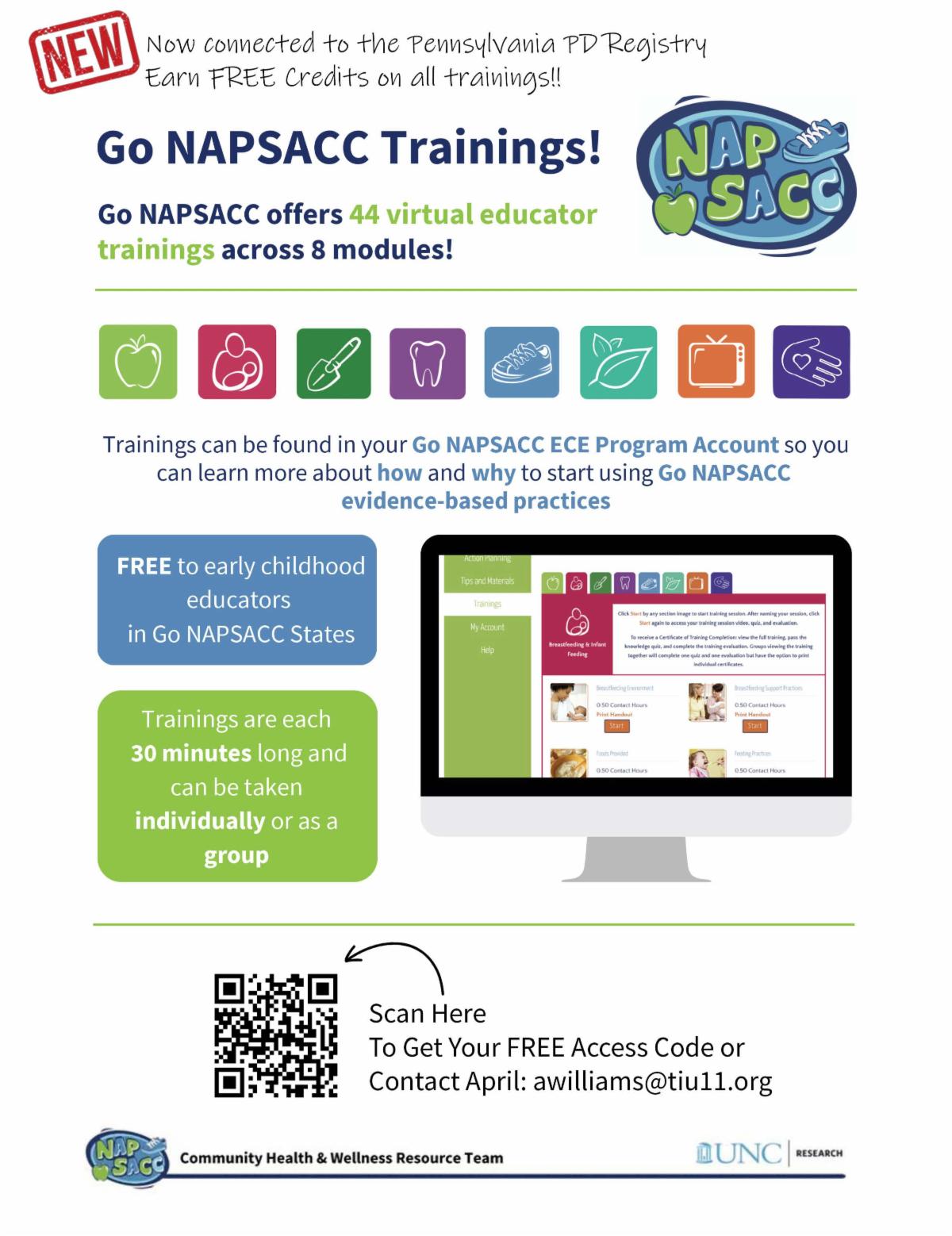
Go NAPSACC Trainings
Go NAPSACC now offers 44 virtual educator training sessions across 8 modules. Trainings are available at no cost to Pennsylvania ECE educators, are 30 minutes long, and can be taken individually or in groups.
Go NAPSACC uses a 5-Step Improvement Process to guide early care and education (ECE) programs in making healthy changes. Trainings include:
- Child Nutrition
- Breastfeeding and Infant Feeding
- Farm to ECE
- Oral Health
- Infant & Child Physical Activity
- Screen Time
- Outdoor Play & Learning
- Social Emotional
By completing Go NAPSACC trainings, ECE professionals can learn more about evidence-based practices, build skills, and gather resources to use in their ECE program.
Complete the form to get your free access code or email April at awilliams@tiu11.org.
Funding for Go NAPSACC access is provided by the Pennsylvania Department of Health through the Centers for Disease Control and Prevention's Preventive Health and Health Services Block Grant.
| |
Healthy and Ready to Learn: National and State Data on 3-, 4-, and 5-Year-Olds
The Healthy and Ready to Learn (HRTL) dashboard from Child Trends has been updated with new data and features, making it easier to explore developmental well-being among young children across the United States. Based on the HRTL measure developed for the National Survey of Children’s Health, the dashboard presents five developmental domains—early learning skills, social-emotional development, self-regulation, physical health, and motor skills—to provide a holistic view of whether young children are developmentally “on track”.
This dashboard update adds new data for 4- and 5-year-olds, building on the existing data for 3-year-olds. The expanded data range—from two years (2023–2024) to three years (2022–2024)—provides more reliable state estimates, and new indicators highlight which states differ from the national average.
According to the dashboard, 74.1% of 3-year-olds, 64.2% of 4-year-olds, and 67.1% of 5-year-olds in Pennsylvania were on track overall.
| |
Early Childhood Governance Typologies: Patterns in State Governance Across the Nation
As states work to improve services for young children and families, they continue to take very different approaches to organizing early childhood programs. A recent study by the Prenatal-to-3 Policy Impact Center at Vanderbilt University found no single governance model has been proven most effective, but identified key patterns, benefits, and challenges across states.
One emerging model, known as the “whole child” typology, brings together education, health, and family support services under a single department or division. Commonly consolidated programs include child care subsidies, pre-K, home visiting services, and Early Intervention. The study identified 12 states using this approach. Among them, Colorado, Connecticut, Illinois, and New Mexico have established dedicated Departments of Early Childhood, while Missouri, Montana, and Pennsylvania house services within an early childhood division of a larger agency.
Pennsylvania is the only state with a co-administered early childhood division, as the PA Office of Child Development and Early Learning (OCDEL) is a dual deputate of the Departments of Education and Human Services.
The findings highlight the variety of governance structures states use to support young children and families and provide insights into practices that may improve coordination and service delivery.
| | August Family-Friendly Newsletters Now Available | |
Looking for fun and easy ways to support young children’s learning? The August editions of the family-friendly newsletters are now available!
Designed for families and caregivers of children from birth through kindergarten, each issue is packed with engaging, age-appropriate activities that help children learn through everyday experiences. Early childhood professionals can also use these ideas in classrooms and learning settings.
All activities are aligned with the Pennsylvania Early Learning Standards and support key areas of child development. Get helpful tips, resources, and practical tools that empower families in their important role as a child’s first and most influential teacher.
Explore the latest editions, then share them with family, friends, and colleagues. Don’t forget to subscribe to have future issues delivered directly to your inbox!
| |
New Resources Make Pennsylvania State Parks and Forests More Accessible for All Visitors
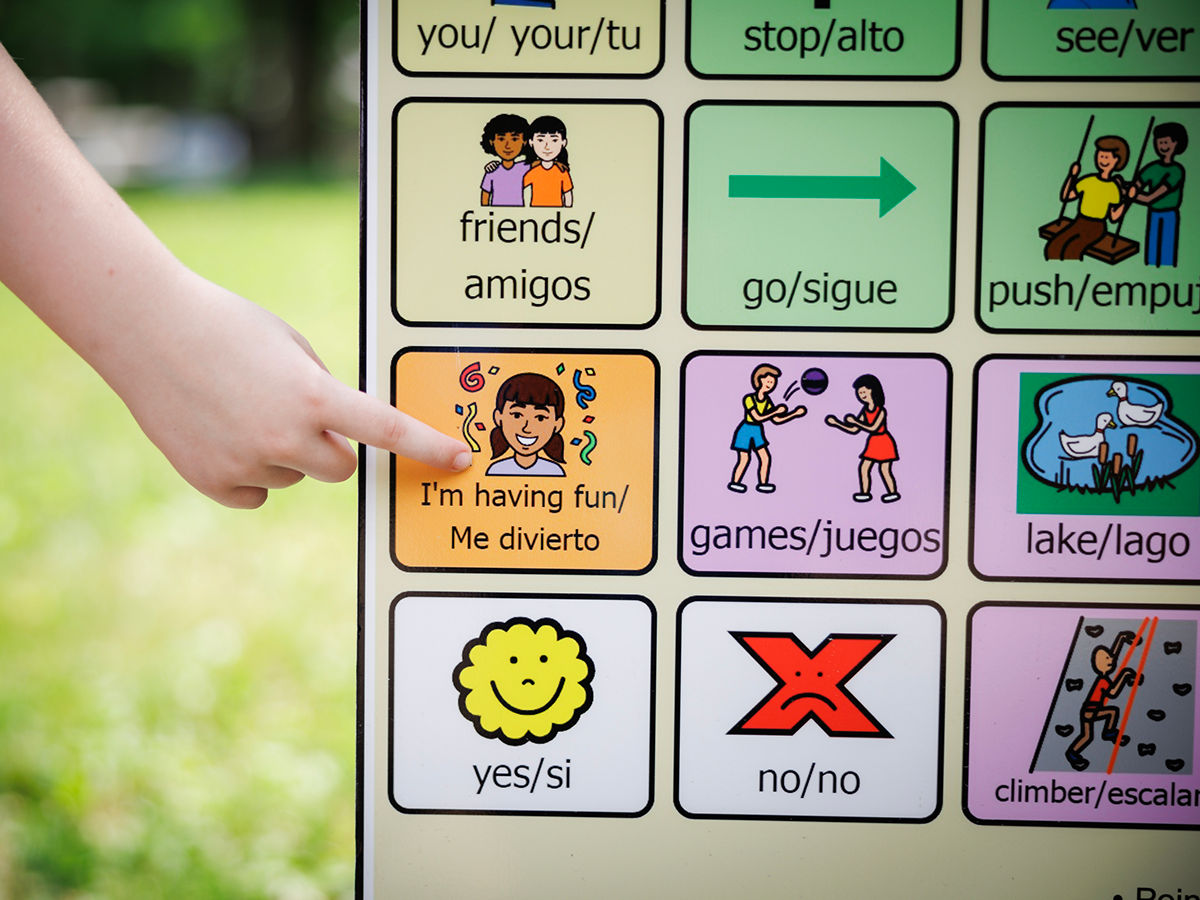
New online planning tools, communication boards, Handy Talkers, and colorblind viewing resources make it easier for all visitors to plan trips and enjoy Pennsylvania’s public lands. Communication boards are located in seven PA State Parks throughout the Commonwealth.
The Department of Conservation and Natural Resources (DCNR) also announced major updates to its accessible recreation website pages. More than 100 state park and forest webpages now list detailed accessibility features. These pages continue to be updated and include information about accessible facilities and amenities, such as lodging, pavilions, water access, fishing access, hiking, hunting, beaches, loaner equipment, colorblind viewfinders, wildlife-watching areas, theaters, amphitheaters, and environmental education centers. A new search function allows visitors to filter locations by the specific accessibility features they are looking for. Learn about the other features offered and how to access them.
| |
Share with Families: Virtual Conversations, Parents Rising to Child Developmental Challenges
The Brazelton Touchpoints Center invites families to join the fifth season of Parents Rising to Child Developmental Challenges. This free, 4-episode virtual conversation series offers a warm, inviting opportunity for parents and families of children with differences in or challenges to their development to connect.
Through engaging conversations with families who know what it’s like to raise children with developmental differences, challenges, delays, or disabilities, share the unique and common experiences of loving and raising children whose developmental journey is delayed or atypical.
What You'll Gain
- Honest conversations with families who understand
- Practical insights and shared experiences
- A supportive community where every family's story matters
Episodes Mondays | 3–4 pm ET
September 14 • October 26 • November 2 • December 7, 2026
- Free and open to all
- Live Spanish interpretation and captioning available
- Register for one or all four conversations and connect with families who understand your journey
Learn more and register at the Brazelton Touchpoints Center website.
| |
Snack Time Coloring Page
Every mealtime, including snacktime, is an opportunity for learning. While children munch on their fruit salads, they can learn which snacks are healthy and which are unhealthy. Use the Snack Time coloring page to add fun to the lesson.
| |
The Childhood Ecosystem Audit
The Childhood Ecosystem Audit is a free tool for restoring the conditions children need to become capable, connected, regulated, responsible, and fully alive. The audit looks at nine foundations children need in order to thrive: self-regulation, social connection, independence and agency, resilience and grit, creativity and imagination, executive function, physical health and coordination, purpose and meaning, and contribution and responsibility. This is not a diagnostic, clinical, or normed assessment, but it can be used to guide restoration rather than diagnosis.
| |
Resource from Camille Catlett
The July resource from Camille Catlett is now available. The July release of Natural Resources shares information about Intersections Between New Zealand and US Early Childhood Practices, Unpacking the Core Considerations of Developmentally Appropriate Practices, and more.
| | Calendar of Activities for Early Learning Professionals | | |
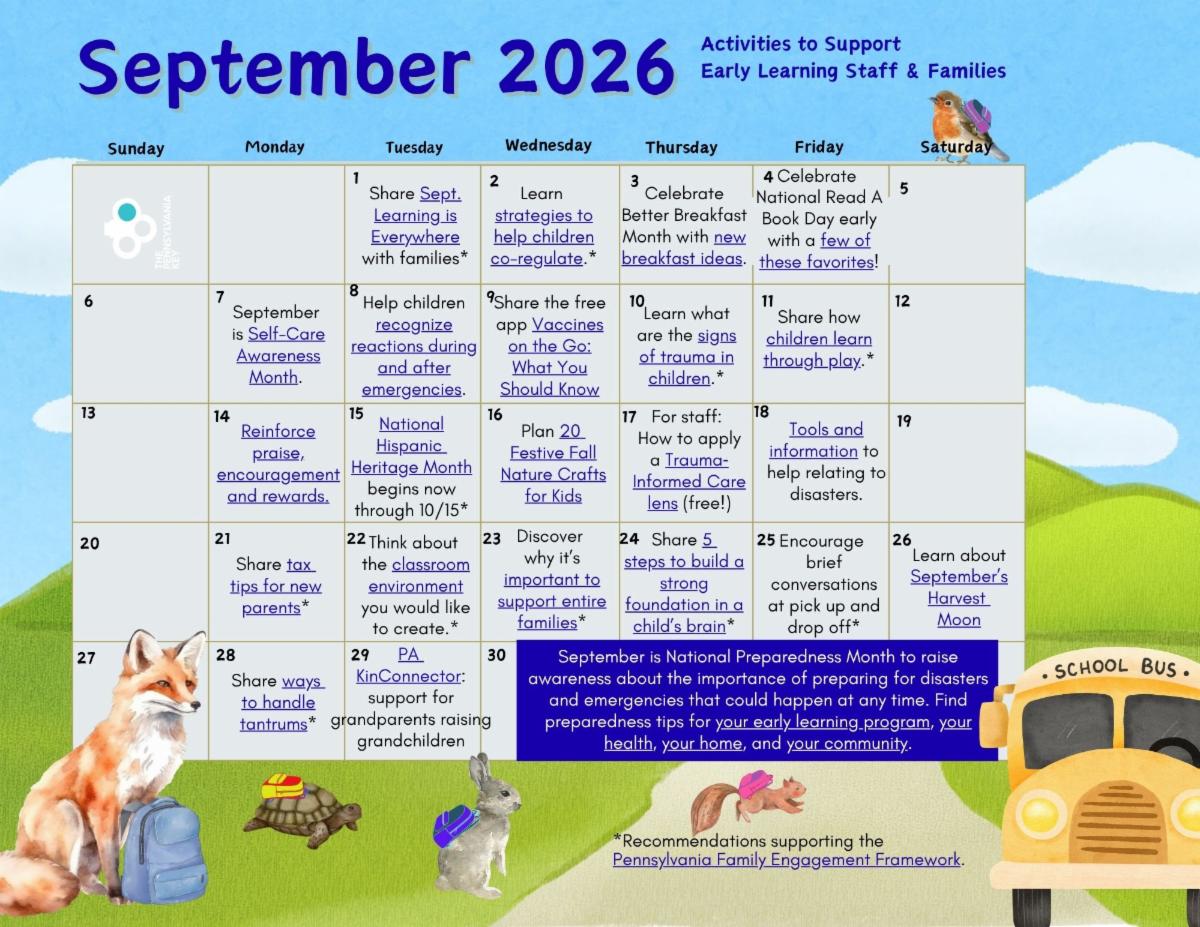
September is National Preparedness Month, a time to help families and caregivers get ready for emergencies, just in case they happen.
Take a look at the September Calendar of Activities! It’s filled with helpful tips and fun ideas to support early learning professionals and staff as they guide children and families in preparing for school success.
Still need some ideas for August? The August Calendar of Activities for Early Learning Professionals is still available!
| |
The PA Early Ed News is a project of the PA Office of Child Development and Early Learning, and the PA Departments of Education and Human Services to inform early learning professionals, the early childhood community, policymakers, community leaders and the public on developments in early childhood education and care in Pennsylvania.
Find more information about early childhood education in Pennsylvania
Please share this email with friends, family and colleagues.
WE ARE WHERE YOU ARE
| | | | |