|
August 2026 UME Master Gardener
State Office Announcements
| | |
Our docent list for the Maryland State Fair is full! Huge thanks to all of you who have signed up. Tomorrow (August 11th) we will mail parking and admission passes along with other information for navigating the fairgrounds.
Our newsletter this month includes resources from the Seed Library Network, the Maryland Native Plant Society annual conference, and more!
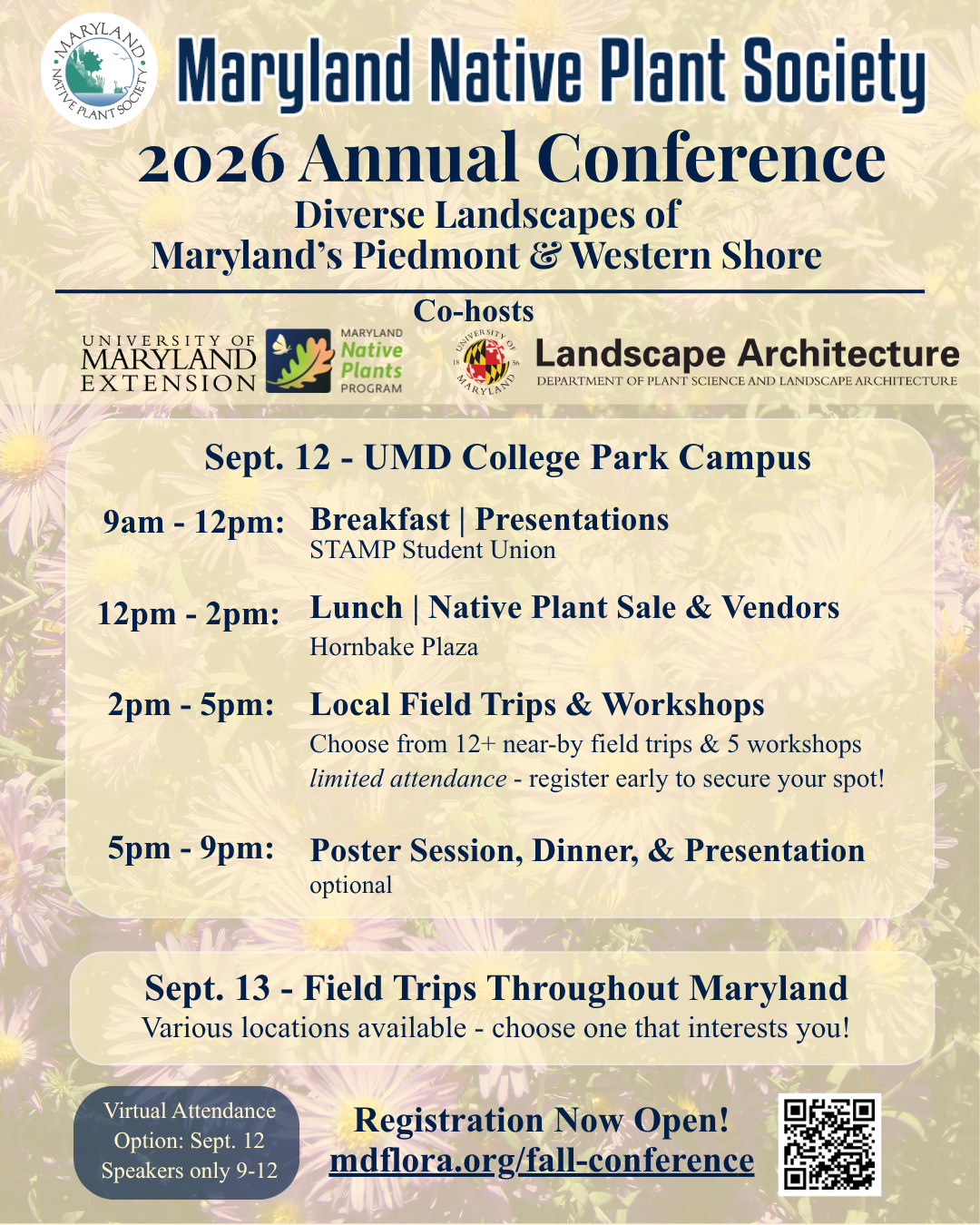
| | | Maryland Native Plant Society Conference | | Diverse Landscapes on Maryland's Piedmont and Western Shore | | |
Registration is now open! This conference will count towards continuing education hours.
Speakers
-
Paula Becker, Maryland Department of Natural Resources- Soldiers Delight's Serpentine Barrens: The Restoration of a Globally Rare Ecosystem with Amazing Plants
-
Maya Korb, Natural Resources Defense Council (NRDC)- The Toxic Truth About Neonic Pesticides: Threats to Pollinators, Natural Ecosystems, and Our Health
-
Michael Hayslett, Principal & Consulting Ecologist, Virginia Vernal Pools, LLC- Restoring Vernal Pools and Preserving their Fragile Habitats
-
Melissa McCormick, PhD Smithsonian Environmental Research Center (SERC)- People, Fungal and Pollinator Networks Critical for Maryland Orchid Conservation
Workshops:
- Asteraceae Identification Workshop. Clare Walker
- The Native Food Forest: Talk and Walk. Shane Brill
- Design your Native Garden with a Landscape Architect. UMD Department of Plant Science and Landscape Architecture
- Plants to Dye For! Maile Neel
- Sketching Asters - Draw One to Know One. Jen Brown
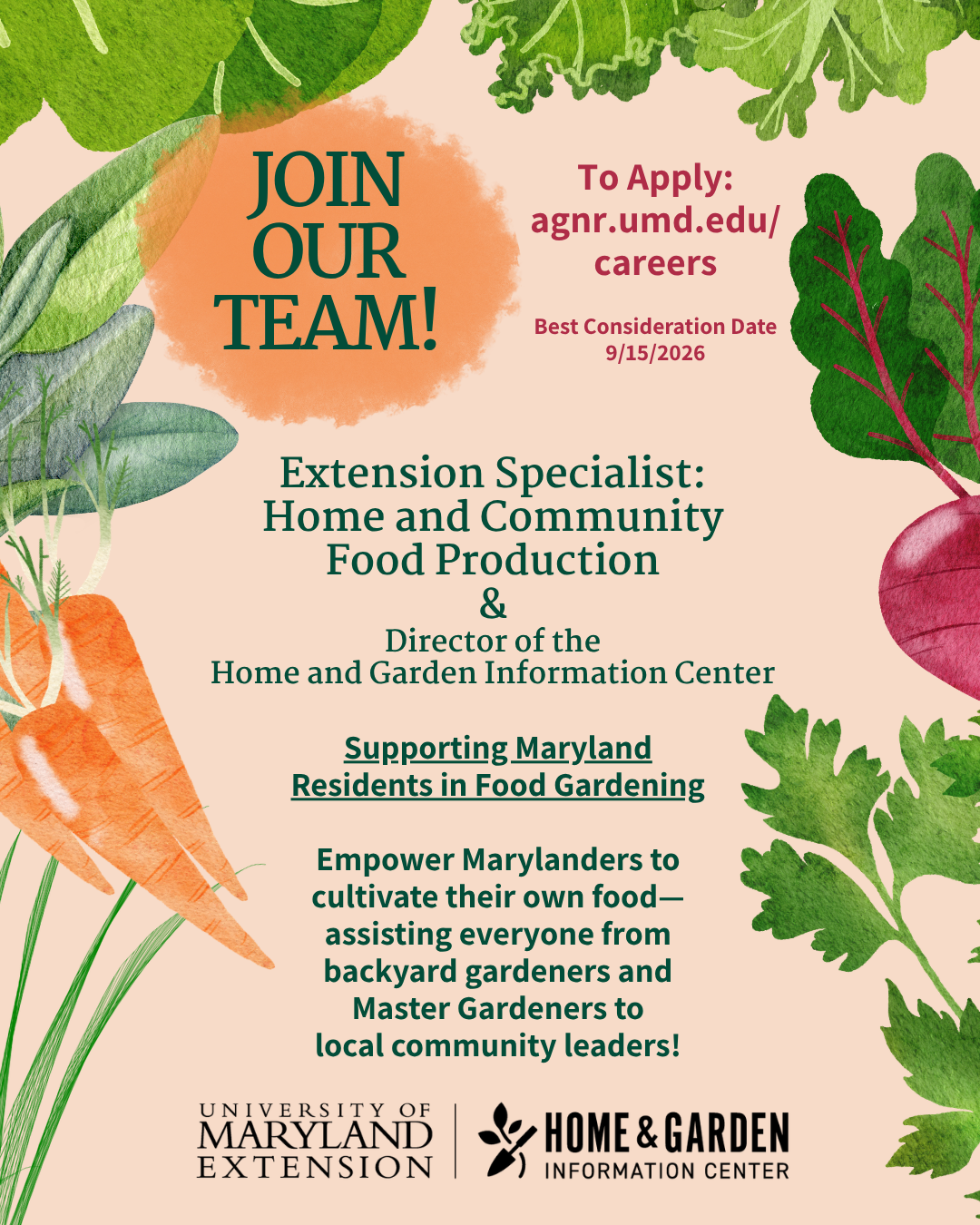
| | Searing for New Director of HGIC | | There's a second search for candidates to fill the position of Extension Specialist – Home and Community Food Production and Director of the Home and Garden Information Center. Please help us spread the word by sharing the link and flyer below! Best consideration date is September 15, 2026. | | |
The Seed Library Network offers a growing collection of free, open-source seed saving resources for educators, gardeners, libraries, and community organizations.
If you are saving and sharing seeds, one of their most popular free tools is the Auto Seed Wrapper (scroll about halfway down the page), which instantly creates printable seed packets for more than 70 species. Each wrapper includes the common and scientific name, planting instructions, and seed saving information, making it easy to share high-quality information through seed swaps, seed libraries, and community events. Organizations can also add their own branding to the wrappers. NOTE: They also have some bioregional Auto Seed Wrappers for native plants that are easy to grow.
Now is also a great time to begin planning seed saving classes for next season. Their free Seed Saving in Community class is available in both English and Spanish and includes license-free photos. You can use the presentation as-is or customize it for your local audience. At the bottom of the class page, you'll also find a place to upload your own seed saving presentation so other communities can build on your work—or browse presentations shared by others for ideas and inspiration.
To receive new resources, programming ideas, and practical tips throughout the year, subscribe to their free Cool Beans! Newsletter at SeedLibraryNetwork.Substack.com.
| | Statewide Meetings and Continuing Education | | Using Harvested Rainwater for Edible Plants | | |
Friday, August 14, 12:00 – 1:30pm, Zoom
Rainwater harvesting can reduce stormwater runoff, conserve drinking water, and provide more water for irrigation. Learn from UME Senior Agent for Urban Agriculture Neith Little about her research in harvesting rainwater!
Due to proprietary unpublished research, this webinar will not be recorded.
If you need a reasonable accommodation to participate in this event, please contact Stephanie Pully at pully@umd.edu or (301) 226-7616 before July 31, 2026.
| | Monthly Plant Clinic Updates | | |
Second Wednesday of the month, April-October, 12:00 – 1:00pm, Zoom
Join us for monthly updates from our UME experts on what questions or hot topics you might encounter at your upcoming Ask A Master Gardener Plant Clinics!
If you need a reasonable accommodation to participate in any event or activity, please contact Stephanie Pully on or before 2 weeks prior to the webinar at pully@umd.edu or (301) 226-7616.
| | Catch Up on Continuing Education | | |
Did you miss any of our continuing education webinars last year?
Check out the recordings below! You can always see both upcoming continuing education opportunities and recorded webinars on the State MG Continuing Education webpage.
| |
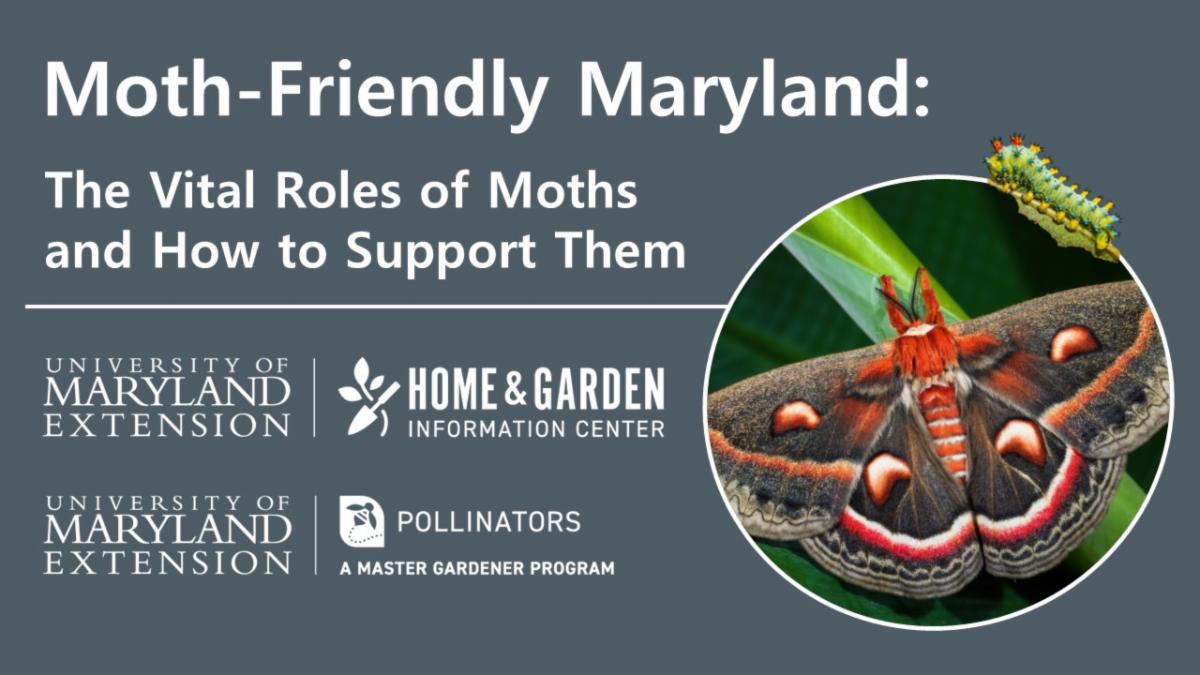
Moth-Friendly Maryland:
The vital Roles of Moths and How to Support Them
Join Madeline Potter, UME Faculty Specialist for Entomology & IPM, for an interactive lunch-and-learn webinar about Maryland's Moths. Did you know Maryland is home to more than 2,000 species of moths? While many go unnoticed, moths are important pollinators and a critical part of our local ecosystems. Join us as we discover the diversity of Maryland's moths, the plants that support them, and key ways to observe and conserve these insects. Designed as a train-the-trainer program, this session will equip you with ready-to-use resources, educational materials, and conservation gardening practices to help inspire others to appreciate and protect moths and other pollinators in their own greenspaces.
| | Lunch & Learn: Natives at Noon | | |
Next topic: September 2nd- Saving Ash for Future Forests
Ash trees in North America face a severe threat from the emerald ash borer (EAB), now present in 38 states. Ash species are vital to many forest ecosystems, including black ash (Fraxinus nigra), which holds cultural significance for numerous Indigenous communities. Cornell Botanic Gardens is working to conserve and restore ash to New York Forests by propagating individuals showing natural resistance to EAB. Todd Bitner, Director of Natural Areas, will highlight ash conservation efforts and ways citizen scientists can help restore ash to our forests.
| | The Biology of Wild Solitary Bees | | |
The Biology of the Wild Solitary Bees: Discover the fascinating world of wild solitary bees in this engaging 8-week webinar series (weekly, September 15 - November 3, 2026) designed for bee enthusiasts and anyone interested in pollinator conservation. Participants will explore the biology, ecology, and evolution of solitary bees through accessible, science-based presentations grounded in natural history and current research. Topics include bee diversity, life cycles, nesting behaviors, mating systems, foraging ecology, plant interactions, and the many environmental threats affecting bee populations in a changing world.
This series will deepen participants’ understanding and appreciation of wild solitary bees while providing practical knowledge to support pollinator stewardship and conservation efforts.
| | Vermont Composting Short Course | | Want to become a better composter? Join the UVM Extension's 2026 Vermont Composting Short Course, a six-week hybrid program that teaches participants how to transform food scraps and yard waste into nutrient-rich compost that improves garden and landscape soils. The course runs from Sept. 11 to Oct. 23 and includes online learning, weekly live Zoom sessions and in-person workshops at Vermont community composting sites. Participants will gain practical skills to produce compost that doesn’t attract wildlife. Registration is open through Sept. 4.; the fee is $50 for Vermonters, and $150 for participants who live outside Vermont | |
Victory Gardens
In this month's episode, we’re celebrating the 250th anniversary of the United States, by chatting about Victory Gardens! During some of our darkest moments American's came together to grow fresh produce for themselves and their community from sea to shine sea.
Fun fact: By May 1943, Victory Gardens supplied 40% of the produce in America, and there were roughly 20 million gardens across the U.S.
| | | Home and Garden Information Center | | |
Stephanie Pully
UME Master Gardner State Coordinator
| |  | |
Kaitlyn Baligush
Program Management Specialist
| | The University of Maryland Extension programs are open to any person and will not discriminate against anyone because of race, age, sex, color, sexual orientation, physical or mental disability, religion, ancestry, national origin, marital status, genetic information, political affiliation, and gender identity or expression. | | | | |