A Roundup of Recent Ulster County Business-Related News, Views, and More
August 26th, 2026
| |
Welcome to the August Business Bulletin. At Ulster Strong, we have officially entered an exciting new chapter with the launch of our “Ulster Strong 2.0” initiative. As we address the current economic headwinds facing our region, our mission is clearer than ever: to champion sustainable growth that creates high-quality jobs, diversifies our economy, and ensures Ulster County remains a vibrant, prosperous place to live and work.
We believe that true progress is achieved through collaboration. Our focus is on ensuring that the local business community has a visible, influential seat at the planning table—advocating for targeted, smart development and processes that are transparent, timely, and responsive to the needs of our local businesses.
But we cannot do this work alone. Your voice and your active participation are the cornerstones of our success. Whether you are a small business owner or an industry leader, we invite you to join us in shaping the future of our county. By working together, we can build a more resilient economy that balances smart investment with the unique character of our community.
Ready to help us build a stronger Ulster? Click here to learn more about membership opportunities and add your voice to the conversation today.
REMEMBER: you can always find this and other recent Ulster Strong Business Bulletins on our website at ulsterstrong.com
| | |
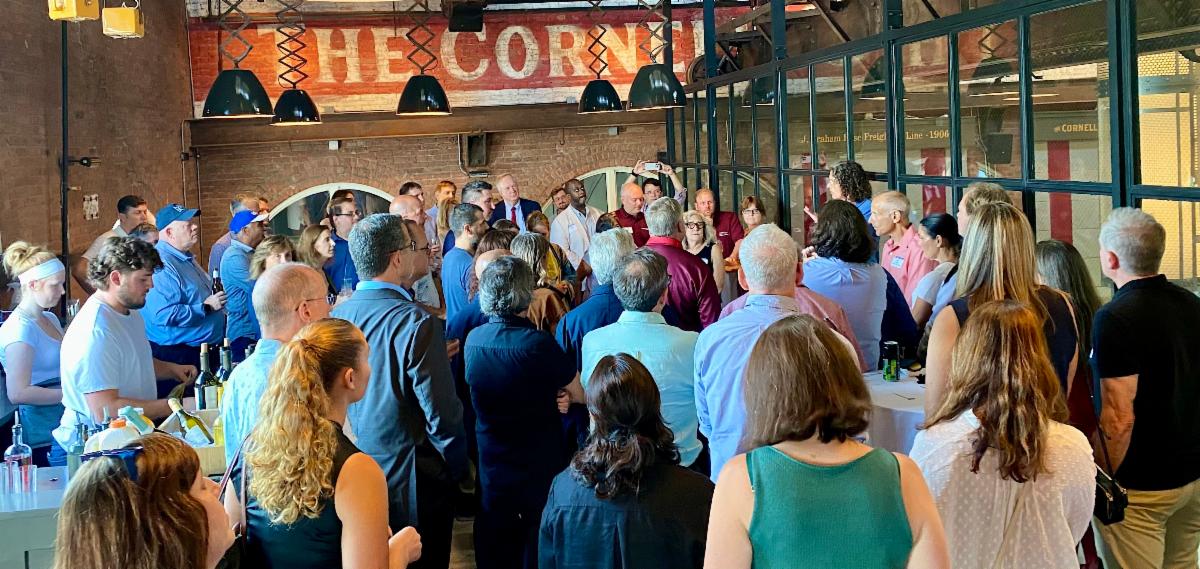
(Pictured: Ulster County Executive Metzger and new Interim Director of Economic Development, Leslie Wellington address the Ulster Strong Board July 30th.
| | |
This newsletter includes the following:
Checking In On The Hudson Valley Mall
ULSTER STRONG IN THE NEWS
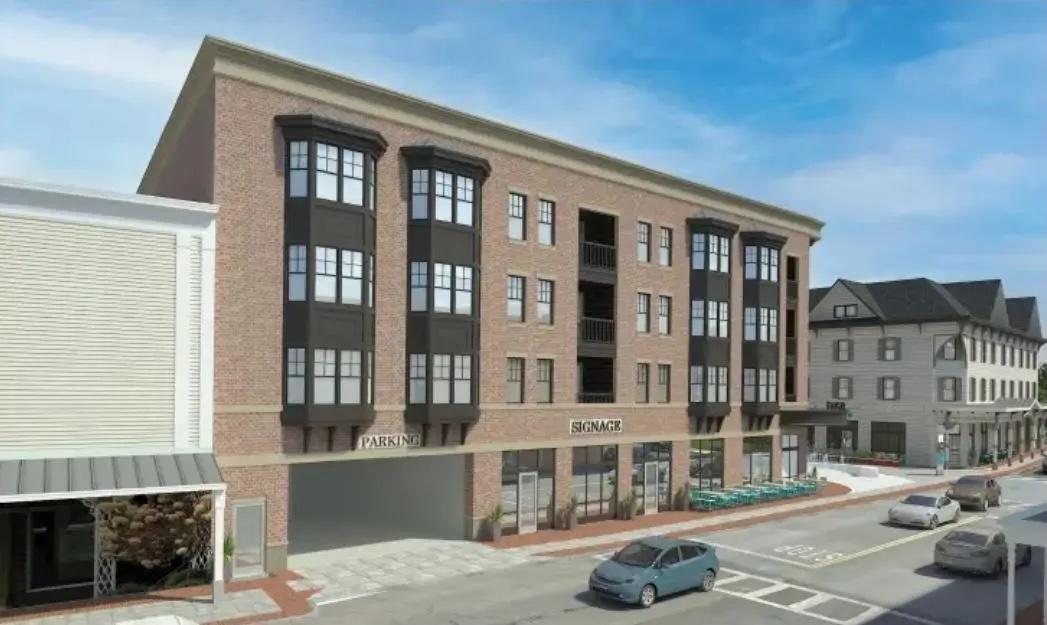
KINGSTONIAN PROJECT GETS UNDERWAY
Ulster County Revolving Loan Fund accepting applications
Ronnybrook Farm signs ‘letter of intent’ for iPark 87
Ulster Strong Meets With Kingston Lodging Businesses
Ulster rulings advance Zena Homes
NoVo Foundation’s Metro complex in Kingston to open late 2026
Upcoming Ulster Business Events
ULSTER COUNTY IDA COMMEMORATES 50 YEARS OF SERVICE
DATA BITES
| | |
Checking In On The
Hudson Valley Mall
by Jesse Smith for Ulster Strong
| | |
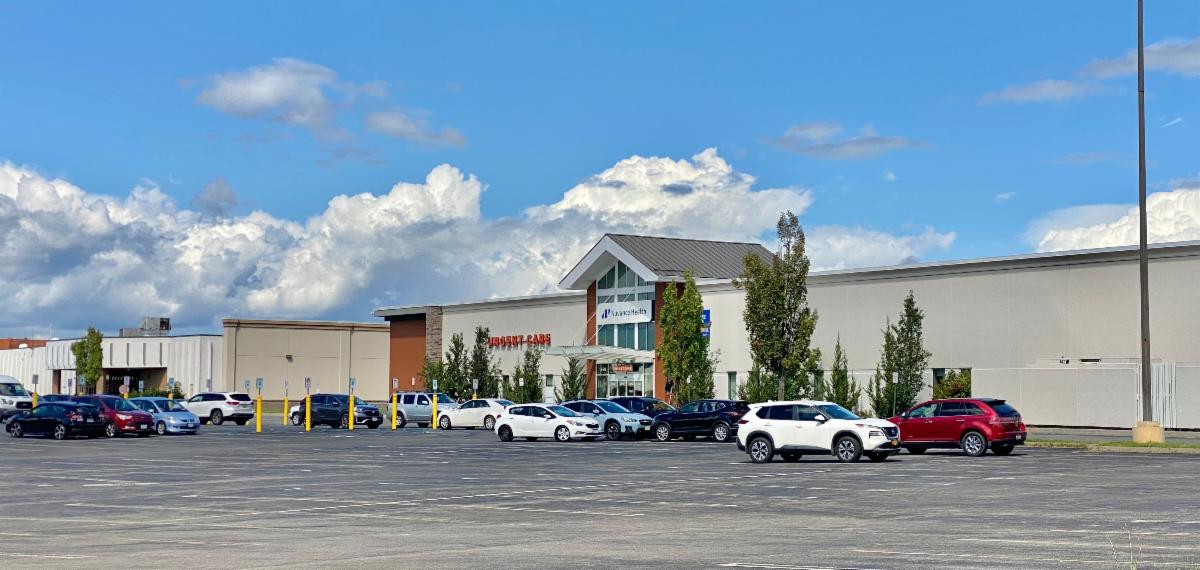
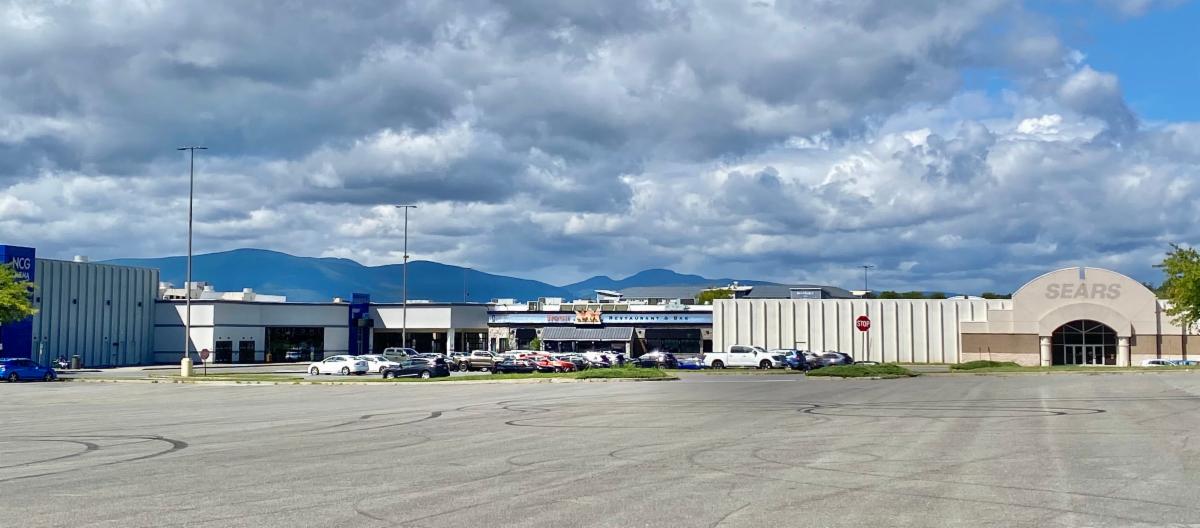
Walking through the Hudson Valley Mall on a Friday afternoon can be a disorienting experience for anyone who recalls the days when it was a bustling retail hub. These days the cavernous interior of the 760,000 square foot space features long stretches of decorative murals depicting local history and attractions, interspersed with vacant storefronts. A handful of businesses, none of them strictly retail, survive.
The NGC Cinema multiplex, a Target outlet, and a Nuvance healthcare facility are the only anchors today. The interior retail space features a children’s parkour gym, and adult fitness center, a bust unisex hair salon, and a Boy Scouts of America store, and that’s about it. Rather than shoppers, the people strolling the long, carpeted corridors are mall walkers who have adopted the space as an all-weather alternative to the track at Dietz stadium.
What was once a premiere shopping destination, not to mention perhaps the single largest taxpayer in the Town of Ulster is now a quintessential “dead mall.” And while some might look at it and feel pity for whoever owns- and must pay taxes-on this zombie shopping center, for John Mulherin and the team at Hull Property Group, everything is going according to plan.
“I tell folks all the time - remember 1982 when you’d go to the mall with your girlfriend and it was full and you’re wearing your members only jacket and you go to the arcade and play the Galaga machine and blah, blah, blah?” said Mulherin, Senior VP for Governmental Relations at the Augusta, Georgia-based commercial real estate firm. “Well, you can forget it because the nostalgia years are not coming back; the future of the mall is not going to be the retail of the past.”
In the world of commercial real estate, enclosed malls are rated like term papers. At the top, “A malls” in major metropolitan areas are anchored by high-end retailers like Sax Fifth Avenue and filled with luxury brands like Louis Vuitton and Tiffanys. At the other end of the scale “F Malls” - abandoned hulks whose only conceivable investment is demolition. Hull Property Group owns and operates 38 enclosed malls in 18 states. The company’s wheelhouse are “D Malls” - shopping centers stripped of the anchor stores that generate the foot traffic needed to attract smaller retailers but just viable enough to justify paying the taxes and keeping the lights on.
There are just a handful of companies operating in the D Mall space. Most of them get by with aiming at the bottom of the retail food chain - think discount smoke shops and liquidation outlets - where they keep the overhead low enough to offer rock bottom rents. But Hull takes a different approach. Mulherin said the key the company’s redevelopment model was a three-step process; stabilize, transform and reposition.
“You’ve got to stabilize the way it looks and feels, you’ve got to transform the way it looks and feels and then you wait for the opportunity,” said Mulherin. “We’ve done the first and second things, and I think the Hudson Valley Mall represents probably the largest redevelopment opportunity on 9W where there’s really not a lot of space for redevelopment.”
The company’s approach was evident back in 2017 when they purchased the mall out of bankruptcy for $8.1 million. The acquisition came at the height of what came to be known as the Great Retail Apocalypse, and a period of wrenching realignment as big box chain stores came face to face with the reality of online retail.
In 2017 alone, 35 major retailers, including longtime shopping mall staples like Payless, The Limited and Toys R Us went into bankruptcy. Enclosed malls have always relied on the synergy between big box anchors, smaller retailers and food and entertainment businesses. The departure of anchor stores like J.C. Penny and Macy’s from the Hudson Valley Mall put such a dent in foot traffic that it no longer made sense for smaller retailers to remain.
Local developer Joe Deegan said a major factor in the demise of the enclosed mall concept were the costs associated with common areas, like food courts and spacious hallways. Mall tenants were willing to pay higher rents to maintain those common spaces when anchor stores were generating high-volume foot traffic. But once the anchor chains failed and foot traffic declined, retailers fled enclosed malls for front facing shopping centers where they only had to pay for space they could actually use.
"You’re paying to heat, cool light and maintain these huge common areas” said Deegan who specializes in commercial real estate. “And when you move to a front facing mall, that all goes away.”
| |
ULSTER STRONG IN THE NEWS
Ulster Strong expands campaign for jobs, investment and smart development
(By Maura Rosner for HV1)
| | |
Local business leaders, entrepreneurs and elected officials gathered in the Rondout district to outline a new chapter for regional economic growth as Ulster Strong officially launched its “Ulster Strong 2.0” initiative. The business advocacy coalition used the event to address pressing economic headwinds facing Ulster County, showcase new county-level funding streams for small businesses and urge the local business community to take an active, visible seat at the public planning table. Among those in attendance were Ulster County executive Jen Metzger, Kingston mayor Steve Noble, deputy county executive James Amenta, interim director of the Department of Economic Development Leslie Wellington and county legislator Lindsey Grossman and Amy Dooley.
Ulster Strong chair Don Tallerman introduced Metzger, who announced a significant new economic tool aimed at empowering small enterprises across the county. “Tomorrow, we are opening revitalized standard revolving funds for small businesses at the county level,” Metzger told the crowd. She explained that after extensive discussions with local business owners, the county structured three distinct loan products ranging from $7,500 to $150,000. These financial tools include micro-equipment loans featuring fixed-term, low-interest funding for minor capital purchases that fall below commercial bank thresholds. The county is also offering gap financing that covers up to 25% of a project’s cost alongside commercial bank lending to lower overall capital costs. Additionally, bridge loans are now accessible to both small businesses and nonprofit organizations that are waiting on approved state or federal grant disbursements.
Following Metzger’s remarks, Tallerman addressed the broader economic landscape facing Ulster County, framing the region’s quality of life as its greatest asset while remaining candid about structural challenges. While noting the scenic beauty and cultural appeal of the area, joking that even the South of France does not have anything on Ulster County, Tallerman said, “… the region has experienced net job losses and stagnant population vitality … while the area continues to attract new talent, it is losing key residents to other parts of the country.” Tallerman urged county stakeholders to work collaboratively to create more sustainable local jobs, address rising housing expenses and narrow the widening income disparity within the community.
Clarifying the coalition’s growth philosophy, Tallerman emphasized that Ulster Strong does not advocate for unchecked commercial expansion or rubber-stamp approvals. Citing past opposition to a proposed asphalt plant near the Bluestone Wild Forest on Route 28, he stressed that future development must preserve the region’s natural environment. Instead, Ulster Strong advocates for targeted development concentrated along key transit corridors such as Routes 28, 32 and 209, as well as within established downtown business districts like Kingston’s Rondout.
A central focus of the evening was mobilizing business owners to participate in municipal governance and push back against habitual anti-development sentiment. Tallerman explained that Ulster Strong was created in part to push back on the NIMBY, or “not in my backyard,” community, noting that proposed development projects are frequently met with cynicism and opposition at public planning board hearings. He stated that the organization intends to ensure the business community’s voice is heard at public hearings and planning board meetings to counteract automatic opposition.
Addressing policy issues, Tallerman noted an ongoing dialogue with the county executive’s office regarding a proposed county income tax. While expressing concerns about the tax, he acknowledged the county’s need to cover budget shortfalls resulting from federal funding cuts to safety-net programs and stated that Ulster Strong plans to present alternative revenue solutions. To lead this expanded mission, dubbed Ulster Strong 2.0, the organization announced the hiring of Tim Weidemann to manage day-to-day operations and strategic direction, alongside plans for an upcoming brand overhaul and an expanded membership drive.
Membership tiers for the organization are structured at $5,000 annually for general businesses and $2,500 annually for small operations with three or fewer employees, offering members direct board involvement in regional policy discussions and strategic networking opportunities.
| | |
KINGSTONIAN PROJECT GETS UNDERWAY
(By Daily Freeman)
| |
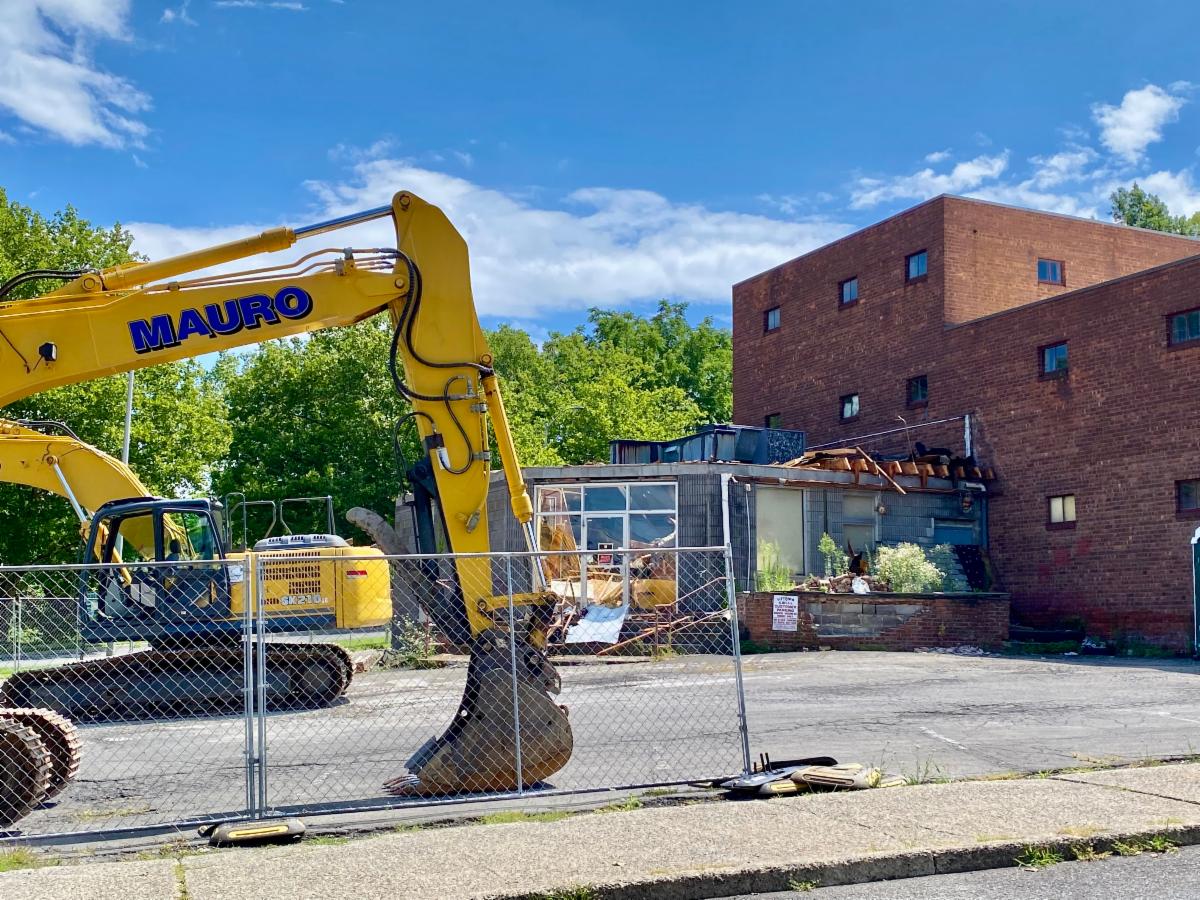
Demolition work at long-shuttered diner signals construction work years after project was first announced
The ongoing demolition of the long-vacant Uptown Grill Diner at the corner of Schwenk Drive and Fair Street is part of the site work for the construction of the Kingstonian mixed-use project, according to one of the project’s developers.
“We are demolishing the former diner,” Brad Jordan, who is developing the mixed-use project with Joe Bonura Jr., told the Freeman in an email on Friday, Aug. 7 when asked for comment. “As you are aware, we were prevented from moving forward for an extended time due to several factors outside our control. We continued working during that period and are excited to move forward.”
The project is to include 143 residential units, a hotel, commercial space and a parking garage, along with a public plaza built over the top half of Fair Street Extension and a pedestrian bridge crossing to Kingston Plaza.
Mayor Steve Noble, who has championed the Kingstonian project since it was first proposed nearly nine years ago in September 2017, said in an email when asked for comment on Friday that, “The diner coming down is the first step of this exciting project.
| | |
Ulster County Revolving Loan Fund accepting applications
(By Daily Freeman)
| | |
The Ulster County Revolving Loan Fund is accepting applications from small businesses and nonprofit organizations for low-interest, fixed-rate loans.
The program, a partnership between Ulster County Economic Development Alliance and the Ulster County Department of Economic Development, provides loans ranging from $7,500 to $150,000 to help small businesses and nonprofit organizations in Ulster County meet capital needs for improvements or expansion and close financing gaps.
Loans are available in three categories: Micro Loans — $7,500 to $15,000 for small‑scale capital needs, especially for businesses with limited collateral or credit history; Gap Loans — Up to $75,000 to supplement commercial financing, close remaining funding gaps, and bring down borrowing costs; and Bridge Loans — Up to $150,000 tied to documented reimbursement-based grants awarded to nonprofit organizations, intended to bridge the time between starting the project and receiving the grant money.
| |
Ronnybrook Farm signs ‘letter of intent’ for iPark 87 agribusiness hub
(by Daily Freeman)
| | |
The Ulster County Economic Development Alliance and Ronnybrook Farm Dairy have signed a “letter of intent” to establish Ronnybrook as an anchor tenant for a food and beverage manufacturing and agribusiness hub at iPark 87, according to an announcement on Thursday.
According to a news release, the move builds on the “county’s and the region’s agricultural strength, the County’s vision is to expand markets for farmers, value-added production, and food and beverage manufacturing.”
Under the letter of intent, Ronnybrook would lease UCEDA-owned property located on the east campus of iPark 87. The existing 21,700 square-foot warehouse building would be used for cultured dairy production, and a cold/freezer storage facility would be developed on the site at a later date, managed by Ronnybrook, to serve other farm businesses and food manufacturers.
| |
Ulster Strong Meets With Kingston Lodging Businesses To Discuss Possible New City Bed Tax
| | |
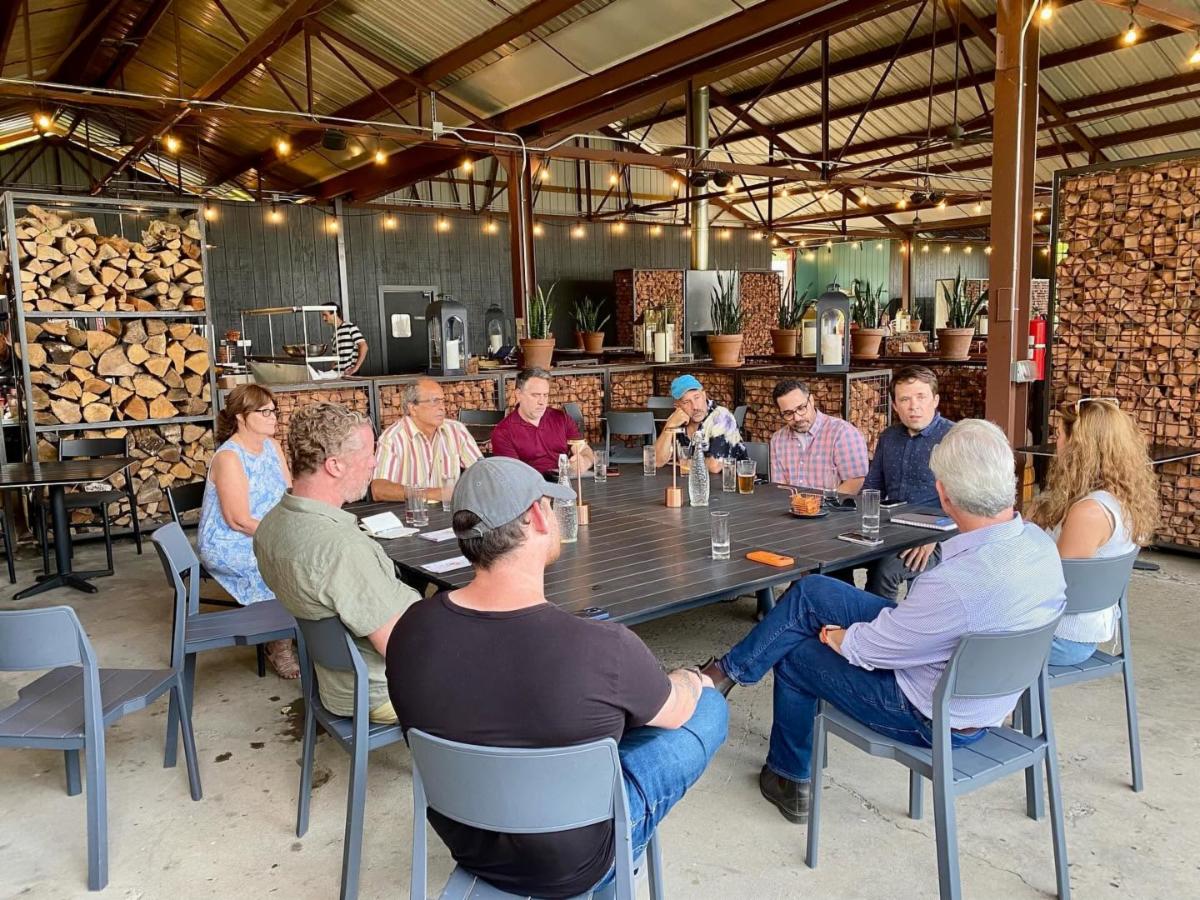
Earlier this month Ulster Strong met with several City of Kingston businesses in the lodging and hospitality industry. A major discussion point was a proposed new Occupancy Tax in the City of Kingston singling out city lodging.
Concerns raised about the proposed new tax (anywhere from 1-3%) include putting Kingston lodging businesses at a competitive disadvantage to lodging in surrounding towns, and projecting an image as a high-tax location, dissuading future lodging investments, as well as limiting future tax revenues and tourism for Kingston.
The lodging sector in Ulster County already pays an addtional 4% county occupancy tax, on top of sales taxes. BNBs also pay large annual STR license fees to Kingston. Kingston has (as many towns in Ulster today) a strict limit on how many STRs may be open in the city. Even though the city is now quickly onboarding new housing, the number of STR licesnses has remained the same - shrinking below the 1% target rate of city housing stock. In addition to the county bed tax, a new city bed tax tax would be in addition to fast growing STR app fees and surging utility costs stressing the business sector. Concerns were expressed that growing local fees and taxes will limit further growth in the lodging industry and tourism in Kingston, and redirect it elsewhere.
| |
Ulster rulings advance Zena Homes despite environmental, access and procedural objections
(by HV1 - photo by Dion Ogust)
| |
Rulings from two town of Ulster boards allow the approvals process for the proposed Zena Homes subdivision to proceed, dealing a significant but unsurprising blow to opponents who have fought to stop it.
The town of Ulster Planning Board determined the proposed 30-lot Zena Homes subdivision poses no significant environmental impact. The next day, the Zoning Board of Appeals denied an appeal from Woodstock Land Conservancy claiming the Town Board should be the proper body to scrutinize the plans.
The project has an added layer of complexity because its only access is through Eastwoods Drive, a narrow, private gravel road in the town of Woodstock. The project’s success hinges on Woodstock Planning Board approval, which now includes more than a dozen waiver applications because the road does not meet town code. Deliberations in Woodstock were awaiting Ulster’s SEQRA, or State Environmental Quality Review Act, determination.
| |
NoVo Foundation’s Metro complex in Kingston to open in late 2026
(By Daily Freeman)
| | |
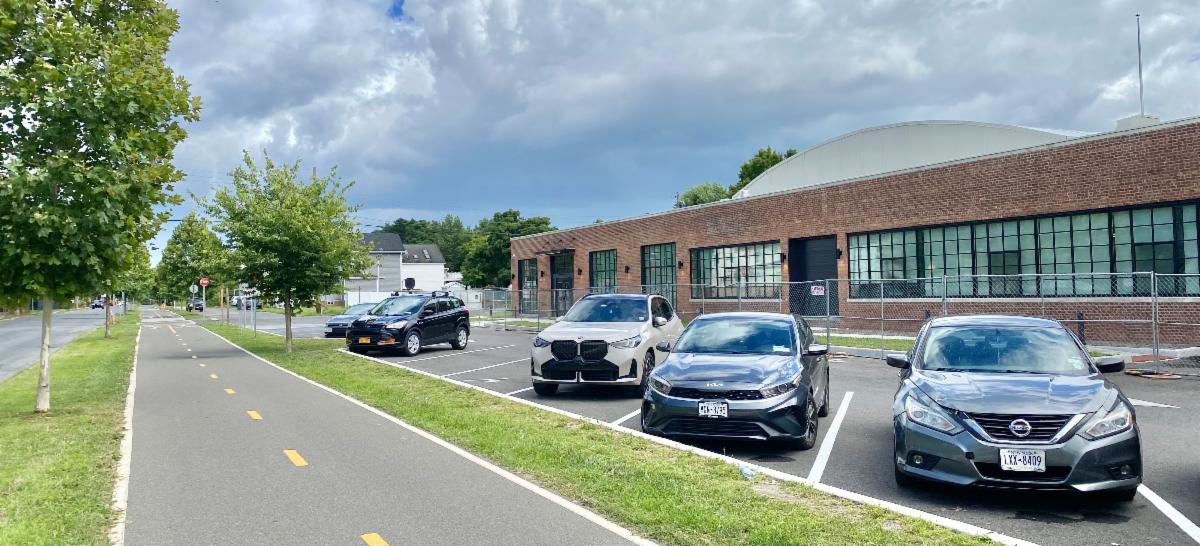
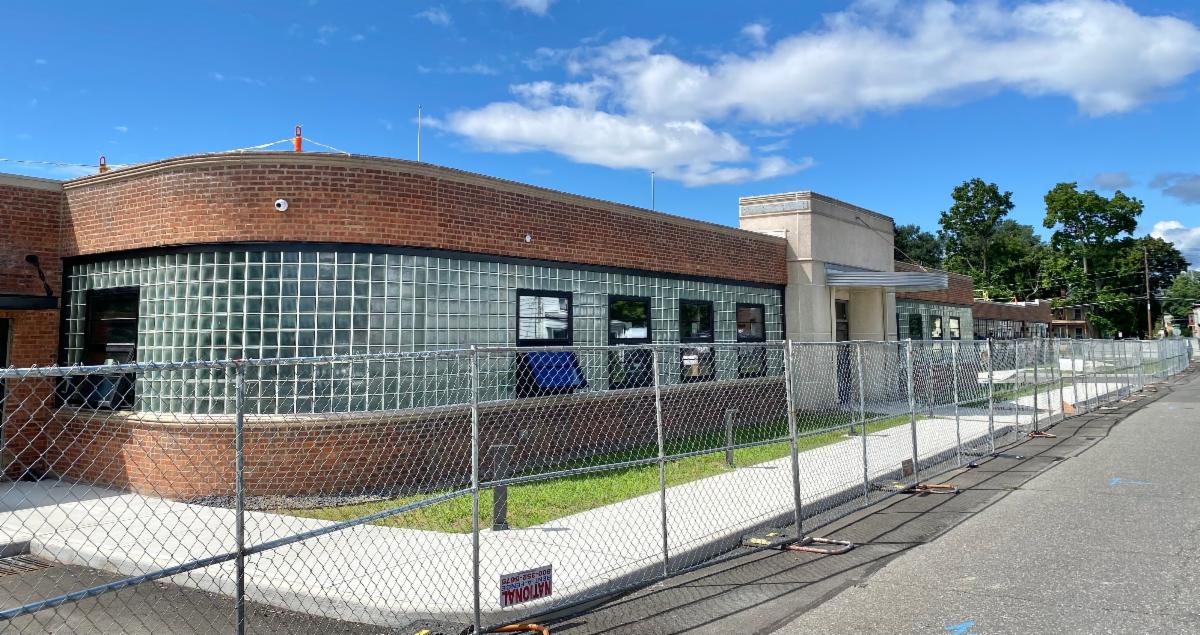
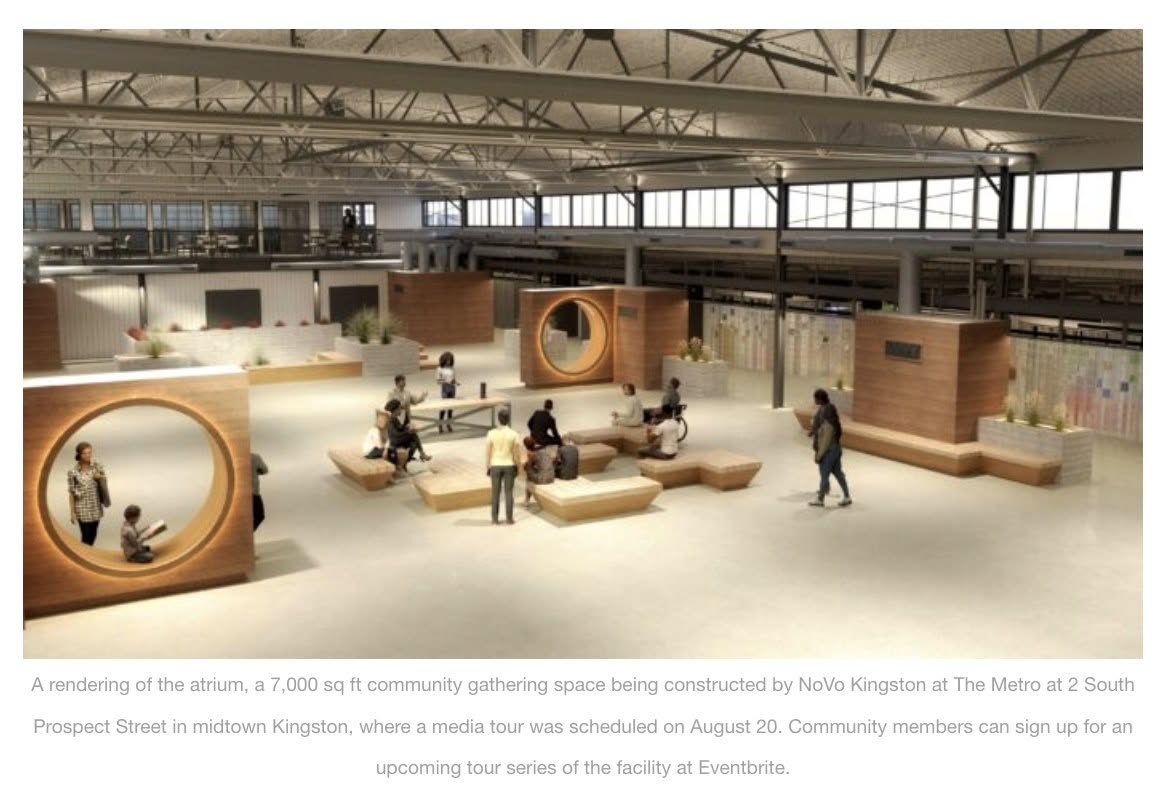
A former manufacturing facility on Greenkill Avenue known as The Metro will open in phases as soon as the end of 2026, the complex’s owner, the NoVo Foundation, announced during a construction tour Thursday.
The 70,000-square-foot building will have spaces for gathering, eating food and creating a wide array of objects, as well as places for learning and creativity, foundation officials said.
NoVo Foundation Executive Director Megan Weiss-Rowe said the project represents a $55 million investment in Kingston during a tour that was also led by Peter Buffet, who controls the foundation and its Kingston-focused arm, NoVo in Kingston, with his wife, Jennifer.
While the Metro project was originally focused on young people, Buffett and Rowe pointed out during the tour a number of facilities that will also offer projects for all ages.
Buffett said the project will open in phases over a course of more than a year.
| | | |
Support local independent journalism - subscribe to a local news outlet today
Supporting local journalism is essential for maintaining transparent local government, fostering community identity, and strengthening democracy. Local outlets hold officials accountable, provide crucial information on schools and businesses, and encourage civic engagement, acting as a vital, verifiable counterweight to polarized national media.
| | |
ULSTER COUNTY IDA
COMMEMORATES 50 YEARS OF SERVICE
| | |
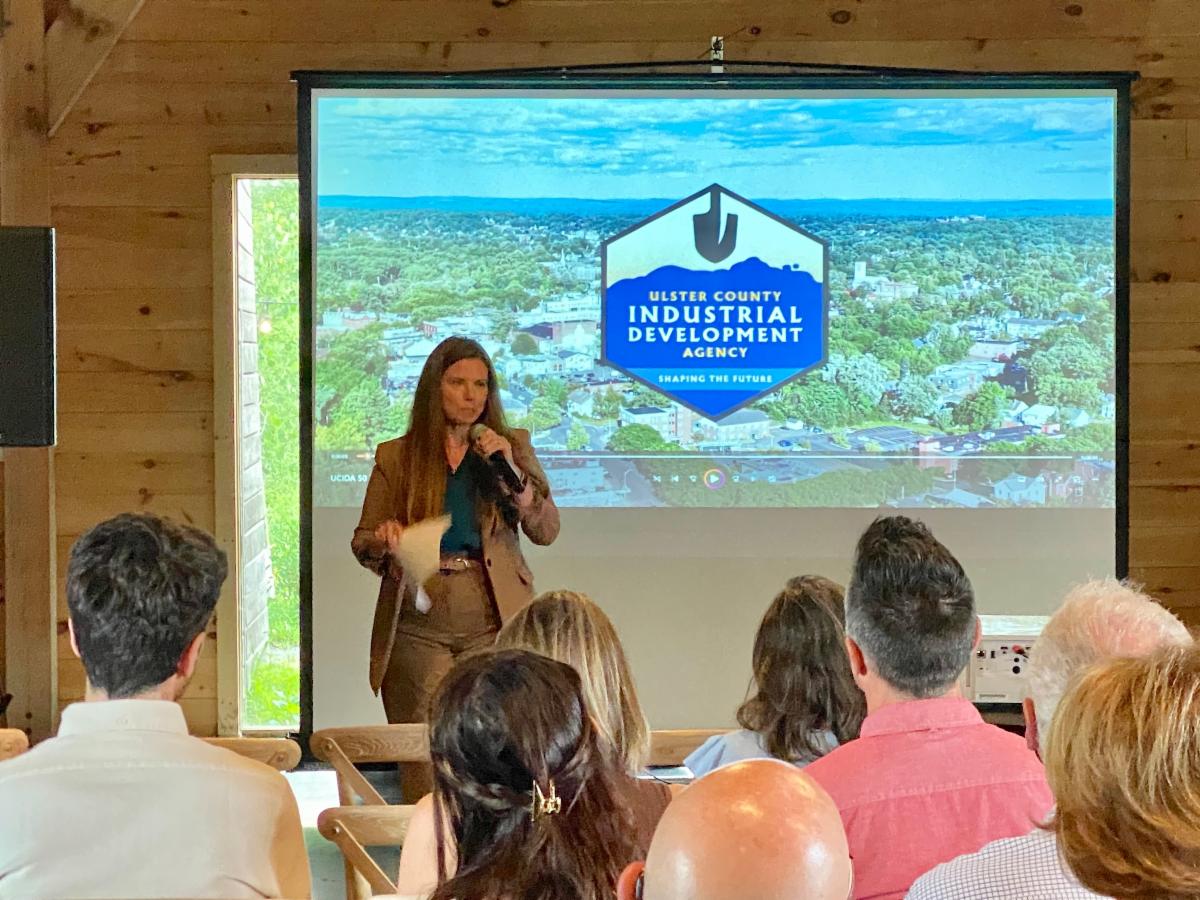
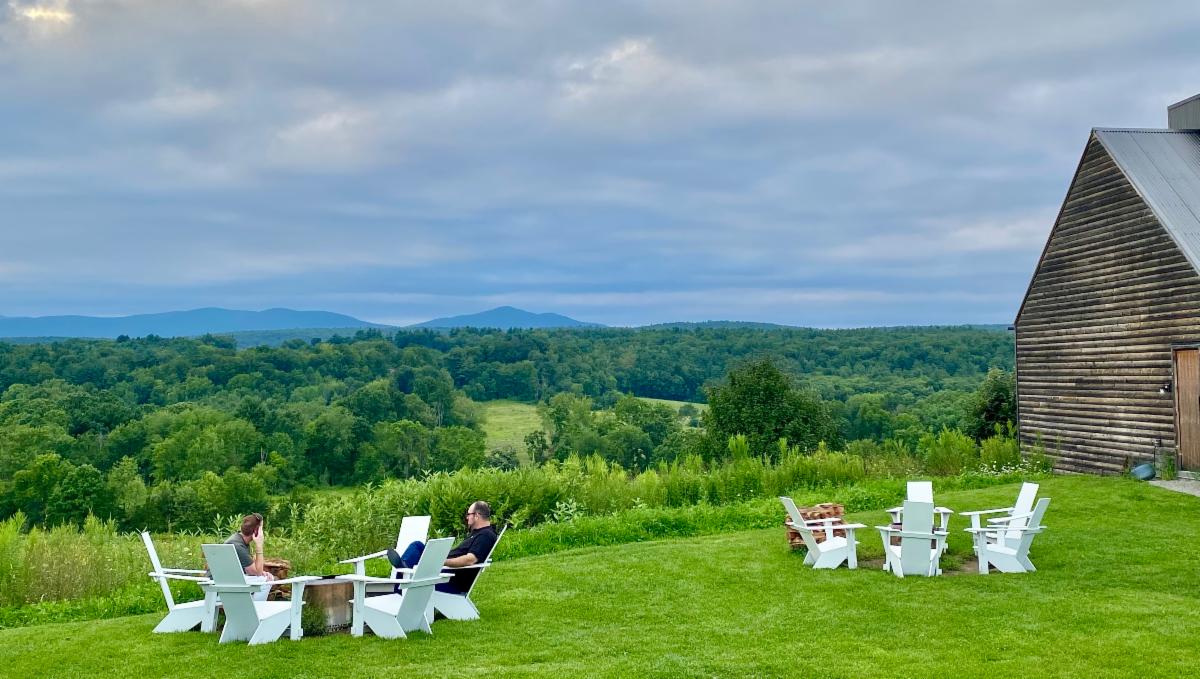
On August 5th the UCIDA commemorated its 50th anniversary of public service helping grow local jobs, tax base and opportunities in Ulster County. The mixer and short presentation was hosted at one of the developments supported by the UCIDA, the beautiful Inness retreat and hotel in Accord.
Congratulations to Executive Director Hillary Nichols, Board Chair Michael Hamm, and everyone part of the UCIDA team, and thank you for your dedication to our community!
| |
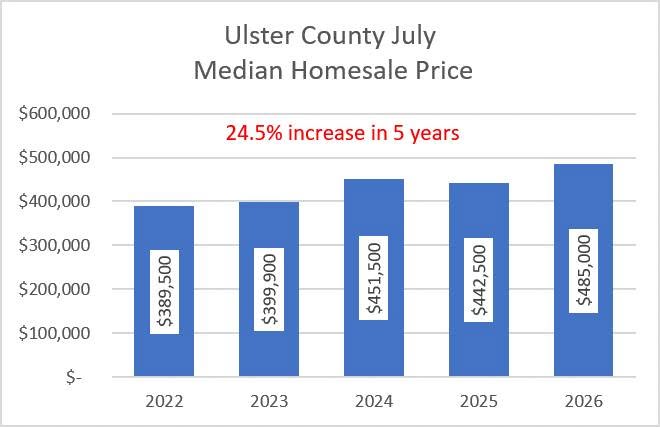
HOUSING PRICES
(source: Ulster County Comptroller's Office)
| | |
Ulster Strong is a non-profit advocating a pro-growth agenda that balances good jobs and investment opportunities with the environment and sustainability.
ULSTER STRONG SUPPORTS
Adding good-paying jobs;
Diversifying the local economy so it’s more resilient;
Encouraging new investment;
Balancing the environment with local economic needs;
Growing local tax base to support community services including schools, infrastructure and emergency services;
Updating planning and development procedures to be more
transparent and timely.
MEMBERSHIP INQUIRIES
| | Our Company | Contact Us | FAQs | Privacy Policy |
| | | |