|
Welcome to the August Newsletter!
Thanks for opening! It's been a couple of months since our last edition, but we're back with a fascinating story and some outstanding auction pieces to share.
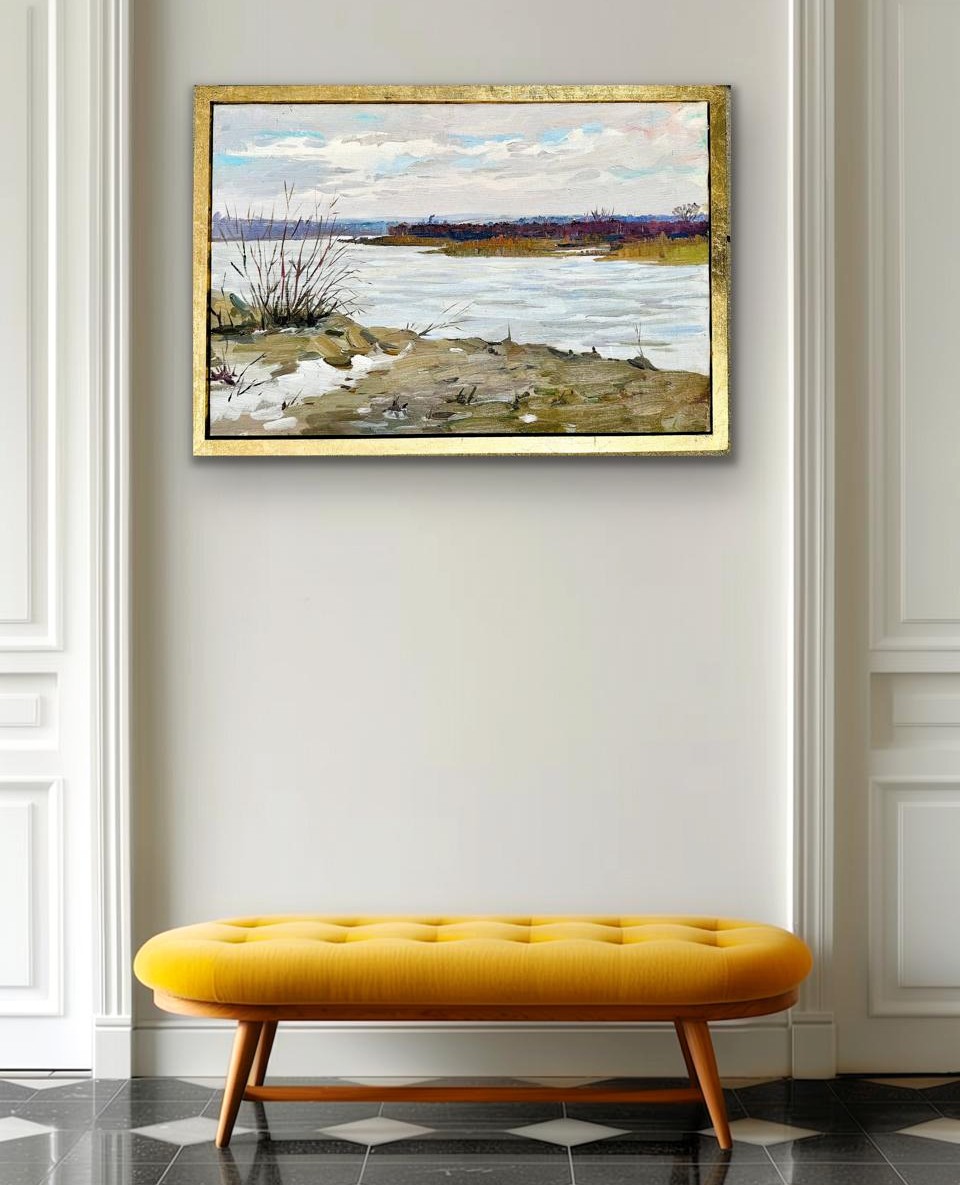
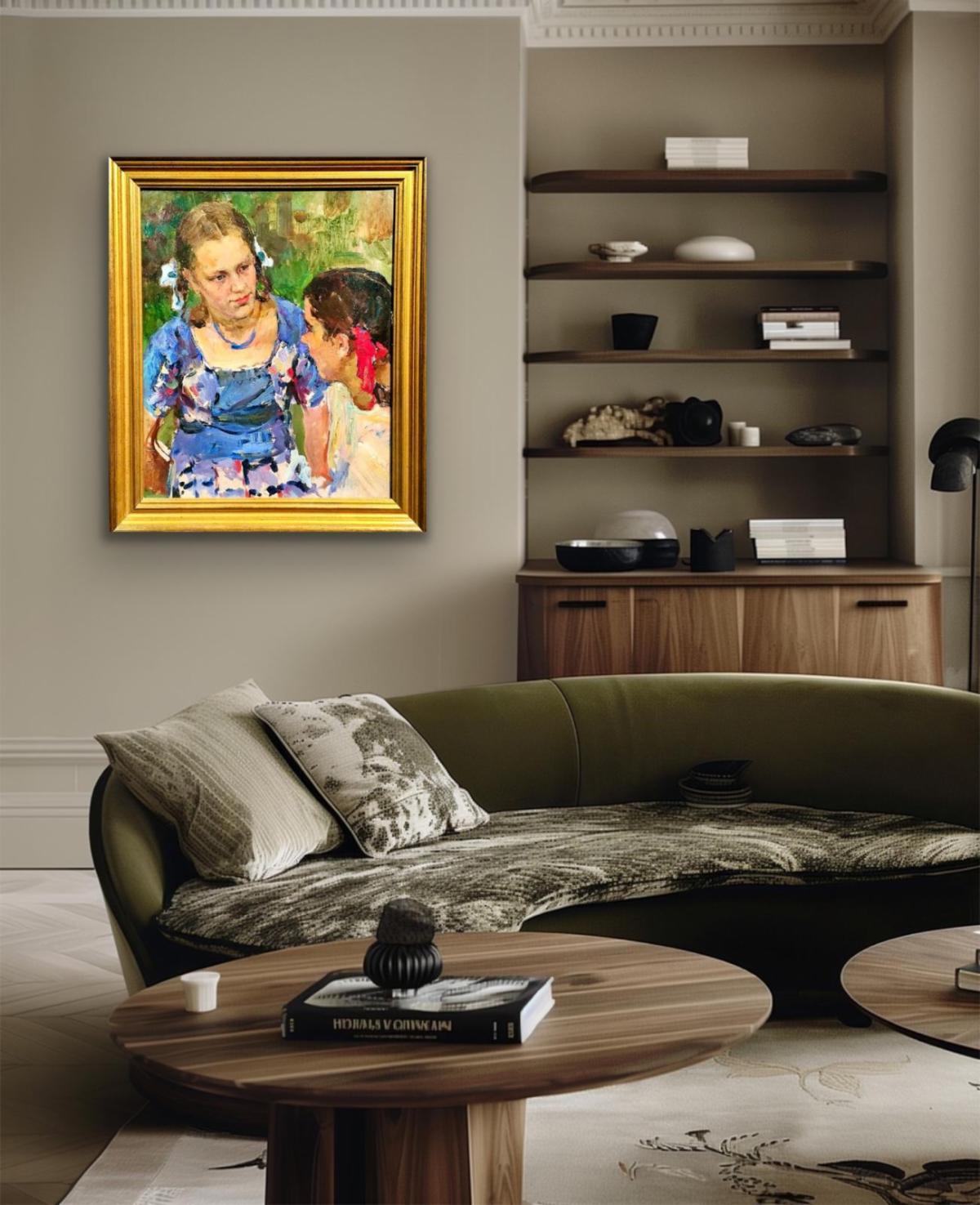
The highlights are first, August's No-Reserve Silent Auctions, featuring two beautiful works up for bid: Nina Volkova's quietly atmospheric "Ukrainian Marsh" and Mikhail Platunov's tender, mid-century portrait "Conversation."
Second, the Gallery spotlights some of our noted Ukrainian Artists, featuring some amazing landscapes and genre scenes from Igor Popov, Mikhail Akinshin, and Yuri Smirnov.
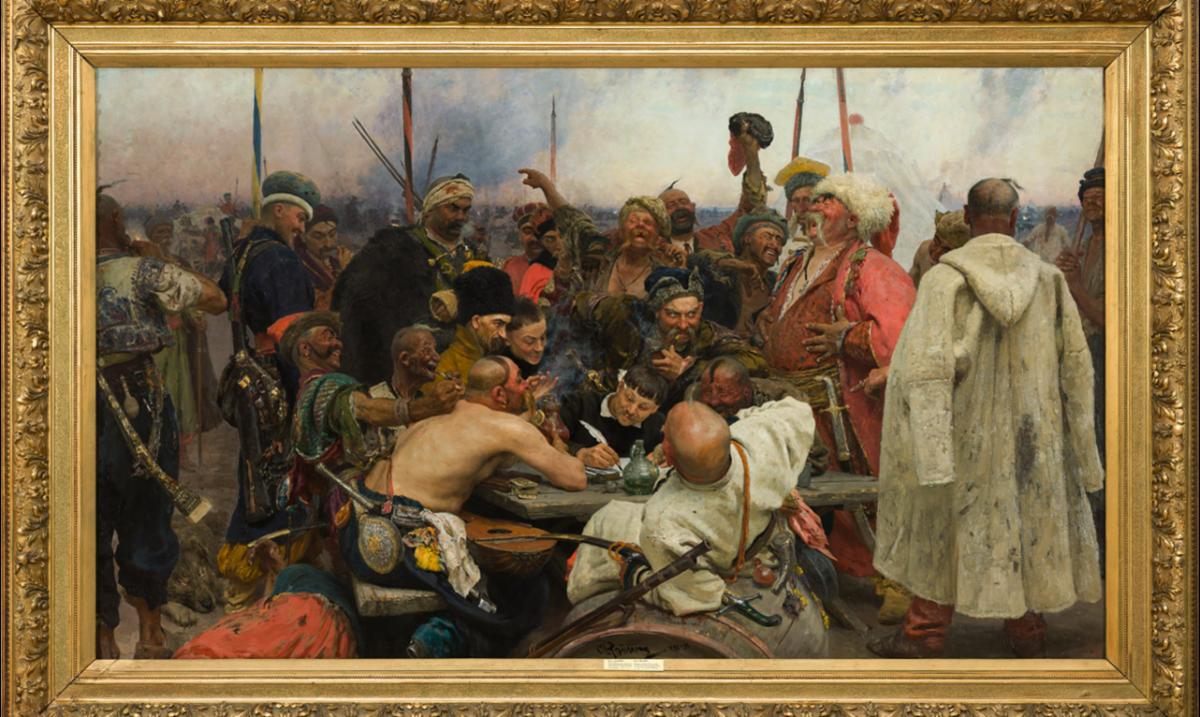
Finally, this issue dives into the painting at the center of a much larger Ukraine-Russia cultural war: Ilya Repin's "Reply of the Zaporozhian Cossacks." A celebrated masterpiece of 19th-century Russian art, it's taken on an unexpected new life during the current war, with Ukrainian soldiers recreating the scene themselves. We unpack the story behind the painting, the debate over whether Repin belongs to Russia or Ukraine, and the deeper, centuries-old question of where these two nations' shared roots actually begin.
Read on for the full story, artist biographies, and everything you need to know to place your bids.
|
Explained: The painting at the center of a larger Ukraine-Russia cultural war
When world renowned painter Ilya Repin unveiled his painting, "Reply of the Zaporozhian Cossacks", in 1891, he probably didn't anticipate that it would one day become a symbol of Ukrainian resistance to Russian incursion. But now, more than four years into Russia's full-scale invasion, Repin's painting has become a rallying cry: so much so that some Ukrainian soldiers are painstakingly recreating it.
The original painting depicts a legendary (perhaps apocryphal) event around the year 1676, when Ukrainian Cossacks, after defeating Ottoman forces, sent an insult-filled, vulgar letter in response to Sultan Mehmed IV's demand for their surrender. In the painting, a group of hardened warriors laughs with colorful glee as they compose the letter. Read More below.....
| | |
AUGUST'S NO RESERVE
SILENT AUCTIONS
| | |
Volkova, Nina
"Ukrainian Marsh"
15¾'' x 23½'',
1961, Oil on Canvas, Framed
Estimated $2,000 to $3,000 Current Bid $250 by J. Haney, Next Bid is $500
-Read More Below
| | |
Platunov, Mikhail Georgievich
"Conversation"
19¾'' x 15¾'',
1952, Oil on Board Framed,
Estimated $2,000 to $2,500. Current Bid $250 by L Juarez, the Next Bid is $500
-Read More Below
| | |
First and foremost, we extend our congratulations to the winning bidders of the last Silent Auction!
For our August Silent Auctions, we proudly present a rare opportunity to add two beautiful works by highly acclaimed artists to your collection.
The first, a vibrant, confident, colorful work, by the noted artist Mikhail, G. The first, a vibrant, confident, colorful work, by the noted artist Mikhail, G. Platunov, "Conversation". The second a magical landscape, masterfully painted by the skilled Nina Volkova "Ukrainian Marsh."
We are thrilled to extend an invitation to you to place bids in August's exclusive auction. We deeply appreciate everyone who participated and placed bids in the last auction.
| | |
Platunov, Mikhail Georgievich
"Conversation"
19¾'' x 15¾'', (50 x 40 cm), 1952, Oil on Board Framed,
Estimated $2,000 to $2,500. Current Bid 250 by S. L. Juarez, the Next Bid is $500
| | |
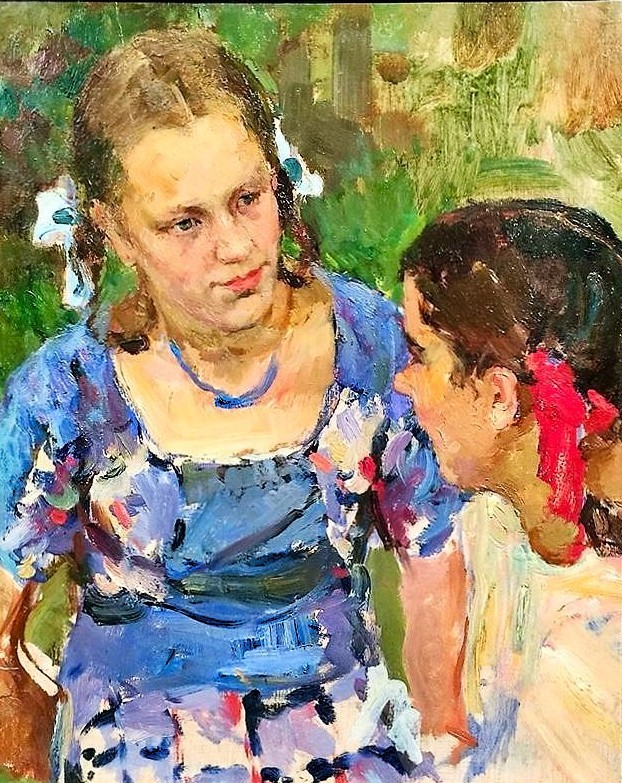
"Conversation" — has a nice, confident energy to it — very much that mid-century Soviet portrait style with an Impressionist loosening around the edges.
The subject, two young girls caught mid-secret. One's facing us head-on, the other's turned away — all we get of her is an ear, a red ribbon, and a tumble of dark hair. That's actually the smartest move in the painting: instead of two faces competing for attention, we get one girl's expression to read and ones is a total mystery. It makes you feel like you're eavesdropping, trying to guess what's being said just from that slightly wary, thoughtful look on the first girl's face.
The painting highlights several interesting contrasts. The dress and background are loose and splashy, confident strokes of blue, white, hits of pink and red thrown down fast. But the face slows way down: soft, careful blending in the skin, real volume in the cheeks and brow. That push-pull between a tightly rendered face and a loosely thrown-together dress is an old trick, but it works — your eye stays locked on her expression.
The painting portrays a real tenderness between two close friends. This is that Russian/Soviet genre tradition of catching kids in an actual unposed moment rather than posing them for a "cute kids" picture. She's not performing for the painter — she looks genuinely absorbed, a little guarded, listening. That's what gives it some real emotional honesty instead of feeling decorative.
"Conversation" is a warm, confidently painted piece — a good example of mid-century Soviet realist portraiture with an Impressionist touch that would make a great addition to any collection!
| | |
Anatoly Ivanovich Platunov (Platunov) 1930-2001
(Translated from the original Russian)
Anatoly Ivanovich Platonov (1930–2001)
Born October 18, 1930 in Kovrov, Vladimir Oblast, and died December 17, 2001 in Ufa. After the war his family moved to Vilnius, where he studied privately with painter Vytautas Varanka before enrolling in the painting faculty of the Lithuanian SSR State Art Institute, graduating in 1955. That year he settled in Ufa, drawn by a lifelong ambition: to paint the Ural Mountains — among the oldest on Earth — as a witness to the origins of human culture. Alongside his "Ancient Urals" cycle, he pursued an extensive study of the Bashkir people whose culture is bound to those mountains, producing numerous sketches of Bashkir women, whom he saw as the keepers of their people's traditions.
He worked for the Bashkir Artistic-Production Combine until 1984 and remained in Ufa for the rest of his life. He joined the Union of Artists of the USSR in 1966 and the Union of Artists of Bashkortostan in 1961, and was named Honored Artist of the Bashkir ASSR in 1990.
Platonov's realism is defined by a distinctive fusion: the colorful, painterly sensibility of the Lithuanian school combined with the rigorous draftsmanship of the Russian academic tradition. This is especially evident in his portraits, his most complex body of work. For Platonov, a sitter was never a generic type but a specific individual whose "topological" character — their inner life, expressed above all through the eyes — he sought to capture. His portrait subjects appear capable of dialogue, achieved through simple compositions paired with a complex, nuanced color palette, rendered in a classical style free of showy contrast or deformation.
His work is held in museum, gallery, and exhibition collections, and is recognized by admirers of classical Russian painting across Russia, Western and Central Europe, North America, Japan, Australia, and New Zealand. Artists like Platonov exemplify a broader pattern in Soviet art: painters trained in the Baltic republics who carried that region's chromatic sensibility into provincial Russian centers far from Moscow and Leningrad, giving cities like Ufa a richer, more independent artistic culture than they might otherwise have had.
| | |
Volkova, Nina
"Ukrainian Marsh"
15¾'' x 23½'', (40 x 60 cm)
1961, Oil on Canvas Framed
Estimated $2.000 to $3.000, the Current Bid $250 by J. Haney, Next Bid is $500
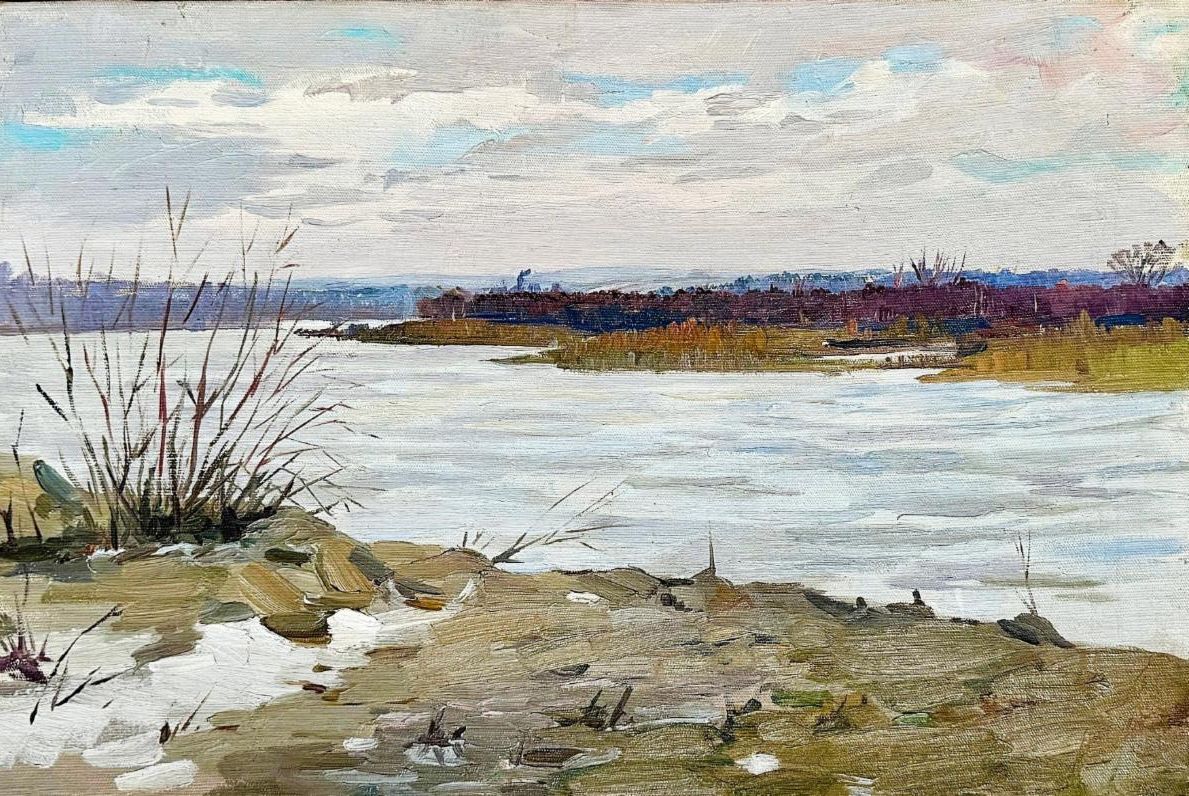
"Ukrainian Marsh" belongs to the distinctive tradition of Russian and Ukrainian planar landscape painting — a school shaped by two centuries of academic training, yet insulated from the pressures of the commercial art world by both the Soviet system and the sheer scale of the region's untouched wilderness. That isolation, paired with the singular quality of light found in the forests and marshlands of the era, gave rise to a generation of landscape painters with a truly unique visual language.
"Ukrainian Marsh" captures this sensibility at its height. Rendered in a deep, muted palette, the painting conveys the starkness of the winter landscape, while a flowing river cutting through the scene hints at the coming thaw — a quiet suggestion of spring and renewal beneath the barren surface. The tension between stillness and movement, cold and coming warmth, gives the piece its emotional pull.
The palette is subdued and silvery — grey-lavender sky, pewter water, bleached winter grass — putting it somewhere in that raw in-between season of late autumn or early spring. That's not an accident: Russian and Ukrainian landscape painters, following the Itinerant tradition of Levitan and Savrasov, were drawn to exactly this kind of unglamorous, transitional light. It's melancholy rather than picturesque.
In the foreground, quick, calligraphic strokes of reeds and dry grass frame the scene and pull the eye back across the water toward a low, dark tree line — a classic Ukrainian river and composition. The loose, direct handling and close attention to the marshy ground itself — patches of old snow, waterlogged earth, scrubby growth, make "Ukrainian Marsh" a strong and representative example of mid-20th-century Ukrainian landscape painting, by one of the era's foremost artists.
| | |
Volkova, Nina Pavlovna, 1917-1993
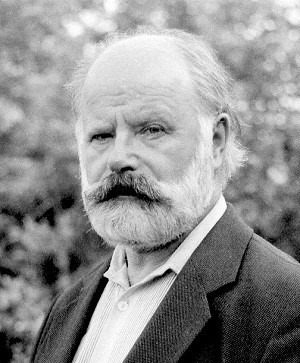
Volkova is a solid, representative figure of the mid-century Ukrainian Soviet school — not a radical innovator, but a technically accomplished, officially recognized painter whose landscapes capture the specific light and terrain of the Dnieper region where she spent most of her career. A work like "Ukrainian Marsh" is valued today less for grand historical significance than as an honest, well-crafted document of place and of a particular mid-century Soviet-Ukrainian painterly sensibility — the kind of picture that rewards close attention to paint handling more than it carries overt political or symbolic weight.
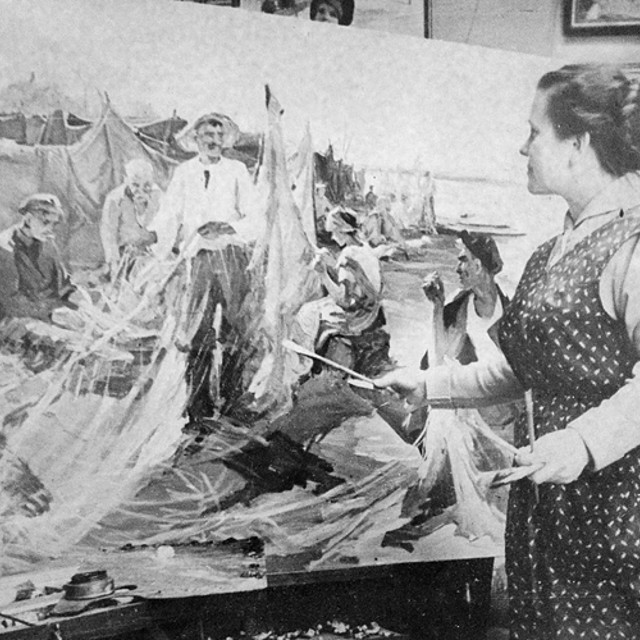
Born January 28, 1917 in the village of Uber, Kirov Region, Volkova graduated from the Dnipropetrovsk Art College in 1936, studying under M. Panin, and from the Kiev Art Institute in 1946, where her teachers were K. Eleev, K. Trochimenko, and M. Sharonov. She began exhibiting in Republican shows in 1947 and in All-Union and international exhibitions from 1948, and was a member of the Union of Artists of the USSR. Working primarily in easel painting, she was recognized as a master of genre painting, still life, and landscape, with a particular gift for achieving the intense open-air (plein air) impression central to landscape painting. She lived and worked in Kiev until her death in 1993.
Her best-known works — "In the Days of the German Occupation" (1946), "Girls of Krasnodon" (1947), "On the Day Off on the Dnieper" (1951), "Farmers' Collective Farm" (1960), and a portrait of General F. T. Umansky (1964–65) — trace the standard arc of a Soviet Socialist Realist painter of the war generation: wartime memory painting, Komsomol/heroic-youth subject matter (the Krasnodon girls were young Soviet partisans executed by the Nazis, a common postwar theme), collective-farm genre scenes, and official portraiture.
Her posthumous reach extended well beyond Ukraine, with exhibitions in England (1998), a solo show in Germany (1999), "From Russia to Russia" in Kaliningrad (2001), the International Art Salon (2007), Slovakia (2009), and Luxembourg (2011, at the RCSC Exhibition Hall). Her work is held in museum, gallery, and private collections in Ukraine and abroad, and she is listed in Matthew Bown's Dictionary of Twentieth Century Russian and Soviet Painters.
| |
|
We extend an invitation to place bids in August's exclusive auctions. We deeply appreciate everyone who participated and placed bids in the last auctions.
The current high bids for each painting are all just $250! The next bids are $500, followed by minimum bidding increments of $250. Remember, there is no reserve, at the end of the auction the high bid wins! Bids will be taken via telephone, or e-mail until 7:00 pm MST, Friday, September 4th. Follow all the bidding updates on the Gallery's website and view the works in person by appointment!
Note that you may place a maximum bid and the Gallery will bid on your behalf up to your maximum. By placing a maximum bid, you will be assured you are not out bid at the last minute.
Please, e-mail bids only to info@McCartheyGallery.net and make sure your receive confirmation of your bid. Note that you may place a maximum bid and the Gallery will bid on your behalf up to your maximum. By placing a maximum bid you will be assured you are not out bid at the last minute.
Tel: 801-755-7072
email: info@McCartheyGallery.net
website: www.McCartheyGallery.net
We look forward to your participation and wish you the best of luck!
Warm regards,
Stephen Justesen
| |
Explained: The painting at the center of a larger Ukraine-Russia cultural war
When world renowned painter Ilya Repin unveiled his painting, "Reply of the Zaporozhian Cossacks", in 1891, he probably didn't anticipate that it would one day become a symbol of Ukrainian resistance to Russian incursion. But now, more than four years into Russia's full-scale invasion, Repin's painting has become a rallying cry: so much so that some Ukrainian soldiers are painstakingly recreating it.
The original painting depicts a legendary (perhaps apocryphal) event around the year 1676, when Ukrainian Cossacks, after defeating Ottoman forces, sent an insult-filled, vulgar letter in response to Sultan Mehmed IV's demand for their surrender. In the painting, a group of hardened warriors laughs with colorful glee as they compose the letter.
| |
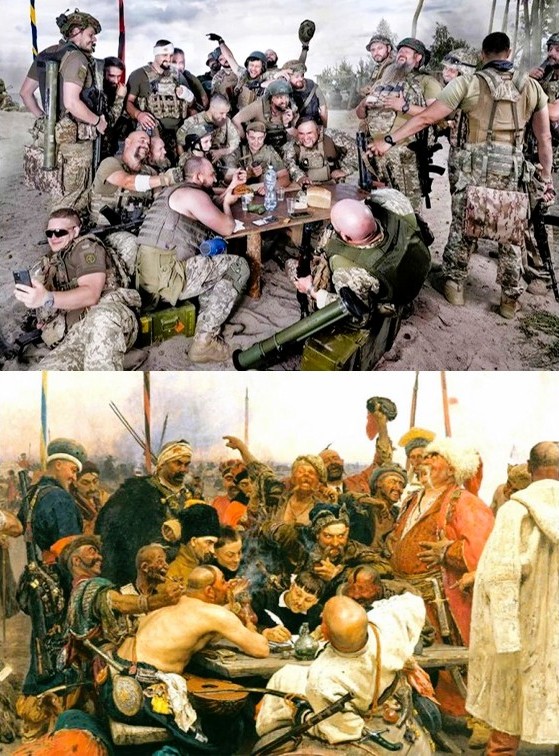
The classic painting and a modern take. Below Repin's "Reply of the Zaporozhian Cossacks." Above, Emeric Lhuisset's "From far away, I hear the Cossacks' reply."
Today, as Russian and Ukrainian forces fight over the territory once trod by these same Cossacks and not far from Repin's birthplace, the painting carries a new level of meaning.
A photographic re-creation of the 19th-century painting has become an unlikely source of inspiration for the Ukrainians fighting against Russian troops in the ongoing war. French photographer Émeric Lhuisset staged and clicked the photo featuring Ukrainian soldiers, sharing it on his Instagram account in September 2023.
The central figure, holding a walkie-talkie in place of Repin's scribe, is none other than Roman Hrybov, the Ukrainian border guard made famous by dismissing a Russian warship with an expression that wouldn't be out of place in the Cossacks' legendary message. (That warship, the Black Sea flagship, was later sunk, by the way.)
According to a report this month from The New York Times, “For the past year, the image has been widely shared online by Ukrainians and praised by government officials, who displayed it recently in the capital’s leading exhibition center because it has struck at the heart of the Ukrainian identity
See a small collection here.
The original painting by Repin, measuring some 3.6 meters in width, is held at the State Russian Museum in St. Petersburg, having been purchased by Russian tsar Alexander III in 1892. A later version of the painting, which remained unfinished, is held by the Kharkiv Art Museum.
| |
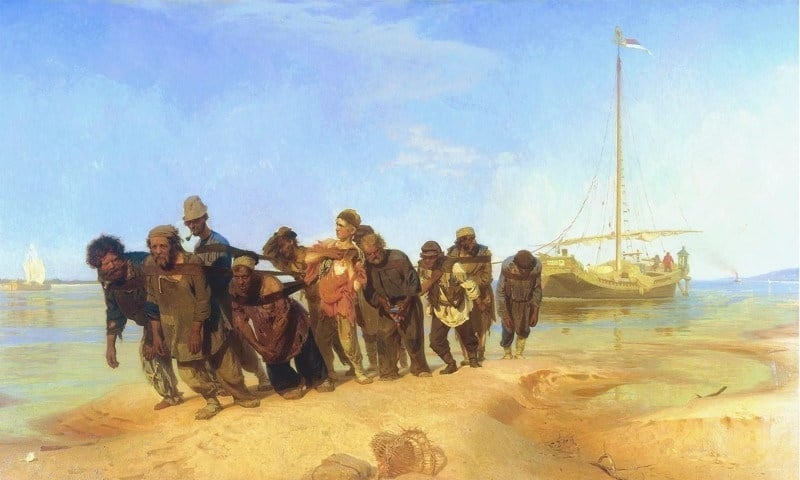
Ilya Repin, "Barge Haulers on the Volga"
1870–1873, Oil-on-canvas, 151.8 in × 111 in
State Russian Museum, St. Petersburg
| |
Ilya Repin: Russian Painter or Ukrainian Son?
The short answer: he's genuinely both — born and raised in what's now Ukraine, but professionally shaped by and celebrated within the Russian imperial art world. Most historians treat him as a Ukrainian-born artist who became the central figure of Russian Realism, rather than picking one label over the other.
|
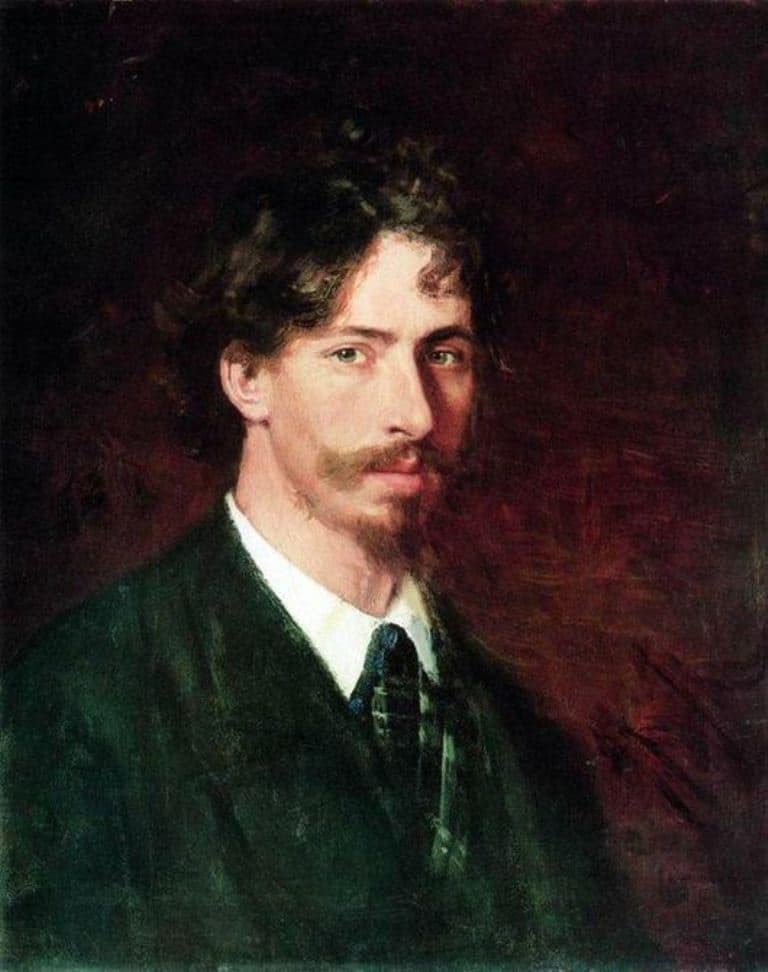
Who Was Repin?
self-portrait to the left
Born July 24, 1844 in Chuhuiv, Ukraine (Russian Empire); died September 29, 1930 in Kuokkala, Finland.
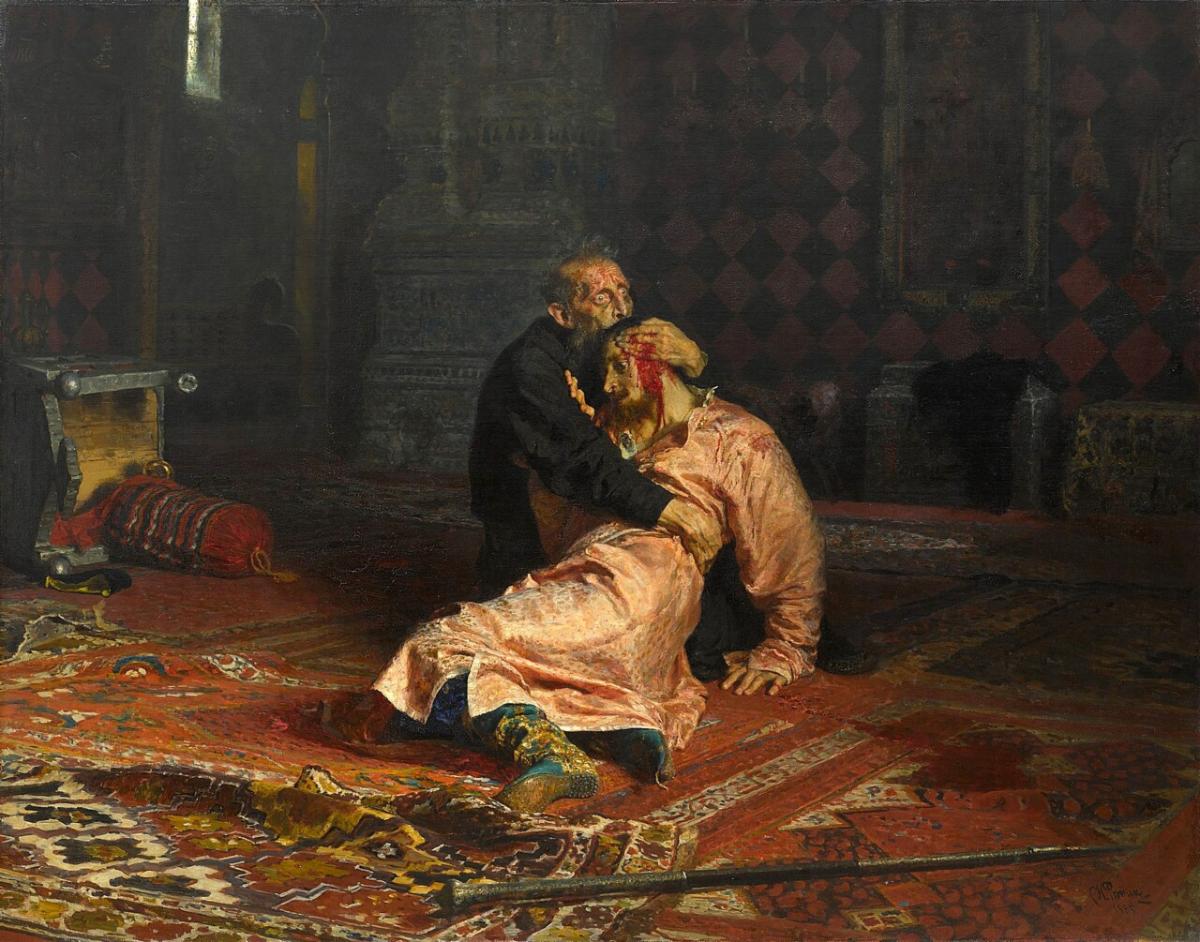
Ilya Yefimovich Repin (1844–1930) is widely regarded as one of the greatest painters of the Russian Empire and among the most important Realists in European art history. Works like "Barge Haulers on the Volga", "Ivan the Terrible and His Son Ivan", and "Zaporozhian Cossacks Writing a Letter to the Turkish Sultan" are cornerstones of the Russian canon, hanging in the Tretyakov Gallery and the Russian Museum.
A master of historical and genre painting as well as portraiture, Repin brought deep psychological insight to his work, along with a rare ability to turn the everyday into the epic and to find the universal in a single scene — while giving each subject striking individuality. Often called the encyclopedist of a reforming Russia, he devoted much of his output to depicting ordinary people; "Barge Haulers on the Volga", his most iconic work, lifts a mundane subject onto a socio-philosophical plane.
Repin left behind more than five hundred works — paintings, drawings, and sketches — now housed in major museums worldwide, including the Tretyakov Gallery, the State Russian Museum, and New York's Metropolitan Museum.
The Case for "Russian"
Repin spent most of his working life in the cultural centers of the Russian Empire. He trained at the Imperial Academy of Arts in St. Petersburg, became a leading member of the Peredvizhniki (the "Wanderers," a realist movement central to Russian art history), and produced the bulk of his most famous work while living in Russia proper, depicting Russian historical and social subjects. In the standard Western and Russian academic framing, he is catalogued as a "Russian painter," and this remains the default description in most encyclopedias and museum collections.
The Case for "Ukrainian"
The case for Ukraine's claim rests on birthplace, heritage, and lifelong connection:
-Repin was born in Chuhuiv, in the Kharkiv region of what is now Ukraine — at the time part of the Russian Empire, but ethnically and culturally a Ukrainian (then often called "Little Russian") area.
-He frequently returned to Ukraine throughout his life, maintained close ties to Ukrainian culture, and painted numerous Ukrainian subjects — his Zaporozhian Cossacks painting is explicitly about Ukrainian Cossack history and identity, painted with deep affection for Ukrainian folklore and character.
-He is on record expressing pride in his Ukrainian roots and referred to himself using the term "khokhol" (a folk term for Ukrainians) with evident fondness, and corresponded in both Russian and Ukrainian contexts.
-After 1918, his estate at Kuokkala fell just outside Soviet borders (in Finland), and he chose not to return to the USSR — a fact sometimes cited by Ukrainian commentators to suggest ambivalence toward the Russian/Soviet state, though this is more directly tied to his rejection of Bolshevism than to a Ukrainian political stance.
Ukrainian institutions, including museums in Kharkiv and Chuhuiv (where his childhood home is preserved as a museum), actively claim him as part of Ukrainian cultural heritage, and Ukrainian scholars have increasingly pushed to recontextualize him as a Ukrainian-born artist whose work was shaped by his origins, even though his career unfolded within the Russian imperial art establishment.
| |
Ilya Repin, "Ivan the Terrible and His Son," 1883- 1885, 78.5" × 100", The Tretykov Gallery
Ivan the Terrible, ruled as the Grand Prince of Moscow from 1533 and became the first Tsar of Russia in 1547 until his death in 1584. His reign transformed Russia into a sprawling empire through major territorial expansions, but it was marked by extreme political centralization, paranoia, and brutal state terror.
|
Why the Dispute Exists
This tension reflects a broader pattern: the Russian Empire (and later the USSR) absorbed the artistic, literary, and scientific output of many peoples within its borders and folded it into a unified "Russian" cultural narrative. Ukraine's post-1991, and especially post-2014 and post-2022, cultural policy has involved reclaiming historical figures — Repin among them — who were born in Ukrainian lands but whose work was historically categorized as Russian by default. This is similar to ongoing debates over figures like Nikolai Gogol (born in Ukraine, wrote in Russian) or Kazimir Malevich (born in Kyiv, worked across the Russian and Soviet avant-garde).
A Reasonable Answer
Most art historians would say Repin doesn't fit neatly into either box: he was ethnically and by birth Ukrainian, professionally and stylistically shaped by the Russian imperial art world, and personally connected to both cultures throughout his life. It's accurate to describe him as a Ukrainian-born artist who became the leading figure of Russian Realist painting — a dual identity rather than an either/or, and one that mirrors the broader intertwined history of the two nations during the imperial period.
| The Shared Roots of Russia and Ukraine: A Short History Kievan Rus': The Common Ancestor | |
The Repin dispute is really a smaller version of a much older argument: where do Russia and Ukraine actually come from, and whose story is whose?
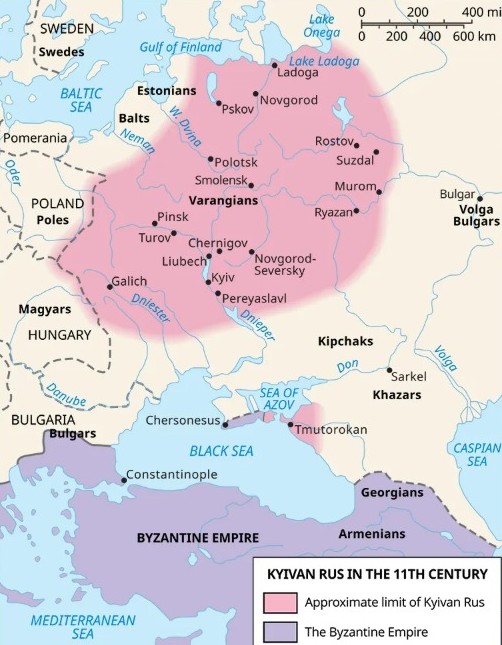
Both nations trace their roots to Kievan Rus', an East Slavic federation that coalesced around the 9th century. Per the traditional (and debated) account in the Primary Chronicle, Varangian (Viking) princes came to rule the Slavic tribes of the region, founding the Rurikid dynasty first in Novgorod and then, from the late 9th century, in Kyiv — which became the political, religious, and cultural capital of the civilization for roughly three centuries. It was there that Prince Vladimir adopted Orthodox Christianity in 988, an event that shaped the religious identity of the entire East Slavic world, and under rulers like Yaroslav the Wise, Kievan Rus' became one of the largest and most connected states in Europe.
Fragmentation and Divergence
That unity didn't last. Rival principalities splintered apart in the 12th century, and the Mongol invasions of the 1230s–40s devastated Kyiv itself. From there, the lands of Rus' diverged: the northeastern principalities around Moscow fell under Mongol suzerainty and slowly grew into the Grand Duchy of Moscow and, later, Tsardom of Russia, while the southwestern lands around Kyiv
and Galicia-Volhynia were absorbed into the Grand Duchy of Lithuania and then the Polish-Lithuanian Commonwealth — developing the distinct linguistic and cultural path that became Ukrainian identity. The two were reunited under one state only centuries later, beginning with the 1654 Treaty of Pereyaslav and completed by Russia's full annexation of Ukrainian lands by the late 18th century.
| |
The Contested Question of "Origin"
Whether Russia's origins are "Ukrainian" depends heavily on framing, and this is a genuinely disputed point among historians and a politically charged one between the two nations today:
The case that Russia originates in Ukraine: Kyiv, not Moscow, was the original capital and cultural heart of Rus'. Moscow did not exist as a settlement until the 12th century and only became politically significant after Kyiv's decline. In this view, Russia's Rus' heritage was inherited from a civilization whose historical geographic core is in modern-day Ukraine, making Kyiv (not Moscow) the "mother of Russian cities" in a literal sense.
-The case against a simple "Ukrainian origin" framing: Kievan Rus' was not a nation-state and did not correspond to modern Ukraine, Russia, or Belarus — all three nations claim descent from it, and 9th–13th century Rus' identity is not the same as any 21st-century national identity. Many historians argue it's more accurate to say Russia, Ukraine, and Belarus are three distinct nations that share a common medieval ancestor, rather than saying one is the "origin" of another.
This debate isn't merely academic — it has been actively used for political purposes. Russian state narratives (including arguments made by Vladimir Putin to justify the 2022 invasion) have claimed Russians and Ukrainians are "one people" descended from a shared Rus' civilization, denying meaningful Ukrainian distinctiveness. Ukrainian historians and much of Western scholarship push back on this, emphasizing that Ukraine has a continuous and distinct claim to the Kyiv-centered heartland of Rus', while Muscovite Russia developed later, further north, under very different (Mongol-influenced) conditions.
The Balanced View
Most non-partisan historians would put it this way: Kyiv was the founding capital of the medieval civilization from which both Russia and Ukraine descend, culturally and religiously. Calling Russia's origin "Ukrainian" overstates a modern national label onto an medieval, multiethnic polity — but noting that Kyiv preceded Moscow as the cradle of Rus' civilization is a plain historical fact, not a nationalist claim. Both nations have a legitimate claim to the Rus' inheritance; neither the Kremlin's "one people" narrative nor a simple "Russia is just an offshoot of Ukraine" narrative fully survives scrutiny.
| |
Shared Ground: The Historical, Cultural, and Linguistic Ties Between Russia and Ukraine
A Common Point of Origin
Set the political argument aside, and the historical ties are real and deep. Religion is probably the strongest thread: Prince Vladimir's conversion in 988 gave both peoples the same liturgical language (Church Slavonic), the same saints and monastic traditions — Kyiv's Monastery of the Caves was a spiritual center for the whole Orthodox East Slavic world — and, until 2018–2019, the
same ecclesiastical hierarchy, with the Ukrainian church under the Moscow Patriarchate for centuries before finally gaining independence.
Language tells a similar story. Russian and Ukrainian both descend from Old East Slavic, sharing a Cyrillic alphabet and enough vocabulary and grammar to be mutually recognizable, alongside a long history of bilingualism, especially in eastern and southern Ukraine. Linguists group Russian, Ukrainian, and Belarusian as three branches of one language family — related the way Spanish, Portuguese, and Italian are related, not identical.
Politically, the two histories stayed institutionally linked for centuries: the1654 Treaty of Pereyaslav, full incorporation into the Russian Empire by the late 1700s, and nearly seven decades together as founding Soviet republics after 1922, with shared governance, economic planning, and population movement between them. Figures often filed under "Russian" history — Gogol,
the philosopher Grigory Skovoroda — were born in Ukraine and shaped by both cultures, the same tension that surrounds Repin. Generations of intermarriage,migration, and shared cultural production followed.
Cultural and Family Ties
Centuries of shared statehood produced deep social interweaving: intermarriage across the two populations is common, many families have relatives on both sides of the border, and cultural products — literature, music, cuisine, folk traditions — often overlap or were shared during the Soviet period. Kyiv, Moscow, and other cities exchanged migrants, students, and workers continuously for generations.
None of that erases what's distinct. Ukrainian language, folklore, and national identity predate the modern Ukrainian state by centuries, and that identity was repeatedly suppressed under both imperial Russian and Soviet rule — a history of suppression that helped drive the modern push for cultural and political independence. The two nations share a common ancestor and centuries of
intertwined history; that closeness is exactly why the argument over who owns
that history, and figures like Repin, is playing out with such force today.
| |
"McCarthey Gallery's Featured Ukrainian Artist's | |
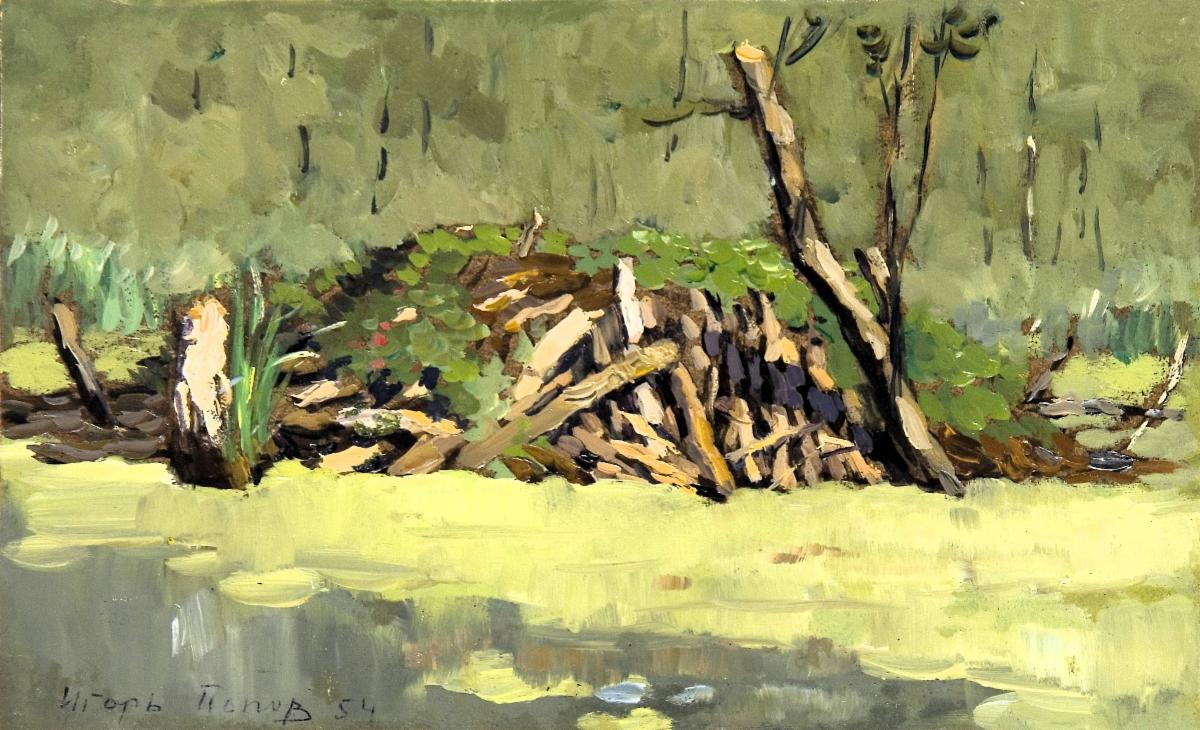
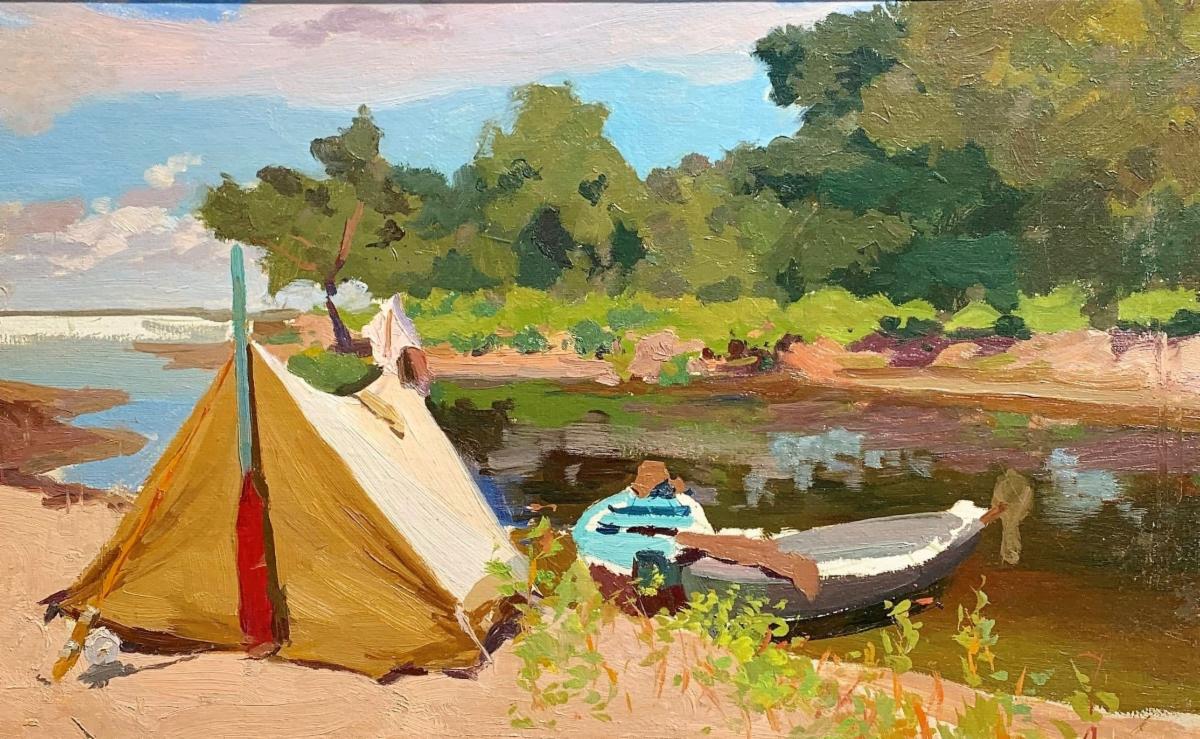
Popov, Igor Alexandrovich
"Beaver's Hut"
6¼'' x 9½'', (16 x 24 cm)
1954, Oil on Board
$2,000, Unframed
| |
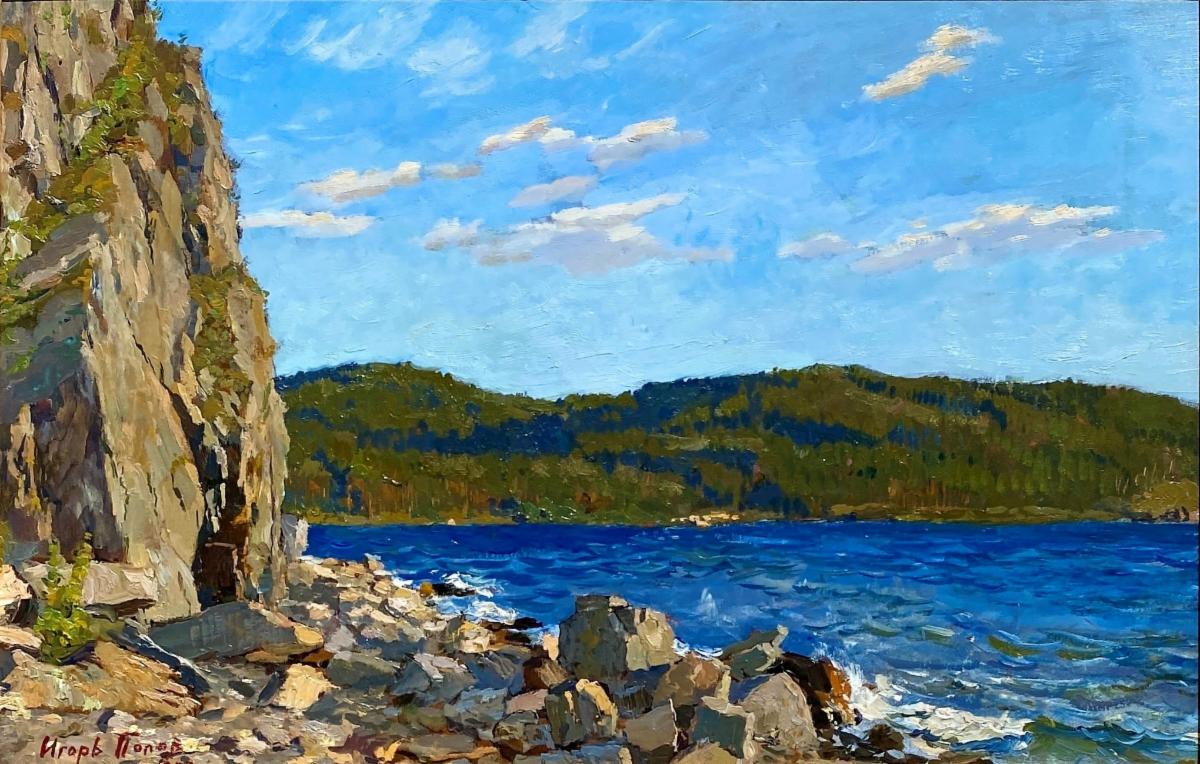
Popov, Igor Alexandrovich
"Windy Day on Lake Turgoyak"
15¼'' x 23¼'', (39 x 59 cm)
1953, Oil on Board
$9,500, Framed
| |
Igor Alexandrovich Popov (1927–1999)
Igor Popov was born in 1927 in Kharkov, Ukraine. He began his artistic education at the Moscow Intermediate Art School (1939–1945), then went on to study at the Surikov Moscow State Art Institute from 1945 to 1951, training under S. Gerasimov and V. Pochitalov. His cohort there was notably strong, including fellow students such as V. Popkov, V. Stozharov, V. Ivanov, I. Shevandronova, and N. Andronov, several of whom went on to become significant figures in Soviet art themselves.
Popov settled in Moscow, becoming active there from 1954, when he joined the Moscow branch of the Union of Artists of the USSR. He built his reputation primarily as a painter of cityscapes, becoming known as an outstanding master of the genre — his numerous depictions of Moscow were noted for their finesse and lyricism. Beyond cityscapes, he also worked in genre painting, portraiture, still lifes, and landscapes; a trip to Russia's North proved particularly inspiring, leading to a series of landscape works.
He was a regular participant in Moscow, republican, and All-Union exhibitions, including the major "Soviet Russia" exhibition in Moscow in 1960, and he also exhibited abroad alongside other Russian artists. In 1970, he received the Silver Medal from the USSR Academy of Arts for his portrait series "Fishermen of Galich." In the mid-1970s, he served as head of the Moscow Artists' Union, and in 1977 he was awarded the title of People's Artist of Russia. In 1985, he contributed to wall paintings for the Reception House.
Over his career, Popov held four solo exhibitions, including a notable one-man show in Moscow in 1989. His work is held in more than 20 museums across Russia, including the State Tretyakov Gallery and the State Russian Museum, as well as in the Kiev Museum of Russian Art and other major regional museums. His paintings are also present in private collections both in Russia and abroad, and have been regularly acquired by collectors in the USA, Great Britain, France, and Germany, among other countries.
Igor Popov died in Moscow in 1999.
| |
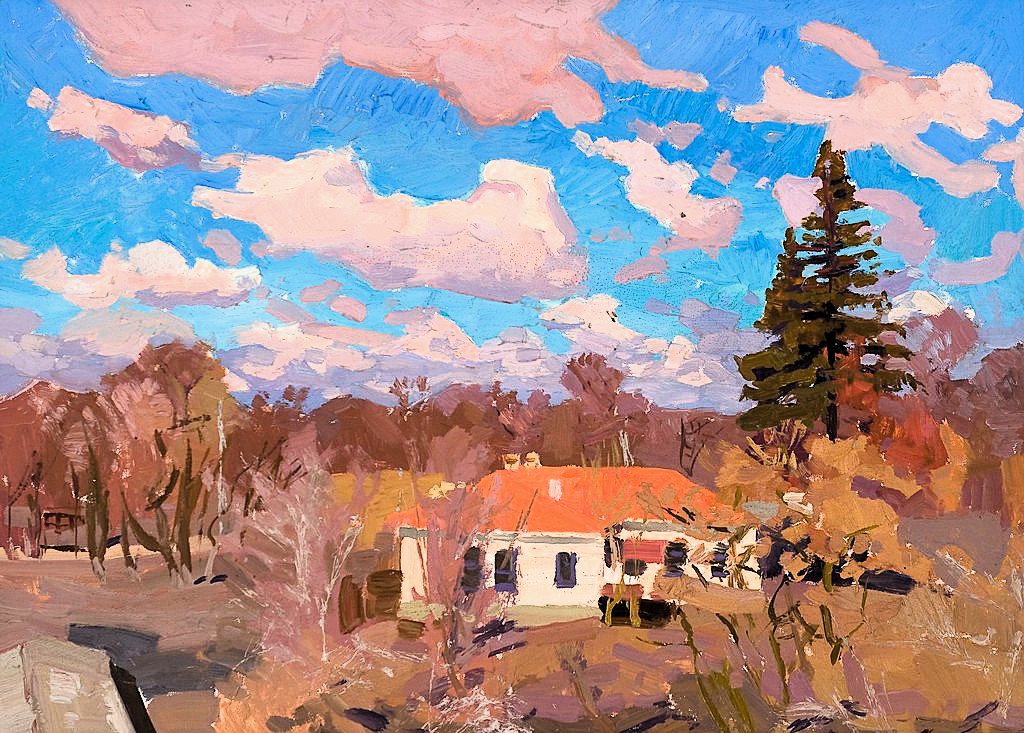
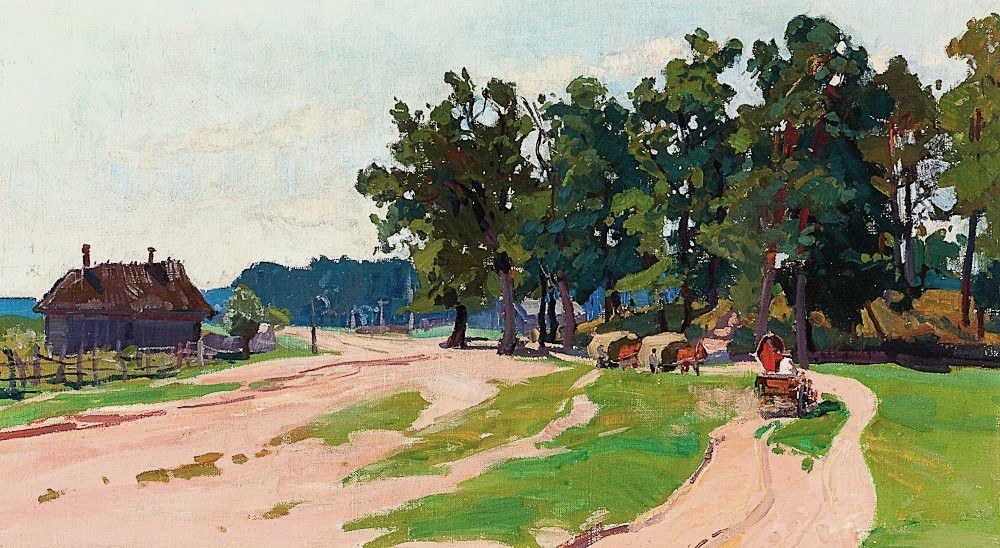
Akinshin, Mikhail Vasilievich
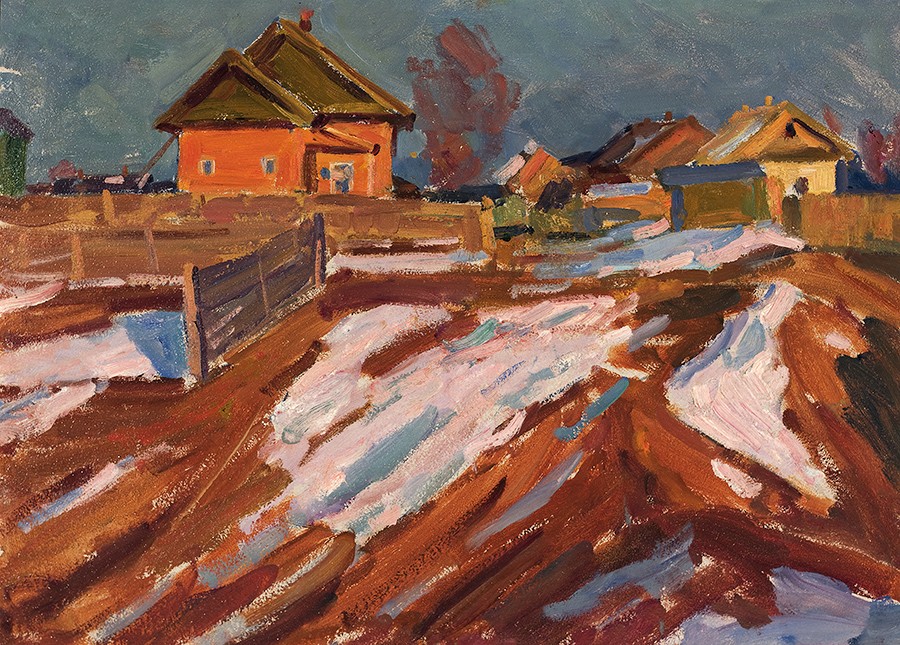
"House on the Prairie"
19¾'' x 27½'', (50 x 70 cm)
1963, Oil on Board, $1,250, Framed
| |
Akinshin, Mikhail Vasilievich
"On the Rest"
18¾'' x 29¼'', 1961, Oil on Board
$2,500, Framed
| |
Akinshin, Mikhail Vasilievich
"Carts"
17¼'' x 31¼'', (44 x 79.50 cm)
1962, Oil on Board
$2,500, Framed
| |
Mikhail Vasilievich Akinshin, (1927–1982)
Mikhail Akinshin was born on February 18, 1927, in the village of Lomovo in Russia's Kursk region, to a peasant family. He trained at the Tashkent Art School, graduating in 1951, and briefly taught drawing before relocating to Zaporozhye, Ukraine, in 1953, where he began working as a professional artist. He later completed further training at the Kiev State Art Institute in 1962.
Akinshin built his career around landscape painting, drawing on extensive travels across the country to capture the distinct character, light, and detail of different regions — particularly the countryside of Ukraine and Uzbekistan, where he had studied. Rather than working from mechanical sketches, he treated his travel studies as the foundation for fully realized paintings shaped by personal feeling and reflection, giving his work a quality often described as philosophical and contemplative.
His style varied with subject: in one notable landscape of the northern town of Velikiy Ustyug (painted between 1968 and 1970), he used an elevated, bird's-eye perspective to highlight the town's historic character. In a companion piece, Evening, he instead worked from a low viewpoint, using bold contrasts of red, orange, and blue to emphasize the old Russian architecture up close.
Akinshin's career gained formal recognition starting in 1965, when he began exhibiting regularly at regional and national shows, and in 1968 he was admitted to the Union of Artists of the USSR. He died on July 22, 1982. A decade later, in 2012, the Zaporozhye Regional Art Museum marked the 85th anniversary of his birth with a retrospective exhibition titled From Voznesenka to Samarkand.
His work is included in reference texts such as A Dictionary of Twentieth Century Russian and Soviet Paintings, 1900–1980 by Matthew Cullerne Brown, and his paintings are held in museum and private collections across Ukraine, Russia, Uzbekistan, France, Switzerland, the UK, the US, and Canada.
| |
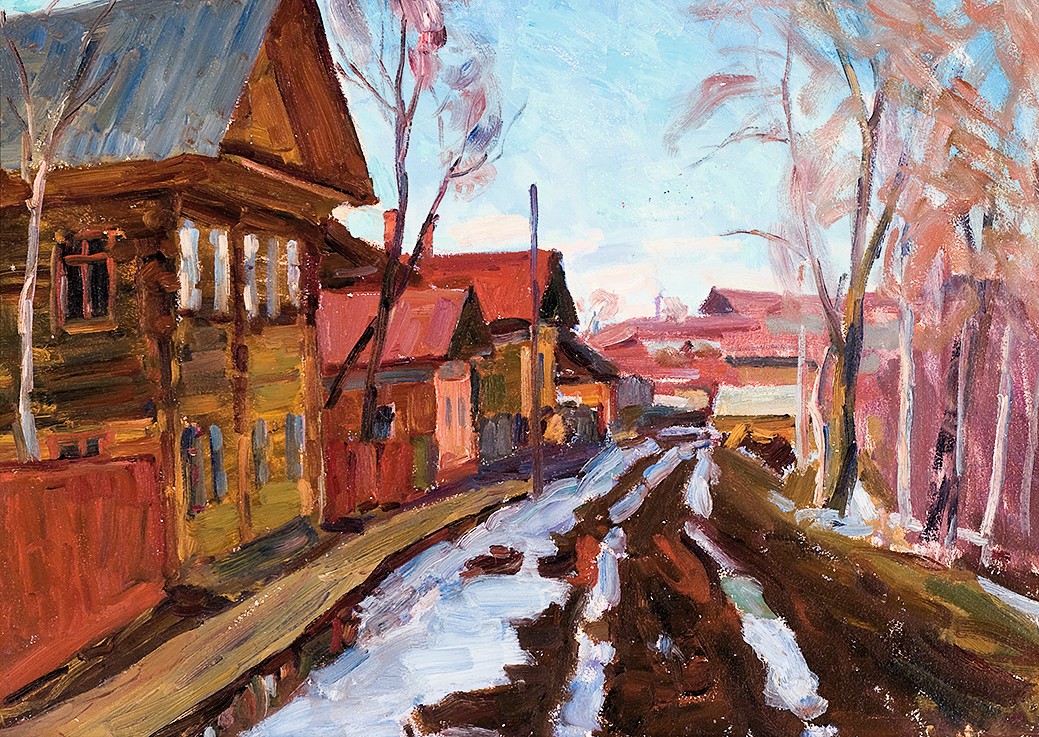
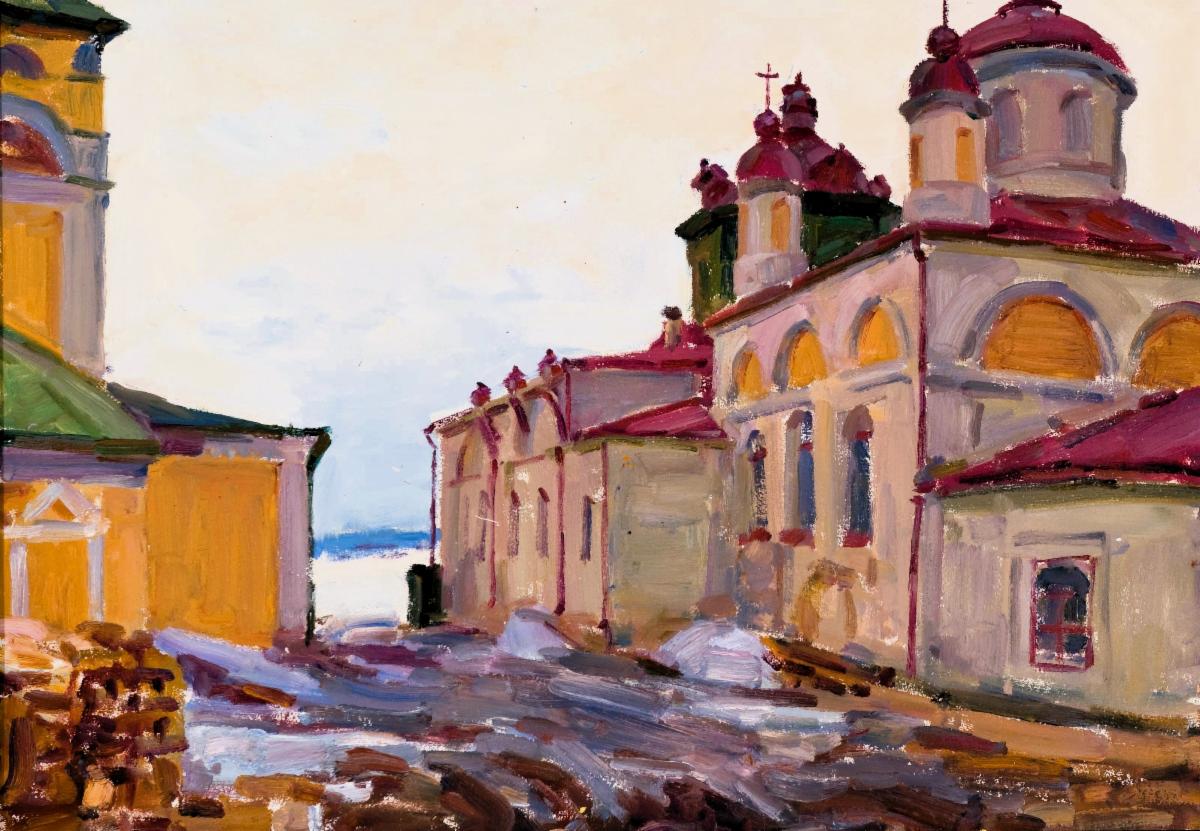
Smirnov, Yuri Alexandrovich
"Frosty Evening"
19¾'' x 27½'', (50 x 70 cm)
1968, Oil on Board
$2,500, Framed
| |
Smirnov, Yuri Alexandrovich
"Monastery of XVI Century"
19½'' x 27½'', (49.50 x 70 cm)
1968, Oil on Board
$2,000, Framed
| | |
Smirnov, Yuri Alexandrovich
"Frosty Evening"
19¾'' x 27½'', (50 x 70 cm)
1968, Oil on Board
$2,000, Framed
| | |
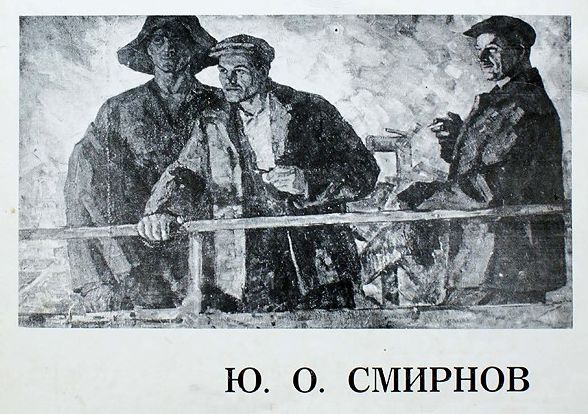
Yuri Aleksandrovich Smirnov (1925– )
Catalog from Smirnov's exhibition, Zaporizhzhya 1977
Yuri Aleksandrovich Smirnov was a Soviet Ukrainian painter and graphic artist, born on July 3, 1925, in Kharkov. He was Ukrainian by artistic tradition, working across both graphics and easel painting.
He began his formal art education at the Kharkov Art College. After the war, he continued his studies at the Kharkov Art Institute, where his teachers included M.G. Deregus and P.I. Kotov — both established figures in Ukrainian Soviet art. He completed his studies at the Kharkov Art Institute in 1951, going on to specialize in easel painting and graphic art.
Smirnov began exhibiting his work publicly in 1953, taking part in numerous regional and republican art shows over the following decade. In 1964, he was admitted to the USSR Union of Artists, formalizing his standing within the Soviet art establishment. Alongside his gallery and exhibition work, he contributed to diorama projects for the regional museums in Melitopol and Sumy — large-scale commemorative works that were a common commission for Soviet realist painters of his generation.
His subject matter reflected the concerns typical of Soviet Socialist Realism, blending portraiture, historical and political themes, and scenes of industrial labor. Known works from his output include a portrait of a Komsomol excavator operator; "Energetics" (1967); "Lenin and Children" (1973); "Shchors and Bozhenko" (1965), a historical subject centered on two Ukrainian Civil War commanders; and several paintings of steelworkers at their trade, along with quieter landscape studies such as "Sunny Day." This combination of ideological subject matter (revolutionary heroes, labor themes) with more personal, atmospheric landscape work was characteristic of many Soviet-era Ukrainian painters balancing official commissions with individual artistic interests.
In 1977, a personal exhibition of his work was held in one Zaporozhye. His paintings are held in museums, galleries, and private collections across Ukraine, Russia, and abroad, and his work continues to circulate in the art market for Soviet-era Ukrainian painting today.
| | | | |