|
We hope you have had a great summer! AEOs and AEMs, we know this time of year means "Back to School" for cadets and students. Civil Air Patrol's AE Program is here to help make the 2025-2026 school year impactful.
With the start of August, two Civil Air Patrol AE programs have kicked off registration. Educators, registration is open for Aerospace Connections in Education (ACE), a K-6 STEM program. Educators and AEOs, registration is also open for the ACE Plus program, which connects classrooms and squadrons. Find out more details on both in this newsletter.
As schools are opening, CAP's STEM Kit program has opened up again for AEM applications after a 4-month pause. Keep reading to find out more.
This newsletter issue has important announcements about the following:
- CAP AE sUAS STEM Kit Stand Down on federal installations
- The newest CAP/NASA Mission: The Aurora Watch Mission
- The CAP/NASA 2025 Aviation Weather Mission
Also, read on to learn about some summer AE successes at CAP's National AEO School in Dayton, Ohio, and the Academy of Model Aeronautics' UAS4STEM national drone competition finals at EAA AirVenture Oshkosh.
This month's featured member, from Tennessee Wing, attended and presented at the 2025 National AEO School. If you know of other outstanding member stories of AEOs or AEMs, we hope you will reach out to us at ae@capnhq.gov
| | |
THIS MONTH: Member story - Program updates - AE Safety Check -
News and Events - Curriculum
| | |
PROGRAM UPDATES
2025-2026 ACE registration is open!
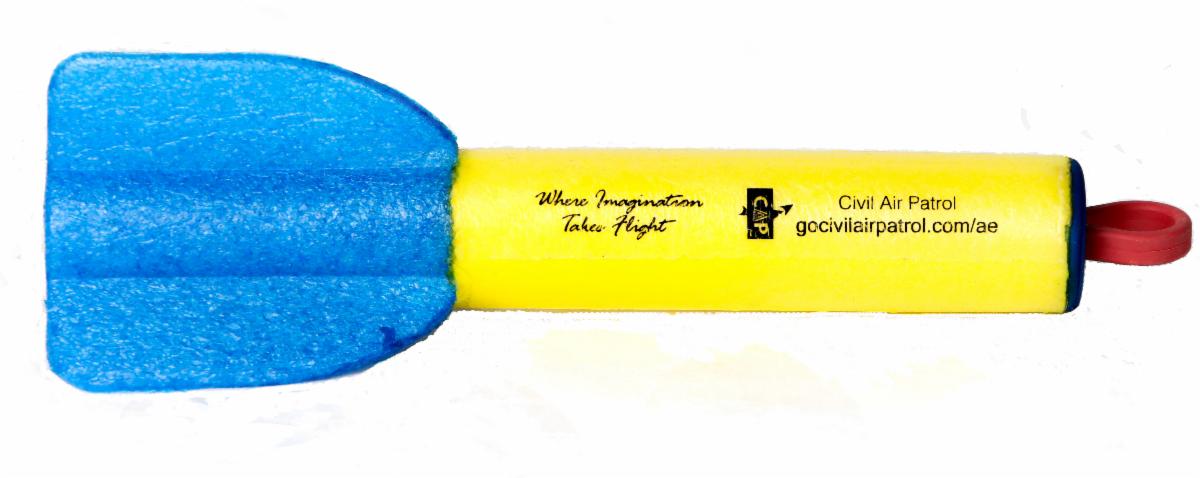
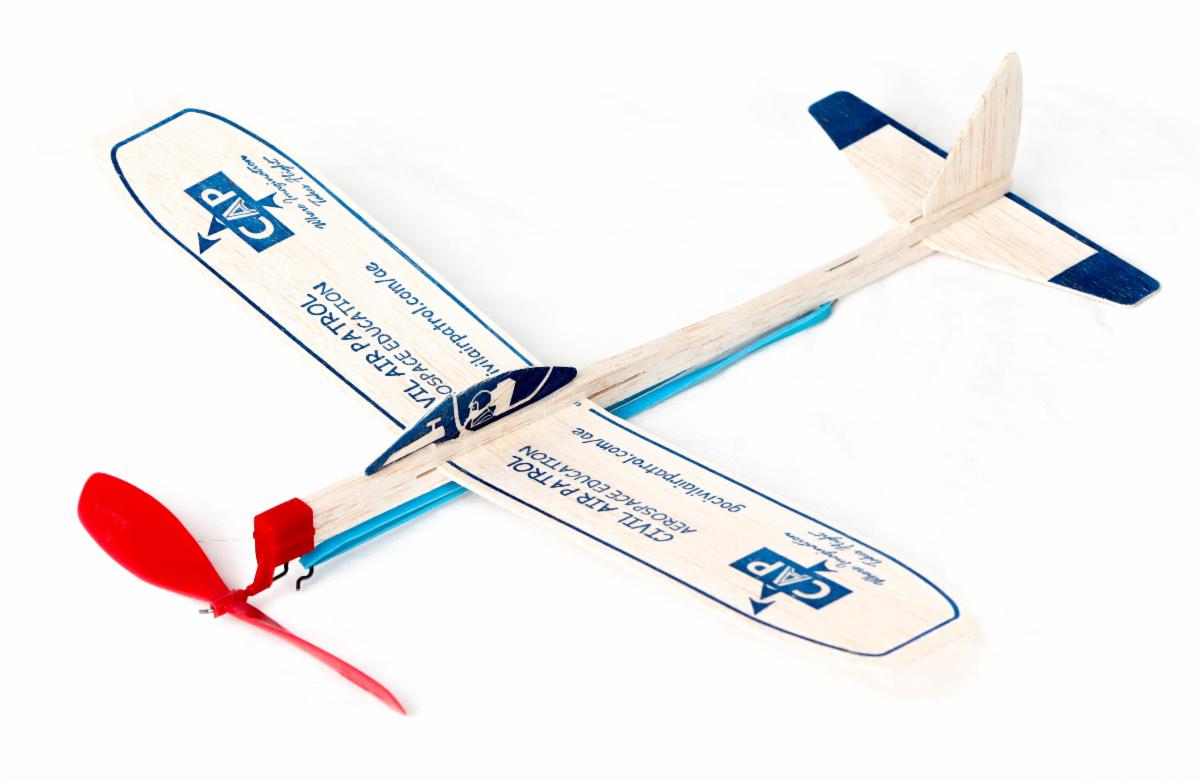
| | Registration for the 2025-2026 Aerospace Connections in Education (ACE) Program opened August 1. Educators, get ready to add the high-flying power of aerospace to your classroom! ACE is a fun, interactive Aerospace/STEM program for CAP educator members who teach grades K-6, along with CAP members who work with students in those grades outside of the classroom setting. The ACE Program uses the aerospace theme in academics, character education and physical fitness lessons. Teachers receive free grade-specific educational manipulatives, such as the seond-grade finger rockets (pictured), for each student participant. Grade-specific curriculum guides are located in eServices and can be downloaded and printed for use with students. Find out more about the lessons in the Curriculum Spotlight section of this newsletter. To register for ACE, click on the link below. | | ACE Plus adopt program registration is open | | |
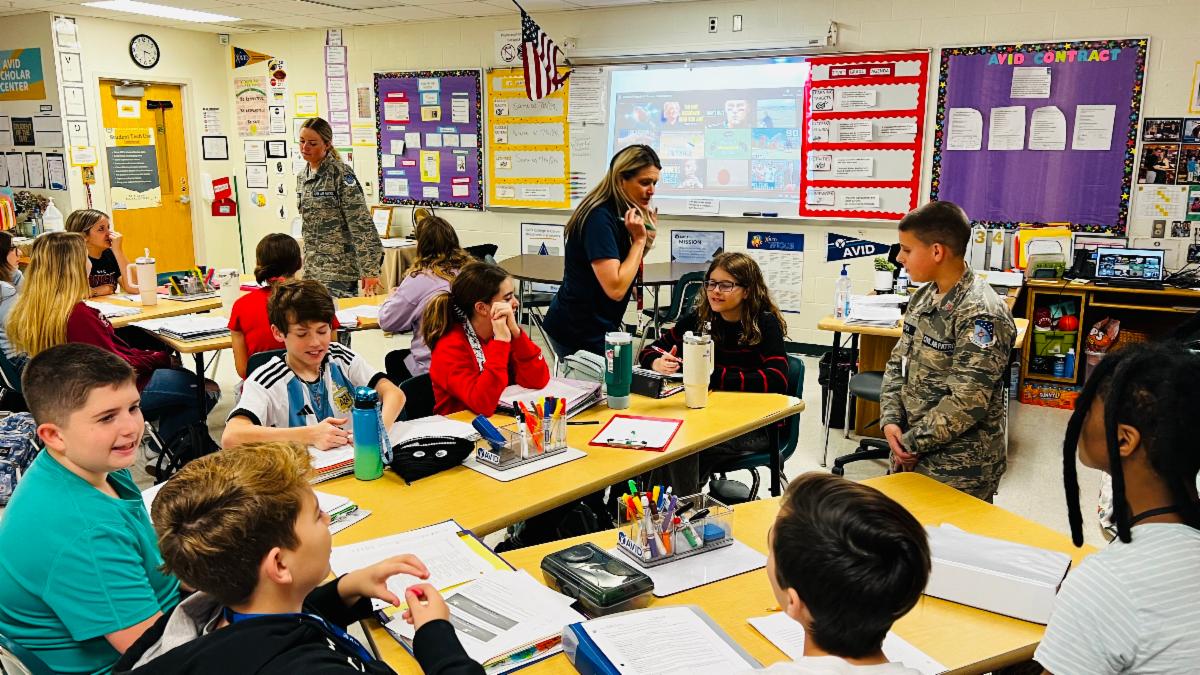
Teachers in grades 5-8 who register for the ACE program can have their classroom adopted by a CAP squadron with adults and cadets coming into the classroom to teach ACE and other aerospace/STEM lessons!
Interested teachers can complete the top of the Request to Collaborate Form and send to their state’s volunteer Director of Aerospace Education (DAE) as found on the list HERE. The state’s DAE will connect the teacher to a squadron, which will complete the bottom portion of the form and submit to adopt@capnhq.gov for processing.
| | AE sUAS STEM Kit Stand Down reminder | | |
NOTE: This message was originally sent to all CAP commanders from Maj. Gen. Regena M. Aye and is now being sent to DCS/AEs, DAEs, AEOs, and AEMs.
SUBJECT: Immediate Stand Down of Certain sUAS Operations on Federal Installations
Effective immediately, Civil Air Patrol (CAP) has been directed to suspend all indoor and outdoor operations involving STEM kit small unmanned aircraft systems (sUAS) and other non-approved sUAS on federal installations. This stand down applies to all such systems except those listed on the approved “Blue” sUAS list, which are not affected and may continue to operate as usual.
Please ensure this directive is promptly communicated to all:
- Directors of Cadet Programs
- Aerospace Education Officers
- Directors of Operations & sUAS Operations
Thank you for your immediate attention and cooperation.
Update:
Please review DAFMAN 11-501 and DAFMAN 11-502 as well as the Frequently Asked Questions below in full. They provide essential information regarding the AE sUAS STEM Kit Stand Down and clarify current restrictions on the use and storage of AE sUAS STEM Kit assets on federal installations, in compliance with recent guidance.
AEMs with the sUAS STEM Kits should not use them on federal installations.
| | | |  | | STEM Kit Program now accepting AEM applications again after 4-month pause | | |
AE Leaders:
The STEM Kit Program is now accepting AEM applications once again following a 4-month pause. Thank you for your patience and continued support!
Please note: Applications submitted during one month are reviewed the following month. For example, applications submitted in August will be reviewed in September.
Learn more about the application process and check out our list of available STEM Kits by clicking the links below.
If you have any questions, please reach out to STEM@capnhq.gov. We are excited to continue supporting our members in inspiring the next generation of aviation, space, and cyber leaders through STEM education.
Very Respectfully,
The Stem Kit Committee
| | |
CURRICULUM SPOTLIGHT
ACE lesson plans are fun and ready-to-use
| | |
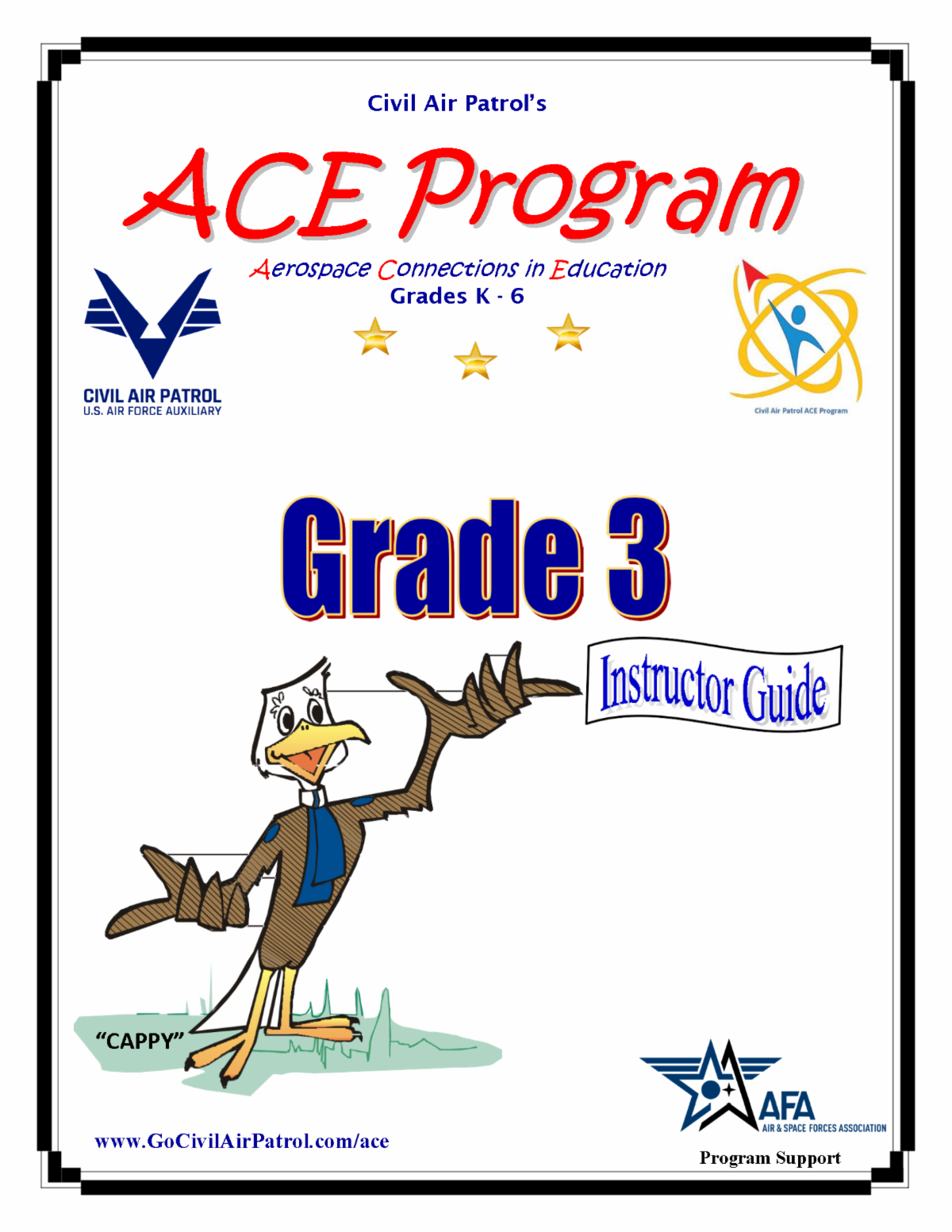
Educators, registration for Civil Air Patrol's Aerospace Connections in Education (ACE) Program is now open. ACE is a K-6 grade-specific STEM program. This month we spotlight the detailed step-by-step lessons available to ACE program teachers. Each educator who registers for ACE receives a class set of the grade-specific manipulatives. (Some are pictured below.) Click the link to find out how these and the other manipulatives match each grade level and to preview sample lessons. As a member, even if you are not an ACE participant, you have free access to download CAP's ACE Guides for every grade in eServices. Lessons and activities use the aerospace theme in academics, character education, and physical fitness lessons.
| | (These safety nuggets are things to think about as you lead or participate in an Aerospace Education activity. The writer of this monthly feature is Lt. Col. Karen Cooper, who works in safety and risk management on the AE National Headquarters Staff and is also the Northeast Region DCS/Aerospace Education.) | | |
STORE LITHIUM BATTERIES SAFELY
In late July, we received direction from the National Commander that, “Civil Air Patrol (CAP) has been directed to suspend all indoor and outdoor operations involving STEM kit small unmanned aircraft systems (sUAS) and other non-approved sUAS on federal installations.” For those of you impacted by this stand-down, you are, more than likely, putting your STEM sUAS and similar items in storage. BUT – are you storing them correctly?
These systems usually have lithium-ion batteries, which require careful storage. Keep this in mind:
- Never charge lithium-ion batteries on a soft or combustible surface
- Store lithium batteries at room temperature, ideally between 59°F and 77°F
- Store batteries in a dry environment and avoid exposing them to humidity.
- Ensure terminals are not exposed to metal objects that could cause a short circuit.
- For long-term storage, it's generally recommended to store lithium batteries at a partial charge, typically between 40% and 50%. However, keep in mind that the guidance states you may not charge, power on, or test the kit and/or batteries on a federal installation.
- Ensure the storage area is well-ventilated to prevent the buildup of gases in case of a malfunction.
- Always refer to the manufacturer's specific storage instructions for your particular batteries.
And one more thing - Do not store the batteries near a door or window. If they catch fire, the exit that you and the firefighters will want to use will be blocked by that fire.
| | If you have a safety topic you would like to be included in this space, please email kcooper@ner.cap.gov. | | |
Newest CAP/NASA mission supports
data collection on aurora sightings
| | |
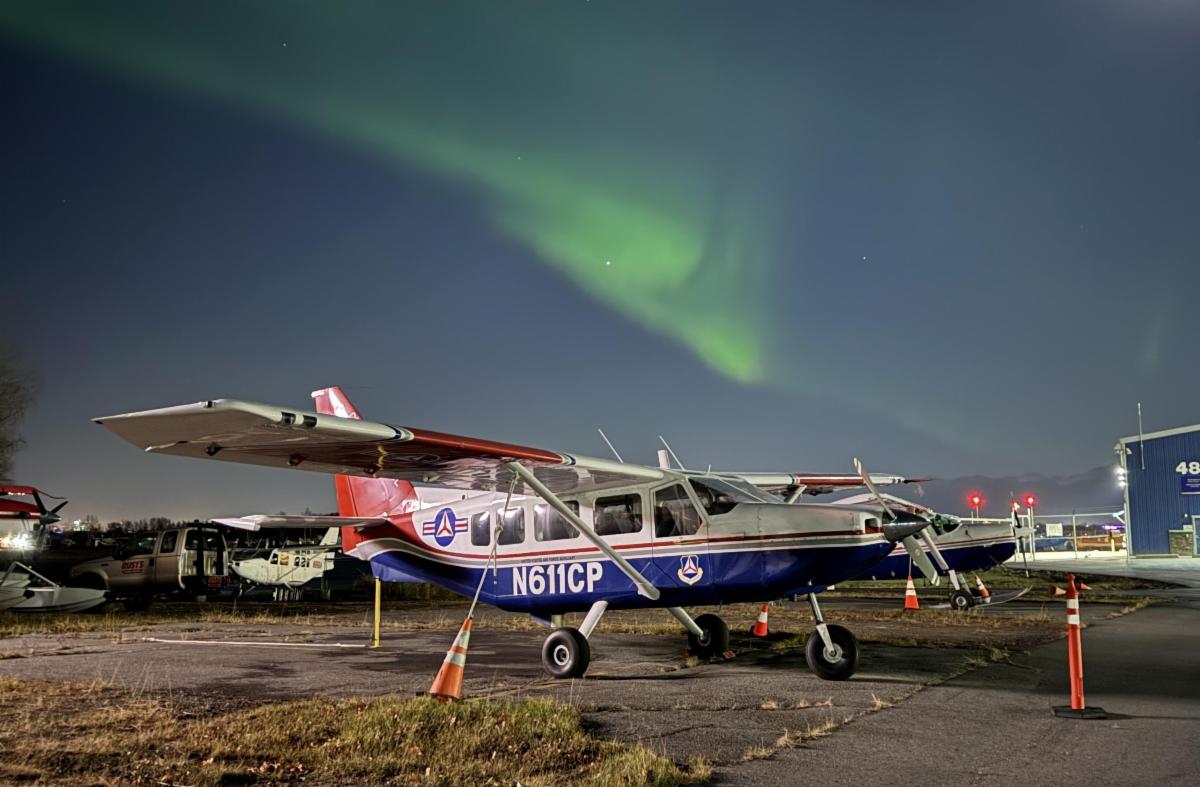
Get ready for Civil Air Patrol’s newest CAP/NASA mission! The CAP Aurora Watch is an AE Mission that supports the Aurorasaurus Project and NASA Science Activation.
During this mission, individuals and data collection teams will support scientists by observing the sky and reporting sightings of the aurora, also known as the Northern Lights. The aurora phenomenon can interfere with satellites, power grids, and even communication systems such as cell phones.
For this mission, we will be making observations and taking photographs of the sky during geomagnetic storms. Volunteers will monitor local and space weather forecasts, observe the night sky, and may assist in verifying reports submitted by others. This mission offers a unique opportunity to explore the connection between Earth and the Sun while supporting real scientific research. By reporting both sightings and non-sightings of the aurora using the Aurorasaurus app or website, we will be helping scientists better understand solar storms and how to improve the models they use to predict and study where auroras can be seen.
To participate in this mission, CAP members must:
- Be at least 14 years old
- Have a digital camera, cell phone camera or tablet capable of taking photos
- Have a complete CAP Field Uniform (such as ABUs or CAP Polo for Senior Leaders)
- Completed your GES (General Emergency Services 116 and 117 part 1-3) Training
- Completed Senior Leader Level 1 or Cadet Achievement 1
- Complete 2 hours of Aurora Watch Mission-specific training.
- Stay involved in the mission for at least 4 months.
- Open to members in all 52 Wings
For cadet participants, a parent or guardian must attend a 1-hour training session before the cadet can participate in the mission at home.
| | Register for August webinar to hear cadets share experience with Aviation Weather Mission | | |
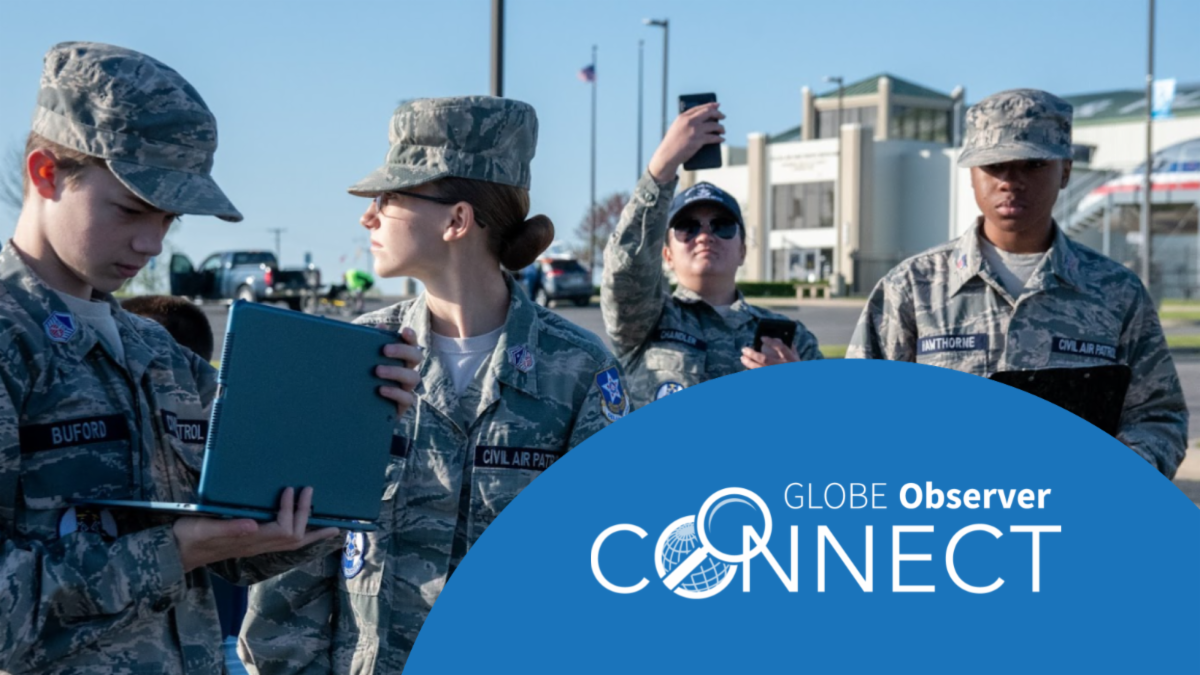
Civil Air Patrol cadets and senior members participated in the 2025 Aviation Weather Mission (April - July 2025) tracking airplanes and collecting atmospheric observations, including clouds and contrails using the GLOBE Observer app. On August 14 at 7 p.m. ET (23:00 UTC), cadets from all eight regions (Northeast, Mid Atlantic, Southeast, Great Lakes, North Central, Southwest, Rocky Mountain, and Pacific regions) in the United States will share their experiences and stories of being part of this experience.
The 2025 Aviation Weather Mission was a collaboration between the Civil Air Patrol and the NASA Earth Science Education Collaborative (NESEC). The mission consisted of four 4-hour observation periods, when CAP members collected ground-based atmospheric observations including airport conditions, information about commercial aircraft (registration number and altitude). In addition, cadets and senior members used the GLOBE Observer app’s clouds tool to report cloud cover and contrail types. Preliminary data is being processed by the NASA GLOBE Clouds team at NASA Langley Research Center in Hampton, Virginia. Read more and find the link to register for the webinar.
-- Information provided by The GLOBE Program
| | |
Maryland, Alabama cadets take honors
in UAS4STEM national drone meet
| | |
Maryland Wing cadets won the Academy of Model Aeronautics' UAS4STEM drone competition Beginners division July 23, while their counterparts from the Alabama Wing placed third in the Advanced division.
Both squadrons were returning to the national finals at EAA AirVenture Oshkosh, as was the Virginia Wing’s 55 Knights team — second-place finishers in the 2024 Beginners division.
UAS4STEM is the Academy for Model Aeronautics’ Unmanned Aerial Systems for Science, Technology, Engineering, and Math program. Teams in both divisions designed and built a quadcopter Unmanned Aircraft System and programmed it for flight. The Advanced division teams guided their drones in flight and built an additional mechanism to complete another task.
| | National AEO School held in Dayton, Ohio | |
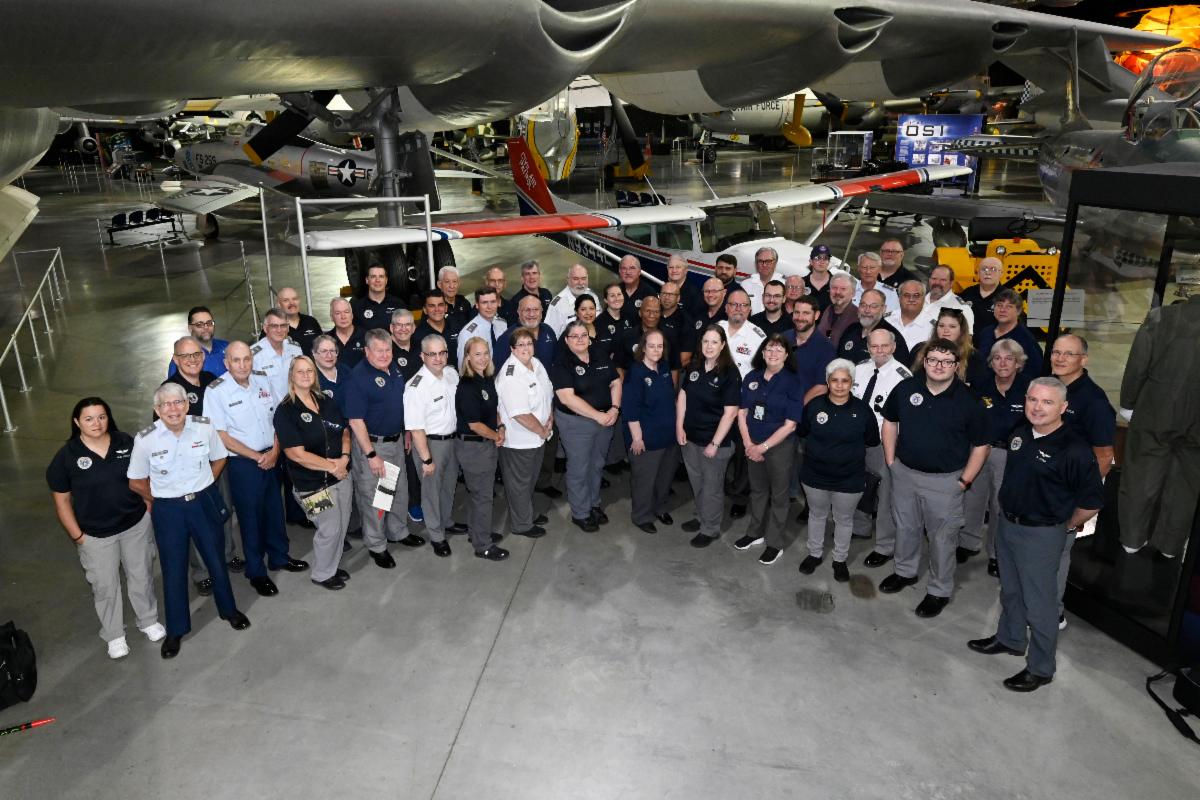
Aerospace Education leaders from all eight CAP regions made history the week of June 24-28 at the 22nd National AEO School, conducted in Dayton, Ohio, for the first time. Previous schools had been held in Pensacola and Cocoa Beach, Florida.
The busy four-day schedule included presentations on AE duties and responsibilities and AE programs and products, engaging activities, networking opportunities, panel discussions, and workshops.
Dr. Shayla Freeman, CAP’s director of aerospace education, expressed appreciation for the school's presenters and participants.
“What an incredible week spent connecting with so many devoted and inspiring AEOs from across the country!” she said. “It was truly inspiring to share in days filled with learning, growth, and collaboration. A heartfelt thank you to everyone who shared their knowledge and made this school not only possible — but unforgettable.”
The last day included a visit to the National Museum of the U.S. Air Force, a rocket launch and graduation ceremony. Click the link below to read the full story.
| | |
AEO STORY
Tennessee Wing Internal DAE shares passion for astronomy with cadets, community
| |
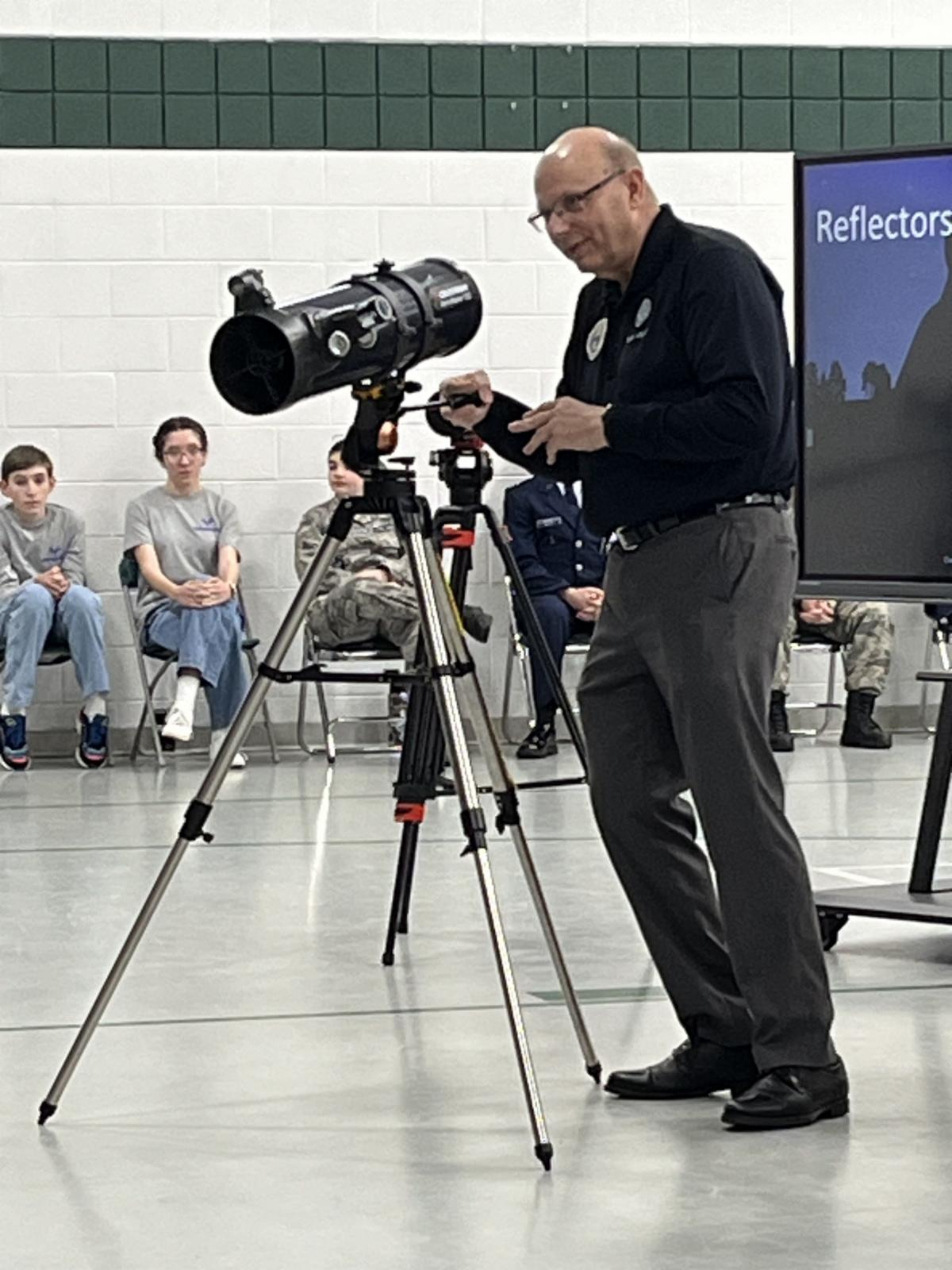
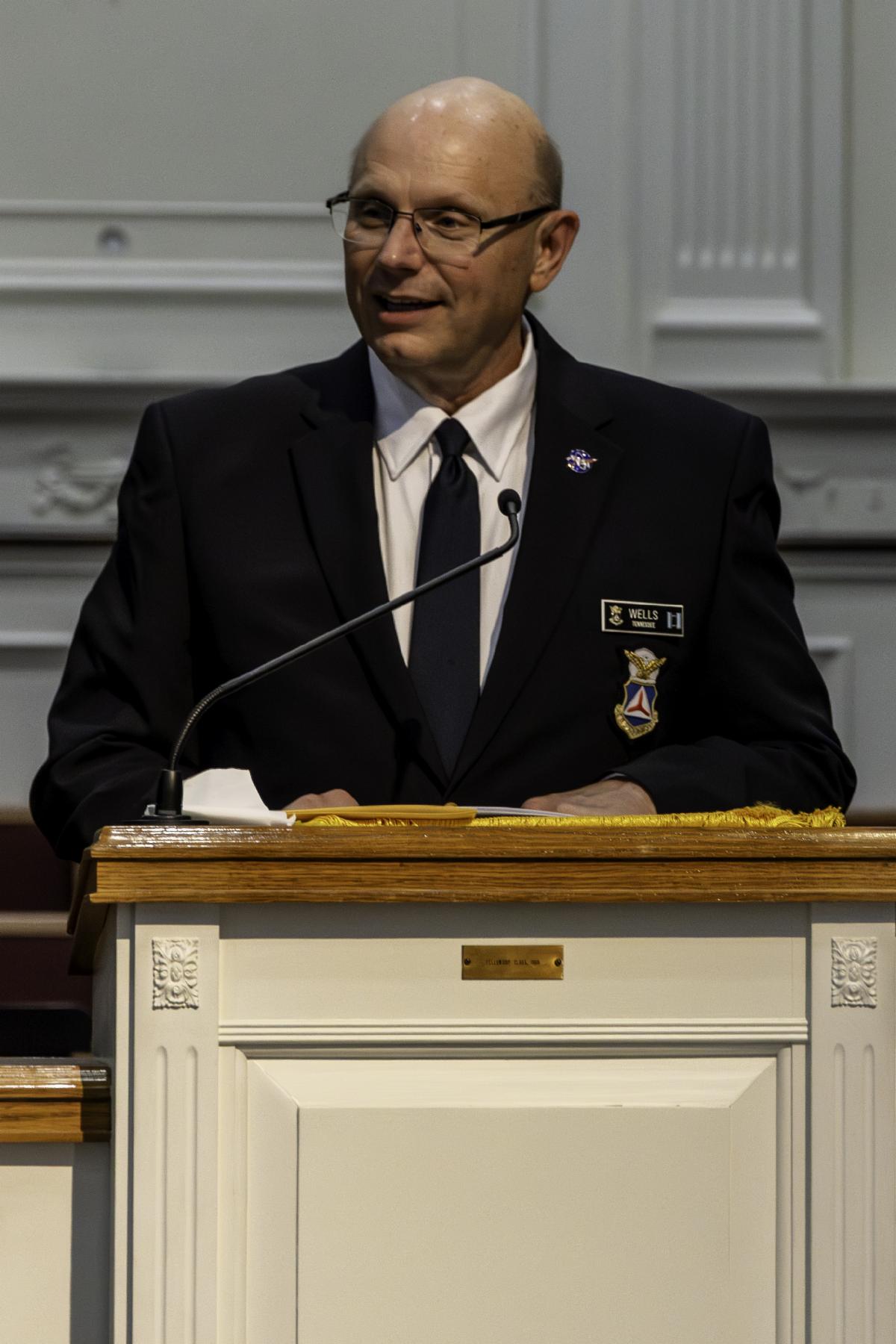
 | | Meet Capt. Dave Wells, Internal Aerospace Education Officer for Tennessee Wing and Squadron Commander, Sunsphere Cadet Squadron in Knoxville, Tennessee. He first joined Civil Air Patrol as a cadet in 1975 because his two older brothers had joined the U.S. Air Force. He earned his Spaatz Award, Civil Air Patrol's highest cadet honor, and credits the organization for a positive impact on his life. "It gave me a sense of purpose, identity, and a sense of accomplishment as I progressed through the Cadet Program," he recalls. His specific area of interest in aerospace education is in the fields of space exploration and astronomy. "My earliest historical memory is of the Apollo 11 landing in July 1969," he says. He continues to share that passion for space with the cadets and families within his squadron and with the local community. "The excitement of kids - and their parents - when they see the craters on the Moon, or the moons of Jupiter, or the rings of Saturn for the first time is very rewarding to me," he says. This summer, Wells attended his first National Aerospace Education Officers School in Dayton, Ohio, where he also presented a session on the CAP STEM Kit telescope -- how to use the telescope to teach astronomy both in the cadet squadron and in the local community. After a 30-year career working and training others in the insurance industry, this fall he will begin a new chapter in his aerospace educator journey: he will begin teaching a semester-long course on aerospace education at a local Catholic high school using the CAP textbook Aerospace: The Journey of Flight. Click the link below to read his full story.
| | |
"Whether it's the history of flight, or the intricacies of weather, or the thrill of flying, or the sheer awe and wonder of looking at the stars - share your passion and you will light a spark in your cadets!"
-- Capt. Dave Wells, Internal DAE, Tennessee Wing
| | | | |