Your Community Gardening Newsletter |
|
August 2022 Volume 10 Number 7 |
|
Wednesday, August 3rd, 17th and 31st 2022, 10AM – 11:30AM
This biweekly program is designed to engage 3- to 5-year-olds and an accompanying grown-up into the wonderful world of gardening. Each class will build upon knowledge from the last and will be centered on what’s growing and ready to harvest! ADVANCE REGISTRATION IS REQUIRED AND BEGINS 6/29: 330-865-8065.
Saturday, August 6, 2022, 3:00PM – 4:30 PM
Native Plants for the Future: Climate change, conservation the sixth mass extinction — all these terms are alarming. Join a naturalist to decipher the science behind it all and look toward the future of native plants.
The program will be held at F.A. Seiberling Nature Realm, 1828 Smith Rd., Akron www.summitmetroparks.org
Sunday, August 7, 2022 2:00 PM to 3:30 PM
Summit Metro Parks is hosting Back Yards Gone Wild: Hummingbirds; Learn about these fascinating, flying gems of the garden and how to attract them to your own back yard. After a presentation, take a short stroll to search for hummingbirds and the flowers they like best. Twinsburg Ledges Area & Nature Center, 9999 Liberty Road, Twinsburg. See summitmetroparks.org for more information.
Tuesday, August 9, 2022, 4:00 PM – 7:00 PM
Join Summit Metro Parks for Healthy Habitats: Learn about native plants and how they benefit the environment while attending the Summit Lake Farmers’ Market. the Summit Lake Community Center, 380 W. Crosier Street, Akron.
Thursday, August 18, 2022 6;00 PM to 7:30 PM
Join Summit Metro Parks for Good Gardens: Good Bugs vs. Bad Bugs Have you noticed something eating the leaves of your beans? What is that enormous caterpillar eating my tomatoes? Why are my cucumber and squash vines dying? Join us as we answer these questions and more relating to the bugs you see in your garden. The program will be held at Goodyear Heights Lodge. See www.summitmetroparks.org for more information.
Wednesday, August 24, 2022 6:30 PM to 8:30 PM
Join Summit Metro Parks for Go Native! Drop into the Rock and Herb Garden to discover why you should ditch exotic and invasive species and fill your home landscape with beautiful and ecologically important native plants instead! Wildflowers, grasses, vines, shrubs and trees — every species plays its part! Native seed packets will be available for attendees to bring nature home. The program will be held at F.A. Seiberling Nature Realm, 1828 Smith Rd., Akron www.summitmetroparks.org
Monday, August 25, 2022, 6:00 PM
More learning opportunities:
· Summit County Master Gardeners on Facebook
· Follow Summit County Master Gardeners on Instagram with our user name osusummitmgv
|
|
Seed Saving Online Discussion |
Amanda Helin, Gardener with the U.S. Botanic Garden will be doing an online discussion on Intro to Seed Saving. With regard to the program, which is aimed at beginners, the Garden explains "Seed saving is an affordable way to cultivate variety and preserve heirloom plants in your garden - but how do you do it? Join Amanda as she discusses the basics of seed saving, answers questions, and helps you get started with this age-old practice." This program is Thursday, August 25 from 10:30 a.m. to 11:15 a.m. ET. The program is FREE, but pre-registration is REQUIRED. Click HERE to view the calendar, go to August 25, then click on the program link and follow the prompts.
|
|
Were you looking for something to do? |
- Continue to water and weed as needed
- Mid-month sow lettuce, turnips, spinach, radishes and kale for fall harvest
- Harvest vegetables regularly for maximum flavor and nutritional value
- Can, freeze or dry vegetables to preserve for winter use
- Clean up the garden as plants die back
- Consider planting some cover crops in the bare spots
- Prepare any new sites needed for a future vegetable garden
- Continue to monitor regularly for insect and disease problems
- Enjoy the continuing warm weather and the ripening fruit and vegetables
|
|
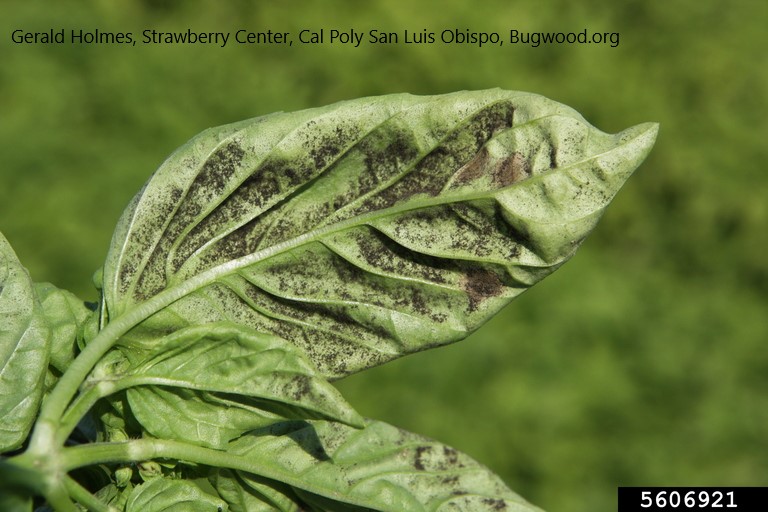
Basil Downy Mildew was first reported in the United States in 2007 and has since spread widely across the US wherever basil is grown. Basil Downy Mildew is caused by the fungus-like organism, Peronospora belbahrii. While many pathogens are called downy mildew, this one is host-specific to basils, which means that it is only found on basil. Basil Downy Mildew can get into your garden lots of ways: from contaminated seed, on infected transplants, or via wind-borne spores. Wind is the main dispersal method and what allows Basil Downy Mildew to spread widely every summer. Once in your garden it can spread by wind, by rain splash, or by working around infected plants and then working on healthy plants. Basil Downy Mildew thrives in humid, warm environments and can spread rapidly, wiping out your entire basil crop.
Infection usually starts on lower leaves and moves up the plant. Infected leaves first turn yellow in areas between the major veins. Eventually the entire leaf turns yellow and as they age irregular black spots appear on infected leaves. Seeing fluffy gray spores on the underside of leaves is the diagnostic key, but because spores are produced during the night, early morning is the best time to inspect basil for downy mildew.
The University of Wisconsin notes that there is no known cure for Basil Downy Mildew. If you see Basil Downy Mildew on your basil, harvest any unaffected leaves on infected plants as well as on all your other healthy basil plants in your garden. Use these materials immediately (e.g., to make pesto). Remove and bag any symptomatic plant remains and dispose of this material in your garbage.
According to the Wisconsin fact-sheet, Green-leafed varieties of sweet basil are particularly susceptible to the disease, while purple-leafed varieties of basil, Thai basil, lemon basil, and spice basil are less susceptible. You might consider not planting sweet basil but instead planting other types of basil that are more resistant to basil downy mildew. There are also some resistant varieties of green basil being developed, though none of them are yet immune, so keep an eye out for those.
Culturally, UW suggests that you try to grow your plants in a manner that will keep them as dry as possible, thus creating an environment that is less favorable for the downy mildew pathogen to develop and infect. Plant basil in a sunny location, space plants as far apart as possible and orient rows in the direction of prevailing winds to promote good airflow and rapid drying of plants when they get wet. Avoid overhead watering (e.g., with a sprinkler) that will wet leaves and spread the pathogen; instead, use a drip or soaker hose to water.
|
|
We all look forward to the first local sweet corn, whether we grow it ourselves, get it at farmers' markets, one of the many local growers, or at the grocery. But did you know that only 5% of the corn grown worldwide is sweet corn. The other 95% is field corn, also called dent corn or flint corn. Field corn is a high starch, low sugar corn used for many culinary and industrial products as well as for animal feed. Cornmeal, grits, polenta, cornstarch, corn syrup (not to be confused with high-fructose corn syrup), popcorn, bourbon, snack foods, plastics, cosmetics, insulation, soaps, chemical solvents, and pharmaceutical products are just some of what we can get from field corn.
But back to sweet corn, according to Cooks' Country magazine, look for ears that are plump and feel heavy for their size. The husk should be deep green, and the silk should be dry. To preserve the corn's moisture shuck the ears just before cooking. To avoid overcooking they suggest bringing the water to a boil, salting it, dropping the corn in, covering it and turning off the heat. Then just let the corn sit until tender-crisp, about 10-15 minutes.
|
|
Hot hot is that pepper in the garden (sung to "How Much is that Doggy in the Window". |
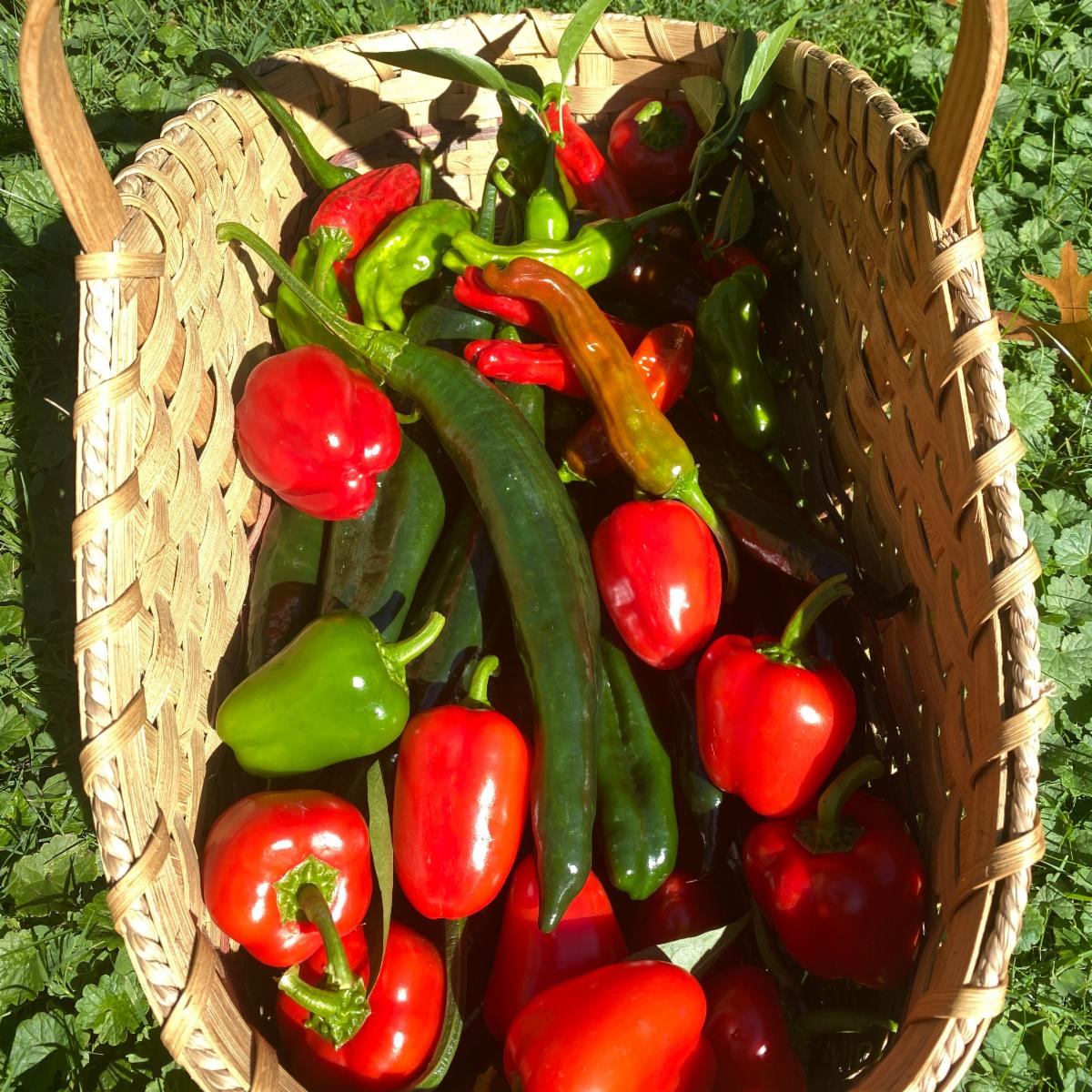
In Is that chile pepper hot or not? Texas A&M notes that there are over 6,000 varieties of peppers worldwide, and you cannot accurately tell how hot a pepper is by looking at it. (What we call "heat" is also known as pungency or piquancy.) According to Growing Chile Peppers in New Mexico Gardens from New Mexico State University "Chile pepper pungency is determined by the amount and types of capsaicinoids found in the fruit. These alkaloids are chemical compounds produced by glands normally associated with the placenta in the center of the pod where the seeds are produced. Seeds are NOT sources of pungency, although they may absorb some of these capsaicinoids when cooked." That is why you often see recommendations to remove the membranes of hot peppers to reduce the heat. The Texas A&M article cited above noted that "Capsaicin feels “hot” because it plays a trick on our senses. It turns out capsaicin activates sensors in our body that normally detect high heat. In fact, capsaicin helped scientists learn more about how our ability to sense heat works, a discovery that was celebrated by the 2021 Nobel Prize in Physiology or Medicine."
As you can see from above, Texas A&M and NMSU both use the term "chile". North Dakota State University, on the other hand, in Agriculture Communication decrees "If you’re talking about the pepper or the popular food usually made with meat and beans, it’s chili. By the way, the plural is chilies. For example: 'Some cooks like to use extra-hot chilies in their chili.'” Michigan State in Hot pepper, sweet pepper, black pepper? Chili, chile, chilli? A peek into the confusing naming conventions of peppers, which contains an interesting "brief history of how local cuisine and worldwide trade networks contributed to the tongue-tied world of peppers and their chiles", concludes that "All spellings of chile, chili or chilli are acceptable." Merriam-Webster puts the matter to rest by explaining "In American English, "chili" is the most common spelling for the spicy peppers as well as the stew and hotdog topping. In British English the preferred spelling is "chilli." In Spanish speaking countries and regions of the US, "chile" is the most common variant."
The heat of peppers is measured using the Scoville scale, which assigns Scoville heat units to peppers based on the amount of capsaicin. The more Scoville heat units the hotter the pepper. Sweet Bell peppers score 0, the Carolina Reaper scores 2.2 million, and pepper spray scores 5 million. In Michigan Fresh: Hot Peppers Michigan State offers this chart
- 1,400,000–2,200,000 SHUs – Carolina Reaper
- 855,000–1,00,000 SHUs – Ghost Pepper
- 100,000–350,000 SHUs – Habanero
- 100,000–325,000 SHUs – Scotch Bonnet
- 100,000–225,000 SHUs– Bird’s Eye Chili
- 50,000–100,000 SHUs – Thai Hot Pepper
- 30,000–50,000 SHUs – Cayenne
- 10,000–23,000 SHUs – Serrano
- 2,500–5,000 SHUs – Jalapeño
- 1,000–2,000 SHUs – Poblano
The range of heat within the various types of peppers is due to the fact that environmental factors and seed heritage can affect the production of capsaicin, and thus heat.
There is a myth that growing hot and sweet peppers together can make the sweet peppers hot and the hot peppers less hot through cross pollination. According to Aggie Horticulture from Texas A&M, this is not true. First, peppers typically self-pollinate. Second, if they do cross pollinate, that would only effect the seeds. So the peppers from those seeds might be different next year, but there will be no difference in the characteristics of this year's crop.
One final caution, if you are going to handle hot peppers wear gloves, wash your hands, and DON"T rub your eyes.
|
|
In the words of Felder Rushing, "[a] weed is a plant having to deal with an unhappy human." There are three basics weed management approaches: remove them, ignore them, or embrace them (think Milkweed!). Whatever your strategy, you can kick it up a notch with some extra knowledge. As the Chinese general Sun Tzu wrote in the 6th century BCE, “If you know the enemy and know yourself, you need not fear the result of a hundred battles." Is your weed an annual, a perennial, or a biennial? Does it spread by seeds or by runners or underground by roots or rhizomes, or all of the above? Is it native? Is it invasive or noxious? Knowing the life cycle of your weed, how it spreads, how aggressive it is, and what ecological benefits it has can help you plan your strategy. And Virginia Tech has a Weed Identification Key that can help. You start by selecting the growth habit, then add characteristics to help narrow your choices. Once you know what it is, you can then do some more research to learn more about it. |
|
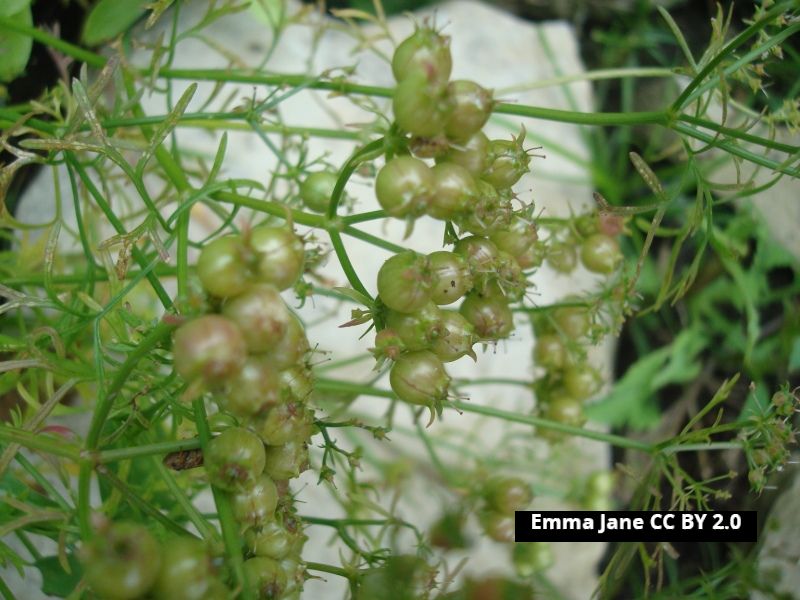
Chef and author Samin Nosrat wrote an article in the New York Times titled "Gardening Made Me Happier. It Will Work for You Too." In it she wrote about using green coriander seed. If you grow cilantro you know how quickly it bolts--goes to seed. If you just leave the seeds to fall to the ground they will self sow. According to Michigan State in The short, sweet life of cilantro" once it bolts "it loses its unique leaf flavor." So most gardeners sow seeds every couple of weeks to have a steady supply of fresh leaves.
You may also know that the dried seeds are coriander, used in Indian, Asian, Mediterranean, African and Middle Eastern cuisines. In fact, MSU notes that "the seeds were the original reason the plant was grown." But Samin doesn't wait for them to dry, she uses them green. She describes the flavor as having an "intensely aromatic, slightly citrusy, mildly cilantro-ish flavor." Samin says she uses the green coriander seeds "anywhere I would use cilantro: for marinades, dressings, hummus; in stews, soups or braises; in herbed rice; with rice noodles or soba; mixed with oil and drizzled atop poached eggs." They also work well with grilled or roasted vegetables. Green coriander seeds are best harvested as you need them, if they sit too long after picking they will start to dry and change flavor. Pick them when they are young and bright green and use them whole or crushed. You could start by sprinkling a few over a fresh tomato salad.
|
|
The effect of heat on tomato blossoms |
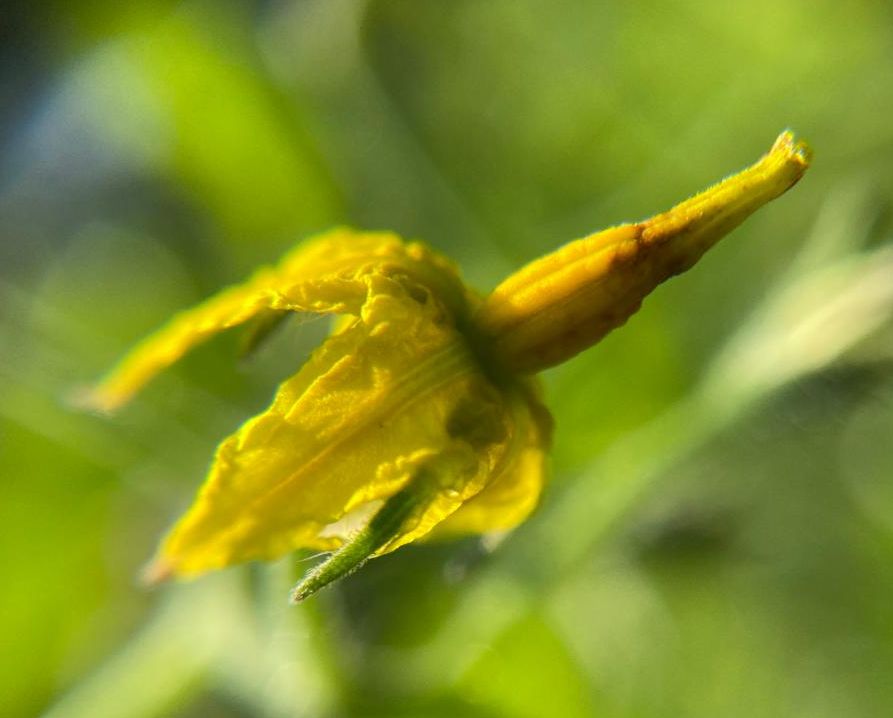
Tomatoes are native to the tropics, and like warm weather, just not too warm. The University of Delaware Extension explains "Tomato plants can tolerate extreme temperatures for short periods, but several days or nights with temperatures above 90F (daytime) or 72F (nighttime) will cause the plant to abort flowers and fruit. At these temperatures the pollen can become sticky and nonviable." So the bloom isn't pollinated, and the bloom dies and falls off. The same thing can happen later in the year when nighttime temperatures are below 55F.
|
|
All we are saying, is give bees a chance! |
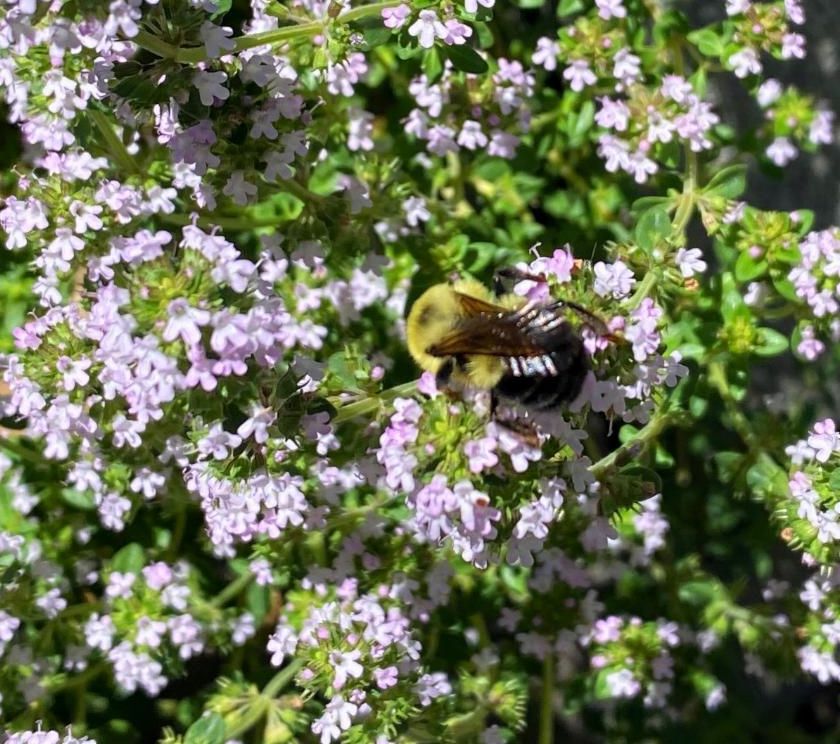
The US Forest Service has determined that lawns can provide good habitat for native bees, assuming two things. First, that they are allowed to contain pollen and nectar sources like clover and dandelions. And second that they are not mowed too often. Lawns mowed every two weeks instead of every week showed a marked increase in the number and diversity of bees. So give yourself and the bees a break and put off mowing for a little while longer. Instead of the roar of the lawnmower, sit back with a cold beverage and enjoy the hum of the bees. There are about 500 species of native bees in Ohio. To learn more about them check out the new Bees of Ohio: A Field Guide.
|
|
Plant now for a fall harvest |
Think your garden is winding down for the year? Think again. Now is the time to stick in a few late season crops. Many vegetables that are harvested in cooler weather taste sweeter. Also, planting later in the season can help you outsmart pests, who may be done reproducing at that point. Also, you get to extend your growing period a bit and fill in some of those empty spots you may have.
Fall harvest planting is based on the growing period of each vegetable, the harvest period, and on the expected fall frost date. The growing period is easy to find on the seed packets. For us, the frost date is usually mid to late October.
To determine when to plant your crop take into consideration that plants grow more slowly as day length shortens in the fall, so add about 14 days to the estimated days to maturity for each variety. Also, add in a harvest period. Finally, consider whether your crop can take any frost. Collards will, beans won't. Many people think that the flavor of some cold-tolerant fall vegetables is improved by a light frost.
Some crops to consider are arugula, beets, collards, kale, lettuce, mache, mizuna, pac choi, radishes, snap peas, spinach, turnips and Swiss chard. Check the maturity dates and choose varieties that mature more quickly.
You can also start several different types of herbs outside in containers in late summer, and simply move them inside when the weather becomes too cold, for a winter herb garden!
|
|
And start some of those fall crops inside |
Seeds have a temperature range where they germinate best. And seeds of crops like lettuce and peas don't germinate well when the soil temperature is too warm. So dust off a couple of your seed starting trays, plug in your grow lights, and start some seeds INSIDE in August. The cooler temperatures indoors will give you a good germination rate, and you can set the plants out in September, when it is (hopefully) cooler. |
|
Be on the lookout for hornworms |
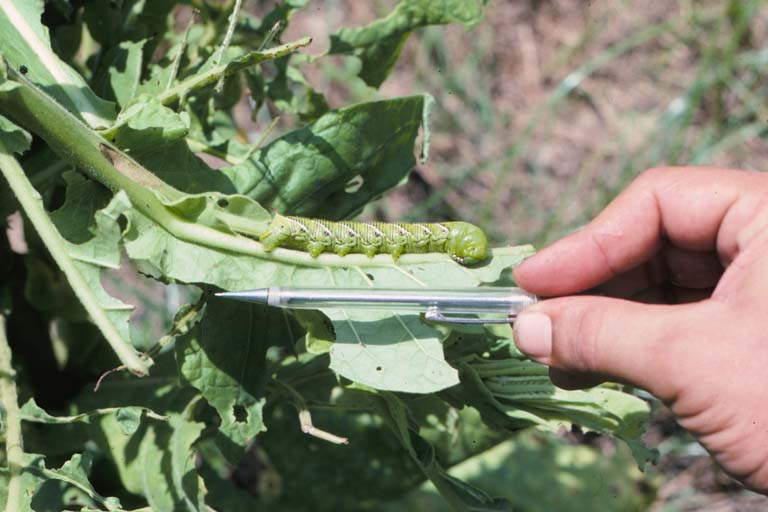
According to Joe Boggs at the Buckeye Yard and Garden onLine (BYGL, see link below) two types of hornworms may be found feeding on tomato plants: TOMATO HORNWORMS (Manduca quinquemaculata) and TOBACCO HORNWORMS (M. sexta). The caterpillars are called "hornworms" because of the prominent horn-like projection rising from the upper surface at the end of their abdomen.
Both hornworms will feed on tomatoes as well as several other closely related plants in the Solanaceae family including eggplants, peppers, potatoes, tobacco, and certain weeds. Backyard vegetable gardeners need to be alert for the symptoms of feeding activity by these luminous green caterpillars which includes missing leaves and stems, hunks bitten out of developing fruit, and frass (poop) on leaves and the ground beneath infested plants.
Tomato and tobacco hornworm caterpillars are the larvae of hawk or sphinx moths. Indeed, tomato hornworms eventually grow up to become the 5-Spotted Hawkmoth; the "quinque" in the specific epithet refers to the five spots on the moth. The caterpillars can grow to a truly impressive size of 4" in length and 1/2-5/8" in diameter. However, despite their size, these cleverly camouflaged caterpillars may go undiscovered for weeks owing that to their coloration and white markings. You might have a better chance of finding them at night--if you have a blacklight flashlight. Hornworm caterpillars glow under blacklight.
The caterpillars can be controlled through hand-picking; however, both caterpillars are also subject to the attacks by several predators and parasitoids. Paper wasps, yellow jackets, and other wasps will grab them, chew them up, and take the remains to their nests to feed their larvae. The tiny parasitoid wasp, Cotesia congregata (Family Braconidae) inserts its eggs into the caterpillars and the resulting wasp larvae consume the hornworms from the inside out. Just before the hornworms die, the full grown wasp larvae erupt through the skin of the caterpillar to form oval, white, silk pupal cocoons.
|
Rows of these white cocoons sprouting from tobacco and tomato hornworms are a well-known and a welcome sight to home gardeners. Of course, the parasitized caterpillars should be left alone. They will do little to no feeding, and the wasp cocoons represent the potential future demise of numerous other hornworms. |
|
Got Corncobs? Make stock!
Put 8 corn cobs, kernels removed using your method of choice and cut into 3" pieces; 1 onion roughly cut; 1 stalk of celery, cut in thirds; 4 crushed garlic cloves, and 1 bay leaf into a stock pot or Dutch oven. Add water to cover by 3 inches. Bring to a boil then reduce heat and simmer at least 30 minutes, up to an hour. Strain the stock and set aside. You can use the stock after 30 minutes, but letting it rest for at least an hour will impart more flavor.
Use the stock as you would any vegetable broth or look on the internet for a recipe for Tennessee Corncob Soup.
Too much zucchini? Click HERE to see Penn State's factsheet on freezing, pickling, and drying your summer zucchini bounty.
Basil will root in water. Cut off a growing tip and put in a glass of water on the windowsill. Once it roots, pot it up and you can have a nice new plant for the garden or for your kitchen window sill long after the frost has killed the ones in your garden.
Beet greens are pretty, tasty and nutritious. But once you have harvested your beets they should be removed right away. The greens pull nutrients and moisture from the beets (their roots). The same goes for turnips and carrots, too. All will keep much better with the greens removed.
|
|
A little bit about crops you can harvest in 60 days |
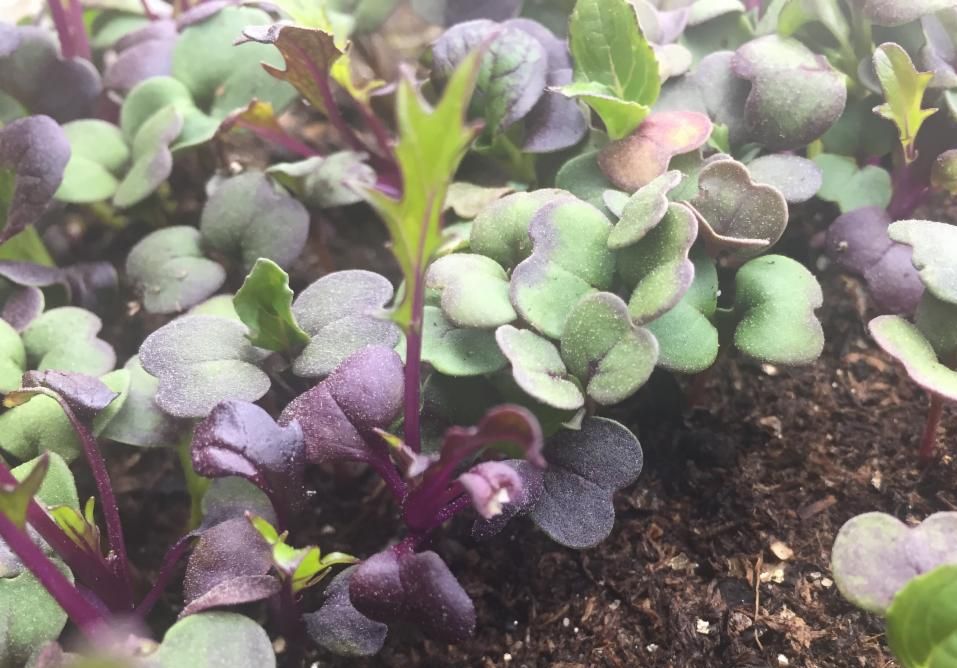
The folks at the All-America Selections had a blog post Homegrown Vegetables in Two Months or Less! by Niki Jabbour (noted author who was a keynote speaker at the Summit County Master Gardeners Design and Beyond program in 2020!) that listed 10 AAS vegetable winners that go from seed to harvest in 60 days or less. So, if you plant these seeds RIGHT NOW, you can be harvesting by the end of September, at least 2 weeks before our average first frost. Niki's recommendations were Mascotte Bean (50 days from seed), Green Wave Mustard (21 days baby greens, 45 days mature heads), Sandy Lettuce (30 days baby greens, 50 days mature heads), Patio Pride Pea (40 days from seed), Prizm Kale (50 days from seed), Avalanche Beet
(50 days from seed), Green Light Cucumber (42 days from seed, 37 days from transplant), Asian Delight Pak Choi (30 days for baby crop, 50 days for full-sized heads), Sunburst Summer Squash (50 days from seed), Radish Sweet Baby (30 days for seed). While you can certainly follow Niki's suggestions, AAS winners are pretty reliable, you can also use them as inspiration. Several other varieties of bush beans mature in about 50 days, like Provider and Maxibel, as do Boro and Red Ace beets. Mokum carrots are ready to harvest as "baby" carrots in 36 days, or full size in 50 days, and Cortino cucumber may be ready in 48 days. Most arugula and mustard greens are ready to harvest in less than 50 days as are several varieties of kale. Sugar Ann and Cascadia snap peas both have short days to harvest, and don't overlook summer squash, most varieties can start producing in about 50 days.
|
|
Buckeye Yard and Garden onLine provides timely information about Ohio growing conditions, pest, disease, and cultural problems. BYGL is updated weekly between April and October.
|
|
|
|
|
|
|