Monthly News & Updates


August| 2026

Insights From The Alliance


The Rural Advantage in a Workforce-First Era


Every few years, higher education reaches an inflection point, a time when national priorities shift and institutions are challenged to adapt. As I look across the higher education landscape this summer, I believe we're living through one of those moments.


Whether you're following discussions in Washington, reading the higher education press, or talking with employers in your own community, one message keeps surfacing: workforce development has become a national priority.


That shouldn't surprise any of us.


For years, community colleges have been the nation's workforce engine. We've trained nurses, welders, electricians, teachers, technicians, first responders, precision manufacturers, cybersecurity professionals, and countless others who keep our communities functioning every day. What's different today isn't our mission, it's that the rest of the country is finally recognizing just how essential that mission has become.


For rural community colleges, however, I believe this moment presents both an opportunity and

a responsibility.


Unlike many larger institutions, rural colleges have never had the luxury of operating in isolation.

We've always worked hand-in-hand with local employers, economic development organizations,

school districts, chambers of commerce, hospitals, manufacturers, and community leaders.

When the largest employer in town needs twenty more welders or the local hospital needs

respiratory therapists, we don't convene a committee that studies the problem for two years. We pick up the phone, bring people together, and start building solutions.


That's one of our greatest strengths.


But we should also remember that workforce development has never meant simply filling jobs.


Our responsibility is much broader than preparing students for their first day of work. We

prepare them for careers that will evolve, industries that will change, and communities that

depend upon educated citizens as much as skilled employees.


That means teaching adaptability.


Critical thinking.


Communication.


Problem solving.


Leadership.


Those skills remain valuable whether someone is entering manufacturing, healthcare,

agriculture, information technology, or transferring to pursue a bachelor's degree.


The conversations surrounding short-term credentials and workforce training are exciting and I

believe community colleges are uniquely positioned to lead them. At the same time, we should

resist the temptation to think that workforce education is somehow separate from higher education. It isn't.


The best workforce programs don't simply teach students what to do.


They teach them how to continue learning long after graduation.


That's especially important today, when technology, particularly artificial intelligence, is changing

jobs at a pace we've never before experienced. The occupations our students enter today will

almost certainly look different five or ten years from now. Our graduates won't succeed because

they memorized a particular software package or machine operation. They'll succeed because they developed the curiosity, resilience, and confidence to keep learning and adapting.


I also think rural colleges possess another competitive advantage that often goes unnoticed:

Relationships.


We know our students by name. Our faculty know their families.


We understand the employers in our communities because many of us serve alongside them on

local boards, volunteer organizations, and civic groups.


That kind of trust cannot be manufactured or artificially generated.


It becomes the foundation upon which successful workforce partnerships are built.


As RCCA members, we have an opportunity to lead—not because rural colleges have the

largest budgets or the newest facilities, but because we've spent decades doing exactly what

national policymakers are now encouraging institutions to do: listen to our communities and respond with agility.


The national conversation may have finally caught up with us.


Now it's our turn to demonstrate what rural leadership looks like.


I hope many of you will join us this September at our joint RCCA–ATEA National Conference at

Northwest Mississippi Community College. There is perhaps no better place to continue this

conversation. Throughout the conference, we'll be exploring innovative workforce partnerships,

leadership strategies, student success initiatives, and practical ideas that you can take back to

your campus. Just as importantly, we'll have the opportunity to learn from one another—something that has always been one of RCCA's greatest strengths.


As always, I encourage you to share your successes with one another. If your college has

developed an innovative apprenticeship, launched a new employer partnership, expanded work-

based learning, or found creative ways to meet local workforce needs, let us know. The best ideas often begin with a conversation among colleagues who understand the unique opportunities and challenges of serving rural communities.


Until next month, thank you for the work you do every day to strengthen rural communities

through the power of education. The future of rural America isn't something we wait for, it's something we build together.

From the RCCA Board

Rurals on the National Stage: What We Can Expect in the Next Year


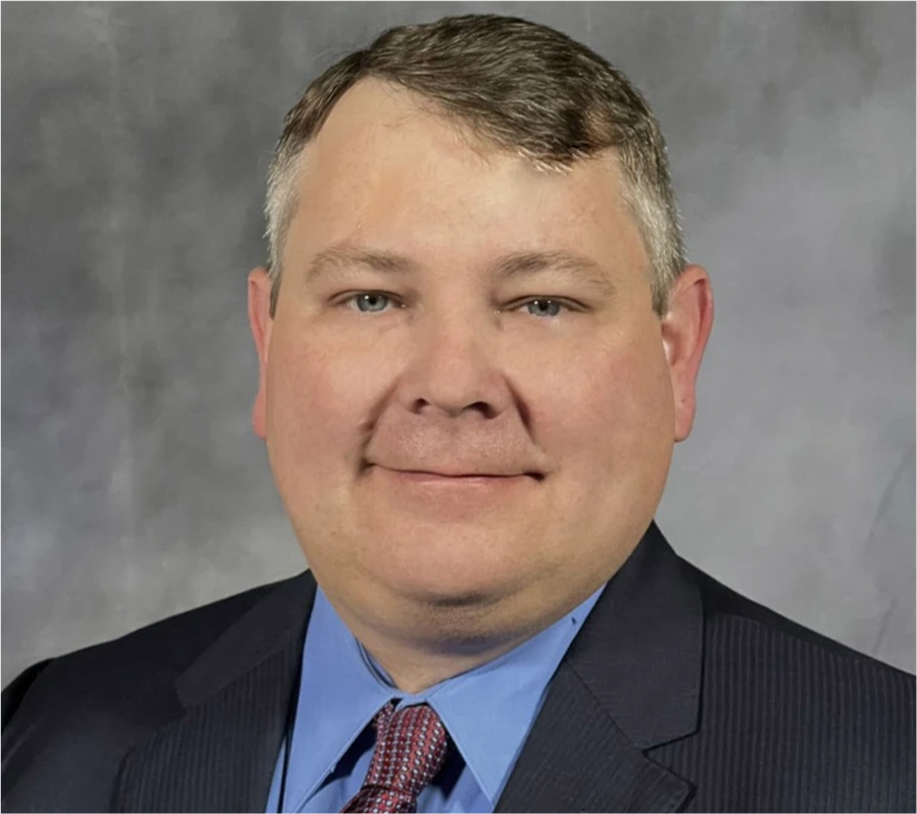
Dr. John Enamait, President, Stanly Community College


Rural community colleges have always been more than places of instruction. We are economic engines, workforce partners, conveners, and sources of stability in the communities we serve. We understand that decisions made on our campuses affect not only individual students, but also families, employers, and the long-term vitality of entire regions. Over the next year, rural colleges have an important opportunity and responsibility to bring that experience more fully into the national conversation about education, workforce development, and economic mobility.


The implementation of Workforce Pell will be one of the most consequential developments before us. For the first time, eligible students may use Pell Grants for qualifying short-term workforce programs that prepare them for high-skill, high-wage, and in-demand careers. This opportunity is especially significant in rural communities, where employers often need workers with specialized skills and students need pathways that produce value quickly. Our challenge will be to ensure that short-term programs do more than respond to an immediate vacancy. They should lead to recognized credentials, continued education, career advancement, and family-sustaining wages. Rural colleges can help demonstrate that rapid workforce preparation and long-term educational attainment are complementary, not competing, goals.


Rural colleges also need, and deserve, a seat at the policy table. Investments in infrastructure, broadband, workforce preparation, healthcare, and economic development will not reach their full potential without rural colleges capable of converting those resources into local opportunity. Rural community colleges already perform that role. We bring employers, school systems, government agencies, and community organizations together because collaboration is not optional in our communities. It is how meaningful progress occurs. In the coming year, we must communicate that story with greater clarity and support it with credible evidence of student, workforce, and regional outcomes.


Technology will present another defining opportunity. Artificial intelligence and other emerging tools are changing how colleges operate, how faculty teach, and how employers organize work. Rural colleges cannot be passive observers; we must thoughtfully harness these tools to expand capacity while continuing to close the digital divide so geography never dictates access to innovation.


None of this work can succeed unless we remain focused on the realities facing rural students. Limited transportation, inadequate childcare, housing instability, unreliable internet access, and financial pressure can derail even the most determined learner. Expanding access matters, but helping students complete credentials and translate them into economic mobility matters even more.


The next year will bring substantial change, but rural community colleges are well positioned to lead through it. We know how to accomplish more with limited resources, build partnerships across sectors, and respond quickly to community needs. By bringing that experience to the national stage, rural colleges can help shape a future in which opportunity is not determined by ZIP code and rural America is recognized not as a problem to be solved, but as an essential part of the nation’s strength.

RCCA Sponsorship

Most rural colleges already know what improves gateway outcomes: cross-functional teams, faculty partnership, data, and corequisite support in place of long developmental sequences. The evidence has been settled for years. Yet on campus after campus, corequisite reform stalls before it reaches scale.


Across two decades and more than 100 partnerships, we've found at Almy Education that the problem is rarely which moves an institution makes. It's the order and ways those moves are made in that have significant impact.


Sequence is the most overlooked variable in corequisite reform, and the most decisive. When the order is wrong, the result is familiar to any rural leader working with a lean team: a promising pilot that never spreads, a redesign that unravels the moment one champion leaves, faculty goodwill spent before the change reaches students. When the order is right, a corequisite model at scale looks like something different. Students finish a college-level course in their first year instead of cycling through developmental terms. The gains hold across every section, not just one or two, and they last after the founding team moves on.


That intentional order, the sequence that turns known practices into results at scale, is exactly what our corequisite guide lays out, step by step.


Read the guide, Improving Corequisite Outcomes: Beyond Access to Success at Scale


Join Kathleen Almy, Ed.D., CEO and Founder of Almy Education, for Corequisite Success at Scale: A Sequenced Approach for Rural Colleges on August 19, 2026, at 1 p.m. ET. Learn how to move corequisite reform beyond isolated pilots using a practical framework designed for rural colleges.


Have You Registered for the 2026 RCCA/ATEA National Conference?

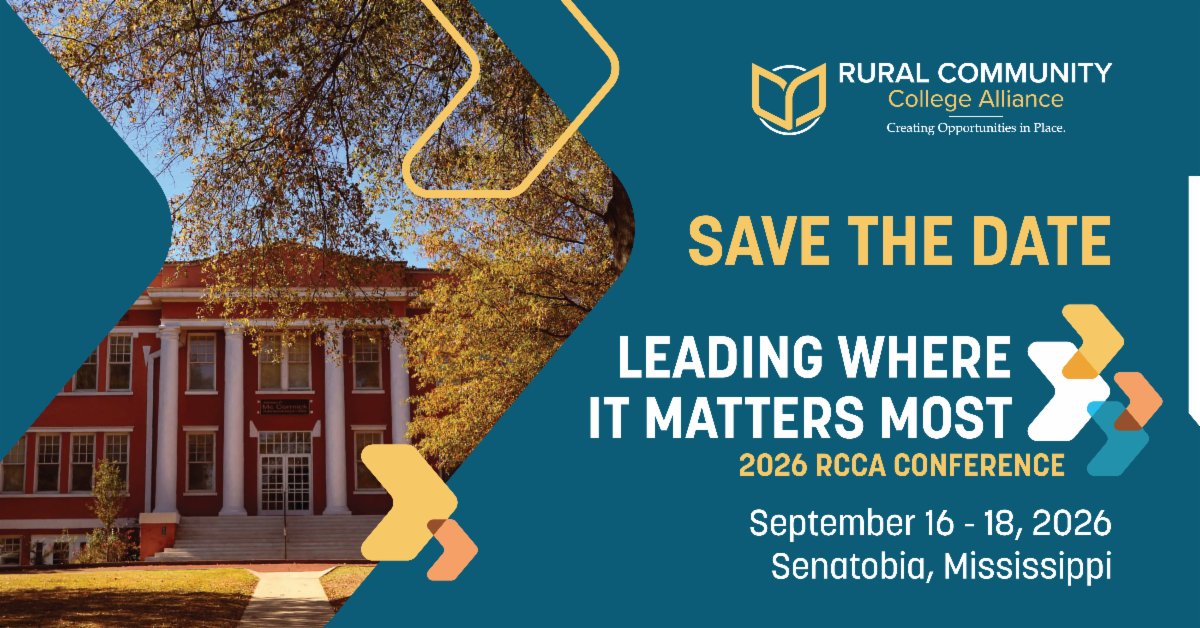
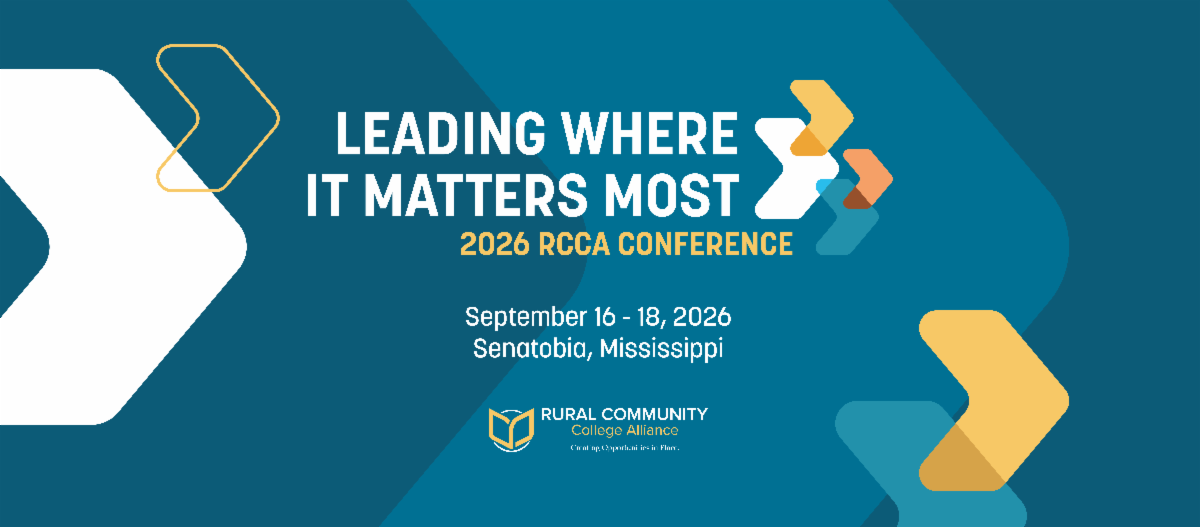
Save-the-date graphic for the Rural Community College Alliance 2026 Conference titled “Leading Where It Matters Most,” scheduled for September 16–18, 2026, in Senatobia, Mississippi, featuring a campus building image and RCCA branding.

We are excited to welcome you to the 2026 RCCA/ATEA National Conference hosted by Northwest Mississippi Community College.


This year’s conference will take place in Senatobia, Mississippi, a welcoming community just south of Memphis, rooted in the region’s rich heritage of agriculture, music, and education.


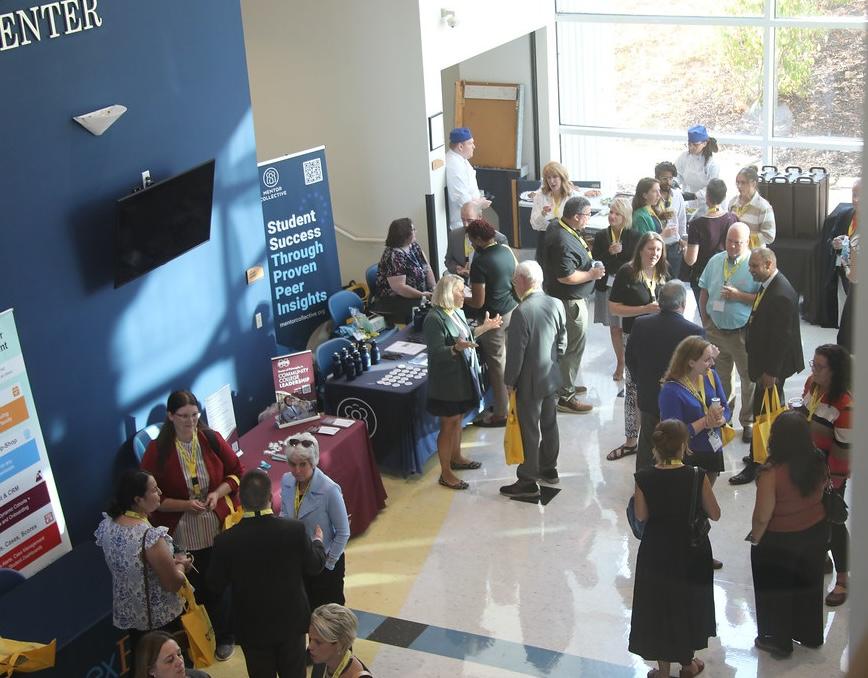
The event will bring together educators, administrators, industry experts, and stakeholders who are dedicated to advancing rural education and strengthening the connections that empower our communities.


We can't wait to see you this September!


Exciting conference excursion on tap with NMCC!


As Northwest Mississippi Community College celebrates its Centennial, we invite you to experience one of our proudest traditions—Ranger Football. For 100 years, football has been woven into the fabric of our college and community, and today our game day atmosphere is widely recognized as one of the premier experiences in NJCAA athletics.


The Northwest Rangers have reached the national playoffs four of the past five seasons while also demonstrating excellence in the classroom, recently earning the highest team GPA of any NJCAA football program in the nation.


Conference attendees will enjoy dinner and exclusive VIP access to our multipurpose facility overlooking the field near the 20-yard line—offering an outstanding view of the action and a relaxed setting to continue conversations with colleagues while experiencing the excitement and hospitality that define Northwest. We look forward to welcoming you to Senatobia and sharing this special part of our Centennial celebration with you.

The Quiet Power of Rural Community Colleges


RCCA President Chris Breitmeyer was recently featured in a Q&A with HigherEdJobs exploring the vital role rural community colleges play across the country. Breitmeyer discusses how these institutions serve as educators, workforce developers, community conveners and economic anchors, often while navigating limited resources, geographic barriers and changing local needs.


The conversation highlights how rural colleges prepare nurses, EMTs, teachers and technicians while forming employer partnerships and providing essential student support. Take a few minutes to hear directly from RCCA’s president and discover why the quiet power of rural community colleges deserves greater recognition.

Host a Gone Guys Screening, a Film About the Growing Challenges Facing Boys and Young Men


Boys and Men are Struggling. It's time to talk about it.


Award winning-new documentary, Gone Guys, is available for library catalogue acquisitions as well as community, classroom, and professional development day screenings paired with thoughtful discussions. Low-cost film licenses are available alongside discussion materials and additional content. The film explores a “quiet crisis” in our communities: the increasing disengagement and isolation of boys and young men.


Set in rural Vermont, the documentary features young men, educators, mentors, and trailblazing programs that are working to re-engage boys and young men in their communities and to reshape their futures. The film draws on the influential work of Richard V. Reeves, bringing national data to life.


Schools have been screening the film alongside discussions at teacher PD days, public events, and in classrooms. Athletic directors and coaches have attended screenings with their teams and hosted team-based conversations.


To learn more, watch the trailer, and host a screening, visit GoneGuysFilm.com and fill out the "Host A Screening" form. 


College Spotlight

Three Rural Colleges Named Aspen Prize Finalists


This column is taking a bit of a turn in this issue. We want to recognize three rural community colleges this month. Congratulations to Patrick & Henry Community College, Stanly Community College, and Wallace State Community College as finalists for the 2027 Aspen Prize.


Being named a finalist for the Aspen Prize is a prestigious honor, but for a rural community college it means even more. It means keeping all rural colleges in the national conversation and on the national stage, and positioning rural colleges as leaders. It shows that innovation and student success don't always need big budgets, but they do need big ideas. 

Resources and Opportunities

Resources Worth Exploring


If you'd like to stay informed on workforce trends and emerging practices, here are a few organizations and resources worth following:


  • American Association of Community Colleges (AACC) – National leadership, policy updates, research, and workforce initiatives affecting community colleges.
  • Association for Career and Technical Education (ATEA) – A valuable partner in advancing technical and workforce education, connecting educators with innovative practices and industry trends.
  • National Skills Coalition – Research and advocacy focused on workforce policy, skills development, and equitable access to good jobs.
  • Lightcast – Labor market analytics and regional workforce intelligence that can help colleges align programs with employer demand.

Important Dates from ACCT


Grant Opportunities

New Federal Grants Resource for Community Colleges


Looking for funding opportunities beyond the U.S. Department of Education? ACCT’s Summer 2026 Public Policy interns have compiled a new resource highlighting federal grants that community colleges may be eligible to pursue through other agencies. The spreadsheet includes opportunities supporting workforce development, health professions education, student well-being and other institutional priorities.


ACCT also provides a customizable letter-of-support template colleges can use when reaching out to members of Congress for support with a federal grant application.


View ACCT’s Summer/Fall 2026 grants resource.

Meet your 2026 RCCA National Conference host!

Watch Northwest Mississippi Community College's welcome video and get excited for the 2026 RCCA National Conference.

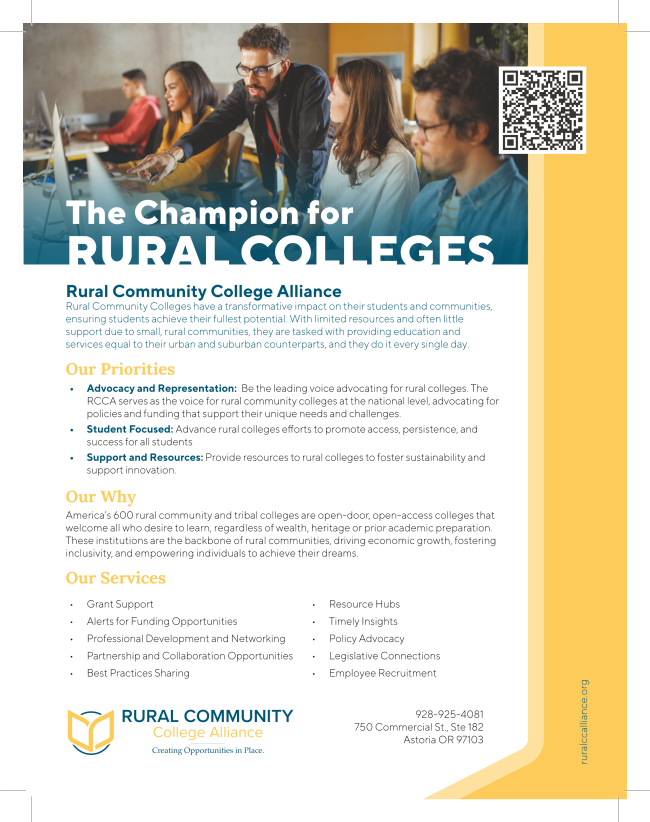
Group of professionals collaborating at computers with overlay text reading “The Champion for Rural Colleges.” Graphic highlights the Rural Community College Alliance mission, priorities, and services supporting rural community and tribal colleges.

Follow the RCCA Facebook Page

Facebook
X Share This Email
LinkedIn Share This Email