|
Late Summer's Show Starring Joe Pye
by Catherine Smith
| | |
When we moved to the old farm we call ChicoryLane in 1974, Joe Pye was blooming along the streams. The plant astonished me. I hadn’t experienced tall wildflowers like that where I came from. Now, I welcome its perennial August return to ChicoryLane among other late summer natives. With long, purple stems and big dusky-pink flower heads swaying in the slightest breeze, Joe Pye energizes the landscape.
Three of five native North American species of Joe Pye might be found here: sweet-scented (Eutrochium purpureum), hollow-stemmed (Eutrochium fistulosum), and spotted (Eutrochium maculatum). We don’t know for sure. We simply enjoy Joe Pye collectively rising above big bluestem grass, goldenrod, ragweed, coneflowers and ironweed around vernal pools, on streambanks, and in meadows. Sometimes a single Joe Pye surprises us by growing close to the farmhouse.
| | | |
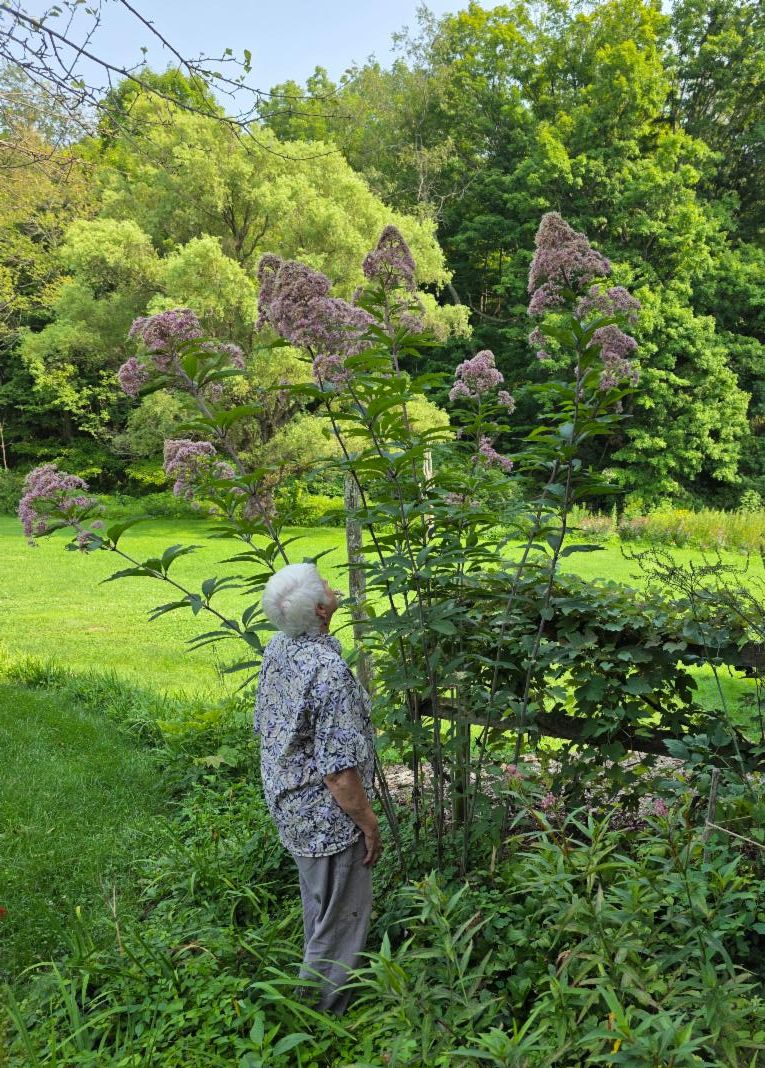
Top: Catherine admiring Joe Pye
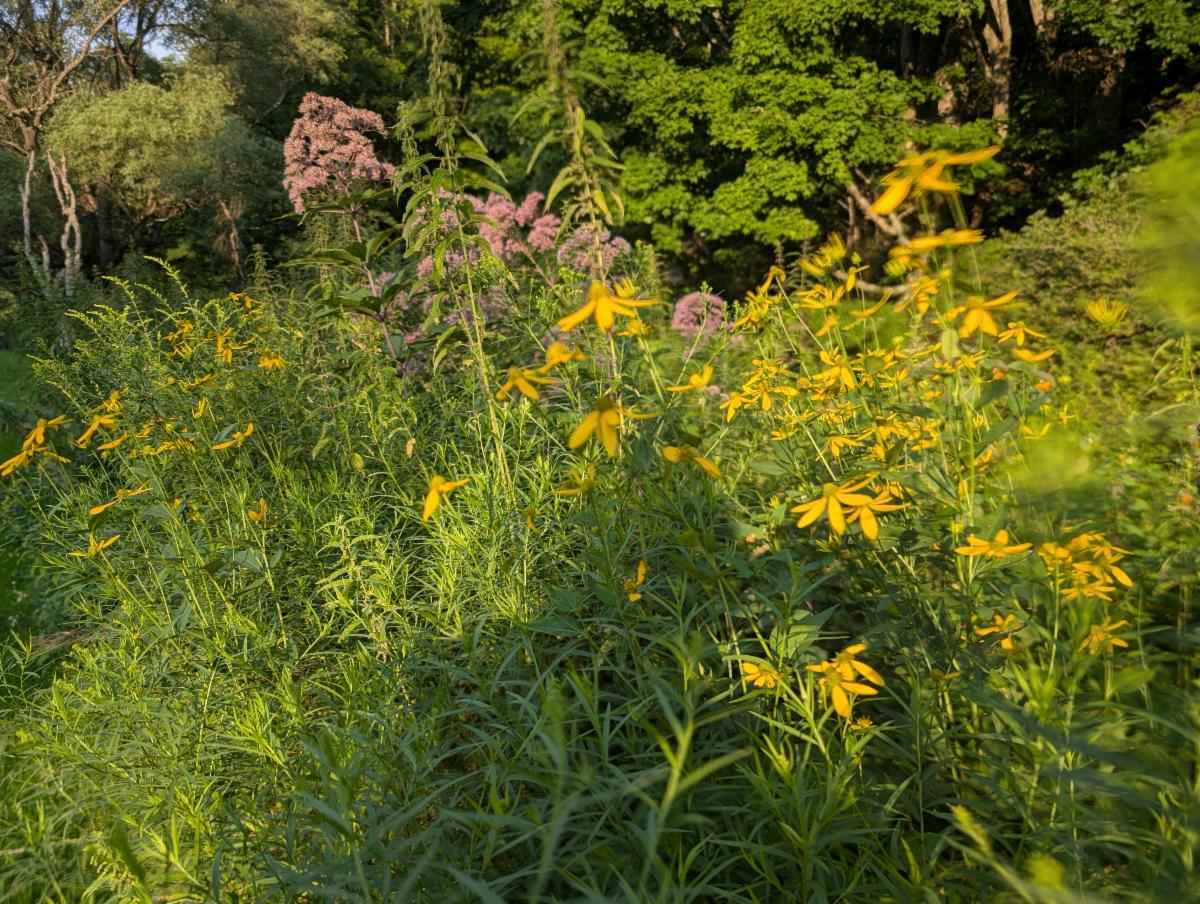
Left: Green-headed coneflowers, Joe Pye, goldenrod, grasses by stream
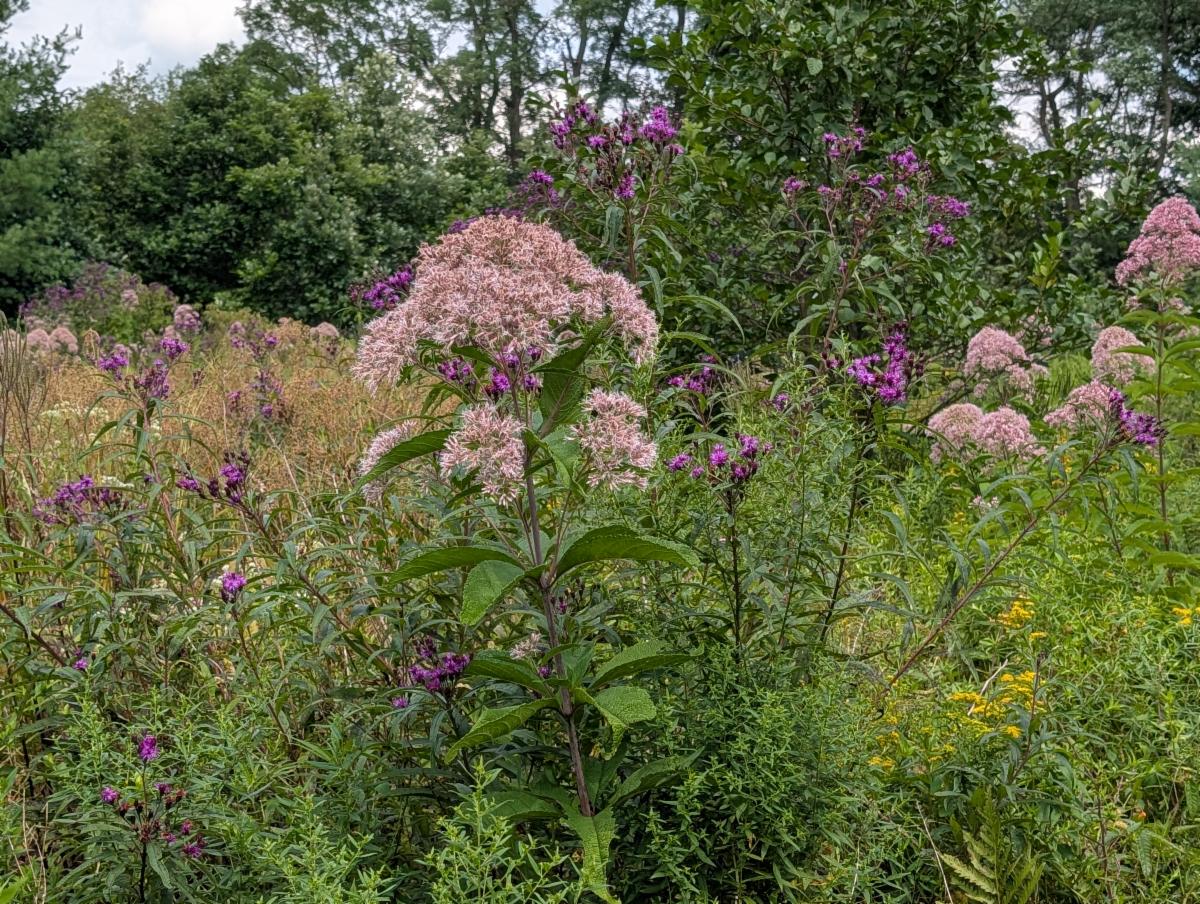
Right: Joe Pye, ironweed, goldenrod, boneset in meadow
Photo credit: ChicoryLane Collection
| | |
What Does Joe Pye Do?
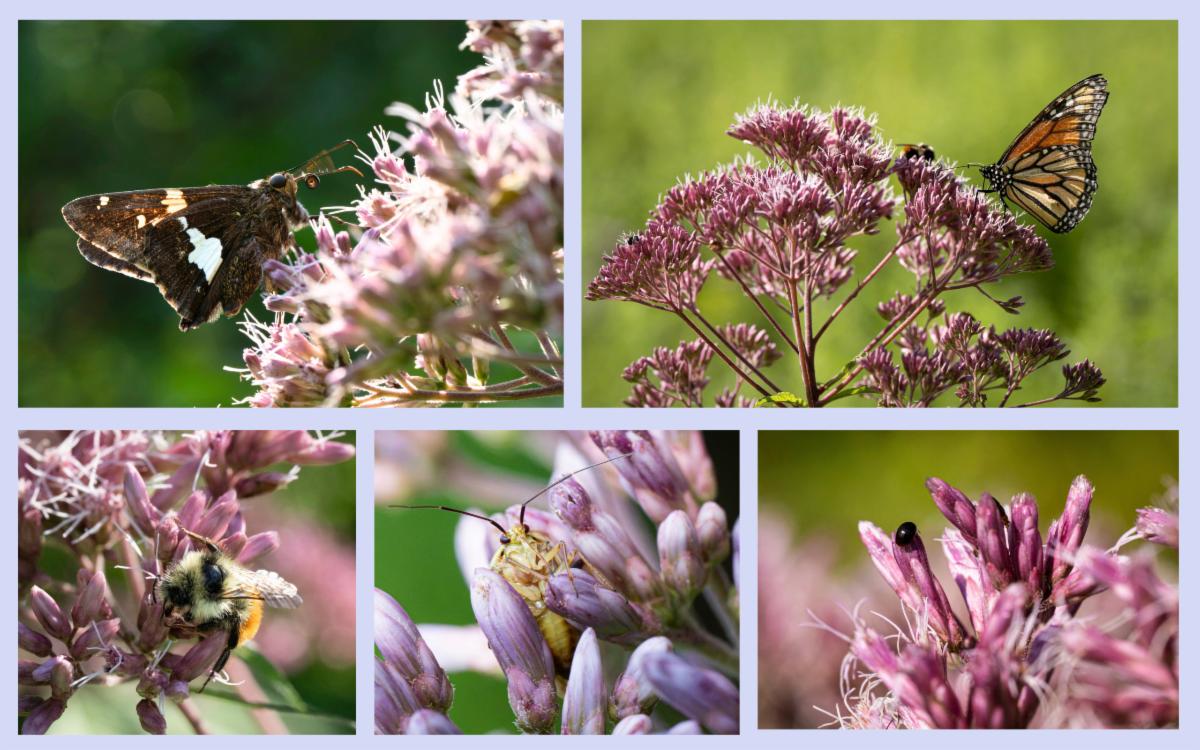
Joe Pye is a generous plant. You could say Joe Pye has a one-to-many relationship with its community; it benefits many. Pollinator butterflies, bees, wasps, and bugs gain nectar from the flowers. Moth larvae eat the roots. Aphids and leaf-miners eat the leaves. (Deer, disliking the leaves’ toxins, mostly avoid Joe Pye.) Solitary female bees overwinter in the stem cavities. Mice, voles, chipmunks, squirrels and varied birds eat the seeds in dried flowerheads. The whole plant’s beauty gives me pleasure. And so on.
| | |
Top, L to R: Skipper butterfly; Monarch butterfly and tri-colored bumble bee
Bottom, L to R: Tri-colored bumble bee; Lygus bug; Dark ladybug beetle
Photo credit: Bill Rathfon
| | |
Joe Pye Enhances ChicoryLane Ecology
To spread Joe Pye‘s beauty and benefits at ChicoryLane, we recently transplanted a few. I chose the donor, an outstanding specimen growing among ferns near the house. At intervals along the purple main stem were whorls of 8 to 10 large, dark green, serrated leaves. From each whorl emerged a bright pink stem, each flinging out clustered, dusky-pink flowers with spiky white stamens. Expansively branching and flowering, the flowerhead reminded me of a summertime fireworks display.
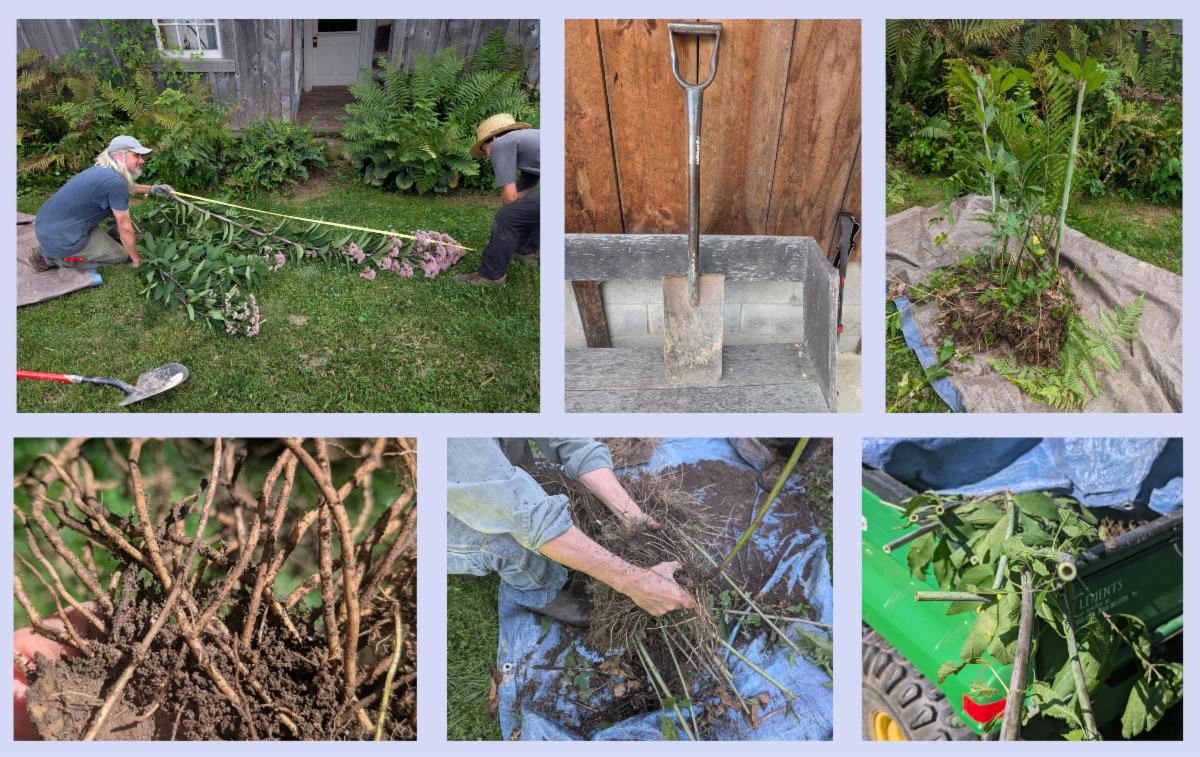
Beginning the transplant process, James Lesher cut the stem at 3’ from the ground for easier handling. With helper Johnny Stoltsfutz, he measured the downed plant’s length at 9’; the whole plant had been nearly 12’ tall. Then James, using his favorite all-steel (not easily broken) shovel, pried the plant’s surprisingly small root mass out of the ground. He pulled the compact mass apart into 12 or more rhizomes. Finally, stem and leaf remains were carried to the compost pile. Over the next weeks, James and Johnny will plant the rhizomes in ChicoryLane’s wet areas.
| | |
Top, L to R: James, Johnny and downed Joe Pye; All-steel shovel; Joe Pye and fern roots mingle in soil
Bottom, L to R: Fibrous Joe Pye root system; Dividing the roots; Compost material
Photo credit: ChicoryLane Collection
| | |
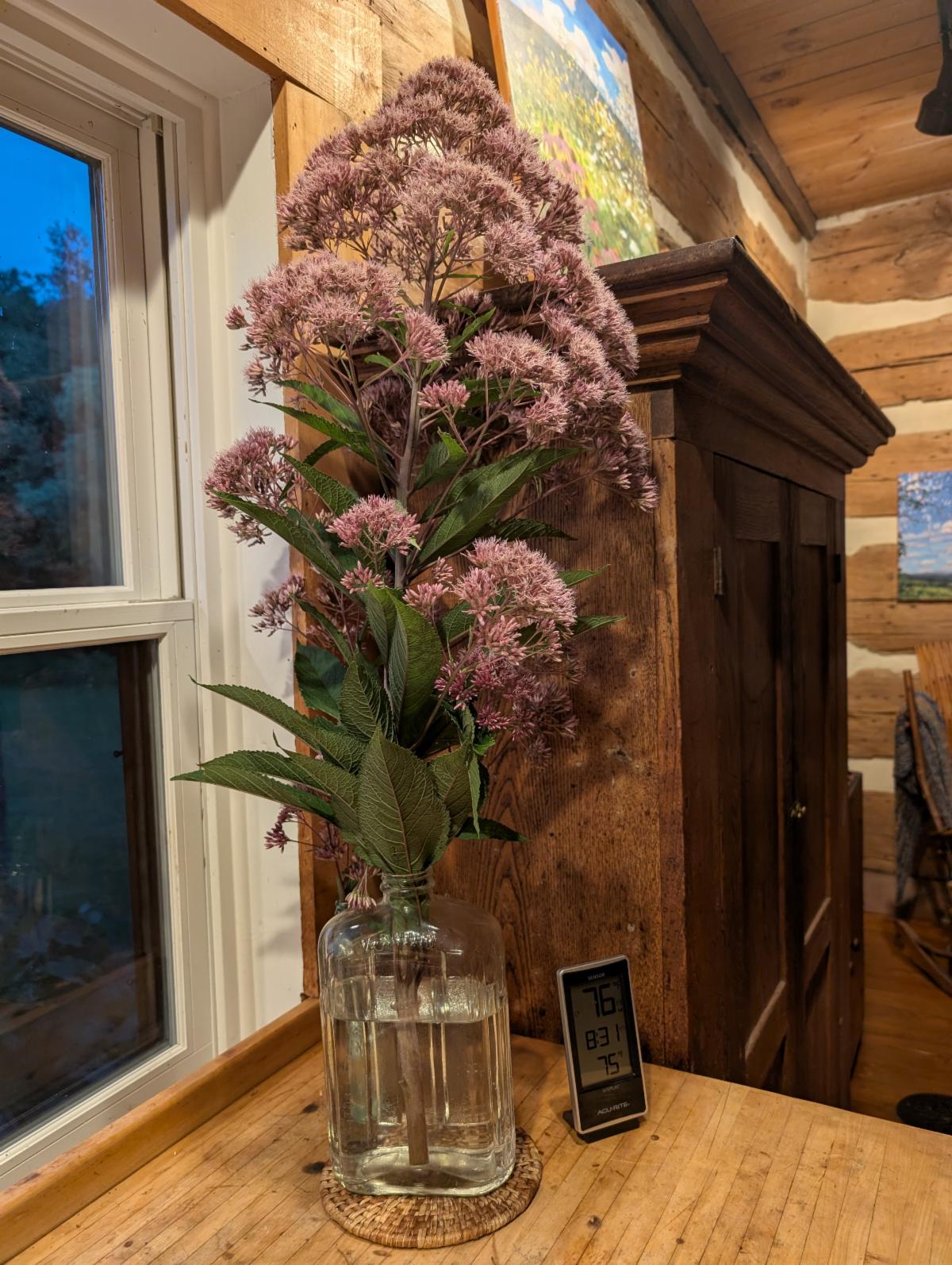
I brought the downed plant's severed flower indoors to stand in a vase by an east-facing window where it catches morning light. Over a few days, despite taking up a half gallon of water, the flowerhead changed. The purple stem shrank and browned, the dusky-pink flowers grayed, and the sturdy leaf whorls curled and drooped. Still grand, the flowerhead became less showy, quieter.
The changes weren’t surprising. As I watched an exemplary Joe Pye change from disruption I caused, I had mixed feelings. Enough said. Later in summer when the sun’s angle changes, I’ll move the vase to a west-facing windowsill. I’ll enjoy watching the big flowerhead catch fall and winter light there.
| | |
Who Was Joe Pye?
To make a long story short, Joe Pye’s sunflower family (Asteraceae) was growing on planet earth approximately 70 million years ago. Ongoing genetic variation and response to massive environmental change split Asteraceae into subfamilies, then species. Approximately 12 million more years of evolution yielded the five distinct species now growing in North America.
So how did an ancient plant come to be named for a particular person? There are several versions of the story. The Euro-American version originated in early America and has been persistently re-told. The gist: Joseph Shauquethqueat, a Mohican tribal leader in late 18th- early 19th century western Massachusetts and New York, used the name Joe Pye in negotiations with British colonial governors and American national leaders including George Washington. Spoken local accounts (in English transcription) credit him with using medicinal plants to heal settlers during a typhus outbreak. Recycling the lore of his healing practice, 19th century botanical and medicinal guidebooks gave Shauquethequeat’s English name to the plant he reportedly used: Joe Pye Weed.
A less familiar Native American version attributes the name to an Abenaki healer, Zhopai. It adds that numerous indigenous tribes, not only Mohican people, used the plant now called Joe Pye to treat various health conditions, not only infectious disease. For summaries of both versions, dip into References below.
Joe Pye’s naming raises an interesting question: how do plants get their common names? Few plants are named for an actual person like Joe Pye, but many plant names suggest a human association. Think about queen Ann’s lace, sweet William, Jack in the pulpit, brown-eyed/black-eyed Susan, or Johnny jump up. If you know how a particular native plant got its name(s), please share that story.
Takeaway thought: The plant existed before anyone called it Joe Pye. Its ancestors existed before humans existed. Humans make sense of things by giving them names, categories, histories, values, and stories. Human sense-making has major consequences for plants. What a plant means to people influences what happens to the physical plant: whether we eradicate it, cultivate it, protect it, study it, admire it, use it.
| | |
Coming Up Next at ChicoryLane
Fall Bird Walk and Open Day
Saturday, September 12, 2026
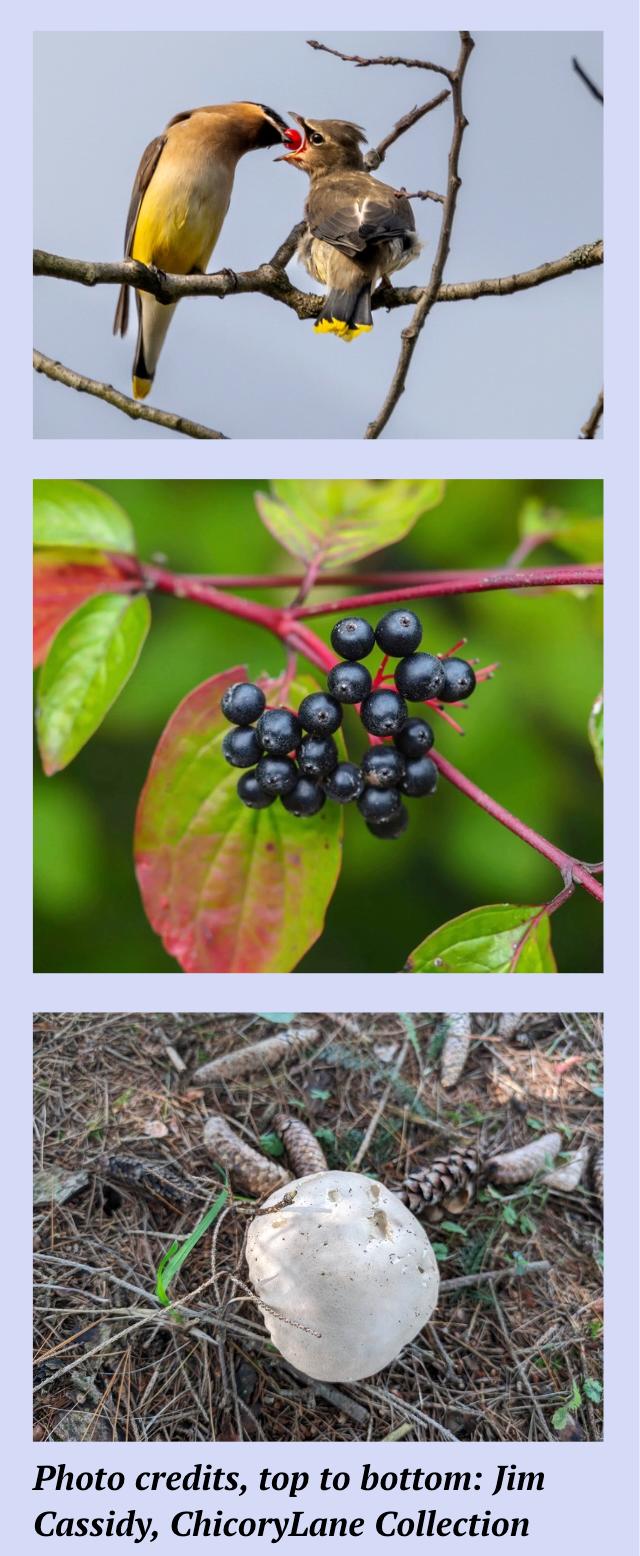
A beautiful show happens in ChicoryLane’s lowlands during fall. Late summer flowers become purple, blue, or white berries encasing woody little seeds. Shrub leaves turn gold, red, brown. Mushrooms appear. Migratory birds might stop thru to feed and rest.
To experience the show and learn about it, join us on September 12 for walks, talks, and exploration. Visitors are invited to design their own day; come for part or stay for all.
-
8:00 – 10:00 AM: Bird Walk led by Joe Gyekis
-
10:00 AM – Noon: Guided Walk: Berries and Birds led
by John Smith and James Lesher
-
Noon – 3:00 PM: Free Range; Ramble on your own
Full details including directions, parking and accommodations, HERE
| | |
Announcement
ChicoryLane’s work centers on improving the ecology of the Reserve and on related educational, aesthetic, and experiential activities. Most of our activities and communications remain closely tied to the place. Occasionally, however, an experience leads us further afield. Last summer, John watched a green heron swallow a frog and reflected on the very different meanings of the encounter for bird and amphibian. More recently, other reflections begun at ChicoryLane have ranged further from place. We will make these reflective pieces available through the label, Musings, on our website’s navigation bar. Interested readers are invited to explore them; others can simply pass them by.
| | | | |
ChicoryLane is a reserve near Spring Mills protected by a conservation easement. Its 68 acres are actively managed for ecological enhancement.
The landscape is natural and scenic. It includes wetlands and meadows, streams, remnant and successional forests, and a grassland. This diversity of habitats is especially inviting to birds and insects. A system of mowed trails and boardwalks make most of the property accessible to walkers.
| | | | |