Facebook  Twitter  Instagram  Youtube  
 

Monthly Newsletter

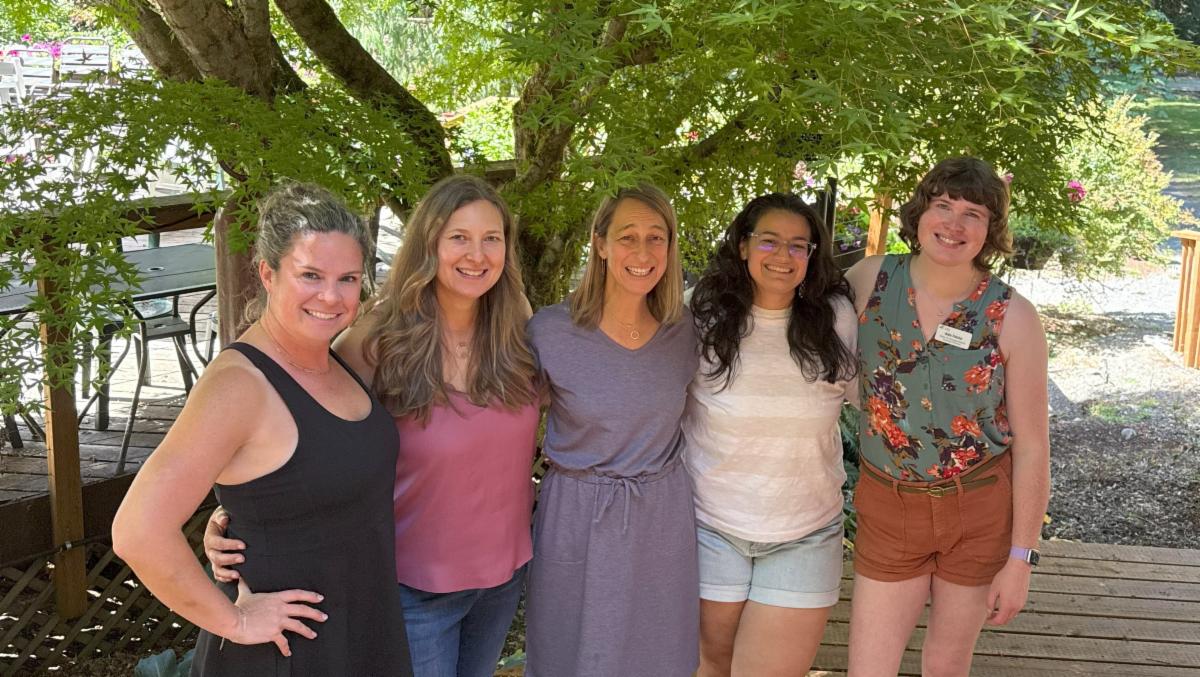
The CSTP team at Camp CSTP at the Rainbow Lodge last week. Jeannie Gruber, Finance Manager (center), has been with CSTP for ten years at this point. Thank you for a decade of dedication, love, and support, Jeannie! We couldn't do any of this without you.

CSTP Events at a Glance

CSTP News

Applications Now OPEN for CRE Residencies: A Unique and Intensive Professional Development Experience

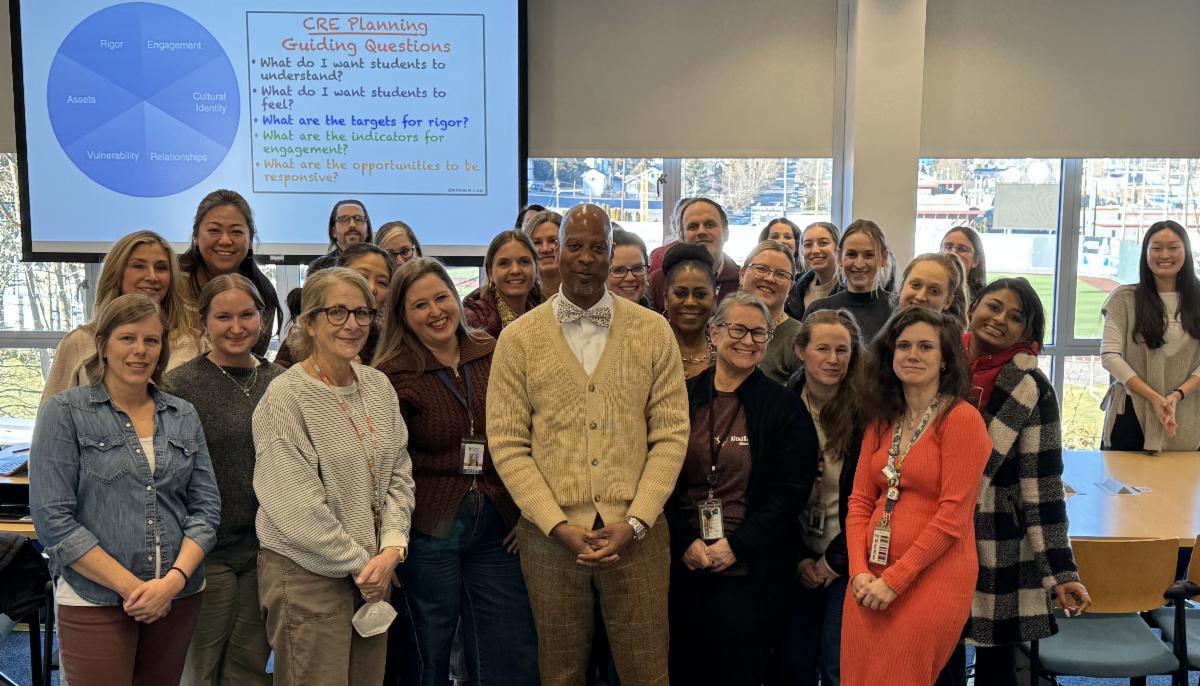
Culturally Responsive Teacher Experiences (also known as CRE Teacher Residencies) are a unique and intensive professional development experience in which your team receives coaching, facilitation, and technical assistance from Dr. Adeyemi Stembridge, author of “Culturally Responsive Education in the Classroom” and “Brilliant Teaching: Using Culture and Artful Thinking to Close Equity Gaps”.


Residencies are designed based on the needs of your school, educators, and their students, and include 18 hours of in-person learning, coaching, and technical assistance around the mental model that serves as the foundation for a culturally responsive classroom. The 18 hours are covered in three consecutive days using a sub-release model. The dates and schedule will be mutually agreed upon once your team is selected and approved. We anticipate selecting up to 15 schools or districts for this one-of-a-kind professional development training.


For those who have already participated in a residency, we also offer a one-day Design Studio to focus on more intensive lesson planning and further application of culturally responsive ideas.


Apply here to host a residency or design studio in your building or district!


If you have any questions, please email Anzara@cstp-wa.org.

CSTP's National Board Component Support is Open for Registration

Registration is open for two CSTP-sponsored National Board Component Support cohorts, with potentially more on the way.


For the 2025-26 school year, we are partnering with the following facilitators:


  • Online cohort: Faciliated by Ranice Innocent. This will be Ranice's 7th year facilitating and supporting National Board Candidates/Cohorts. Foundations and all four components will be offered, with clock hours available for each section. Read more and register here.
  • In-person cohort for music teachers: Stacy Brown will be hosting an in-person cohort for music teachers in the Olympia area. Components 1 and 4 will be offered in 25-26, with clock hours available for each section. Read more and register here.


Partner with CSTP to Offer Clock Hours at Your Next Training

Are you running a course, professional development or book study and want to offer Washington State clock hours? CSTP is an approved Washington State clock hour provider and can approve your courses for clock hours. It is free for the instructor to apply for the course with participants paying a nominal fee.


Learn More and Apply for Clock Hours

National Board Updates

National Board Writing Webinars

Register today for OSPI's National Board Writing Webinars!


Who: Any National Board candidate working toward National Board Certification in 2025-2026


What: These one-hour webinars are designed to support writing for the National Board portfolio. Candidates should expect to examine their own writing and work with peers on the selected topic. These sessions DO NOT replace cohorts nor conditional loan requirements.


When: Fall-Spring, always Tuesdays, 4:30 PM-5:30 PM (choose Series A, B, or both!)


Series A (Fall-Winter) REGISTER HERE!

  • Sept 16: Writing about Contextual Information
  • Sept 30: Writing about Instructional Context
  • Oct 7: Forms & Written Commentary
  • Oct 21: Identifying and Writing about Goals
  • Oct 28: Using Evidence in Written Commentary
  • Nov 4: Integrating National Board Standards
  • Nov 18: Writing Tips: Convincing, Clear, Consistent


Series B (Winter-Spring) REGISTER HERE!

  • Jan 6: Writing about Contextual Information
  • Jan 20: Writing about Instructional Context
  • Feb 3: Forms & Written Commentary
  • Feb 24: Identifying and Writing about Goals
  • March 10: Using Evidence in Written Commentary
  • March 17: Integrating National Board Standards
  • April 7: Writing Tips: Convincing, Clear, Consistent


Where: Zoom – Register above and select the sessions you’d like to attend. You will need an account with https://zoom.us/ and an electronic device to join. A Zoom link will follow in an email after completing the registration survey. Each session per series uses the same Zoom.


RSVP is required – registration will close day-of event. Contact OSPI National Board Program Specialist, Steven Mueller, at Steven.Mueller@k12.wa.us for any questions

Other News and Resources

We Are America Project Application

Are you an 8th - 12th grade English, history, civics, or humanities teacher?

Will you join us in creating a new student-led dialogue around identity?


The We Are America Project works with young people across the country to define what it means to be American — and to spark a new national conversation about American identity today led by the next generation. 


The We Are America Project is led by Lowell High School teacher Jessica Lander and fourteen of her former students, who together published the books We Are America and We Are America Too in 2019. They went on to launch a national project working with teachers and students across the country. Across a school year the We Are America team works with a cohort of teachers, providing curriculum, support and monthly professional development, supporting teachers as they help their students tell their personal stories of American identity. At the end of the year students' stories are published in a book and featured on the project's website. 


The We Are America Project is opening applications NOW for its 7th cohort of We Are America Teaching Fellows! 


Learn more here! And apply here!

Share with your Students

ReadyWA Student Storyteller: Friendship and Belonging

For her second project, Ready WA Storyteller Lizzy shared a deeply personal story about growing up, navigating feelings of not fitting in, and learning to embrace her individuality. From her experiences in the foster care system to her journey toward self-acceptance, Lizzy’s story reminds us that true belonging comes not from changing ourselves, but from finding friendships rooted in respect and understanding.


Her message is one of strength, authenticity, and hope, especially for students who’ve ever felt out of place. Read Lizzy’s full story here.

C-Step into Knowledge!

Join us for fun facts, obscure knowledge, and exploration of physics, genetics, etymology, art, and more!

Fruit: The Fool's Vegetable

There are many different parts of plants that are edible. This includes seeds, roots, stalks, and leaves. We generally lump edible flora into groups, the two most common of which are fruits and vegetables.


Fruits are the plant part that contains seeds and thus, when planted, reproduce the plant. Apples contain seeds, so they are fruit; the same is true of oranges or bananas. Vegetables are far less specific, being defined as any part of the plant that is not the fruit. For some examples: Carrots are roots; lettuce is a leaf; celery is a stalk.


The usual culinary distinction between fruit and vegetable is relatively simple: If it can be made sweet (like in pie) then it’s a fruit; if it is savory and cooked, then it’s defined as a vegetable. This is reflected in many practical areas in life, from grocery store layouts to import laws that tax fruit and vegetables separately.


However, many savory foods contain seeds and are thus biologically fruit. Tomatoes have seeds, but they are used in hearty dinner meals and form the base of most pizzas. Cucumbers are fruit, but we put them in salads instead of desserts. Grains like wheat, rice, and corn are usually classified separately, but corn kernels are seeds, meaning a head of corn is a fruit.


On the other end, we have rhubarb, which is a stalk. That is a distinctly non-fruit part of a plant. Biologically it should be a vegetable, yet we can make pies out of it. Pumpkin and other gourds are a borderline case, where they can be baked in sweet desserts or roasted in sauces for dinner. As anyone who has carved a pumpkin knows, they are full of seeds, and thus a fruit.


The culinary definition of sweet versus savory is disconnected from these biological definitions of fruits and vegetables, so it feels like one must be inaccurate. But here’s the catch: Fruits are vegetables, too. It’s all a linguistic trick. A vegetable, as originally defined, is any part of the plant that we can eat. This includes roots and stalks, but also encompasses fruits, flowers, berries, grains, and legumes.


There is no great conflict between fruits and vegetables wherein some have swapped allegiances by being less sweet or more able to absorb barbecue rub. “Fruit” only encompasses the sweet parts of plants that can be plucked off and eaten raw, so the concept has always been more connected to taste than biology. The most accurate definition of vegetable, then, is “anything we don’t want to call a fruit.”


I think the most elegant solution is to avoid the word fruit whenever possible. Next time I serve apple pie at a family function, I’ll ask if anyone wants any “vegetable dessert.” I’ll keep everyone updated on how that goes.


Support CSTP
Your gift ensures that CSTP continues to support student achievement through a focus on teaching excellence. With you as a partner in CSTP’s mission, you directly make a difference in the lives of youth across Washington State schools. Donations are tax deductible and essential as CSTP works to support educators navigate unique models of student engagement and teacher leadership.
Follow Us
Facebook  Twitter  Instagram  Youtube  
Liking and sharing our posts on social media is another way you can support CSTP during these times. Thank you for sharing our message.
https://cstp-wa.org/ ● (253) 752-2082