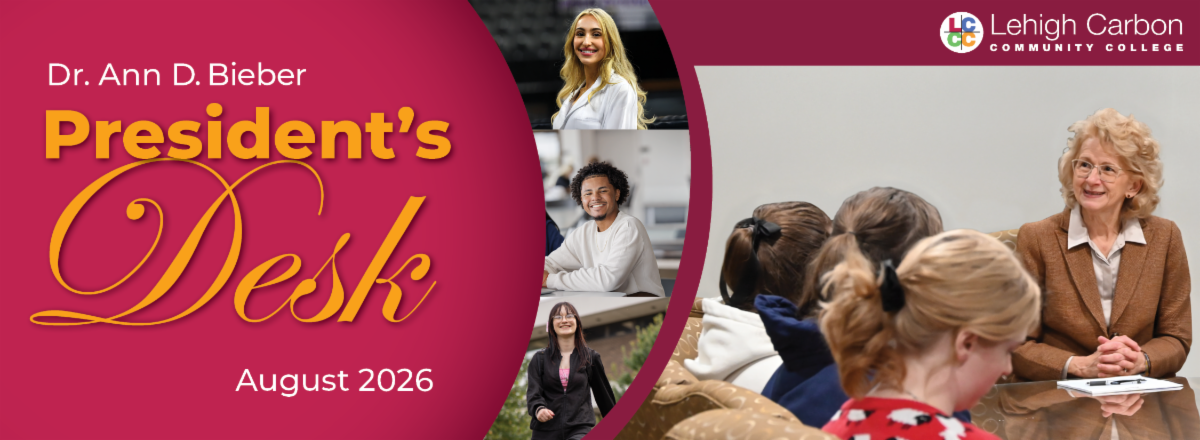
Lehigh Carbon Community College President's Desk newsletter banner for August 2026. Features the college logo, a portrait of President Dr. Ann D. Bieber, and a collage of students engaged in campus activities

Lehigh Carbon Community College Launches Five Dual Enrollment Academies Backed by Pennsylvania Dual Credit Innovation Grant

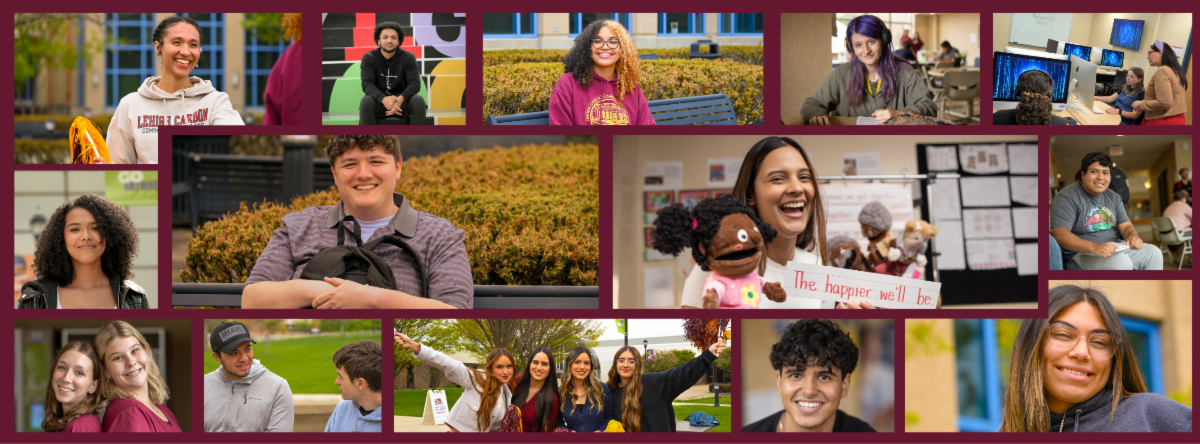
Collage of Lehigh Carbon Community College students engaged in learning activities, group discussions, hands-on coursework, and campus events.

Lehigh Carbon Community College (LCCC) has announced that the Pennsylvania Dual Credit Innovation Grant funding will cover up to 12 credits, textbooks, and fees to help high school students explore high-priority career pathways. The funding will support the launch of five new Dual Enrollment Academies designed to guide high school students along structured pathways directly aligned with high-priority occupations across the Commonwealth.


Participating high school students can now enroll in curated course sequences within five key industry sectors:

  • Criminal Justice
  • Education
  • Healthcare
  • Computer Science (Computer Science & CIS, Network & Cybersecurity, and Gaming)
  • Technology (Advanced Manufacturing)


Through June 30, 2028 (or until funds are exhausted), the grant fully covers up to 12 credits of Academy coursework—including all tuition, required textbooks, and course fees.


The Academy program is structured for maximum flexibility. Students are not required to complete an entire Academy track to receive funding. At a minimum, taking one or two introductory courses offers a tuition-free, low-risk opportunity to test a career field while earning credits toward an LCCC degree or transfer path. Stand-alone eligible classes outside the formal Academy pathways are also fully covered by the grant, with tuition adjustments applied automatically by LCCC’s Business Office.


“This grant allows us to help students approach dual enrollment with true career intentionality,” said Brandon Kwiatek, Executive Director of High School Connections at LCCC. “Whether a student completes a full Academy sequence or simply tests the waters with an introductory class, this funding eliminates financial barriers and gives them a meaningful jumpstart on both college and their future careers.”


As part of the initiative, LCCC will also develop dedicated career workshops for Academy participants and dual enrollment students during the 2026-2027 academic year, set to roll out in spring 2027.


Enrollment and Next Steps


High school students interested in joining an Academy and securing grant funding should

visit https://www.lccc.edu/dual-enrollment-academy/ or email dualenrollment@lccc.edu.

The H.O.P.E. Center: Building Stronger Campus Life  

“I remember walking out of my office and seeing this whole space full of students, and it was just very heartening for me,” said Daniel Melin, Director of Student Life. “For a while, this space really wasn’t getting used as much as it could be. It was great to see it full of students laughing and having fun.”


Melin oversees student organizations and clubs and serves as an advisor to the Phi Theta Kappa Honor Society. He is also the advisor for the Student Government Association and acts as a liaison between students and administration. In this role, Melin supports student programming, addresses concerns, and creates opportunities that strengthen campus life.


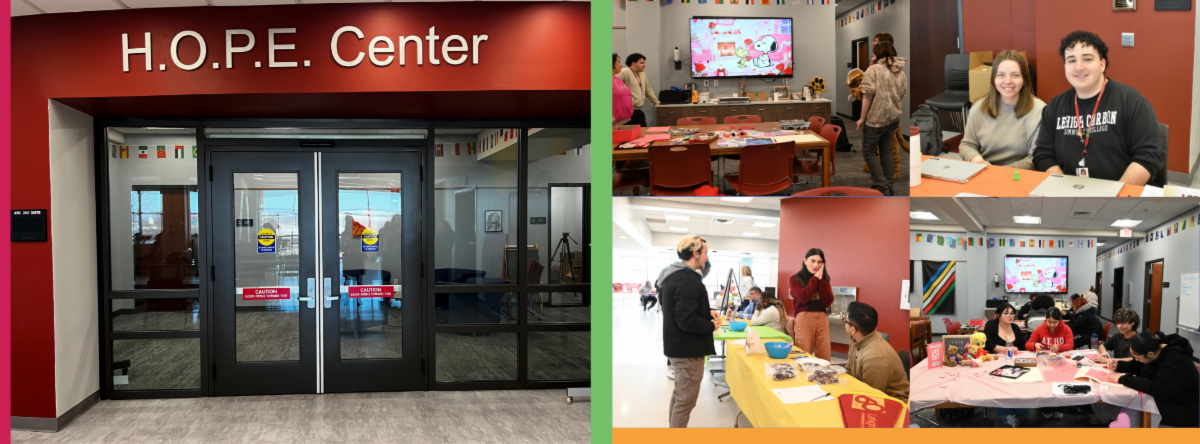
Last fall, Latin@ Leadership and Art Club hosted a Día de Muertos celebration in the H.O.P.E. Center. The vibrant event featured food, crafts, coloring pages, and music. For Melin, whose office sits at the heart of the center, it remains one of his favorite memories of the space.


In 2023, LCCC formally opened the center. For a short time, the center was known as the J.E.D.I. Center. Later in the year, the center was renamed the H.O.P.E. Center. The acronym stands for Humanities, Opportunity, Programming, and Engagement. The name was selected by the Student Government Association and was approved by the college's Board of Trustees. Although the space is relatively new, it is becoming a hub for student activity and connection. Located next to the cafeteria, the center provides a convenient place for students to gather between classes. Students study, hang out, work on group projects, or meet with clubs and organizations. The center also features group rooms and shared screens for presentations, meetings, or activities.


Beyond the gathering space, the H.O.P.E. Center serves as a resource hub for the campus community. A bulletin board highlights upcoming events, campus resources, and helpful information for students. Visitors can find materials related to campus directories, student clubs and organizations, LGBTQ+ resources, and disability support services. If students are unsure where to find help, staff members at the center maintain an open-door policy to connect students with the resources they need.


The space is open to everyone on campus. Students, faculty, and staff are all welcome to use the center. Faculty can also reserve the space for specialized classes or workshops. In one example, Professor Anney Ryan hosted an open mic workshop for her creative writing students.


Looking ahead, Melin hopes the H.O.P.E. Center will continue to grow as both a social and collaborative space. He plans to expand student engagement programming and encourage more clubs and organizations to host meetings and events in the center. At the same time, Alex Nguyen, Director of Student Experience, plans to continue hosting orientations, study-skills workshops, and other events in partnership with Educational Support Services. Melin envisions more faculty using the space to create an academic hub.


For Melin, the goal is simple: create a welcoming space where students can connect, learn, and build community.


“The H.O.P.E. Center is open to all,” Melin said. “I look forward to meeting any students who want to stop by.” As a 2020 graduate of LCCC himself, Melin said he likely would have spent a lot of time in the center as a student. To learn more about the H.O.P.E. Center and upcoming events, visit Lccc.edu.

A Image of one double door that enters to the H.O.P.E Center. Portrait of Daniel Melin, Director of Student Life at LCCC, smiling in front of the H.O.P.E. Center campus space, and students doing activities inside the space.

Honoring the Career of Karen Clark, Director of Nursing

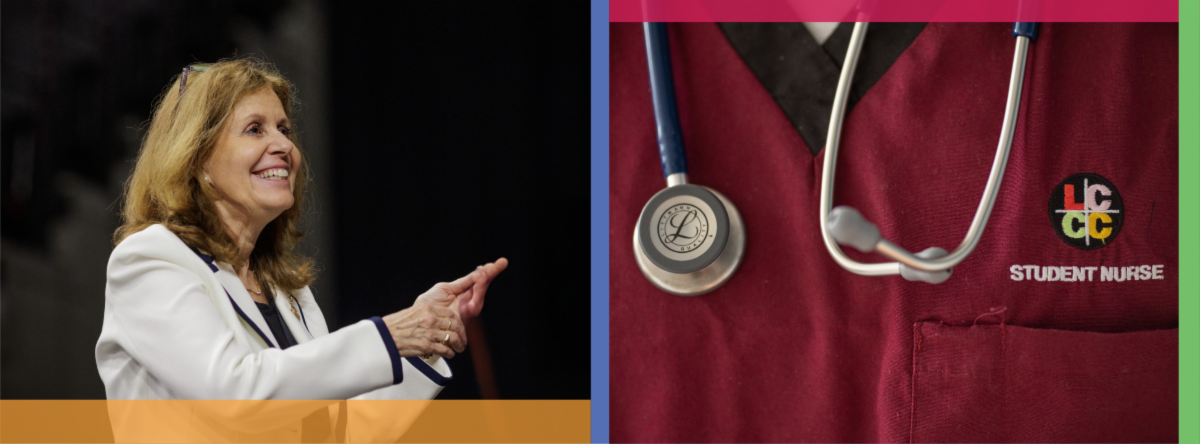
Portrait of Karen Clark, Director of Nursing at Lehigh Carbon Community College, next to a image of the nurse students uniform..

“Community college is one of the best kept secrets, especially in today’s world.”


A framed plaque sits beside Karen Clark’s desk, serving as a quiet reminder of the mission that first drew her to LCCC. She gestures toward the plaque as she reflects on her father, a former Trustee who served the college for 10 years. Through him, she developed a deep appreciation for the mission and impact community colleges provide.


Clark began working at LCCC in 2009 as a clinical adjunct professor before becoming a full-time faculty member in 2011. Over the years, she helped oversee both the RN and practical nursing programs while contributing to student support and the daily operations of the nursing programs.

Clark, the oldest of five, explained that although she was not a community college graduate herself, her father strongly believed in the importance of accessible education and service to the community.


Student Support and Community Impact

During her time at LCCC, Clark witnessed the nature of community college, where students balance jobs, families, and academic responsibilities. “Students have a lot on their plates,” she said.


She credits Larissa Verta, Vice President of Academic Services and Student Development, as a mentor and an important influence in shaping her approach to student support. Verta, she noted, modeled availability and consistent guidance, qualities Clark worked to carry into her own practice.


Clark described her role as an act of service. “I saw it as service to others and the contributions I could make,” she said. “I am thankful each and every day while working at LCCC.”


Growth in the Nursing Program


Students can often be seen working with simulation mannequins—a key development in the program’s hands-on learning approach.


Clark played a role in the development and continued use of these simulation labs. She highlighted their importance in nursing education. “The mannequins can do vital signs, change their respirations, heart rate, heart rhythm,” she said. Students practice procedures such as inserting nasogastric, feeding, and catheter tubes.


The simulation lab also includes a birthing mannequin, allowing students to experience the delivery process in a controlled setting. VR goggles give students a first-person view of the birthing process, allowing them to observe fetal movement and delivery in real time.

Clark noted that this type of training helps bridge the gap between classroom learning and clinical experience, especially in cases where students may not encounter certain situations during their practical rotations.


She also emphasized the broader impact of the program on the local community. Many graduates remain in the area after completing their degrees, helping strengthen the region’s healthcare workforce. “We provide the community with quality, professional nurses that remain local to the area,” she said.


Reflection and Legacy


When asked about student interactions that have stayed with her, Clark said, “All of it. Students are in and out all of the time. Some just really need support. I constantly interact with students. I try to be at all campuses.”


She added that students and peers have been a constant source of motivation throughout her career. “The big thing for me is service to the community,” she said. “My goal is helping students get to their goals.”


Clark described LCCC as a place where student support is central. She said her time at the college allowed her to provide a meaningful service to others and that she has tried to remain grounded in her core beliefs throughout her career.

When asked what advice she would give to future students, she said, “Follow your dream, follow your passion, and just stay with it.” When asked what she will miss most, she said, “The people.” Clark hopes students and colleagues remember the importance of staying true to who they are.


In retirement, Clark enjoys spending time with her family, gardening, golfing, traveling with her husband, and time with her grandchildren. Looking back on her time at LCCC, she described it in one word: “Fulfilling.”

Nursing students on graduation getting their graduation pin for the Director of Nursing, Karen Clark.

Driving Student Experience Through Professional Growth 

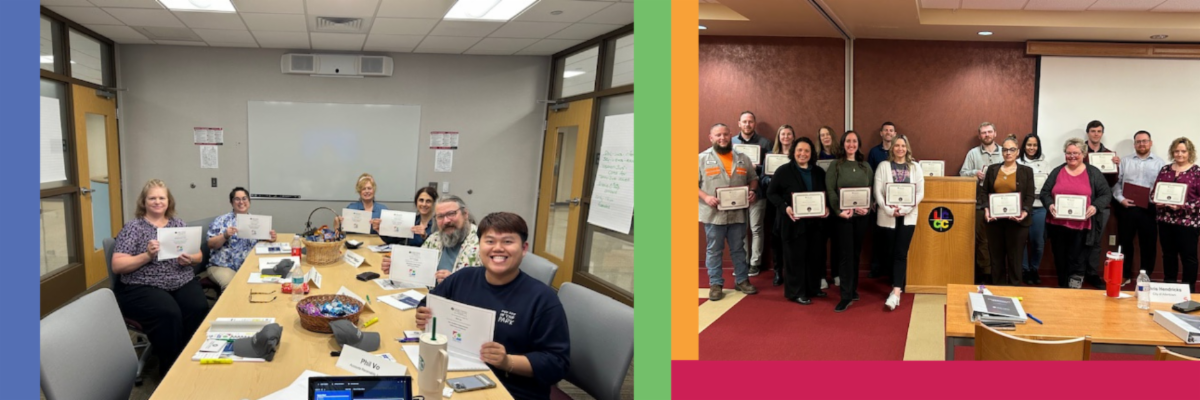
LCCC staff members participating in an interactive service mapping and leadership development workshop.

At Lehigh Carbon Community College, we are dedicated to continuously improving customer service across every stage of the student journey. Our staff members recently participated in hands-on service mapping workshops designed to evaluate, refine, and improve every touchpoint, thereby ensuring that students receive high-quality support. These workshops enable LCCC staff and administrators to deliver an optimal experience to students, whether during their initial interaction or as part of an ongoing connection.


These skill-building workshops, offered directly by our own Center for Workforce Development, provide customized training solutions that are customized for what organizations are looking for. The programs, including service mapping workshops and leadership development courses, are tailored to address the specific objectives of our organization and teams.


Our employees utilize these workforce development opportunities not only to enhance their skills but also to pursue ongoing professional growth within the institution. A recent example of this internal development is the graduation of staff from the Level 1 Foundations Leadership Class. One participant noted, "I liked how engaging and informative it was; the interactive discussions and real-life experiences made it easy. I also appreciated the opportunity to connect, learn, and grow.”


Building on that success, our team is preparing for the Level 2 Emerging Leadership Program, which will touch on emotional intelligence, strategic thinking, cross-departmental leadership, and influence. Facilitated by the Center for Workforce Development, these programs support staff in developing leadership skills and help strengthen leadership capacity throughout the broader community.


To learn more about these customizable opportunities, contact Doni Binczak, Employer Partnership & Business Development Manager, at (610) 799-1950 or email leadershiptraining@lccc.edu.


Important Dates for August

August 15 – Saturday Virtual Administrative Office Hours (9 a.m. – 3 p.m.)

August 18 & August 19 – Fall Convocation

August 22 – Saturday Virtual Administrative Office Hours (9 a.m. – 3 p.m.)

August 24 – Fall Classes Begin

August 24 –August 30 – Late Registration and Add/Drop Period

Lehigh Carbon Community College President

Dr. Ann D. Bieber

LCCC Board of Trustees

LCCC Foundation Board of Directors

Alumni Association Board of Directors