|
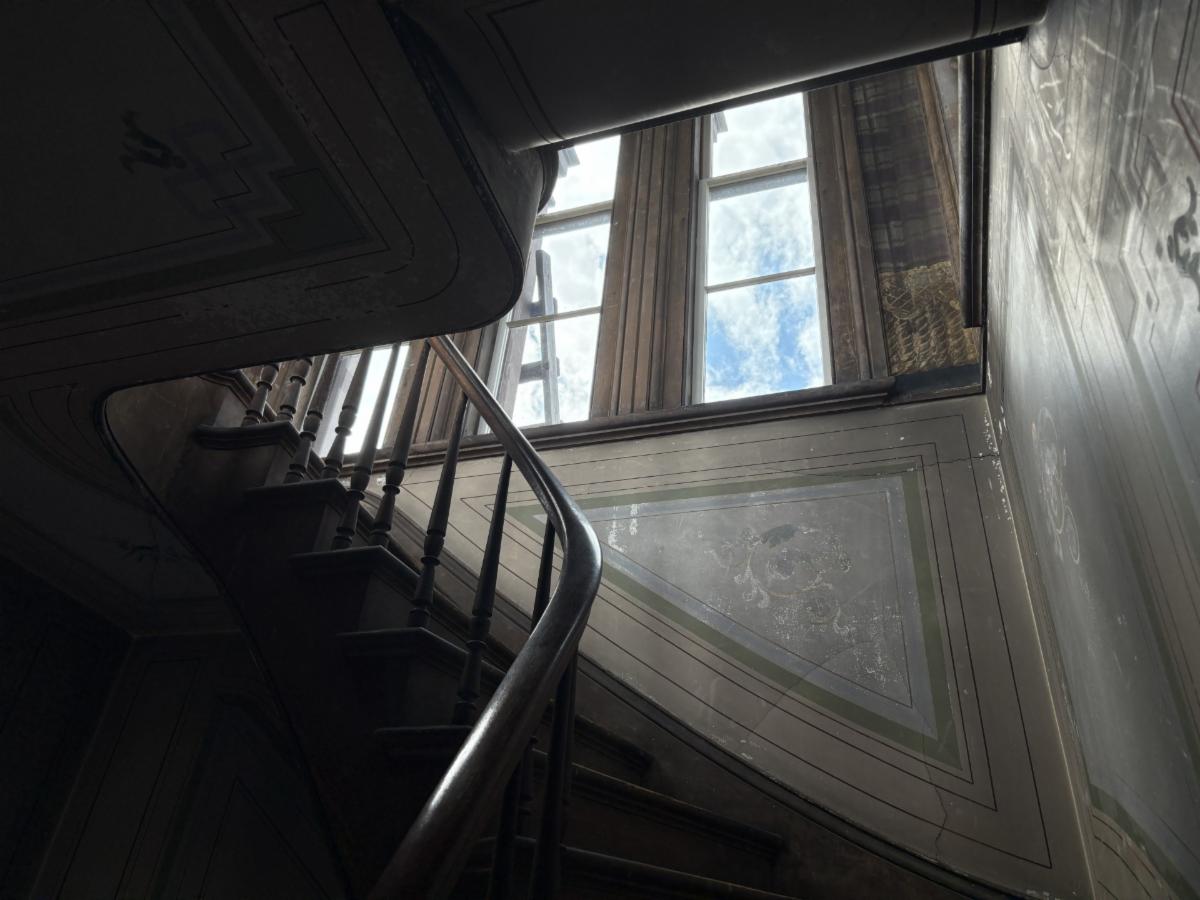
Victoria Mansion has long been in the forefront of conservation technology relating to nineteenth-century wall and ceiling paintings, which were known at the time as “fresco painting.” We are thrilled to announce that with a new and important publication, we are now taking the lead in the scholarship concerning the Italian immigrant artists who introduced this type of decoration into American interiors.
Over ten years ago, former trustee and long-time curator Arlene Palmer Schwind started researching the Bolognese artist responsible for the Mansion’s decorations, Giuseppe Guidicini, with the idea of writing a modest book limited to his career and his work at the Mansion. She quickly discovered, however, that for many of his architectural commissions, he worked with a peer artist, who, in turn, accomplished different decorative projects in collaboration with other Italian artists—and virtually none of these Italian immigrant artists were known to scholars.
Realizing that these neglected artists deserved attention, Arlene spent the last six years unearthing information about Guidicini and his colleagues from thousands of nineteenth-century newspaper articles and advertisements, theatrical playbills, and other primary sources. It soon became obvious that these talented artists had an outsized impact on American visual culture between 1820 and 1880.
Trained in scenography as well as architectural decoration, Guidicini and others painted memorable and innovative scenery for American stages, even as they set new standards for the interiors of theatres and opera houses. Those venues exposed the public to a sophisticated, European style of decoration that merged elements from classical antiquity and the Italian Renaissance. The fashion spread, and the Italian artists were soon ornamenting places of business, houses of worship, and private homes. Although their remarkable achievements are best documented in New York, the artists were engaged for projects from Maine to Louisiana to California—and even beyond, to Cuba and Brazil. Sadly, few examples of their work remain; Victoria Mansion is unique not only in retaining almost all of Guidicini’s stunning original decoration but also in presenting his artistry in a nearly complete context.
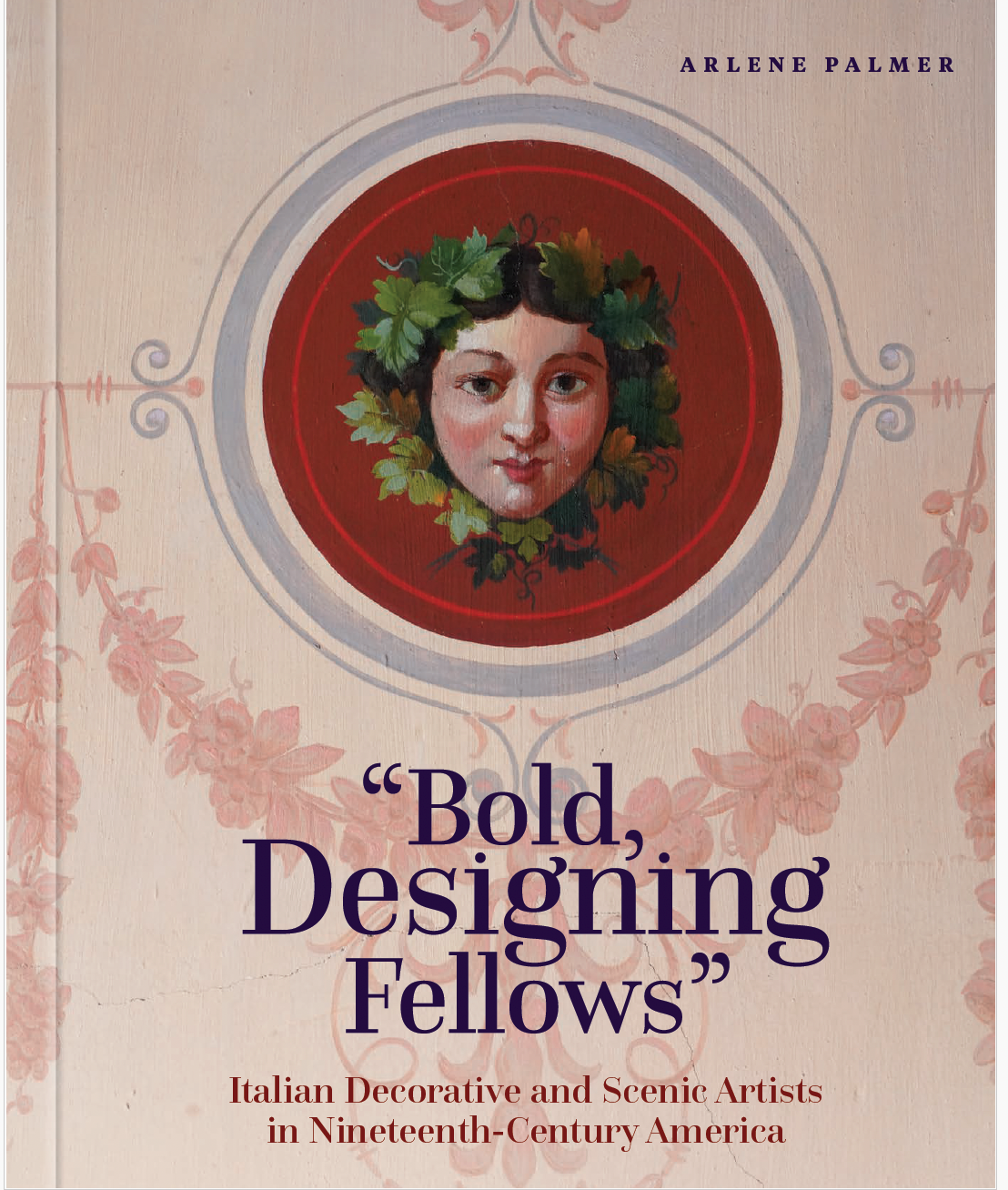
The fruits of Arlene’s research have come together in a beautiful book that will be released by the Mansion next spring. The title, “Bold, Designing Fellows”: Italian Decorative and Scenic Artists in Nineteenth-Century America, references a satirical novel of 1858 in which a fictional millionaire simply had to have his Fifth Avenue mansion decorated by Italian fresco painters—those “bold, designing fellows.” The 368-page hardcover book, with nearly 250 illustrations, is being published by Giles Limited, a British firm that is well known in this country for its high quality museum publications.
In support of the cost of publication, Victoria Mansion is pleased to announce a generous grant from the Richard C. von Hess Foundation, which in past years had underwritten such conservation projects as the Turkish Smoking Room and the Vestibule. The Decorative Arts Trust has also awarded the Mansion a handsome publication grant. Donations for the project have also come from the late Charlotte F. Brown and former Board President Wilmont M. Schwind.
There will be special events next spring surrounding the release of “Bold, Designing Fellows” that you won’t want to miss—stay tuned!
|