Cyndie Zikmund - Author


Creative nonfiction + real world wisdom. My beginnings were rough. My path was unlikely. Now writing the stories I once needed to hear.

Bootstrap Newsletter

November 2026 | Issue 11

Welcome!

... to the go-to location for details and updates about my upcoming memoir, BOOTSTRAP: A MONTANA ORPHAN'S RISE IN SILICON VALLEY.

In this issue - Beautiful Souls

  • I KISSED A BOY is an anthropomorphic look back at my first giraffe kiss.
  • PRACTICING LEAVE-IT honors the twelfth birthday of our two rescue pups by learning their method of staying calm during times of stress.
  • NOVEMBER IS DIABETES AWARENESS MONTH and time to pay tribute to two beautifully souled women who died too young, gave so much, and will always be remembered.
  • But first, a BOOTSTRAP update...

BOOTSTRAP


The Early Access program has completed! Thank you to those who read an electronic version of BOOTSTRAP and are ready to provide a review when it launches in December. I appreciate the kind remarks many of you have sent me. This process is daunting and your support means the world to me.


Here are two endorsements or "blurbs" that came from people I admire, respect, and like a lot. Deep gratitude to Paul Lisicky and Hal Ackerman for their kind words.


"Some people are given a path, while others must tread their own. Cyndie Zikmund has built a life from the ground up, and BOOTSTRAP is a magnetic account of grief, drive, vitality, and difficult decisions, arriving, unexpectedly, at something like grace—as close to wisdom as we can imagine."

Paul Lisicky, author of SONG SO WILD AND BLUE and THE NARROW DOOR


"The memoir BOOTSTRAP is the story of a girl growing up in a boy's world into a woman in a man's world. It is about her staying power to endure and overcome the many adversities her life presents, and the motivation to move forward to the achievements she is determined to fulfill. It is an outsider's long poignant quest to find a place where she feels she belongs. In doing so it chronicles the development of the electronics industry, deals with love and death, and teaches us the proper way to eat steak. It is written without any affectation of language. Its only adornments are honesty, an ability to see her vulnerabilities, and a well-paced, well-observed, well-told, emotionally involving narrative."

Hal Ackerman, former co-chair of UCLA'S Screenwriting Program and author of WRITE SCREENPLAYS THAT SELL.


I KISSED A BOY (GIRAFFE)

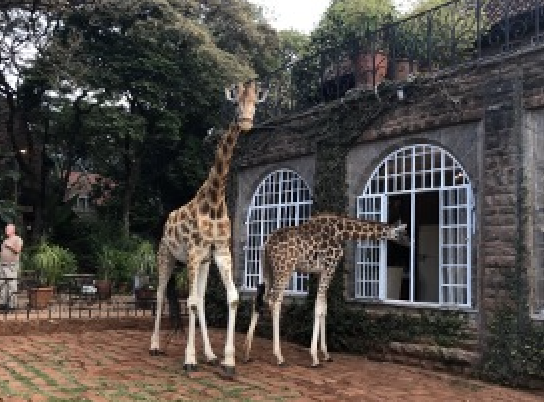
Two Rothschild's Giraffes visiting during breakfast at the Giraffe Manor in Kenya.

When we arrived around midnight at the Giraffe Manor in Kenya, the other guests had already gone to their rooms. Dave and I had traveled to the other side of the world for my sixtieth birthday. The manager served chicken pie and salad while I gazed out the window at a young giraffe visiting from the sanctuary next door. I imagined he was a unicorn with special powers. 


The next morning the front door to the manor looked the same as it did the night before. But I would soon learn things were very different. 


I opened the door and stepped into the courtyard, wondering where coffee was being served. 


Two Rothschild's giraffes looked startled by my presence. The morning was their time to receive treats from guests seated in the breakfast room.


The giraffe on the left struck a confrontational stance. I froze. The other giraffe teeter-tottered her legs. Her long neck swayed. I ran towards the backyard, leaping over the low fence while every molecule in my body shuddered. 


They wouldn't have eaten me. They're herbivores. But they would have knocked me around with their long necks like the intruder I was. 


Later that day, several giraffes from the Center sauntered over to receive snacks from guests during afternoon tea. 


The manager suggested I hold a tasty pellet in my mouth for a kiss. I said an emphatic, "No." 


But then, I looked into the eyes of Pimba, a young male giraffe. His gentle stare and his big eyes framed in long curled lashes put me in a trance. I recognized him from the night before. We meet again. The unicorn giraffe, a kindred soul.


In that moment, my "No" became a "Maybe."


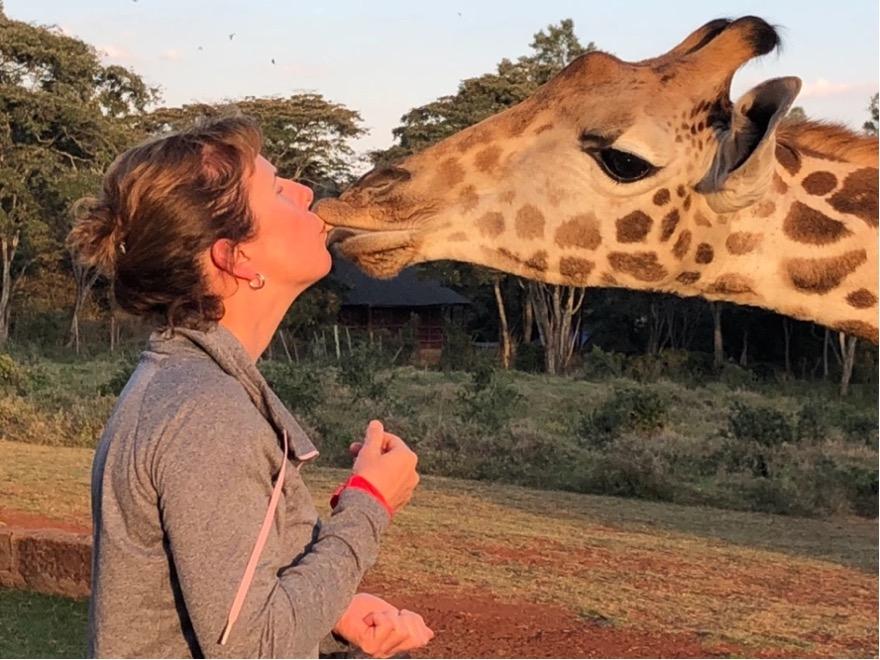
Against my better judgement, I clenched the pellet between my front teeth, closed my eyes, and waited.


It was weird but then again, it wasn't. 


~~~~~~~~~~~~~~~~~~~


Listen to a recording of me reading I KISSED A BOY here. 


Cyndie kissing Pimba during afternoon tea at Giraffe Manor.


PRACTICING LEAVE-IT

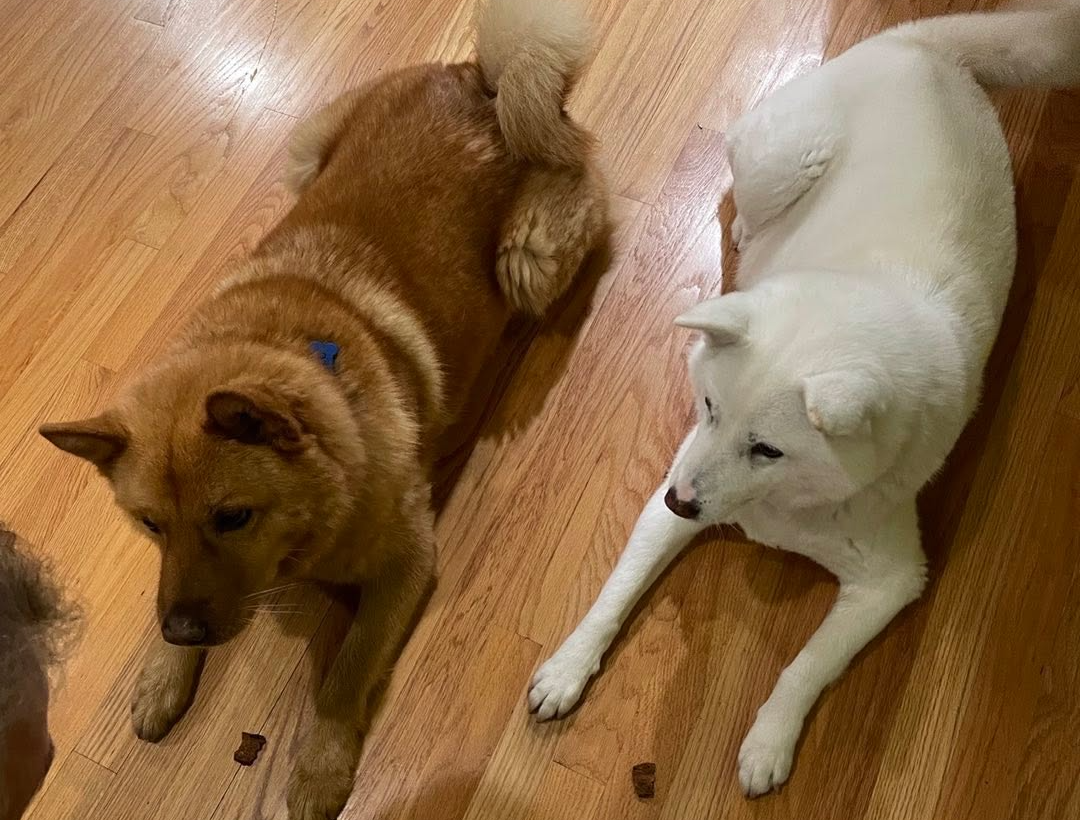
Leo on the left and Nala on the right practice leave-it.

Leo and Nala turn twelve this month. We've had our two sweet-souled rescue pups for ten years. In this photo, they're practicing one of their favorite skills, "leave it." The stakes are high and it requires intense concentration.


But, are the rewards worth it?


I drop a dog treat on the floor and say the command. The appropriate response for them is to turn away and ignore the salmon jerky. 


Nala is a natural at leave-it. She spent the first two years of her life in an area with risky food sources. By her emaciated frame when we adopted her, I suspect she left most of her food on the dirty ground.


But Leo is a Chow-Shepard mix, literally a chow hound. It's particularly challenging for him to control his food urges. But when he does, he gets rewarded with two treats, one of higher value, and the first one I retrieve from the floor. 


This exercise has a grander purpose. When out for a walk and another dog appears, Leo’s protective instincts fire up, he growls, jumps, and pulls on his leash. But when I say, “leave-it,” he’s been programmed to look away. This daily conditioning has helped curb his reactive behavior.


During the pandemic, I switched to remote work. Co-workers were on the emotional edge for many of our extended team calls. In one partiular Zoom meeting where my colleagues flung word arrows at one another, my fingertips were poised to join the heated exchange of isolated, paranoid people. 


But Leo’s reaction to the shift in energy distracted me. He sensed the tension, snorted, and left me alone in my closet-sized office with only my frazzled colleagues as companions.


This was the behavior I had taught him. Turn away from confrontation. But it still hurt. For almost a year Leo and I had shared a daily routine, strolling from the office to the kitchen to the deck, and then back to the office several times a day, stuck together like velcro. When he chose to turn and leave, I had to make a choice of my own. I could either join the fray and type a snarky remark or follow his lead and leave-it.


At that moment, the meeting moderator said to the inflamed Zoomers, “Take a breath. Step away from the keyboard.” 


Leo’s instincts had been correct. I exhaled, followed him to the kitchen, and gave him a dog treat and myself a chocolate. Nala got a treat too because she's always a good girl.


This heated exchange weighed on my mind, realizing how temperamental we all had become. Acerbic comments that were common in anonymous social media posts had seeped into our friendly workplace, disrupting our core tenet of "teamwork makes the dreamwork."  


I thought of this lesson recently when The New York Times published an article called "How to Keep Your Anger in Check." One helpful suggestion was to create a catchphrase for trying times. Author Elizabeth Passarella provided a fun example, "I will not strangle this person."


Humor can help diffuse a tense situation.


But I wondered if we could also retrain ourselves with positive reinforcement like Leo and Nala had. For each time we're tempted to lash out, what if we paused, took a deep breath, walked around the yard, stretched, and rewarded ourselves with a treat? All we had to do was resist, center, and leave the dog pile.


It's not so easy.


We can't transform overnight, and we can’t always take the high road when we’re feeling low. But we can set aside a little time each day to practice and give ourselves a high value reward when successful. We may find that getting a treat isn't the real reward. It's knowing we can resist the urge to strangle someone.


~~~~~~~~~~~

Practicing Leave-it was first published in Women Writing the West's Blog.

NOVEMBER IS DIABETES AWARENESS MONTH

Through the loss of two dear friends I learned that diabetes impacts us all. Melissa Baten-Caswell personified the spirit of helping others first. During her battle with pancreatic cancer, she contracted type 2 diabetes (d. 2023). Toni Deser was always the first to sign-up, congratulate, or encourage. She wasn't diagnosed until the year she died from diabetes complications (2026). They both died too young.


Early detection, getting the right treatment, and making lifestyle changes can save or prolong a life. But if you wait for symptoms, the disease will have progressed. Diabetes can masquerade as almost anything such as fatigue, sudden weight loss, thyroid issues, and more.


Regular blood tests look for diabetes indicators. Visit American Diabetes Association for more information.


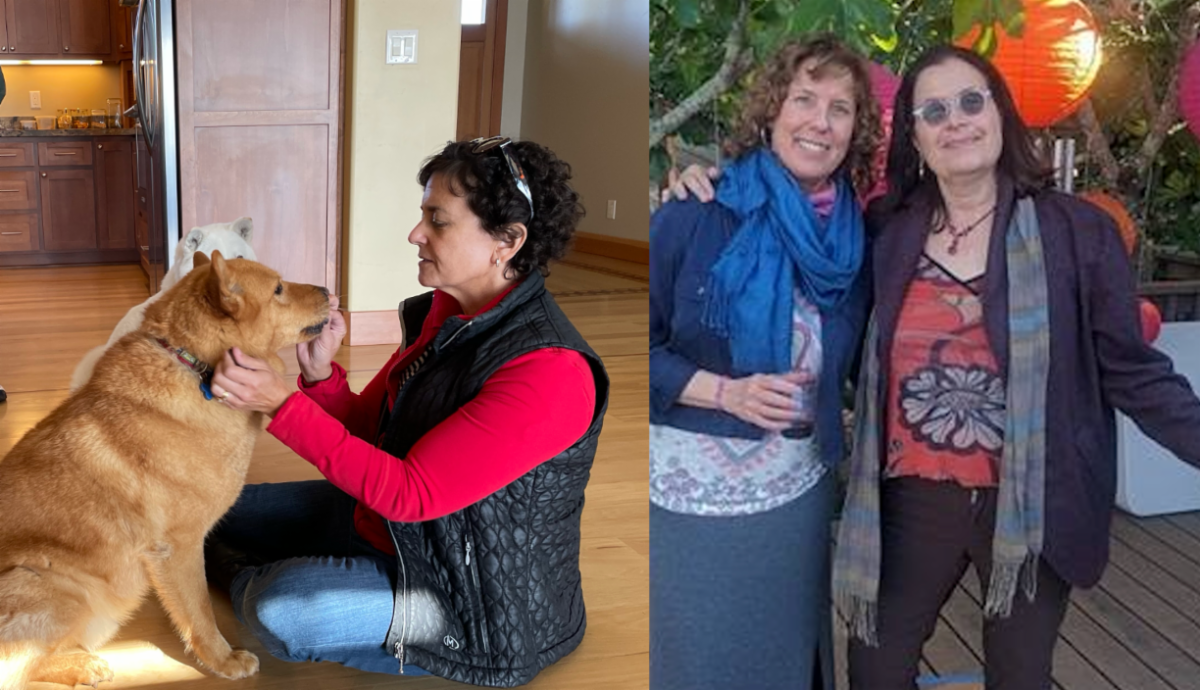
Below, Melissa charms Nala and Leo, and Toni attends a fundraiser. Their spirits live strong in my heart.


Thank you for reading! Forward to friends or have them Subscribe here.


Bootstrap Website