|
|
Author e-blast from Stephen Puleo
June 2026
| |
Greetings, dear readers, and happy summer!
I think this issue is packed with interesting and entertaining information.
At long last, I am revealing the topic of my ninth book (in the very first item), and I can't wait for your response. That will be followed in the second item with a very special honor from Beacon Press about my first book, DARK TIDE.
You'll also read about my work with students, a special Puleo family outing, reader responses, a magazine feature on DARK TIDE, side-by-side 250th anniversary observations, an update on essays I've written, my rewarding Spring speaking events, and, as always, my book recommendations for your reading pleasure (besides mine, that is).
Please let me know your thoughts on the e-blast – especially the new book topic -- or share anything else you’d like by contacting me at spuleo@aol.com. Because I respect your time and fully recognize the flood of emails you receive, I try to limit these newsletters to 3-4 per year (I've had several readers say they appreciate this!). For those "in-between times" and more "breaking news," I hope you’ll follow me on Facebook and Instagram, and Linkedin.
And, of course, I hope you'll participate in my new exclusively-for-my-readers platform, The Speakeasy, which I remind you about below, where we can share thoughts, ideas, and information.
More than anything, I enter the summer season with an attitude of gratitude for your constant support and interest. Thank you so much, enjoy your summer, and happy reading!
|
|
Announcing My Ninth Book:
THE PENICILLIN MIRACLE:
A Deadly Fire, World War II, and the Dawn of the Antibiotics Age
Publication date is set for August 31, 2027!
(cover image coming soon!)
| | |
I appreciate your patience!
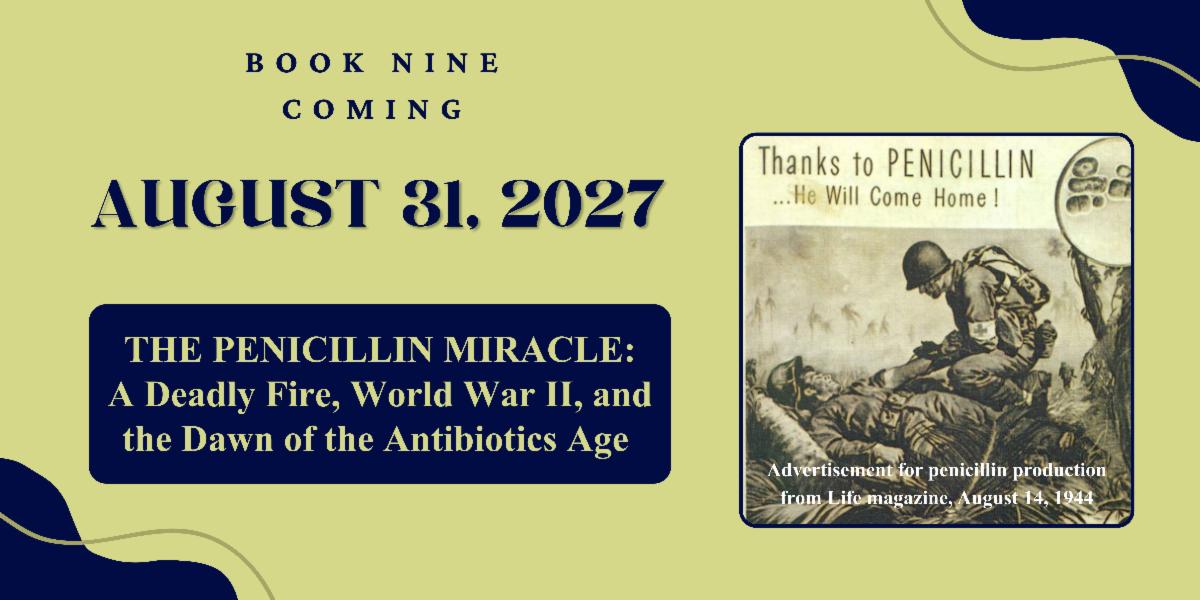
At last, I'm able to announce the topic of my upcoming book (number 9!): THE PENICILLIN MIRACLE: A Deadly Fire, World War II, and the Dawn of the Antibiotics Age, to be published by St. Martin's Press on August 31, 2027!
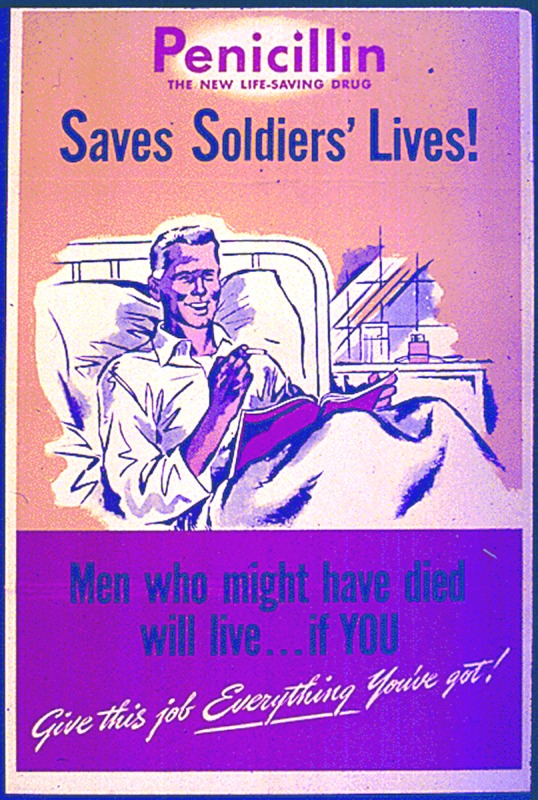
I'm so excited about this book and want to give you a flavor of the story now! The graphics here are authentic home-front images used during the Second World War, but should not be confused with the book's cover image, which will be coming soon.
Read on and enjoy!
One of the Most Compelling Stories Ever --
The Medical "Manhattan Project"
Few stories in all of the twentieth century, or any century, are as compelling as the cultivation, isolation, purification, stabilization, testing, mass production, and widespread distribution of penicillin during World War II – the equivalent of a “medical Manhattan Project,” in the words of one U.S. government official. While most Americans are at least partially familiar with the secret effort that produced the atomic bombs, few are aware of its public health equivalent – the “penicillin miracle” that produced the new “wonder drug,” as it was called repeatedly in the 1940s.
This herculean project occurred at lightning speed and with unprecedented cooperation between British (Oxford) and U.S. researchers and among the U.S. government, pharmaceutical companies, universities, and medical professionals working across numerous geographic locations – Oxford, Washington, D.C., Boston, Brooklyn, and Peoria, Illinois, among others.
Its success reshaped the world in the battle against fatal and debilitating infections, first from disease and war wounds suffered by U.S. and Allied soldiers, and then from injuries and illnesses that beset civilians in the U.S. and overseas.
The Penicillin Miracle and World War II Were Inextricably Intertwined!
Like so many major scientific and technological breakthroughs and social upheavals of the 1940s – the splitting of the atom, the invention of radar and sonar, the massive movement of women into the workplace, the creation of the computer and defense industries, the birth of intelligence agencies – the full penicillin story was driven by the Second World War and how the Allies could win it.
Penicillin research was not launched because of the war, but the war drove decision-making and provided the rationale for virtually every critical decision made about penicillin along the way.
World War II and penicillin were inextricably intertwined. Without the war, the penicillin miracle, which was fulfilled in the United States, may have remained the penicillin mystery for years to come, and could have delayed for decades the antibiotics age. Only when sufficient penicillin was produced to meet the military’s needs did U.S. civilians – who made hundreds of requests to the government for the new drug – have full access to its curative capabilities.
The Full "Miracle" Occurs Between 1942 (almost zero penicillin) and D-Day,
June 6, 1944 (enough penicillin to supply every Allied soldier
who went ashore at Normandy)
Set in England and the U.S., and based on numerous archival sources, THE PENICILLIN MIRACLE for the first time tells the full political, scientific, and social story behind the most important medical breakthrough of the twentieth century, set against the backdrop of world war. This includes the oft-ignored chapters of how penicillin captured the imagination of the American people, who desperately sought the wonder drug even as government authorities designated the vast majority of the medicine for military use in 1942, 1943, and much of 1944.
Penicillin burst upon the American and world scene with blazing speed, and just when Allied soldiers and civilians needed it most.
In early 1942 – two years after Oxford researchers had proven penicillin’s effectiveness in mice – there was not enough penicillin in the United States to adequately treat even a single patient. In late 1942, Dr. Champ Lyons of the Massachusetts General Hospital used almost all the available penicillin in the country on a small group of burn patients, victims of the historic and deadly Cocoanut Grove nightclub fire -- the first-ever use of penicillin on a controlled group of patients who suffered infections from their burns.
Yet by early 1943, the first group of wounded U.S. troops returning from the battle of Guadalcanal in the Pacific were treated with penicillin, though supplies were not sufficient enough to treat wounded soldiers at the battlefront. By fall, however, U.S. troops wounded in North Africa were treated in-theater with the drug. As the June, 1944 D-Day invasion of Europe crept closer, a full-on effort – overseen by the United States government, and including scores of private researchers, university scientists, physicians, the medical establishment, and nearly two dozen large drug companies – kicked into high gear to produce and distribute enough penicillin to treat all the Allied wounded, curing once fatal battlefield infections, and saving tens of thousands of lives.
By 1945, when my father was wounded -- penicillin likely saved his life, or at the very least, spared him from disabling injuries -- the "wonder drug" was so abundant that the government made it available for widespread civilian use in America and was exporting it to Allies abroad.
An Inspirational Story of a World-Altering Scientific and Medical Breakthrough Pinned Against the Vast Tapestry of World War
As is the case with most epochal stories, THE PENICILLIN MIRACLE encompasses the best of human behavior – dedication, selflessness, strong leadership, and nobleness of purpose among people of extraordinary talent – coupled with an occasional sprinkling of the worst: pettiness, jealousy, stubbornness, and egotism.
Overall, though, it is an inspirational story, one of courageous collaboration, of audacious risk-taking, of science and art; all for the sake of the public good and all pinned against the vast tapestry of world war.
The penicillin miracle in the 1940s eased the suffering and saved the lives and limbs of several hundred thousand Allied soldiers, offered hope to civilians everywhere, and ushered in a new age in medicine that would become known as the antibiotics revolution – a world-altering transformation that, during the last 80 years, has saved an estimated 500 million lives across the globe.
I Think You'll Love the Book!
I feel like I know most of you personally. Many of you have written to me about my books, talked to me at presentations, and posted comments online. I feel confident in saying that I truly think you'll love THE PENICILLIN MIRACLE narrative. I truly enjoyed researching and writing it -- all the while keeping you in mind!!
During the summer, I'll be providing you with more information and snippets about THE PENICILLIN MIRACLE on social media accounts and in The Speakeasy platform on my website (keep your eyes peeled for a cover image). My next newsletter in the Fall will also include additional info!
| Reminder: To sign up for The Speakeasy, just go here and put in your email and select a password (If you’re receiving this e-blast, you’ve already shared your email with me -- thanks for that; any password you choose remains confidential to you. That's how simple it is). Once you’ve entered The Speakeasy, you’ll see topic area tiles (shown here) labeled “Books,” “History,” “Medley” and “Ask Me Anything.” You'll see posts from me, and you can post your comments accordingly. | | |
I'M HONORED (and Humbled) THAT DARK TIDE Has Been Named A Beacon Press "Classic" as Publisher Approaches its 175th Anniversary Year!
| | |
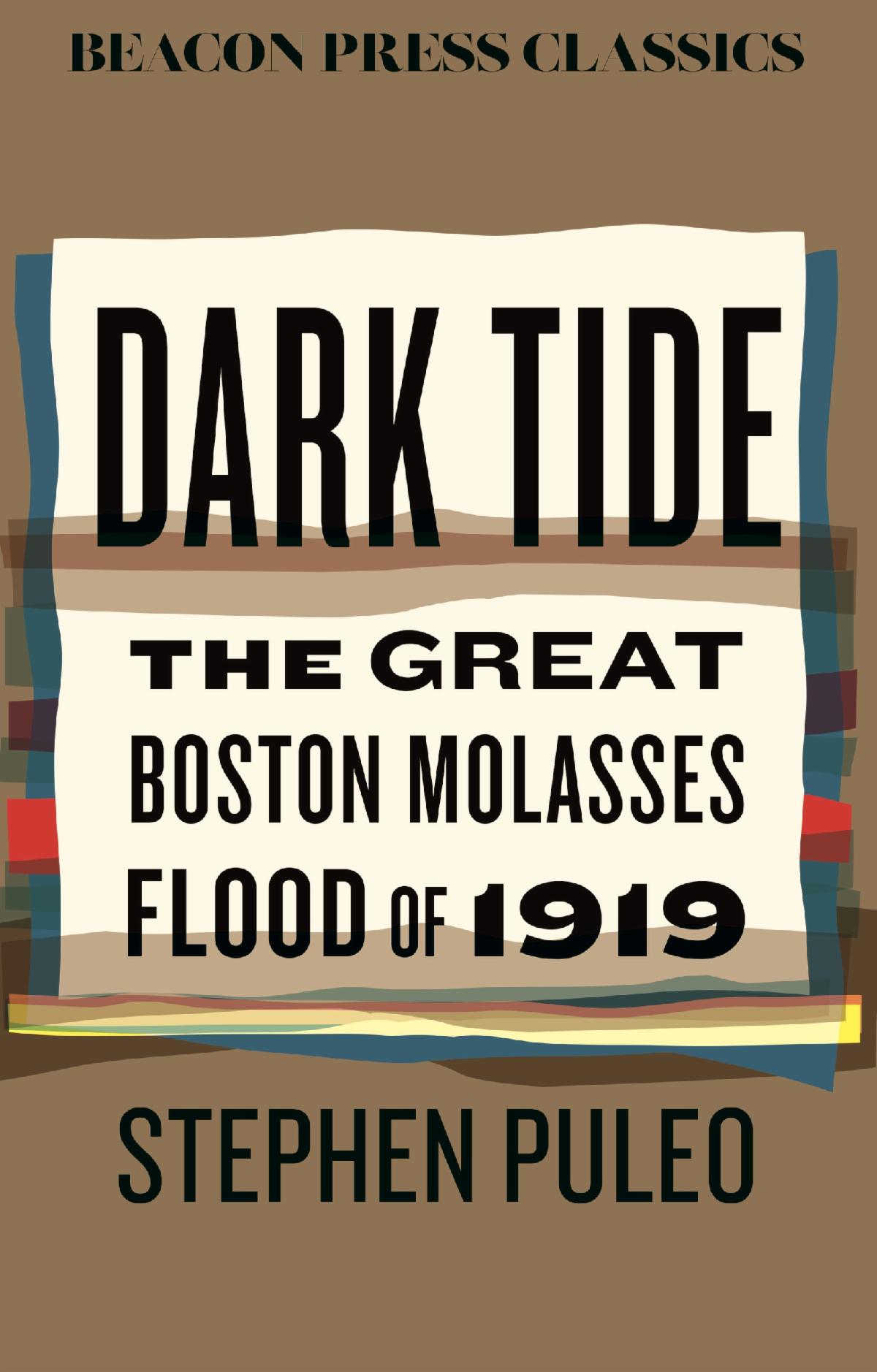
The "Beacon Classics" Hardcover Edition of DARK TIDE -- on sale January 5, 2027! The cover design matches the other Beacon Classics style
________
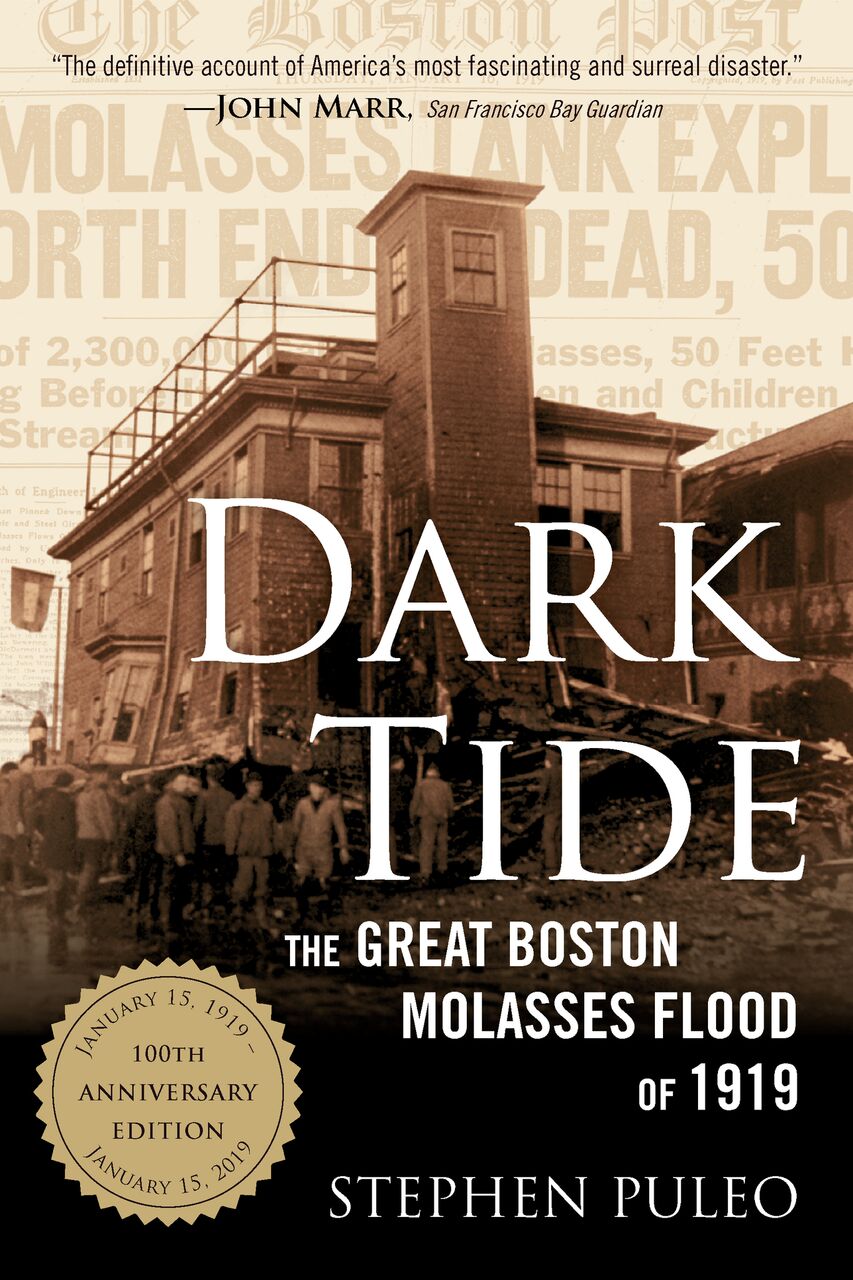
The current paperback edition of DARK TIDE will continue to be sold, as will the e-book and audiobook versions!
| |
This is a "stop-the-presses" moment!
Shortly before this newsletter was published, I received word from Beacon Press that my book, DARK TIDE: The Great Boston Molasses Flood of 1919 has been named a Beacon Press "Classic" as the publisher approaches its 175th anniversary year in 2029!
In the countdown to the anniversary, Beacon will be releasing only 60 books in total (one book per month, 2025-2029 inclusive) from its backlist of thousands of titles! These will be special deluxe, limited-edition hardcover books, with a "retro" cover feel using the color pallet from the original. The regular paperback edition of DARK TIDE will continue to be sold, as will the e-book and audiobook versions.
The DARK TIDE Classics edition will be the January 2027 book release (after all, the flood was in January), and will be on sale January 5, 2027.
Beacon's message on this announcement: "We are excited to include DARK TIDE: The Great Boston Molasses Flood of 1919 in our new Beacon Classics series. As you can imagine, selecting a handful of titles from over 170 years' worth of books is no easy feat. Our hope with the series is to highlight Beacon Press's wide and rich publishing history, and we could not envision doing so without including your work."
These Classic editions will be treated as regular "front list" titles and sold everywhere -- Barnes & Noble, independent bookstores, online retailers, gift shops, museum stores; and they will be available at libraries, too!
I'm so grateful that in the 23 years since its debut, DARK TIDE has received a great deal of praise from readers, community organizations, librarians, booksellers, students and teachers, the media, reviewers, and many others. This honor from Beacon is especially rewarding -- and it could not have happened without your support and continuous word-of-mouth recommendations of DARK TIDE.
Thank you all for being wonderful DARK TIDE ambassadors -- and be sure to look for your copy of the classic hardcover edition in the new year!
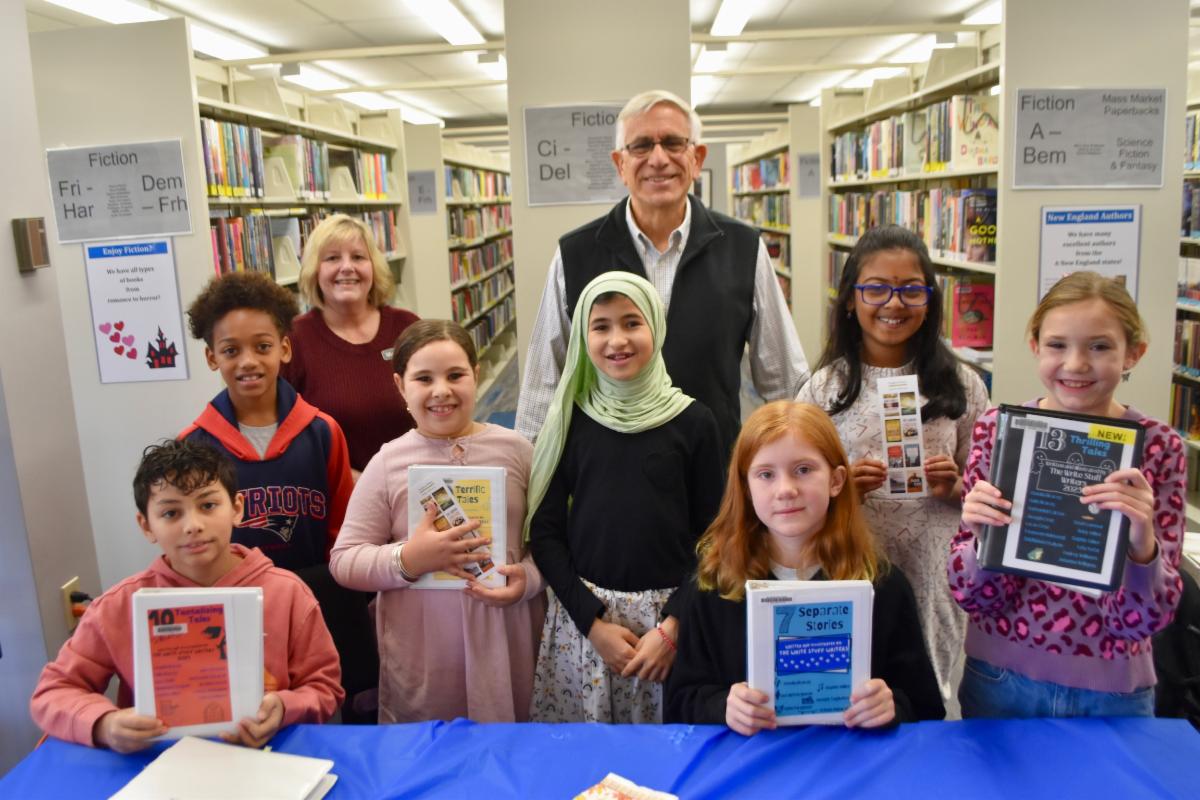
| | | A Spring of Working With Students and Schools! | | As many of you know, I work often with students on history-related projects and visit high schools to discuss my books and other topics. I thoroughly enjoy working with students, who never cease to amaze me with their curiosity and creativity! I'm highlighting two examples since we last communicated... | | |
I'm very proud of two students for their excellent podcast!
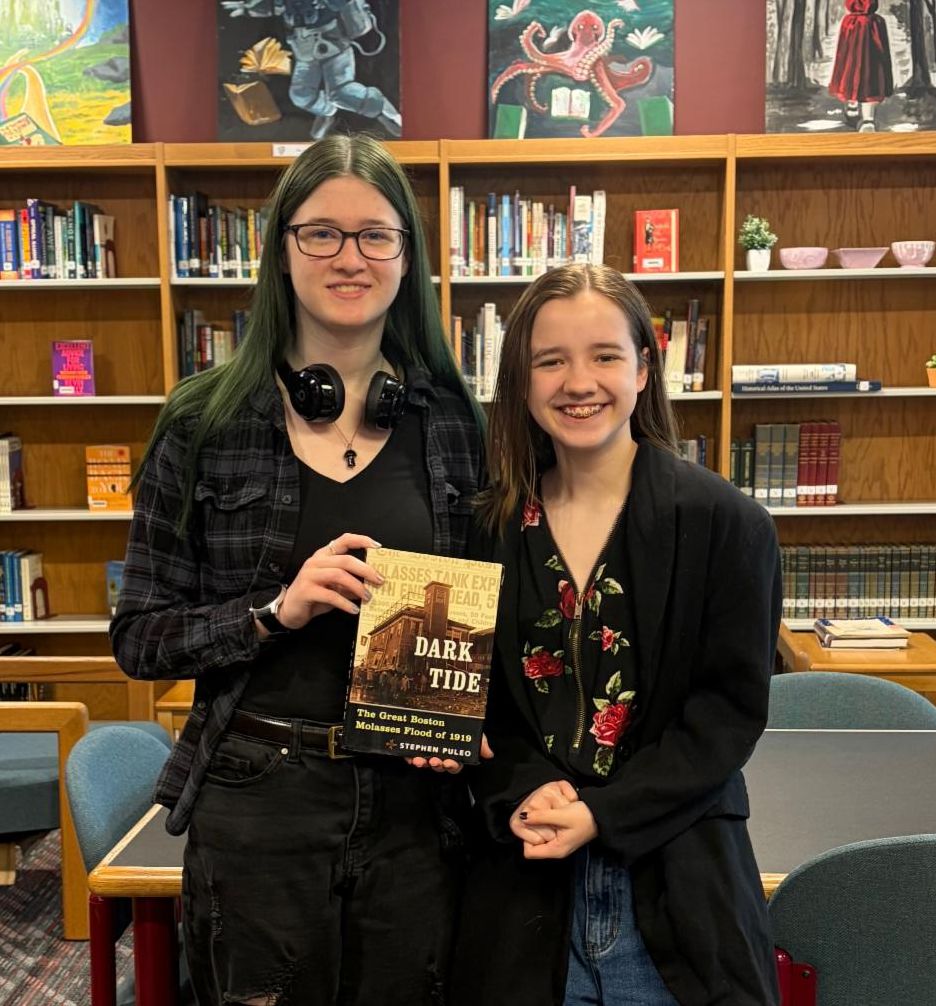
| | Congratulations to Madison (left) and Evie for their outstanding work! | | |
I'd like to introduce you to Madison and Evie, two high-school students who competed at the Pennsylvania Technology Student Association (PA-TSA) state conference with a podcast they created about the great Boston molasses flood of 1919. Madison and Evie used my book, DARK TIDE, as one of their sources, and conducted an excellent interview with me as well.
They made it to the semifinals at the state level, after placing second at the regionals! I think they did a great job with their podcast (about five minutes long), which you can listen to here.
| | | |
___________________________________
And I Enjoyed Discussing THE GREAT ABOLITIONIST With Freshmen U.S. History Classes at Everett (MA) High School!
| | | | |
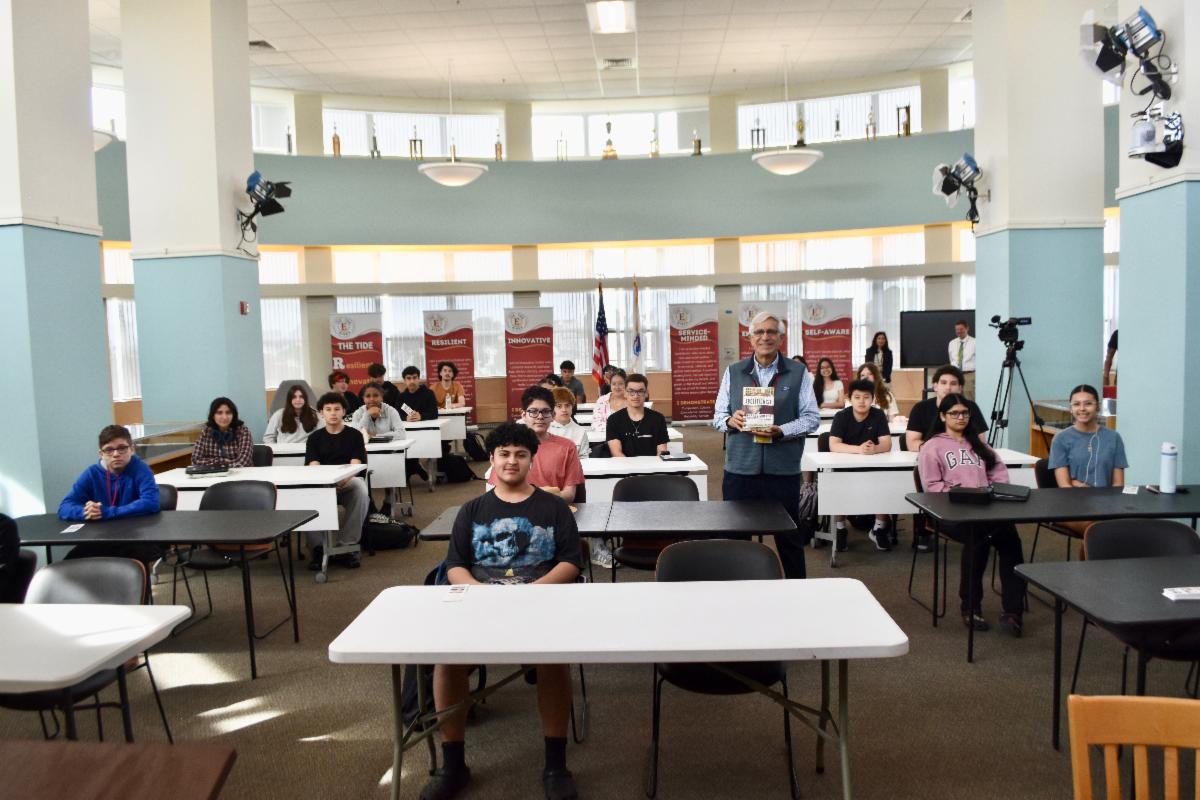
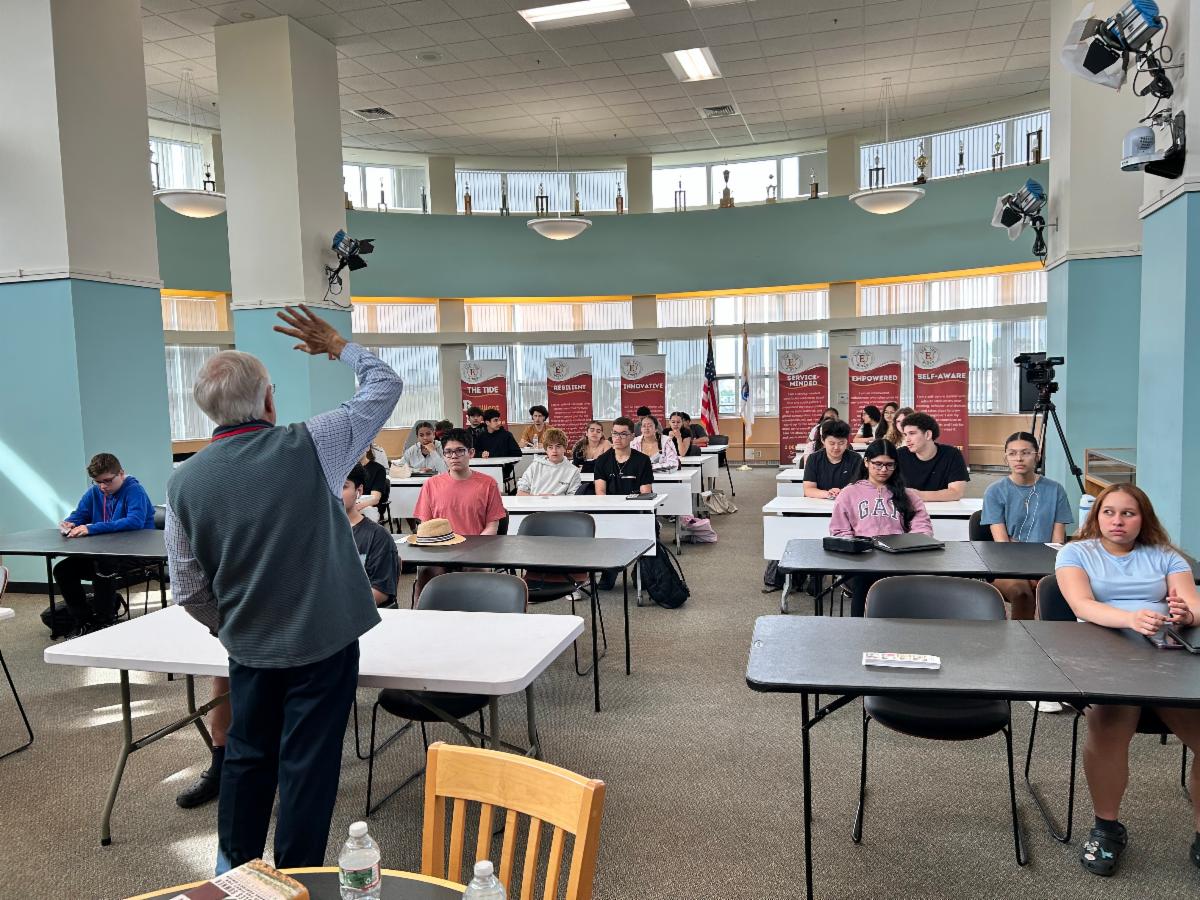
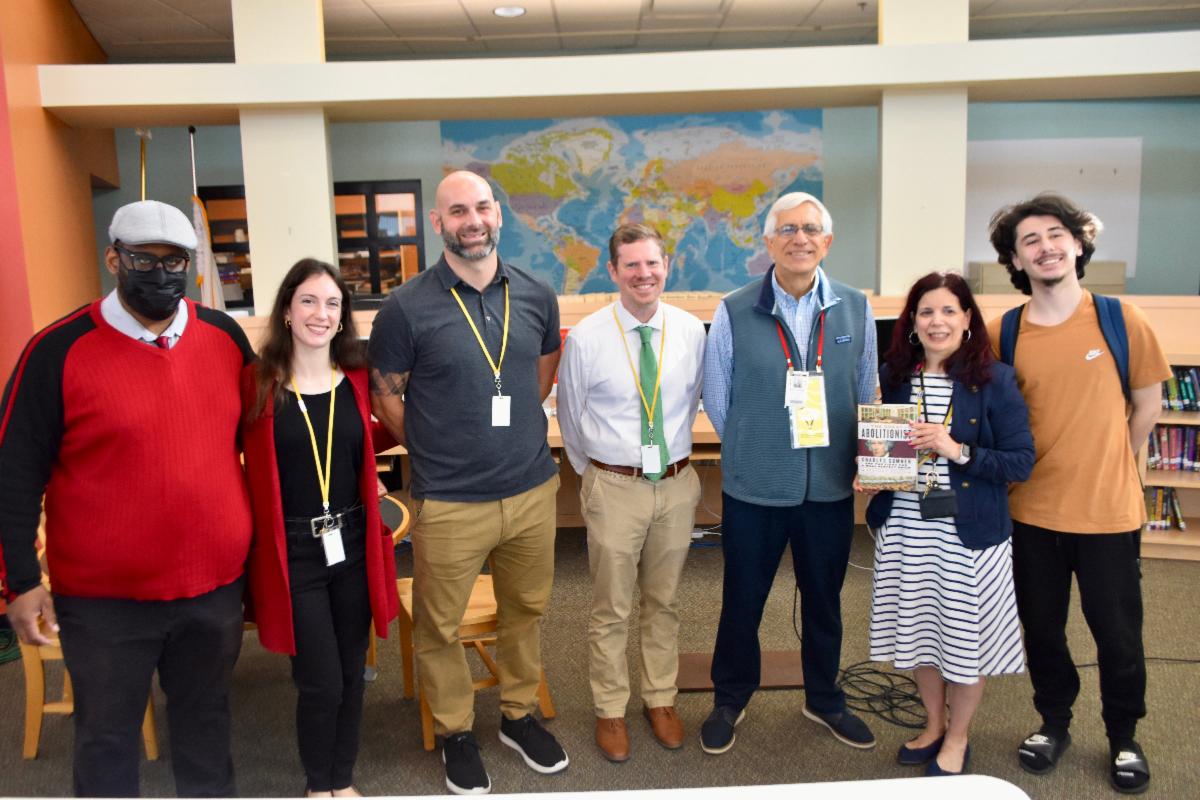
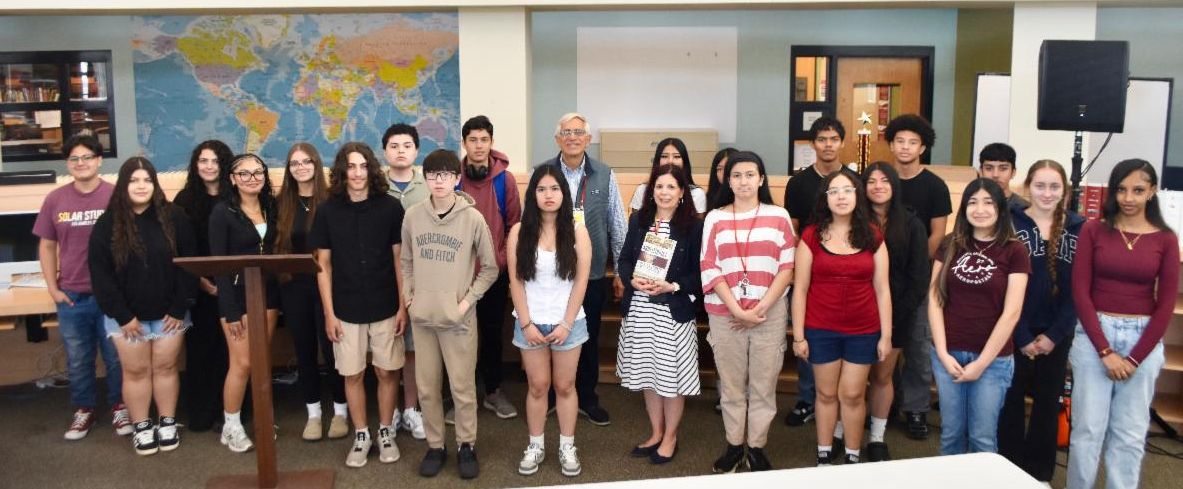
I had a great day at Everett High School (EHS) in Everett, MA discussing my book, THE GREAT ABOLITIONIST: Charles Sumner and the Fight for a More Perfect Union.
I spoke to four freshman U.S. History classes about Sumner, the Civil War, and the use of primary sources.
My thanks to these students and to the teachers and staff who made the event possible. I'm shown in the group shot with (from left): history teachers Claude St. Jusle, Clarissa Thekcekava, and Dom Persuitte; History Department Director John Flannery, EHS Library Director Mary Puleo (no relation!) -- who worked with me every step of the way to make this event a success -- and freshman student Miguel Rudovanski Mariot Do Nascimento.
| | | |
Reader Bill Miller Becomes the Latest Fan of
THE GREAT ABOLITIONIST!
| | |
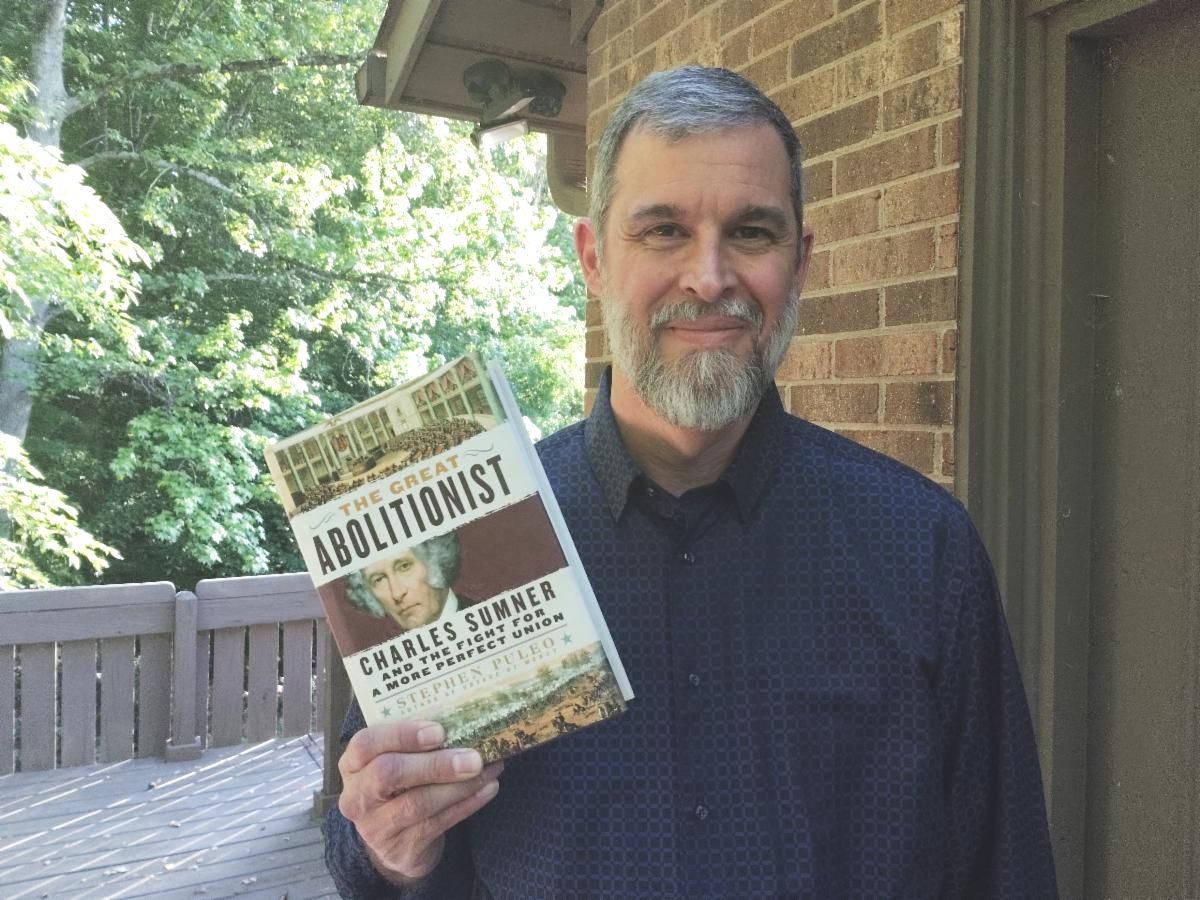
The latest reader correspondence about my book, THE GREAT ABOLITIONIST comes from Bill Miller, who's living "between" Winston-Salem, NC and Virginia as he and his family are getting their house ready in Amherst County, VA.
Here's an excerpt of Bill's kind comments:
"I really enjoyed your book on Charles Sumner. I had just finished reading [a book about Abraham Lincoln] when I spotted your book on the shelf at a bookstore and Sumner's name caught my eye. It really helps get more understanding of history to read something that goes deep on a specific subject. There was a lot I learned in your book not only about Sumner but also other events and people that leads to other trails in history to pursue."
Bill said he "values history as well as understanding the current state of our nation and culture." He added that he needed to get a better understanding of "our governance, what our public servants are doing, and how I participate. I've got a lot of catching up to do."
He added: "I'll be encouraging my kids to read your book -- and others -- as a good way to learn beyond the textbooks." (I am particularly thrilled about this)!
Thanks, Bill. Your comments are appreciated!
You can always check out what readers are saying about my books by visiting the "What Readers Are Saying" section of my website!
| | | Stories About the Great Boston Molasses Flood Appear in the Most Unlikely Publications -- Thanks to Popular Mechanics Magazine for Citing DARK TIDE and Me! | |
Thanks to Popular Mechanics writer Elizabeth Rayne for her article on the Boston molasses flood, which uses my book, DARK TIDE as its main source. Despite what may seem like its limiting title, Popular Mechanics has a long history of writing stories under its "Science" category that encompass a wide range of topics.
This article appears under the headline: "One Winter Day, Workers Poured Some Molasses Into a Tank. 21 People Lost Their Lives" followed by the suhead: "Boston's Molasses Flood of 1919 Sounds LIke Fiction, But it Was All Too Real."
You can read the article here!
| | |
My Favorite Tour Yet of Boston's Historic North End:
The Puleo Family (Extended) Had a Blast!
| |
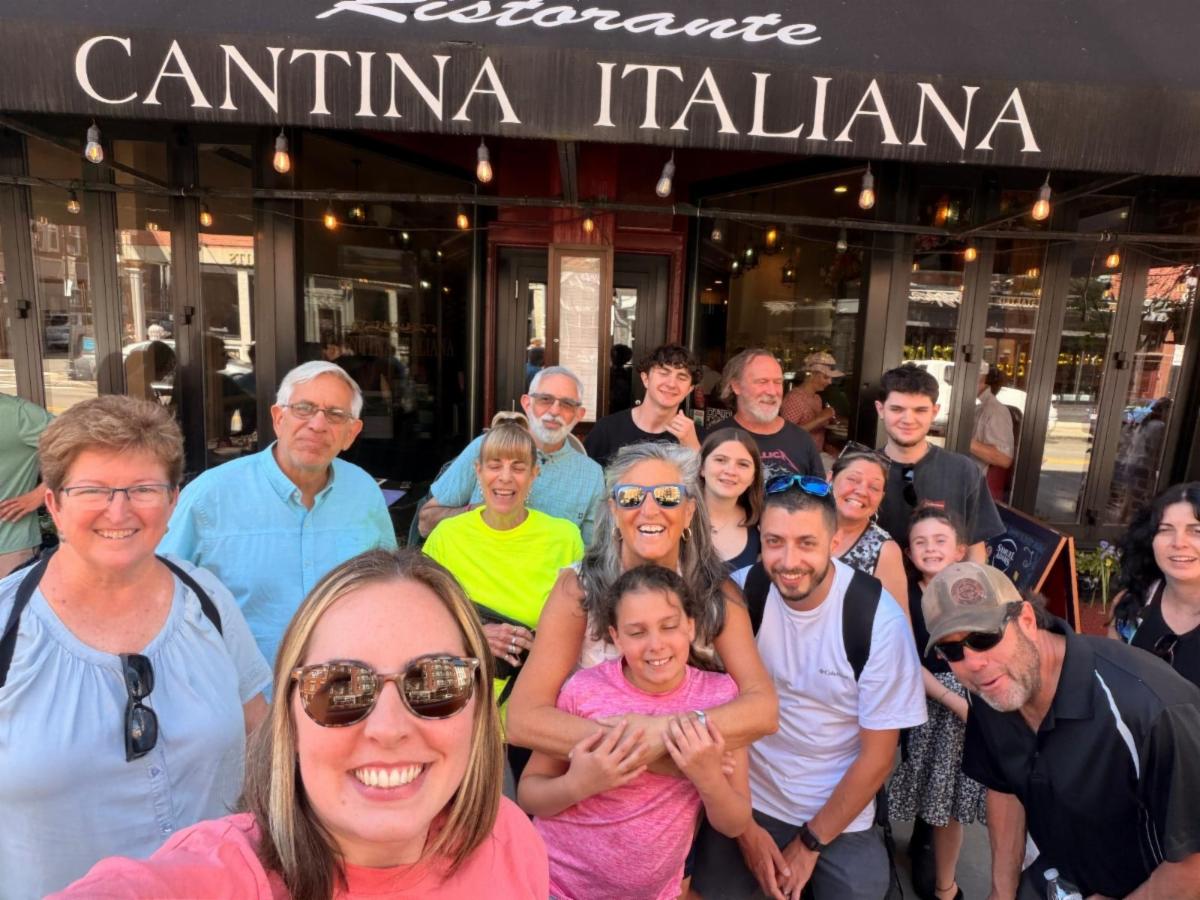
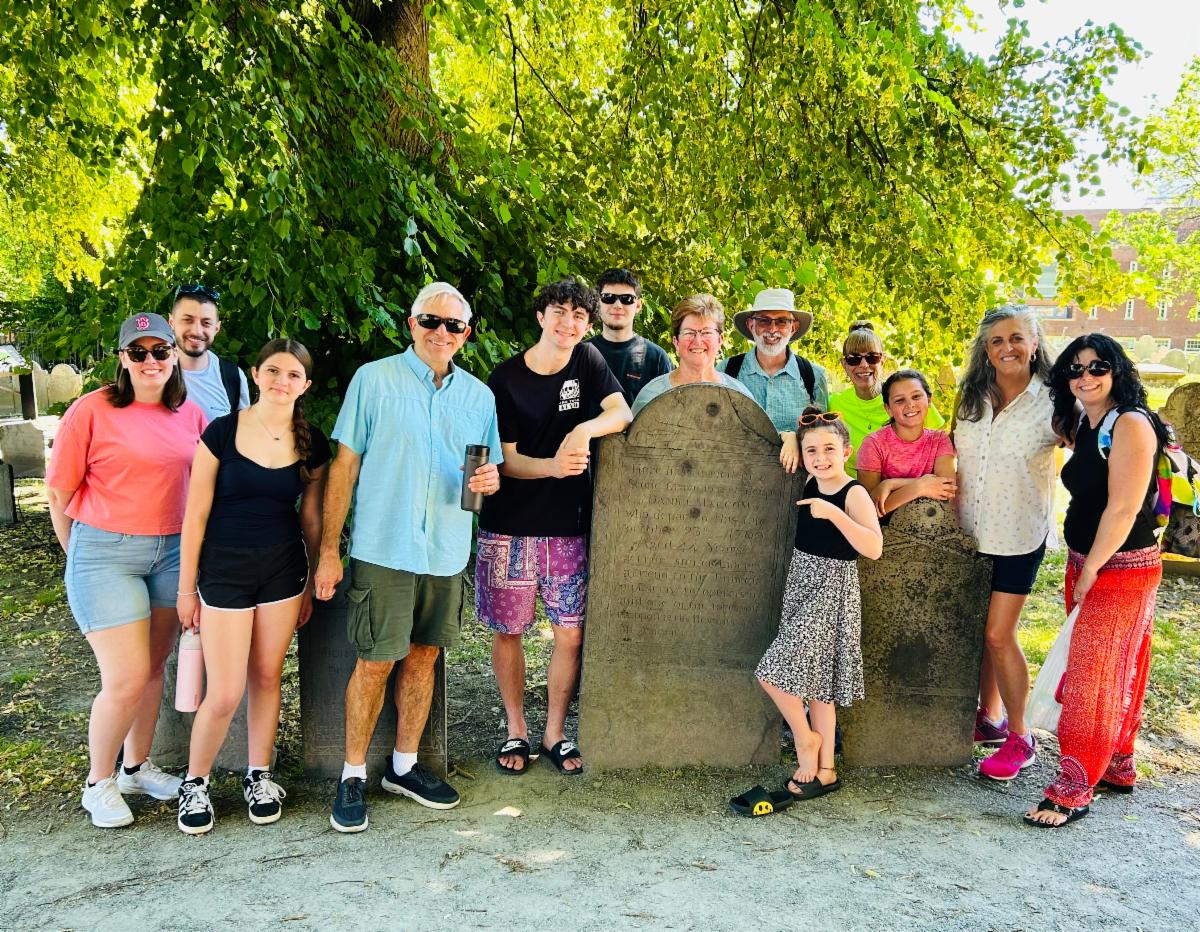
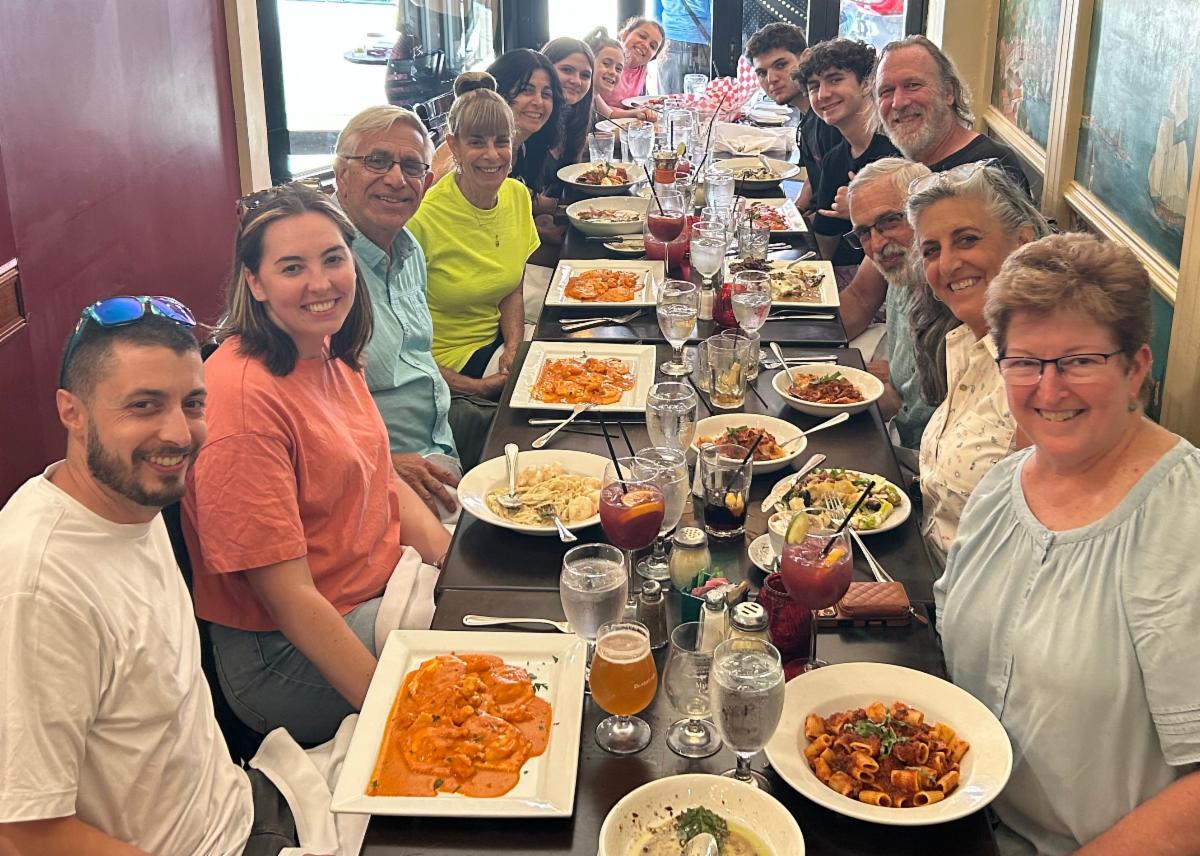
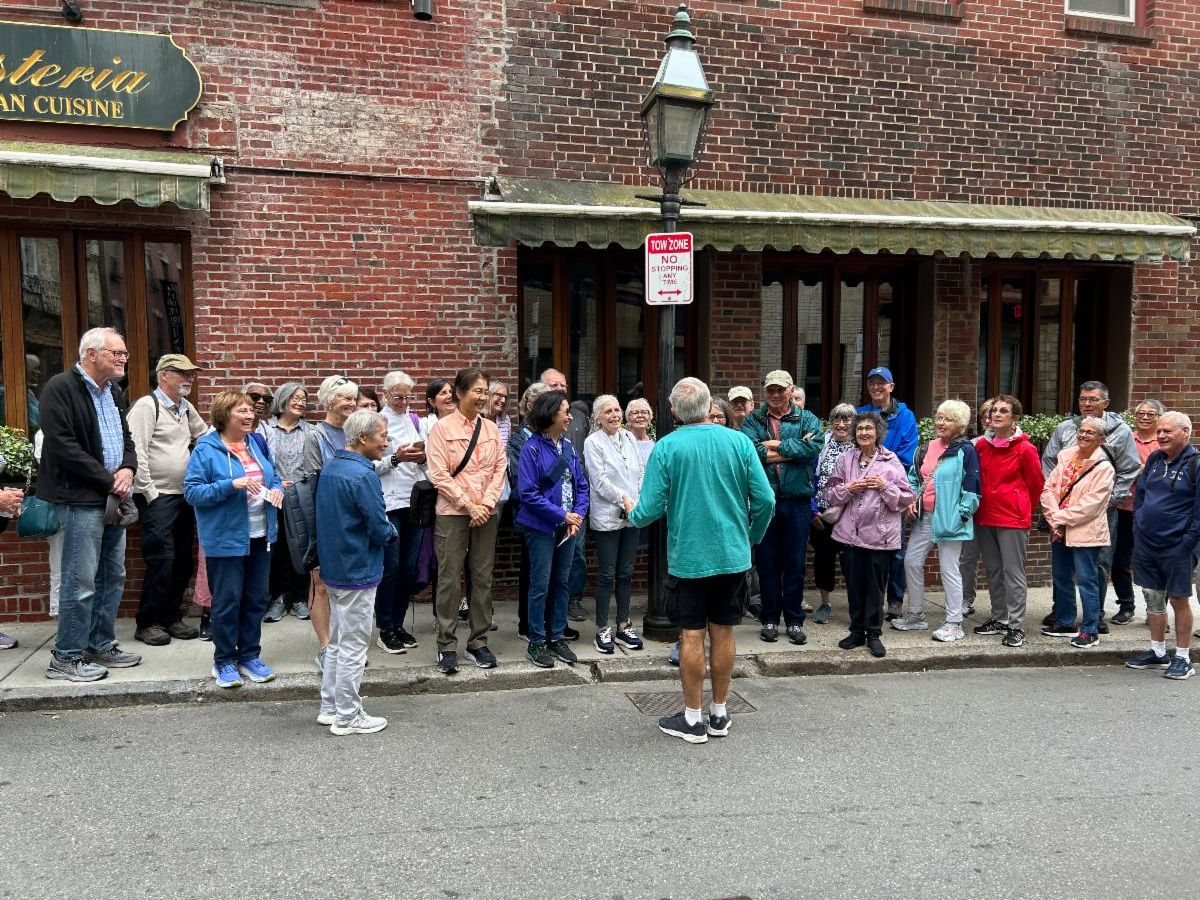
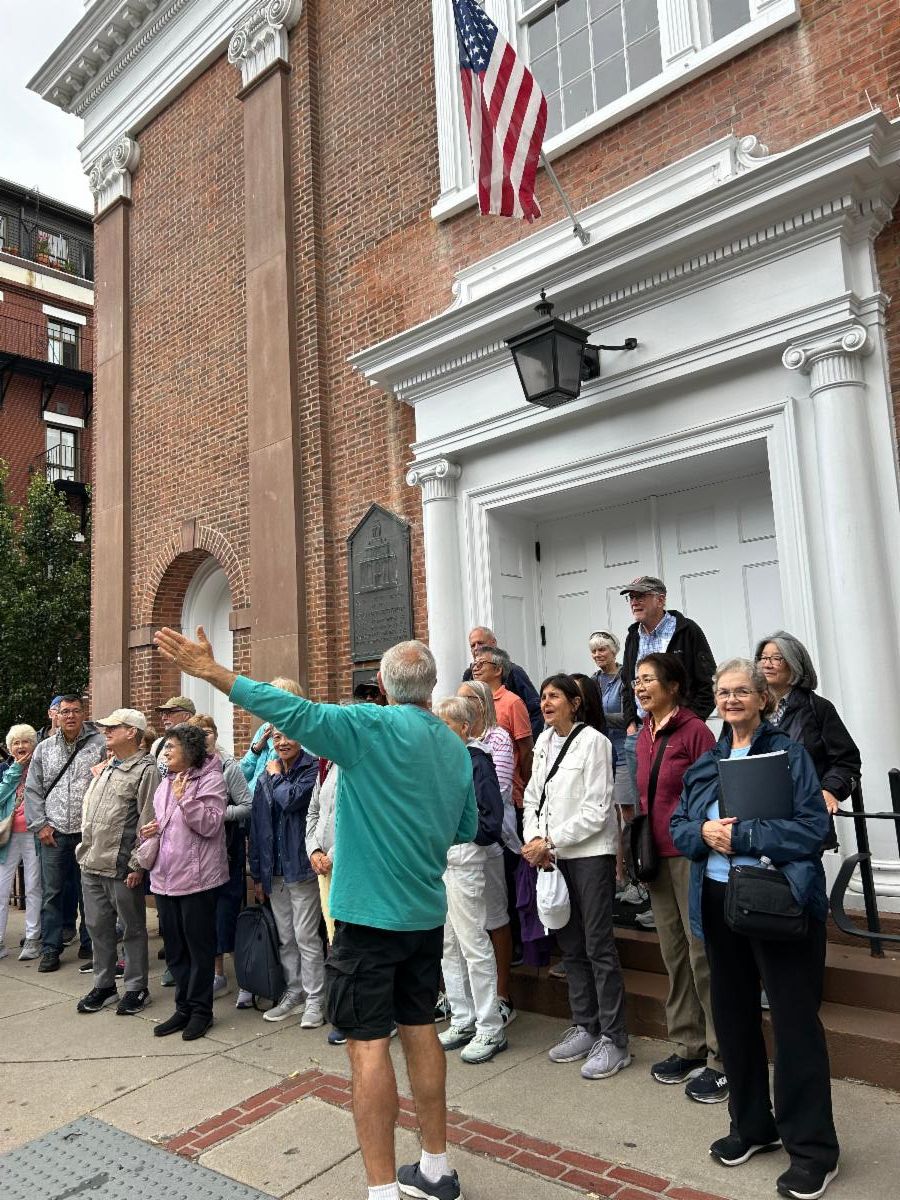
Many of you know that I conduct tours of Boston's North End, and really enjoy doing them -- but my favorite tour ever took place earlier this month when the Puleo family gathered for a tour, great food, and an overall amazing experience.
Photos here show us gathered at the historic Copps Hill Cemetery, at the grave of colonist Daniel Malcolm, who was such a thorn in the side of the British that the Redcoats took target practice on his gravestone (note the bullet holes); and the fabulous (and historic in its own right) Cantina Italiana restaurant on Hanover Street, which is where my late parents had their first date in 1951! A special shoutout to our fantastic waiter, Orazio, who did the work of ten people and made us feel warm and welcome!
| | Kate and I agreed that the only thing better than walking around and eating in the North End is to do so with the people you love the most!! | | |
An Update on My Two Essays to "Constituting America" and its "Consent of the Governed" Initiative as Part of
Our Nation's 250th Celebration
| | |
In my last newsletter, I let you know that I was asked by Constituting America to contribute two essays as part of its initiative called, "Consent of the Governed: Celebrating America's 250th of the Declaration of Independence." The organization is committed to teaching students and adults across America about the "nonpartisan relevancy of the U.S. Constitution and the principles of self-governance inherent in our founding documents."
While the Constitution won't celebrate its 250th anniversary until 2037, Constituting America recognizes the inherent link between the Declaration's commitment to equality and liberty, and the Constitution's role and ongoing commitment in codifying those principles into law.
The "Consent of the Governed" initiative focused on monumental events in history, how they relate to the founding documents, and the heroes who acted on those principles.
My essays are now complete and accepted. One focuses on Alexander Graham Bell and the invention of the telephone, and how it connected Americans and facilitated instant communications; and the Allied D-Day invasion of Normandy in World War II on June 6, 1944, and the "courageous battle by American citizen-soldiers defending the United States and fighting for freedom against totalitarianism and tyranny." I'm really happy with both of them, and I think you will be too!
The Bell essay will be posted on the Constituting America website in late August and the D-Day essay will be posted in late September. The essays will also be recorded for the podcast version of the project. I'll keep you posted when they're live and ready for you to read and listen to!
| |
And Speaking of America's 250th, A Brief Tribute to Historian Gordon S. Wood, and a Couple of Books to Help You Commemorate the Country's Anniversary
It's earlier than usual in my e-blast to recommend books (and I recommend more in my usual spot at the end of this issue too!), but a couple of events -- one that already occurred and one that is coming up shortly -- made it seem appropriate. I hope you'll read these books, and if you do, enjoy them!
| | |
It is sad and deeply ironic that, just weeks from celebrating its 250th anniversary, America lost one of its best and most deeply respected historians of the Revolutionary era,
Pulitzer-prize winner Gordon S. Wood. He died at the age of 92 when he was struck by a car in a supermarket parking lot.
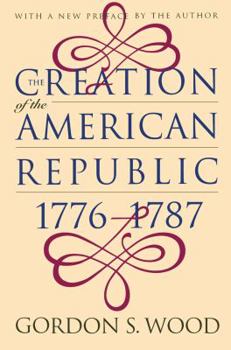
Wood's book THE CREATION OF THE AMERICAN REPUBLIC, 1776-1787, is a true classic about our founding, from the Declaration of Independence to the Constitution. Published in 1969, it remains a standard-bearer for understanding the philosophical, political, and social ideas behind America's founding. It has been on my bookshelf since I was an undergraduate, and I reread it recently.
Wood researched, wrote, and interpreted history by relying on primary sources, and by studying the motivations of the people in their own time period. He never revised or analyzed historical events through a modern-day prism or applied 20- and 21st-century standards to the people and events of 1776-1787.
He believed the American experiment was transformational because it contravened thousands of years of monarchical dominance, and brought ordinary people into the political process by establishing a society and culture whose rhetoric and foundation were rooted in liberty, freedom, limited government, natural rights, self-governance by the people, and egalitarianism.
Even when contradictions are apparent -- slavery most notably -- Wood argued that the ideological principles espoused during the Revolution era provided the moral foundation for all future egalitarian movements, including abolitionism, women's rights, and civil rights (I agree with this thesis).
Gordon Wood agreed in principle with founder John Adams, who, on the eve of American independence, described what was afoot and what was at stake:
"Objects of the most stupendous magnitude, and measures in which the lives of millions yet unborn are intimately interested, are now before us. We are in the midst of a revolution, the most complete, unexpected, and remarkable, of any in the history of nations."
If you want to fully grasp John Adams's words, understand how radical the American Revolution was, and glean the true historical meaning of American exceptionalism, Wood's classic work (or any of his Revolutionary era books) is a good place to start.
RIP Gordon Wood. Great historian and great American.
| |  | |
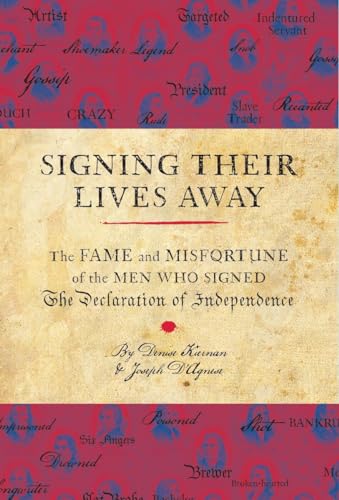
The other book I reread over the last several weeks was SIGNING THEIR LIVES AWAY: The Fame and Misfortune of the Men Who Signed the Declaration of Independence.
In the summer of 1776, fifty-six men risked their lives and livelihood to defy King George III and sign the Declaration of Independence (while the document was approved on July 4, most delegates affixed their signatures on August 2 in a somber signing ceremony at the Pennsylvania State House (now Independence Hall).
It was a treasonous act. The delegates pledged themselves to principles that were antithetical to the Crown, principles best expressed in the Declaration's iconic second paragraph:
"We hold these truths to be self-evident; that all men are created equal, that they are endowed by their Creator with certain unalienable Rights, that among these are Life, Liberty, and the pursuit of Happiness -- That to secure these rights, Governments are instituted among Men, deriving their just powers from the consent of the governed."
Unalienable rights derived from the Creator rather than the king? Government deriving their powers from the governed? An unheard of notion in 1776; indeed, a Revolutionary one.
This book takes a look at all the signers of the Declaration in a series of short essays -- who they were, what they risked, how they and their families were treated, the sacrifices they were willing to make. Some prospered and rose to the highest levels of U.S. government (John Adams and Thomas Jefferson among them), while others had their homes and farms seized by British soldiers. Some are household names (add Benjamin Franklin and John Hancock to Adams and Jefferson), but most -- sadly -- have been forgotten.
What better time than our 250th anniversary summer to get to know them better? All of them -- though from different backgrounds, geographic regions, economic strata, and with different values -- came together to form a new nation, and in so doing, put their lives at risk. If the colonies had not been triumphant in war, these men most assuredly would have been hanged.
They were well aware of this. Which is why, at the conclusion of the Declaration, they made a more personal declaration of their own:
"And for the support of this Declaration, with a firm reliance on the protection of Divine Providence, we mutually pledge to each other our Lives, our Fortunes, and our sacred Honor."
| | | I Enjoyed Some Great Speaking Events This Spring! | | |
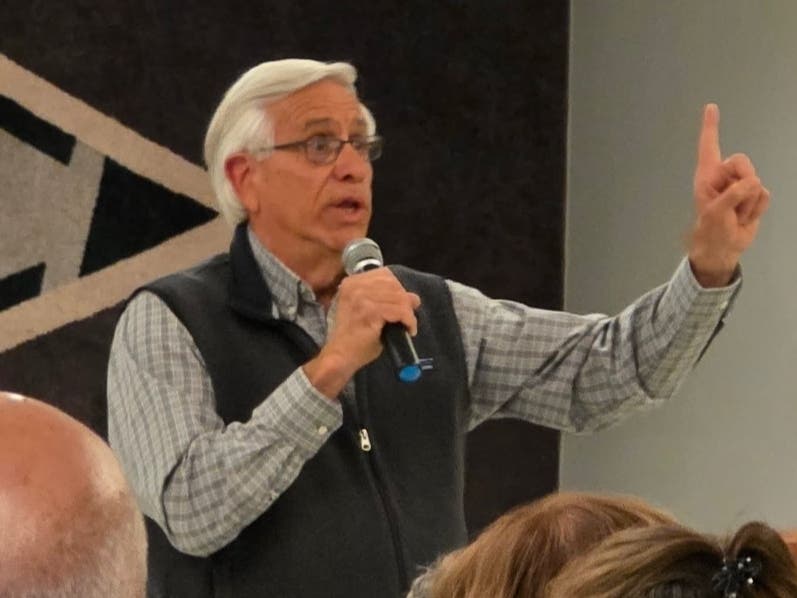
I'm always thrilled to talk to readers about books, history, and writing and this past spring was no exception. Here's a summary of events! Also, I would like to give a massive shoutout to my wife, Kate, and my sister-in-law, Pat Doyle, who provided inspirational and rock-solid support through the whole speaking season. Among their many contributions, Kate managed book sales at a number of events, and Pat took responsibility for photography! I could not ask for a better team! I offer them my profound thanks.
____________
| | | |
Thanks to Swansea (MA) for Inviting Me to Discuss AMERICAN TREASURES!
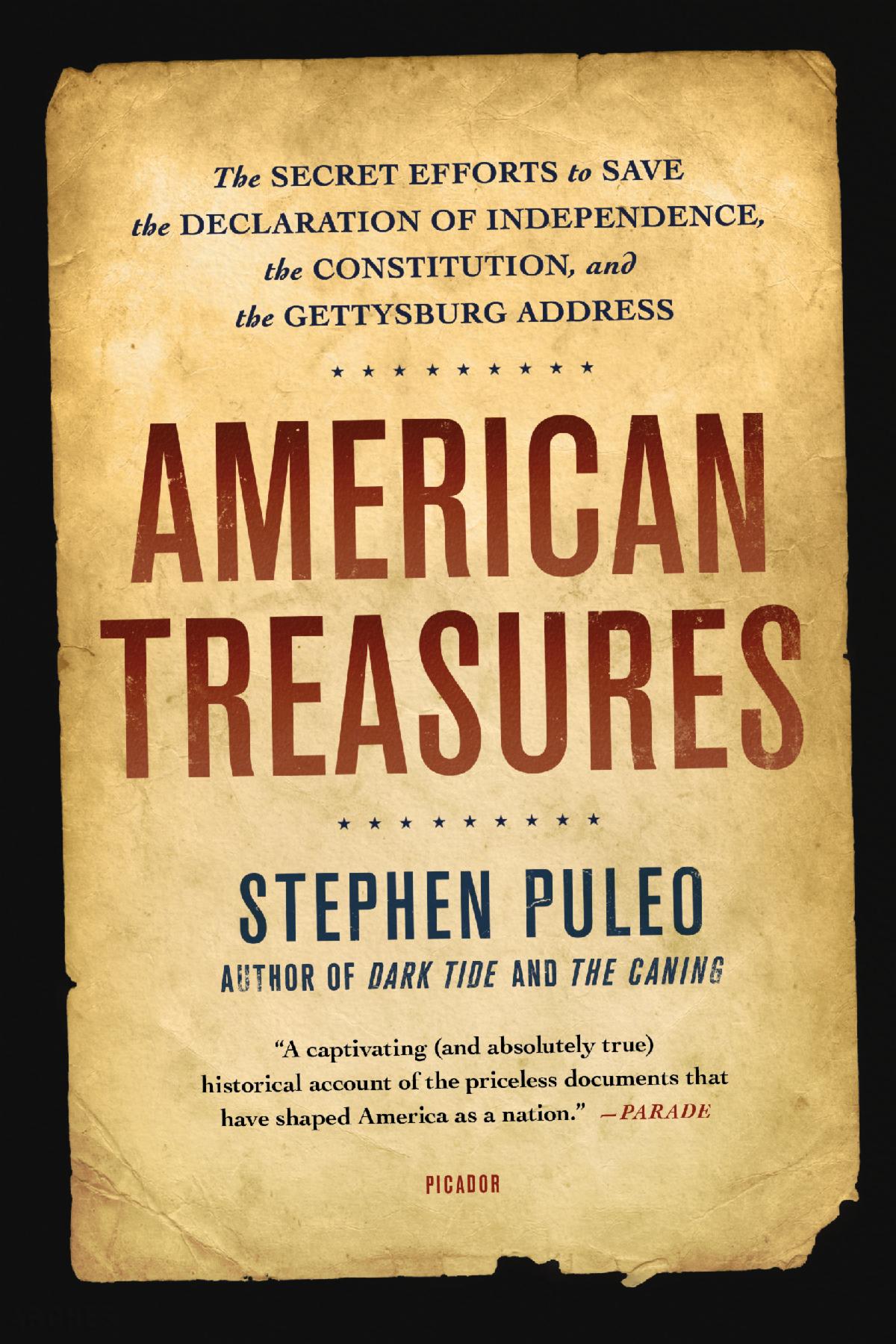
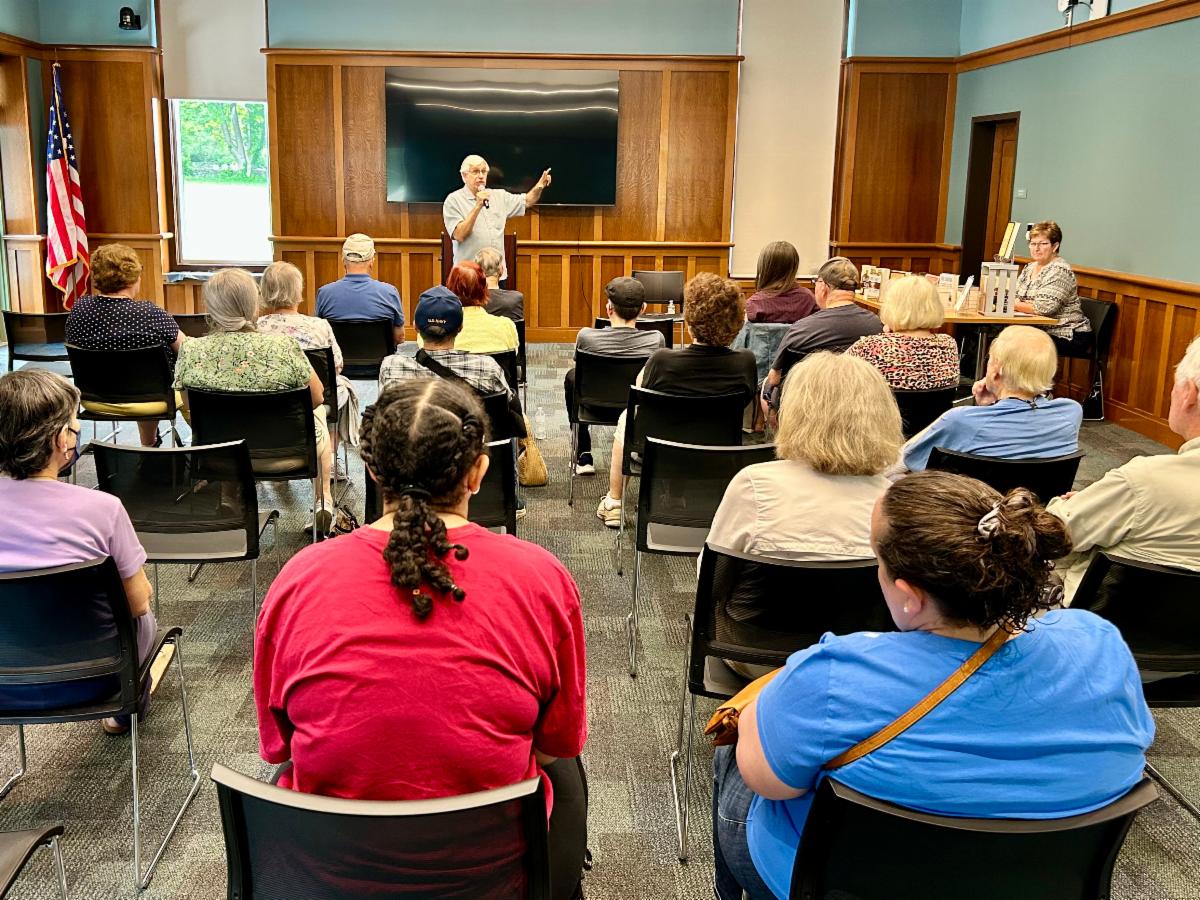
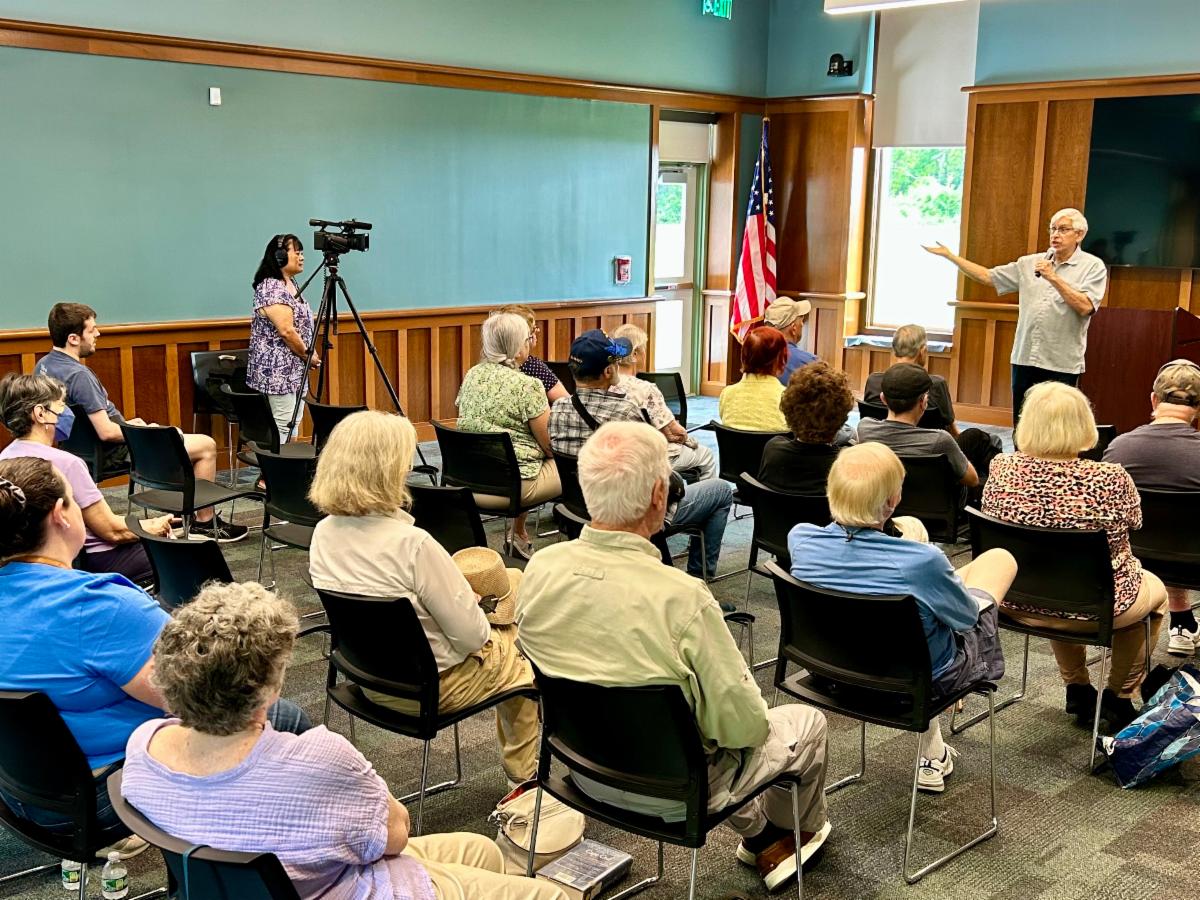
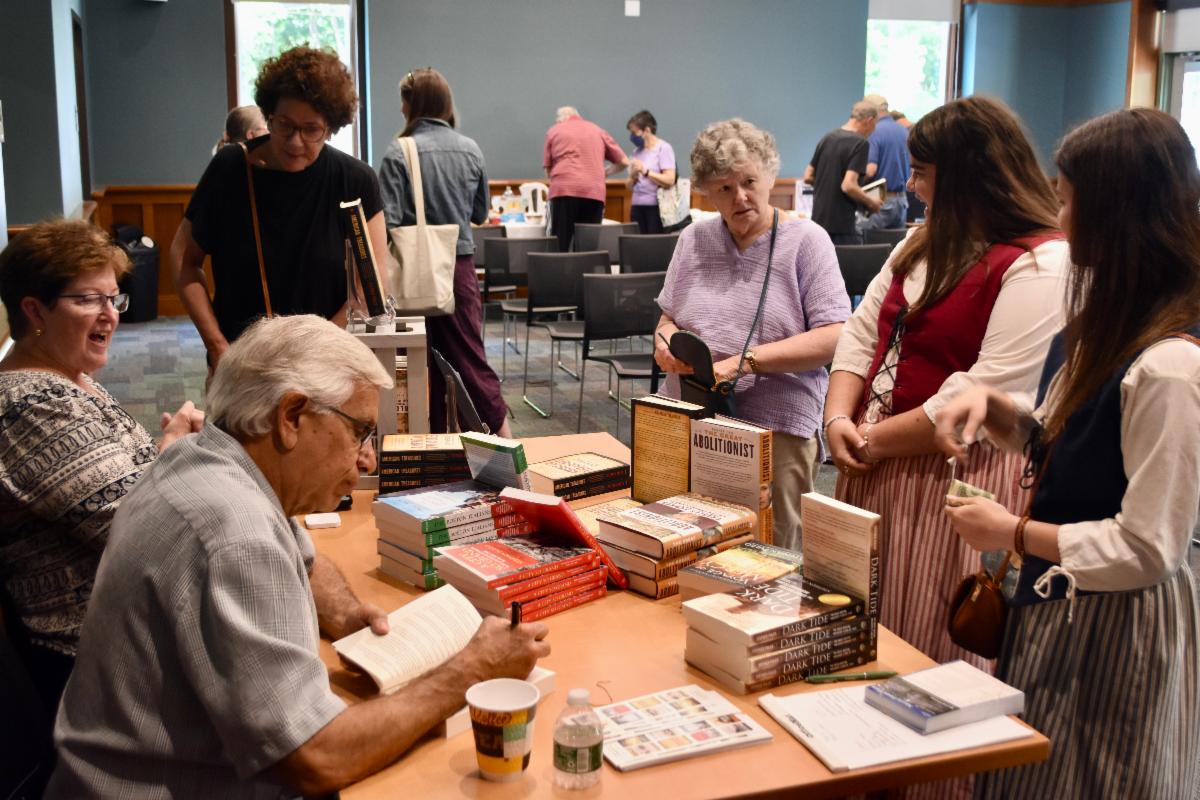
I was honored to wrap up my spring speaking season in Swansea, MA with a discussion of my book, AMERICAN TREASURES: The Secret Effort to Save the Declaration of Independence, the Constitution, and the Gettysburg Address. The event, my 748th appearance as an author, was part of Swansea's 250th anniversary celebration.
We had a wonderful discussion about our country's precious documents, followed by a spirited question-and-answer session!
Thanks to Community Engagement Librarian Carol Gafford for her work setting up the event, and to the Friends of the Library and the Martin House Farm for their sponsorship.
| | | ________________________________________________________ | | |
What a Great
DARK TIDE Event at Wakefield (MA)
Sons & Daughters of Italy!
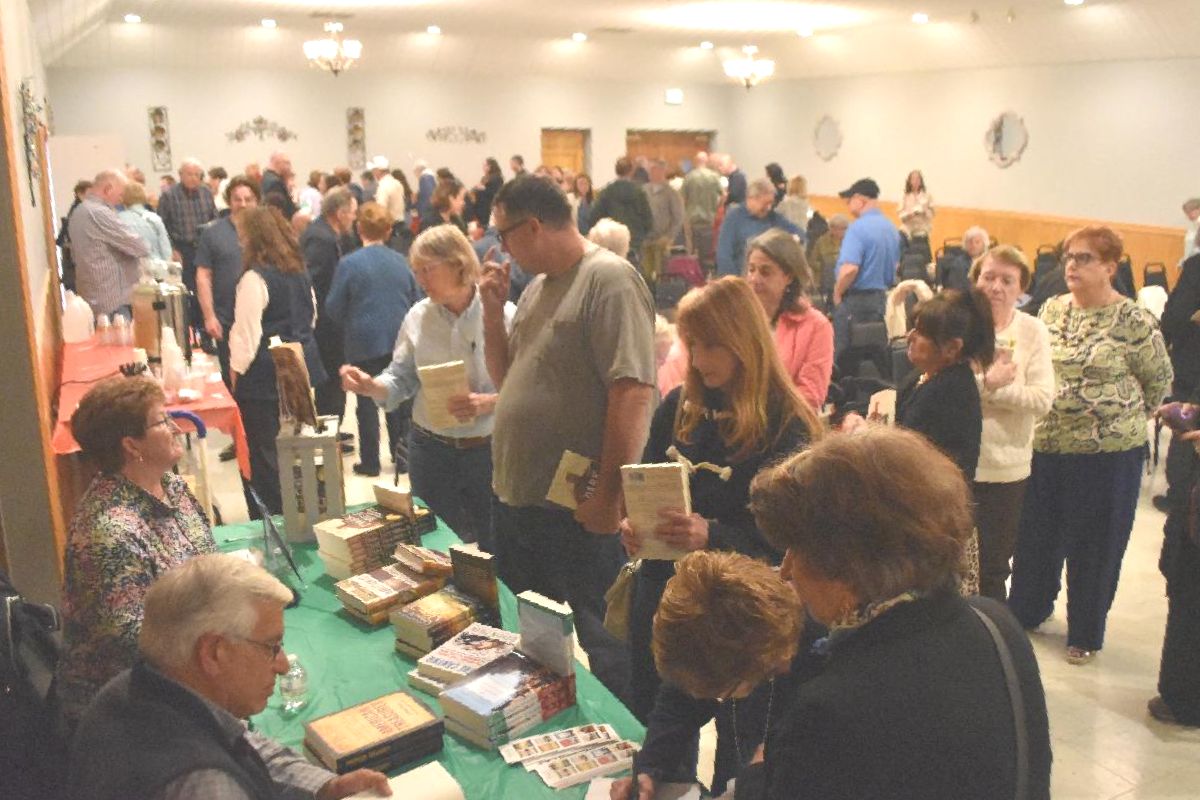
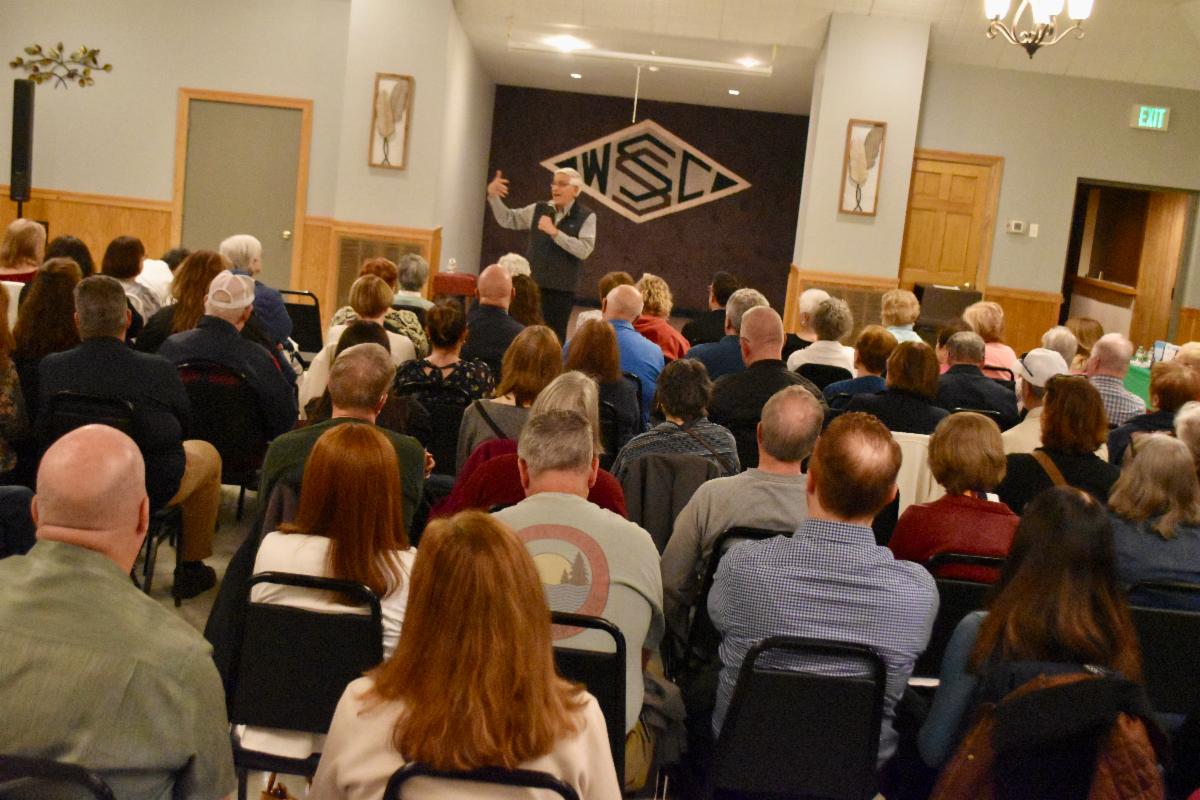
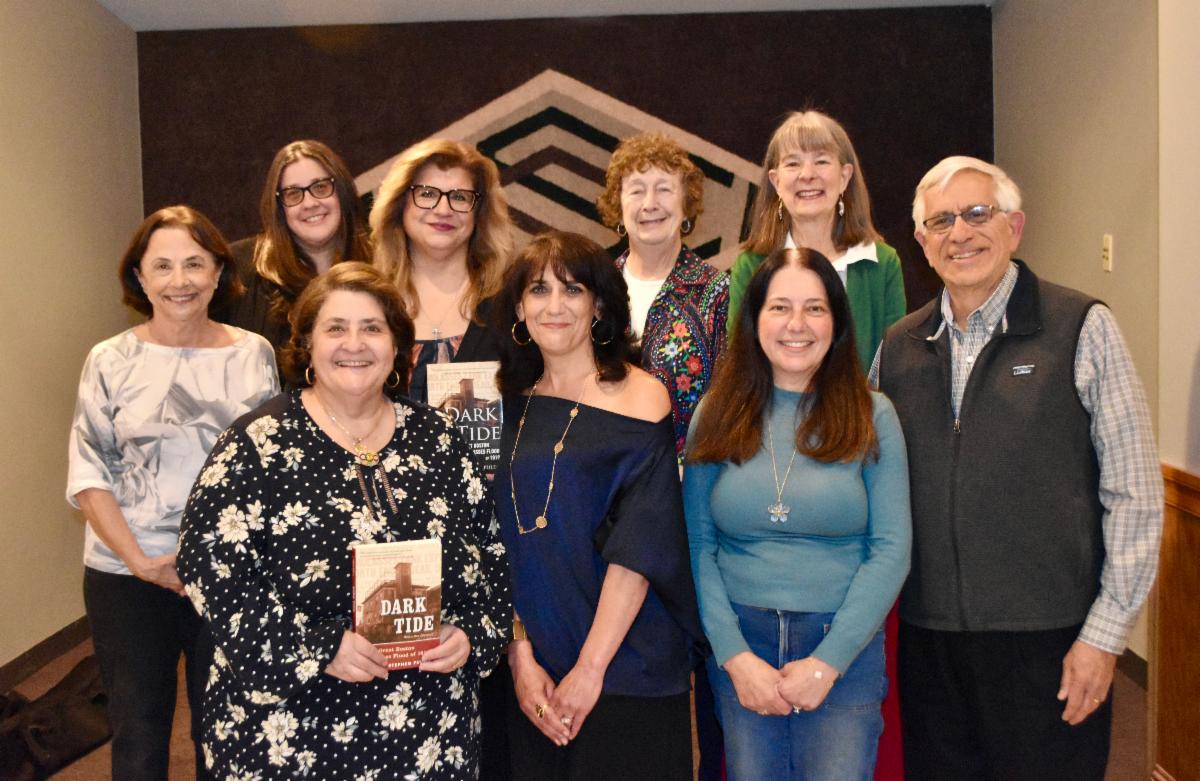
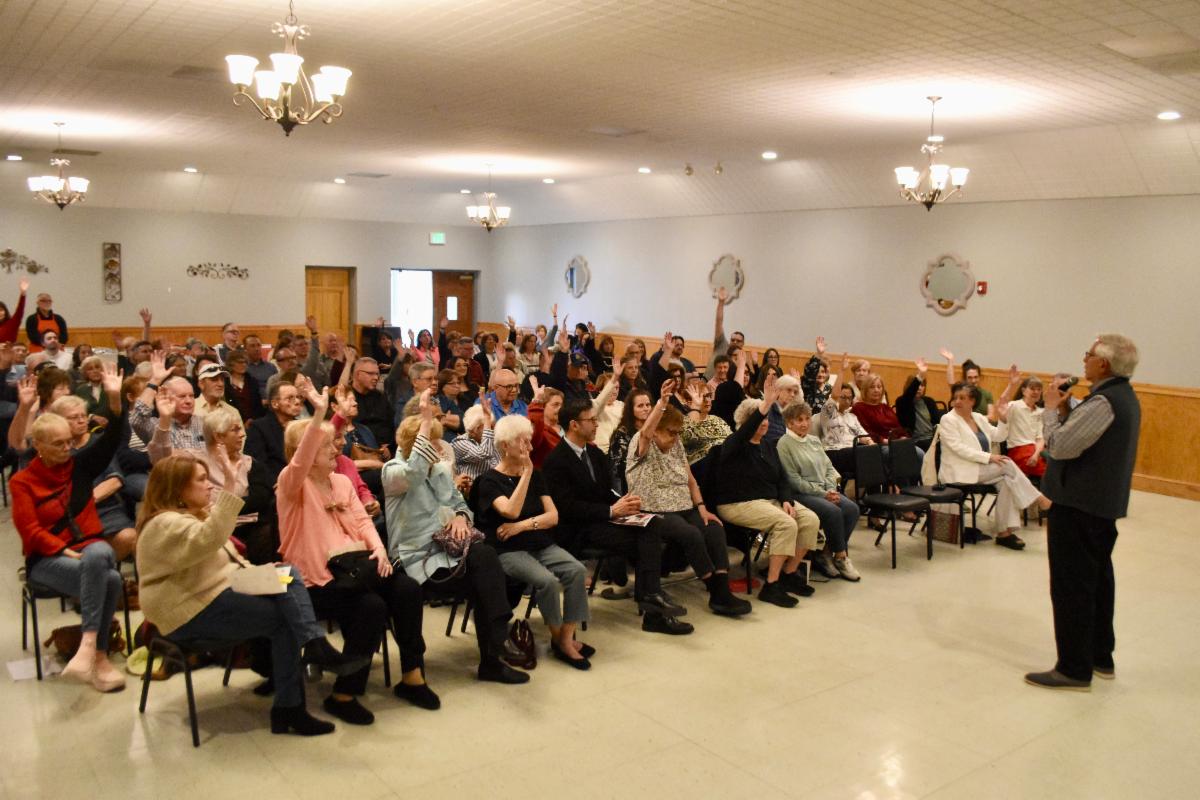
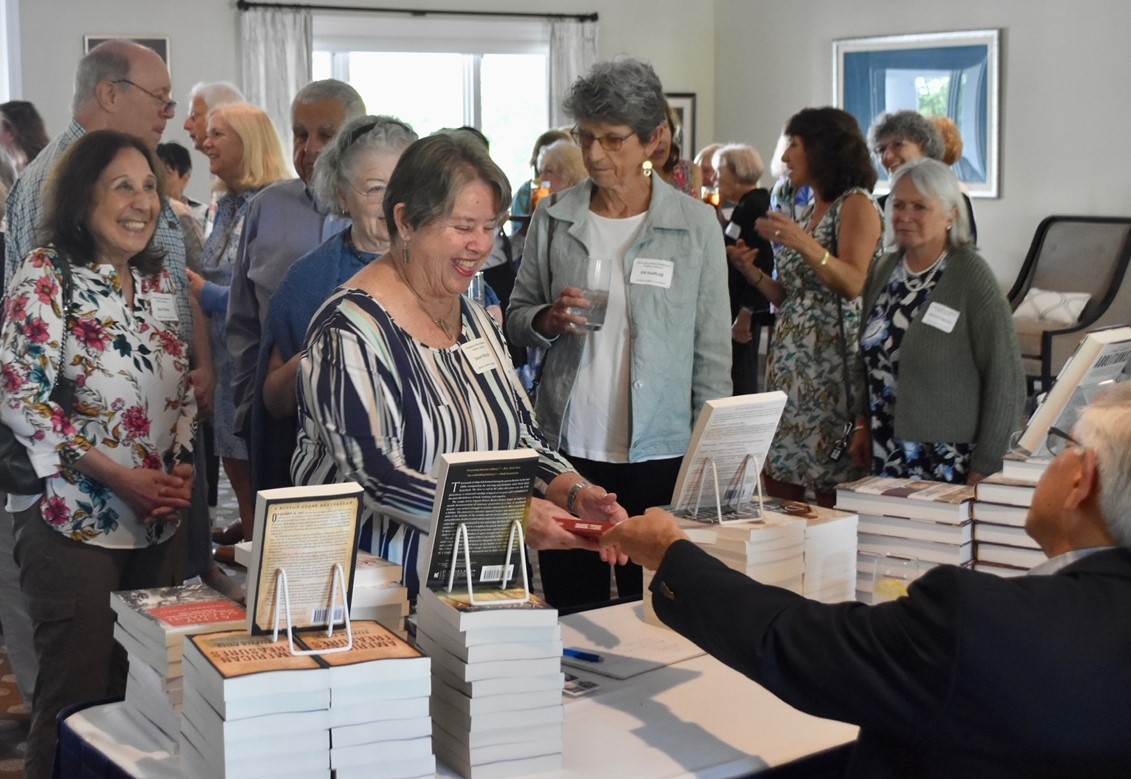
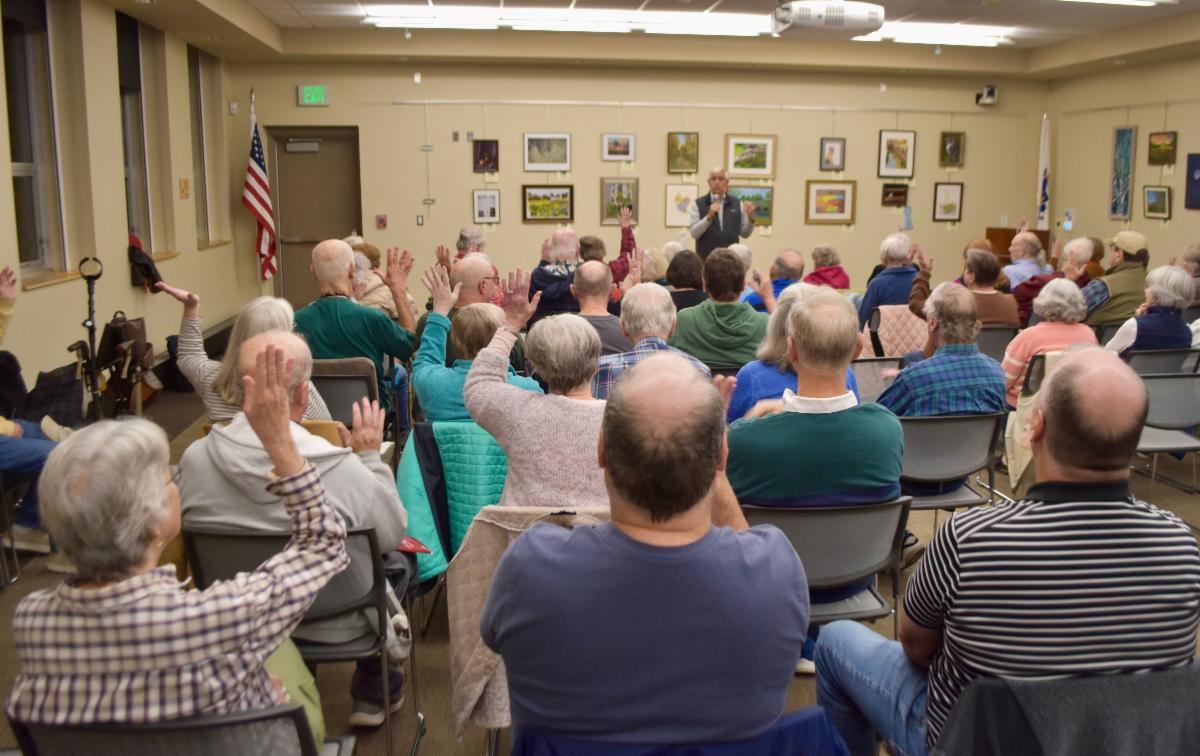
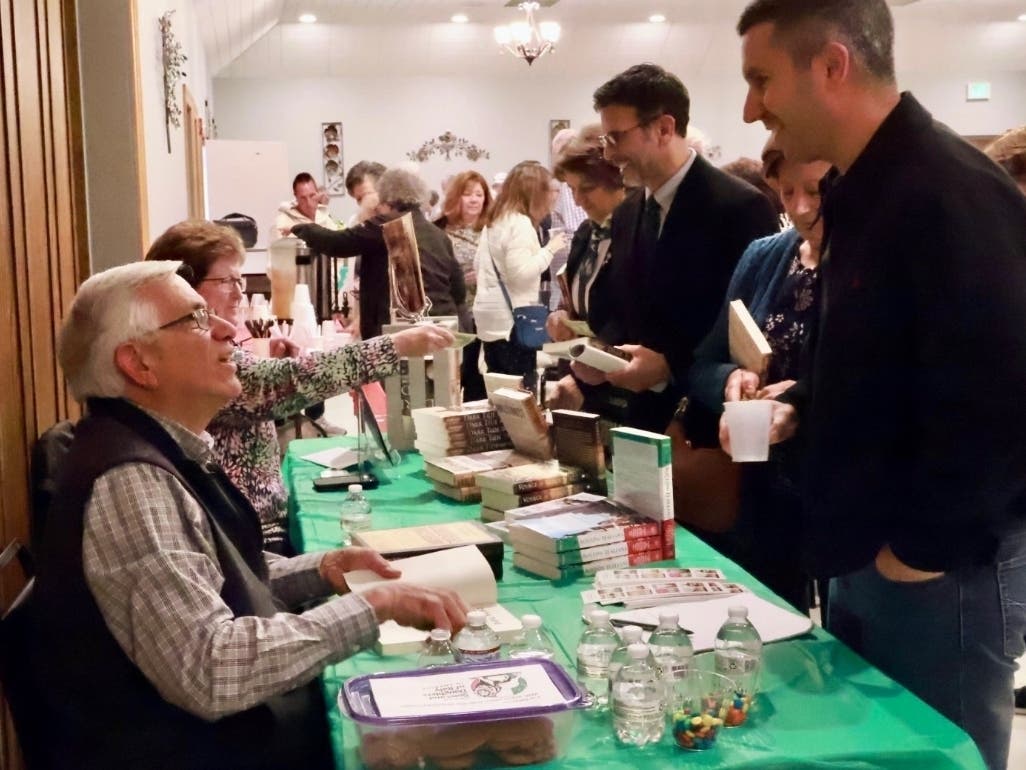
I so enjoyed talking about my book, DARK TIDE: The Great Boston Molasses Flood of 1919, at an event sponsored by the Wakefield (MA) Sons & Daughters of Italy! We had a full-house of more than 110 attendees who offered me a warm welcome and asked some amazing questions after my presentation. The evening included some wonderful homemade goodies and a raffle drawing of baskets that included copies of my books.
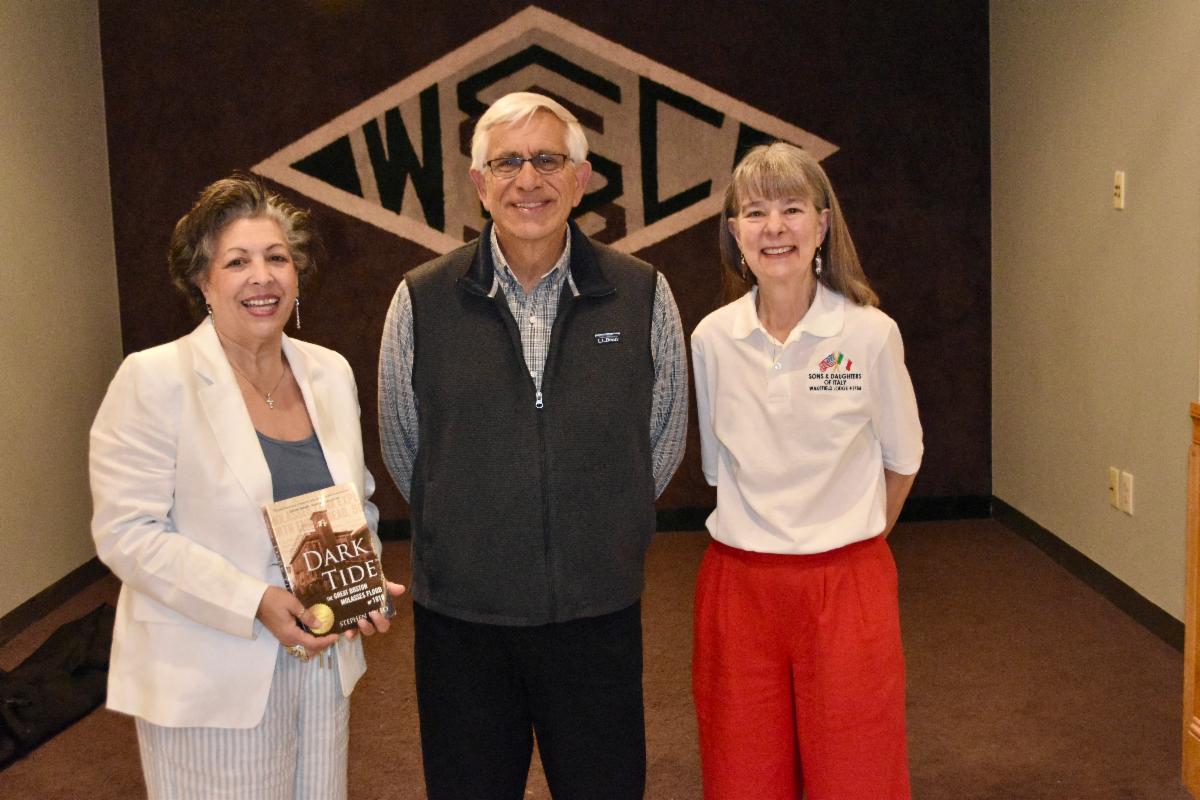
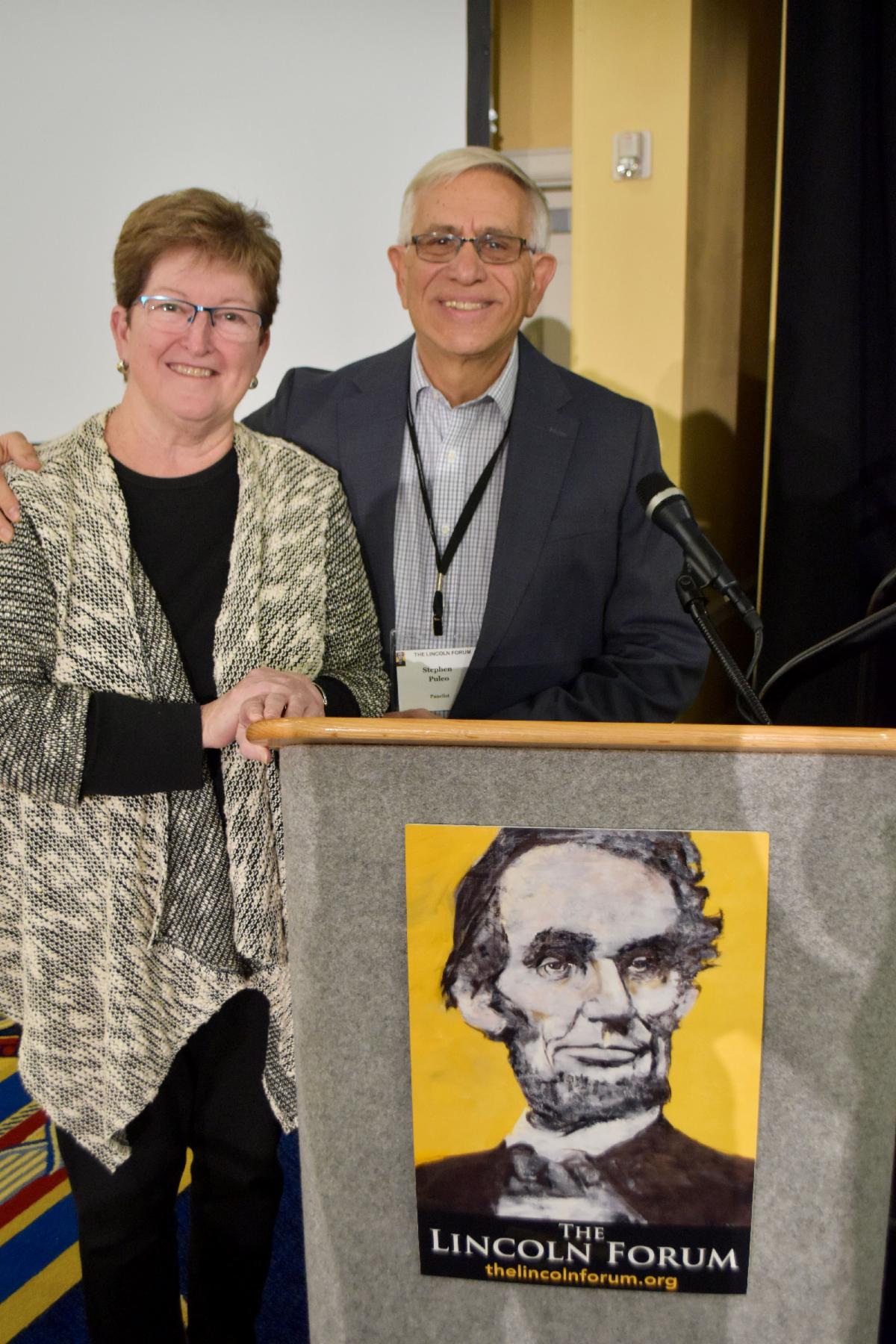
In the group shot I'm shown with the Massachusetts Sons & Daughters of Italy State Cultural Committee Book Club, which selected DARK TIDE as its read in anticipation of the event. I'm also shown with Toni Encarnacao (left), President of the Lodge, and Debbie Tremblay, Vice President. My special thanks to Debbie, the organizing committee, and the Lodge for inviting me to this outstanding event!
| | | ________________________________________________________ | | |
A Wonderful VOYAGE OF MERCY Discussion
at 2026 Cashman Family Luncheon!
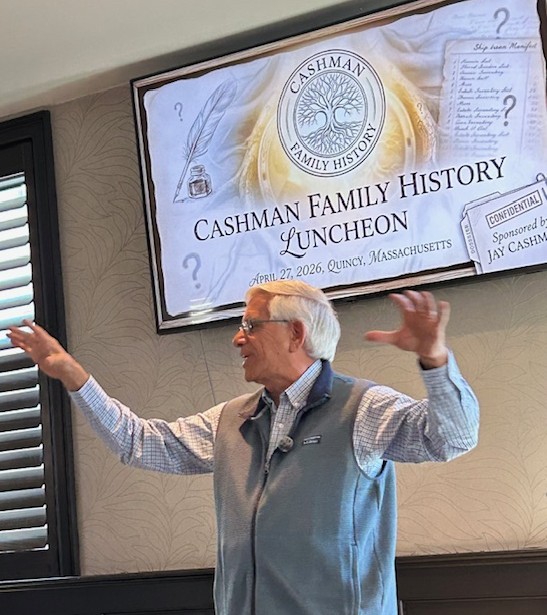
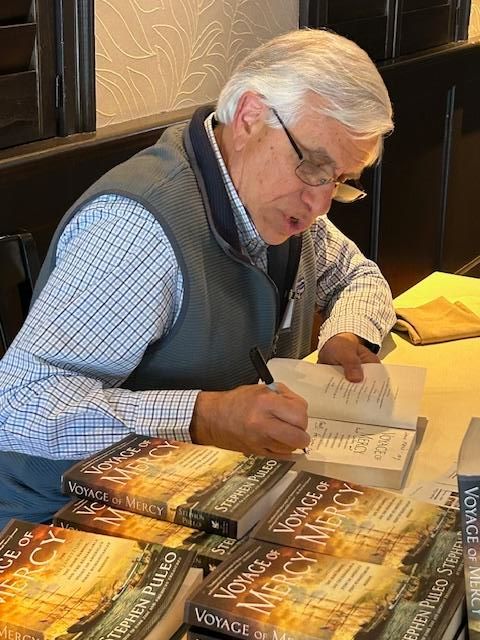
I was honored to do a presentation on my book, VOYAGE OF MERCY (about the Great Irish famine of 1846-47 and the extraordinary American humanitarian response to it), at the 2026 Cashman Family History Luncheon that was held at Alba’s restaurant in Quincy, MA.
The event is hosted by Jay Cashman, founder and chairman of Jay Cashman Inc., a prominent Quincy-based construction and development company that does business across North America, Europe, and the Caribbean. Jay is also proud of his deep Irish roots, tracing his ancestry back to James Cashman, who emigrated from County Cork to Boston in 1850.
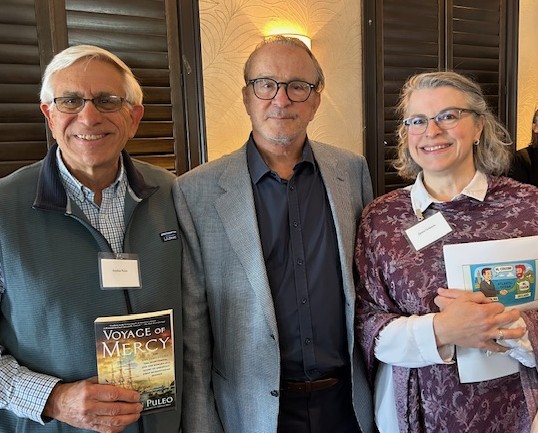
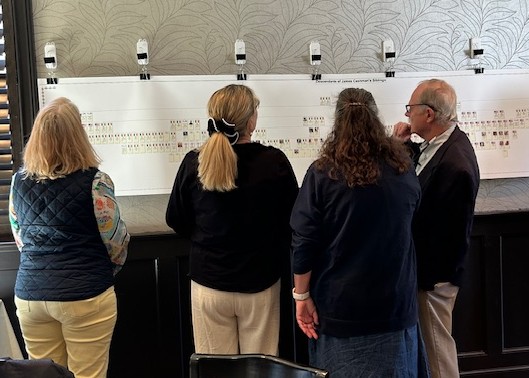
What a great event this was – a celebration of history, heritage, and legacy. I’m grateful to Jay and Cashman History genealogist Donna Bouley Goldstein for making me feel so welcome, and to Donna for working with me on arrangements for the event. I’m shown here with Donna and Jay, and the Cashman genealogical timeline shown in the photo was researched and created by Donna. Thanks to the Cashman family and the entire Cashman organization for a memorable event!
| __________________________________________________________ | |
Nothing Like a Hometown Event: A VOYAGE OF MERCY EVENT at Weymouth (MA) Elder Services
It's always fun to do a hometown event!
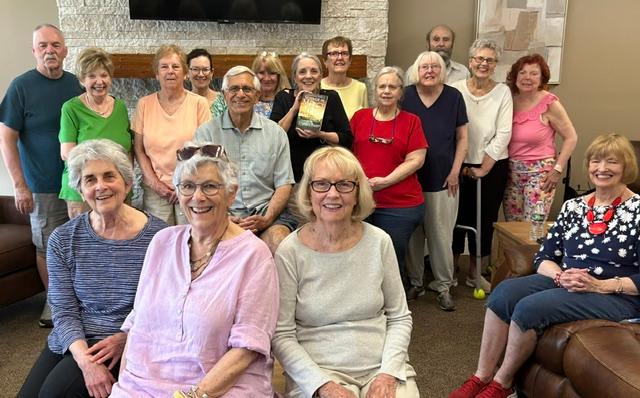
Many thanks to the Weymouth (MA) Elder Services book club for choosing my book, VOYAGE OF MERCY as its monthly read! My thanks to Book Club Coordinator Judi Henderson (shown in the photo holding a copy of the book) for the invitation, and for the club's warm welcome which made for a fun afternoon!
| | | As Always, My Thanks to You | | | | |
I say it every time I publish a newsletter, and many times in between, and I'll say it once more: THANK YOU!
I'm so grateful for your support, and especially to those who have honored me with their loyalty and encouragement for so many years.
I’ve been enormously blessed as an author and it all starts with you!
Whether you are a loyal and devoted reader, a good friend or family member, a school administrator or teacher, a member of a library staff, a book club member, a podcaster, a student who loves history or writing, part of a community organization, a corporate or non-profit staffer, a publicity professional, someone who has taken a North End tour with me, or a member of the media (and maybe you fill more than one of these roles!) -- you have all done so much to make my author career very special.
Thanks for your attendance at my author appearances, your emails, your visits to my website, your responses to my social media posts, your book purchases, and your general well wishes.
With eight published books, a ninth on the way, and almost 750 appearances since this author journey began, I have been humbled by your support.
My wife Kate and I are profoundly grateful! We can't say it enough. We are truly honored that you're all members of the "Puleo team."
| | |
And finally, a few books (besides mine)
for your reading pleasure..
| | |
Those of you who have received my e-blasts before know that I like to recommend nonfiction books (with an occasional fiction title thrown in) from other authors that I think you'll enjoy. Many of you have let me know that you appreciate this, which I'm glad to hear. I love talking about books, so consider this our online book club conversation.
For previous books I've recommended, you can always go to my "What I'm Reading" section of my Website (this issue's selections will be added shortly).
My recommendations for this issue (only two this month due to my 250th reading that I discuss above!):
-
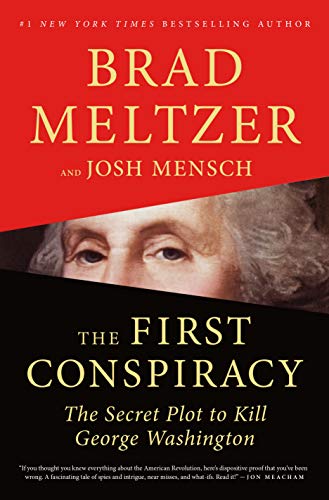
THE FIRST CONSPIRACY: The Secret Plot to Kill George Washington, by Brad Meltzer with Josh Mensch
This book is all true and great history, and it's also a riveting detective story. In 1776, an elite group of soldiers was handpicked to serve as General George Washington's bodyguards (the "Life Guards" - and yes, that's where the word was coined). Unbeknownst to Washington, some of the guards were part of a treasonous plan. In the early months of the Revolutionary War, these guards, along with the Governor of New York and the Mayor of New York City, launch a potentially deadly scheme against the most important person on the colonial side in the fight against the British crown -- George Washington himself. To say more would require a rare non-fiction spoiler alert -- best to read and enjoy this page-turner!
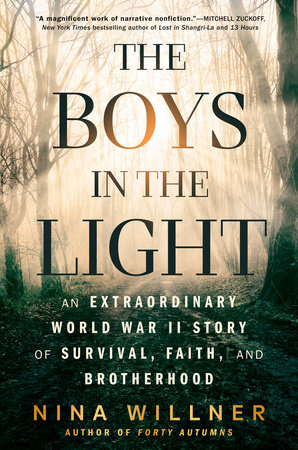
- THE BOYS IN THE LIGHT: An Extraordinary World War II Story of Survival, Faith, and Brotherhood,
by Nina Willner
And speaking of riveting...This book follows the parallel journeys of U.S. Army 3rd Armored Division Company D (tank division) and Eddie Wilmer, the author's father, who -- along with a friend -- had survived both Auschwitz and Buchenwald, and escaped. The 3rd Armored boys were weary and battle-hardened and constantly questioned whether the war was worth it -- they got their answer when two emaciated boys stepped out of the woods with their tattooed arms raised. What happens in the months and years ahead is a testament to the bonds forged during war, and the resilience of the human spirit. Nina Willner tells her father's amazing story in a compelling and compassionate way. Give this book your full attention this summer - you will not regret it!
| |
| | | |