|
Dear Friends committed to living and aging consciously:
Welcome to the Autumn 2026 edition of Conscious Eldering Inspiration and Resources; The Journal of the Center for Conscious Eldering. Many of us feel relieved that this Summer is nearly over. It’s been a Summer of chaotic extremes in the natural word, in human society, and for many of us in our personal lives. And yet, our lives have continued to also be surrounded by beauty, caring, courage and creativity. This quotation by Lee Harris seems more accurate and important than ever: “Whether wer’re headed toward heaven or the apocalypse, the job is the same.” Fall is the season of the harvest, calling us to step back a bit from our work to reflect on what is the state of the harvest of the “job we have been doing.” Have we given it the best of our wisdom, passion and commitment? What might we do in the seasons ahead to strengthen ourselves, the seeds we are planting in the world, and the soil in which we plant them, to withstand the turmoil and thrive amid the chaos.
May the articles, poetry and resources in this Autumn edition of our Journal support your connection with nature's energies, your remembrance of what truly brings forth the best of your human potential, and your trust in the regenerative power of ending and loss. We suggest that you slowly and reflectively read and savor this edition of our Journal. May it be a meaningful resource for your growth. And may you experience great bounty within and around you this Fall..
| | |
Read More of Ron Pevny's Writing on Substack
Ron will now periodically be posting his writing on Substack. He will not be charging for access to his articles. You do have to subscribe to his Substack, which you can do by going to: roncce.substack.com/subscribe
And please tell your friends about this opportunity to be inspired by meaningful writing about conscious eldering.
| | |
The Power of Community
A Prerequisite for Elderhood
by Ron Pevny
To my mind, there is a potential gift in the extreme polarization humanity is experiencing in seemingly all aspects of life. The human family has the opportunity to experience in a compelling way the stark difference between fear-and-ego-grounded unconsciousness, and consciousness grounded in vision of the human potential for vision, community, growth and wholeness. As we are assailed each day by images, messages and energies that feed fear and unconsciousness, those of us for whom the fulfillment of human potential is the highest value NEED the support of kindred spirits if we are to shine urgently needed light in a world teetering on a knife edge between transformation and collapse. All of us of any age need the support of true community. This is especially true for those of us committed to becoming the conscious elders whose wisdom, commitment and courage can make a great difference in what the polarization of these times leads to.
Throughout history, in cultures around the world, rites of passage have been the template for supporting individuals in moving through the transition process, for their own growth and for the wellbeing of their communities. Those moving from one life sage to another were prepared by the acknowledged wise elders for their transition and the ceremonies of initiation that marked this.And when they were ready to return to the community, the elders as well as the “youngers” heard and acknowledged their stories of growth and welcomed them and their newfound or newly understood gifts back to community.
We now live in a different world that has lost touch with understanding of what the human psyche needs to grow through life's inner and outer stages. Yet our human need for community support in moving through the transitions between these stages remains the same. As people seeking to age consciously, our challenge is to find such support. It is difficult, if not impossible, to navigate the life transition process without the support of at least a few kindred spirits. This reality became very real for me in this personal story I’d like to share with you.
Eighteen years ago I experienced a health crisis that I have since recognized as my rite of passage onto my elder journey. I came to realize as I emerged from this crisis how pivotal it was in requiring me to let go of my previous way of understanding and defining my life, and in helping me emerge from a lengthy, difficult time feeling lost somewhere between who I had been and who I could become. This time of crisis ended with a profound spiritual experience that opened the door to my beginning to recognize and claim the role and gifts of my elderhood. However, my sense of new beginning was fragile, unfolded slowly, and at times seemed to be an illusion.
Then, a couple years later, while in a beautiful wilderness setting with a few friends and a wise elder I considered a mentor, I realized that this personal, informal rite of passage was missing something crucial – acknowledgment and ritual support from others who are my “community.” We were near a stream, and I asked this mentor to help me create a baptism ceremony for myself to mark and empower the new life stage I was slowly but surely growing into. With this impactful ceremony, using flowing water and a few loving witnesses, my passage into a new life chapter finally felt real. It felt so very important to have others witness my telling the story of my transition, to affirm my growth through this process, and to pledge their support moving forward.
I repeat: We need the support of community to successfully navigate our transition into a conscious elderhood. If at all possible, receive your needed support in person. Being together face-to-face and heart-to heart allows us to share human energies and subtle cues that cannot be transmitted online. And even moreso cannot be provided by an AI, which has the ability to provide information and say supportive things, but cannot give and receive the love and other energies necessary for human growth and wellbeing This may well require stepping out of our comfort zones in a word that is focused on maximizing ease, comfort and efficiency by minimizing human interaction,, but growth only happens by stretching ourselves; growth does not happen in our comfort zones. And accumulation of information, ever easier these days, is not growth. Growth requires developing the various facets of our natural human intelligence, and supporting this with information.
Here are ways you can receive and provide such support.
* Ask someone you consider a kindred spirit, who cares about your growth and theirs, to be a conscious eldering buddy with whom you can share honestly and deeply what is true for you as you negotiate this challenging transition. If at all possible, meet in person with this partner.
* Find people who share your commitment to aging consciously and create a support group. Together, your group can share your collective wisdom and experience, your fears and enthusiasms, on this journey. You can read and write together with focus on supporting each other's growth.
* Your support group can play a role in rituals you and they create to help support your and their important inner and outer changes.
* As you gain increasing clarity about your emerging new life chapter, share this with your community. Share your goals and intentions, and ask for their support in staying true to them as you nurture the new sense of self you are growing into.
* Make a conscious effort to engage regularly with children, youth and younger adults. The archetypal role of elder is one of sharing wisdom, big-picture perspective, and the energy of wholeness with the younger generations, while being energized, informed and kept flexible by their enthusiasm, idealism and attunement to societal changes.
Moving through the inner work of life transition requires living as consciously and courageously as possible. This is not, and has never been, a journey for those unwilling to endure the discomfort of stretching, and being stretched, beyond what is familiar easy, and comfortable. With fear and negativity so pervasive, it is critical to counter these with the energies of hope, trust, inspiration, and love if our inner lives are to thrive and growth to happen. For most of us it is impossible to do so in isolation. We are hard-wired to resonate with the energies of the society we live in and the people close to us. Fortunately, it's not a matter of numbers. Even a few conscious people in our lives can make the critical difference if we are to have any hope of living consciously and intentionally at a stage in our lives where losses and fears are increasingly strong realities along with vast potential for growth and fulfillment.
Our family or social friends may not be our “soul family.” Finding our soul community may well require us to take the lead in initiating relationships, and accepting that our search may result in various “false positives.” However, if our intention and motivation are strong, we will find conscious, kindred spirits or they will find us. And with the support of kindred community we elders and our communities can thrive amid the chaos.
| | |
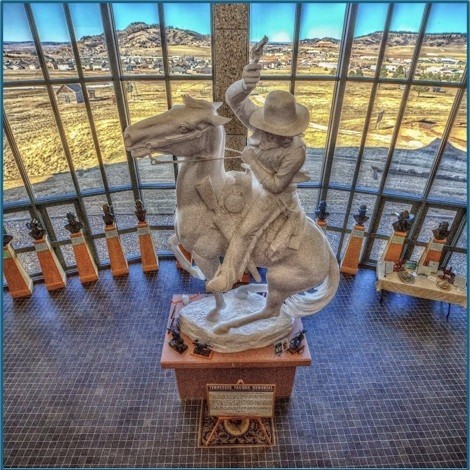
statue of Tennessee Vaughan
in Spearfish, South Dakota
(as referenced in article below)
Transforming Self-Image With the Ancestors
by Al Rider, CSL
Five years ago, when COVID was driving most of us indoors for a year of isolation, I began going stir-crazy and launched a personal project that I’d been postponing for decades. As a pre-law college history major, I’d picked up the tools for researching and writing about events and people from the past. And I vowed that someday, I’d use my historic research skills to dig up clues on my mysterious great-grandparents. My family had never told me anything about them.
That became a year of exciting discovery as I immersed myself in the detective work of genealogy and found stories of my forgotten forebears: Three amazing Civil War soldiers, seven Revolutionary War veterans, and a heroic great-granddad whose death in Detroit’s worst fire ever – while trying to save his friends! – had put his name on the front page of the New York TIMES.
Were my parents trying to protect their “little Alan” from bad dreams by keeping such dark family secrets secret? Probably. But suddenly, at the age of 70, with a lifetime of adventure and risk-taking behind me, these surprising, courageous ancestral stories quickly became a huge inspiration. Everything connected, my world expanded. My sense of who I am and where I came from was re-rooted in larger-than-life metaphors. My self-image changed: We Riders were not just small-town Midwest “nobodies.” We had a place in the mythos of America.
Friends (including Ron Pevny, and Rosemary Cox of Sage-ing International, encouraged me to share my experience with others. And so, the Sage-ing Ancestry Project was founded. Today, after four annual Circles have gathered, some 30 Sage-ing members have learned to do that same research, and have found their long-lost family stories, too. Several report that the ancestors have transformed their image of who they are, just as mine did for me. Here’s one outstanding example:
FINDING HER “COWBOY ROOTS”
Ancestry Circle member Jan Flynn of Georgia is a retired university professor who now co-guides retreats for the Center for Conscious Eldering that take participants onto the land for growth and spiritual connection. She had already traced several forebears before joining Ancestry Circle. With the Circle’s encouragement, her research quickly deepened, and more generations of ancestors appeared.
In the last few weeks of our Circle’s year together, Jan was asked by her 95-year-old aunt to find a ‘lost’ cousin, a relative who had eluded former family historians. With Circle help and new tools, she found the story of her uncle J.A. ‘Tennessee’ Vaughan. Following Horace Greeley’s advice to “Go west, young man, go west!” – ‘Tennessee’ had moved to Texas right after the Civil war, at age 15, taking a job with a cattle company. His cowboy crew drove herds north from Texas each Spring, fattening them up on the grasses of the Great Plains. Having reached the railheads in the South Dakota Black Hills each fall, ‘Tennessee’ and the men loaded their cattle onto trains headed for stockyards in Chicago and Kansas City. He loved outdoor life and made a career of it. He became a legendary ‘Trail Boss’ and eventually drove well over a million cattle to market over some 20+ years. In South Dakota, he’s remembered as ‘THE Great American Cowboy.’
His larger-than-life size statue, crafted by a sculptor into an American icon, can be seen in the rotonda of High Plains Western Heritage Museum in Spearfish, South Dakota, the city where he is also buried.
DISCOVERING HER OWN “INNER COWBOY”
This discovery had a powerful impact on Jan. As a young adult, she fell in love with horseback riding. “I promised my 12-year-old self that someday I would have a horse and really learn to ride,” she said. In her 40’s, she got her first horse and began riding seriously. In 1991, she discovered Montana High Country Riding, and was smitten. Several years later, on her second trip there, opportunity appeared. She was a guest at the ranch, when without warning, the ranch cook quit mid-week and disappeared. But the trail-riding group still needed meals. Jan was asked whether she could cook. That question – and her “yes!” in response – began a decades-long relationship between Jan and the ranch. She’d come for two weeks but stayed for six, then returned many times over the next 20 years, running the kitchen and cooking on cattle drives.
What began as an adolescent dream-come-true, soon became a calling. “Over the next two decades, horses and Montana became a part of my life,” she recalls now. “On my first High Country pack trip I thought I might be in heaven. On my first cattle drive, I knew I was. Riding 18 miles a day behind some 200 Longhorn-Watusi cattle isn’t for everyone. It’s dusty, hot, sometimes dangerous, and hard work. I loved every minute of it. I felt completely at home, as if I’d been there before, not just once but many times.”
Then years later, when Jan discovered in our Sage-ing Ancestry Circle that her great-great-uncle had happily lived that same rugged life more than a century before and made his mark on the history of the West, Jan was stunned. Had she been “channeling his outdoor energy” all those summers and now with nature-based retreats, without even knowing his name, or that he’d existed? Could some part of him have been living on in her, just as ancient Wisdom Keepers of American Indigenous tribes have long taught? She now says with confidence: “My uncle ‘Tennessee’ would be so proud of me!”
SHE’S NOT THE ONLY ONE
As Jan’s genealogy coach, I’ve watched her new excitement at hearing her uncle’s story, and it resonates for me personally. Like her, my ancestors, whose adventures I’ve hinted at above, have also inspired me to re-think the life-review exercises I’ve done as a conscious elder.
I’ve come to recognize a kind of ‘explorer-discoverer’ energy in myself, the gift of my immigrant forebears. In my active career – first as a progressive pastor, which took me to some dicey third-world global locations, then as a tour guide in edgy Communist Eastern Europe, and later as a career counselor and therapist – I became a guide to many hundreds of other searchers. And now as Sage-ing’s genealogy coach, my risk-taking forebears are still giving me clues to who I am, and who I have been. Have I been a kind of courageous spiritual ‘explorer’ all my life? Maybe. Am I finally finding and naming that as my true inner self now, as a conscious elder? I wonder.
Al Rider and his spouse Karen are retired in Columbus Ohio, living near their kids and grandkids. Al is a Certified Sage-ing Leader. Jan Flynn and her husband are retired on a beautiful lake in the hills of Georgia, from which she travels frequently to Ghost Ranch, New Mexico and elsewhere to co-lead retreats for the Center for Conscious Eldering.
For information on the 2026-27 SAGE-ING INTERNATIONAL Ancestry Circle, click HERE.
| | |
I Am Crone
My Growth As a Wise Elder Woman
by Barb Roth
Aren’t we lucky? 200 years ago, many of us would not still be alive. I would have died from my bout of cancer, when I was hit by a car, or from several other health issues. But now we can live thanks to “modern” medicine. Ageing has given us new chances, new opportunities, new lives in some ways. For those with enough money to have a warm house and food, life is pretty good. We can have fun!
Becoming an elder enters us into a specific developmental stage of life. Like all human developmental stages, it comes with crucial tasks to be accomplished. Self-reflection, giving back, sharing our wisdom and readying for the end of life are but a few of these tasks. The challenge is to weave these into a life full of new health challenges and the desire sometimes to simply rest.
Mary Pipher tells us in her book Women Rowing North, “With each new stage of life, we outgrow the strategies that worked for us at our earlier stage”. When we outgrow them, we then need newly adapted strategies. I have found I need new strategies for balancing “doing” and “resting”, new strategies for saying yes or no, and new strategies for knowing myself. I find myself needing to question my habits. What served me as a working Mom in my 40’s may be detrimental to me as a retiree in my 70’s. I need to make space and time for how I want to spend my time now. If I am constantly cleaning, cooking, doing laundry and “working” (now as a volunteer) as my life demanded earlier – there will not be time for writing, reflecting, journalling, meditating and reading that I want to be doing now.
I am working on these strategies for myself:
- Being a Conscious Elder
- Embracing being a Crone
- Learning to find Balance
- Coping with evolving new Health needs
- Allowing for Creativity
- Making the World a better place
- Sharing Wisdom
Many elders struggle with what it means to find and share wisdom at this age. I have found that when we are self-reflective, when we take time to know ourselves and deepen our relationships with honesty and time, this happens quite naturally. An informal conversation in which I share a story from my work life with a young colleague at a gathering, results in her sending a thank you card for the wisdom I shared.
Wisdom? I didn’t know I was sharing wisdom. When my youngest daughter is looking for a new career opportunity and calls to talk through how she should handle her interview, asking me my opinion about her strategies, it is a chance to share wisdom from my experiences. And when my friend gets a similar type of cancer that I had years ago it is another opportunity. We also share wisdom when we write articles or letters others will read, when we speak at events and when we write our memoirs. Wisdom includes both big insights and small ideas. We have lived a long time and so we have experienced a lot. With this comes wisdom.
Zoning in on two of the strategies I have worked on, Embracing being a Crone and Learning to Find Balance, I see that the change in strategy is on-going.
Embracing being a Crone has evolved from learning about the value of wise old women in other cultures and working to disregard what my culture tells me about aging. Our culture paints a grim picture of aging that I have not found to be true. When searching for research on women aging in our country 80-90% of what is found is exclusively about our health issues. We are so much more than our ailments and struggles, important as they are. I now believe that the wisdom, knowledge and passion we have is exactly what the world needs. It is not easy to stay conscious; in fact, our increased awareness can bring to the surface anger and sadness. But this awareness is crucial for a fulfilled life that has an impact.
Conscious Eldering Retreats have supported me in settling into my last stage of life with a mostly positive attitude and renewed sense of curiosity about life. Important to my wellbeing are my creative outlets (writing, knitting, painting), my connection with nature (hiking). and positive relationships with my husband. adult children and grandchildren. I have sought out wisdom from others, mostly women, in books and articles on aging and becoming a Crone. Prayer, meditation, reading sacred texts, ritual and connections with others in spiritual practice support my spirit at this time of life. Volunteering and giving round out my self-care and the fulfillment I achieve now.
I love spreading the word that being an old woman is an honored place in our world. I also push back, sometimes gently and sometimes not, when others try to engage me in some of the culturally acceptable focus areas for older women. Have I lost weight? Am I thinking about Botox? Am I on a diet? NO – NO – NO. OK I do color my hair but not to look younger; being a redhead has always been part of my identity and I’m not giving it up yet. My Aunt Barbara was a redhead until the day she died at 94.
My time and spirit are too precious for lots of focus on my looks, I need to focus on being healthy and learning. My latest effort to continue learning and to give back was helping to design a retreat specifically for women moving into their Crone years. The inaugural retreat was held on sacred ground in Ireland in August. It dove deeply into the unique issues, challenges, and strengths that women have as elders. Participants welcomed becoming Wise Women—Crones
Many people of various ages and genders have laughed when I’ve said I’m proud to be a Crone, thinking I am making a joke. I see this statement as a way to take back this word and restore it to its original respected and honored meaning--a true, wise woman elder. This year I was gifted a drinking glass with green spots and black “witches’” hats on it (made for Halloween I think) by my stepdaughter. She said it looked like a Crone glass. She heard me! I use it every day.
May all women and men reading this article and this newsletter spread the word that conscious elder women are strong, free, and full of wisdom.
Barbara Roth retired in 2018 from a career focused on child and youth development in local, state and national arenas. Since then, she has been on a conscious eldering journey which started with a weeklong Choosing Conscious Elderhood retreat at Ghost Ranch, New Mexico one week after retirement and has continued with participation in the Next Step program ,co-leading Choosing Conscious Elderhood retreats, writing articles for Conscious Eldering Inspiration and Resources Journal, and doing the inner work that she teaches.
Barbara can be reached at barbaraanneroth@gmail.com
| | |
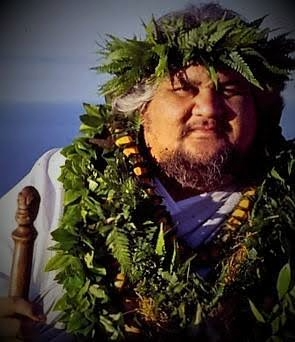
Kumu Hula John Ka`imikaua
Our Stories
By Lehua Lopez
(This article was written by my request to my Hawaiian elder friend. I feel it is especially relevant in these times of global ecological and cultural crisis)
"Hula tells a story." I was a 4-year-old Kanaka `Oiwi (Native Hawaiian) when I began my hula training and first heard those words. Coming from a family of 'olapa hula (hula dancers), telling stories with my hands is instinctual. But, at 77, the ‘old stories,’ our mo`olelo kahiko that I dance or recount, no longer feel all that true and complete.
My Kumu Hula, (hula teacher) Kepa Maly, once told his hula students that our Hawaiian culture is dynamic, that it changes over time because we keep it ‘alive’ through our dancing, through the new mele (songs) that we create from the influences of different languages, new technology, and world events. But as much as our culture, hula and mele change, there are values and a worldview that stay the same—ka `ike pono o na mea Hawai`i—knowledge and values that are true to the culture.
There’s an old story about Paka`a, a son whose father was a bird catcher, and who fed his family, including Paka`a, with birds. But Paka`a complained about always having to eat birds so he took it upon himself to learn to catch fish for the family. He became very successful and was highly praised for his resourcefulness, as his family feasted on birds AND fish! In this story, the Hawaiian values of loea (skills, inventiveness), a`apo (learning quickly), and malama `ohana(caring for family), are emphasized. [1] But the narrative also tells us that the old Hawaiians sought new ways to cope with situations that were ‘unsatisfactory.’ All of us are now forced to change to cope with ‘unsatisfactory situations,’ like human-caused climate changes that threaten our families and decimate non-human species.
All indigenous cultures pass on wisdom, na`auao, from elders, kupuna. They tell their children how to behave with others, and especially, with (and in) nature; when to plant, build, or rest; who to help or ally with; where to worship; what is necessary to protect and fight for; and maybe most importantly, why we need to remember and pass on this wisdom. One of our most beloved kumu hula, (hula teachers) was the late Kumu John Ka`imikaua, a brilliant, highly talented, and generous teacher who would tell stories to illustrate the lessons he wanted us to learn.
Wawahonua`aho, The Wind Gourd of the Goddess Hina
In this old tale, the cave home of the Goddess Hina (who protects the Island of Moloka`i) is called Pa`oiki, wherein a gigantic gourd, called Wawahonua`aho, contains the powers of three violent winds. These winds are released by Hina, one by one, as ho`ailona, as a warning for people to know that they are not ‘pono,’ not ‘right’ with the land or the ocean, that they are ruining, over-developing, or neglecting to clean and maintain the places they farm, fish, or live on. The first wind, the Ilinahu, is released when Hina opens Her wind gourd part-way. This howling wind rushes through the forests, knocking down trees, forcefully flowing through the lowlands, and sweeping out into the ocean. These winds are ‘signs’ that the people need to do ho`oponopono with the land, an ancient process, led by elders, asking for forgiveness and knowledge, that would ‘set to right’ human actions so the land and sea can remain abundant.
But if the people continue their wasteful, greedy, or neglectful actions, Hina will open Her gourd half-way, and the second wind, the Uluhewa, will emerge with even stronger winds, coupled with heavy rains, that will batter the island, and cause huge ocean waves to rise and destroy coastal fishponds teeming with sea life, and ravage the lowlands where the taro crops and banana fields grow. The Uluhewa wind, however, only destroys property. But if the people do not heed the first two winds of Hina, She will open her gourd completely and release the final catastrophic wind, the Luluku. This will be a turbulent, annihilating wind with heavy rains from all directions coming in with devastating lightning and thunder. This is the wind that takes life! [2]
But what are these ‘right actions’ that would prevent Hina’s winds? Kumu John told us about the ancient times when Moloka`i was ruled by a governing `aho, a council of experts, chosen by the island’s residents, who were highly respected in various fields of knowledge. These authorities, in specialties like farming, fishing, bird-catching, and herbal medicine, knew how to maintain the fecundity of the land and the sea. As the ruling council of Moloka`i, they consulted with each other, respecting each other’s knowledge and experience, and made decisions about land management and ocean use, the ‘right’ actions, so the people could continue to process the foods, products, and medicines they needed.
However, as sea rise and climate changes have upended the predictive character of nature and weather, and as the imposed trauma of cultural/political/social changes in our native communities continue to isolate us from our old ecological surroundings, our ancient stories have become anachronistic. We no longer have governing ‘aho, ruling groups of local experts who can tell us how to live on the land in a ‘pono,’ a ‘right’ way.
It is time to weave new stories! There are now many young Hawaiian experts—marine scientists, land-use planners, water managers, historians, agricultural specialists—who have the expertise to ‘right the wrongs,’ the western knowledge (with the spiritual and cultural wisdom from our elders) to clean up polluted lands, and re-direct development away from contaminating our natural resources. Our western-educated children have studied the scientific processes of our earth—like what kind of energy production we should use to reduce pollution, or how to store and recycle water in urban settings, and where to locate housing that does not damage ecosystems (even if those houses need to remain small, multi-storied, and incorporate recycled materials). But they also know our elders’ chronicles that teach our people how to treat one another and how to honor our ancestors, because young Hawaiians are brought up to listen to stories, whether they come from kupuna (grandparents/aunties/uncles), or from kumu (teachers). And our kumu and kupuna are still the primary sources of wisdom!
Your Stories!
So, when the hurricane, tsunami, and/or fire destroys every physical thing you had, what’s left to keep, nurture, and bequeath to your grandchildren? Tell them the story about meeting the love of your life, the times you were happy, and how you felt when they were born. Let them know that ‘nature’ is NOT their enemy or something to ‘overcome,’ but that hubris, vanity, and greed are the attitudes that lead to human and non-human losses. These are our legacies to the coming generations, the treasures that every generation needs to survive, and thrive!
Credits: [1] “Recovering Hawaiian Culture Through Children’s Literature,” by Ku`ualoha Meyer, Literature and Hawai`i’s Children[Journal], 1990 Proceedings, Pg. 184.
[2] “Mo`olelo Malama Pono—the story of Malama Pono,” Chapter 6, from the video, A Mau A Mau, to continue forever, by Kumu Hula John Ka`imikaua, produced by Nalani Minton and John Ka`imikaua, 2009.
Lehua Lopez, a native Hawaiian cultural anthropologist, was born and raised in Honolulu, Hawai`i, and graduated with a Bachelor’s degree in human development from the University of Hawai`i (Manoa). She received her Master's degree in cultural anthropology, specializing in Hawaiian culture, at the University of New Mexico (Albuquerque). She has been teaching adults and children the culture and history of Hawai`i for more than 50 years. Since 2017, she has been living in Albuquerque, New Mexico, where she considers herself part of the early 21st Century’s Hawaiian economic diaspora. She returns to Hawai`i Island, and Honolulu, at least once a year, visiting family and friends, and eating poi and fresh fish.
Lehua's contact info for those who may want to get in touch with her: 88hale@gmail.com
| | |
Wise words from Richard Gere,
friend and key supporter of
the Dalai Lama
at 75
Aging is not just wrinkles
Not just gray hair
Not just a number on a document
It is the moment when you finally
begin to understand
That life does not have to be
chased all the time.
It has to be lived.
Yes, the body changes
The face is no longer the same
as it was in youth.
Movements become slower.
The mirror tells the truth
more honestly than before.
But there is something time
cannot take away.
The heart.
Because the heart does not age the way the body does.
It remembers the first love.
He first dreams.
He first pain.
The first loss.
The first joy that made you want to embrace the entire world.
The soul has no age.
It stays where we first learned
how to truly feel.
And perhaps with the years comes the most important understanding:
Every age is the right age.
20 gives courage.
30 gives strength to build.
40 gives honesty with yourself.
50 gives depth.
60 gives wisdom.
70 gives a calm that no longer needs to prove anything to anyone.
Every stage of life brings its own gift.
And growing older is not a defeat.
It is a privilege.
Because not everyone gets to see
their gray hair.
Not everyone gets to watch
their children grow.
Not everyone gets the chance
to greet another Spring.
Not everyone wakes up in the morning
and can simply say: “I am here.”
Too often we fight against time.
We hide wrinkles.
We feel ashamed of age.
We compare ourselves to old photographs.
We try to look as if the years
have not touched us.
But maybe the real victory is not in still looking young on the outside.
It is in not growing old on the inside.
Keeping curiosity.
Not losing tenderness.
Still being amazed.
Laughing sincerely.
Loving without fear.
Being grateful for simple things.
Seeing beauty even in quiet days.
Because the secret is not to look young.
The secret is to have a soul that is alive.
Until the very last day.
Then every year stops feeling like a loss. And becomes a gift.
Do not be afraid of age.
Be afraid of passing through life
without ever truly feeling it.
Because growing older
does not mean fading away.
Sometimes it means finally beginning
to shine from within.
Summons
by Aurora Levins Morales
Last night I dreamed
ten thousand grandmothers
from the twelve hundred corners of the earth
walked out into the gap
one breath deep
between the bullet and the flesh
between the bomb and the family.
They told me we cannot wait for governments.
There are no peacekeepers boarding planes.
There are no leaders who dare to say
every life is precious, so it will have to be us.
They said we will cup our hands around each heart.
We will sing the earth’s song, the song of water,
a song so beautiful that vengeance will turn to weeping,
the mourners will embrace, and grief replace
every impulse toward harm.
Ten thousand is not enough, they said,
so, we have sent this dream, like a flock of doves
into the sleep of the world. Wake up. Put on your shoes.
You who are reading this, I am bringing bandages
and a bag of scented guavas from my trees.
I think I remember the tune.
Meet me at the corner.
Let’s go.
| | |
Uncertainty
By Marilyn Boyle
These are the poetic lyrics to a song written this year by Marilyn
West (Body / What is)
Feet on the ground, breath in my chest
This is the moment, nothing more, nothing less
Boxes half-packed, futures unclear
And still, in my body… I am right here
I don’t have to solve what hasn’t come
I don’t have to finish what’s begun
There is a place beneath it all
Where I can land, where I don’t fall.
I can live here too
In the not-knowing
I can be with what is true
Without controlling
There is something steady now
Even when I don’t know how
I am learning how to be
In uncertainty
North (Mind / Meaning-making)
My mind keeps reaching for a frame
Trying to name what I can’t name
Stories of loss, stories of fear
Stories that say I disappear
But I can watch them rise and fade
Not every thought is truth I’ve made
Meaning is something I can shape
I don’t have to close the spac
I can live here too
In the not-knowing
I can choose a meaning new
Without forcing
East (Spirit / Mystery)
There is a rhythm I can’t see
Something unfolding quietly
Not everything is mine to know
Not every path is mine to show
What if the unknown is not a threat
But where my deeper life is met
What if the dark is not the end
But where the next self can begin
South (Heart / Relational field)
And I am not alone in this
There is love I still can feel
In every memory, every thread
In every place my life was real
There is grief, and there is grace
Both belong here in this place
I can hold them, I don’t have to choose
I don’t have to win or lose
Center (Integration / Will)
I can live here now
In the unfolding
I can trust somehow
Without holding
There is something steady now
Even when I don’t know how
I am choosing how to be
In uncertainty
Return to West (Body anchor)
Feet on the ground, breath in my chest
This is the moment, nothing more, nothing less
And for now, that is enough
For now… that is enough
Elders
By Felice Rhiannon
“…the infinite sum of things seen, lived through, thought, felt and
suffered.”
hermann hesse, hymn to old age
take your place
among the old ones
as your body
grows
like the redwood
and the oak
rings marking your years
become presence
aware of earthsky
and all between
in radiant potential
eldering the world
now, only now,
in your frailty
vulnerable to life’s
dangers--
and death’s--
can you open
to the dignity
of your years
bequeathing
the good fortune
of time’s lesson—
spaciousness is
your being
in the vastness
of love
| | |
Upcoming Conscious Eldering Programs
Retreats
Our last Choosing Conscious Elderhood retreat of this year is full, and will happen in mi-September at Ghost Ranch.
Our 2027 schedule has not been finalized. It will likely include two or three weeklong retreats, a Next Step Retreat, and several shorter workshops.
*We have a three-day workshop coming up October 26-28 in the Houston area, presented with co-sponsorship by the Conscious Aging Program of the Catholic Archdiocese of Galveston/Houston. It will be at a beautiful, semi-rural retreat center, and be an inspiring introduction to conscious eldering, with special focus on passion and purpose. For information and to register, contact. kris kerlin at kkerlin@archgh.org or
713-291-2678
| |
*For those who want an inspiring online experience, Ron Pevny and Jan Flynn will be facilitating a four session online workshop called "Liminal Times and Conscious Eldering:
Navigating Life's In-Between Spaces". It will be on four Mondays at 9:00 am Mountain Time beginning September 21st, and is co-sponsored by our partner organization Sage-ing International, which is handing registration. To see the flyer, click here: https://bit.ly/3QMG47i
We are seeking more opportunities to present our inspiring weekend workshops and one-day introductory programs. If you know of a faith community, senior living community, or other organization that might be willing to sponsor one of these, please let us know.
Please consider joining us if you seek an empowering vision for your elder chapters, tools for helping make that vision reality, and the warmth of a supportive community of kindred spirits sharing and growing together. Our programs provide a powerful opporrtunity to have your idealism acknowledged, your hope rekindled and your dreams for a vital, passionate elderhood supported? They offer you the wisdom of skilled guides and the heart-and-mind-opening energy of the natural world, to open you to the rich possibiities of your later-life chapters--for growth, purpose, spiritual deepening, and giving your elder gifts to support a healthy society and planet.
If you need financial assistance to participate in a Choosing Conscious Elderhood retreat, please contact us. We have a small scholarship fund. And if you are in a position to contribute to this fund, we would love to hear from you.
| | |
For Organizations, Faith Communities, etc:
We are available to present our highly impactful weekend workshops or custom designed programs for groups who would like to sponsor one in their area.
Contact us to explore possibilities.
for details on our programs and registration information, please visit
www.centerforconsciouseldering.com/events
| | |
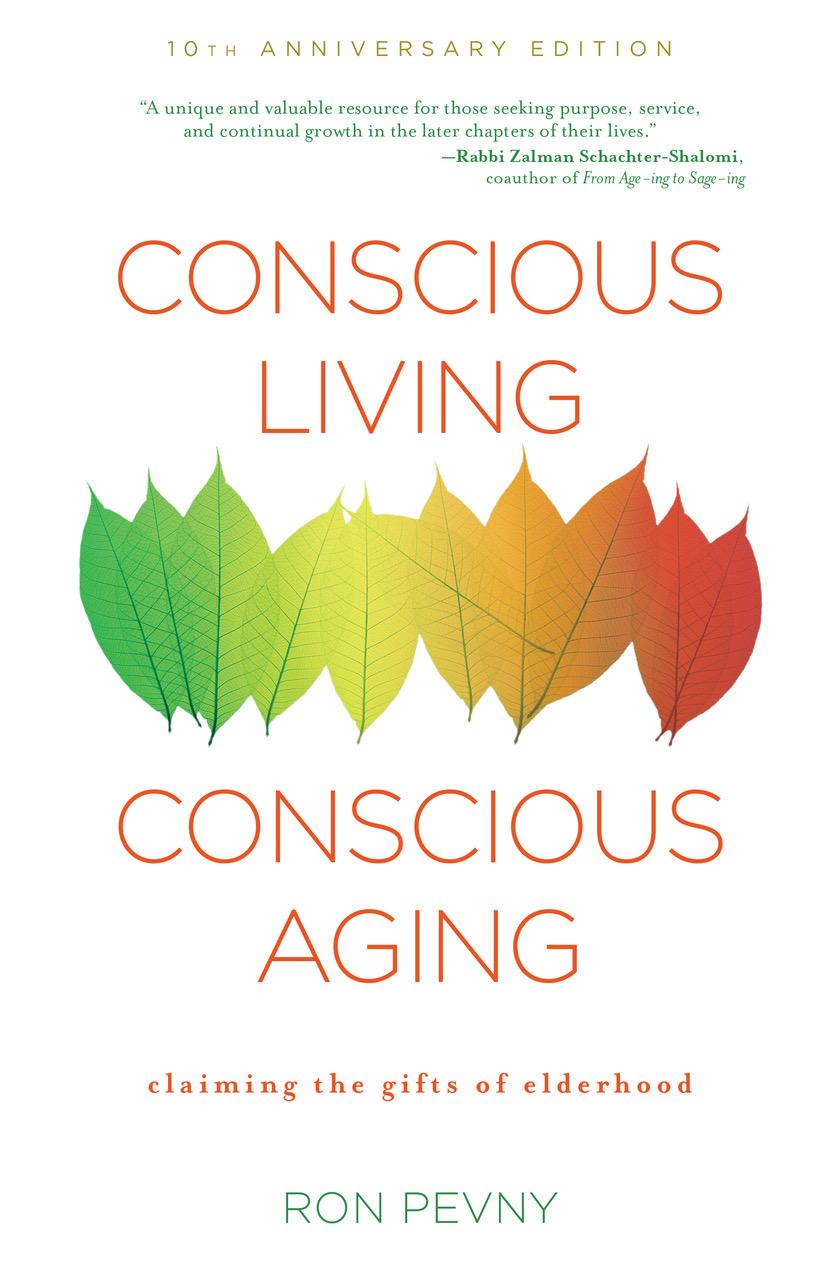
We are delighted to announce that Ron Pevny's book Conscious Living, Conscious Aging; Claiming the Gifts of Elderhood is now available as an audio-book, available through Audible and other sellers of audiobooks.
The print version is available through all the customary book sellers. You can best support our conscious eldering work by buying it from the publisher, Beyond Words Publishing, which is offering a 50% discount. To do so, use this link:
https://beyondword.com/products/conscious-living-conscious-aging-10th-anniversary-claiming-the-gifts-of-elderhood
| | | |
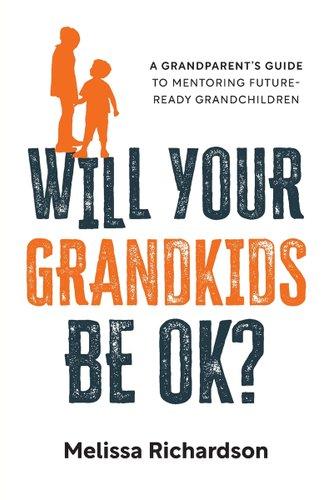
Will Your Grandkids Be OK is a tremendous resource for anyone seeking to help their grandchildren grow and thrive in today’s confusing, chaotic, largely unconscious world. I find this book a treasure trove of wisdom about every facet of mentoring children It unfolds organically, beginning with presenting the context in which today’s children are growing up; then offering many tools and techniques for making interactions mentoring opportunities; and then moves to an inspiring elucidation of the Roots and Wings framework for understanding and supporting what children need to thrive. It concludes with considerations for how to help your grandchildren learn resilience and deal with the challenges life will inevitably throw at them, so that they fly rather than being grounded by adversity.
From Ron Pevny's foreword to the book
| | |
The Human Values in Aging Newsletter
The newsletter you are reading is not intended to provide a comprehensive listing of workshops and other resources available these days to help support people in aging consciously. That job is well done by Rick Moody in his monthly Human Values in Aging newsletter. To receive it on the first day of each month, send an email to hrmoody@yahoo.com
| | |
One of our partner organizations, the Elders Action Network is an educational non-profit organization fostering a budding movement of vital elders dedicated to growing in consciousness while actively addressing the demanding social and environmental challenges facing our country and planet. They work inter-generationally for social and economic justice,environmental stewardship, and sound governance. They offer their multiple talents and resources in service to the goal of preserving and protecting life for all generations to come. Anyone committed to living and serving as a conscious elder in invited to join them in this critically important endeavor. EAN offerings include, among others,
* Bi-weekly Elder Activists for Social Justice Community Conversations
*The growing and influential "Elders Climate Action" initiative
* The Empowered Elder--EAN's foundational program
* Intergenerational environmental and social action projects
*The Elders for Regenerative Living initiative
To learn about EAN and its initiatives and programs, visit www.eldersaction.org
| | |
Another of our partner organizations is Sage-ing International, the pioneering organization in promoting the principles of "Sage-ing/Conscious Aging, Their greatly expanded offerings of online workshops and seminars, Elder Wisdom Circles, and their training program for Certified Sage-ing Leaders are grounded in the work of the late Rabbi Zalman Schachter-Shalomi, who introduced conscious aging to the world with his workshops at Omega Institute with Ram Dass and others, and via his seminal book, From Age-ing to Sage-ing.
We would like to highly recommend these three of Sage-ing International’s upcoming wide variety of programs which support the growth work of elders. Information about all their programs can be found on the S.I. website.
***Ron Pevny and Jan Flynn will be facilitating a four session online workshop called "Liminal Times and Conscious Eldering: Navigating Life's In-Between Spaces". It will be on four Mondays at 9:00 am Mountain Time beginning September 21st, and is co-sponsored by the Center for Conscious Eldering. To see the flyer, click here: https://bit.ly/3QMG47i
***Ancestory Circle: Beginning again later in September. Facilitated by Al Rider (see his article above). This is a small online group exploration with elders exploring their ancestral history. For information on the 2026-27 SAGE-ING INTERNATIONAL Ancestry Circle, click HERE.
*** Deepening the Sage Wthin. In Boulder, Colorado October 16 and 17. This in-person workshop, led by long-time Sage-ing leaders Maureen Dobson and Rosemary Lohndorf, is an experiential overview of the Sage-ing wisdom and practices that have their roots in the wisdom and writing of Rabbi Zalman Schachter-Shalomi, For information and to register, contact r.cox@sage-ing.org.
To learn about Sage-ing International: www.sage-ing.org
| |
Ron Pevny, Founder and Director
970-223-0857
3707 Coronado Ave, Fort Collins, Colorado 80526
ron@centerforconsciouseldering.com
| | |
Whether we're headed toward heaven or the apocalypse,
the job is the same
Lee Harris
| | | | |