|
Dear Friends committed to living and aging consciously:
Welcome to the Autumn, 2025, edition of Conscious Eldering Inspiration and Resources; The Journal of the Center for Conscious Eldering. In these chaotic times, when we are experiencing what seem to be the endings of many ways of being and thinking on our ever-supportive yet fragile planet, nature’s cycles remind us that new life arises only from endings. Our Wisdom Traditions teach us that, in human affairs, the scope of new beginnings is proportional to the scope of what needs to end to allow and catalyze such beginnings. The articles and poetry in this Fall edition of our Journal speak to the dynamics of this pivotal moment in history. They remind us that our growth into the elders we can be and our willingness to envision and work toward life-supportive new beginnings in a renewed world are critical for our wellbeing now and for the wellbeing of those who will call us their ancestors.
May this journal support your growth into the conscious elderhood that is your birth rite, but requires your willingness to accept it as both gift and responsibility.
| | |
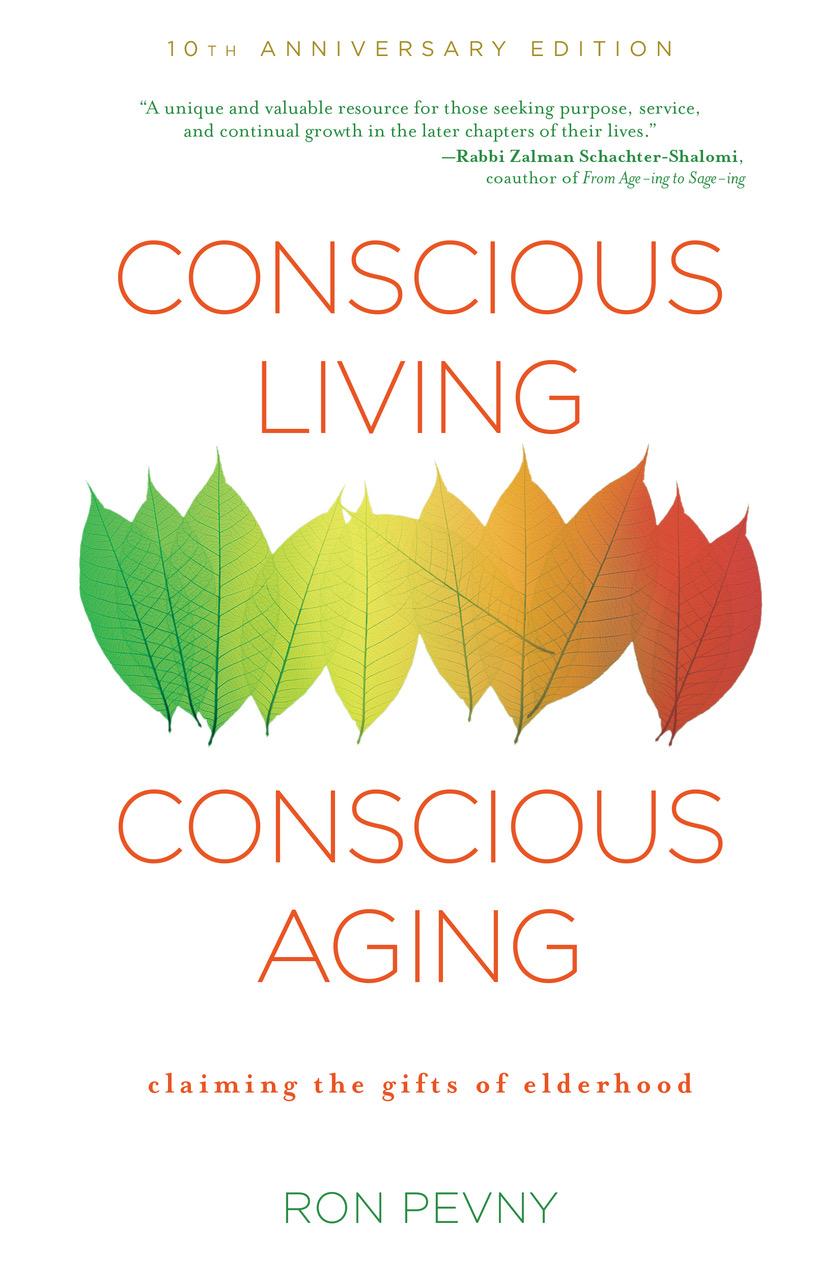
Ron Pevny and his publisher announce a 50% off SALE on his book Conscious Living, Conscious Aging: Claiming the Gifts of Elderhood. For details. scroll down to the announcement about Ron's book.
| | |
Shining Our Elder Light in Dark Times
A parable recounted by Ron Pevny
Once upon a time—very much like these times, on a beautiful life-supporting planet—very much like ours—that world’s people found themselves in profound crisis. Many of them felt that their most cherished values were being brutally assaulted by unconscious people with great political power, and by great numbers of their fellow humans who were in thrall to the beliefs and consciousness of those leaders. And they saw the life-sustaining dynamics of their planet being in great danger from these leaders, but even moreso from a way of thinking and relating to their planet home that seemed to work in their past but was clearly no longer an option. Many began to realize that their own habitual attitudes and behaviors were contributing to the multiple crises.
Whether they had such realizations or not, most of the residents of that planet found their lives in turmoil as the world they used to know seemed to be crumbling around them. Fear, depression, and hopelessness were constant companions of a great number of the people.
The time of crisis they were living in had long been foretold by the Wisdom Keepers of their indigenous cultures, and more recently by many wise people widely acknowledged as their contemporary visionaries. The central message shared by all of these was that a new chapter in human evolution on their planet was seeking to emerge. The people were told that that these were the times when a long envisioned leap forward in consciousness was possible, but that this could happen only as non-life supporting structures and ways of thinking and being were dismantled, at the individual and collective levels.
Their visionaries told them that the next stage in their evolution required that the old order was necessarily and painfully breaking down, with them having to experience what felt like the slow death of the world and way of living they had known---the kind of world in which many of them had previously envisioned doing their work of growth and service. Now, rather than seeing their inner work as something to ft into a familiar and fairly predictable life, they were being forced to up the ante.
Many of them who were the Elders or aspiring elders in their communities were coming to realize that they had an especially important role to play. That their commitments to modeling wholeness in their communities were urgently necessary for their personal and collective wellbeing, but even moreso for a future in which their descendants could thrive in healthy communities on a healthy planet.
Many of the wisest among them were recognizing that their commitments to wholeness supported strong evolutionary energies seeking to manifest on their planet at a pivotal time when crisis was heralding the transformation that was very possible, but not assured. They were indeed perched on a knife edge between collapse and transformation, and their choices could make all the difference.
Their visionaries reminded them of the importance of trusting that these transformative energies guided and strengthened them as they did their part to contribute to a renewed world for the generations that would follow them. While in their world the darkness of resistance to transformation was becoming increasingly powerful, also extraordinarily powerful at that time were spiritual energies that supported their commitments to their growth and to the giving of their gifts in service to community and planet. The message was strong and unequivocal. They were evolution's agents of transformation. Amid growing darkness, both the shining of their light and their reluctance to do the work of growth and service were more significant than ever. If they were going to tip the scales toward a transformed humanity, their Elder gifts, growth and deepened consciousness were necessities. And gifts given from wholeness—in attunement to the voice of Spirit within them--were more much more powerful and effective than reactions and responses to crises that carried their unhealed energies.
Humanity on that planet was living in the portal between two worlds. They were in the midst of individual and collective rites of passage. As many of them navigated their individual passages between their former lives and the life of an Elder or Sage, at the same their time collective humanity was seeking to pass through this evolutionary portal. More and more of them were remembering what their Wisdom Traditions had known—that growth happens only in such portals. That to pass through they must allow themselves to fully experience all the dynamics that occur in the difficult yet necessary journeys from endings to new beginnings. Only in this way could their hearts and minds be fully open to the vision and compassion needed for true renewal. A butterfly emerges only after the caterpillar’s life seems to come to an end. Small tweaks don’t transform the caterpillar.
Their Wisdom Traditions taught that for passing through such portals, the support of community is absolutely necessary. Many of their people had Sacred Gatherings to experience the support of conscious community, as they explored the dynamics that they, and now we, will experience to some degree or other in the portal:
In sacred circles, on the one hand, they shared with each other about: Endings...Grief…Loss…. .Anger…..Numbness…. Hope and Hopelessness...Loneliness and Need for Community….. Overwhelm with toxic news and images…… Confusion about what it means to be an Elder and even questioning what is the point in doing often difficult inner work.
But on the other hand they shared how they were also are experiencing Visions of what a conscious world can be…..How they were getting in touch with deep Desire to make a difference….. How they were focusing on becoming aware of the many emerging projects, structures and ways of thinking that reflected the life supporting qualities of the world seeking to be born. How they were focusing on Envisioning a world in which all the generations dreamed, gave their gifts, and grew toward wholeness together.
And they reminded each other of one of the biggest gifts of the grief they experienced and the losses they mourned in their passage between their old and new worlds—the Gift of being increasingly and acutely aware of what they hold most sacred and valuable and of their deep commitment to working to create a healed world that reflects these sacred qualities..
I don’t know how their story ended. That page is missing from the record. And I don’t know how ours will end. It is likely that none of us reading this will be alive to see that ending. But our descendants will be. They need us to shine our lights now more than ever. They need us to do the inner work of growth, to give the gifts our souls know are ours to give in these times, and to stand up for what is truly life-supporting in our current world as we pass through the Portal between today's chaos and a more conscious world. They need us us to become today's Elders, and for our descendants, Ancestors who cared.
| | |
We Are Made for These Times
by Marilyn Loy Every, DMin, CSL
It was November last year that I was in Victoria, British Columbia, Canada. I awoke to the harsh reality, as I saw through my eyes, of these times we are living in. My rose-colored glasses had shattered overnight; illusion died that morning. I simply did not know how to navigate through the uncertainty we faced around the world. I did not know how to move through change, loss, disruption, and raw disappointment.
I set out for a long walk in the brisk air that morning. I walked along the cliffs flanking the Strait of Juan de Fuca, and out on the jetty with sea air in my face. Eventually, I arrived at the Monroe Bookstore in downtown Victoria. In my solemn longing, a book jumped off the shelf into my hands—We Were Made for These Times by Kaira Jewel Lingo, a Buddhist nun who trained with Thich Nhat Hanh. Though a short read, the book changed me that day. The concept that you and I are made for these times continues to amaze me every day and bring me hope through shadows of what Matthew Fox, an American priest, theologian and author, names as ecocide, racism, patriarchy, illusion, and despair.
This brings me to ponder our human journey here on Earth. We are not just participants at this moment in time. We indeed are the culmination of a 13.8-billion-year journey, from the birth of the universe to this moment. We are part of something unimaginably vast—and intimately connected. In all the chaos and uncertainty in our world today, it is easy to feel overwhelmed, wondering whether we are equipped for the times we are living in, and what we can possibly add to the welfare of the world.
We truly are living proof of the “union of miracles” that resulted in our existence in the first place. So, considering that your and my life are miracles, it is essential for us to also consider how to best navigate these unprecedented times. In my own search, I looked for novel spiritual practices that would give me hope, inspiration, encouragement, and strength. I discovered helpful suggestions in Lingo’s writing that provided life-affirming support in carrying forward.
Coming Home to Ourselves. In times of upheaval, our first refuge is within. Coming home to ourselves means pausing the noise of the world and turning inward to reconnect with our breath, our body, and the stillness beneath the storm. This is the place where truth lives—not as an idea, but as an embodied experience. In our “home within,” we find our ground and comfort.
Trusting the Unknown. Change often dismantles the familiar and leaves us standing “stark in the dark.” To trust the unknown is not to pretend we are unafraid, but to walk forward anyway—open-hearted, alert, and attuned to our intuition. Trust means recognizing that while we may not know what lies ahead, life has always held us. The same intelligence that births galaxies and turns seeds into trees is moving in our lives, too.
Accepting What Is. Acceptance of our situation at any moment is not resignation. It is the willingness to see life as it is without resistance. When we accept what is, we stop struggling against reality and begin to move with it. It allows us to set aside our “cherished beliefs” that things should be different. It is from this place of grace and honesty that real transformation can begin.
Loving Ourselves Through Uncertainty. Uncertainty is precisely the time when we most need our own kindness. To love ourselves through uncertainty is to be gentle with our inner experience, to soothe the parts that fear and ache. It is a radical act of self-compassion grounded in love, allowing resilience to grow.
Caring for Strong Emotions. Anger, grief, and anxiety are not problems to fix, but messengers to tend. When we care for our emotions instead of denying or suppressing them, they begin to soften and settle. We can breathe into the storm, name what we feel, and let it move through us. With care, even the strongest emotion becomes a doorway to healing and deeper wisdom.
Realizing Realities of Impermanence. Understanding that everything changes is the most difficult and yet most liberating truth of our existence. When we realize impermanence, we begin to hold life a little lighter. We cherish peace, success, and relationships while they are here, and grieve losses knowing they were never meant to last. We do not cling, but we lean into change—understanding whatever our circumstance is, it too will pass.
Mirroring Compassion. One of the most powerful spiritual practices we can engage in is mirroring compassion. This means learning to reflect to ourselves the same gentleness, understanding, and care that we would offer someone we deeply love. Remember this simple truth: every one of us is walking through life with invisible burdens—grief that is unspoken, fears that are masked, struggles that are invisible. What we most need is not self-reproach or advice but loving presence and kindness.
Practicing Equanimity. Equanimity is the spiritual practice that was meaningful for me last November. It involves the practice of remaining calm and centered during chaos. It is not detachment, but it creates balance. To practice equanimityis to cultivate a heart that is steady—holding joy and sorrow, gain and loss, hope and fear. It is the deep stillness that teaches us how and when to act with clarity.
Nurturing Good. Even when the world feels heavy, there is still goodness everywhere. We can choose to notice and nurture good. This may be a small kindness, a simple prayer, or a brave conversation. To amplify the good is to see it, name it, and even create it. In doing so, we become gardeners of the human spirit—planting seeds of light in dark soil.
Believing You Are Made for These Times. Most importantly, it is to believe that you and I are made for these times. It is a truth that our soul already knows. We were shaped by everything that came before us. We carry wisdom in our bones, and we have boundless strength, love and courage yet waiting to be roused. Believing is a choice—to show up, to stay awake, and to participate in the healing of the world, right where we are.
Which of these spiritual practices speak to you most potently at this time when the old world is shaking and the new one is not yet born? It is good to discover new life-affirming ways to support and strengthen yourself. Then, choose once again and yet again how to live your life holistically, and passionately, with clear intentions and focused purpose.
Yes, our world is hurting and calls us for healing. We have never been better prepared to act than we are now. However, it is wise for us to continue tending our own healing along the way, so we continuously are the best version of ourselves as we contribute to the healing of the world. Let us be there for one another in fostering positive outcomes day by day right where we are.
Reference: Lingo, Kaira Jewel: We Were Made for These Times. Berkeley, California, Parallax Press, 2021.
Marilyn Loy Every holds a Doctor of Ministry degree in Wisdom Studies with a focus on aging, and Certification in Spiritual Direction. She also has a MA in Counseling Psychology, and MS in Audiology. Marilyn is founder of Sagessence, a company dedicated to promoting affirmative transformation of personal and cultural views of aging.
Marilyn can be reached at m.loyevery@sage-ing.org
| | |
Wise Woman/Crone/Elder: A Journey
by Barbara Roth
As women age, we may feel less relevant. Yet, despite what our culture portrays, we are more relevant than ever. We do not need to spend money on products or procedures to try and still look young. It doesn’t work! Our beauty and wisdom have developed from the inside and now shine through. This is the time to share our wisdom; mentoring and informally teaching the lessons others need; becoming the Sages of our time.
Conscious Eldering as defined in Ron Pevny’s book, “Conscious Living Conscious Aging” is a vision of aging that allows the elder to be conscious and delve more deeply into our souls. It was at a Choosing Conscious Elderhood retreat the week after I retired that my concept of ageing and retirement shifted drastically.
I was educated in human development focused on the life stages of child, youth and adult. I now know that there is a final stage in which the wise woman/crone emerges. Contemplation of personal life accomplishments happens at this stage. Knowledge morphs into wisdom. Synthesizing our experiences deepens our understandings. If we no longer work full time or are not raising children, we have time and emotional energy. Time for reflection, for feeling and thinking, and brain power for reading and studying as never before. We build on our awareness of what our families, communities and the world need from us and how we can help. We guide others (formally or informally) on their life paths.
We live in a patriarchy; women and men have differing experiences in their elder years. The “hero’s journey” is rarely about a female hero. Studies about older women’s spiritual journeys, the joys in their lives, the important roles they play in their families and communities or about the various advocacy efforts performed by older women are hard to find. If you search “women aging” it will be about physical health issues. I have health problems and necessarily know a lot about them. I am more curious about how I can grow spiritually and emotionally, how I can be a positive force for good in my community.
In folklore, a Crone is an old woman who may be characterized as disagreeable, malicious, or sinister, often with magical or supernatural associations that can make her either helpful or obstructive. I am disagreeable sometimes (just ask my husband). My goal is to be wise, to be helpful to the world and to be conscious. The Crone is an archetypal figure, a Wise Woman. When ancient matriarchal cultures became patriarchies, Crone became a negative term. Women could no longer hold power
As patriarchy began to arise after c.7000 BCE, women became increasingly under the dominion of men. When patriarchy became dominant, gray-haired high priestesses, once respected tribal matriarchs of pre-Christian Europe, were transformed into minions of the devil - witches. Through the Middle Ages this trend gathered momentum, finally developing a frenzy that legally murdered thousands of elder women from the twelfth to nineteenth centuries.
.
Western culture may love elderly women individually, in families and friends’ circles, but our wisdom is so often not appreciated. I feel honored and loved by my family, but in the broader world I am frequently invisible, primarily appreciated only by other elder women (there are exceptions – especially in the Conscious Eldering community). In ancient cultures, the elder woman was viewed as a fount of wisdom, law, healing skills, and moral leadership; her presence and leadership were treasured. What would our current culture be like if wisdom, law, healing, and morality were sought from elder women? Maybe everything from race relations to environmental issues and war would be dealt with more humanely.
How do we learn to be wise elders in today’s world? The wisdom traditions teach us. My journey into old age may be typical of others. Before I became an elder, I believed the only path to meaning was through paid work. I feared aging, had no plan for how to deal with it, and had no idea that I would encounter the physical struggles I’ve had. At 65 when I attended that Conscious Eldering retreat, my life and attitude about the third act of my life radically changed. Just as it was designed to do, Choosing Conscious Elderhood was a rite of passage, helping me to start the process of shedding what I needed to shed, catch glimpses of the richness that life could now be, and develop practices that have continued to be crucial in this process. I have grown to love the slower pace and expanded sense of time this stage of life brings.
My life is enriched with deeper spiritual awareness, finding the mystical in the world. The more open I am, the less effortful seeking I do, the more serendipity and synchronicity come into my life. Just as I wonder how I might better support women in my community, a neighbor asks if I am interested in serving on a county women’s commission!
When we stop focusing on the weaknesses of our body or mind, our spirit takes over. For many this leads to self-awareness, supporting our families and the human family, and working for justice. There are many examples of how to grow into an older woman with wisdom in our culture.
Painter Georgia O’Keeffe began losing her eyesight to macular degeneration when she was 80 and it was almost completely gone by the time she was 84. She continued to paint, sometimes with assistance. She continued to express herself through her art. My mother learned how to paint at age 70 and shortly after that began losing her sight to macular degeneration. She also persevered with her painting. My daughters and I all have her lovely art hanging in our homes today, reminding us of her strength and determination.
Likewise, many elder female authors have taught us a lot about aging. Margaret Atwood’s fiction shows us what has been, might be, and how to find our strength.
We are examples for those following behind us in this aging process. What will they learn from us? And how about those for whom we will become the ancestors? What will they glean from our last years on this earth? I hope to be remembered as a wise old crone who spread love, joy, magic, and wisdom.
Writing about our lives prepares us for the end and leaves a legacy. Writing my memoir has helped me to better know myself. I wish I knew more about my grandmothers’ and mother’s lives. No one may be interested in my memoir during my lifetime; I am sure that a generation or two down the road some will be glad to have it. I encourage every woman to leave this type of gift for your future generations. The stories of our lives have much to teach!
Old age is not an affliction, and we must be careful not to buy into the myth that it is. Slowing down allows us to become more grounded to stop simply speeding over the surface of our lives. Even our physical changes have a lot to teach us, like patience with our bodies. It is the elders who are the makers of myth and culture for the next generations. Let’s own that honor.
Barbara Roth retired in 2018 from a career focused on child and youth development in local, state and national arenas. Since then, she has been on a conscious eldering journey which started with a weeklong Choosing Conscious Elderhood retreat at Ghost Ranch, New Mexico one week after retirement and has continued with participation in the Next Step program, writing articles for this "Conscious Eldering Inspiration and Resources" newsletter, and doing the inner work that she teaches. Barb co-leads retreats at Ghost Ranch in New Mexico for the Center for Conscious Eldering.
Barbara can be reached at barbaraanneroth@gmail.com
| | |
Hidden Clues in Life Review
by Anne Wennhold ©
Claustrophobia always interfered with my life. Practically and emotionally. I tried therapy, hypnosis, past-life regression and a variety of healing practices for it. Nothing helped. So I sucked it up and endured. For years, entering elevators was such an ordeal. I’d walk up flights of stairs rather than risk the doors closing behind me. And in fear of being locked in before takeoff, the only way I could board an airplane was to stop in the airport bar for a round of Manhattans on the way to the gate or to carry my own stash on board. On vacations, I could never tolerate being closed up in caves of any size.
But then I retired at age 70 and joined Ron Pevny’s Choosing Conscious Elderhood retreats, first as a participant and later as a co-facilitator, exploring the spiritual path to elderhood. In my work there, among practices supporting growth into elderhood, I especially appreciated “Life Review.” Life Review is a thread used to connect the dots between seemingly unrelated events over a lifetime, creating a cohesive picture of the nature and purpose of one’s life. This exercise often created surprising connections.
My favorite form of Life Review was, and still is, to jot down whatever early memories come to mind, followed by random notations of events, situations, teachings and people that have contributed to one becoming a unique self. These jottings can form the basic framework for later additions inspired by family stories, old letters, photographs, hearing music, or incidents recalled in a quiet moment.
When I decided to start my memoir, I had no clue about the extent to which random memories were critical to understanding the claustrophobia that had plagued me for years. Early on I recorded a story about a “game” I’d made up with a playmate. When we two were about five years old, roaming around a rundown neighborhood building, we found an old-fashioned meat locker left in one room. It had various sized compartments for storing a butcher’s freshly butchered animal parts with a place for ice at the top.
I decided that each of us in turn would climb into the meat locker, while the other would firmly close the door behind her. Then we’d wait a time before opening the door again and letting the prisoner out. That was the game! I wanted to be first to be locked in. But, once inside, the seconds grew into an anxiety of waiting and wondering if my friend would remember to open the door. I was in complete panic until she finally released me back to the world. Game ended! But just remembering the “game” and jotting the story down brought on a sense of panic, so I knew it was important. What was that all about?
Later, when COVID hit, I decided to teach Memoir Writing as a Life Review process online. And in preparation for a session on photographic resources I retrieved an old photo of myself, scanning it for details that might add information about infant life before memory kicked in. The process brought about a chain of notes:
· * The fat baby looking back at me recalled stories of the pregnancy when Mom’s German doctor had prescribed a bottle of beer a day: an old recipe thought to insure a healthy infant. Which led to...
· * The recollection of a conversation with my father when I was 60 years old in which he told a birth story I’d never heard before .... It turns out that I was a breech birth baby! During the difficult delivery the doctor asked Dad to make a choice between either the mother or child’s survival since he wasn’t sure he could save both. At the time, I paid little attention to the story since both my mother and I had survived. But now that I was reminded of it, the information was noted down as a point of interest.
Fast forward to a class discussion where I learned of research confirming that the fetus in utero reacts to its environment with the same emotional response that adults experience in times of stress, danger, or even pleasure. When the fetus has no vocabulary to name a situation or an emotion, the sensation is encoded in their physical being to the extent that, faced with a similar anxiety-producing situation later in life, the emotional response is acted out in other ways.
Bingo! My claustrophobia had come from a birth trauma during which both mother and infant struggled with feelings, including fear of death. From then on, any time I was enclosed in a small space, the fear of something I had no words for or memory of overwhelmed me. I had connected the dots!
In a book called, The Body Keeps the Score: Brain, Mind and Body in the Healing of Trauma (published 2015), author Bessel Van Der Volk, M.D. shares the ways the body can react to experiences that are preverbal, of unknown origin or of such pain that our mind blanks them out. Yet the body “remembers” and reacts again and again to whatever triggers the memory until we understand the source of the trauma or the difficulty.
And according to Mary Ellen MacDonald, PhD, author of More Than Words (2025), being able to name a source or origin of emotional or habitual behavior allows one options for managing it. This explains why children, for whom trauma is largely preverbal, will act out situations in play. Hence, the refrigerator “game” based on the preverbal terror of being stuck in the womb and facing death.
The relief of finding the origin of the claustrophobia was immediate and transformative. Now that I knew my fear of being shut up in an elevator or an airplane came from being shut up in a womb facing death, when that fear arises again, as it sometimes does, I tell myself this: “Just because you were once locked into a birth trauma, doesn’t mean you are the helpless being you were as a fetus. You are now an adult in charge. You don’t have to hold on to that fear anymore. You CAN let it go.” And so I do.
.
Which brings me back to Life Review. Thanks to the intermittent times of quiet reminiscence and a recording of thoughts, claustrophobia is not the only life issue I uncovered by the Life Review process. I recently recognized that my over- the-top anxiety about financial matters, which I thought was a given in life, is actually an inheritance from my mother’s financial anxieties based on the Great Depression. Now when I start feeling anxious about finances, I remind myself that I’m not my mother growing up in the Depression. I‘m an adult who’s already managed herself well for years. I can let go once again: this time of that inherited response to a daily life situation.
Life Review is a valuable resource in finding the origin of lifelong habits, attitudes and behaviors that present energy-depleting obstacles blocking one’s journey of growth. In addition, Life Review serves as a ‘house cleaning process,” a spiritual tool for the work of elderhood as we age. We can use it to clean out the accumulated emotional, habitual, and behavioral clutter of a lifetime or reduce it to manageable size in order to make way for new growth in aging.
As Florida Scott-Maxwell says: “You need only claim the events of your life to make yourself yours. When you truly possess all you have been and done...you are fierce with reality.” Life Review is one way to make that happen
.
Anne Wennhold, Choosing Conscious Elderhood Guide Emeritus, co-led retreats for 20 years for the Center for Conscious Eldering. Anne is currently exploring and sharing with her Zoom groups the spiritual and navigational terrain of later elderhood. Her background with Shamanic Journey training and certification in Counseling support her work in the aging community. She is available for individual counseling.
Anne can be reached at annewennhold@gmail.com
| | |
Living in Seasons
by Katia Petersen
I have lived in many seasons—
not just the ones the sky reveals,
but the ones my soul has worn
like a second skin.
Winter quieted the world around me
until I could hear my own heartbeat again.
It asked nothing
but presence.
In the hush, I met myself anew—
not in noise or motion,
but in stillness
that felt like prayer.
Spring arrived unannounced,
with wildflowers blooming in my chest
and dreams stirring like seeds
breaking open underground.
It reminded me
that it is never too late
to begin again—
to reach, to risk, to rise.
And Summer—
oh, Summer let me sing.
It reminded me of the gift of laughter,
to dance in the joy of now,
to receive the nurturing of the sun,
to love out loud.
To live not as a shadow,
but as a flame.
Autumn taught me how to harvest—
to gather wisdom like wind-swept leaves,
to sort what stays and what falls away
with grace, not grief.
I learned that letting go
is not the end—
but the beginning
of space.
These seasons spiral through me still—
each with their own rhythm,
their own offering.
Some days I am bare-branched and listening.
Others, I am blooming with words,
mentoring in quiet circles,
or laughing in golden light.
This is the gift of living fully:
To reflect when the moment asks,
to speak when the heart knows,
to listen without rushing,
to give without losing,
to rest without guilt.
Let us live this life
in season— not racing, not retreating—
but rooted in rhythm, ready to savor,
who we have become.
Over the Threshold
by Tom Chulak
There is a space
where we don't know
what the future will tell
It is a mystery
vague and foggy
waiting for the warmth
of sunlight
The mind is tugged
to return to the past
the heart says stay open
Over a lifetime
faith has emerged
assuring clarity will arrive
Oh, how we want to go back
to what is familiar
Oh, how we want the blanket
But wait, wait, wait
slow down, slow down
trust
Until the door swings wide
and we struggle over the threshold
illuminated in a new room discovered
| | |
If We Are to Shine
by Tahlia Hunter
And if we are to shine
May we shine as the stars do
Which glow brightly in the darkness
And illuminate the beauty of all that surrounds them
And if we are to heal
May we heal as the forests do
Which regenerate following the harshest of fires
And the coldest of winters
And if we are to grow
May we grow as the plants do
Slowly with stability
Directed toward the light
And if we are to let go
May we let go as the trees do
Shedding and releasing what is old
In order to make the way for the new
And if we are to move forward
May we flow freely as the rivers do
Which surrender to their paths gently without resistance
And if we are to transform
May we transform as the moon does
Which continues to shine in all of its phases
Knowing that it is no less beautiful
When it isn’t perfect or whole
And if we are to live
May we live as those before us did
Bravely, boldly, passionately and purposefully
And may we never lose touch with the dreams that lie dormant within us
Waiting to be expressed and shared with the world.
On Fear
by Khalil Gibran
It is said that before entering the sea
a river trembles with fear.
She looks back at the path she has traveled,
from the peaks of the mountains,
the long winding road crossing forests and villages.
And in front of her,
she sees an ocean so vast,
that to enter
there seems nothing more than to disappear forever.
But there is no other way.
The river can not go back.
Nobody can go back.
To go back is impossible in existence.
The river needs to take the risk
of entering the ocean
because only then will fear disappear,
because that’s where the river will know
it’s not about disappearing into the ocean,
but of becoming the ocean.
A Leaf’s Leap of Faith
by S.C. Laurie
I think chances are.,
that if you ever got to speak to a leaf
and asked it to look back
on its life and recall
it’s most exhilarating moments.
It would say that there was no finer
Moment than letting go of all
It knew and had experienced in life,
to free itself from it’s security
and comfort zone,
and surrender wholly to the wind
as it sung to it of it’s coming leap of faith.
To take that plunge in the delicate and dreamy
Rays of the afternoon Autumn sun
And not know where it may land,
not care, because it was lost
in the magic of its flying.
.
| | |
Upcoming Conscious Eldering Programs
Retreats
We are pleased to announce three Choosing Conscious Elderhood retreats in 2026. We will, of course, return to magnificent Ghost Ranch in New Mexico for our annual Spring and Fall retreats and in early May we will return to Hope Springs in the forested foothills of the Appalachians in Southern Ohio where we presented this retreat this past Spring. We are also intending to find more opportunities to present our inspiring weekend workshops and one-day introductory programs. If your organization would like to sponsor one of these, please be in touch.
Choosing Conscious Elderhood
May 4-10 at Hope Springs Institute Retreat Center in Southern Ohio
May 17-23 at Ghost Ranch, New Mexico
September 14-20 at Ghost Ranch in New Mexico
Please consider joining us if you seek an empowering vision for your elder chapters, tools for helping make that vision reality, and the warmth of a supportive community of kindred spirits. Our programs provide a powerful opportunity to have your idealism acknowledged, your hope rekindled and your dreams for a vital, passionate elderhood supported? They offer you the wisdom of skilled guides and the heart-and-mind-opening energy of the natural world, to open you to the rich possibiities of your later-life chapters--for growth, purpose, spiritual deepening, and giving your elder gifts to support a healthy society and planet.
If you need financial assistance to participate in a Choosing Conscious Elderhood retreat, please contact us. We have a small scholarship fund. And if you are in a position to contribute to this fund, we would love to hear from you.
| | |
For Organizations, Faith Communities, etc:
We are available to present our highly impactful weekend workshops or custom designed programs for groups who would like to sponsor one in their area.
Contact us to explore possibilities.
for details on our programs and registration information, please visit
www.centerforconsciouseldering.com/events
| | |
Ron Pevny and his publisher announce a SALE on his book!. For the next month it is available through Beyond Words Publishing for 50% off the cover price, while still generating more proceeds to support our conscious eldering work than are available to us through purchasing this book from other sources.
To purchase Ron's book from Beyond Words, use this link:
https://beyondword.com/products/conscious-living-conscious-aging-10th-anniversary-claiming-the-gifts-of-elderhood
| | | |
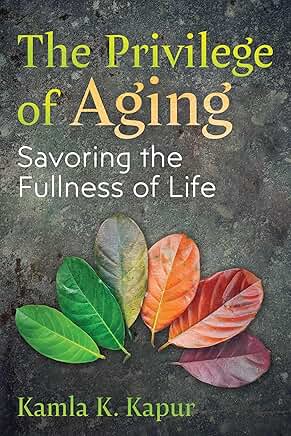
This new book, which won the 2025 Nautilus Gold Award, draws on stories from different spiritual and cultural traditions and offers strategies, tools, and ways of thinking to navigate the challenges and opoortunities of aging. Set in both California and India, Kamla Kapur shares her inner adventure on this path, aided by spiritual guides that pilot her to safety. She demonstrates the power of self-examination, vigilance, and intentionality, and offers numerous strategies, tools, and ways of thinking to ensure mental, physical, and spiritual strength so we can meet aging’s challenges. In doing so, we can transform from the people we once were to the ones we can become in the elder stage of life.
Ron Pevny and info in reviews
| | | |
Last year Ron Pevny was asked to present a webinar for Sage-ing International's World Wisdom Traditions series. Ron's webinar was titled "Conscious Eldering: The Hero's Journey Into Elderhood."
You can watch his hour-long presentationt by using this link: https://youtu.be/BtTIpc8FIKw
| |
The Human Values in Aging Newsletter
The newsletter you are reading is not intended to provide a comprehensive listing of workshops and other resources available these days to help support people in aging consciously. That job is well done by Rick Moody in his monthly Human Values in Aging newsletter. To receive it on the first day of each month, send an email to hrmoody@yahoo.com
| | |
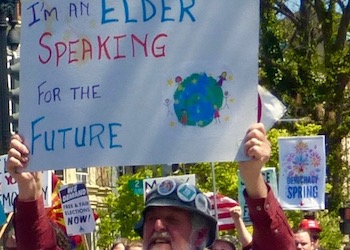
One of our partner organizations, the Elders Action Network is an educational non-profit organization fostering a budding movement of vital elders dedicated to growing in consciousness while actively addressing the demanding social and environmental challenges facing our country and planet. They work inter-generationally for social and economic justice,environmental stewardship, and sound governance. They offer their multiple talents and resources in service to the goal of preserving and protecting life for all generations to come. Anyone committed to living and serving as a conscious elder in invited to join them in this critically important endeavor. EAN offerings include, among others,
* Bi-weekly Elder Activists for Social Justice Community Conversations
*The growing and influential "Elders Climate Action" initiative
* The Empowered Elder--EAN's foundational program
* Intergenerational environmental and social action projects
*The Elders for Regenerative Living initiative
To learn about EAN and its initiatives and programs, visit www.eldersaction.org
| | |
Another of our partner organizations is Sage-ing International, the pioneering organization in promoting the principles of "Sage-ing/conscious aging, Their greatly expanded offerings of online workshops and seminars, Elder Wisdom Circles, and their training program for Certified Sage-ing Leaders is grounded in the work of the late Rabbi Zalman Schachter-Shalomi, who introduced conscious aging to the world with his workshops at Omega Institute with Ram Dass and others, and via his seminal book, From Age-ing to Sage-ing.
To view their website, visit www.sage-ing.org
| | | |
The Pathways to Elderhood Alliance (PEAL) is a newly forming alliance of organizations, including the Center for Conscious Eldering, who offer programs that support the journey into elderhood. To learn about this promising collaboration, click here: Passageways to Elderhood Alliance
| |
Ron Pevny, Founder and Director
970-223-0857
3707 Coronado Ave, Fort Collins, Colorado 80526
ron@centerforconsciouseldering.com
| | |
The world aligns with us as we align
with the inherent purpose of our soul.
Michael Meade
| | | | |