|
Dear Octet community,
I hope your fall season is off to an inspiring start!
This semester, I am teaching a new course that explores what three centuries of piano music reveal about the human experience. As musical styles change, their expressions shift priority among the soul, mind, heart, and strength—opening deep conversations about what it means to be human and God's participation in our humanness.
One of our key touchstones is Karl Barth's writing on Mozart. Barth, arguably the most influential Protestant theologian of the twentieth century, began his days listening to Mozart before turning to his work on the Church Dogmatics. In his short book on Mozart, he described the composer's music as sounding "effortless, and light," adding that "it unburdens, releases, and liberates us."
What strikes me most is that Barth did not view this lightness as naive; he recognized that Mozart was well acquainted with life's shadows. The darkness is present in the music, but it does not have the final word. God's grace does not ignore our brokenness and vulnerability but meets us within them and lifts what weighs us down.
So, I would love to hear from you:
- Where are you encountering earthly signs of Christ in the world?
- Is there a piece of music, a work of art, or an aspect of nature that has unburdened you?
| |
| |
Mia Chung-Yee
Executive Director
| |
- Michael Thate's essay on loneliness.
- An interview with Michael Thate, Octet's Senior Fellow for Human Flourishing.
- Rosalind Picard speaks about faith with The Veritas Forum.
- Reports on teaching, learning, and AI at MIT.
-
Octet's upcoming events: Diálogos updates, our January AI Kickoff Event, and Sabbath Midweek.
-
Malcolm Guite's Lifting the Veil Conference this week!
| | Essay: Loneliness as a Hunger Most Profound | |
In his exploration of loneliness, Michael Thate draws from an eclectic range of sources. What is loneliness, and is there a remedy to it?
You can find Michael's essay below.
| | |
Since May of 2026, the Octet team has expanded!
Nathan Barczi interviewed Michael Thate, Octet's new Senior Fellow for Human Flourishing.
| | |
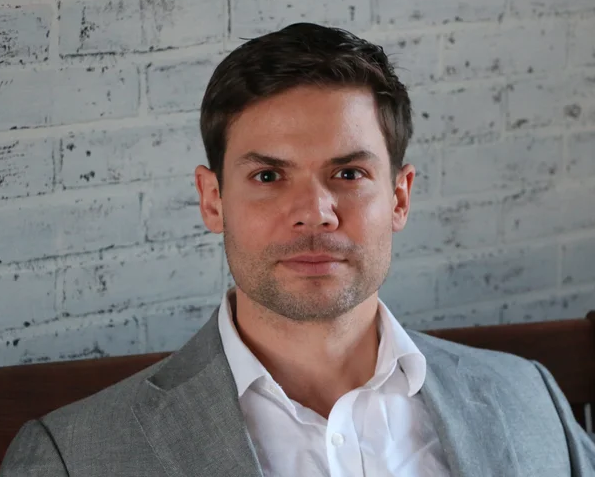
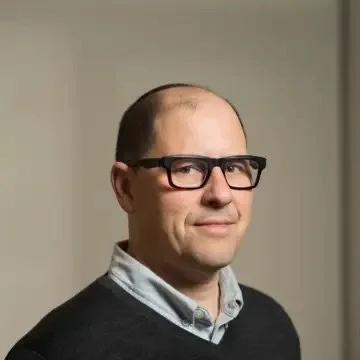
Michael joined Octet in August. He will be representing both Octet and the MIT Media Lab externally while doing research, writing, and public speaking on topics at the intersection of theology, public policy, and technology.
He holds a doctorate in ethical philosophy and religious studies from Durham University. Michael was awarded an Alexander von Humboldt Fellowship at Tübingen, lectured at Yale Divinity School, and held fellowships at Harvard's Center for the Study of World Religions and at the Département de Philosophie of the École normale supérieure, Paris. His books—Remembrance of Things Past? (Mohr Siebeck) and The Godman and the Sea (University of Pennsylvania Press)—ask how communities come to know what resists being made explicit, and what is lost when such knowledge is finally forced into a system.
His technical training follows these questions into the instruments themselves. He holds an MSL from Northwestern Pritzker School of Law and is completing a doctorate in systems engineering at George Washington University, where he is an NSF-funded fellow in Developing Trustworthy AI Systems, working on human–AI interaction. He has further training in systems design at MIT Sloan, GIS at the University of Alaska Fairbanks, and computer engineering through the NYU Tandon Bridge Program. Before joining the MIT community, he spent twelve years at Princeton University and the Faith and Work Initiative as Research Scholar for Responsible Tech, Innovation, and Policy, teaching engineering ethics to doctoral students in SEAS and the history of entrepreneurship in the Keller Center for Innovation—the latter recognized with the Dean’s Award for Teaching Excellence.
His current work engages AI governance, biotechnical ethics, the attention economy, and the legal and theological problem of human distinctiveness.
Please welcome Michael to Octet!
| | |
Rosalind Picard on Faith
with The Veritas Forum
| | |
In The Commitment that Freed Me, AI research pioneer and MIT Professor Rosalind W. Picard speaks with The Veritas Forum about a moment when she faced the following question: "Can I trust God if I walk away from this opportunity?"
| | Reports on Teaching, Learning, Research, and AI at MIT | | |
Please see below for recent reports reflecting on undergraduate education and teaching, learning, research, and AI at MIT. | | |
What is wealth actually for?
A Diálogos Update
| | |
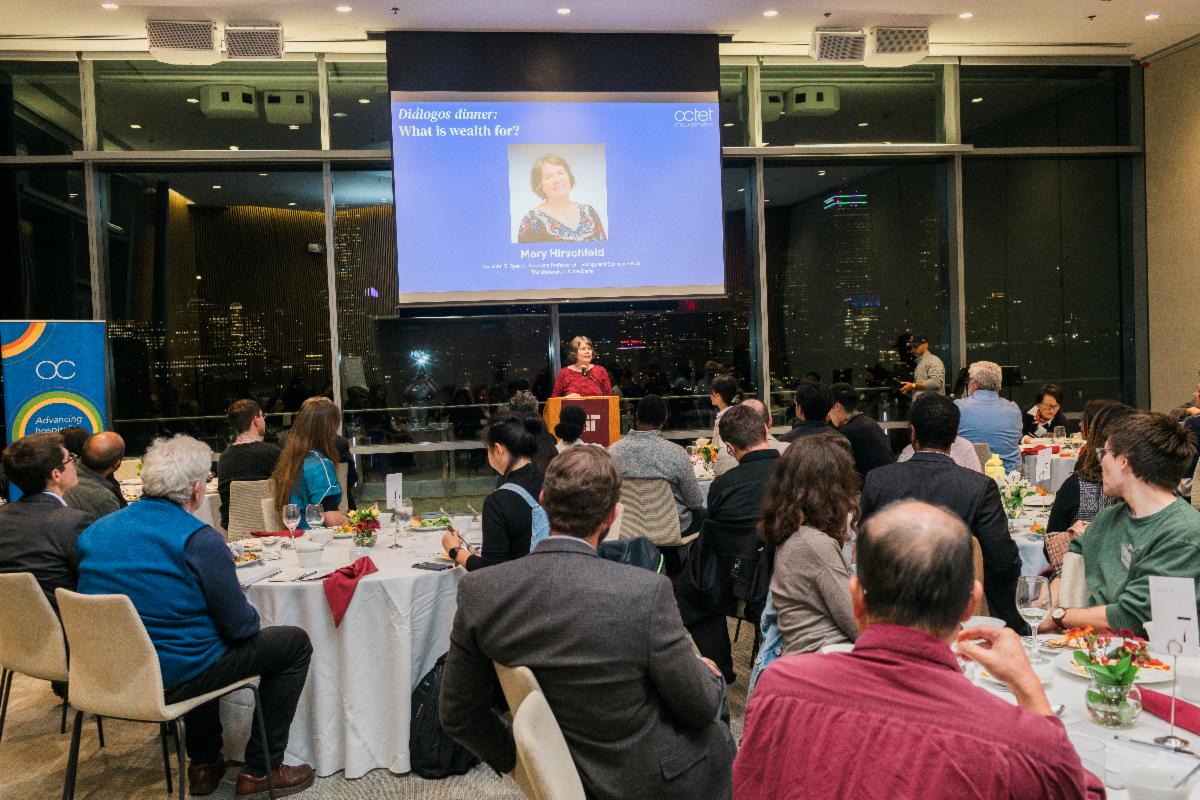
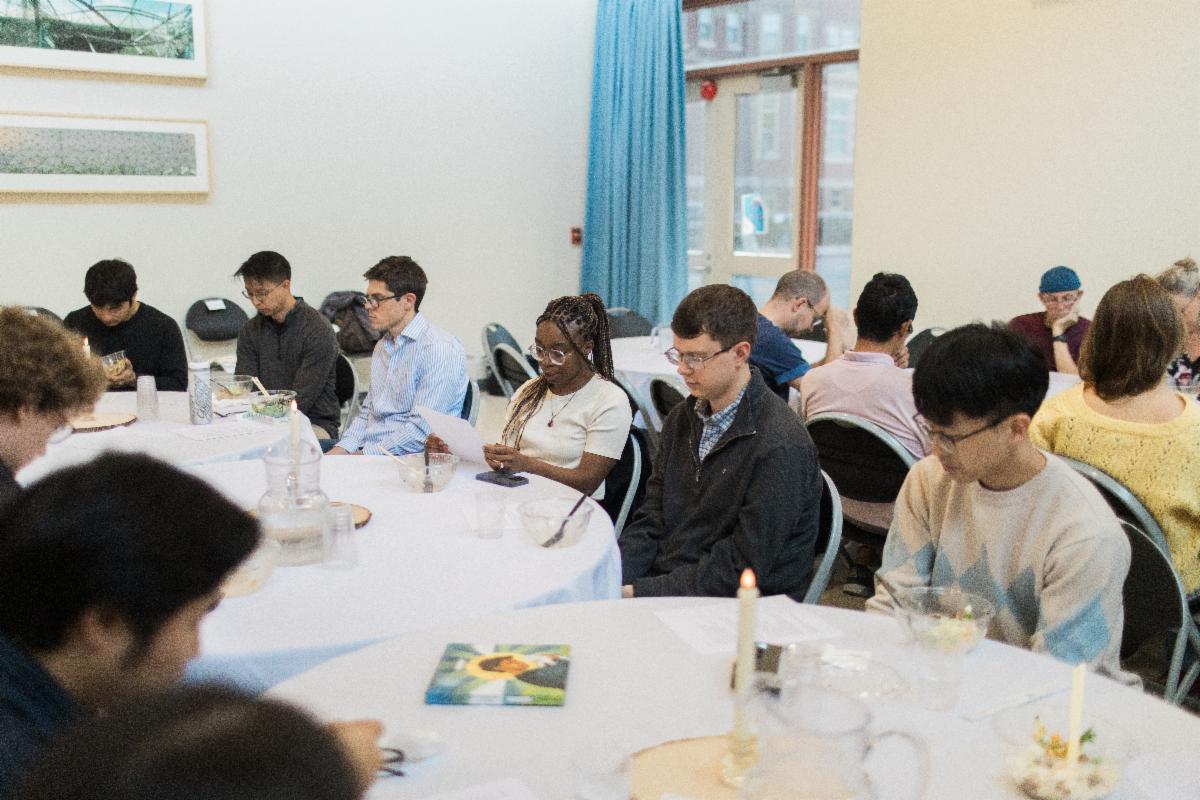
At our October Diálogos dinner, Dr. Mary Hirschfeld, John T. Ryan Jr. Associate Professor of Theology and Business Ethics at the University of Notre Dame, invited participants to reconsider the relationship between wealth, capitalism, and human flourishing.
Dr. Hirschfeld challenged the assumption that greater wealth necessarily leads to greater happiness, exploring how the pursuit of luxury, social status, security, and limitless possibilities can turn a useful means into an insatiable end. Even amid unprecedented material prosperity, many find themselves anxious, dissatisfied, and continually striving for more. Through philosophical reflection and vivid examples, she encouraged participants to examine their own desires and the cultural and religious influences that shape their understanding of wealth, its purpose, and what it means to live well. She also invited reflection on the complexities of capitalism, considering how it can serve—or undermine—human flourishing at both the individual and societal levels. The evening concluded with a call to reclaim a more intentional vision of the good life: one in which wealth serves rather than supplants the pursuit of truth, goodness, and beauty, and creates greater freedom to cultivate relationships, strengthen communities, and attend to the things that matter most.
In the spirit of Diálogos, guests continued the conversation by sharing personal stories of wealth used in service of a greater good, reflecting on the cultural and faith traditions that inform their views, and wrestling with the question of what makes capitalism good or bad for individuals and society. They also considered a deeply personal challenge: How do we recognize when the pursuit of wealth has become too much, and what does it mean to have enough?
Thank you to everyone who gathered with us on Thursday, October 15!
| |
Can productive people rest?
Tuesday, December 8, 2026
5 PM-8:30 PM
MIT Sloan sociologist Ezra Zuckerman Sivan explores the history of the forty-hour workweek and our relationship with work-life balance. Can Sabbath rest fit into modern business ethics?
Dr. Sivan holds an MA and a PhD in Sociology from the University of Chicago.
| |
Disability and the built world
Thursday, February 18, 2027
5 PM-8:30 PM
Sara Hendren, Associate Professor of Art + Design and Architecture at Northeastern University, discusses how our buildings, our streets, and our cities are built, and how we, too, are built into that image. What do the interactions between disability, society, and the physical world say about what it means to be human?
Hendren holds an MDes from the Harvard GSD and an MA in Cultural and Intellectual History from UCLA.
| |
What's a degree for?
Monday, April 26, 2027
5 PM-8:30 PM
Peter Q. Blair, Associate Professor of Education at the Harvard GSE, examines the complexities of economics and why we need an understanding of the university that extends beyond a credential factory. Why do we pursue university degrees, career skills, and credentials in preparation for the job market?
Dr. Blair holds a PhD in Applied Economics from the Wharton School at the University of Pennsylvania and an MSc in Theoretical Physics from Harvard University.
| | |
Octet's AI Kickoff Event
at the MIT Media Lab
| | |
Saturday, January 16, 2027
8:30 AM-1:30 PM
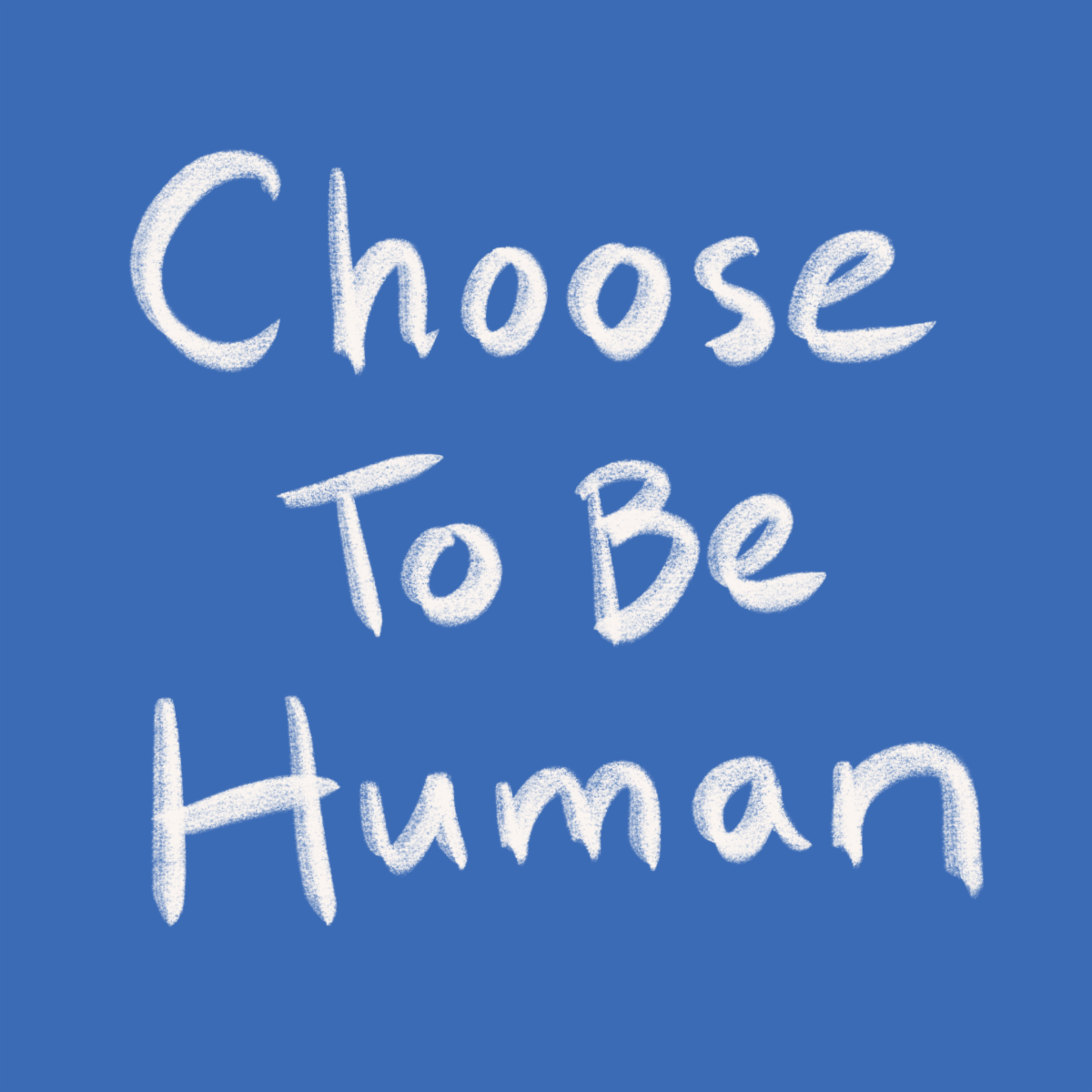
Octet's "Choose To Be Human" AI Kickoff Event welcomes educators, youth pastors, and parents. We will cover what AI does to young people and how to help them "choose friction." The event is free, and breakfast and lunch are included.
For more information and to register, please visit the registration page on Octet's new AI website at the button below. The last day to register is Sunday, January 10.
| | |
Each week, MIT staff, students, and faculty gather at noon to eat lunch and practice contemplative prayer together. We warmly welcome you to join us each Wednesday during the school year in W11's Main Dining Room.
Want to join us? Fill out this quick form or text JOIN to 833-459-3187.
| | |
Malcolm Guite's
Lifting the Veil Conference
in Boston's historic Converse Hall
Friday, October 23 - Saturday, October 24, 2026
This week, renowned poet and priest Malcolm Guite and HopeWords will be hosting a weekend gathering.
Celebrate Malcolm Guite's life’s work as an artist and delve with him into the theological underpinnings of the calling to create. Then join in the culmination of this understanding as singers, poets, artists, and friends showcase the embodiment of our creative work with Christ.
For more information about the conference schedule, or to register, please visit the Lifting the Veil website at the button below.
| |
Consider a Gift to Octet
We're supported by generous individuals and grants. Did you know that you can give to Octet through the MIT Fund? If you're already giving to MIT, we'd love for you to consider designating some of your gifts to Octet. Monthly gifts of any amount are especially helpful. They give us a regular foundation as we reach faculty, staff, and students with gospel-centered practices that promote human flourishing.
| | | | |