Campaigning for Democracy And Socialism | | |
July 10, 2026: The Week in Review
Avoid The Distractions of Shiny Objects and Heartless Outrages: Keep Our Eyes on the Prize, the November Blue Wave
| |
|
We faced yet another week of demented ramblings from President Donald Trump, highlighted by shiny objects meant to distract us from more urgent matters.
We’ll start with a Florida airport. The woman in Palm Beach said it quietly, almost to herself. “It’s just disgusting,” she murmured, staring at the television in the airport lounge. She had just learned that Trump had renamed the local airport after himself — the first time in American history a sitting president had done such a thing. She shook her head. “I get mad every time I see it.”
The TV news videos revealed no outrage in her voice, only quiet frustration. She just appeared as one of many who feel weary from current events, aware that indignation is now a frequent part of everyday American life. But the airport signs were among several developments that day, occurring in succession, challenging an already strained public.
In Washington, a court overturned Trump’s latest accusation — this time against a tourist who had dipped his hand into the algae‑green water of the reflecting pool. Trump had claimed ‘Antifa’ sabotage of his flawed remake of the pool. When the court rejected the claim, he refused to admit any mistake. Instead, he had several tourists falsely arrested. They were released hours later, confused and frightened, carrying a story to take back home that they would tell for the rest of their lives.
POTUS moved on without pause. He is determined to build his Arc of Trump — a monument to himself, towering over the capital. The courts have ruled that no structure may rise above 250 feet. He ignores them. He speaks of the Arc as if it already exists, as if the laws of physics and the laws of the District of Columbia are mere suggestions.
Then came the Supreme Court’s refusal to hear any further appeals in the E. Jean Carroll case. So the verdict and ruling stand. The payment stands. Five million dollars. A jury found him liable for sexual assault. A judge upheld it. The Supreme Court declined to intervene. “In the last analysis, defendant has been stalling this case for years,” Judge Kaplan wrote. It was time, he said, for Trump to “pay the judgment.” The larger $180 awarded to Carroll is still under appeal for its size.
There was no speech from the White House. No admission. No acceptance. Just silence — the kind that pretends nothing happened. Perhaps they feared it might remind voters that Trump’s name appears in the Epstein files over 30,000 times, with several depicting criminal acts by him on underage girls.
But the day was still not done. Trump demanded that the Supreme Court rehear its birthright citizenship ruling. He cited Fox News reports claiming that Texas hospitals were putting up billboards at the Mexico border inviting pregnant women to cross and give birth. The truth? One hospital had two billboards, which were now taken down. Texas officials warned against any repetitions. But Trump repeated an exaggerated version anyway, as if it depicted an ongoing menace. Trump falsely claimed the U.S. is alone in recognizing birthright citizenship. In fact, more than 30 countries do.
Then, in Houston, an ICE agent shot and killed a man from Mexico, firing into the car he was driving. It was at least the twenty‑first shooting by agents involved in Trump’s accelerated deportation crackdown since he returned to office in January 2025. Five people have died — three of them U.S. citizens. Nearly all the shootings involved ICE thugs firing at people in vehicles.
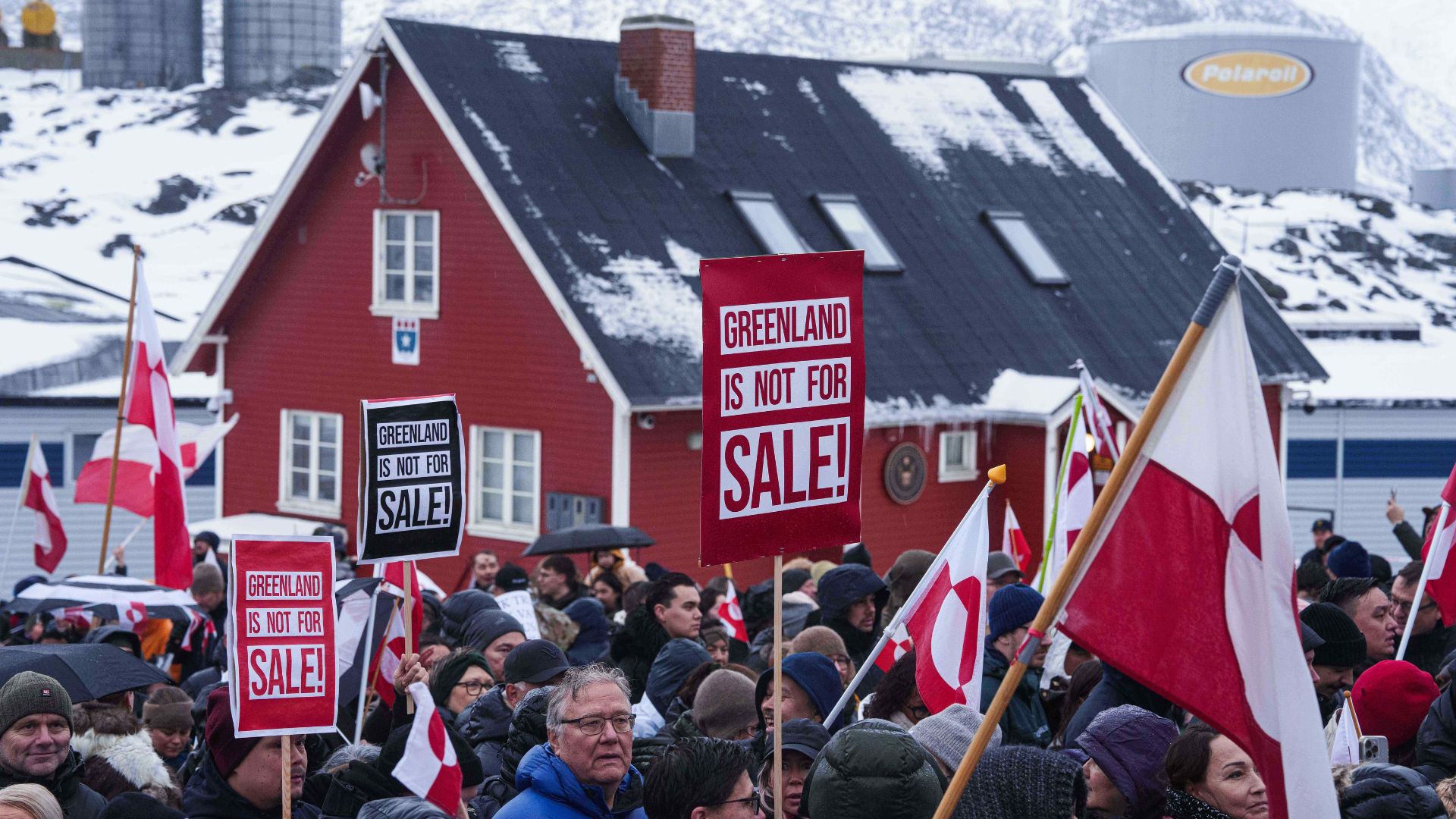
Trump did not comment on the killing. He was too busy ranting at the NATO summit about boycotting Spain and seizing Greenland from Denmark. The Greenlanders oppose it. Denmark opposes it. NATO opposes it. Trump insists anyway.
Trump also resumed bombing Iran twice, calling Iran’s negotiators “scum.” There is now no plan of any sort to end the war. Nor is there much of a plan to continue it. The bombs fall, people die, the statements follow, and the world watches a conflict without any return to the status quo ante, when the Straits of Hormuz were open. As long as the Islamic Republic endures, it wins by default. The best hope is popular change from within Iran’s civil society, but due to both the war and internal repression, that seems even more distant.
Canadian essayist Stephen Marche wrote recently in the New York Times that the United States has become “a kind of lumbering zombie — a beast that can be startled into reflexive actions but lacks higher functions.” It is a harsh description, but not an unfair one. Much of the world believes that another round of our elections — midterms, 2028, or beyond — will not solve anything. They see a country divided against itself, unable to guarantee stable policy or consistent principles. They fear that even a sane Republican or Democratic president would struggle to steer the ship.
They are not wrong to worry. They see an empire of late capitalism in decline. But worry is not enough. The truth is simple: we have our work cut out for us, and it’s not the task of restoring the empire’s old status.
The country is bewildered and distracted with shiny objects — the airport renaming, the false arrests, the Arc of Trump, the birthright tirade, the Greenland fantasy, the bombs falling on Iran. Each outrage is designed to pull our attention away from the deeper currents. Each spectacle is meant to exhaust us, to make us believe that chaos is inevitable and resistance is futile.
But chaos is not inevitable. And resistance is not futile.
The work ahead is clear. We must block every significant attempt by the GOP to disrupt the election in November. We must deliver a decisive defeat of their candidates. And we must protect the votes until they are fully counted and certified.
This is not a call for heroics. It is a call for resolute endurance.
Albert Camus once wrote that the only way to confront an absurd world is with stubbornness — starting with the refusal to surrender one’s dignity. We cannot afford to be startled by every reflexive action of this lumbering zombie of a government. The elderly woman in Palm Beach was right to be disgusted. But disgust alone will not save us. We must keep our eyes on the prize. We must hold on and persist. It can be done.
[All LeftLinks editorials, unless otherwise designated, express the views of our stalwart editor, Carl Davidson, and not necessarily any organizations he is connected with. Everyone, of course, is welcome to steal them and shamelessly pass them around, far and wide, with or without permission. A thank you note would be welcome, though!]
| | | | |
WE ARE INVITING FEEDBACK!
Please send us your letters, comments, queries, complaints, new ideas. Just keep them short and civil. Longer commentaries and be submitted as articles.
Click Here to send a letter
DIFFICULTY READING US?
View as Webpage
Food for thought: Our weekly format is missing too much of vital ideas in the news. What do you think of 'Daily Extras!' once or twice a week?
We're also considering 'Friday Night at the Movies' for 1940s Noir classics, as well as vital new films yet to gain top Hollywood status. Would you project us from a laptop onto your big screen TV and invite friends for popcorn and a 90-to-120 minute show?
Let us know.
| |
We're going to try something new, and you are all invited.
Saturday Morning Coffee!
Started in August 2022, then going forward every week.
It will be more of a hangout than a formal setting. We can review the news in the previous days' LeftLinks or add a new topic. We can invite guests or carry on with those who show up. We'll try to have a progressive stack keeper should we need one.
Most of all, we will try to be interesting and a good sounding board. If you have a point you would like to make or a guest to invite, send an email to Carl Davidson, carld717@gmail.com
*****************
Continuing weekly, 10:30 to Noon, EDT. Here's the ongoing link:
*******************
NEW FEATURE: A summary and transcript of the previous week:
Full Text and Zoom Summary AVAILABLE HERE
******************
Meeting ID: 868 9706 5843
Let's see what happens!
| |
What Makes States Go Nuclear?
National sovereignty and nuclear nonproliferation
By Bill Fletcher Jr
The New Liberator
July 08, 2026 - Nuclear nonproliferation requires national sovereignty; states must believe that they can preserve their security without nuclear weapons. Where international law is respected, and powerful states can be constrained from attacking weaker ones, the incentives for nuclear proliferation decline. Where these conditions disappear, the logic of nuclear deterrence becomes increasingly compelling.
This is the dangerous lesson being taught by our current era.
The Trump regime’s attacks on Iran, its threats against Cuba, Putin’s invasion of Ukraine, and numerous other examples have done immeasurable damage to the notion of nuclear nonproliferation. If you know there is a continuous danger of aggression from a great power, why not have a few A-bombs in your arsenal? North Korea’s determination to develop nuclear weapons, for example, makes grim strategic “sense” in a world where agreements mean nothing and there is no way of enforcing even the basics of international law.
As we enter an increasingly dangerous era, our movements must forge a common understanding of the relationship between nuclear nonproliferation and national self-determination. Only by defending both can we begin to rebuild an international order in which countries no longer believe that their survival depends upon possession of the bomb.
The Foundations of Nuclear Nonproliferation
The battle around the issue of nuclear nonproliferation began at nearly the moment that the first atomic bomb was tested in Los Alamos, New Mexico, in 1945, but certainly in the immediate aftermath of the atomic bombings of Hiroshima and Nagasaki. Nuclear weapons spread from the US to other countries, and were factored into military planning, though it took decades for much of the global military community to finally accept that the strategic use of nuclear weapons could not win a war.
The world coming to the brink of nuclear war in October 1962, with the Cuban Missile Crisis, alerted humanity to how quickly events could unfold and lead to global disaster. Various forms of nuclear nonproliferation agreements were developed after much of the scientific community united with mass anti-nuclear movements to change the popular narrative regarding the survivability of nuclear war—that is, to make clear that humanity would not survive it.. Splits within ruling circles also contributed towards these agreements.
Military establishments attempted to circumvent many of the restrictions on nuclear war through the sophistry of tactical nuclear weapons, i.e., lower-grade nuclear devices that could, allegedly, be utilized on the field of battle. Much of the world paid less attention to this threat as such discussions were sanitized.
An Unequal Nuclear Order
Nuclear nonproliferation, however, has never been an across-the-board set of equitable agreements. The US and, later, the USSR (followed by Russia), laid claims to the permanent possession of nuclear weapons. Over time, other countries joined the “club,” including Britain, France, China, India, and Pakistan. And then there were those that joined the “dark web” version of the nuclear community, such as Israel and their ally, apartheid South Africa , who would not acknowledge possession of nuclear weapons nor sign the nuclear non-proliferation agreement (at least, in the case of South Africa, until apartheid was defeated).
The early 1990s brought with it two interesting developments. The first was the newly independent Ukrainian government disinvesting from nuclear weapons and, literally, turning their weapons—as residue from the Cold War—over to the Russian Federation. The second development, on a very different note, was the escalating allegations that certain countries, particularly Iraq and North Korea, were either in possession of nuclear weapons or were on their way to possessing them is irrelvant?... ...Read More
| |
William I. Robnson: I am pleased to announce that the book I have coedited, with Salvador Rangel, has just been released: "The Antinomies of Black Marxism: Critique of the Racial Capitalism Paradigm":
More info here
| |  | |
Photos:(Top left) The Rev. Ralph Edwin “Ed” King Jr. (in a clerical collar) stands behind (left to right) John Hunter Gray (formerly John Salter), Joan Trumpauer (now Mulholland) and Anne Moody offering support as an angry mob attacks a sit-in on May 28, 1963, in the Woolworth’s in Jackson, Miss. King and others at Tougaloo College helped organize the nonviolent protest to segregation. (Bottom left) Another view of the sit-in and violent mob. (Right) In this June 25, 2016, photo, the Rev. Ed King, a former chaplain at Tougaloo College, sits in Woodworth Chapel at the liberal arts school in Jackson, Miss. Black and white photos by Fred Blackwell, courtesy of the Civil Rights Movement Archive; color photo: AP Photo/Rogelio V. Solis.
Rev. Ed King, Presente!
From United Methodist News
The Rev. Ed King worked for racial equality in his native Mississippi. He also co-founded the Mississippi Freedom Democratic Party that challenged the state’s all-white political establishment.
When his civil rights activism cost him his conference membership in 1963, King found a welcome home in the Methodist Church’s Central Jurisdiction.
Fellow United Methodists remember him as someone who did not grow weary in doing good.
The Rev. Ed King risked both his livelihood and life to help his country and church realize the principle “that all men are created equal” and “endowed by their Creator with certain unalienable Rights.”
So, perhaps it is fitting that the United Methodist civil rights activist died at age 89 on the Fourth of July as his nation celebrated the 250th anniversary of its adoption of that founding principle in the Declaration of Independence.
King defied his native Mississippi’s viciously strict segregation in the 1960s — facing jailtime, beatings and worse to bring Black and white people together at lunch counters, on the voter rolls and in Christian worship.
“He taught me so much about race,” said retired Bishop Woodie White, a civil rights veteran himself. “He taught me so much about reconciliation, and he was brave.”
The Rev. Ed King, from 1963 to 1967, served as chaplain at Tougaloo College, a private historically Black school founded by the American Missionary Association...
He also co-founded the Mississippi Freedom Democratic Party that both championed Black voting rights and challenged — on the national stage — the validity of Mississippi’s exclusively white Democratic Party. In that effort, he worked closely with Fannie Lou Hamer, one of the key leaders in the fight for political representation. ...Read More
| |
Pro-Democracy Coalition Plans Mass Mobilization on July 4
to Counter Trump-Centered
250th Birthday
The Next250 coalition is focused on building a future in the US in which Americans declare their “interdependence” and work together to secure economic justice and an inclusive democracy. ...Read More
| |
Indivisible
We Fight On, Together
Our democracy is under threat.
But we will not yield to fascism.
We will stand together and we'll fight back in defense of our rights, our communities, and our values.
Join Our Weekly Chat
Every Thursday, Indivisible co-founders Ezra Levin and Leah Greenberg help wade through the week’s news, answer your questions, and provide timely calls to action.
Upcoming Actions:
Register for Event
| |
Join us in Chicago for a four day conference of socialist politics, education, and community.
Sept 4-7, 2026
The Socialism Conference is a center of political education rooted in strategic discussions and debates about the world we live in and the world we’re fighting for.
If your organization is interested in endorsing the conference and further collaboration, please also feel free to write to us at info@socialismconference.org.
| |
How do Revolutions actually work? What was the structure of the masses of the past? Vanguard party anyone!?
Here's Lady Izdihar addressing some common questions and concerns when calling for a strike or revolution, but looking at what history and theorists have to say!
| |
Symposium: Democracy for All!
July 23, 2026
2:30 pm - 6:30 pm EDT
Eaton DC
1201 K St. NW
Washington, DC 20005
Join us on July 23 from 2:30 pm to 6:30 p.m. EDT at Eaton DC. This free event will be both in-person and live streamed. For in-person attendees, the Symposium will be followed by an evening reception from 6:30 to 8:30pm. RSVP using the button below!
Confirmed Speakers Include:
Rep. Jamie Raskin (MD)
Sulma Arias, People’s Action
Keya Chatterjee, Free DC
Kate Hess Pace, Hoosier Action
Aru Shiney-Ajay, Sunrise
Shane Larson, Communication Workers of America
Lindsay Owens, Groundwork Collaborative
Erica Smiley, Jobs With Justice
Katrina vanden Heuvel, The Nation
Sarah Anderson, Institute for Policy Studies
Tope Folarin, Institute for Policy Studies
Lindsay Koshgarian, National Priorities Project, Institute for Policy Studies
Khury Petersen-Smith, Institute for Policy Studies
Full schedule coming soon!
RSVP Today - Click here
Institute for Policy Studies -- https://ips-dc.org/
| | | |
News of the Week, Plus More
Our News Editor Team for the week:
Jesse Crawford, Bill Fletcher, Jr., Mike Klonsky,
Harry Targ, Janet Tucker, Susan Weiss
| | |
Trump Turns Independence Day
Into A Dystopian, Fascist Nightmare
Calls Democrats 'communists' who need to be 'exiled.'
By Michael Klonsky
michaelklonsky.substack.com
July 05, 2026 - Photo above: An iconic picture of the 'Patriotic Front' worth a thousand words
HAPPY BIRTHDAY AMERICA— The scene felt less like a birthday celebration and more like a dystopian nightmare. As hundreds of masked white supremacists marched through D.C. waving American and Confederate flags and chanting “Reclaim America!”, President Trump seized the moment to deliver what amounted to a call for a fascist offensive against the Democratic Party and anyone else he deems an enemy. One marcher, drunk on the Nazi spectacle, crowed that the display was a “total Aryan victory.”
The Speech
Trump’s rhetoric, in turn, gave the Front a sense of permission and purpose. His speech harkened back to the Cold War and the McCarthy Red Scare of the 1950s. He even claimed that “communism was now a bigger threat to the U.S. than WWII”, implying that the U.S. should have aligned with Hitler against the USSR.
Many American politicians, businessmen, and media figures, like Charles Lindbergh and Henry Ford, argued exactly that. The Chicago Tribune under publisher Colonel Robert R. McCormick repeatedly ran editorials in the 1930s and early 1940s portraying Hitler’s Germany as a strategic bulwark against Soviet communism. I mention the Tribune only because today’s edition has an editorial warning centrist Democrats not to let “democratic socialists” take over the party. The editorial describes the recent Mamdani-backed election winners in New York as “kissing cousins of Karl Marx and Kim Jong Un.”
Trump has repeatedly labeled Democrats “communists,” and in several recent speeches he has used language about “vanquishing communism” and sending “them” into exile. He’s used this rhetoric for years, especially targeting “Democratic socialists” and progressives, but increasingly applying it more broadly to the Democratic Party. Examples include calling them “hard core, godless Communists,” saying the party is becoming a “communist party,” and warning of a “resurgence of the communist menace in our land.”
The Patriotic Front
Patriot Front is a white supremacist, white nationalist, anti-immigrant, and antisemitic organization.
They emerged after the 2017 Charlottesville rally, when members of the neo-Nazi group Vanguard America splintered off and rebranded. At that time, Trump referred to them as “nice people on both sides.”
Patriot Front focuses on choreographed public displays — masked marches, banner drops, propaganda stunts — designed to project strength while hiding identities. Their ideology blends fascist aesthetics, “blood-and-soil” nationalism, and explicit exclusion campaigns against immigrants, Jews, and non-white Americans. They are responsible for widespread hate propaganda and have been tracked by organizations like the Southern Poverty Law Center and the Anti-Defamation League for their role in promoting extremist narratives and intimidation.
But their timed presence yesterday during Trump’s speech was meant to put the country on notice that the fascist threat is real and imminent.
Trump’s rhetoric doesn’t float in isolation. It’s part of a tightening constellation of authoritarian signals now visible in plain daylight. When a president calls Democrats “communists,” speaks of “exiling” them, and frames political disagreement as infiltration, he’s already redefining democratic competition as internal subversion. When hundreds of masked white supremacists march through Washington carrying American and Confederate flags and chanting “Reclaim America,” they’re not improvising; they’re echoing the worldview he’s constructing. And when Trump promises legislation to guarantee Republican victories for “the next hundred years,” he’s saying the quiet part out loud: that the goal is not winning elections, but ending them as meaningful contests.
A Hundred-year Reich?
Trump: “We can only lose the midterms if we allow ourselves to lose the midterms, if we are foolish, stupid and unwise,” Trump said in front of Mount Rushmore in South Dakota. “But if we terminate the filibuster as we should do and immediately vote for the SAVE America Act, then we will not lose an election for 100 years.”
He was referring to the SAVE Act, a Republican-backed proposal framed as an election-security measure but widely criticized by voting-rights groups as a vehicle for restricting voter access, especially for marginalized communities.
* * *
This is how the growing fascist threat is exposed in real time, not through a single coup, but through a merging of rhetoric, street power, and personal greed and corruption. Delegitimize opponents as enemies, mobilize white nationalist and paramilitary groups, and pursue structural changes that lock in permanent rule. The United States is not immune to this pattern; it’s now exhibiting its textbook features. While Trump dreams of exiling his rivals, his supporters march under fascist symbols, and his party seeks century-long electoral dominance by statute, the danger isn’t hypothetical. It’s already marching down Pennsylvania Avenue.
Happy birthday, America! ...Read More
| | |
Photo: Minister JaNaé Bates Imari, center, co-executive director of the interfaith group ISAIAH, speaks during a news conference, Tuesday, July 7, 2026, at the Minneapolis State Capitol in Saint Paul, Minn. (Video screen grab)
Between July 4 And Nov. 3, Faith Leaders Seek Fair Access To The Voting Booth
'Our churches, our mosques, our synagogues, our places of worship will become democracy hubs,' said Minister JaNaé Bates Imari, co-executive director of the interfaith group ISAIAH Minnesota.
By Adelle M. Banks
Religion New Service
July 7, 2026 - (RNS) — Four months before the midterm elections, Minnesota faith leaders who previously have protested against federal immigration agents have unveiled a multistate initiative to ensure fair elections.
“Our churches, our mosques, our synagogues, our places of worship will become democracy hubs,” said Minister JaNaé Bates Imari, co-executive director of the interfaith group ISAIAH Minnesota, as she opened a Tuesday (July 7) news conference at the Minneapolis State Capitol in Saint Paul backed by dozens of other clergy.
“We are doing all that we can to ensure that every single elected official on every level of government understands that they are also to be held accountable.”
In December, faith leaders in the Minneapolis-Saint Paul area organized to counter a U.S. Immigration and Customs Enforcement operation that targeted undocumented Somali immigrants. In June, they decided to spearhead a new cause, in part due to concerns about possible Trump administration interference in the elections. In a brief interview in May, when asked if he would send ICE agents or National Guard members to the polls in November, President Trump said, “I’d do anything necessary to make sure we have honest elections.”
On Tuesday, Bates Imari said clergy gathered in eight other states to express dedication to a “team democracy” approach to the election season.
“We are going to step up and lean into our moral authority to ensure that we will not allow any kind of federal intimidation or overreach to try to break any of our constitutional rights to have a say in our vote and in our voice.”
Organizers of the “Faith in Us” movement said they have collected more than 1,700 names on an online letter calling on election administrators, secretaries of state and other elected officials to protect the voting process. The letter cites examples of possible limitations that they oppose.
“We are deeply concerned about the executive order severely restricting vote-by-mail, and we are outraged by the rapid gerrymandering of racially discriminatory election maps in many states following the Supreme Court’s decision to end the Voting Rights Act commitment to racial equality in elections,” reads the letter... ...Read More
| | |
Graphic: Record-shattering heatwaves have gripped the European continent. (Photo: Giorgiogp2, via Wikipedia)
Europe is Burning: Deadly Heatwave Exposes
Criminality of Fossil Capitalism, Economy of Genocide
By Michael Leonardi
The Palestine Chronicle
July 4, 2026 - The heat is not coming. It is here. And even with the dismantling of the criminal system driving it, it is only likely to get worse — until it becomes unsurvivable
Europe is on fire. Record-shattering heatwaves have gripped the continent, pushing temperatures above 40°C (104°F) in multiple countries, buckling infrastructure, overwhelming hospitals, and claiming thousands of lives. This is not a natural disaster. It is the foreseeable, profitable outcome of decades of fossil fuel addiction and capitalist extraction.
According to a sobering analysis by The Economist, this late-June heat spike could cause around 12,000 excess deaths across Europe. The study, covering 854 cities, shows that human-caused climate change has made the event far more lethal than it would have been otherwise.
France alone has already reported over 1,000 excess deaths, with Spain, Italy, and Germany also suffering heavy tolls. The elderly and the poor are paying the highest price. The World Health Organization has confirmed more than 1,300 excess deaths linked to the heat since June 21.
The oceans tell an even darker story. In June 2026, global sea surface temperatures reached a new all-time record, hitting averages of 21.0°C according to the EU’s Copernicus Marine Service — surpassing previous records set in 2023 and 2024. Scientists warn we are entering “uncharted territory,” with marine heatwaves expanding and intensifying. A supercharged El Niño has thrown more fuel on an already burning planet, but the root cause is clear: decades of unchecked carbon emissions by the fossil fuel industry.
This is not misfortune. This is mass murder by profit
The fossil fuel giants — ExxonMobil, Shell, BP, Chevron, and Italy’s own ENI — have known for half a century that their product was cooking the planet. They lied, they lobbied, they delayed, and they continued drilling, fracking, and expanding. In 2025 alone, ENI reported adjusted net profits of around €5 billion, while European oil majors collectively posted obscene windfall gains.
Greenpeace and investigative reports have repeatedly exposed how these companies continue to prioritize extraction over survival, even as they greenwash their images with token “transition” investments that amount to a fraction of their fossil fuel spending.
The indictment runs deeper. These corporations are not just polluters — they are active participants in the economy of genocide. Chevron operates and co-owns Israel’s largest gas fields, Tamar and Leviathan, which supply the bulk of Israel’s electricity — including to military bases, illegal settlements, and the infrastructure of occupation.
This gas has helped Israel maintain energy independence while enforcing collective punishment on Gaza, including repeated cuts to electricity that have crippled hospitals, water systems, and civilian life.
ENI has supplied crude oil to Israel through major pipelines and pursued exploration licenses in waters claimed by Palestine, directly profiting from the theft of Palestinian resources while the siege and bombardment continue. Both companies fuel the very military machine carrying out what legal experts describe as genocidal actions. Fossil capital doesn’t just warm the planet — it powers the wars and occupations that accelerate ecological collapse.
Nowhere is this more obscene than in the fusion of war and ecological destruction. The world’s militaries — led by the United States and its allies — are among the largest institutional emitters on Earth.
The ongoing genocides in Gaza and Sudan, wars in Ukraine, Iran and elsewhere pour tens of millions of tons of CO₂ into the atmosphere through fuel-guzzling jets, tanks, bombs, and reconstruction. Every missile fired, every drone launched, every city reduced to rubble accelerates the very climate breakdown that makes these heatwaves deadlier. War is not separate from the climate crisis — it is one of its most vicious engines.
Yet the real climate warriors understand the connection. The struggle against fossil capitalism is inseparable from the fight against imperialism and colonialism. From the Niger Delta to the Amazon, from Standing Rock to Palestine, frontline communities are resisting both the extraction of their lands and the militarized violence that protects it. True climate justice demands an end to both the burning of fossil fuels and the wars that secure their dominance.
Even as we confront this crisis, a new and rapidly growing source of heat and emissions is accelerating the problem: artificial intelligence and data centers. These facilities already consume between 1% and 2% of global electricity.
With the explosive growth of AI, projections show data center electricity demand could double by 2030, much of it still powered by fossil fuels. The waste heat generated by these server farms further intensifies local and regional temperatures, creating a vicious feedback loop. In a world already struggling with deadly heat, we are building an infrastructure that demands ever more energy while pumping additional heat into an overheating atmosphere.
The human body has hard physiological limits. Scientists have long warned about wet-bulb temperatures — the point at which heat and humidity make it impossible for the body to cool itself through sweating.
At a wet-bulb temperature of around 31–35°C, even young, healthy people face mortal danger, while the elderly and vulnerable die much sooner. In this heatwave, many regions have already approached or exceeded these thresholds for extended periods.
When the air is both extremely hot and humid, core temperature rises uncontrollably, leading to organ failure and death. These are not future risks. They are happening now.
Climate deniers and skeptics have long claimed that global warming is a hoax, exaggerated by scientists, or simply natural variation. They have dismissed urgent warnings as alarmism.
Yet even the most pessimistic voices in the scientific community are being vindicated by the data. Guy McPherson, who has long warned of near-term human extinction driven by abrupt climate feedbacks, has repeatedly argued that we have already crossed multiple tipping points with irreversible consequences.
While his specific timelines have been debated, the accelerating reality — record ocean temperatures, deadly heat events, and collapsing ecosystems — shows that the trajectory he identified is not science fiction. The deniers, by contrast, have been proven catastrophically wrong at every turn. Every broken temperature record, every mass die-off, and every new study on tipping points demonstrates that the science was never alarmist enough.
The message of this heatwave is brutally simple: we are no longer approaching the abyss. We are in free fall. Every additional fraction of a degree means more corpses, more suffering, and more irreversible damage to the only home we have.
The time for half-measures and greenwashed promises is over. We need a ruthless, immediate dismantling of the fossil fuel economy, an end to the wars that feed it, and a radical reorientation toward genuine justice — for people and for the planet.
The heat is not coming. It is here. And even with the dismantling of the criminal system driving it, it is only likely to get worse — until it becomes unsurvivable. Strategies exist that could help provide some temporary relief if the world collaborated and cooperated to implement them.
The struggle for human existence has begun. The question is whether we will fight with the urgency this moment demands to prioritize our common humanity and our planet above allowing business as usual to steam ahead. ...Read More
– Michael Leonardi is an Italy-based journalist. Leonardi is the vice president of the Treewater Initiative, a non-profit dedicated to building sustainability in a Free Palestine for over a decade. He contributed this article to the Palestine Chronicle.
| | |
200 ATTACKS! US-Iran AGREE TO PEACE?
REAL REASON Why America SUDDENLY HALTED Attacks On Iran...
The Daily Jagran: July 10, 2026 Iran war is at a pause again. The guns have fallen silent after 48 hours of bombardment. In this video, Nikita Kapoor breaks down the fragile reality behind the latest Middle East escalation. Why does peace keep collapsing and reviving in the same week? We dive into the uncomfortable truth about Tehran’s control over the IRGC and why diplomacy now has a very short fuse.
| | |
Photo: U.S. President Donald Trump and Turkish President Tayyip Erdogan participate in a state arrival ceremony before attending a NATO leaders' summit in Ankara, Turkey, on July 7, 2026. (Jonathan Ernst/Reuters)
Pathetic in Ankara
Who’s afraid of the big bad Trump?
By Paul Krugman
paulkrugman.substack.com
July 8 2026 - A recent report in the Wall Street Journal describes a tense meeting among European leaders early this year, convened after Donald Trump threatened to use military force to seize Greenland from Denmark. According to the Journal,
Heads of government were venting so emotionally about the 47th president that some of the nearly 30 leaders present would later call the session “therapy night.”
Yesterday, soon after he arrived in Ankara for the NATO Summit, Trump reiterated his demand that Denmark hand him control of Greenland. But reactions were subdued. As far as I can tell, our erstwhile allies are now treating Trump as the senile uncle who says crazy, outrageous things, but shouldn’t be taken seriously.
What has changed? According to the Journal, European leaders have largely given up on hopes that they can bring back the America they used to know, and are quietly, in effect, declaring independence:
American allies have begun pushing the gas pedal on an unprecedented experiment in de-Americanization. Authorities from France to the Netherlands are quietly removing American tech from their systems, adopting European open-source software and urging civil servants to no longer use Microsoft Teams or Office. Belatedly, they are spending hundreds of billions of dollars to try to boost Europe’s own private space firms, AI companies, and data centers, to avoid leaning on U.S. juggernauts.
Europeans are running studies on where they would store their data or process their payments should friction with the U.S. escalate, and how well their American-made weaponry would operate without Washington’s authorization. Nations whose empires once spanned the globe are now stuck trying to extricate themselves from their humbling dependency on American technology and military power, without provoking the U.S.
Their willingness to de-Americanize partly reflects recognition that reconciliation is hopeless: Trump is who he is, and a nation that elected him twice simply can’t be trusted.
However, Europe’s turn away from Trump also reflects plummeting perceptions of his power. At one time the world feared Trump although it never respected him. The silence that met his renewed demand for Greenland shows that the world no longer takes him seriously.
America remains an economic superpower with an enormous military budget. And the combination of a supine Republican Party, along with a Supreme Court that shamelessly greenlights Trump’s authoritarianism, has given this president more control over U.S. policy than any president has ever had, or ever should have. But while Trump is able to run roughshod over Americans, he can no longer bully the rest of the world. Thanks to Trump, the U.S. has seen its global influence plunge.
There are three big reasons for that precipitous decline.
First, there is the debacle in Iran. Not only did Trump’s war of choice fail in all its objectives, it revealed that U.S. military power is far more limited than almost anyone realized. The insistence by Trump and his lackeys that this humiliating defeat was a great victory shows that American foreign policy only serves to pander to Trump’s fragile ego. And when his ego meets reality, it slithers away.
In addition to showing the limits of U.S. military power, the war also showed the limits of U.S. financial power: It is increasingly easy for nations to bypass U.S. banks and the dollar using cryptocurrency — and Chinese yuan.
A second, in its way equally important, blow to U.S. prestige and influence has been Trump’s failure to deliver Ukraine to Vladimir Putin.
For make no mistake: everyone at that summit in Ankara knows that Trump, JD Vance and company both expected and hoped that their betrayal of Ukraine would lead to Russian victory. Surely, they imagined, Ukraine would be unable to hold off the onslaught from its much bigger neighbor without U.S. aid. To America’s everlasting shame, Trump told Volodymyr Zelenskyy that he didn’t “have the cards.”
Yet after Trump cut U.S. aid to Ukraine by 99 percent, Ukraine not only survived but began gaining the upper hand. Europe has stepped up financially, more or less replacing the lost American dollars. And Ukrainian military innovation has largely made up for the loss of American weapons.
The result has been to make the U.S. increasingly irrelevant. Put it this way: Iran taught foreign governments not to fear American might; China, along with the crypto industry, has taught rogue countries that they needn’t fear American financial control; and Ukraine has taught foreign governments that they don’t need American support.
Finally, Trump’s global power play rested on economics even more than on military force, above all on his belief that other nations would cower in fear at the prospect of facing U.S. tariffs. But Trump’s attempt to weaponize international trade has been a bust. Most notably, China’s economy has powered right through the Trump tariffs. Furthermore, it turns out that China has escalation dominance in the trade war: we need their rare earths more than they need access to our consumers.
And other nations — even Canada and Mexico, which have historically been highly dependent on the U.S. market — are moving to reduce their dependence. Canada’s move to build a new pipeline that will let it sell Alberta oil to Asia rather than the Midwest is just a highly visible symbol of a general world move toward bypassing America now that we have become an unstable, unreliable economic partner.
The combined effect of these humiliations for Trump and his minions has been a drastic reordering of America’s place in the world. For most of last year foreign leaders kept trying, desperately, to appease Trump. These days they’re mostly just humoring him, building a world in which his sundowning won’t matter.
It’s extremely unlikely that anything substantive will come out of this NATO meeting. And a year ago the prospect of a failed summit would have been a source of deep concern. Now it will be met with a shrug: Nobody expects anything but chaotic bluster from Trump, and what he does matters less and less. ...Read More
| | |
OUR WEEKLY ICE ROUNDUP... Edited by Susan Wise (right).
VIDEO ABOVE: Mexico President Claudia Sheinbaum announced Wednesday that her government will take legal action in the United States following the death of another Mexican at the hands of ICE, the controversial Immigration and Customs Enforcement agency.
“Our goal is to go beyond diplomatic notes and what we have raised before the Inter-American Commission on Human Rights (IACHR),” the mayor said regarding the actions taken so far:
“Because they respond to us, but there has been another tragic death of a fellow citizen in the United States due to detention issues, when his only offense was not having papers, even though he was hired by a U.S. company.” Since the beginning of 2016 alone, at least 17 migrants have died in the agency's custody.
“We cannot allow mistreatment,” Sheinbaum asserted regarding the death of Lorenzo Salgado in Houston, Texas, who died in the hospital from gunshot wounds inflicted by U.S. agents when he apparently resisted arrest.
VIDEO BELOW: Surprise! Trump suffers a legal setback that puts another immigrant prison on ice MSNOW's Rachel Maddow reports on the many levels of opposition to the Trump administration's intention to open a massive immigrant prison in Surprise, Arizona, from local activists to elected politicians including both senators, and now a lawsuit by the state attorney general has forced a significant new delay to Trump's plans.
| | |
|
Photo: CD1 candidate Melat Kiros addresses her supporters at a watch party in Denver after the Associated Press called her victory in the Democratic primary election. June 30, 2026. McKenzie Lange/CPR News
‘Organized people Beats Organized Money:’
What’s Next for Denver’s Democratic Socialists?
Melat Kiros notched Colorado’s biggest progressive victory in decades.
By Paolo Zialcita
The Denverite
Jul. 07, 2026 - As Melat Kiros completed her shocking run to end Rep. Diana DeGette’s 30-year incumbency on Tuesday night, she and her allies dreamed of a future that once seemed unattainable for Denver progressives.
“This is about something so much bigger than this moment, than one moment,” she told a euphoric crowd of supporters. “This is a movement and we are just getting started.”
Kiros’ victory is by far the biggest achievement for the Colorado democratic socialists and their allies. A socialist has not won a federal or statewide primary in Colorado’s modern history.
Soon, she could achieve more — she’ll face off against Republican candidate Christy Peterson in the Congressional District 1 race, a Democratic stronghold for most of the last century.
It’s the culmination of years of smaller victories in Denver and Colorado. And now, democratic socialists see an opportunity to build momentum — with their eyes on other offices.
How they pulled it off
Kiros had strong support from the Denver Democratic Socialists of America — the local chapter of the national organization that supported Sen. Bernie Sanders’ presidential runs and the ascent of Mayor Zohran Mamdani in New York City.
In Denver, the DSA has boosted Councilmember Sarah Parady and state lawmakers like former Rep. Elisabeth Epps and Rep. Javier Mabrey.
The campaign to elect Kiros broke new ground — Denver DSA mobilized at a scale the organization had never achieved here.
“Organized people beats organized money. We knocked over a hundred thousand doors. We made over 500,000 phone calls,” said Sybil Vane, a member of Denver DSA’s steering committee.
The ground game strategy involved having field leads take charge of organizing canvassers in specific Denver neighborhoods. It copies a successful strategy created by New York’s chapter. Across Denver, the results were clear — in the days leading up to the election, canvassers swarmed neighborhoods, putting up hundreds of yard signs and distributing “Hot Girls for Melat Kiros” T-shirts for volunteers.
Riding a Perfect Storm
Deep Singh Badhesha, a local political organizer who worked on the campaign, said Kiros was able to ride a perfect storm — especially the growing discontent with incumbents and the Democratic status quo. Kiros also harshly criticized Israel and its deadly war in Gaza throughout the campaign — a stance that catalyzed voters and drew pushback from some Jewish leaders.
“And no, we will not wait to end the genocide in Palestine,” she declared at her victory party to chants of “Free Palestine!”
Kiros’ win builds on earlier DSA victories on both coasts.
While the initial blockbuster victory was Zohran Mamdani’s ascension to become New York’s mayor, the organization has recorded recent wins like electing “sewer socialist” Katie Wilson as Seattle’s mayor and securing Janeese Lewis George as the Democratic nominee in the Washington, D.C., mayor’s election.
“I think this rise of DSA is coming from this idea that these corporate Democrats, these established Democrats, they failed us,” Singh Badhesha said.
Kiros also had the support of a larger progressive coalition, including the Justice Democrats caucus, the Working Families Party and others.
What’s next for democratic socialism in Denver and Colorado?
Kiros’ campaign may be a blueprint for progressives in Colorado elections. Vane said hundreds of people joined the Denver DSA as card-carrying, dues-paying members during the campaign.
“I think the progressive policies really resonated with people,” said Braeden Miguel, who attended Kiros’ election night party. “Talking to people at the doors (or) on the phone, they are struggling a lot right now.”
Vane said members of the state’s other chapters — Fort Collins, Boulder, Mesa County, and Colorado Springs — have been reaching out to copy notes.
They may find similar opportunities. In a 2025 poll of about 400 Coloradans by the Colorado Polling Institute, more than half of surveyed voters had favorable views of socialist beliefs.
With the November election coming up, the Denver DSA’s immediate focus will be on getting Kiros through the general election and opposing two ballot measures targeting transgender youth.
But many are already looking to future elections.
“I think the next thing we should keep the tires on is Denver City Council,” Badhesha said.
The at-large seat of Councilmember Parady will be up for election in November; Parady, a DSA member, is resigning due to illness. In 2027, the city will hold a full municipal election, including for mayor and all 13 council seats.
Socialists also look to statewide and statehouse offices in the 2028 elections, when more incumbents are up for reelection.
Candidates hoping to latch onto the Denver DSA’s momentum will have access to the same ground game as Kiros — if they can win over the group’s members.
“If candidates want to be a part of our movement, if they want to run as socialists and are committed to our democratic socialist agenda, then they should absolutely reach out about getting our endorsement and we will meet with them and we will deliberate as a body and we will decide whether or not to endorse them,” Vane said.
The DSA’s official platform focuses heavily on universal public systems like healthcare, college and housing; reforms to the government; an end to military and economic aid to Israel; and expanded labor rights.
Candi CdeBaca, a former Denver City Council member who ran as a DSA member but has since left the organization due to disagreements with its leadership, said she’s not convinced that Denver progressives need the outright approval of the DSA — to her, simply pushing back against the establishment is enough to win.
“I think more broadly it's not just the appetite for DSA policies and values, it's the disdain for the two-party structure,” she said.
But it’s not clear just how far progressive victories will go.
Former State Sen. Julie Gonzales, who built a strong reputation as a progressive coalition builder in the statehouse, lost her statewide primary challenge to incumbent Sen. John Hickenlooper by about five points.
And history shows that winning the primary isn’t always enough — even in liberal Denver. In 1970, the anti-war progressive Craig S. Barnes knocked off longtime incumbent Byron Rogers in the Denver district. But he lost the general election to a Republican, Mike McKevitt, who held the seat for two years.
If Kiros wins the general election, she’ll be faced with a new challenge: Acting on her progressive priorities in a crowded chamber currently controlled by the opposing party.
But for her supporters, the primary was vital proof of concept — one that charts a path forward for progressives in Colorado.
“New York elected Zohran and the Knicks won,” Vane said. “Maybe it's the Nuggets’ turn next.”
Paolo Zialcita: Paolo's lived in Colorado since 2020, but he didn't become an official Denverite until he moved close to City Park in 2023. Since then, he's been obsessed with learning as much as he can about the city. As Denverite's Neighborhood Reporter, he now gets to do that for a living. Before coming to Denverite, he worked on CPR News' daily news desk, NPR and KUNR Public Radio in Reno, Nevada. Paolo can often be found roaming East Colfax, lounging at Cheesman Park, or slowly hitting up every single ice cream shop in the city. ...Read More
| | |
Painting: Leaders of the Society of United Irishmen © National Portrait Gallery, London
History Lesson of the Week:
How Tens of Thousands of Irish Immigrants Led the Patriots to Victory During the American Revolution
By Sonja Anderson
The Smithsonian
July 1, 2026 - Soldiers of Irish heritage accounted for up to 50 percent of the Continental Army’s ranks. Driven from their homeland by British oppression, Irish-born rebels also served as spies, politicians and more.
In 1745, a boy named John Barry was born by the sea in southeastern Ireland. He would spend his childhood under England’s thumb. Like other Irish Catholics living in the Protestant kingdom, Barry was prohibited from voting, holding public office or owning a horse that cost more than £5. When he was a teenager, he and his family were forced off their land, reportedly by an English landlord. With few other options, Barry turned his sights toward the sea.
Around 1760, Barry immigrated to Philadelphia, where he pursued a career in shipbuilding and sailing. A decade and a half later, when the Thirteen Colonies revolted against unfair taxes and imperial rule, he became an early patriot, motivated by his experience with British oppression on both sides of the Atlantic.
Barry put this fervor to good use. Appointed a captain in the Continental Navy in 1775, he captured multiple British vessels at the helm of a brigantine called the Lexington. By the American Revolution’s end, he was in command of the Alliance, protecting a cargo ship transporting Cuban gold—seed money for the United States’ national bank. After the war, President George Washington selected Barry as the Navy’s first commissioned officer; today, he’s often described as the “father of the U.S. Navy.”
When America declared its independence from Britain 250 years ago, on July 4, 1776, a diverse group of patriots joined the fight against the crown. Many were born on American soil. Some came from England or mainland Europe. Still others either emigrated from or traced their ancestry to that small Emerald Isle west of England.
These immigrants’ beef with Britain went deeper than taxes on stamps and tea. The Irish soldiers and sailors who flocked to the patriot cause would prove indispensable to both the defense and the founding of their new country. Despite accounting for just 10 percent of the U.S. population during the war, individuals of Irish heritage represented 25 to 50 percent of the Continental Army... ...Read More
| | |
Book Review: Elon Musk for the Not-So-Perplexed
Quinn Slobodian and Ben Tarnoff’s 'Muskism' is a much-needed critical study of the world’s first trillionaire. But Musk is no enigma—and no mere symptom either.
By Victor Shammas
Theorybrief.com
July 06, 2026 - Elon Musk is one of the most powerful people alive. SpaceX’s IPO in June made him history’s first trillionaire, and his companies increasingly control essential infrastructure both on and off Earth, from launch vehicles to satellites, EV production, AI compute, and a still-influential social media platform.
His $44 billion purchase of Twitter helped Trump win the 2024 presidential election—Bloomberg found Musk to be the platform’s single most important spreader of anti-immigrant conspiracy theories—and his $288 million in Republican campaign donations allowed him to aim, at least for a time, the DOGE wrecking ball at the U.S. government’s administrative, assistive, and redistributive wing. Millions are projected to die as a result of USAID cuts, according to a Lancet study. Musk’s power, both corporate and political, is growing, and he is unafraid to use it to further his far-right goals.
Yet books on Musk have been dominated by a tendency to idolize their subject, from Ashlee Vance’s nerd-hagiographical 2015 biography, to Walter Isaacson’s bestselling mythologization of Musk’s alleged genius (2023). A critical-structural analysis is long overdue.
Quinn Slobodian, one of the most incisive historians of neoliberalism—from Globalists (2018) to Crack-Up Capitalism (2023) and Hayek’s Bastards (2025)—has shown how the neoliberal project has entailed not so much freeing markets from the state as re-engineering the state to assist and empower capital, a project that has been deeply entangled with racialized notions of superiority.
His coauthor, Ben Tarnoff, is the author of the left-technology tract Internet for the People (2022). The pairing promises to deliver a critique of Musk and, more controversially, “Muskism,” an -ism in his name denoting a political-economic “toolkit.”
Of course, the book’s subtitle, “A Guide for the Perplexed,” invites the counter-question: Who, exactly, is still perplexed by Elon Musk? The man leaves little room for mystery. He is an inveterate social media poster; he has made no secret of his increasingly extreme politics; and he is building an empire seemingly modeled on libertarian science-fiction paperbacks from the 1960s.
There is nothing particularly secretive about the man. Back in 2019, a colleague and I described Musk’s business model as charismatic accumulation: charisma in Weber’s sense—the mobilization of extraordinary enthusiasm around Musk as a person—serving as the engine of his corporate empire’s debt-fueled, narratively enhanced growth. With self-driving cars perpetually right around the corner, and humanity allegedly set to become “multiplanetary,” Musk’s real-life Iron Man/Tony Stark persona has been pumped up by a supportive press.
None of it was ever particularly mysterious. Instead, Musk is exactly what he appears to be: a far-right-supporting oligarch born and raised in apartheid South Africa who arrived in Silicon Valley just in time to ride a wave of cheap credit, easy venture capital, and generous government contracts, and now works tirelessly for a global right-wing oligarchic capitalism because it benefits him and his booming enterprises.
After the Nazi-style salutes of January 2025 and thousands of posts revealing a racist, transphobic, far-right worldview, the real puzzle is why so many keep backing him—from Tesla-driving, Starlink-surfing consumers to governments and corporations that continue doing business with him. Musk has agency, but we also need to understand the social order that has allowed him to rise and garnered him so many fans in spite of his patently noxious beliefs and actions.
Slobodian and Tarnoff are not writing biography. Instead, they present Musk as the bearer of a new political-economic rationality, “Muskism,” modeled on Fordism (after Henry Ford) as anatomized by Antonio Gramsci, with its automation and assembly lines, relatively high wages, and revolution-averting compromises between capital and labor.
What, then, is Muskism? On the production side, a “lean Fordism”: hyperefficient factories—think Tesla’s Gigafactories and SpaceX’s Starfactory—with radically integrated supply chains, run with the cultural freneticism of a Silicon Valley startup. On the consumption side, what the authors call techno-sovereignty: products promising individuals and, increasingly, states more autonomy. The promise, of course, is largely illusory: It is an entry “into Musk’s walled garden, to which he holds the master key,” as the authors put it. “Trying to unplug from Musk, you realize he owns the socket.”
Fordism was a response to a fundamental problem in industrial capitalism: It offered a social contract intended to engender social stability, stave off working-class radicalization, and deepen capitalism’s legitimacy. What Muskism is meant to solve remains unclear; if anything, it promises greater polarization, destabilization, and conflict.
The authors sense this, conceding that Muskism is less a “governing philosophy” than “a toolkit available to those who govern.” Something essentially new is afoot, they recognize—though not, contra Varoufakis and others, “technofeudalism”—but what it constitutes, as a general model beyond the empirical case of Musk, is never quite made clear.
Slobodian and Tarnoff are right to highlight one of Musk’s signature intuitions: that there are great fortunes to be made in the fusion of state and capital—“sovereignty as a service,” in the authors’ phrase, or what I have elsewhere called oligarchic infrastructure: private control over state-critical infrastructure, often funded and supported by the government itself, then turned into political leverage by a corporate titan like Musk.
The Washington Post enumerates a whopping $38 billion in contracts, loans, subsidies, and tax credits to Musk’s companies, essential to his rise. With SpaceX on the verge of bankruptcy in 2008, for instance, a crucial $1.6 billion NASA contract saved the company. The hypocrisy peaked in April 2025, when SpaceX won a $5.9 billion Space Force contract while Musk himself led DOGE’s crusade against parts of the U.S. federal government. Today, the dependency has largely been turned on its head: Musk, the authors drily note, doesn’t need to “run a government to shape geopolitics.”
The chapter on Musk’s South African formation is particularly instructive. Apartheid South Africa was a white-supremacist terror state deploying advanced techniques of control and domination. The authors describe apartheid as a “data-driven project—a reactionary technocracy”: South Africa was a “biometric state,” in the words of historian Keith Breckenridge, where IBM mainframes stored racial classifications used to police the population—big data avant la lettre. What the authors call the country’s “fortress futurism”—the belief that technology is a route to “self-reliance in a hostile world”—made apartheid South Africa not an aberration or anachronism but a “precursor to our own time.”
The book’s second half shows how Musk’s corporatist sovereignty fantasy has gone cyborg, with humans increasingly meant to be fused with machines via X, Neuralink, and AI, but within a specifically “cyborg conservatism,” as Slobodian and Tarnoff aptly describe it: Humans and machines may melt together, but the population is to remain strictly “segmented by gender, race, and class.” The COVID-19 pandemic marked something of a tipping point in Musk’s evolution, as the fear of contagion was displaced from COVID-19 onto the “woke mind virus,” which Musk set out to purge—first from his newly acquired Twitter, then from AI itself via Grok (which promptly crowned itself “MechaHitler”).
In the chapter on DOGE, the authors analyze the role of an accountancy method, “zero-based budgeting,” where every organizational unit is meant to rejustify its budgetary items each year. ZBB owes its origins to Texas Instruments in the late 1960s and was long dismissed as unworkable; by the mid-2020s, proponents claimed, it had become practicable thanks to AI.
Unsurprisingly, “zero-based budgeting rarely succeeds in cutting costs,” the authors write; “its real effect, in Musk’s hands, was the concentration of power.” The hunt for “waste, fraud, and abuse,” they observe, “blurred seamlessly into the hunt for illegitimate people: irregularities to be deleted”—like corrupted or superfluous data. Here the authors draw on Nick Bostrom’s idea of “shadow people” and Musk’s stress on “NPCs,” or non-player characters, an idea from computer games: the ontologically incomplete person who need not be cared for, but can safely be removed, deported, or “deleted.” Empathy is, in Musk’s own words, “a bug in Western civilization” to be patched.
While this book is a welcome move beyond pure biography, it likely will not be the final word. In their framing, Slobodian and Tarnoff write: “[W]e thought the more useful question is not who is Musk? but what is Musk a symptom of?” But a symptomatic reading of the world’s richest person gets the causality backwards. If anyone on this planet wields real agency, it must be Musk. They also overstate Musk’s ideological fluidity, insisting he is no “systematic thinker” beholden to any “fixed ideology.” He is certainly no political theorist or social philosopher. But the past decade in Musk’s life, as Muskism itself shows, has hardly been haphazard; instead, Musk has been on a relentless rightward march, now armed with a $44 billion communication platform.
Early in the book, the authors issue a warning: “At some point, society will stabilize on a new basis. Muskism could provide the foundation.” Fordism was foundational to the Western capitalist social order for at least half a century. The task now is ensuring that Muskism doesn’t play the same role this century. ...Read More
| | |
On The Ground With The Voices Fighting Femicide In Mexico
In this short documentary, the Austin-based filmmakers Edna Diaz and Arturo R Jiménez follow three stories of people taking to the streets in Mexico to demand justice in the face of gender-based violence: a father mourning his murdered seven-year-old daughter; a survivor rebuilding her life after an attack by a former partner; and the members of a feminist collective.
The title Sangre Violenta / Sangre Violeta (‘Violent Blood / Violet Blood’) captures both the violence they have endured and the movement they have become part of, violet being the emblematic colour of feminist movements worldwide. Together, their stories shed light on the rise of femicide in Mexico, a term used by scholars to extend beyond individual crimes against women to implicate governments and institutions in systemic violence and neglect. Simultaneously, the film becomes a portrait of solidarity, tracing how people from markedly different backgrounds and experiences come together in collective resistance.
Directors: Edna Diaz, Arturo R Jiménez
Producer: Maggie M Bailey
Website: Sangre Violenta / Sangre Violeta
| | |
Photo: People protest against Trump's policy towards Greenland in front of US consulate in Nuuk, Greenland, Saturday, Jan. 17, 2026. AP Photo/Evgeniy Maloletka
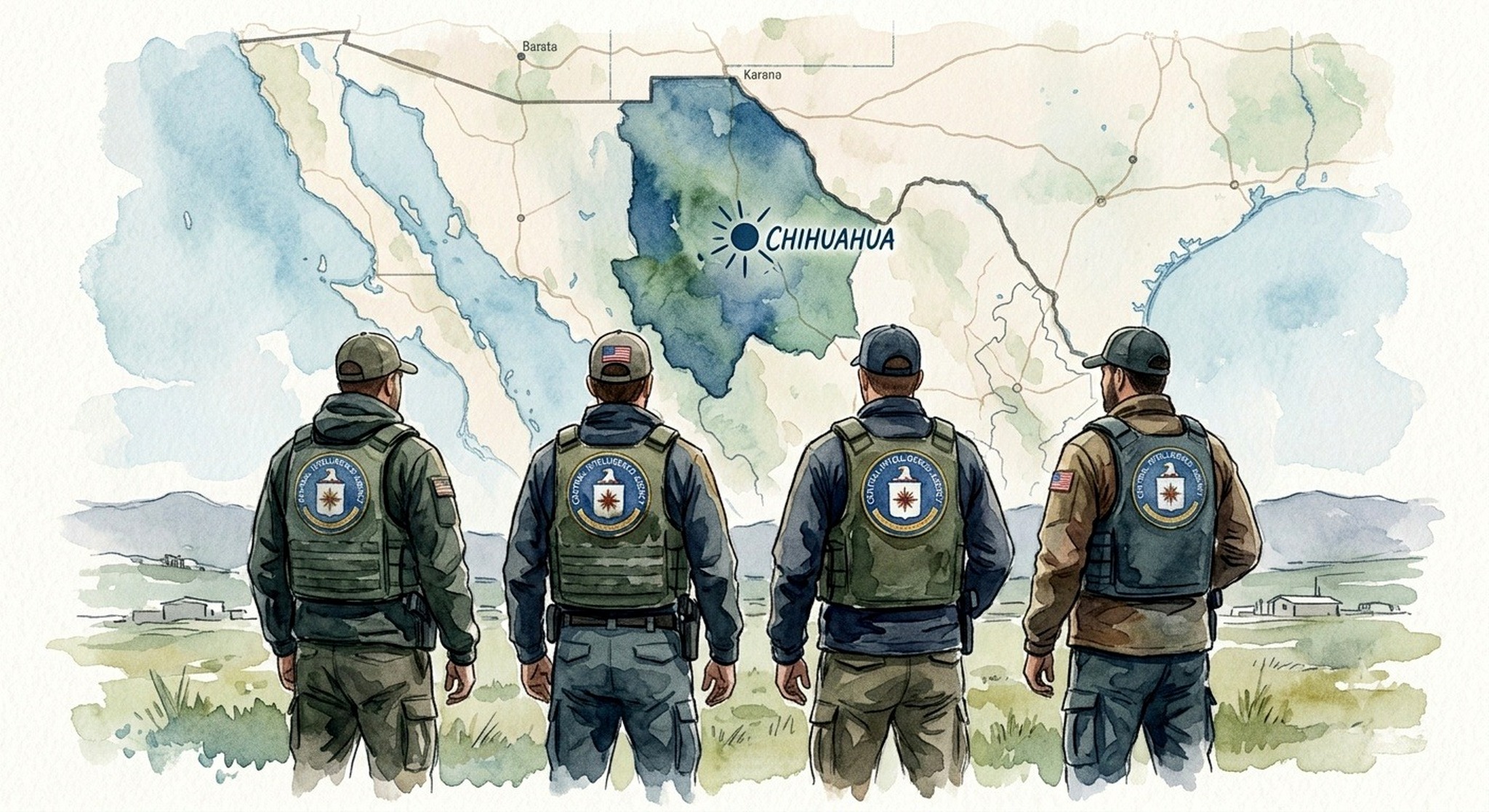
Inside the Ludicrous, Deadly Serious Plan to Take Over Greenland
'We want Greenland,' Trump said. Four men sprang into action to make fantasy a reality.
By Ben Taub
The New Yorker
June 15, 2026 - On a Saturday afternoon in Nuuk, Greenland, last March, a thousand people walked down toward the harbor, to a small red cabin that bore the Great Seal of the United States—an eagle grasping an olive branch in one foot and thirteen arrows in the other.
The air was freezing, and the town was bathed in the crisp Arctic light of a late-winter sun. After almost seven decades with no diplomatic presence in Greenland, the U.S. had opened a tiny consulate in 2020, during the pandemic; now, less than two months into Donald Trump’s second term as President, it was the site of the largest demonstration in Greenlandic history.
Even before Trump retook office, he had made clear his intent to annex Greenland. But, from the moment that he was sworn in, his fantasies and provocations became American foreign policy. “One way or another, we’re gonna get it,” he told a joint session of Congress.
So five per cent of Nuuk’s residents stood before the consulate, beating traditional drums and chanting their country’s Inuit name: Kalaallit Nunaat. “Enough is enough,” they shouted. But no one from the State Department drew the blinds. It wasn’t clear that anyone was even there.
Across town, in the commercial center, a lone American handed out flyers. He wore a cowhide jacket and pants, mirrored sunglasses, and a black leather vest with a patch that read “Bikers for Trump.” He was tall and fit, with gray curls and a short mustache, and presented himself as a kind of unofficial ambassador—not of the U.S. government but of its President, whose cellphone number he claimed to have.
“My name is Chris Cox. I’m from the United States, and I have come here to try to make some friends,” he said to an elderly Inuit man. “We are not looking at you like a tiger looks at a gazelle.”
Cox had founded Bikers for Trump in 2015, and the group had provided security at campaign rallies and at Trump’s first Inauguration—“a wall of meat,” as he put it, between protesters and the unlikely candidate who became President. When Trump lost the 2020 election, Cox spoke at a rally to call for overturning the result.
“I, for one, will take the first bullet,” he said. “If there’s anybody out there from Antifa or Black Lives Matter, spend your first fuckin’ bullet in my chest.” But in Nuuk he struck a more conciliatory tone. “We are not biting at the chomps,” he said. “I just plan on doing the best we can to have an influence here.”
“He wasn’t really breaking any laws,” a senior Greenlandic police official told me later. But Cox’s interactions were inherently provocative. “Without knowing it, a lot of the Greenlanders are living in the Stone Age,” he told an Italian TV channel.
“I’m receiving a lot of death threats as a result of my work here in Greenland,” Cox noted, a few days into his trip. “People are looking at me like I’m a Russian with a machine gun right now, when they see the Trump patch.”
By that point, Greenlanders had started wearing red caps with white text that read “Make America Go Away.” Nevertheless, Cox considered his mission to be fruitful. “I’ve got some suggestions for how we can clean this up,” he said, in a phone call from Nuuk to the Washington Times. “We need to change the hearts of some of these Greenlanders.”
Cox left Nuuk for Washington, D.C., where he claims to have briefed the White House and Republican lawmakers on his findings. He also did a prime-time interview with One America News Network, portraying Denmark, whose realm includes Greenland and the Faroe Islands, as an illegitimate colonial power that is committing “atrocities” against Greenlanders and “weaponizing” anti-Trump propaganda to turn people against the U.S. “Unfortunately, the natives, the Inuits and the Greenlanders, in my opinion, are suffering something we call, here in America, Stockholm syndrome,” he said.
According to Denmark’s national broadcaster, while Cox was in Nuuk, he made lists of Greenlanders who seemed open to annexation, and of those who obviously were not. He also solicited information on points of tension between Greenland and Denmark—examples of historical injustices that could be exploited for propaganda—and sought to recruit Greenlanders for a separatist movement, to tear apart the Kingdom of Denmark. Three months later, Trump appointed him to an advisory council at the Department of Homeland Security.
In recent months, the United States has kidnapped the President of Venezuela, launched a war with Iran, threatened Colombia, and started to move against Cuba. Trump’s obsession with Greenland has mostly slipped from the news. But Greenlanders worry that the war in Iran is only serving as a temporary reprieve; influence operations are ongoing, at Trump’s direction, and every so often he blurts out the stakes. During a rant about America’s European allies, Trump emphasized that his antipathy toward NATO“all began with, if you want to know the truth, Greenland. We want Greenland. They don’t want to give it to us, and I said, ‘Bye-bye!’ ”
The transatlantic alliance reflected a world that was designed and largely enforced by American power. Now, as American primacy fades, the U.S. government has embraced the predatory world view of its traditional opponents. Firepower matters more than values or alliances, and everything is in play. In December, the Danish Defence Intelligence Service noted that the U.S. has transformed into a nation that “uses economic power, including threats of high tariffs, to enforce its will, and no longer rules out the use of military force, even against allies.” Weeks later, Danish soldiers prepared to blow up Greenlandic runways, in case of a U.S. invasion.
“If the United States chooses to attack another NATO country militarily, then everything comes to an end—including NATO and, with it, the security that has been provided since the end of the Second World War,” Denmark’s Prime Minister, Mette Frederiksen, warned. She later added, “The world order as we know it—that we have been fighting for, for eighty years—is over, and I don’t think it will return.”... ...Read More
| | |
Photo: California's Glydways has broken ground on what's set to be become the world's first publicly accessible automated transit network Glydways
Glydways: Atlanta To Host First Fully Automated On-Demand Public Transit System
Our High Design Feature of the Week
By Omar Kardoudi
New Atlas
February 17, 2026 - South Metro Atlanta is set to become home to a demonstration pilot for a publicly accessible automated transit network using autonomous electric vehicles on dedicated guideways. This system promises to end nail-biting traffic congestion, delivering a rail-like capacity at bus-fare prices without the traditional cost or construction timelines.
Glydways, the California company behind the technology, broke ground on the pilot loop recently. The initial 0.5-mile (0.8-km) guideway connects the ATL SkyTrain at the Georgia International Convention Center to the Gateway Center Arena, and marks the worldwide debut for the company's Automated Transit Network system. It's a free public test service scheduled to launch in December 2026.
The company argues that cities need "net-new capacity" – additional transportation bandwidth that doesn't compete with what's already there. "Just putting autonomous vehicles on open roads doesn't actually solve congestion," Mark Seeger, Glydways' co-CEO and founder, explained in a recent interview. "In many cities, it makes it worse."
It’s a pitch that's gaining traction globally. The company has already signed agreements with Dubai's Roads and Transport Authority and the Abu Dhabi Investment Office, and held discussions with officials in Tokyo, Florida, California, and New York.
Glydways' small electric passenger pods run on purpose-built guideways with their own private lanes – not fighting for space with SUVs or getting stuck behind a garbage truck. The system is coordinated by AI software to operate 24/7 on-demand. The idea is that you request a ride via a mobile app, which prompts the arrival of your own vehicle or one shared with your group, and then you travel directly from point A to point B with zero intermediate stops.
The company claims its scaled system has the potential to move 10,000 people per hour through a guideway just 2 m (6.6 ft) wide – matching light rail throughput but without the massive infrastructure costs or decade-long construction timelines. In fact, Glydways says its guideway infrastructure deploys faster and cheaper than traditional rail systems, which can cost hundreds of millions of dollars to realize, though the company hasn't disclosed specific construction costs for the Atlanta pilot. And because the autonomous passenger vehicles operate on dedicated lanes, they can run at consistent speeds in tight platoons, something that's impossible in mixed traffic.
The company's economic model also relies on keeping operational expenses low through having no drivers, utilizing electric propulsion, and undertaking minimal maintenance on a controlled guideway system. And Glydways maintains that unsubsidized operation at bus-fare levels is core to the business model, though actual pricing estimates haven't been announced yet.
The initial Atlanta pilot route will serve as the global proving ground for the system. It connects Convention Center visitors and arena attendees to the existing ATL SkyTrain – a controlled environment with predictable demand patterns, ideal for proving the technology works before scaling up. A feasibility study led by the Metropolitan Atlanta Rapid Transit Authority will evaluate performance and determine whether the system should expand across the broader Atlanta region. If it works here, the model could extend to airport connections, suburban commuter routes, and other high-traffic corridors where traditional rail is too expensive.
"What begins in South Metro Atlanta is designed for the world," said company CCO, Chris Riley in a press statement. "This pilot demonstrates how an innovative new form of public transit can expand access, improve reliability, and help cities move more people without expanding roads or relying on legacy systems."
The real test isn't the technology – autonomous vehicles on dedicated lanes is fairly straightforward engineering. The test is whether the economics hold up at scale. Rail-like capacity at bus-like costs sounds great on paper. Whether it pencils out in practice or everything ends up like the Simpsons' Monorail episode is what the Atlanta pilot will help determine. ...Read More
| | |
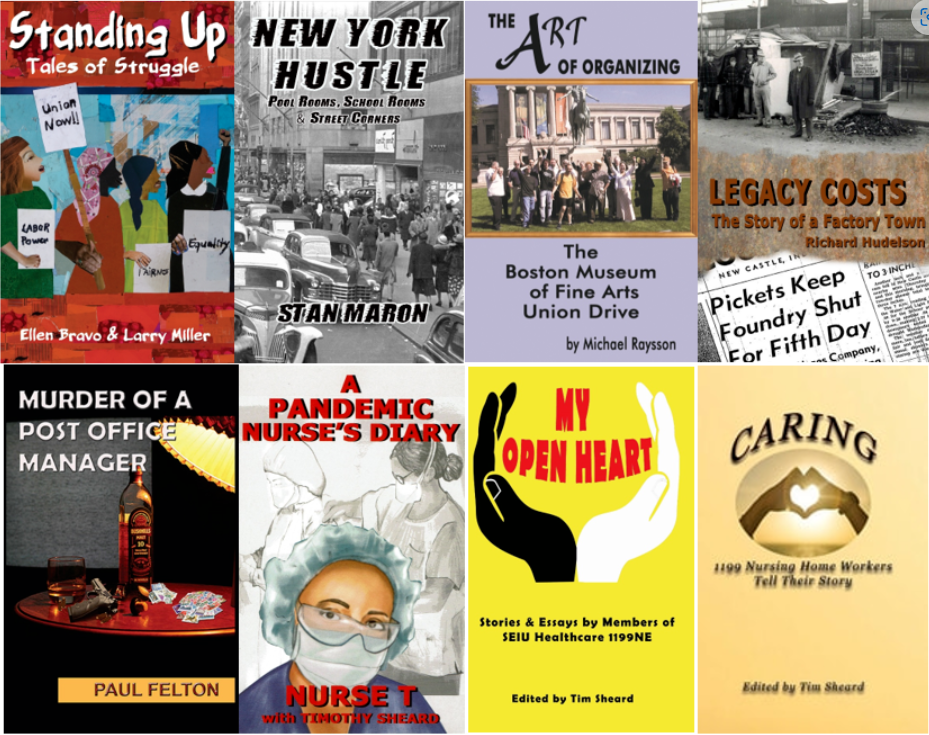
New Journals and Books for Radical Education...
Use Changemaker for Your Holiday Gifts,
Thus Lending Us a Hand, Too!
| | |
From Upton
Sinclair's 'Goose Step' to the Neoliberal University
Essays on the Ongoing Transformation of Higher Education
By Daniel Morris
and Harry Targ
Paperback USD 17.00
This is a unique collection of 15 essays by two Purdue University professors who use their institution as a case-in-point study of the changing nature of the American 'multiversity.' They take a book from an earlier time, Upton Sinclair's 'The Goose-Step A Study of American Education' from 1923, which exposed the capitalist corruption of the ivory tower back then and brought it up to date with more far-reaching changes today. time. They also include, as an appendix, a 1967 essay by SDS leader Carl Davidson, who broke some of the original ground on the subject.
Click HERE to Purchase
| |
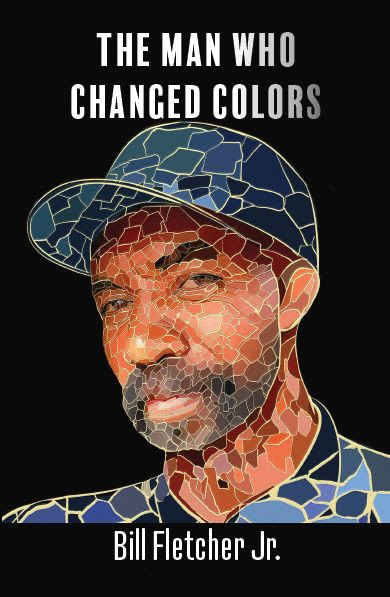
The Man Who Changed Colors
By Bill Fletcher, Jr.
When a dockworker falls to his death under strange circumstances, investigative journalist David Gomes is on the case. His dogged pursuit of the truth puts his life in danger and upends the scrappy Cape Cod newspaper he works for.
Spend a season on the Cape with this gripping, provocative tale that delves into the
complicated relationships between Cape Verdean Americans and African Americans, Portuguese fascist gangs, and abusive shipyard working conditions. From the author of The Man Who Fell From The Sky.
“Bill Fletcher is a truth seeker and a truth teller – even when he’s writing fiction. Not unlike Bill, his character David Gomes is willing to put his life and career in peril to expose the truth. A thrilling read!” − Tavis Smiley, Broadcaster & NY TIMES Bestselling Author
| | |
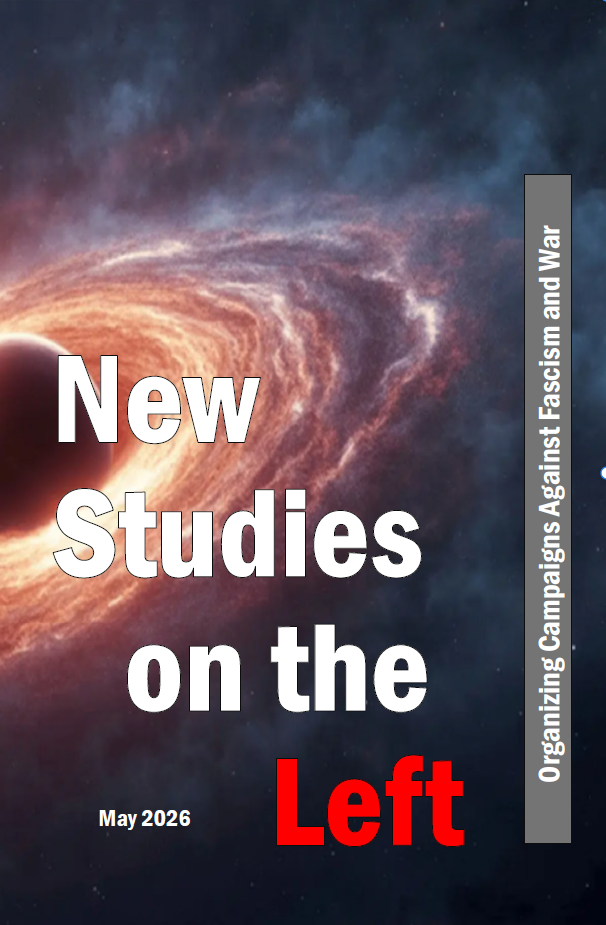
New Studies on the Left, May 2026
Paperback $14.95
...is a journal of socialist theory and practice. It is the successor to ‘Dialogue and Initiative, published as an annual journal of the Committees of Correspondence for Democracy and Socialism in book form from 2012 to 2022.
It will continue the CCDS policy of left unity, including articles with a variety of left perspectives, including debates.
This issue contains a dozen articles grouped under the headings of Analysis and Global Reach, Social movement campaigns, and Book Reviews. Some are reprinted from other sources, but many appear here for the first time.
Among the authors are Nancy Fraser, Jerry Harris, Jay Jurie, Paul Krehbiel, Rod Such, Harry Targ, Janet Tucker and Meta Van Sickle.
Click HERE to purchase
| |
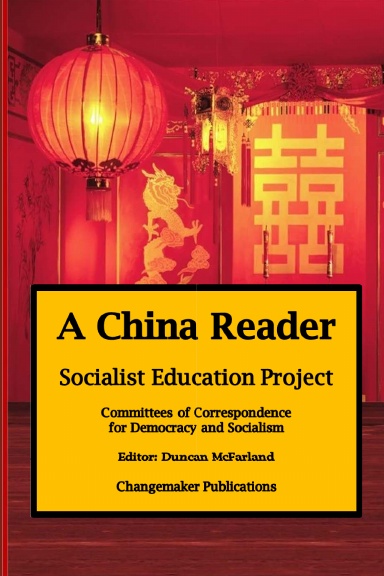
A China Reader
Edited by Duncan McFarland
A project of the CCDS Socialist Education Project & Online University of the Left
244 pages, $20 (discounts available for quantity orders from carld717@gmail.com), or order at :
The book is a selection of essays offering keen insight into the nature of China and its social system, its internal debates, and its history. It includes several articles on the US and China and the growing efforts of friendship between the Chinese and American peoples.
| | | |
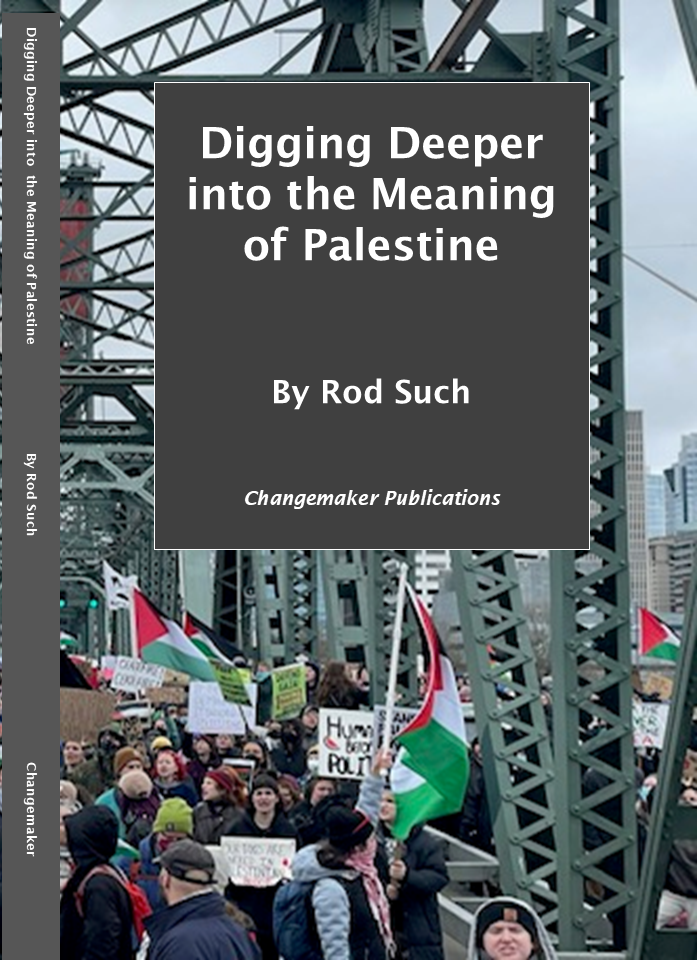
Digging Deeper into the Meaning
of Palestine
By Rod Such
Author's note: My initial decision to begin reviewing books on Palestine and the Palestinian liberation struggle was to write for political activists, rather than academics or the general public. This book, which collects dozens of reviews over a decade, might also be regarded then as a kind of wide-ranging primer or introduction to Palestine that will lead hopefully to an ongoing learning experience.
316 pages, $19.00 (discounts available for quantity), order at:
Changemaker Publications
https://www.lulu.com/spotlight/changemaker
| | | |
Image: @dailyworkerhistoryfarsi, Instagram, accessed July 5, 2026.
Why the Left Has So Little Traction in Iran
On anti-imperialism, repression, and
the Left’s distance from Iranian society
By Mina Khanlarzadeh
Mina's Substack
July 08, 2026 - At a moment when Iran still stands near the edge of war, it may seem almost like a luxury to ask why the Left has so little traction in Iranian society. The destruction and death brought by the recent war are still unfolding: the loss of lives, jobs, infrastructure, health, and the environmental consequences of what was bombed have not yet been fully measured.
That this question has to be asked while universities themselves have been bombed only makes it harder, and more necessary. But the question of what to demand of the Islamic Republic, and how to engage with society’s hopes and fears, cannot be postponed until after the crisis. Much of what society demands belongs to the terrain on which the Left should be able to speak with force: labor rights, an end to corruption, free internet access, press freedom, gender justice, an end to executions and political imprisonment, sanctions relief, and a foreign policy built around national interest. Yet none of this has made the Left more popular.
A Problem From Within
Some background may help. During Ahmadinejad’s first presidency, from 2005 to 2009, a younger generation on Iranian campuses helped shape what became known as the younger-generation Left. This was decades after the Islamic Republic’s mass executions of leftists in the late 1980s.
The new campus Left emerged from reform-era openings around women’s rights, student organizing, and labor unrest, and from reformism’s failure to give those struggles a more radical language. As Peyman Vahabzadeh shows, one of its most visible formations was Students for Freedom and Equality, or Daneshjuyan-e Azadikhah va Barabaritalab, a loose leftist student network that brought questions of social justice back into campus politics and faced a wave of arrests in December 2007. It opened a cross-generational dialogue with survivors of that earlier destruction, recovering what remained of an older language and building something new from it. For many on campus at the time, that language made it possible to think repression, inequality, and historical violence together.
In my own experience, the communities formed in those years—and again after the 2009 Green Movement—kept thinning at each major political juncture. Each new wave of protest produced the same argument: weakening the state during a moment of external threat, some said, only played into the empire’s hands. For some, anti-imperialism took priority over criticizing the state’s own repression—a shift often described, in recent years, as becoming mehvar-e moqavemati, aligned with the Axis of Resistance.
Some others shared the same unease but stayed quiet, afraid that challenging their anti-imperialist friends would mark them, inside the Left itself, as no longer properly of the Left. Over time, these disagreements created distance. Some collaborations fell apart, and conversations that had once felt shared became less frequent.
Looking back, I can see how much of what I wrote in those years and afterward came out of these arguments. During the November 2019 uprising, I wrote “The Silenced Screams Fighting Impoverishment in Iran” and “Anti-Imperialism as an Intellectual Trap.” The critique was already there: instead of listening to people risking their lives in the streets, parts of the Left chose a politics that already knew, from elsewhere, what those people were supposed to want.
That rupture has only widened. During the January 2026 protests, after demonstrations had already begun, Reza Pahlavi, the exiled son of Iran’s last shah, called on people to take to the streets and his name appeared in protesters’ slogans; many on the Left did not know how to respond. Some stayed silent; others quickly dismissed the protests outright, less as an evidence-based analysis than as anger that the street had not spoken in the language the Left expected. At the same time, much of Iranian society has come to view the Left with suspicion.
Over the past decade, as inequality, poverty, corruption, and repression have deepened, the Left has become, in some quarters, an object of contempt close to the contempt directed at the Islamic Republic itself. What explains this?
The Wrong Explanation
An easy explanation would blame this entirely on monarchist media, which has become a common explanation for many shifts in Iranian public opinion. I do not think that explanation holds up. Propaganda exists against every political tendency; the Islamic Republic itself has spent decades vilifying its historical other, the Pahlavi monarchy. If propaganda alone explained political desire, monarchism would not have gained the traction it has.
To say society has been manipulated is another version of the old false-consciousness argument: it names a political behavior without explaining it. Monarchist media’s repeated charge against the Left—that parts of the Left helped give intellectual legitimacy to the 1979 Revolution as an emancipatory project, and that parts of the Left still look for liberation in the Islamic Republic’s own language of resistance—has some force, but it also flattens a contingent history into one linear story of complicity. The question is why that flattened story has become persuasive—and what in the Left’s own language has helped make it so.
The more anti-imperialist Left often works from a fixed set of concepts—imperialism, capitalism, class struggle—that become positions to defend rather than tools for understanding society. Evidence is either dismissed as the behavior of a desperate, manipulated population or fitted into what the Left already believes liberation should mean.
But the problem is not confined to this faction. Even parts of Iran’s Left that are more sympathetic to the streets often speak in a vocabulary translated from Western Marxism and critical theory—a path to the universal, even if a European one, and a defense against the nativist, anti-Western currents that shaped the post-1979 state. That inheritance, however, has left parts of the Left more fluent in theory than in the social world it claims to explain.
One sign of this distance is what it treats with suspicion: individual liberty, joining the world’s economic order, and a foreign policy built on national interest. These demands are often dismissed as liberal, pro-capitalist, nationalist, or insufficiently materialist. The result is a Left waiting for society to become worthy of its concepts, rather than letting society’s experience reshape them.
There have been serious efforts to move beyond this mode of translation-based knowledge production. Among others, Mohammad Maljoo’s writing has long shaped public discussion, and Parviz Sedaghat’s website Naqd-e Eqtesad-e Siyasi has sustained important debates through a substantial body of analysis, even if much of it remains dense enough to challenge well-trained readers.
But the larger task remains unfinished. Inside Iran, this cannot be separated from censorship, surveillance, and repression: Sedaghat himself was arrested in November 2025, and Maljoo was reportedly summoned, as part of a broader wave of pressure on researchers and writers connected to critical and left intellectual circles.
Thinking With the Debate
The recent debate on Iran’s Left and anti-imperialism offers a way to think through this problem with others who have approached it from within the Left itself.
In October 2025, a few months after the twelve-day war, Mohammad Maljoo distinguished between two lefts. The Axis-of-Resistance Left treats anti-imperialism as the master lens and, in moments of war and ceasefire, tends to align with the state’s logic of confrontation. The democratic or people-oriented Left, by contrast, seeks to oppose both foreign domination and domestic authoritarianism, defending society without turning that defense into support for the state. But even in Maljoo’s account, this second Left is still building the language and force that would allow it to oppose both forms of domination in practice. It remains, in this sense, unfinished.
Kianoush Boustani and Yashar Darolshafa help explain why the Axis-of-Resistance Left has been so difficult to dislodge. Boustani shows how geopolitics crowds out the social question: class struggle and domestic repression become secondary to confrontation with the United States. Imperialism is treated less as a global system of power than as a single enemy, usually the United States, and any domestic movement that potentially weakens the Iranian state can then be treated as a possible instrument of that enemy.
Darolshafa published his own account of this distortion on May 31, 2026; he was arrested in Tehran the following day, and, as Naghmeh Sohrabi notes, his whereabouts remained unknown at the time of her writing. [1] His essay, later introduced and translated in shortened form by Sohrabi, traces the “people–imperialism contradiction” to the 1970s, when it functioned as a practical organizing framework against a dependent capitalist dictatorship, without abandoning class analysis. Sohrabi’s introduction frames the debate Darolshafa is intervening in by quoting both Maljoo and Ghamari-Tabrizi.
According to Darolshafa, the Islamic Republic could present itself after 1979 in a language of anti-imperialism and solidarity with the oppressed, and some on the Left mistook that rhetoric for a material political position. In “The Cold That Stays,” I argue that nationalists, leftists, and Islamist currents could recognize one another as part of the same struggle against a shared enemy—the United States, tied to the Shah and the memory of the 1953 coup—but they meant different things by liberation, sovereignty, and justice. In Darolshafa’s account, the state absorbed this ambiguous anti-imperialist language, and once it was detached from concrete conditions, what had been a revolutionary formulation for the Left became a way of legitimizing an existing capitalist, repressive state.
If Boustani and Darolshafa clarify the internal logic of the Axis-of-Resistance Left, Behrooz Ghamari-Tabrizi’s careful and wide-ranging essay challenges the very distinction on which Maljoo’s account depends. His intervention is valuable because it makes the strongest version of the case against Maljoo’s distinction: that imperialism and domestic authoritarianism are not separable realities, but historically intertwined.
In peacetime, this insight might seem to cut both ways: if the two reproduce each other, one could oppose domestic repression as forcefully as imperialism, without having to choose between them. But the symmetry breaks down once we ask what role this account assigns to Iran’s state. If the state is treated as the force actually opposing imperialism, and imperialism is understood as inseparable from domestic repression, then the state’s anti-imperialism begins to appear as the terrain through which repression must be addressed, rather than as one of the ways repression is organized. Taken to its logical end, this changes who counts as the subject of liberation: those who defend the state, at least in its “resistance” against imperialism, appear as the agents of emancipation, while those imprisoned for resisting it are pushed to the margins of the anti-imperialist cause.
This tension appears most clearly in Ghamari-Tabrizi’s own examples, especially his reading of the truckers’ strike before the June 2025 twelve-day war, organized around material grievances. Ghamari-Tabrizi asks whether the union should have continued the strike under Israeli attack, even though its demands were just and its methods peaceful. The question is rhetorical, and its implied answer is no—though by then the state had already weakened the strike through arrests and repression, before the war even began. In that moment, this logic treats the truckers’ repression and the permanent threat of war as two separate problems—one to be criticized, one to be defended—when both are tied to the state’s own policies. Repression and geopolitical crisis both belong to the state’s mode of rule.
Toward the end, Ghamari-Tabrizi’s essay asks how the state might be made accountable to society—a demand worth taking seriously. I share that concern, but would approach his closing claim more cautiously. He argues that the Islamic Republic regained confidence through the battlefield and diplomacy, and that the nation did not leave it alone during the war. Under internet shutdowns, fear of arrest, and a controlled media environment, however, it was difficult to know what society thought beyond what state media allowed to be seen. Arrests and executions of political prisoners continued throughout the war, only weeks after the January protests and the crackdown that followed. The problem is larger than this case: anti-imperialist analysis risks mistaking a managed image of unity for evidence of public feeling, widening the distance between intellectual analysis and broader society.
What appears as a theory of inseparability of imperialism and domestic repression becomes, in practice, an imperialism-first politics. This same imperialism-first logic has been challenged from another angle by Darolshafa, who argues that the state is not outside the order it claims to oppose, but part of the same capitalist order imperialism sustains. My own response starts from lived experience: many Iranians do not experience the state’s anti-imperialism and its repression as two separable things, whatever the theory claims.
What People Actually Live
For some on the Left, imperialism and domestic repression are inseparable because imperialism is seen as the force that produces or intensifies authoritarianism. For many Iranians, however, the problem appears in a different form: the state’s anti-imperialism is one of the main languages through which authoritarianism is defended. The state arrests protesters and dissidents—and, in some cases, executes them—by labeling them agents of empire, infiltrators, or forces weakening the country against external enemies. It explains corruption, deprivation, and the widening gap between rich and poor as the unavoidable cost of resistance, even though sanctions and isolation are tied to policies society never chose.
This is why many Iranians do not experience normalization with the United States as capitulation to empire. They experience it, rather, as a way to take one of the state’s most effective weapons out of its hands: the language of permanent emergency through which democratic demands become foreign infiltration and economic strangulation becomes the price of resistance. I develop this argument at greater length in “The Cold That Stays: The 1953 Coup and Its Afterlife in Iranian Political Memory.”
The demand is not to welcome American power, but to hold the state to a standard of national interest: to spend public resources on citizens’ lives rather than confrontation, and to answer for the conditions under which people live. The point is not that the world order is just. It is that many Iranians do not want to pay the price for a state project that claims to challenge that order while failing to protect its own citizens’ lives, rights, and national interest.
One state-linked poll captured part of this gap: 56 percent of respondents prioritized sanctions relief in negotiations with the United States, while only 5 percent prioritized recognition of the country’s claimed nuclear rights. Dependency on Russia and China, too, does not look like anti-imperialism to many people; it looks like another form of subordination, one more sign that Iranians remain cut off from the ordinary networks through which much of the world lives—unable even to use international credit cards, make simple online purchases, or book travel with the ease others take for granted. Wanting normal relations with the United States is, for many Iranians, a demand for normal life. None of this means that global inequality, or the domination of the United States and its allies, has not been experienced by Iranians as destruction and death.
But in Iran’s case, the concept of imperialism has become so entangled with the state’s own struggle for power that it is now nearly impossible to use it to see the world clearly. Normalization, in this sense, is not a retreat from that larger critique. It may be the precondition for being able to make it again—in a language no longer trapped between the state’s rhetoric of resistance and the fantasy that outside force will bring rescue. Such a language remains to be built.
Iranian state officials defend the country’s regional policy by arguing that when its allies and proxies were strong, war stayed outside Iran’s borders, and that once they weakened, Iran itself became exposed. But this treats the state’s wars as laws of nature, not political choices.
The Islamic Republic is not a resistance movement that happens to govern badly at home. It is a state, and its policies must be judged by the standards citizens use to judge any state: national interest, public consent, development, welfare, accountability, and protection of life. A significant part of the Left has shown sympathy for the state’s own account of these policies, treating them as necessary defenses against imperial aggression. Here the distance between that Left and much of Iranian society becomes especially sharp.
Many Iranians do not accept that their country had to pursue its conflicts through Syria, Lebanon, Iraq, or Yemen, or that the destruction brought to Arab societies can be justified as the price of Iran’s security. They also see these policies as a waste of national resources in a country marked by poverty, corruption, collapsing infrastructure, and blocked development.
Nor can the Islamic Republic pose as leader of regional resistance while its own Arab, Baloch, and Kurdish citizens remain deprived of their rights at home. Boustani and Darolshafa both read this posture for what it is: not resistance, but a struggle for a larger share of power in the region. A democratic politics in Iran would have to reject both the state’s self-justifying language of “forward defense” and the indifference it produces toward Arab lives. Real solidarity with the Arab world cannot mean defending the Islamic Republic’s regional project. It has to begin with recognizing the destruction that project has produced inside Iran and across the Arab world, including the way it has corrupted resistance movements that might otherwise have carried more progressive possibilities.
A Different Left?
Returning to where this essay began: why has the Left failed to become a credible language for these grievances? My sense is that the answer lies in this gap: across its democratic and anti-imperialist currents, the Left continues to speak as if anti-imperialism and democratization are two principles to be balanced, while many Iranians experience the Islamic Republic’s anti-imperialism as one of the main ways democratization, development, and ordinary social life have been blocked. People live with the material consequences of state policy. They demand ordinary government, not permanent mobilization. It is their experience—not the Left’s inherited frameworks—that should revise the Left’s concepts as political life unfolds, not only after movements have already been misread or crushed.
This is also why analysis that turns lived experience into a caricature is so damaging. Treating women’s defiance of mandatory hijab as evidence that the state has already conceded the question, despite continued arrests and violence against women over hijab, or explaining the January protests almost entirely through sanctions and geopolitics while leaving out the state’s accumulated failures—corruption, repression, and the costs of the nuclear program and regional policies that have delivered nothing to ordinary Iranians—misses the point. So does reducing protesters to violence and anger, or claiming that the protests lacked any underlying infrastructure.
The claim that no organizing infrastructure existed reflects what is visible to an analysis insufficiently informed by Iran’s underground networks of labor, student, and women’s organizing, as well as the neighborhood-based networks through which protests have often taken shape. The same reduction appears when commentators take up Trump’s claim about weapons, alter both its timing and content, and then accuse protesters of armed struggle without evidence and against the documented findings of human rights organizations. In each case, lived experience is not being analyzed on its own terms; it is being adjusted to fit a position already taken.
The point is that the Left needs to engage more deeply with the social realities it claims to understand. That would mean a different kind of Left: one that produces political thought out of its encounter with society, rather than importing theory and imposing it from outside, or mistaking the accumulation of “right” positions for political understanding. A Left that wants to be a real force cannot wait for the perfectly articulated movement to arrive; that kind of waiting leaves it in history’s waiting room, letting the urgency of each moment burn away. It has to be shaped by movements that shout names it does not want to hear, or does not yet know how to hear—whether Mir-Hossein Mousavi or Reza Pahlavi. The task is to learn what those names mean, not to wait until they change.
That work has to happen in the language people actually use, not the one the Left is waiting for them to adopt. The Left, too, would have to let itself be unsettled and drawn in directions it cannot fully predict. Without that risk, it remains beside the movements it hopes to understand, speaking about them in a language that no longer hears their rhythm.
[1]: Darolshafa’s imprisonment is not new. He had previously been arrested, tried, and sentenced to prison several times since 2009, and earlier imprisonment left him with physical injuries requiring treatment. A video published by Manjanigh from one of his earlier imprisonments shows him singing. He is also a musician, in addition to being a researcher and writer; another video shows him playing with other musicians. ...Read More
| |
CHANGEMAKER PUBLICATIONS: Recent works on new paths to socialism and the solidarity economy
Remember Us for Gift Giving and Study Groups
Interested in Studying Gramsci? In a Serious way? We have a group that meets Sundays via Zoom, 11am-12:30pm, facilitated by Piruz Alemi. We go paragraph by paragraph, even line by line, reading aloud, then discussing, through The Prison Notebooks, using an online PDF. If you are interested contact Carl Davidson at carld717@gmail.com
HERE'S ONE OF THE LATEST FROM CHANGEMAKER:
| | Click William Ad Below to Go to Purchase Site | | |
HOLIDAY SALE ON EVERY TITLE BEGINS TODAY!
Hard Ball & Little Heroes Press is sharing the holiday spirit by offering a 25% discount on ALL TITLES from November 15-December 25. Enter SOLIDARITY in the discount box when you order a book, 25% will be automatically taken off your cost.
Happy holidays! Tim Sheard, editor
For the children...
Good Guy Jake...An inspiring Children’s Christmas story for Labor!
Imagine young children reading a book about a union that wins back the job of a sanitation worker unfairly fired for taking toys out of the trash. That’s what they will discover in Good Guy Jake.
For years Jake has repaired and painted broken toys he pulled from the trash on his rounds and given them to the children in the local shelter at Christmas. But when an angry motorist reports Jake to the sanitation company, Jake is fired for breaking city regulations.
His union takes the case to arbitration. There, the union brings in a crowd of children, who show the judge the toys Jake gave them and tell her that he taught them the true meaning of Christmas.
| | |
US Agencies, Especially the CIA, Pressure Mexico’s Sovereignty
By Anahí Del Ángel
Mexico solidarity via Contralinea
July 10, 2026 - The clandestine operation of four CIA agents in Chihuahua reopened the debate over the reach of United States agencies in Mexico. Amid Washington’s growing pressures on security, the economy, and migration, specialists warn that the case makes it necessary to review the role these agencies have played in Latin America, imposing US interests and even promoting pliant governments. For this reason, the specialists suggest that the Mexican State must strengthen its own intelligence and national security capabilities; failing to do so, they warn, could unduly influence the 2030 presidential elections.
The clandestine operation of four US agents in Chihuahua not only exposed the illegal presence on national territory of intelligence personnel from the neighboring country, but also reopened the discussion about the reach of the northern neighbor, of the Central Intelligence Agency (CIA), as well as about the strength of the Mexican institutions in charge of national security and the real limits of sovereignty vis-à-vis the United States.
For Dr. Javier Oliva Posada, a specialist in national security matters, what happened in Chihuahua exposed a deeper institutional weakness. “The civilian intelligence and counterintelligence areas of the Mexican State are not receiving the support necessary to meet their objectives.”
In his view, national security constitutes one of the pillars on which the sovereignty of the Mexican State rests, and therefore must be reinforced. “A fundamental pillar of sovereignty is precisely the civilian institutions dedicated to national security and intelligence; the problem is that right now we do not have them.”
Public debate, argues the expert and UNAM academic, tends to reduce sovereignty to a political circumstance, when in reality it is a much broader concept linked to the State’s capacity to protect its strategic interests. “The relationship between national security and sovereignty is direct. The main objective of national security is precisely the preservation of the sovereignty and integrity of the nation.”
From that perspective, Dr. Oliva Posada considers that Mexico’s main problem does not lie solely in the presence of foreign agents, but in the weakening of the institutions responsible for generating strategic intelligence.
In this regard, he recalls that since 2019 the Bicameral National Security Commission stopped meeting, that the Special Program for National Security provided for in the Planning Law has not been issued, and that the National Security Council has not been installed either. “These are public facts; it would seem that national security, among the various dimensions of security, is not a priority.”
For his part, Dr. Nayar López Castellanos considers that Mexican intelligence apparatuses have remained focused on the issue of internal security, such as the search for important information. As an example, he cites that they seek to obtain information about politicians, officials at the three levels of government, and police or military personnel who collaborate with organized crime... ...Read More
| | |
ADELANTE#5 is hot-off-the-press.
This attractive English-Spanish 24-page pamphlet outlines Liberation Road's analysis of ICE and the nationwide resistance. It explains Trump's ethnic cleansing/mass deportation campaign, the roots of the so-called "immigration crisis", and elaborates a comprehensive program for winning immigrant rights and more.
It also contains a fabulous poem "No Borders" from our comrade Joe Navarro, reaffirming our commitment to the cultural-spiritual component of our struggle.
You can view and read it here, in both English and Spanish.
We can send you files to print copies as you need them on any 11 x 17 Color printer at a version of Kinko's near you, or also on an 8.5 x 11 home desktop color printer. You can bulk order hard copies with a union bug, but supplies are limited. Contact BilG4@gmail.com
Why is it important to use ADELANTE? First, the deep answer for LR and other socialist cadres. It's designed for what we can call 'red mass work.' It's not enough for us to be deeply engaged in this struggle. Thousands of progressives and liberals are working hard to 'build a movement.' But more is demanded of us. We have to build organizations within the movement, organizations at all levels, but especially our socialist organization.
This is what's special about Adelante.
It's designed as a collective organizer and a collective educator. First, it explains the deeper nature of the ICE battles and democracy. Second, it ties that explanation to the Chicano 'national question' and to solidarity with Mexico. And third, it introduces LR as a vital organization connecting everything to the need for revolutionary organization and socialism.
In brief, it draws the most advanced fighters to us.
So share it with your contacts, friends, and family members -- either the print or digital versions. Tell them it helps to make sense of issue of immigration and exposes the MAGA lies, and explains why immigrant defense is truly a frontline of the fight to prevent Trump from imposing a fascist regime on our country.
Use the ADELANTE series to organize discussion groups with your close ontacts. You can get support for this piece from the LR Immigrant Defense Leadership Team. You can also create your own podcasts of the ADELANTE! with support from Carl Davidson and Bill Gallegos, who are the main authors of its content. We also have comrades who can help you do this in Spanish. And of course you can disseminate ADELANTE! on Facebook, Instagram and other social media platforms that you use.
You can also distribute the ADELANTE! at mass events and actions, either the pamphlet itself (which you district can reproduce) or as a flyer with a QR code that folks can download to get the pamphlet. Most of all, have a plan for how you can use this powerful publication to advance our unique politics, sharing with folks from DSA or other left organizations in your area, Please let us know if you have any questions or help outlining what support you need on this and other revolutionary literature. Hasta La Victoria Siempre!
| | |
|
Our Amazing Resource for Radical Education
CURRENT FEATURE: In the 'Study Guides' Section
A 4-PART STUDY OF THE SHAPING OF THE
RUST BELT WORKING CLASS.
From the settlers to the present, and how its consciousness is conflicted. Prepared by Carl Davidson and Rebecca Tarlau,
with some help from the DSA Rust Belt group.
| |
There are hundreds of video courses here, along with study guides, downloadable books and links to hundreds of other resources for study groups or individuals.
Nearly 10,000 people have signed on to the OUL for daily updates, and more than 150,000 have visited us at least once.
Karl Marx's ideas are a common touchstone for many people working for change. His historical materialism, his many contributions to political economy and class analysis, all continue to serve his core values--the self-emancipation of the working class and a vision of a classless society. There are naturally many trends in Marxism that have developed over the years, and new ones are on the rise today. All of them and others who want to see this project succeed are welcome here.
May 2026 Updates to the Online University of the Left
May 31, 2026
New Video Course: Explore the life and legacy of notable Black scholar and civil rights pioneer W.E.B. Du Bois. From his birth, just five years after the Emancipation Proclamation, to his death, on the eve of the March on Washington in 1963. His legacy as an activist continues to resonate today, on our Home Page.
New Course Text: What Marxism Can—and Cannot—Do : Marxism remains the most powerful tool for understanding capitalism, but it is not a formula for building socialism. By A. J. Horn, Jan 20, 2026, now on our Home Page.
A new post on our Blog Page: The Fourth World Congress on Marxism, themed “Marxism and Human Civilization”, held in Beijing University.
Now in our Science and Discovery Dept: Particles are nature’s smallest constituents, but that doesn’t mean they’re fundamental. So what is the Universe made of? The answer to this question, Felix Flickerus, contests, is perhaps a surprising one: yes, the Universe is built from fundamental units – but fundamental need not mean smallest. This view is generally adopted by those physicists, such as myself, who work in the largest discipline within the subject: quantum matter. This is the study of quantum behaviors that manifest on everyday scales: the attraction of iron to a magnet, the flow of electricity along a wire, or the passage of sound through a crystal. In these settings, too, we find particles. But these particles are not elementary, like the electron: they are emergent.
Now in our Psychology Dept: Sociality: Why Mead Matters, By Bibhash Sharma…George Herbert Mead’s theory can be linked to Karl Marx’s concept of Alienation. Modern capitalist societies often produce fragmented identities, leading individuals to become disconnected from authentic social relations. Social media validation culture, hyper-competition, and consumerist aspirations create psychological pressures that affect the formation of self.
Now in our Political Economy Dept: Epochal Crisis: The Exhaustion of Global Capitalism, (Cambridge UP, 2025). This is a discussion of the most recent book from Professor William Robinson, Distinguished Professor of Sociology at the University of California, Santa Barbara.
Plus two downloadables in our Books Dept: Marxism and Freedom: From 1776 Until Today Handy for our 250th 4th of July, this is a 1958 book by Raya Dunayevskaya that argues Marxism is fundamentally about human liberation, tracing its development from the American and French Revolutions through Marx’s work, and critiquing of what she terms its perversion in Stalinist and Maoist states. The book introduces her philosophy of Marxist Humanism, emphasizing that theory emerges from the lived struggles of oppressed groups, and connects historical events like the American Civil War and the Paris Commune to Marx’s ideas on freedom.
The World and Africa: Color and Democracy Collected in one volume for the first time, The World and Africa and Color and Democracy are two of W E. B. Du Bois’s most powerful essays on race. He explores how to tell the story of those left out of recorded history, the evils of colonialism worldwide, and Africa’s and African’s contributions to, and neglect from, world history.
|
| | |
Tune of the Week: Jazz Hot (1938) The Rare Short Film With Jazz Legend Django Reinhardt...6:30 min
Here’s a remarkable short film of the great gypsy jazz guitarist Django Reinhardt, violinist Stéphane Grappelli and their band the "Quintette du Hot Club de France" performing on a movie set in 1938. The film was hastily organized by the band’s British agent Lew Grade as a way to introduce the band’s unique style of guitar and violin-based jazz to the British public before their first UK tour. Original title: Jazz Hot 1938.
| | |
Film Review: Dead Horses, Fake Moms and Lying to Björk: Guy Maddin Explains ‘My Winnipeg’
Ahead of an Academy Museum tribute this weekend, the Canadian director unpacks his most famous film on 'It Happened in Hollywood.'
By Seth Abramovitch
Hollywood Reporter
July 10, 2026 - Guy Maddin’s My Winnipeg opens with the filmmaker’s own droning voice repeating the name of his hometown three times before moving on. It wasn’t a stylistic choice, he revealed on It Happened in Hollywood — he simply hadn’t written a script.
“I was too daunted by the prospect of writing 75 minutes of voiceover,” Maddin said. “So I went in for five minutes a day and just improvised, just talking forward, promising myself I just would never stop talking. … I start the movie by saying the word Winnipeg three times. It’s because I didn’t know what to say after the word Winnipeg went in there.”
The 2007 film, which Maddin calls a “docufantasia,” blends real Winnipeg history with invented mythology so seamlessly that even he sometimes loses track of the line. It’s one of four Maddin films screening this weekend as part of “A Weekend with Guy Maddin” at the Academy Museum of Motion Pictures, running July 11-13 with the director in attendance at every show.
The project began as a commission from a short-lived Canadian outlet called The Documentary Channel. “I said, ‘Just assign me something and I’ll make it,'” Maddin recalled. “He said, ‘Well, make a documentary on trains, or on Winnipeg.’ … I chose Winnipeg instantly because ever since childhood I felt that Winnipeg just needed to be mythologized in film emulsion.”
He didn’t have a script until a Q&A in Paris, when an audience member asked what his hometown was actually like. “I just explained for about 15 or 20 minutes what Winnipeg was like,” he said. “And I basically just freestyled the script for my Winnipeg.”
Some of the film’s strangest claims are true. Maddin confirmed the story of horses that drowned crossing a freezing river during a 1920s paddock fire, their heads left visible in the ice through the winter. “It’s real,” he said. “Their heads got caught in between during this really bad cold snap … their frozen heads stuck out of the ice for the entire winter.”
Other details are invented for emotional rather than factual truth — including Winnipeg’s supposed sleepwalking epidemic and a law requiring residents to carry keys to their childhood homes. “Some of this stuff is intentionally untrue because I wanted it to be emotionally true,” Maddin said, “and there was no way to film emotions without staging them.”
That blurring extends to the film’s family scenes, in which Maddin hired retired film noir actress Ann Savage (Detour) to play his mother inside a rented replica of his childhood home. He initially let people assume she really was his mother. Maddin also described inventing, as a child, a memory of a nonexistent TV show called Ledgeman — a man talked down from a ledge daily — which he now believes was how he processed the death of his brother by suicide.
Asked about the resemblance to Nathan Fielder’s recreation-heavy series The Rehearsal, Maddin didn’t hesitate. “No wonder I like him so much,” he said. “I have no idea if he saw My Winnipeg or not. … He just takes it so much further than I do.”
The episode also touched on a 2007 encounter that has become one of Maddin’s favorite stories: a Reykjavik audience Q&A where he’d privately committed to lying on every even-numbered answer and telling the truth on every odd one — until Björk, sitting in back, asked whether the drowned-horses story was real. “It was her turn to get a lie,” Maddin said. “I was piling it on like crazy with Björk.” She and then-husband Matthew Barney later took him for whale burgers, which he ate reluctantly as a committed opponent of whaling: “I felt terrible because I’m strongly anti-whaling.”
Maddin also recounted directing Shelley Duvall in the mid-1990s, describing an impromptu multi-day road trip around Manitoba that included farmhouse stopovers and a detour to a drive-in showing “Independence Day” because Duvall’s friend Harvey Fierstein was in the cast. “She had one of everything at the concession,” Maddin said. “She got half of it for free because she was famous.”
“A Weekend with Guy Maddin” runs July 11-13 at the Academy Museum, featuring a new 4K restoration of Careful (its U.S. premiere), The Green Fog, The Saddest Music in the World and My Winnipeg in 35mm, with Maddin present at each screening. ...Read More
| | |
Initiated by CCDS
522 Valencia St.
San Francisco, CA 94110
415 863-6637
| | | | | |
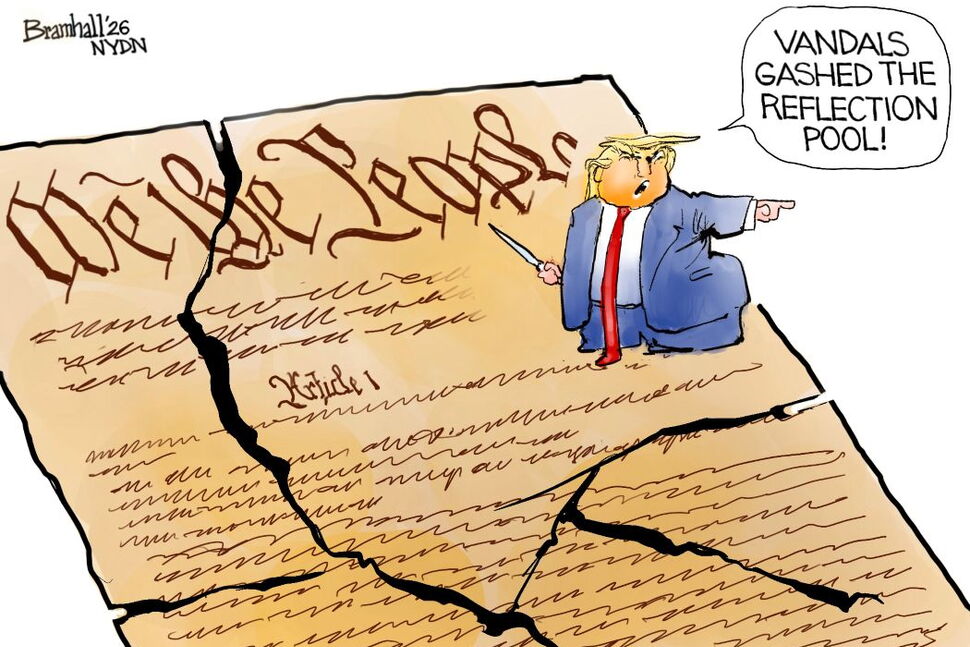




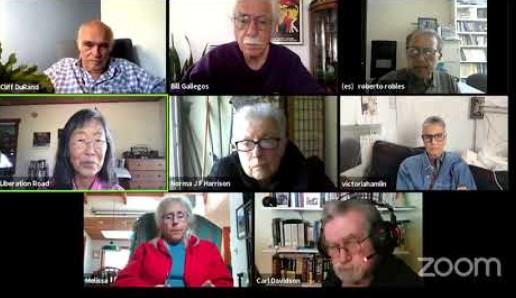


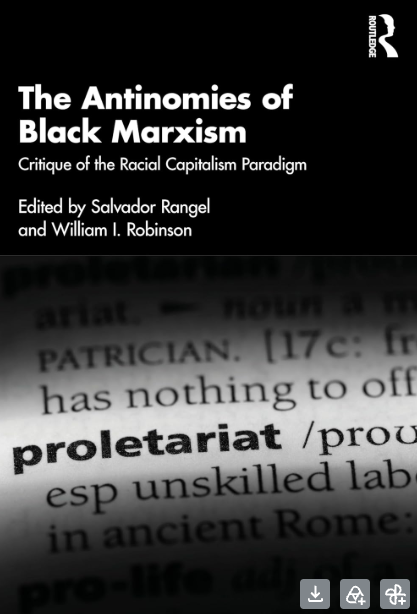


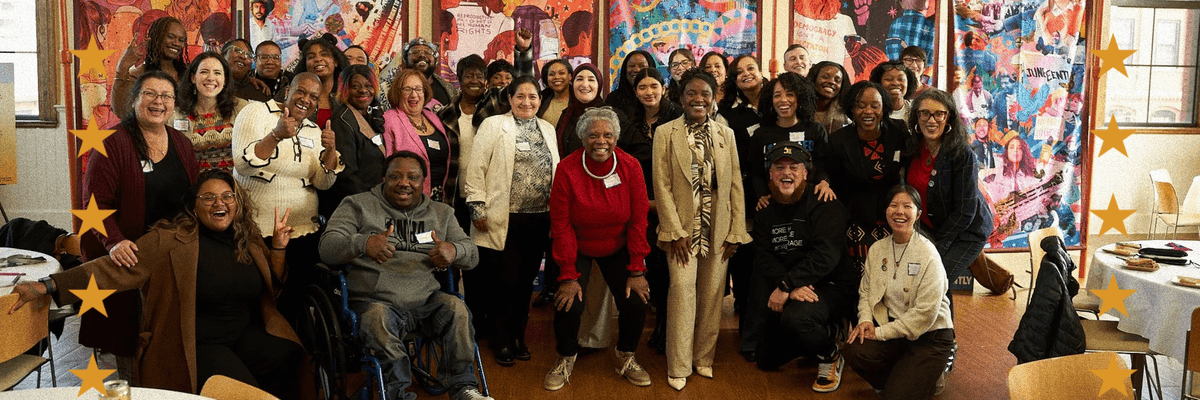
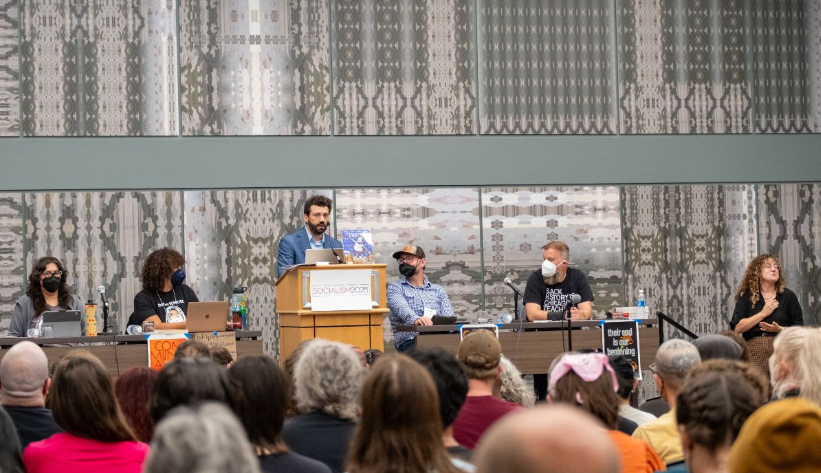


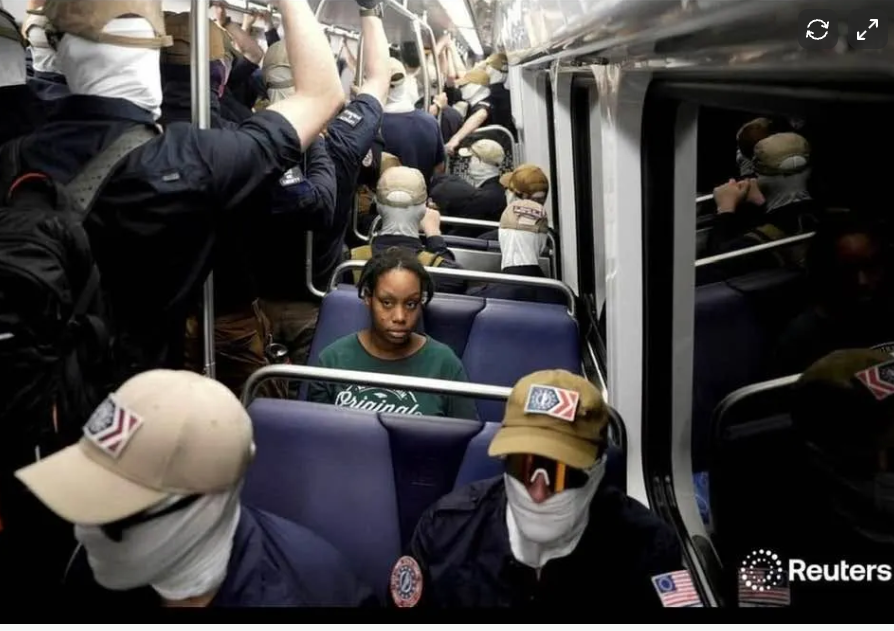
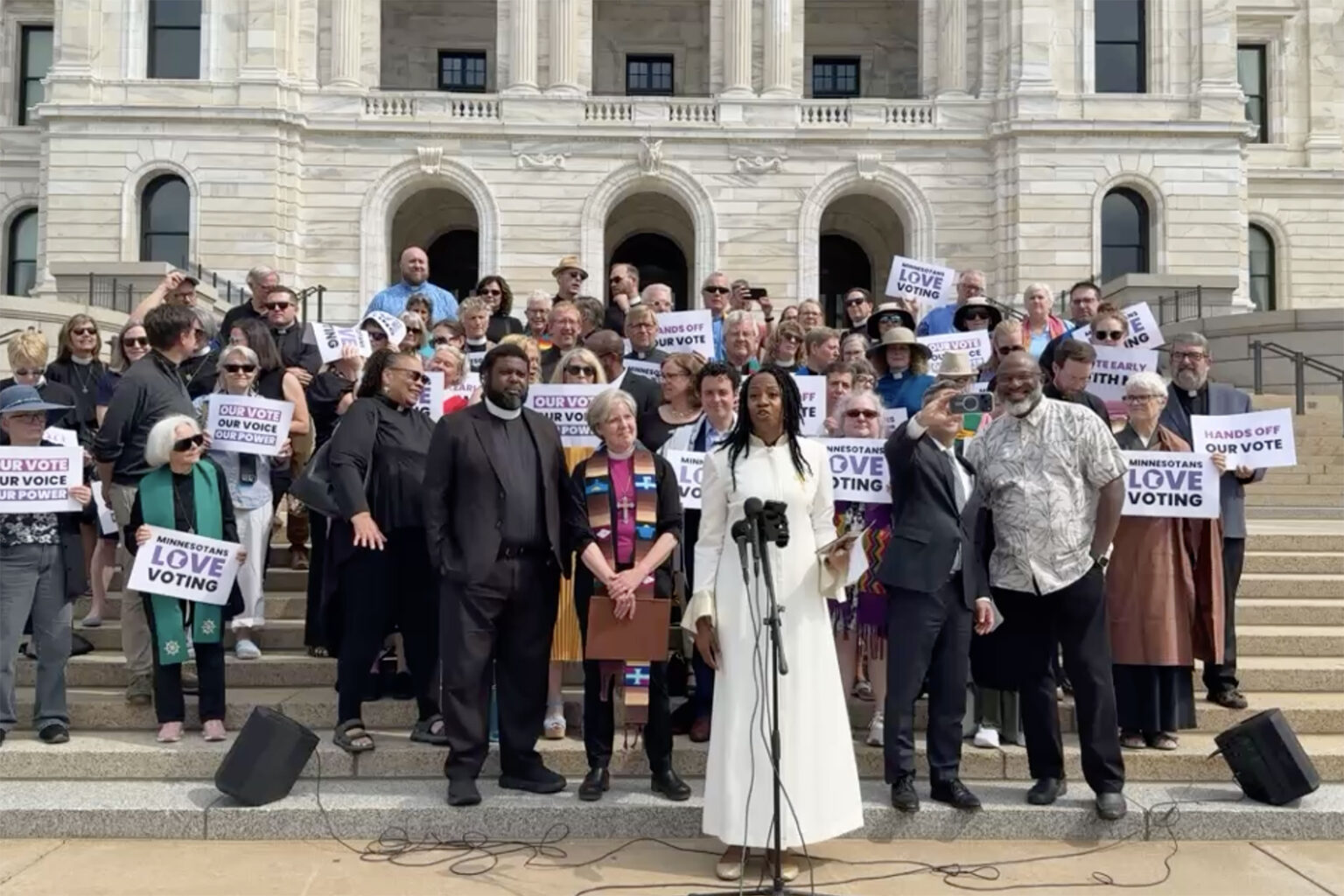






/https://tf-cmsv2-smithsonianmag-media.s3.amazonaws.com/filer_public/2f/e5/2fe5fe51-d507-42c3-8906-adee7eb80525/the-united-irish-patriots-of-1798.jpg)