Wednesday Weblog for January 29, 2025 | |
Awareness without action is worthless. --Phil McGraw | |
Leading Off with Clam Strips | |
|
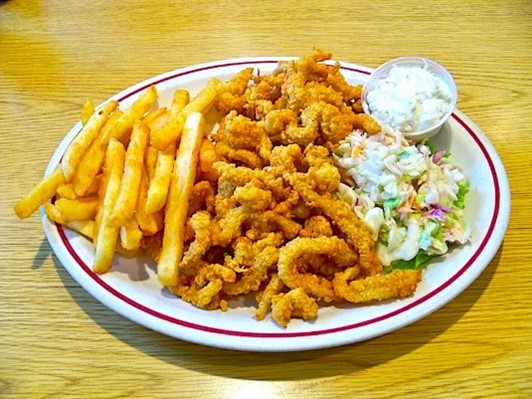
Last Friday night I had some clam strips at a local restaurant and nostalgia hit me in two ways: the fond memories I had of Howard Johnson’s and the lessons learned from their decline from ubiquitous to non-existent.
Read on for either a history lesson, if you've never been to a Hojo's, or for a personal lesson, because one of the truest clichés in the world is that ‘history is the judge’ and the restaurant chain didn't do something to still be here.
| |
|
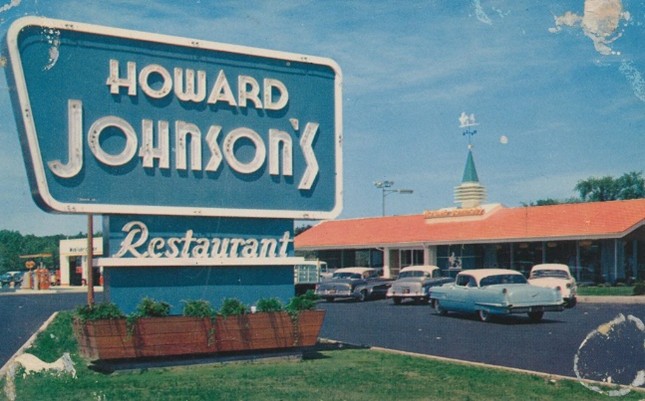
Those of us of a certain age may fondly remember the Howard Johnson restaurant chain. When I was growing up, ‘restaurant’ and ‘Howard Johnson’s’ were more or less synonyms. During my school days I lived just over the town line from Quincy, Massachusetts where Hojo’s was founded.
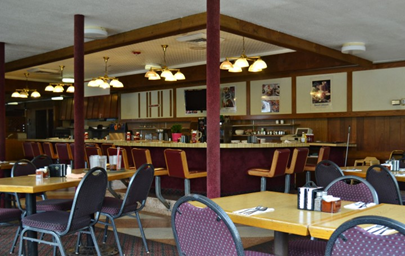
Today, I regularly visit a restaurant in West Boylston, Massachusetts, The Mill 185, that I can tell was built as a Howard Johnson’s and I can’t help but think about those old days.
And every time I drive on the Southeast Expressway heading to Braintree, I notice a grown over field on the right side of the highway where I had my first fried clam strips at a long-gone Howard Johnson's in a highway rest area.
For those of you who remember, and for those of you who don’t, here is a brief summary of the rise and fall and the lessons we can all take from the history.
| |
|
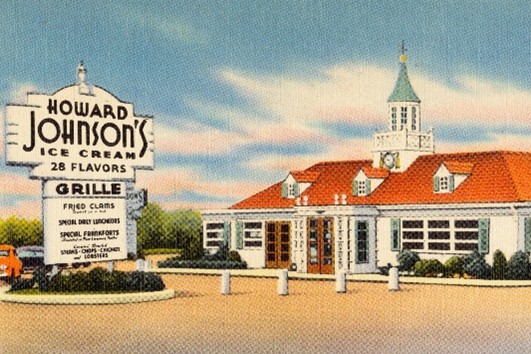
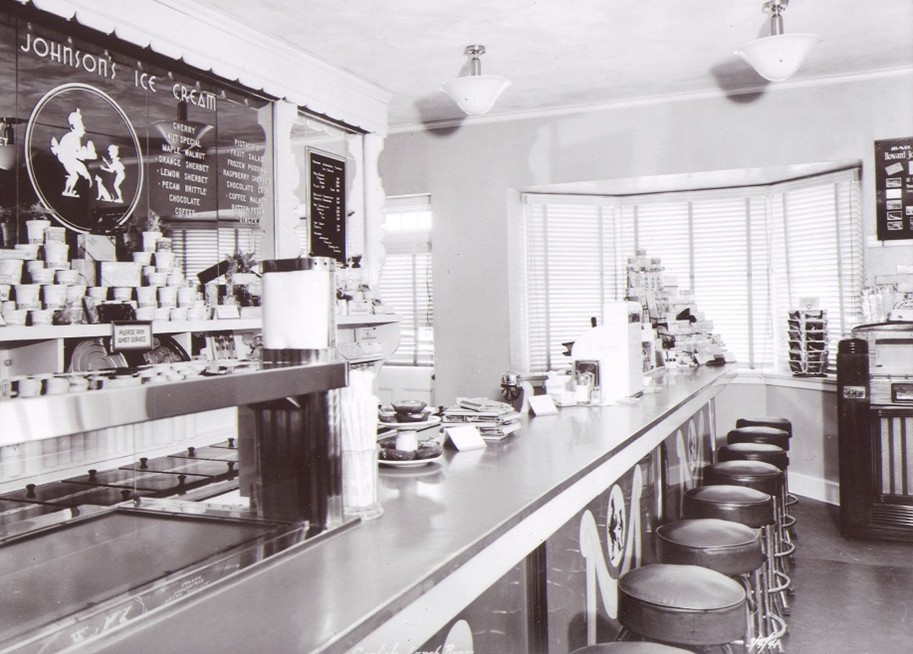
Howard Deering Johnson was a businessman who founded the concept in 1925. He started with a small soda fountain and newsstand. He revitalized the soda fountain concept by offering high-quality, hand-scooped ice cream with 28 flavors, a novel concept at the time.
Encouraged by the popularity of his ice cream and simple menu, Johnson opened a full-service restaurant four years later. In 1935, he struck a deal with a local businessman, Reginald Sprague, that impacted the future of the restaurant industry by allowing him to operate a restaurant under the Howard Johnson’s name. This made the company one of the first to use the franchising model in the restaurant industry.
| |
|
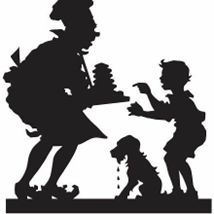
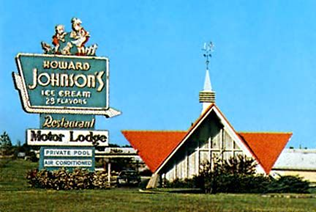
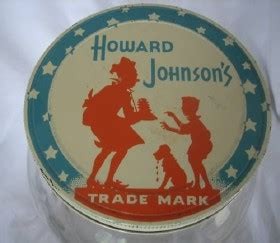
The restaurants became easily recognizable with their orange roofs, turquoise blue trim, and "Simple Simon & the Pieman" logo, believe it or not, inspired by a nursery rhyme.
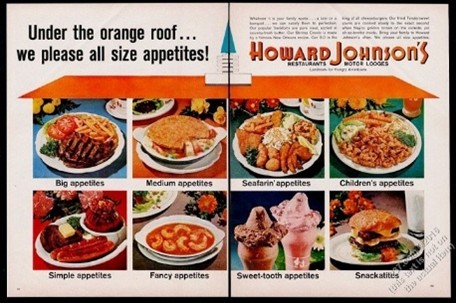
The rise of automobile travel during this period made Howard Johnson’s a popular stop for travelers. Located along highways, they provided consistent, reliable food. The menu was simple but appealing, featuring those fried clams, hot dogs, hamburgers, baked beans, chicken pot pie, and, of course, ice cream.
The company faced difficulties during the war due to rationing, but its brand remained strong.
In the 1950s, the ‘golden era’ for the company began, and it expanded into the lodging business, launching Howard Johnson Motor Lodges, (where I frequently stayed when I started traveling for business in the 1980's) further solidifying its place in American travel culture.
| |
|
By the mid-1960s, Howard Johnson’s operated over 1,000 restaurants and more than 500 motor lodges, making it the largest restaurant chain in the U.S. at the time.
The restaurants were featured in pop culture and became synonymous with family-friendly dining and nostalgia. The "28 flavors of ice cream" were a major selling point.
But in the 1970’s the decline began.
Fast food chains like McDonald’s, Burger King, and Kentucky Fried Chicken began to dominate, offering faster service and lower prices and in 1979, Howard Johnson’s was sold to the British conglomerate Imperial Group, marking the beginning of a series of ownership changes.
As dining trends shifted, the Howard Johnson menu and atmosphere began to feel outdated compared to newer, more modern competitors, so many of their restaurants were closed or converted into other dining establishments.
By the 1990s, only a handful of Howard Johnson restaurants remained in operation. The lodging business, now separate, continued under various ownerships. The last remaining Howard Johnson's restaurant, located in Lake George, New York, closed in 2022, marking the end of an era.
While the restaurant business is gone, the Howard Johnson name still exists in the hospitality sector, owned by Wyndham Hotels & Resorts, which operates Howard Johnson hotels worldwide.
| |
|
Howard Johnson’s impact on franchising, branding, and the travel experience remains a notable chapter in American business history.
Now that the history lesson is over, there are other lessons that can be taken away from the rise and fall of this iconic brand, and you know what some of the biggest lesson are:
| |
|
Failure to Adapt = Eventual Failure: This is more than a cliché in the consumer business, it is the gold standard of rules or lessons. You know many of them, from thousands of buggy whip manufacturers in the 19th century who didn't adapt to the automobile to Nokia cell phones not adapting to the iPhone era, there are hundreds, if not thousands of brands that have drifted off to history because they didn’t adapt. That failure to change may have been based on arrogance, or ignorance, but whatever the ‘ance’ it was, it doomed the brand.
| |
|
Working on the Next Thing = Future Success: Howard took the soda fountain concept and introduced the concept of 28 flavors and was off to the races. He was working on the next thing and it helped him succeed even more. 'Next Things' don't last forever. The 28 flavor thing lasted 75 years or so, close to forever.
| |
Taking Things for Granted = Things Being Taken Away: Whether you take your car for granted and don’t change the oil, or you take your significant other for granted and don’t express your feelings, or whether you take your Superbowl winning Quarterback for granted and don’t extend his contract, taking things for granted is one of the fastest ways to lose them. Howard Johnson's just assumed the yesterday's customers would be tomorrow's customers and eventually they were incorrect. | |
|
There is no panacea (always wanted to use that in a sentence and I can now cross if off my list). Even if you adapt, work on the next thing, and don’t take things for granted, you can still fail and join Howard in the dustbin of history (another word I’ve always wanted to use, and I can cross off my list as well). As a summary phrase for the above three explanations, I offer 'lack of awareness.'
The very first cliché I ever invented or used was ‘Awareness is the Key,’ and it is.
| |
|
Analyzing
Changes can often surprise because of a lack of analysis of the current situation. This is just riding along without brakes or a turn signal and enjoying the ride. You can still enjoy the ride but take some time and analyze how and why you are enjoying the ride. Howard Johnson’s did not respond to the fast-food revolution.
Working
Adverse outcomes can happen because of 'coasting', meaning someone or everyone stopped working at what made the business successful. One of my early mentors eventually went to work in a senior level role for Howard Johnson's here in Massachusetts, and when I visited him during a trip back in 2001, he expressed frustration at the work ethic of other executives and field people.
Alerting
Surprises can happen because the feedback loop, essential to any business, is broken. This can happen when leadership doesn’t listen, or it can happen when those who are closest to the work don’t say anything about problems or issues. When there is both tone-deaf leadership and the 'boots on the ground' say nothing, there are no signs or warnings to avoid trouble.
Revising
Nostalgia and a reluctance to modify what used to work can alter the trajectory of a business or a project. Instead of closing locations, they might have converted some of their great restaurant real estate into fast food locations and/or developed an additional concept. They already had the name: Hojo’s sounds 'fast-food-ish' to me.
Educating
A huge part of a successful enterprise is a well-trained leadership team and workforce. With a lot of miles on me in the training space, I can assure you that organizations committed to training and educating their leaders and others, do better in the long run than those who shortchange the process. If you are not educating the team, you are relying on the concept of keeping your fingers crossed and ‘hope is not a good management tool.’
| |
|
Aware-Ness is the key. In my experience, people and organizations that invest time and energy into analyzing the situation, high engagement working, great feedback that forms an alert system, revising and adjusting plans to the circumstances, and educating key people as a prediction element of where things will be in 5-10 years.
Ideally, every time you drive by a converted Howard Johnson’s or have some clam strips or some ice cream, you’ll remember that Aware-Ness is the key.
| |
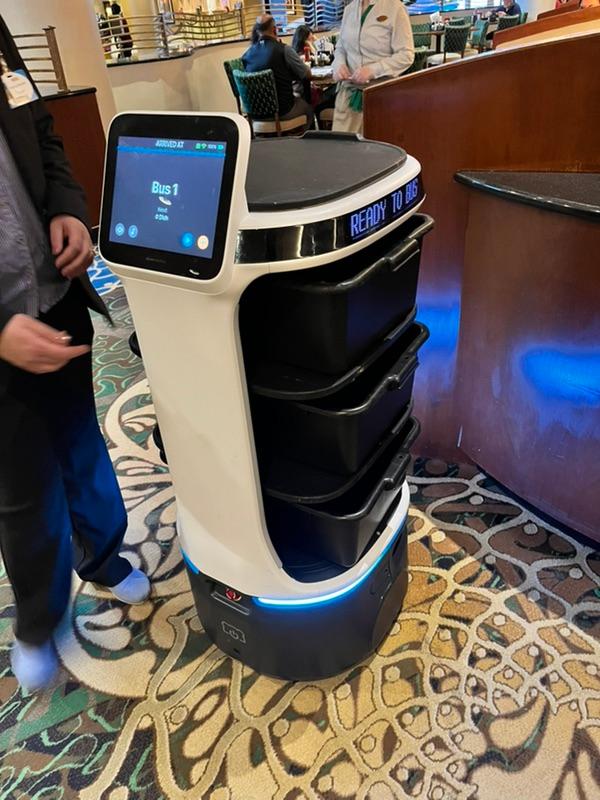
Surprise Photo at the End: A Computerized Busboy | |
Joe's Positive Post of the Week | |
Join the Smart Subscribers | |
If you are reading this on a social media platform, click below and you'll automatically receive a 'different' story every week on Wednesday. | |
|
The Roll Call of states and countries where readers reside: Arizona, California, Colorado, Connecticut, Delaware, Florida, Georgia, Hawaii, Illinois, Indiana, Iowa, Kansas, Kentucky, Louisiana, Maine, Massachusetts, Michigan, Mississippi, Missouri, Montana, New Hampshire, New Jersey, New Mexico, New York, North Carolina, North Dakota, Ohio, Pennsylvania, Puerto Rico, Rhode Island, South Carolina, South Dakota, Tennessee, Texas, Vermont, Virginia, Washington and Washington DC, Wisconsin plus Canada, Conch Republic, Australia and the United Kingdom.
| |
Refer a friend to Sign Up for the Wednesday Weblog | |
|
Ed Doherty
774-479-8831
www.ambroselanden.com
ed-doherty@outlook.com
Forgive any typos please.
| |
| | | |