Welcome to the March BABN Policy and Trade Update.


A significant development impacting bilateral trade and investment is the U.S. Supreme Court's ruling last month striking down the Trump administration's use of the International Emergency Economic Powers Act (IEEPA) to invoke reciprocal and country-specific tariffs. A new global tariff at 10% in response to the ruling was introduced shortly after, although the administration's announcement to increase the tariff to 15% begs important questions about how this applies to the UK given the existing 10% tariff agreed to under the Economic Prosperity Deal. BAB is monitoring developments and underscoring the importance of maintaining the positive momentum in the U.S.-UK economic relationship.


BAB was also pleased to announce a partnership with the Confederation of British Industry (CBI) aimed at promoting the U.S.-UK relationship and securing opportunities for business on both sides of the Atlantic. Through this partnership, the CBI and BAB will promote bilateral trade and investment while working with the UK and U.S. governments to support growth. At a time of heightened geopolitical unpredictability, working closely with international partners to create mutual benefits for businesses has never been more important.


In other news, the UK and the U.S. have resumed talks as part of the U.S.-UK Technology Prosperity Deal and the UK started its Electronic Travel Authorisation (ETA) scheme for travelers entering the UK.


See below for a breakdown of policy and trade headlines and our published works.


Follow BAB on X and LinkedIn

Headlines

Supreme Court Rules IEEPA Tariffs Unconstitutional

20 February 2026


Overview: The U.S. Supreme Court ruled that International Emergency Economic Powers Act (IEEPA) does not grant the President authority to impose tariffs. The decision prevents the administration from further using IEEPA to impose reciprocal and country-specific tariffs. In response to the ruling, President Trump signed a Proclamation imposing a global 10% tariff under Section 122 of the Trade Act of 1974 effective February 24, 2026 for a period of 150 days, with some goods exempted. The President has since proposed increasing the tariff to 15%, although this has yet to be implemented.


Implications: The Court's ruling and the President's imposition of a global 10% tariff, with the potential to be raised to 15%, raises important questions for countries who have agreed upon tariff rates with the United States, including the UK. Concerning the UK, it is unclear whether the existing 10% tariff rate agreed to under the Economic Prosperity Deal will stand despite signals from USTR that it intends to abide by existing trade agreements. Another open question is if UK exporters will be able to claim back IEEPA tariffs paid and if so, how this process would work. Finally, since Congress would need approve extending tariffs under Section 122 after 150 days, it remains an open question as to whether Congress would do so and if not, what action the administration may take in response.


Read more: See our statement on the Supreme Court's IEEPA ruling here.

Read more: See our statement on the announced global 15% tariff here.


UK Electronic Travel Authorisation Scheme (ETA) Enforced

25 February 2026


Overview: From February 25, 2026, the UK government will fully enforce its Electronic Travel Authorisation (ETA) scheme. This means that travelers who previously entered the UK without a visa must now obtain an ETA before they travel.


Implications: An ETA is advanced digital permission to travel to the UK. It is not entry clearance. ETA possession is mandatory for those travelling to the UK for the purpose of short-term visits who are not required to secure, pre-arrival, entry clearance for that purpose. Full enforcement of the ETA scheme from February 25, 2026 means that travelers who previously entered the UK to visit without needing to apply for a visa must now obtain an ETA before they do so. This includes nationals of European countries, the USA, Australia, and Canada. British or Irish nationals are exempted from the ETA scheme. 


You do not need an ETA if:

  • You are a British or Irish citizen
  • You have a valid visa for the UK (e.g. permission to live, work or study in the UK)
  • You have EU settled/pre-settled status or any other immigration status such as a BRP/BRC/indefinite leave to remain
  • Are transiting through certain UK airports without passing through UK border control (check with your airline)


Read more: See the full list of criteria on the UK GOV website here.

Read more: See our statement on the ETA scheme here.

Tech Prosperity Deal Nuclear Cooperation Resumes

December 2025


Overview: The U.S. and UK have restarted cooperation on the Tech Prosperity Deal (TPD) with a focus on nuclear cooperation. This follows the U.S. announcing a pause on implementing the TPD in December 2025 due to concerns over the UK's online safety rules, digital services tax, and food safety restrictions. We are pleased by this news and will monitor implementation of the agreement.


Policy Work

BAB Convenes Intellectual Property Working Group

24 February 2026


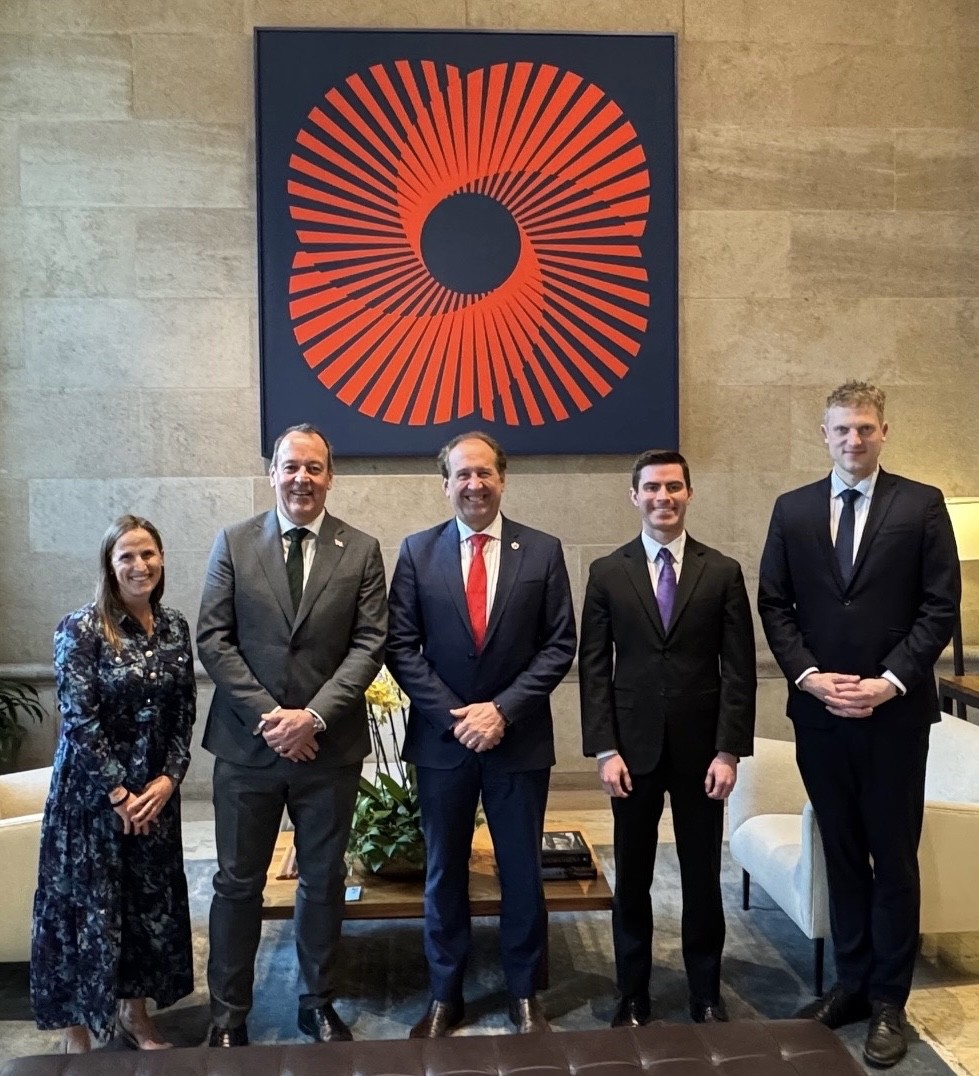
Overview: On February 24, 2026, BAB convened the latest meeting of the U.S.-UK IP Working Group in partnership with the U.S. Chamber of Commerce Global Innovation Policy Center in Washington, DC. Stakeholders from across BAB’s transatlantic network joined the discussion featuring keynote remarks from Adam Williams, CEO and Comptroller General of the UK Intellectual Property Office, and John A. Squires, Under Secretary of Commerce for Intellectual Property and Director of the U.S. Patent and Trademark Office. Opening remarks were delivered by Kelly Anderson, Vice President, International Policy at the Global Innovation Policy Center, with closing remarks by Daniel Hurley, Policy Manager at BAB. 


Topics of Discussion: The conversation covered recent UK and EU developments, including the EU Technology Transfer Block Exemption Regulation (TTBER) and UK Transfer Block Exemption Order (TTBEO), EU General Pharmaceutical Legislation, the UK courts’ application of the doctrine of plausibility in patent cases, post-Brexit IP priorities, and next steps following the UK’s consultations on Copyright and AI. Participants also discussed collaboration in multilateral organizations such as the World Intellectual Property Organization and the World Trade Organization, including advancing an affirmative IP agenda, the 2026 WIPO elections, and preparations for the WTO’s 14th Ministerial Conference. The meeting concluded with an exchange on third-country collaboration, identifying India, Peru, and South Africa as priority markets for coordinated U.S.-UK engagement. 


Read more: See our statement on the meeting here.

(L-R) Kelly Anderson; Adam Williams; John A. Squires; Daniel Hurley; Emanuel Adam

Thank you for reading this month's Policy and Trade Update. If you have any feedback or comments please contact us.


BAB participates in and offers policy and trade support to the BritishAmerican Business Network, a group of 18 independent trade organisations across North America and the U.K. If you would like to learn more about the network and its activities, please visit our website.


If you no longer wish to receive communications from BritishAmerican Business, please unsubscribe using the link below

Follow us online
LinkedIn  X  YouTube