BAMI Newsletter - August 2025


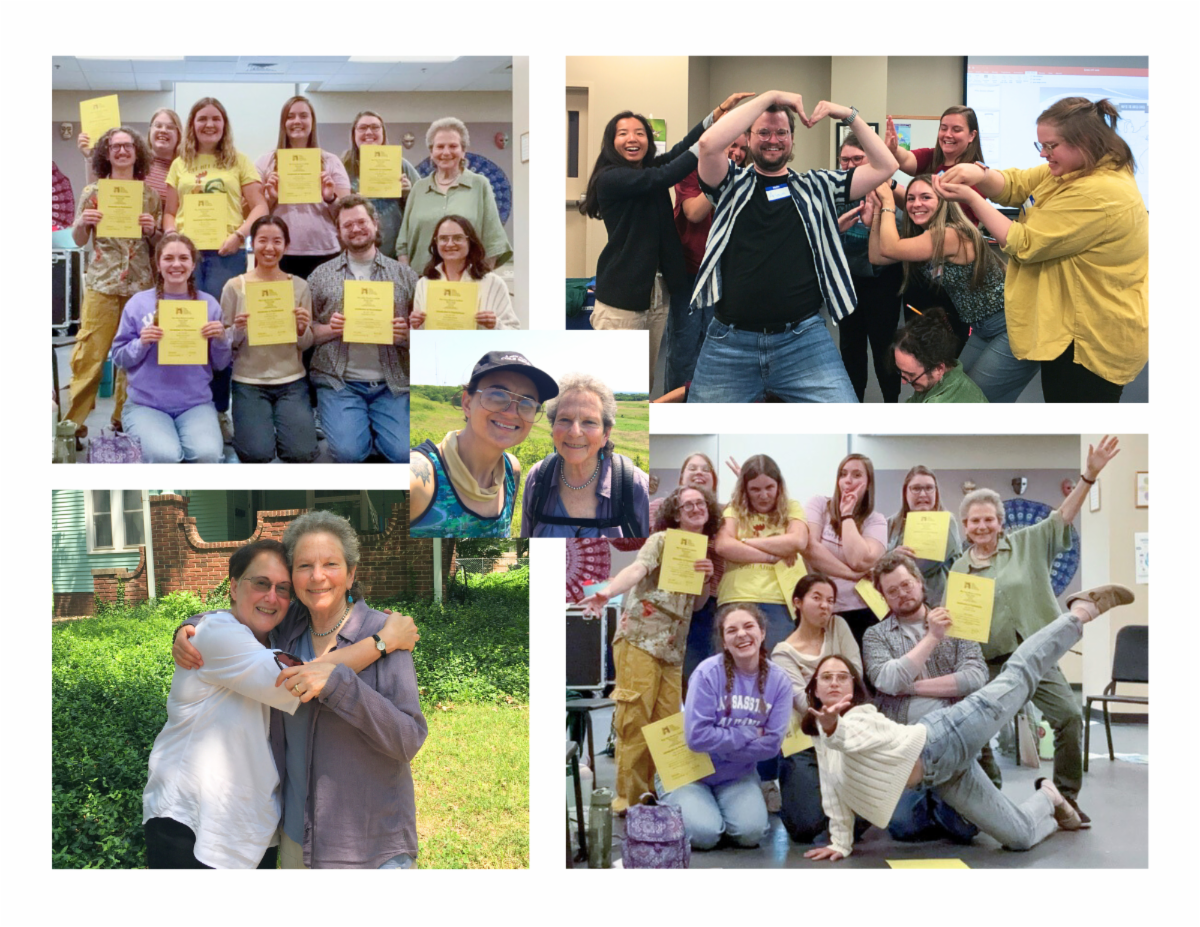
Highlights from my week-long Psychodrama Course at Kansas State University, in May. Sally Bailey, drama therapist extraordinaire (below left), retired the day after the class ended. I wish Sally a happy and fulfilling retirement!

You and I.

We meet as strangers, each carrying a mystery within us.

I cannot say who you are: I may never know you completely.

But I trust that you are a person in your own right, possessed of a beauty

and value that are the earth's richest treasures.

So I make this promise to you:

I will impose no identities upon you,

and invite you to become yourself without shame or fear.

I will hold open a space for you in the world 

And defend your right to fill it with an authentic vocation.

For as long as your search takes, you have my loyalty.

- Theodore Roszak, Quoted by Zerka Moreno


Greetings! 


Psychodrama provides the structure to share our authentic selves creatively in a supportive group setting. When we reveal our authentic self, we also come to see the authenticity that is in each of us. In a psychodrama, the protagonist takes the risk of showing all of who they are by putting their story on the stage and revealing their inner and outer life which can include trauma, joy, grief, hopes and dreams, regrets, mistakes, etc. All of the feelings, parts or roles and inner and outer world of the protagonist are welcomed. Zerka and JL Moreno taught that it is important to clear transferences and experience tele, a mutual authentic seeing of the other. Psychodrama groups provide the opportunity for this special experience of reveling in our authenticity.


Regardless of what emotion is being expressed, it is authenticity that connects us to something greater than ourselves, to the beauty that is in each of us. It is not a beauty of outer appearances, or of always feeling happy. It is the authenticity of being in human form, of recognizing that we are spiritual beings having a human experience, and accepting the many accompanying challenges. Acceptance brings joy, wonder, and sometimes humor. We can surrender with humility to our mistakes. Just as we love a child even when we correct their behavior, we learn to love ourselves and others recognizing that we are growing and evolving. It is remarkable that scientists are learning and confirming what poets, seekers, spiritual teachers and the Morenos have always known, that authenticity is our highest aspiration. 


I am hopeful that in psychodrama groups and communities, we can embrace Moreno’s principles of authenticity which are supported by the basic underpinnings of psychodrama including role reversal, spontaneity/creativity, encounter and tele. In psychodrama, as Roszak wrote, we invite you to become yourself without shame or fear and respectfully hold open a space for you in the world.


News and Upcoming Offerings 

I had the pleasure of teaching an introductory Psychodrama Course in the Theater/Drama Therapy Program at Kansas State University (KSU) in May. I always enjoy the slower pace of Manhattan, Kansas and working with the warm, playful, conscientious, and welcoming students. One student even took me on a walk in the prairie on my last morning! The students were very excited to learn psychodrama and discover how it differed and overlapped with the other forms of drama therapy they studied. 


I'm pleased to offer Psychodrama for Personal Growth and Professional Development on September 27-28 (plus a 2-hour online meeting September 25). This workshop is designed with an emphasis on personal growth. All levels of experience with psychodrama are welcome and encouraged to attend. For those new to psychodrama or to my work, this will be the perfect opportunity to experience a psychodrama weekend. If you are experienced with psychodrama, this workshop will provide an opportunity to do your personal work and deepen your knowledge of psychodrama. You can register here by completing a simple Google form, or scroll down for more details.


I am especially pleased to announce a new Psychodrama Training Cohort, October 2025 through April 2026. This will be an in-person closed cohort, which will meet for four weekends (approximately every other month). I am looking forward to the richness that comes from working deeply with a group over time. If you are interested in expanding your psychodrama skills and practicing within a committed cohort, I encourage you to join us. Contact Sylvia@imaginecenter.net for registration information. You can also scroll down for more details.


Blessings,

Sylvia

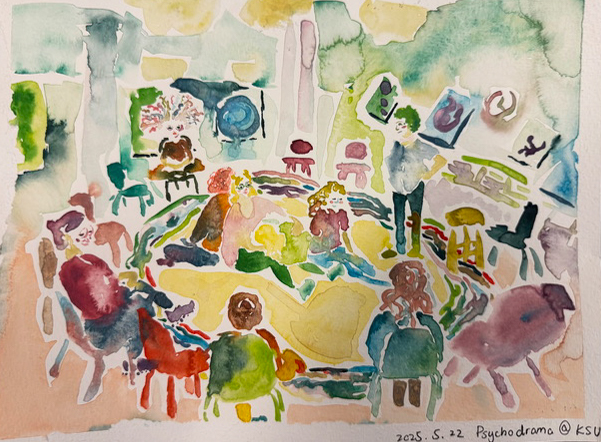
This painting, created at the Kansas State University Introduction to Psychodrama course by Keying Yang (attending from the Bay Area) captures Sylvia directing a Nurturing Parent-Inner Child Dialogue. 

Upcoming Events

Psychodrama for Personal Growth and

Professional Development


September 27-28, 2025 and Online September 25, 2025

Transform Your Personal and Professional Life with Psychodrama! 


Psychodrama is a creative and experiential approach that uses guided dramatic enactment (role-playing) to explore and gain insight into personal and interpersonal issues. Psychodrama allows participants to enact internal conflicts and external situations in a supportive setting, promoting emotional healing and personal empowerment. 

This workshop is designed for you if you would like a space to do your personal work in a caring and encouraging environment and/or are looking to incorporate innovative methods into your practice. If you are new to psychodrama or to my work, this will be the perfect opportunity to experience a psychodrama weekend. You will learn about or deepen your knowledge of psychodrama. All levels of experience with psychodrama are welcome and encouraged to attend.

Join us as we experience the power of psychodrama for personal growth and professional development and have a creative and meaningful experience along the way. 


Educational (Professional) Goal

Participants will learn psychodramatic methods to gain insight into personal and interpersonal issues. 


Learning Objectives

After the workshop participants will be able to:

  • List three parts and five instruments of psychodrama
  • Discuss the importance of the warm-up phase of psychodrama
  • Utilize mindful body awareness in embodying a role
  • Explain the benefit of role reversal with a supportive figure

Psychodrama Training Cohort 2025-2026

October 18-19, 2025, January 17-18, March 14-15

and April 25-26, 2026

It Looks Like Magic - But You Can Learn It! 

The Bay Area Moreno Institute is offering a Psychodrama Training Cohort, October 2025 through April 2026. This will be an in-person closed group, which will meet over four weekends (approximately every other month). This group provides in-depth training for people seeking to expand their knowledge of the theory and practice of psychodrama, sociometry and group psychotherapy. Whether you are interested in bringing action methods into your work, pursuing psychodrama certification, or seeking an in-depth experience of psychodrama, this training will support you in taking your next steps.  


The closed cohort training group creates a supportive, stimulating community of learners committed to personal and professional growth. The training group is a laboratory in which to develop spontaneity as a director, auxiliary, protagonist and group member. Special topics will be presented which might include sociometry, role development, spontaneity/creativity, playback theater, defenses and working with trauma. Trainees will have input into specific areas of study and numerous opportunities for directing. 


Participants develop their skills as auxiliary and director through leading warm-ups, practicing psychodramatic techniques and interventions, and by directing vignettes and short psychodramas. Advanced trainees may have the opportunity to direct a full drama. 


Through this training program you will: 

  • Experience the interplay of creativity and spontaneity and learn how to bring these concepts to life with individuals, couples and groups 
  • Learn how to judiciously and safely use improvisation, role play and other action-oriented techniques to support behavior change, healing and wellness
  • Experience how psychodrama can be used for containment and expansion 
  • Experience activities that support healthy connections in groups
  • Receive peer encouragement and coaching as you apply psychodrama methods to your work
  • Experience inspiration, compassion and support from a group of diverse and dedicated professionals 


Who should attend? Training is open to professionals and students in the fields of mental health, law, substance abuse and recovery, creative arts therapies, religion, human services, personnel management, group facilitation and education, as well as those wanting to further their knowledge of psychodrama. 


Continuing Education Information

Educational Goal 

Students will learn the philosophy, history and methodology or Psychodrama, Sociometry and Group Psychotherapy as created by JL and Zerka Moreno.  


Learning Objectives

After the training group sessions participants will be able to: 

  • List the three phases of every psychodrama
  • Identify the five elements of psychodrama
  • Use the technique of doubling in your work
  • Discuss the difference between a supportive and containing double
  • Demonstrate the use of role reversal to access strengths  
  • List three reasons to role reverse
  • Explain why spontaneity and creativity are important in psychodrama
  • Discuss two key philosophical underpinnings of psychodrama
  • Demonstrate at least one body-based somatic method to integrate into your work
  • Explain why all of psychodrama has been referred to as "spontaneity training" 
  • Describe how sociometric exercises create cohesion and safety in a group 
  • Apply sociometric methods to your work
  • Create a warm-up 
  • Discuss the importance of sharing
  • Demonstrate directing an action vignette

What is Psychodrama and Who Should Attend?

What is Psychodrama? Psychodrama is an experiential method of exploring our private and public worlds in a multidimensional, creative way. It helps you to safely express feelings, develop insights and practice new, desired behaviors. Psychodrama meets you where you are in the present and assists you in contacting and developing the best that is within yourself. As a natural outgrowth, people experience a deeper connection and appreciation of others. Psychodrama emphasizes creativity and spontaneity rather than illness and pathology.


Who should attend? Bay Area Moreno Institute workshops are appropriate for those new to psychodrama, as well as experienced practitioners; anyone wanting to further their knowledge of psychodrama; and those seeking personal growth. No acting skills are needed and participation is at your level of comfort. Shy people are welcome.

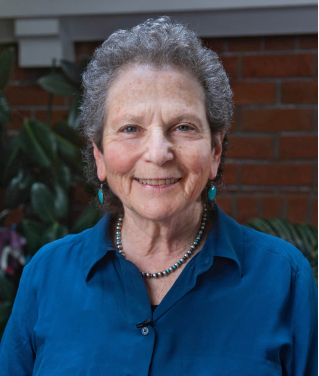
Sylvia Israel Board Certified Trainer, Educator and Practitioner of Psychodrama and Registered Drama Therapist/Board Certified Trainer, is adjunct faculty at CA Institute of Integral Studies (CIIS) and Kansas State University. Sylvia is cofounder of Bay Area Moreno Institute, IMAGINE! Center for Creativity & Healing and Bay Area Playback Theatre and is a past Board Member and Officer of the American Board of Examiners of Psychodrama. She is also a Certified Trainer in the Therapeutic Spiral Model of working with trauma, and a national and international presenter and trainer. Sylvia also uses psychodrama to help civil and criminal lawyers with trial preparation. She enjoys supporting clients in practicing self-compassion, awakening to their spontaneity and creativity, and living more fully in the present moment. Her work blends verbal and somatic therapy with drama, sandtray and other expressive arts. Sylvia has maintained a private practice in the San Francisco Bay Area working with individuals, couples, families and groups for 30 years.

About Bay Area Moreno Institute

THE BAY AREA MORENO INSTITUTE for Psychodrama and Applied Expressive Arts and Action Methods (BAMI) is dedicated to promoting the training, practice and development of Psychodrama, its offspring action methods & philosophies, and related fields in the greater San Francisco Bay Area.

www.bayareamorenoinstitute.com

www.Imaginecenter.net

sylvia@imaginecenter.net 

(415) 454-7308