|
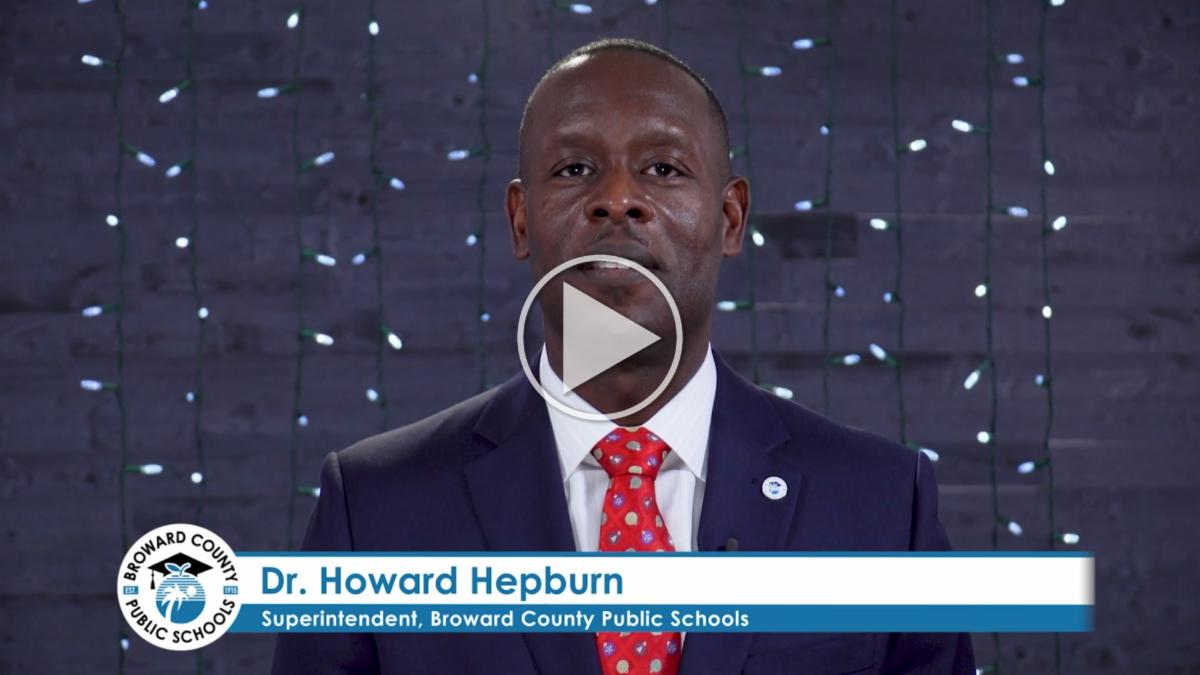
Superintendent Dr. Howard Hepburn shares a heartfelt message of gratitude for our students, parents and staff. In his Winter Break message, he reflects on our shared accomplishments and looks ahead to a successful new year.
He also highlights mental health and wellness resources available to our students and families at browardschools.com/mentalhealthservices as well as valuable resources and academic opportunities to support every student’s growth.
Watch video message
| | | |
THE WHITE HOUSE
Over the last month, the White House’s education agenda has been defined by the administration’s continued push to decentralize federal education authority, including backing major interagency agreements designed to move K-12 program administration out of the Department of Education and into agencies like the Department of Labor. This reflects the broader presidential priority of reducing the federal role in education and empowering states.
On December 11, the White House held its third AI Education Task Force meeting—led by OSTP and attended by cabinet officials, educators, and parents—to explore AI integration in K–12 classrooms. The Presidential AI Challenge has already attracted more than 5,000 students and 1,000 educators nationwide.
THE PRESIDENT
The President has advanced his vision to reshape the federal role in education, with the Department of Education announcing partnerships with multiple federal agencies to reassign K-12 program administration toward the Department of Labor and others. This move aligns with his pledge to streamline federal bureaucracy and return authority to states.
The President’s FY 2026 budget proposal seeks to trim the Department of Education by roughly $12 billion (15%), while shifting Title I and IDEA into standalone block grants. It consolidates 18 smaller K–12 grant programs into a $2 billion “K–12 Simplified Funding Program,” resulting in a net cut of about $4.5 billion. The plan eliminates English-language acquisition grants ($890 million), teacher professional development, after‑school programs, and Equity Assistance Centers, while boosts charter school funding by $60 million.
U.S. DEPARTMENT OF EDUCATION
In mid‑December, ED awarded $256 million in Education Innovation and Research grants to boost literacy, distributed over $208 million in mental‑health service grants, completed negotiated rulemaking for the new Workforce Pell Grant program, and launched the Presidential 1776 Award to celebrate civic knowledge.
U.S. SENATE
In the Senate, education policy developments include bipartisan actions on child nutrition — notably final passage of the Whole Milk for Healthy Kids Act, returning whole and 2% milk to school menus. Senate appropriators have also released FY26 funding proposals that would maintain level funding for key K-12 programs like Full-Service Community Schools and 21st Century Community Learning Centers as part of broader funding negotiations.
Meanwhile, it continues reviewing major legislation, including the sweeping States’ Education Reclamation Act, which proposes to dismantle the Department of Education and shift K‑12 funding to states.
U.S. HOUSE OF REPRESENTATIVES
In the House, lawmakers have taken legislative action affecting schools, including passing the Whole Milk for Healthy Kids Act following Senate approval. The House Energy & Commerce Subcommittee advanced 19 bills on child online privacy—most notably COPPA 2.0 and KOSA—to strengthen protections for students online.
On broader federal education funding policy, House spending proposals differ sharply from the Senate on K-12 and related youth program funding, proposing elimination of some discretionary programs — setting up potential conference negotiations as FY26 appropriations continue.
| | FLORIDA COMMISSIONER OF EDUCATION MIDYEAR MESSAGE | | |
Anastasios Kamoutsas, Florida Commissioner of Education, published a letter that underscores the importance of strong collaboration between teachers and families in supporting student success at the midyear point.
The Commissioner encourages families to use winter break to reinforce learning, resiliency, and goal-setting at home, and emphasizes that shared responsibility between schools and parents helps students thrive academically and personally.
The letter also highlights state-provided parent resources aligned to the B.E.S.T. Standards in Math, English Language Arts, and Resiliency, and expresses appreciation for educators and families while looking ahead to a successful second half of the school year.
Read the Commissioner's Midyear letter
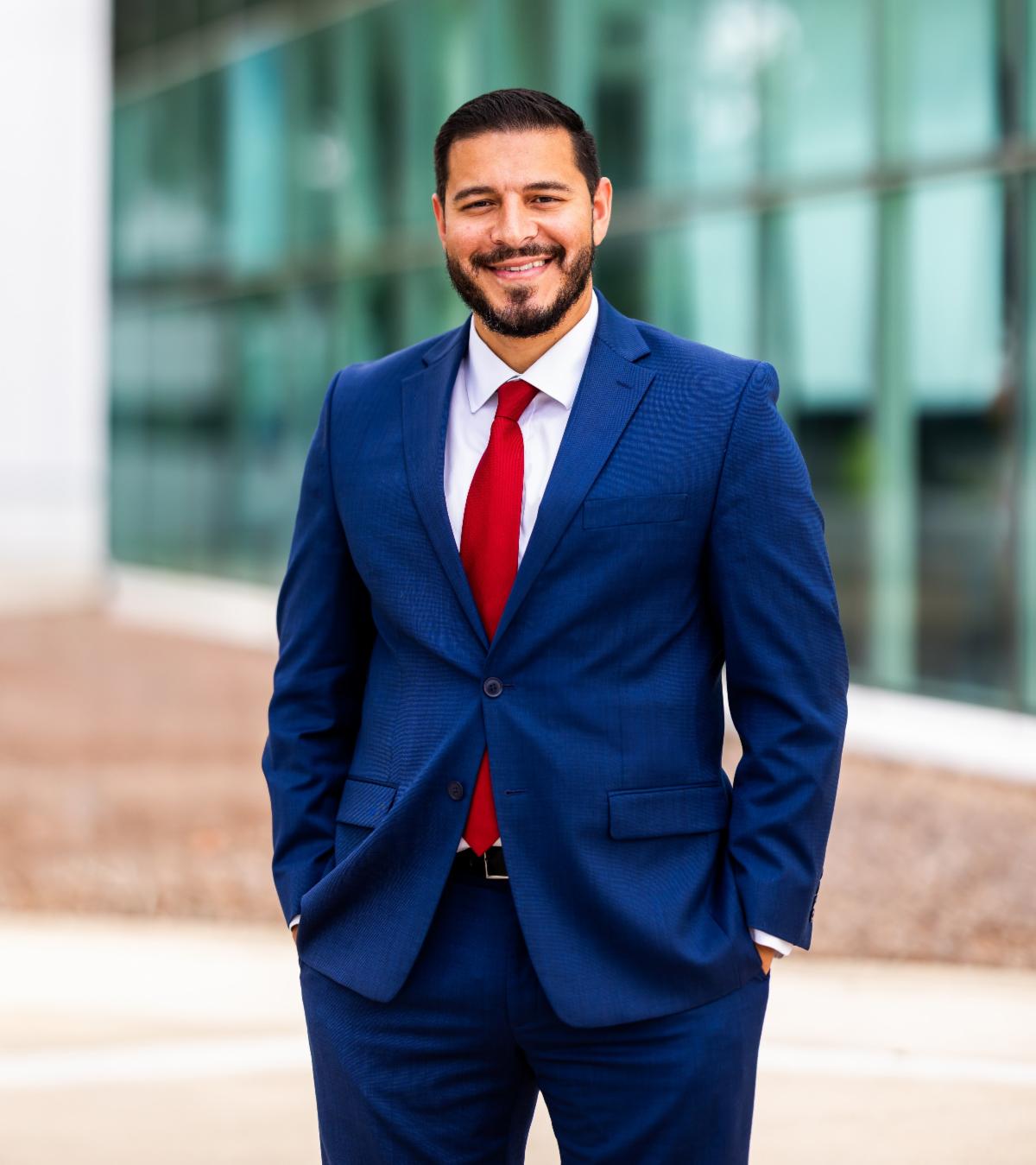
Commissioner Kamoutsas Visits BCPS (August 2025)
| | BCPS PRIORITIES & STATE BILLS TO WATCH | | STRENGTHENING DISTRICT OPERATIONS AND CAPITAL RESOURCES | | |
We are advocating for legislation that ensures fair compensation for charter use of district-owned facilities; preserves School Board authority to assess rental and leasing fees; supports responsible stewardship of public assets; and maintains local discretion in granting rights of refusal and managing the disposition of surplus properties—while also promoting fairness, accountability, and consistency across funding models for all entities receiving public dollars (traditional public, home school, public charter, and private schools) so each has a fair and competitive opportunity.
We support legislation to expand industry certification opportunities for students, including, but not limited to, leadership and soft skill coursework.
| | |
BILLS TO WATCH:
Proposed measures aim to improve governance, efficiency, and resource management through term limits for school board members, modernization of public records processes, and regulation of political activities on school grounds. Additional initiatives streamline administrative requirements, enhance transparency, reduce costs, and update facility use and charter school land agreements to support effective capital planning.
HB 27: Term Limits for Members of Boards of County Commissioners and District School Boards by Holcomb
SB 44: Electronic Payment of Public Records Fees by Rouson
HB 49: Political Activities on School Grounds by Gossett-Seidman
HB 105: Local Government Enforcement Actions by Brackett
HB 247 / SB 248: Public Records/Municipal Clerks by Campbell / Rodriguez
SB 320: Administrative Efficiency in Public Schools by Simon
SB 332: Public Meetings by Bradley
SB 380: Legal Notices by Trumbull
SB 424: Educational Facilities by Rouson
HB 437 / SB 770: Public Records by Andrade / Rouson
SB 824: Charter Schools by Truenow
| | | ACADEMIC EXCELLENCE FOR ALL STUDENTS | | |
We support the removal of statutory limitations that tie Title I eligibility thresholds to prior-year district levels or the statewide percentage of economically disadvantaged students, to allow local flexibility in expanding support to more schools in need.
| | |
BILLS TO WATCH:
Legislation focuses on improving instruction, equity, and student opportunities. Key provisions strengthen IEPs, expand language access for assessments, require cursive instruction, and enhance autism training. Bills also promote inclusion through anti-discrimination protections, career planning resources, and updates to extracurricular and scholarship programs, while broader policy changes support diversity and educator preparation.
SB 72 / HB 615: Individual Education Plans by Harrell / Tendrich
HB 127 / SB 444: Required Instruction in Cursive Writing by Overdorf / Grall
SB 178: Athletics in Public K-12 Schools by Jones
SB 206 / HB 717: Students with Autism Spectrum Disorder by Harrell / Maggard
HB 235 / SB 252: Prohibited Discrimination Based on Hairstyle by Driskell / Jones
HB 305 / SB 342: Statewide, Standardized Assessments by Harris / Arrington
HB 371 / SB 420: Patriotic Displays in Classrooms by Snyder / Burgess
HB 409 / SB 464: Observance of Veterans' Day by K-12 Schools by Giallombardo / Ávila
HB 411: Terminology Associated with Autism by Maggard
HB 415 / SB 486: Discrimination in Education by Tendrich / Polsky
HB 417 / SB 448: Career and Academic Planning For Middle and High School Students by Tant / Arrington
HB 453 / SB 556: Requirements for Standard High School Diploma by Gossett-Seidman / Berman
HB 461 / SB 564: Volunteering / Student Volunteers at Polling Locations by Michael / Yarborough
SB 538: Physical Education by Simon
HB 579 / SB 690: Family Empowerment Scholarship Program by Bartleman / Jones
HB 583: Protection of Religious Expression in Public Schools by Tramont
HB 677 / SB 790: Education by Nixon / Davis
HB 731: Interscholastic or Intrascholastic Extracurricular Activities by Abbott
| | | RETAINING A HIGH-QUALITY INSTRUCTIONAL WORKFORCE | | |
We support legislation that ensures competitive compensation and performance-based bonuses for the instructional workforce, and promotes long-term recruitment and retention of high-quality educators, while also establishing paid family leave benefits for school district employees to strengthen recruitment and retention, promote employee well-being, and provide greater stability and continuity in the classroom for students.
| | |
BILLS TO WATCH:
Measures target teacher recruitment, retention, and professional development by expanding training and mentoring programs, revising certification rules, and easing requirements for school counselors. Additional provisions address salary schedules, funding for pay increases, recognition of advanced degrees, and apprenticeship eligibility, alongside workplace protections and administrative efficiencies.
HB 23: Educator Certifications and Training by Daley
SB 136: Protections for Public Employees who use Medical Marijuana as Qualified Patients by Polsky
HB 147 / SB 430: Oaths of Classroom Teachers / School Personnel by Fabricio / Yarborough
HB 345: Funding for the Voluntary Prekindergarten Education Program by Edmonds
SB 572 / HB 603: Ethics for Public Employees by Harrell / López
SB 630: Administrative Efficiency in Public Schools by Simon
HB 561: Educator Certifications by Gerwig
HB 727: Instructional Personnel and School Administrator Salaries by Edmonds
HB 753: Certified School Counselors by Hunschofsky
| | | INVESTING IN PUBLIC EDUCATION: BUDGET, FINANCE, AND FEFP PRIORITIES | | |
We support legislation that addresses the District’s structural funding gap—reflected in FY 2025–26 revenues of $4.676 billion against expenditures of $5.399 billion, resulting in a $722 million shortfall requiring reserves and transfers—while increasing overall education funding to meet or exceed the national per-pupil average and minimizing the impact of property tax reform.
Further, we support dedicated funding to ensure a full-time licensed nurse in every school, and advocate for maintaining the Required Local Effort rate to provide stable and sufficient local funding for BCPS, protect FEFP enhancements, and preserve the Education Enrollment Stabilization Program to prevent proration of district funds.
| | |
BILLS TO WATCH:
Bills seek to secure sustainable funding and flexibility by updating virtual school governance, adjusting millage rates, revising property tax exemptions, expanding scholarship programs, and increasing VPK allocations—strengthening financial stability and resource planning.
SB 124 / HB 129: Florida Virtual School by Rodriguez / Smith
HB 149: Maximum Millage Rates for the 2027-2028 Fiscal Year by Chamberlin
HB 201, HB 203, HB 205, HB 207, HB 209, HB 211, HB 213 (Various Sponsors) Various bills proposing changes to property tax and homestead exemptions, including phased-out elimination, exemptions for seniors, property insurance relief, and modifications to assessment increases.
SB 318: Educational Scholarship Programs by Gaetz
HB 345 / SB 512: Funding for the Voluntary Prekindergarten Education Program by Edmonds / Osgood
| | | COMMITMENT TO TECHNOLOGY, SCHOOL SAFETY, SECURITY, AND MENTAL HEALTH | |
We are advocating for increased funding and resources for the Safe Schools and Mental Health Assistance Allocations to strengthen preventive safety measures, enhance security protocols, sustain mandated security personnel in every school, support training for the Guardian program, and cover costs associated with School Resource Officers.
We support legislation permitting any funds allocated under SB 7026, the Marjory Stoneman Douglas High School Public Safety Act, that were not used for the replacement of Building 12 to be redirected toward the construction of an off-site memorial.
In addition, we support legislation that strengthens the protection of student data—including governance of artificial intelligence in schools, safeguards for minors, requirements for age verification and transparency, content filtering, and regulations on the collection, storage, and use of data by technology companies—and provide clear guidance on the use of audio-visual recording in self-contained ESE classrooms, allowing for an annual parent notification, while ensuring student privacy and alignment with safety measures.
| | |
BILLS TO WATCH:
Legislation emphasizes stronger safety protocols, emergency alerts, and cybersecurity protections. Measures expand parental rights, require seizure and elopement plans, mandate safety equipment and mass-casualty training, update immunization rules, and enhance digital security—ensuring safer schools and better preparedness.
SB 166 / HB 173: Parental Rights by Grall / Kendall
SB 186: Student Health and Safety by García
HB 283 / SB 498: School Zone and Pedestrian Safety by Alvarez, J. / Rodriguez
HB 321 / SB 406: Carrying Weapons and Firearms by Hunschofsky / Polsky
HB 389: Smoking in Public Places by Andrade
HB 423 / SB 494: Student Elopement by Eskamani / Arrington
SB 510: Educator Certifications and Training by Jones
SB 576: Local Government Cyber Security by Harrell
SB 626: School Attendance Immunizations by Smith
SB 671: School Safety Equipment by Blanco
HB 715 / SB 814: School and Child Care Facility Emergency Alerts / Emergency Alerts by Young / Jones
HB 757 / SB 896: School Safety by Salzman / Gaetz
| | | Governor Ron DeSantis’ proposed FY 2026–27 budget raises statewide K–12 and per-student funding. However, while Broward County Public Schools sees increased investments in the Base Student Allocation, teacher salaries, school safety, mental health services, and early learning, these gains are outweighed by declining district enrollment and rapid growth in state-funded scholarships, resulting in a net reduction in FEFP district funding. | | |
FINANCIAL IMPACTS
Florida Education Finance Program (FEFP)
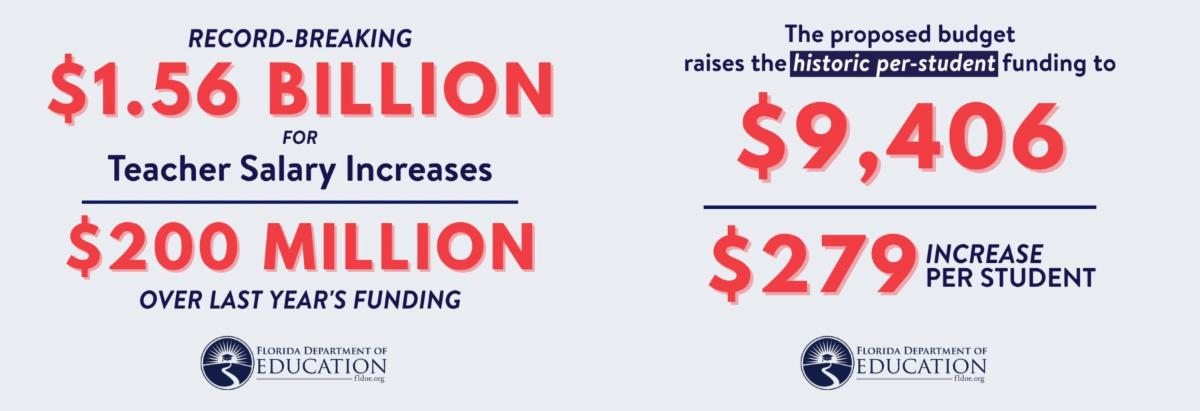
- Per-Student Funding: Statewide funding reaches a record $9,406 per student, an increase of $279 per student over FY 2025–26.
- Base Student Allocation (BSA): Increased by $100, benefiting all districts but diluted for BCPS due to enrollment loss.
- Total FEFP (Statewide): $30.6 billion for K-12 public education, including scholarship students.
Teacher & Instructional Personnel
- Salary Funding: $1.56 billion statewide for teacher and instructional staff pay increases (up $200 million year-over-year).
- Impact on BCPS: Provides resources for raises, but does not fully offset staffing pressures tied to declining enrollment.
School Safety & Mental Health
- Safe Schools Allocation: Increased to $300 million statewide (+$10 million).
- Mental Health Assistance: Increased to $190 million statewide (+$10 million).
- Guardian Program Expansion: Sheriffs required to assist districts and charters with guardian training, with local cost responsibilities remaining.
| | |
EARLY LEARNING & READINESS
- School Readiness Program:
$1.1 billion statewide; Broward receives higher reimbursement rates than many counties:
-
Infant: $51.38
-
Toddler: $42.06
-
3-Year-Old: $39.00
-
4-Year-Old: $38.00
-
School Age: $22.37
$483.4 million statewide, supporting approximately 145,000 children.
| | |
SCHOOL CHOICE & SCHOLARSHIPS
-
Family Empowerment Scholarship Expansion: Scholarship FTE grows 11.15% statewide, with continued statutory changes tightening withdrawal reporting and FTE reconciliation.
-
Funding Cap Protection: Scholarships cannot exceed 99% of a district’s FEFP share, but Broward remains close to this threshold due to scale.
SCHOOL RECOGNITION PROGRAM CHANGES
-
Restricted Use of Bonuses: School recognition funds are limited to non-recurring bonuses for instructional personnel only, reducing flexibility for school-based spending decisions.
BROADER FISCAL CONTEXT
-
Total State Budget: $117.4 billion
-
Reserves: $16.75 billion
-
Debt Reduction: $250 million recurring accelerated paydown
RESOURCES
Press Release: Governor Ron DeSantis Announces the Floridians First 2026-2027 Budget
One-Pager
Budget Highlights / Overview, Debt Reduction, and Reserves
| | |
Broward County Public Schools, Department of Legislative Affairs / Office of Governmental Affairs
Phone: (754) 321-2195
| |  | | | | |