|
BHIPP Bulletin
Volume 11, Issue 7
January 2026
| | |
Medication Management for ADHD with
Co-occurring Conditions
| | |
This month's BHIPP Bulletin is a contribution from
Rheanna Platt, MD, Associate Professor in the Department of Psychiatry and Behavioral Sciences at Johns Hopkins University School of Medicine and BHIPP Consultant.
| | |
It is estimated that more than half of youth diagnosed with ADHD meet criteria for another psychiatric or developmental disorder. In our October 2022 BHIPP Bulletin, we reviewed the frequency of comorbidity with ADHD along with approaches to assessment. In this newsletter, we will review principles of medication management for ADHD with co-occurring conditions. A number of these principles draw from the Society for Developmental and Behavioral Pediatrics’ 2020 Clinical Practice Guidelines for the Assessment and Treatment of Children and Adolescents with Complex Attention Deficit/Hyperactivity Disorder (with complexity defined either by age (e.g., presentation at <4 years or >12 years) or the presence of coexisting conditions, moderate to severe functional impairment, diagnostic uncertainty, or inadequate response to treatment).1
As an overall guiding approach (regardless of what the specific comorbid condition is), the Society of Developmental and Behavioral Pediatrics Clinical Practice Guideline emphasizes addressing the most impairing condition first and using a shared decision-making framework in identifying the most impairing condition. If treatment of the most concerning condition is not sufficient to address the impairment caused by the additional condition, the guideline recommends adding an evidence-based intervention for that condition (ideally/if possible, starting with psychosocial interventions to avoid polypharmacy). Another factor to consider is the time course of the conditions. For example, a patient with ADHD may develop demoralization and then depression related to challenges experienced in school; in this case, treatment of ADHD may alleviate some symptoms of depression. Finally, it is important to keep in mind that the focus of the treatment and/or the most impairing condition may change over time.
| | |
With regards to medication treatment of ADHD comorbid with specific disorders:
-
For ADHD and comorbid internalizing disorders (e.g., anxiety, depression): evidence from the Multimodal Treatment of Children with ADHD Trial (MTA Trial) suggested that psychosocial treatments for ADHD can improve some symptoms of internalizing disorders. With respect to medication treatment, while atomoxetine (a selective norepinephrine reuptake inhibitor (SNRI)) might be considered for patients with comorbid ADHD and anxiety symptoms, stimulants remain first-line, are typically not associated with worsening of internalizing symptoms, and in fact were found to improve symptoms of anxiety in a 2015 meta-analysis.2
-
When combining SSRIs with stimulant medications for comorbid ADHD and depression, there is a theoretical increased risk for serotonin syndrome. However, recent large cohort studies using medication claims data from both pediatric and adult populations did not find differences in adverse effects between those taking methylphenidate alone compared to those taking a combination of methylphenidate and SSRIs.3,4 Similar cohort/real-world studies have not been conducted with medications from the amphetamine class.
-
For ADHD and comorbid tic disorders: when tic disorder symptoms are more impairing, in addition to behavioral treatments (which are first-line in most cases), clinicians might consider starting with an alpha agonist (e.g. clonidine or guanfacine). If ADHD symptoms are more impairing, first-line treatment would be stimulants (which have not been found to worsen or precipitate tics in meta-analyses).5
-
For ADHD and comorbid substance use disorders: it is important to note that ADHD is a risk factor for development of substance use disorders (SUD). It follows that some studies find an association between stimulant treatment for ADHD and reduced risk for later development of SUD. 6,7 However, it is recommended that medications with lower abuse liability (e.g., extended-release medications, prodrugs, transdermal formulations) be considered for those with comorbid SUD.
-
For ADHD with comorbid disruptive behavior disorder(s): the combination of stimulants and behavioral parent training is recommended prior to consideration of other medications.
-
For ADHD with comorbid autism spectrum disorders (ASD): methylphenidate is first line medication treatment for ADHD symptoms (in addition to behavioral treatments), with nonstimulant medications (e.g., alpha agonists, SNRIs) having less evidence. Importantly, the effect size for medication treatments for ADHD symptoms among those with ASD is lower than those without neurodevelopmental disorders, and adverse effects may be more common.
| | |
As always, if you have questions about the behavioral health needs of your patients, we encourage you to call the BHIPP consultation line at
855-MD-BHIPP (632-4477), open 9am-5pm Monday-Friday, for resource/referral networking or consultation support.
We will keep you informed about all our services and training events through our website (www.mdbhipp.org) and monthly e-newsletters. Additionally, BHIPP is on LinkedIn and Facebook. We invite you to follow us there to stay up-to-date on upcoming training events, pediatric mental health research, and resources for providers, families and children.
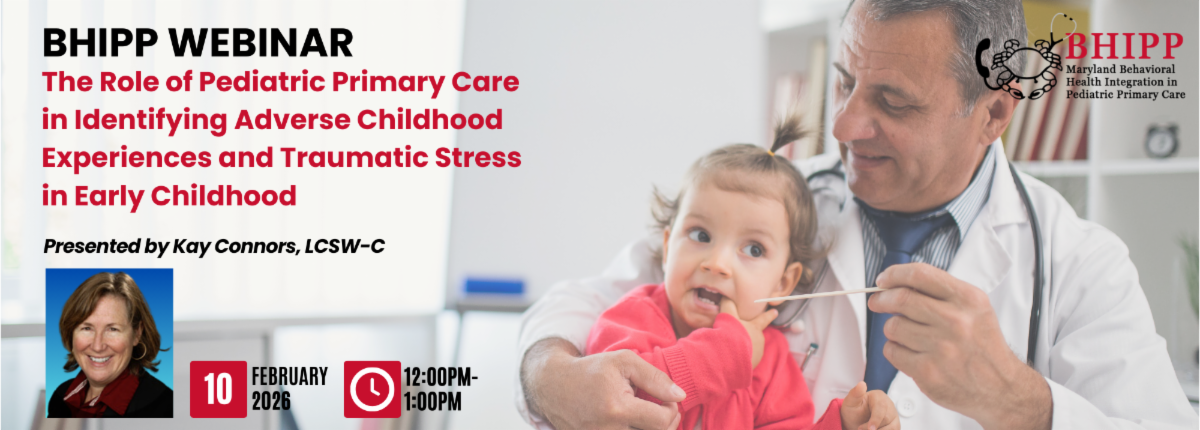
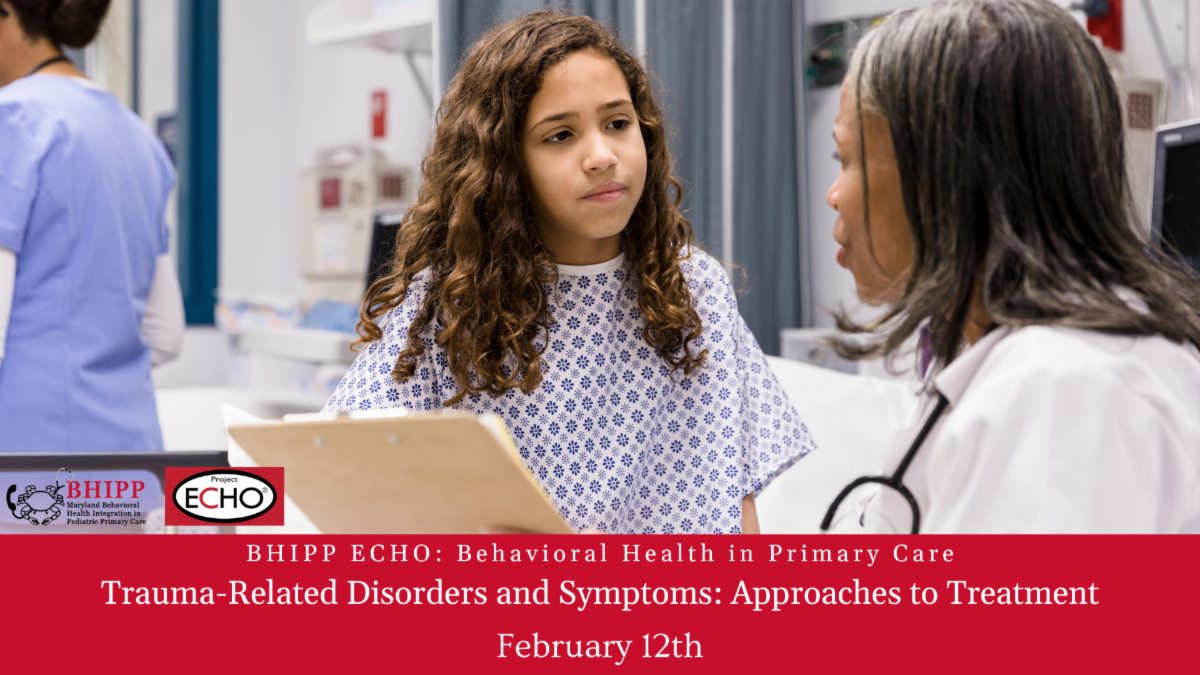
| | There is still time to sign up for tomorrow's BHIPP Webinar! | | Register for the next BHIPP Webinar on January 28th at 12:00pm! BHIPP Webinars are a series of interactive, web-based learning sessions that are a virtual space for pediatric primary care, emergency medicine, and behavioral health providers to connect, learn and share about strategies, practices and resources to promote mental health and resilience among children and families as well as providers. Free CME and CEU credit is available for participation! | | Register for the BHIPP ECHO PMHNP Series! | | Register for the new BHIPP PMHNP ECHO series! The first session will be held on February 3rd from 11:00am-12:00pm. Join our multidisciplinary team of child behavioral health experts every month between October 2025 and May 2026 for virtual case-based learning and didactic presentations. This series is designed for Maryland Psychiatric-Mental Health Nurse Practitioners (PMHNPs) who want to deepen their knowledge of child and adolescent mental health. | | Sign up for an upcoming BHIPP Webinar! | | Register for an upcoming BHIPP Webinar on February 10th at 12:00pm! BHIPP Webinars are a series of interactive, web-based learning sessions that are a virtual space for pediatric primary care, emergency medicine, and behavioral health providers to connect, learn and share about strategies, practices and resources to promote mental health and resilience among children and families as well as providers. Free CME and CEU credit is available for participation! | | Join the BHIPP ECHO Series for Pediatric Primary Care Providers! | | Register for the BHIPP ECHO Series for Pediatric Primary Care Providers! The first session will be held on February12th from 12:00-1:00pm. Join our multidisciplinary team of child behavioral health experts bimonthly from October 2025 and May 2026 for virtual case-based learning and didactic presentations. Free CEU, CME, and ABP MOC Part 2 credits are available for participation. | | |
BHIPP is supported by funding from the Maryland Department of Health, Behavioral Health Administration and operates as a collaboration between the University of Maryland School of Medicine, the Johns Hopkins University School of Medicine, and Salisbury University.
BHIPP and this newsletter are also supported by the Health Resources and Services Administration (HRSA) of the U.S. Department of Health and Human Services (HHS) as part of an award totaling $1,379,327 with approximately 20% financed by non-governmental sources. The contents of this newsletter are those of the author(s) and do not necessarily represent the official views of, nor an endorsement, by HRSA, HHS or the U.S. Government. For more information, visit www.hrsa.gov.
Copyright © 2021 Maryland Behavioral Health Integration in Pediatric Primary Care (BHIPP), All rights reserved.
| | | | |