BHIPP Bulletin

Volume 11, Issue 4

October 2025

Obsessive-Compulsive Disorder in Children and Adolescents

This month's BHIPP Bulletin is a contribution from Grace McIlmoyle, MPH BHIPP Outreach & Training Coordinator.

In honor of Obsessive-Compulsive Disorder (OCD) Awareness Month, BHIPP has gathered information and resources about recognizing symptoms of OCD in children and adolescents.


OCD symptoms can begin either between the ages of 8 –12 years old, or in the years between late teens to early adulthood.1 Symptoms of OCD among children and adolescents include obsessions, which are reoccurring images, thoughts or urges that are unwanted and feel intrusive.1 Examples of obsessions include worries about germs or getting sick, a need for everything to be “just right” or in a specific order, and worrying about causing harm to oneself or others .1 Other symptoms of OCD include compulsions, which are behaviors that a child or adolescent may engage in to relieve distress caused by their obsessions. The child may feel that they must engage in these behaviors to alleviate distress or prevent a feared outcome. Examples of compulsions include excessive washing or cleaning, repeating actions until they are “just right”, and frequent apologizing/confessing.1 The symptoms of OCD can interfere with a child’s daily activities such as at school, in their social life, or in self-care.1 Evidence-based treatment for OCD includes cognitive behavioral therapy and exposure and response prevention therapy.2 Pediatric primary care providers can support their patients with OCD by: 

  • Providing psychoeducation to increase knowledge about OCD and recognition of signs and symptoms of OCD
  • Assisting patients and families who have experienced difficulties in locating specialized support or resources to address their OCD symptoms
  • Discussing the potential role of pharmacological treatments to address OCD symptoms; Call BHIPP for a consultation


Resources:


1. Obsessive-Compulsive Disorder in Children


2. Obsessive-Compulsive Disorder (OCD) in Children and Teens


3. What is Obsessive-Compulsive Disorder in Children?


4. OCD in Toddlers and Children: Signs, Causes, and How to Help


5. Johns Hopkins University Center for OCD, Anxiety, and Related Disorders for Children (COACH)


6. Treatments for OCD


7. International OCD Foundation

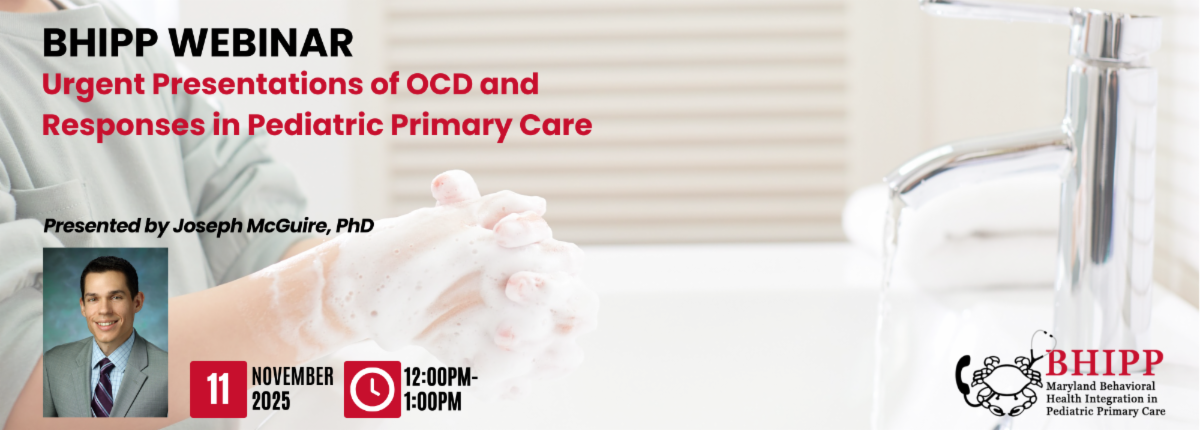
BHIPP is holding a webinar on November 11th focusing on "Urgent Presentations of OCD and Responses in Pediatric Primary Care" presented by Dr. Joseph McGuire. See registration details below!


As always, if you have questions about the behavioral health needs of your patients, we encourage you to call the BHIPP consultation line at 

855-MD-BHIPP (632-4477), open 9am-5pm Monday-Friday, for resource/referral networking or consultation support.


We will keep you informed about all our services and training events through our website (www.mdbhipp.org) and monthly e-newsletters. Additionally, BHIPP is on LinkedIn and Facebook. We invite you to follow us there to stay up-to-date on upcoming training events, pediatric mental health research, and resources for providers, families and children.


References:


1. Signs and Symptoms of Pediatric OCD. International OCD Foundation. Accessed October 20, 2025. https://kids.iocdf.org/professionals/md/pediatric-ocd/


2. Treatment. International OCD Foundation. Accessed October 20, 2025. https://kids.iocdf.org/professionals/md/treatment/

BHIPP Announcements

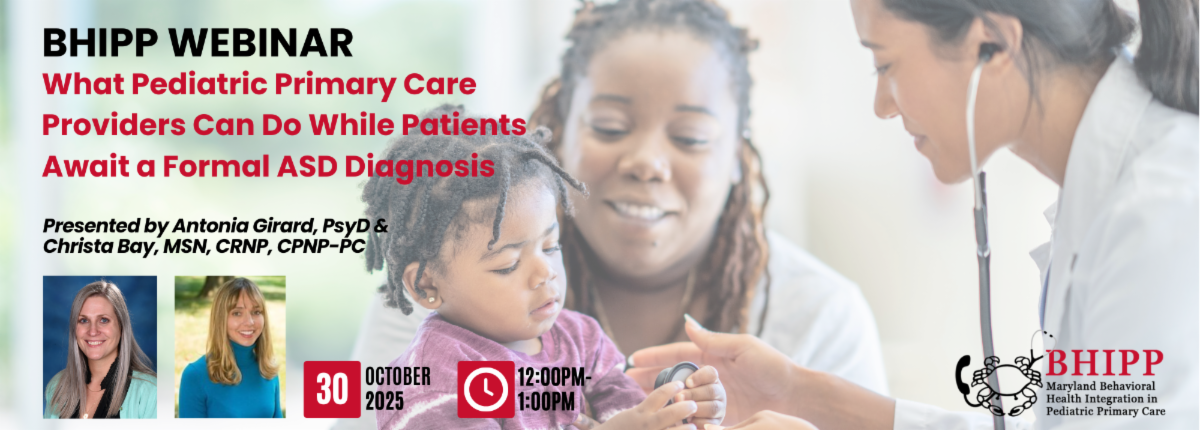
There is still time to register for this week's BHIPP Webinar!

Register for the next BHIPP Webinar on October 30th at 12:00pm! BHIPP Webinars are a series of interactive, web-based learning sessions that are a virtual space for pediatric primary care, emergency medicine, and behavioral health providers to connect, learn and share about strategies, practices and resources to promote mental health and resilience among children and families as well as providers. Free CME and CEU credit is available for participation!

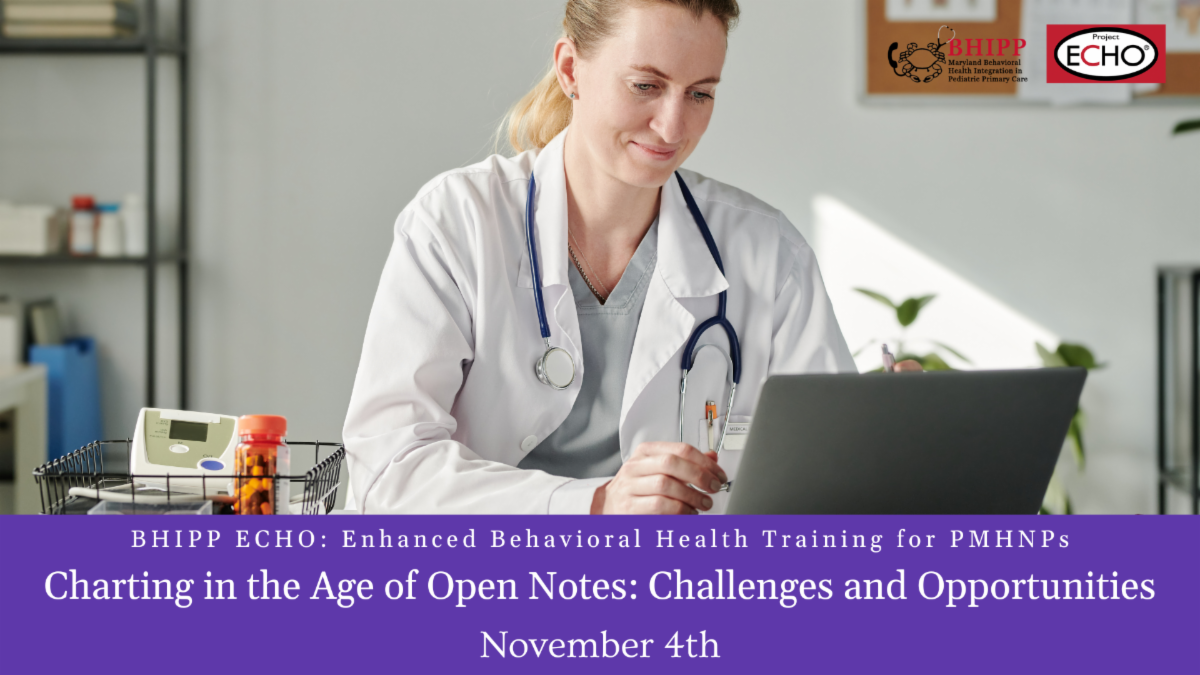
Sign up for the BHIPP ECHO PMHNP Series!

Register for the new BHIPP PMHNP ECHO series! The next session will be held on November 4th from 11:00am-12:00pm. Join our multidisciplinary team of child behavioral health experts every month between October 2025 and May 2026 for virtual case-based learning and didactic presentations. This series is designed for Maryland Psychiatric-Mental Health Nurse Practitioners (PMHNPs) who want to deepen their knowledge of child and adolescent mental health.

Register for an upcoming BHIPP Webinar!

Register for an upcoming BHIPP Webinar on November 11th at 12:00pm! BHIPP Webinars are a series of interactive, web-based learning sessions that are a virtual space for pediatric primary care, emergency medicine, and behavioral health providers to connect, learn and share about strategies, practices and resources to promote mental health and resilience among children and families as well as providers. Free CME and CEU credit is available for participation!

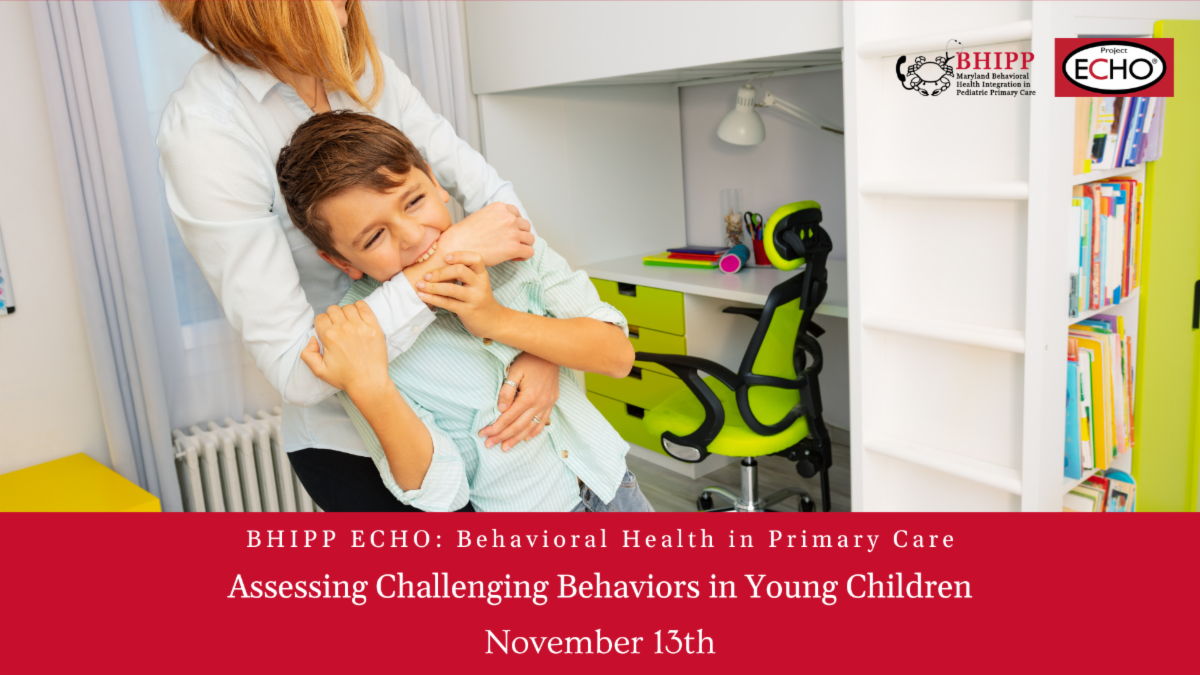
Join the BHIPP ECHO Series for Pediatric Primary Care Providers!

Register for the BHIPP ECHO Series for Pediatric Primary Care Providers! The next session will be held on November 13th from 12:00-1:00pm. Join our multidisciplinary team of child behavioral health experts bimonthly from October 2025 and May 2026 for virtual case-based learning and didactic presentations. Free CEU, CME, and ABP MOC Part 2 credits are available for participation.

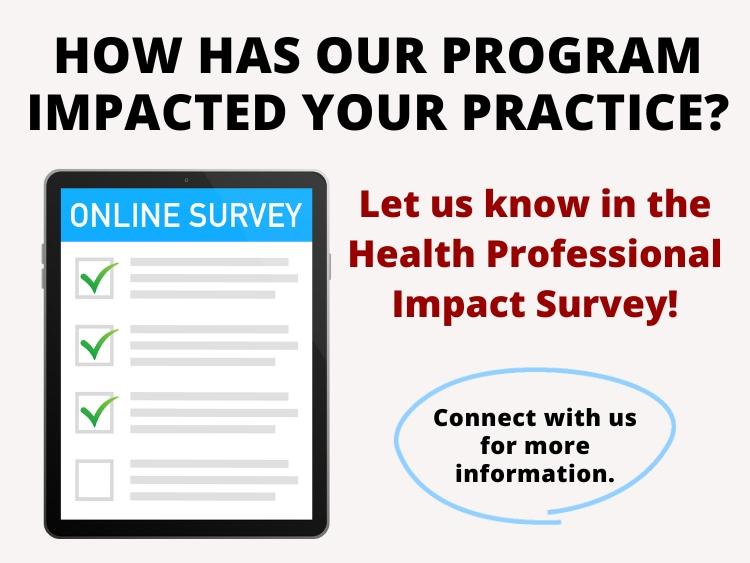
Tell us how BHIPP has impacted your practices related to screening, diagnosing, and referring!

Thank you for your participation in BHIPP. We want to hear from you! Please take a moment to complete a brief survey to let us know how our services have improved your practice. Your feedback is essential for informing program improvements and serves as an integral part of guiding the development of similar programs in the future. Don’t miss this opportunity to make an impact! 


Haven’t connected with us yet? Please reach out for support and resources to help you address your pediatric patients’ behavioral health concerns: 855-MD-BHIPP (632-4477)

Facebook  Linkedin  Youtube

BHIPP is supported by funding from the Maryland Department of Health, Behavioral Health Administration and operates as a collaboration between the University of Maryland School of Medicine, the Johns Hopkins University School of Medicine, and Salisbury University.


BHIPP and this newsletter are also supported by the Health Resources and Services Administration (HRSA) of the U.S. Department of Health and Human Services (HHS) as part of an award totaling $1,379,327 with approximately 20% financed by non-governmental sources. The contents of this newsletter are those of the author(s) and do not necessarily represent the official views of, nor an endorsement, by HRSA, HHS or the U.S. Government. For more information, visit www.hrsa.gov.


Copyright © 2021 Maryland Behavioral Health Integration in Pediatric Primary Care (BHIPP), All rights reserved.