|
|
Media Contact:
Devendra Mishra
Executive Director
Phone: 818-224-1552
|
|
HOW DOES DHL MEET GLOBAL LOGISTICS CHALLENGES WITH DIGITALIZATION & ENVIRONMENTAL SUSTAINABILITY? |
|
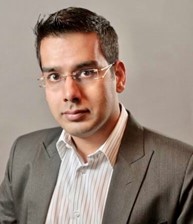
INSIGHTS FROM KUNAL PUNJABI, US HEAD OF THE SECTOR OF LIFE SCIENCE & HEALTHCARE |
|
Calabasas, California, May 6, 2021: In view of the unprecedented global distribution of COVID-19 vaccines from manufacturers in different countries, the supply chain network is being severely taxed while it is also evolving. Devendra Mishra, the Executive Director of BSMA, seized the opportunity to interview Kunal Punjabi, the US Sector Head of Chemicals, Life Science & Healthcare at DHL. The logistics company has played a critical role in the distribution of the vaccines with its global network.
|
|
Kunal Punjabi has over 17 years’ experience in the logistics industry and is focused on providing cold chain solutions for Life Science and Pharmaceuticals. Kunal is based out of the Bay Area and is responsible to drive strategy and growth within the Chemicals, Life Science & Healthcare sector for DHL. The globalization of pharmaceutical logistics along with increased sophistication of product composition (temperature control), heightened regulation and costs presents both opportunities and risks for bio/pharma organizations. DHL is helping face these current and fast changing logistics challenges with enhanced digital lane risk assessment tools and robust global transport solutions. Kunal has received a Post Graduate Diploma in Logistics Management as well as a bachelor’s degree in Commerce from Symbiosis College in Pune, India.
|
|
HIGHLIGHTS OF THE INTERVIEW |
|
Devendra: What have been the most important areas of focus for DHL, considering the disruptive nature of Covid19, and what is differentiating you from your peer group?
Kunal: Over the past 20 years, we have worked hard to establish what is today a 9,000-strong Life Science and Healthcare (LSH) community of specialists and a global infrastructure network consisting of over 100 air freight LSH competence centers and approximately 140 life sciences-graded facilities. Transporting vaccines (or any temperature-controlled product for that matter) requires a highly coordinated approach with intimate knowledge of the details, such as packaging, storing, air/land routing, timing, carrier selection, and specific handling requirements.
Our company’s purpose is connecting people, improving lives, and we realized, when the pandemic started, that prioritizing aid and medical products around the world was crucial and with skilled people on the ground and an efficient network for the life sciences and healthcare sector, we were capable of meeting our customers’ needs immediately. Most importantly though, we could offer charters, specialized services and a network that others couldn’t.
The distribution of a vaccine will not fail because of logistics. We believe that cooperation and partnerships will be key. No single logistics provider can alone fulfill the task for distributing vaccines globally.
|
|
Devendra: How does DHL help mitigate the risks of product delivery in the Cold Chain?
Punal: As a leading logistics provider with a presence in over 220 countries and territories, DHL is well positioned to play a huge role in not only vaccine distribution but the delivery of products that require cold chain. We ensure that essential supply chains, such as vaccine distribution, are not disrupted. We leverage our suite of alternative transportation modes, like courier, charters, air combination. We tap our logistics specialists’ experience and life sciences infrastructure, ranging from carriers to packaging companies. We have invested in Ultra-Low-Freezers to safely and securely store and handle vaccines, while training our staff. In addition to having recently received IATA CIEV Pharma Certification, we have deep expertise in handling clinical trial products, pharmaceutical goods and a variety of medical devices with GxP (Good Practice) compliant facilities located across the world.
|
|
Devendra: What are the Top Regions of the world you serve and how are they different in terms of supply chain capabilities?
Punal: There really is not one “top” region that we focus on. We are present in 220 countries with 570,000 employees worldwide. We are one of the biggest private employers worldwide, which is a huge responsibility. But with that responsibility comes a commitment to making our customers, employees and shareholders more successful – without compromising on results.
|
|
Devendra: What are the technology capabilities of the enterprise to integrate trading partners and provide visibility and accountability?
Punal: Freight forwarding is still characterized by inefficiencies and manual processes. This creates opportunities for innovation and disruption. At the same time, it is still a people-driven industry, so our approach is one of evolution rather than revolution. We believe that digitalization has never been more important, calling for rapid deployment. We encourage our customers to implement them like our new, myDHLi platform.
Covid-19 has also been a catalyst for greater resilience and flexibility – finding charters and transport solutions for temperature-controlled shipments where there was almost no airfreight capacity. Working from home and adjusting to an all virtual environment in not only getting the job done, but also connecting with our customers to help them navigate the same pandemic.
To give our customers more visibility and accountability, we launched myDHLi last year, which is the only fully integrated online platform for freight forwarding customers. It provides completely transparent management of freight rates, offers, transport modes, carbon emissions, and all other relevant shipment data. The highly intuitive use interface makes it easy to use and ensure that customers have all relevant information at hand. Reflecting already well-established social media functions like follow and share, relevant information can be easily accessed across organizations and trading partners. And customers experience superior online services for full shipment visibility and control in one platform.
Our innovation approach is focused on the following:
- Upgrading its digital ecosystem, with the Transportation Management System at the center, to speed up and simplify processes, increase responsiveness, eliminate paper and operate more efficiently.
- Applying incremental technology innovations in our operations – such as scanners and sensors – to increase speed and accuracy, and give transparency to customers.
- Targeting innovation that meets specialized requirements from customers in key verticals, such as pharma (i.e., sensor technology, packaging).
- Piloting the use of AI and Machine Learning to improve route and capacity planning (i.e., Global Trade Barometer).
- Using new capabilities (chatbots, VR, myDHLi, Data Analytics Platform) to improve customer experience and employee training.
- Exploring the feasibility of longer-term, digital freight platforms (Saloodo!) and autonomous trucking / platooning.
|
|
Devendra: Specifically, what are the unique services being offered in temperature-controlled distribution of drugs, medical devices, vaccines and kits for clinical trials?
Kunal: Our global, holistic approach connects customers to greater efficiency, new geographies and differentiated routes to market. Services we offer include:
- 170+ GDP-qualified warehouses in 43 countries (1.9 million m²)
- 25 clinical trials depots
- 20+ GMP-certified sites
- Access to next-tier growth markets via 4 regional hubs (Dubai, Istambul, Panama and Singapore)
- Air Thermonet & Ocean Thermonet networks
- Time-definite international (TDI) express network covers 220 countries & territories
- Life sciences-qualified DHL Medical Express services in 90 countries
- European ColdChain road freight network with 8 GDP-certified cross-docks serving over 30 countries
- 8 eCommerce life sciences fulfillment hubs (Australia, China, India, Germany, Mexico and United States)
|
|
Devendra: What are the company initiatives to ensure Sustainability of the Environment?
Kunal: In March Deutsche Post DHL Group announced our ambitious new Sustainability Roadmap investments and goals about the environment, social issues and corporate governance. Investments of USD 8 billion (EUR 7 billion) is being made in clean operations. In addition, a commitment has been made to contribute 1% of net profit each year to create lasting impact for the people and the communities where we operate. The new Sustainability Roadmap will accelerate our planned decarbonization through interim Environmental Science Based Targets and set targets and measures for Social Responsibility and Governance.
|
|
BSMA - Driving Innovation in the Life Sciences Supply Chain
Since its inception in 2007, BSMA is a global organization that fosters Innovation and Adoption of disruptive technologies within the end-to-end supply chain of the Life Sciences industry. With offices in California (USA), Brussels (Belgium) and Mumbai (India), BSMA promotes collaboration and networking between professionals of the biotech, pharmaceutical, academic and medical diagnostics enterprises. The Alliance partners with industry, academia, foundations, suppliers, technology enablers, research institutions, trade organizations and the government to improve productivity, quality, product and service integrity, risk mitigation, managerial talent development and patient care globally. It is also the home of start-up companies engaged in business development and scale up.
|
|
|
|
|
|
|