Handel's glorious music for a lavish barge expedition on the River Thames along with one of Bach's most treasured orchestral compositions create the pillars that surround a pair of imaginative works by Telemann: an Oboe Concerto that begins with a stupefying introduction and a sweetly sensitive musical characterization of "The Ingenious Gentleman Sir Quixote of La Mancha."
• Highlights •
Hardly a court existed in the first half of the eighteenth century that did not seek to emulate the grandiosity and extravagance of the court of Louis XIV for whom Jean-Baptiste Lully wrote elegant music that defined not only the French style of the period but also found its way to influence composers in other countries. Bach’s emulation of the classic “French Overture” is found in the four orchestral suites that have survived. They have come to us as music for festive events at the affluent courts of Weimar and Cöthen, years before Bach would have revived them for public concerts by Leipzig’s Collegium Musicum. In our performance of the “third” orchestral suite, you’ll hear a special restoration of the music to its first incarnation for strings only, before the heraldic trumpet and timpani parts (even the two oboe parts) were added to the score around 1730. Notably, the suite contains one of the most popular works among Bach’s compositions, one that has become known as the “Air for the G string.” This brief movement — Bach’s title is simply Air — is admired for its extremely lyric melody, quiet counterpoint, and a very poetic sense of inward reflection and contemplation.
Telemann was one of the most celebrated composers in the world of Baroque music. His prolific output was one of the greatest in history, and his eclectic tastes and international flair kept him on the cutting edge of musical styles and tastes. The Concerto for Oboe in C Minor is notable for its quite shockingly discordant opening chord. It is wonderfully jarring, and such unexpected musical tension would not be taken up again until some 80+ years later by Beethoven in the opening bar of his Ninth Symphony’s final movement. It’s a “must hear!” Telemann also greatly enjoyed writing thematic and programmatic pieces, including the Burlesque de Quixotte, a sweetly sensitive musical characterization of the hero in “The Ingenious Gentleman Sir Quixote of La Mancha” by Miguel de Cervantes. With comedic yet compassionate flair, Telemann composed seven “scenes” that depict various highlights of the story including Quixote’s clumsy attack on windmills, his scraggly horse Rocinante, the rough and tumble swindling of his blundering sidekick Sancho Panza, and his misty eyed, romantic appreciation for the peasant girl-turned-lady, Dulcinea. That last scene seems to reveal the composer’s own sense of vulnerability to love and its bittersweet outcomes.
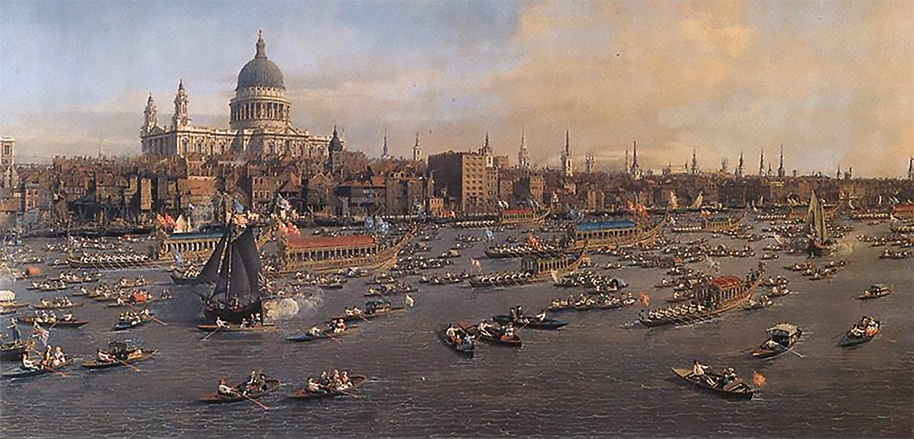
For a great water party that was to take place on a July evening in 1717, King George I wanted a barge full of some 50 musicians to travel alongside his royal barge as it sailed on the River Thames from Whitehall to Chelsea. Upon arrival at Chelsea, the royal party was entertained at Ranelagh House (built in 1688-89 by the then late Richard Jones, 1st Earl of Ranelagh), where they had supper until early in the morning of the next day. Several movements from the Water Music — unquestionably among the top 10 favorite Baroque works of all time — have become as popular and recognizable as any among the top hits from the Baroque era. The endearingly loping stride of the Air, the perkiness of the Bourrée, and uncontainable vivacity of the Hornpipe have brought smiles to the faces of listeners for ages.